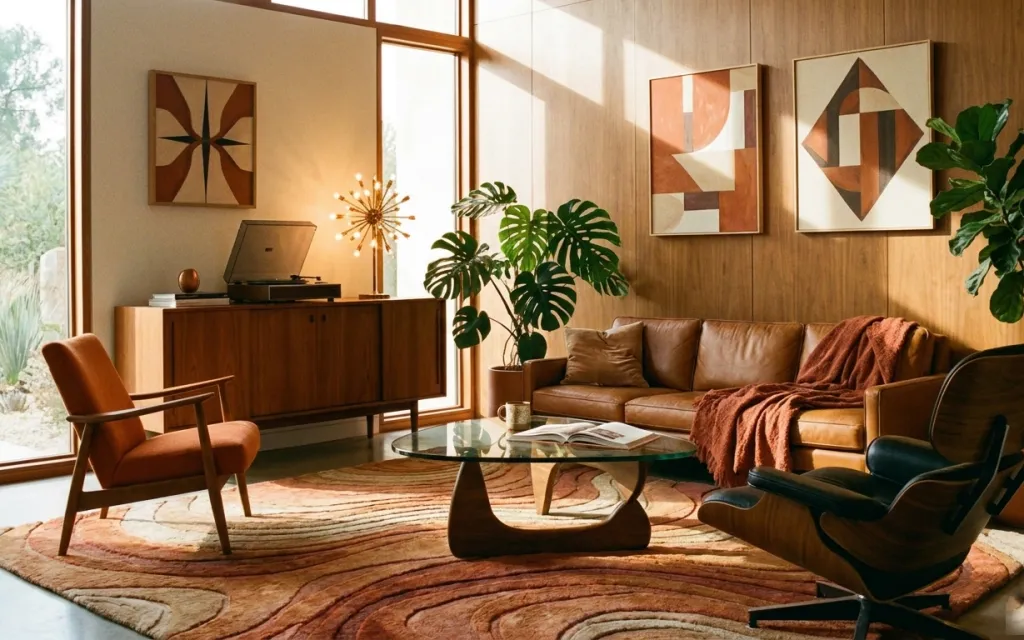
- Best for
- Earthy living rooms that still pack up
- Time
- 2–4 hours
- Total cost
- $600
- Renter-safe
- No drilling; removable swaps
Why warm wood-and-rust living room is the golden-hour base of 2026
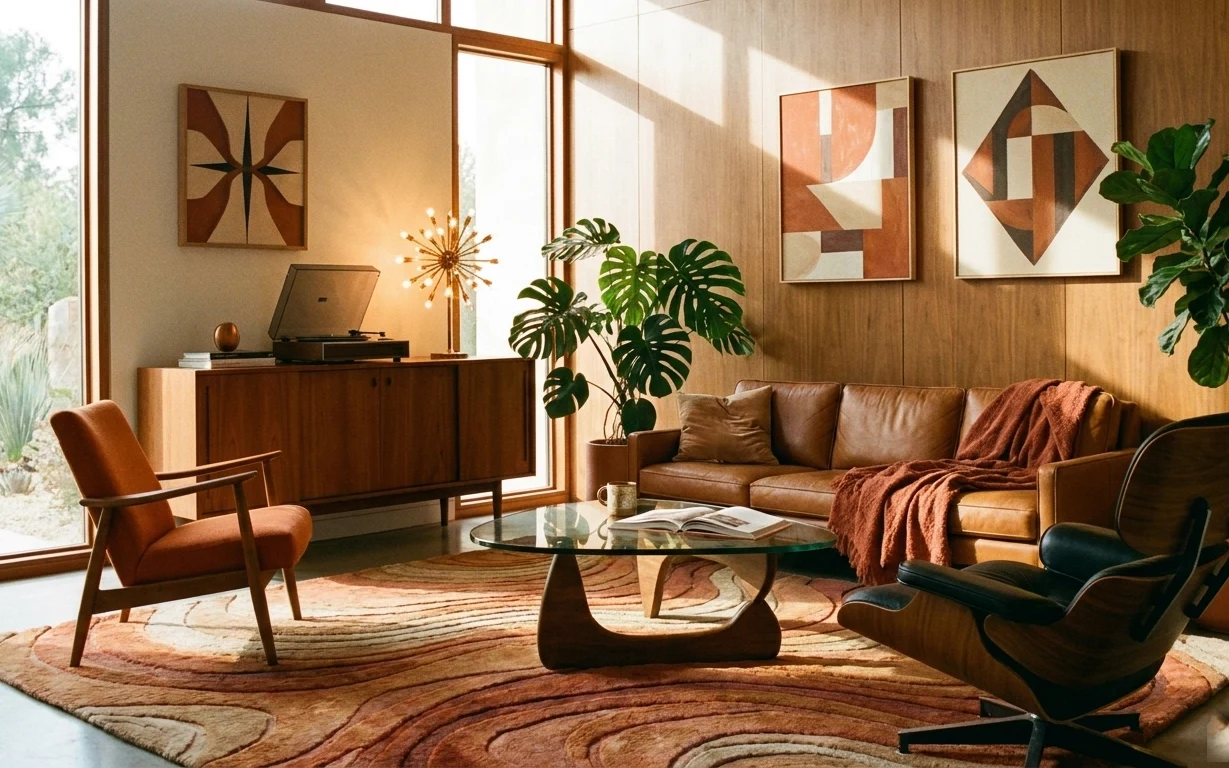
The biggest clue in this space is how the rug and sofa both lean into warm tones without matching too perfectly. The area rug pulls in rust and cream like a filter, while the leather sofa keeps the look grounded with a soft sheen. On the wall, framed abstract geometric prints repeat shapes, and the wood sideboard gives you a place for the sunburst-style decorative light. Even the plants add depth through leaf texture—everything is about layers, not one expensive “centerpiece.”
I once tried to fake this vibe with one “statement” item and then everything else looked unfinished. Here, the trick is that the textures talk to each other: glass table shine, wood-panel warmth, and the rust throw’s matte weave. The golden-hour feel mostly comes from warm light and placement, not from fancy fixtures you can’t take with you. It’s a look that’s very achievable for shared housing because you can swap soft goods and add lightweight decor without touching anything fixed.
Layer 1 — area rug ($100) rust-and-cream pattern that hides everyday mess
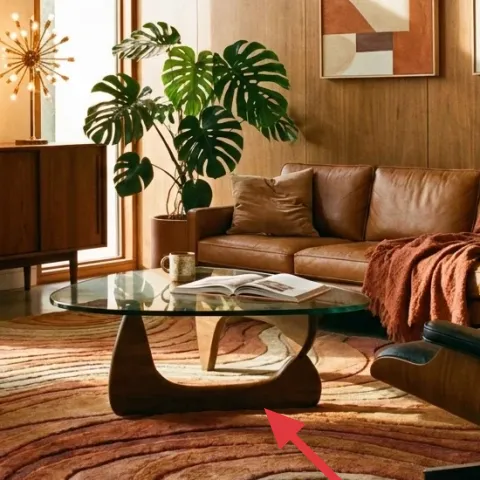
An area rug is doing a lot of heavy lifting here: it anchors the leather sofa, softens the hard wood floor, and creates a “warm filter” over the whole room. This particular rust-and-cream pattern is practical too—small marks blend in instead of shouting. The trade-off is that rugs this bold need clean edges around furniture legs, so vacuuming and rotating matter more than with a neutral flatweave. For a move, choose a rug you can roll tightly and lift solo, even if it looks substantial in the photo.
Choose a rug colorway with two tones
When the pattern has both a light and a warm midtone, stains and scuffs look less obvious between steam cleanings.
Layer 2 — leather sofa ($250) warm neutral upholstery with a soft sheen
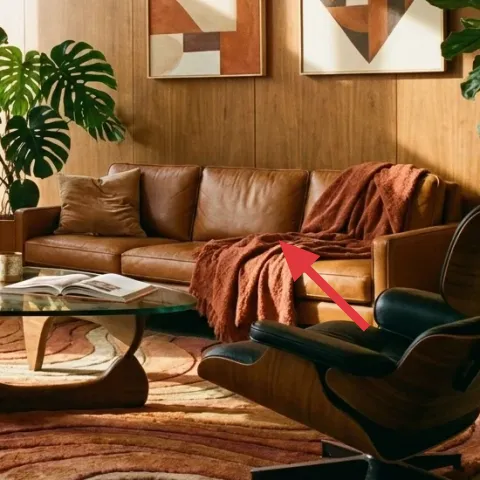
A leather sofa brings that rich, low-effort warmth because the surface reflects light slightly, especially near windows. In this photo, the sofa reads as a calm base, letting rust and plants show up clearly without fighting the wall’s wood tone. The trade-off with leather (or leather-look) is that it can feel sleek if the throw is too thin or too glossy—so pairing it with a heavier rust throw helps. In shared housing, this is worth prioritizing early, because a sofa silhouette sets the “geometry” for everything else you add.
Keep the pillows simple
Two to three cohesive pillow covers work better than lots of tiny patterns when the wall already has framed art.
Layer 3 — glass-top coffee table ($60) reflective top that brightens the middle
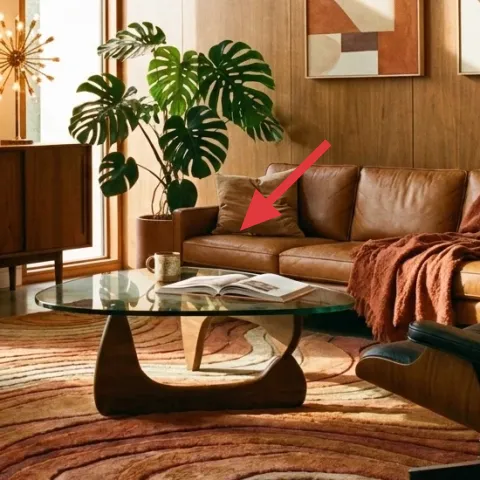
This glass-top coffee table makes the room feel lighter because it doesn’t visually block the rug pattern underneath. The round shape also helps soften the lines from the wood sideboard and the framed abstract geometric prints. A trade-off: glass shows fingerprints and dust more than a solid wood or fabric surface, so it needs quick wipe-downs. The upside for move-in renters is that a tabletop can usually pack into protected flat storage with fewer “problem corners” than a bulky wooden coffee table.
Pick an easy-to-wipe finish
If the top looks too textured, it will hide dust less well and be harder to clean when roommates move food around.
Layer 4 — wood sideboard (credenza) ($100) storage that sets the styling height
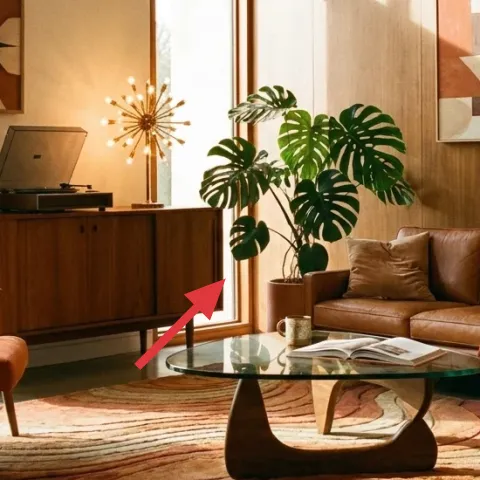
The wood sideboard matters because it’s a visual platform for the decorative light and decor, and it repeats the warm wood tone of the walls. By putting most styling items at sideboard height, the room looks “composed” even when the living room is shared and busy. The trade-off with using a sideboard for décor is that you can over-style it fast—so it helps to limit to a small cluster (light + one tray or books + plant). Choose a piece that breaks down or is easy to move, since this is the kind of furniture you’ll want to pack when the lease ends.
Don’t stack too many tall items
If the display gets higher than the framed prints, it starts to fight the wall and makes the room feel crowded.
Layer 5 — sunburst-style decorative light ($25) a warm focal point without permanent wiring
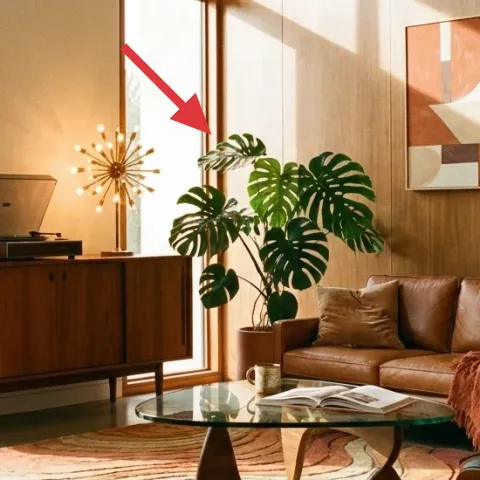
The sunburst-style decorative light is the mood-maker here: it adds star-like sparkle in the middle of the room and keeps the wall and sofa from feeling flat. This works especially well in shared housing because you can re-create the effect with a clip-on or a lightweight string-light plan—no hardwired changes needed. The trade-off is that you need to position it thoughtfully so the glow lands on the sofa and rug rather than washing out the plants. In the photo, it sits near the sideboard, which is a great “in-between” height.
Make it instead of buying it
This DIY string-light arrangement recreates the sunburst vibe using lightweight cord and removable hooks, so it packs up with the rest of the decor.
Materials
- Warm white string lights — 1 set — small home store — $10
- Command Strips multi-pack — small hooks — $8
- Small cable ties (or twist ties) — a handful — craft store — $2
- Cardboard template (scrap) — 1 piece — from recycle bin — $0
- Painter’s tape (for measuring only) — 1 roll — home storage — $0
Steps
- Uncoil the string lights and test the glow near the sideboard so the warmth reads right.
- Make a simple cardboard template with a small center circle and equal “spoke” markings.
- Lay the lights along the template spokes, then lightly secure with cable ties where needed.
- Press Command Strips onto the wall or the back edge of the sideboard area (only where removal won’t pull finish).
- Hang the template as a guide for spacing, then remove the template once the lights are placed.
- Plug in, adjust the spoke spread, and keep the cord path tucked behind the sideboard styling.
Total DIY cost: $20 — saves about $5 over buying.
Layer 6 — large monstera plant ($30) leaf texture that adds depth
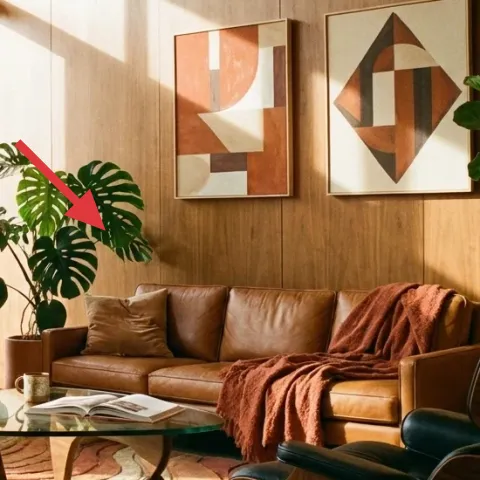
A large monstera plant gives you instant “vertical layering” without needing wall shelves or drilling. In this photo, the leaves fill the space between the sideboard and the sofa, making the room feel lived-in rather than staged. The trade-off with real plants is upkeep, but the payoff is texture that looks good from every angle and packs down better than big furniture. For shared housing, treat the plant as seasonal decor: choose a pot and tray you can lift easily, and move it room to room when roommates change routines.
Match the pot’s visual weight
A heavier-looking pot stabilizes the plant visually, especially against a wood-paneled wall.
Layer 7 — framed abstract geometric prints (left wall print) ($25) one repeat pattern to unify the wall
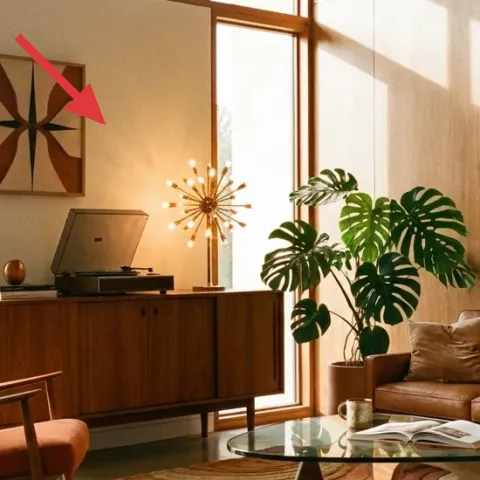
Framed abstract geometric prints bring structure to an otherwise organic room—wood panel, plants, and soft textiles. This left wall print matters because it repeats shape language already present across the set, so the wall reads cohesive instead of random. The trade-off is that art can look too “busy” if the palette isn’t limited; that’s why you want warm neutrals and a restrained rust accent. For move-out day, frames you can pack flat and protect are ideal, since wall decor is the easiest part to swap across apartments.
Buy one frame, then mirror the scale
If the room feels blank, add matching frames later—but start with the biggest one you can pack easily.
The cost, layer by layer
| Layer | Item | Cost |
|---|---|---|
| 1 | Area rug (5×7) | $100 |
| 2 | Leather sofa (thrifted) | $250 |
| 3 | Glass-top coffee table | $60 |
| 4 | Wood sideboard (credenza) | $100 |
| 5 | Sunburst-style string-light arrangement (DIY equivalent) | $25 |
| 6 | Large indoor plant (monstera) | $30 |
| 7 | Framed abstract geometric print | $25 |
| Total | $590 | |
For a cheaper variant, prioritize the rug and plant first, then choose one framed print instead of building out a full set. Swap the coffee table look with a simple thrifted glass-top tray-and-stand or a low clear side table. A secondhand sofa is often the biggest savings.
What worked, what didn't (across the whole room)
This look works because warm wood, rust textiles, and leaf texture all share the same color temperature. The decorative light adds a focal point that keeps the middle of the room from feeling empty, and the glass-top table prevents the rug from looking heavy. The only place it can fall apart is if the wall art feels too random or if plants are underscaled compared to the sofa.
What worked
- The rust-and-cream area rug anchors the seating and makes small scuffs less noticeable.
- The leather sofa reads warm and reflective without needing extra hardware or wall changes.
- The glass-top coffee table keeps the room visually open above the rug pattern.
- The wood sideboard repeats wall warmth and gives a practical styling height.
- The sunburst-style decorative light creates a focal glow near the sideboard.
- The large monstera plant bridges the vertical space between wall and sofa.
What didn't
- Too much clutter on the sideboard makes the room feel busy against geometric wall art.
- A lamp or light placed too low can flatten the wall and reduce the “golden-hour” effect.
- Oversized framed art without matching palette can overpower the rust throw blanket.
- If the plant pot looks light or cheap, the monstera can feel visually unstable.
- Skipping the rug’s pattern tones can make the room look cooler than the wood.
What we'd skip if we did it again
Skip a fully matching furniture set. In this look, the warmth comes from repeated materials and color temperature, not from everything being the same brand or finish.
Skip adding too many tall décor objects on the sideboard. Keeping the display to one main cluster preserves the airy gap between the sofa and framed abstract geometric prints.
Skip cool-white bulbs. If the decorative light reads too blue, the rust and wood lose their golden-hour character, and the whole room feels harsher than the photo.
Frequently asked
How long does this living room refresh take?
For a shared-housing version, plan for 2–4 hours total. The rug and framed print swaps are usually fastest, and the biggest time sink is getting the decorative light placement right so it reads warm on the sofa. If you’re DIY-ing the string-light arrangement, set aside an extra 30–60 minutes for spacing and cord hiding.
What if the room is smaller than the photo?
Scale down the rug first: a 5×7 can still anchor a seating area if the sofa sits on it with just the front legs. Keep only one framed print per wall zone instead of building out multiple frames. For plants, choose a shorter monstera or keep it slightly farther from the sofa so it doesn’t overwhelm the seating.
What if the room is bigger or has more blank wall space?
Go bigger with the rug pattern first, then add a second framed abstract geometric print so the wall repeats the shape language. If the seating feels too low in the room, use the same wood sideboard height but add just one more low object on top—no stacks of tall décor. For plants, add one extra small leafy branch rather than a third large plant.
Where should I shop for move-friendly pieces?
For the rug and framed art, thrift stores and discount home sites are the easiest wins because you can get the color temperature without overpaying. For the leather sofa look, look for secondhand listings, and verify dimensions before pickup. Plants can be sourced locally—choose a monstera that already has full leaves so it doesn’t take months to look like the photo.
Biggest mistake to avoid with this style?
The most common miss is buying one “statement” item and leaving everything else too flat. This look relies on texture and repetition: rug pattern tones, warm wood warmth, and a light source that creates sparkle in the middle. If either the decorative light is too weak or the framed prints are too random, the room won’t feel cohesive.
Can I do this if I’m not allowed to use hooks on the wall?
Yes. The decorative light can be placed using freestanding or clip-on options, or anchored to a removable surface like the back edge of a piece of furniture where it won’t damage the finish. The goal is still the same: keep the warm sparkle at sideboard height and direct it toward the rug and sofa so the room stays golden-hour even in shared schedules.
More in Living Room
5 move-ready swaps for a $600 living room refresh
A warm wood, rust, and cream living room can look intentional even in shared housing. With a $600 refresh and move-friendly pieces (rug, so…
What $700 buys: a move-ready living room seating refresh
A move-friendly living room seating area refresh for shared housing, built from 7 no-drill swaps, warm curtains, and plant-friendly color. …
7 renter-friendly swaps for a plant-filled living room
A plant-filled living room refresh that looks styled (not fussy) using 7 renter-friendly swaps. This move-ready plan fits a $350 budget and…