- Best for
- Shared living room makeovers
- Time
- 2–5 hours total
- Total cost
- $640
- Renter-safe
- Mostly no-drill swaps
Why this leafy-green living room is the living room seating area of 2026
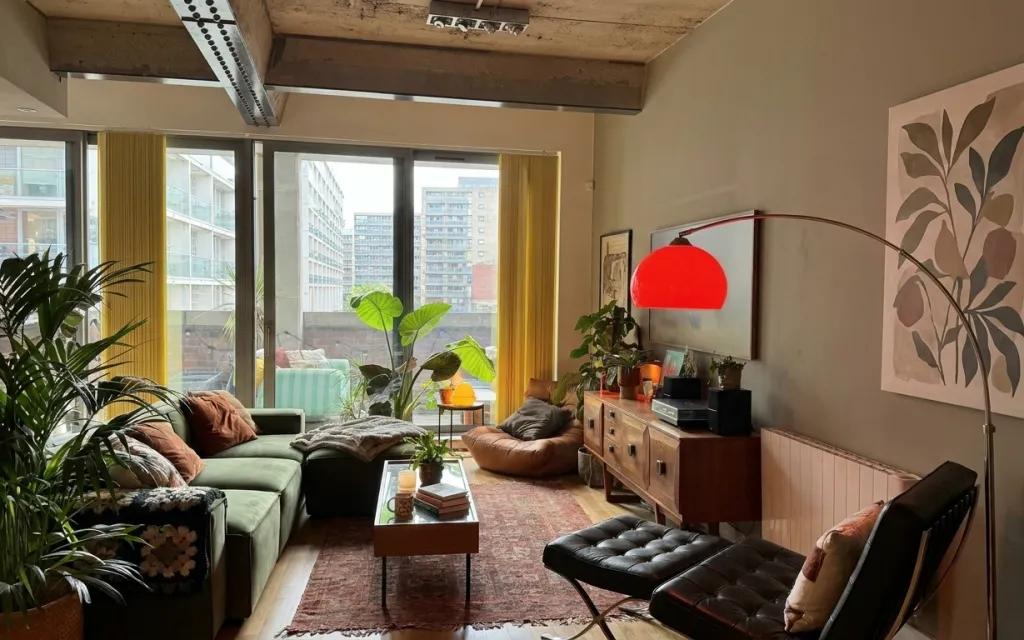
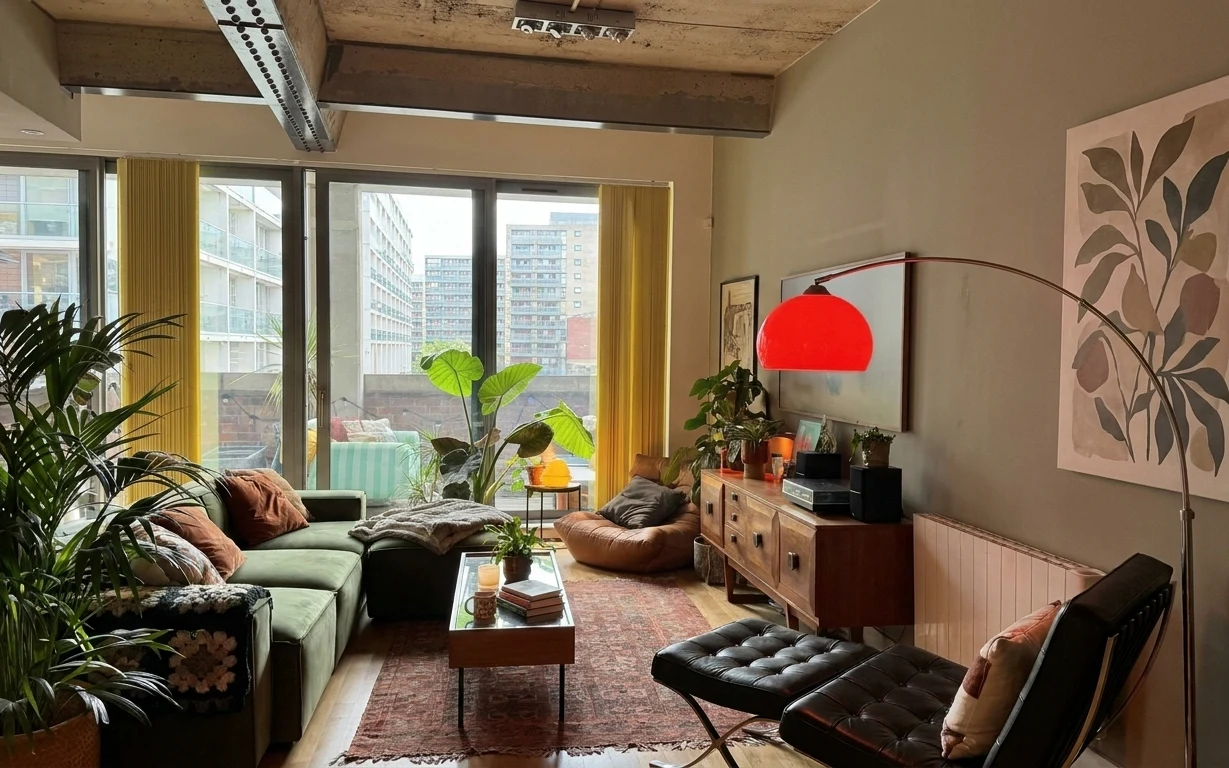
Start by copying the palette, not the exact furniture. In the photo, the green sofa reads fresh against warm wood and a red/orange patterned rug, and the gold curtains bring the whole window wall into the same color family. The red dome floor lamp adds a clear shape that’s easy to swap in and out without changing the room’s layout. This setup works for shared housing because it relies on textiles, clip-on style lighting swaps, and freestanding pieces you can take with you.
I used to chase matching sets, and every time it made my rooms feel like a showroom. What changed for me was noticing that the eye needs one strong shape (that lamp) and one big texture (the rug). Once I stopped buying “everything the same,” the plants and wall art looked intentional instead of accidental.
Layer 1 — red patterned area rug ($200) grounds the sofa-and-coffee-table zone
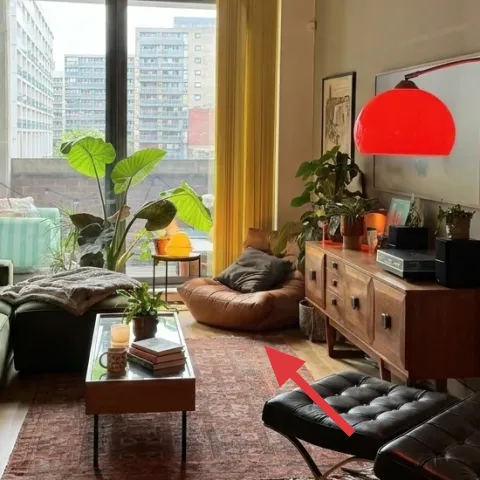
This red/orange patterned rug is the visual anchor for the whole living room seating area. It sits under the coffee table and reaches far enough toward the sofa that the green upholstery doesn’t feel isolated. A neutral rug would be easier, but it wouldn’t carry the same warmth when the room gets dim at night, especially with the paneled lower wall. The trade-off: patterned rugs do show some lint, so a quick vacuum pass matters. The upside is that the pattern hides day-to-day scuffs from shared-life chaos.
Choose size by legs, not by “square footage”
Pick a rug where the front sofa legs (and the coffee table) feel supported—then the room reads pulled together, even without extra wall changes.
Layer 2 — red dome floor lamp ($120) adds a single bold color shape
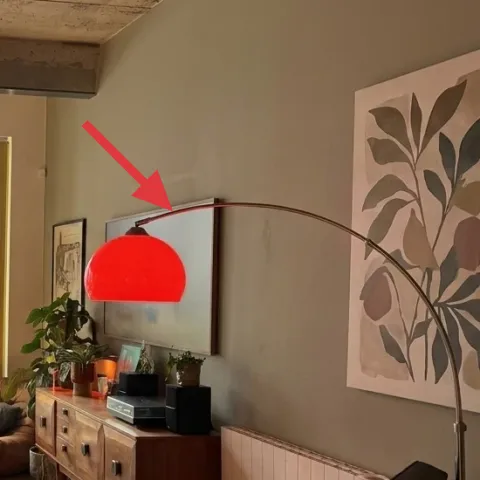
The red dome floor lamp brings a sculptural focal point that still feels flexible for moving. Because it’s a freestanding piece, it doesn’t require hard installs or wall changes, and the warm red echoes the rug’s orange tones. Going with a plain floor lamp would keep the room tidy, but it would also make the plant-heavy backdrop look busier. The trade-off is that bright lamp shapes can dominate if the shade is too small—so choose a dome that reads clearly from the seating angle. This one also helps after dark, when the windows lose some daylight.
Match the lamp to a textile, not to paint
Pull the lamp color from the rug so the scheme still works after you repaint (or when the next rental has different wall color).
Layer 3 — wood credenza/sideboard ($120) gives the room storage without wall installs
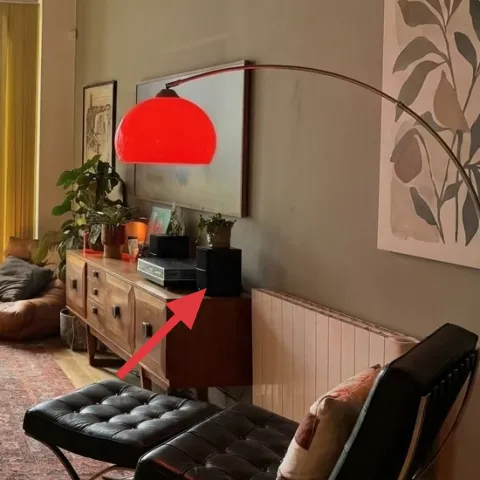
The wood credenza/sideboard is doing two jobs: it adds warm tone and it gives a place for plants, books, and small decor without drilling anything in. In the photo it’s positioned on the right, balancing the visual weight of the sofa and keeping the wall from looking empty below the framed print. A floating shelf would be a tempting alternative, but it’s the opposite of move-friendly if it needs anchors or permanent rails. The trade-off is that you’ll need to measure doorway widths before buying. Still, this kind of freestanding storage travels better than wall-mounted options.
Keep surfaces “styling-flexible”
Use the sideboard top like a temporary gallery: books, one plant, and a tray. You can re-style in 10 minutes when roommates change the vibe.
Layer 4 — large botanical wall art print ($50) fills the vertical space with one graphic idea
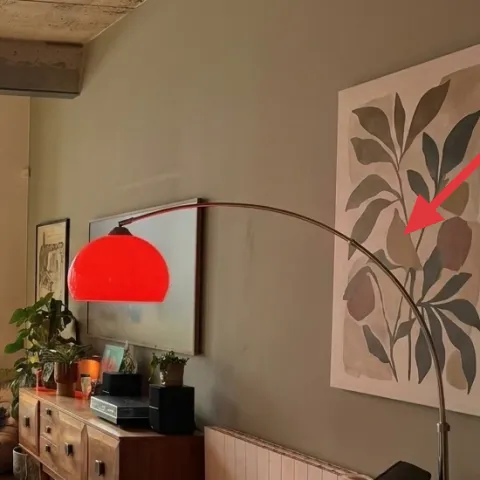
The large botanical wall art print makes the right wall feel finished without needing a big furniture rearrange. It’s tall enough to anchor the sideboard area, and the muted leaf shapes stay calm next to the brighter lamp and rug. Instead of creating a full multi-frame gallery, this keeps the look clean and easy to pack because you can swap to a different frame size later. The trade-off is that a single oversized print needs careful placement so it doesn’t feel too high or too low compared to the sideboard. For a shared rental, prioritize removable hanging methods that won’t pull off plaster.
Avoid adhesive that rips paint
If the wall is plaster or delicate, use foam-core picture hanging systems or removable hooks instead of strips that can take finish with them.
Make it instead of buying it
DIY-dye brown throw pillow covers so they match the rug’s warm tone while staying under the cost of a ready-made set.
Materials
- Fabric dye (warm brown) — 1 kit — store home goods — $12
- Salt — 1 box — grocery/pharmacy — $6
- Gloves — 1 pair — pharmacy/box store — $2
- Drop cloth or old towel — 1 roll — already on hand — $0
- Bucket/container — already on hand — $0
Steps
- Pre-wash pillow cover fabric to remove sizing so dye takes evenly.
- Stir dye and salt into warm water in a container that you can dedicate to dye.
- Submerge the covers and keep the fabric moving so the color doesn’t stripe.
- Let the dye sit for the kit’s recommended time, checking once halfway through.
- Rinse in cool water until the water runs clear.
- Dry the covers fully before stuffing back into the pillow form.
Total DIY cost: $20 — saves about $10 over buying.
Layer 6 — gold/yellow curtain panels (pair) ($60) softens the window wall and warms daylight
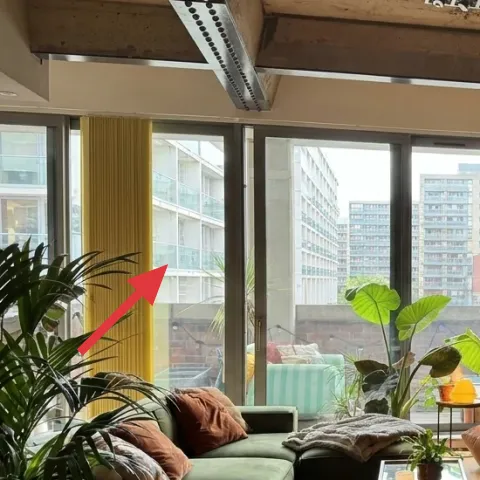
The gold/yellow curtain panels bring warmth to the window wall and help the green sofa feel intentional instead of “just there.” In the photo, they frame the glass with a color band that repeats in the rug and lamp, so the whole seating area feels like one palette. If you choose a cream curtain, it can look pretty, but it won’t give the same glow when the sun hits at an angle. The trade-off is that curtains can fade faster in direct sun, so it’s worth rotating or choosing a fabric with good color retention. This layer is also easy to move because panels roll up and fold flat.
Get the hem length right on day one
Measured floor-length reads polished; too-short panels make the window area feel unfinished.
Layer 7 — rectangular wooden coffee table ($60) keeps the center clutterable but stylish
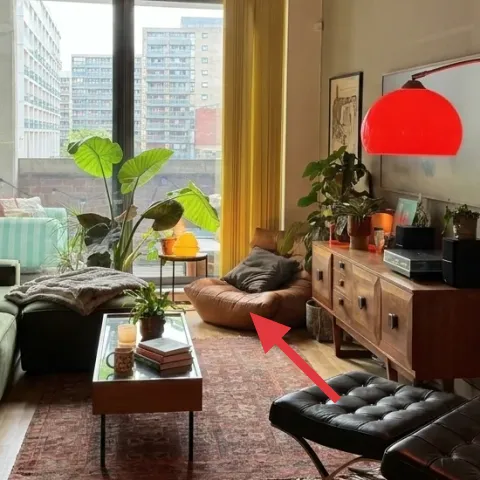
The rectangular wooden coffee table helps the room function for shared life: it’s a surface for plants, books, and a candle, and it visually connects the sofa to the sideboard. In the photo, the table’s warm wood tone ties into the sideboard, while its open top makes styling feel airy instead of heavy. A larger coffee table could swallow the floor space in a move, and a glass top would show every mug ring. The trade-off is that wood finishes can scratch, so pick something that’s easy to wipe and that can take normal roommate use. This kind of table also fits in a rental van better than bulkier alternatives.
Style with three heights
Use a book stack, one small decor object, and a plant so everything reads on first glance from the sofa.
The cost, layer by layer
| Layer | Item | Cost |
|---|---|---|
| 1 | Red patterned area rug | $200 |
| 2 | Red dome floor lamp | $120 |
| 3 | Wood credenza/sideboard | $120 |
| 4 | Large botanical wall art print | $50 |
| 5 | Brown throw pillow covers (DIY) | $30 |
| 6 | Gold/yellow curtain panels (pair) | $60 |
| 7 | Rectangular wooden coffee table | $60 |
| Total | $640 | |
If the budget is tighter, keep the rug and lamp as-is and swap one “hero” purchase for something cheaper: choose curtain panels in a simpler weave or pick a smaller framed print. The overall look still works because the palette cohesion comes from the rug + warm window glow.
What worked, what didn't (across the whole room)
The strongest win across this living room seating area is the color loop: rug, curtains, and the red lamp all talk to each other without needing major wall changes. The plant-forward styling also helps the space feel alive even when the room is a little messy. The main miss would be trying to do too much at once—if every surface is patterned, it starts to compete with itself.
What worked
- The red patterned rug visually anchors the sofa and coffee table, so the room reads intentional.
- The red dome floor lamp provides a single bold shape without requiring any hardwired changes.
- The wood credenza adds warmth and storage while staying freestanding for easy moves.
- The large botanical print gives the wall a focal point that doesn’t need a full gallery wall.
- Gold curtain panels soften the window wall and make daylight feel warmer.
- Styling books and decor on the coffee table keeps the center useful and not cluttered.
What didn't
- Trying to match multiple decor items by brand can make the room feel too coordinated.
- Using a rug pattern that’s too similar to the wall art can cause both to blur together.
- Short curtains can make the window area feel chopped up instead of framed.
- A coffee table that’s too small makes styling look random rather than planned.
- Overstuffing the sideboard with decor reduces the impact of the botanical print.
What we'd skip if we did it again
Skip a second matching “set” purchase, like buying a matching lamp shade and pillow cover from the same line. Matching can look nice, but in shared housing it often locks you into a look that’s hard to swap when the next roommate prefers a different direction.
Skip wall drilling-heavy ideas like shelf rails or multi-frame gallery grids. This room’s wall payoff comes from one large botanical print plus a sideboard top, both of which are easier to pack and hang safely in rentals.
Skip going neutral-only. The green sofa can handle warmth, and the red lamp plus patterned rug are what make the seating area feel cohesive after dark—without needing permanent changes.
Frequently asked
How long does this kind of living room refresh take?
If the big items (rug, lamp, curtains) are already in hand, the styling pass is surprisingly fast—plan on about an hour for placing the rug, half an hour to set up curtains, and 30–60 minutes for sideboard and coffee table styling. Shopping and delivery is the real time cost. The DIY pillow cover dye adds active time, but the total calendar time still stays manageable because you can dye in a single afternoon.
Is this really renter-friendly if I can’t use nails or anchors?
Yes, because the core choices are freestanding or textile-based: rug, floor lamp, coffee table, sideboard, and curtains. For wall art, choose a removable hanging method designed for delicate surfaces so the artwork comes down cleanly at move-out. The trick is to treat the wall print as the only “wall moment,” rather than building a wall of hardware.
What if my living room is smaller or I have less wall space?
Go slightly smaller on scale, not on color intent. Keep the rug as the anchor, but choose a rectangle closer to 5×7 instead of stretching it too wide. For the wall print, pick the largest size that still leaves a little breathing room above and around the sideboard. The red dome lamp can stay because it reads as a shape even in tight corners.
Where should I shop for move-friendly versions of these pieces?
For the rug and curtains, look for standard sizes at home goods stores so returns and exchanges are easy. For the lamp and coffee table, prioritize places with assembly-free shipping options. For wall art, buy a print that can come out of its frame easily, and choose a frame size that matches what you can safely hang in your lease.
What’s the biggest mistake people make in plant-filled living rooms?
They add too many competing focal points at once—more than one patterned large area, multiple oversized frames, and lamps with strong colors. This plan avoids that by choosing one hero rug pattern, one sculptural lamp, and one large botanical print. Plants then become texture and life instead of another “competing design.”
Can I swap the colors if I don’t like the red/orange rug look?
Absolutely. Keep the structure: one patterned rug, one bold lamp shape, and warm window textiles. If you switch away from red/orange, echo the new rug color in the lamp or the pillow covers, not both in multiple places. That keeps the room cohesive while still letting the plants and green sofa stay the background.
More in Living Room
What $700 buys: a move-ready living room seating refresh
A move-friendly living room seating area refresh for shared housing, built from 7 no-drill swaps, warm curtains, and plant-friendly color. …
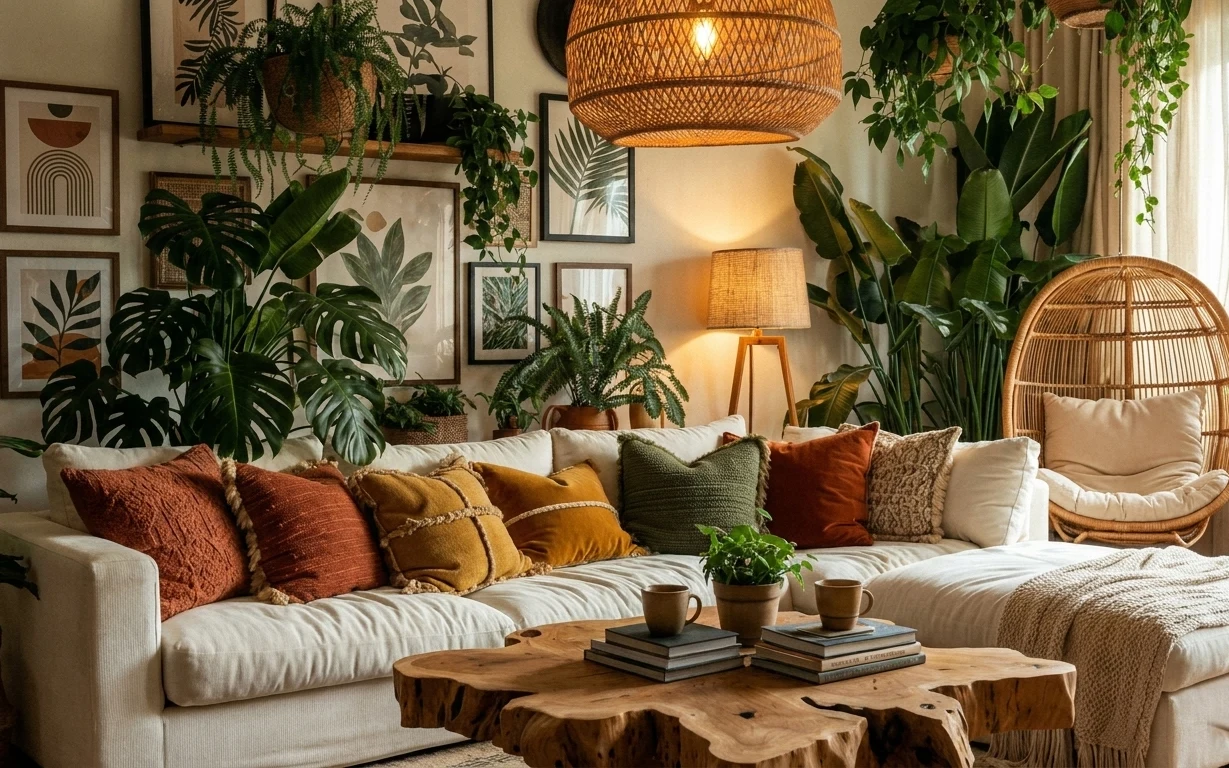
7 renter-friendly swaps for a plant-filled living room
A plant-filled living room refresh that looks styled (not fussy) using 7 renter-friendly swaps. This move-ready plan fits a $350 budget and…
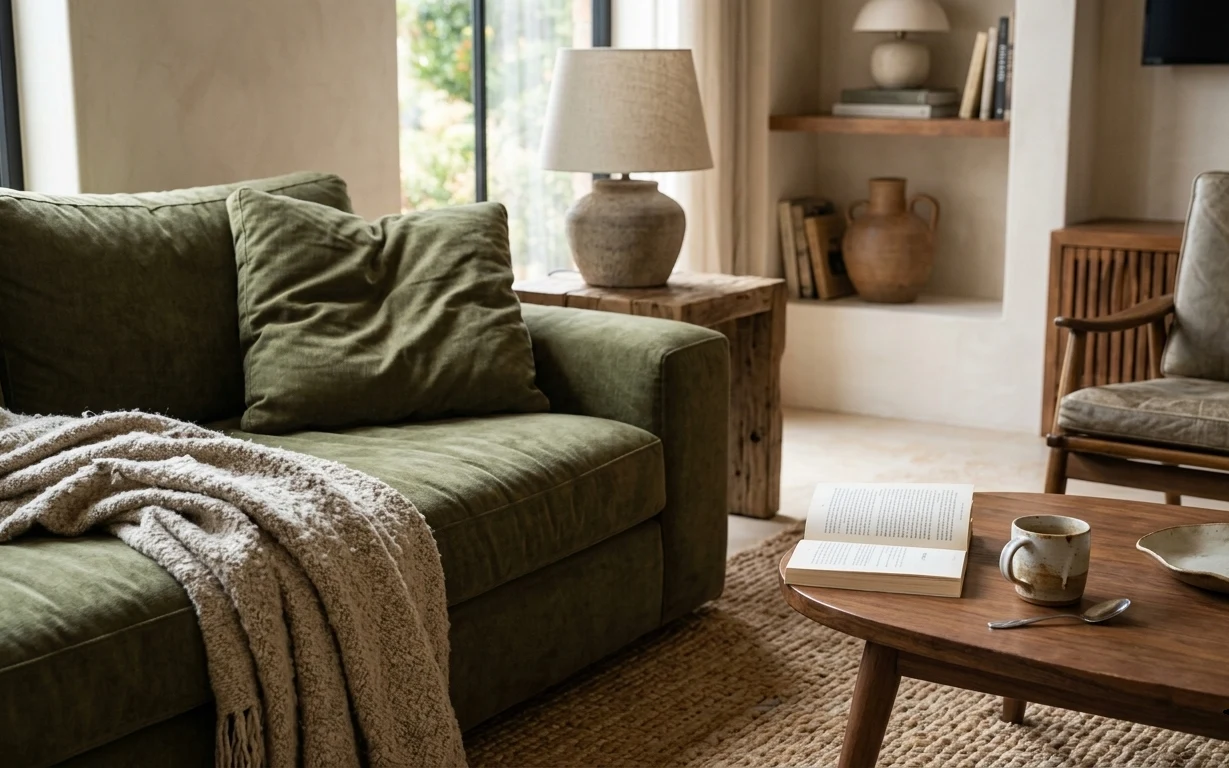
How to build an olive-and-cream living room refresh for $700
A calm olive-sofa reading corner, pulled together with a woven rug, warm wood coffee table, and a beige-shaded table lamp. This living room…