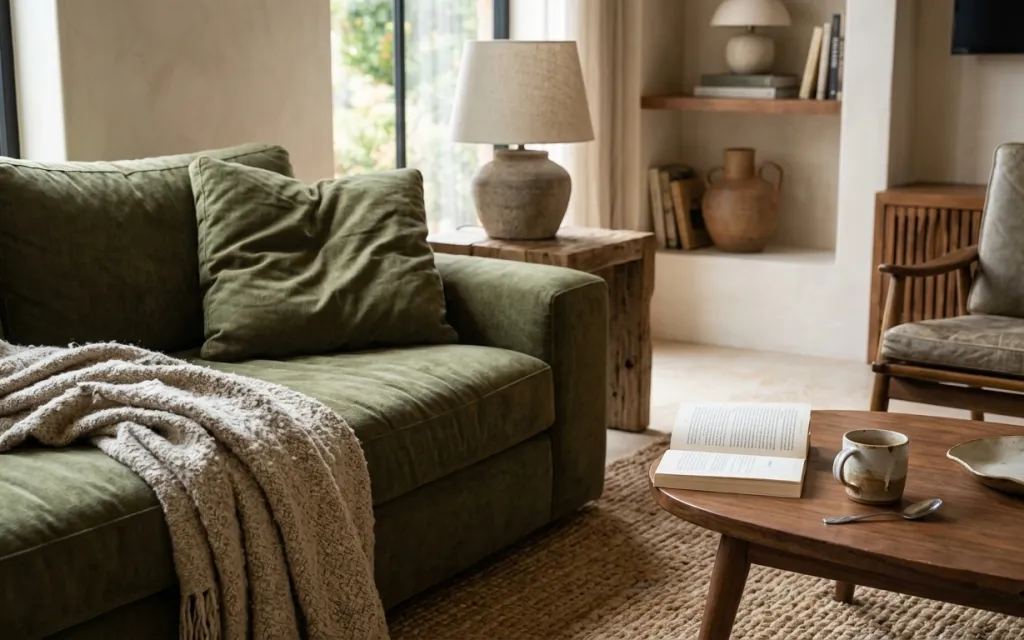
- Best for
- Textured “reading corner” vibes
- Cost
- About $700
- Difficulty
- Easy–Moderate
- Time
- One weekend (plus dry/cure time)
Why olive-and-cream layering is the olive-sofa reading corner of 2026
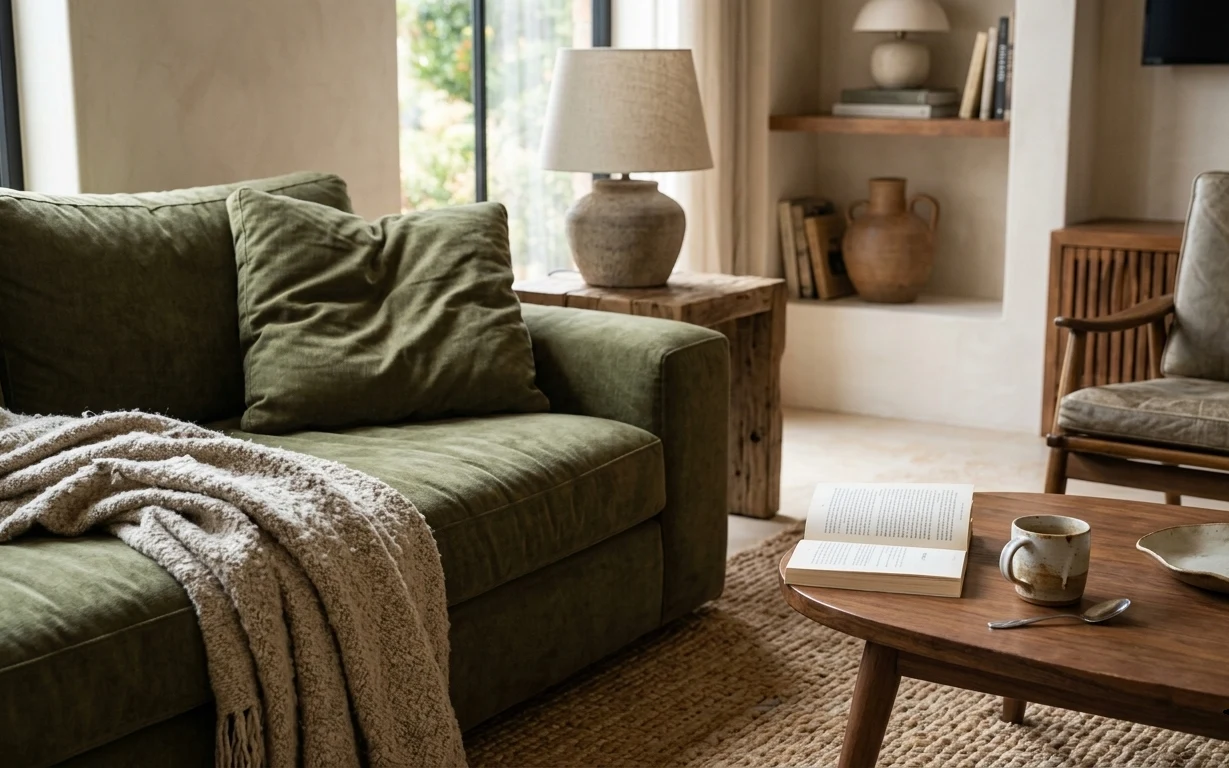
The fastest way to make this living room feel finished isn’t a new layout—it’s texture on repeat. You’ve got an olive green sofa with an olive throw blanket, then a woven area rug that softens every step, plus a warm wood coffee-table top that grounds the whole scene. The beige fabric lamp shade adds a gentle, steady glow, and the wall shelf gives you a place for ceramics and books without turning the coffee table into storage. For a homeowner refresh on a weekend, that mix is especially doable: buy the missing “touch points,” then keep everything in the same warm palette.
I used to over-style coffee tables—tray, vase, little bowl, and a stack of books—until it looked like I was trying too hard. Here, the ceramic dish and ceramic mug read like “useful objects,” and the book stack stays intentional because it’s not fighting the rug’s pattern. I also caught myself wanting to replace the lamp immediately. The beige shade is doing more than lighting; it’s balancing the olive colors so the room doesn’t feel heavy.
Layer 1 — Woven area rug ($150) Texture underfoot so the sofa doesn’t feel flat
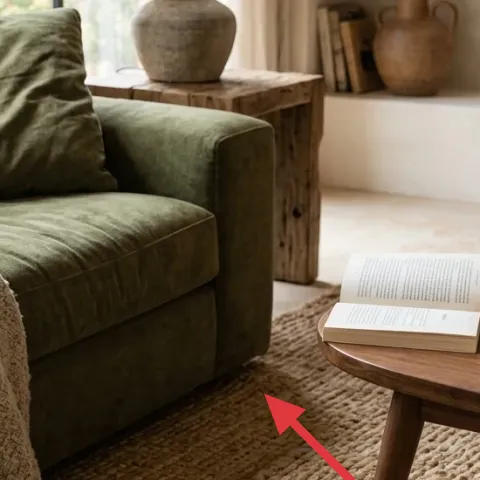
A woven area rug in a warm neutral is what keeps this olive-sofa reading corner from feeling one-note. In the photo, the rug sits under the coffee table and anchors the seating zone, so the green sofa reads deeper instead of darker. The trade-off: you’ll lose the sleek “smooth floor” look, but you gain a tactile base that hides everyday marks. If you go too thin or too gray, the whole room shifts colder—so aiming for a natural fiber look is the decision that matters.
Let the rug shape the conversation
Choose a rug that places the coffee table and chair feet on the same surface, so the zone feels drawn, not accidental.
Layer 2 — Olive throw blanket ($40) Adds weight and movement in the same color family
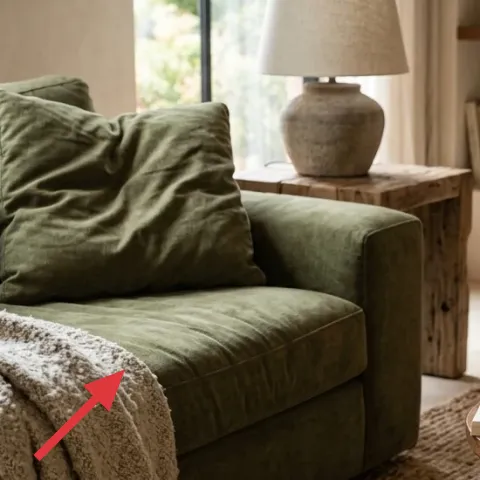
The olive throw blanket draped across the olive green sofa is doing two jobs at once: it breaks up the solid upholstery and adds casual “real life” softness. Because it’s in the same color family as the sofa, you get contrast without introducing a new palette that might clash with the rug. The trade-off is practical—fabric like this can attract lint—but it’s worth it for the way it makes the sofa look styled rather than just upholstered. Skipping it is the easiest way for this look to turn bland.
Keep the blanket in the room’s main undertone
Olive reads best when the throw and cushions share the same warmth level, so nothing feels oddly mismatched.
Layer 3 — Olive throw pillow ($18) Crisp edges that balance the blanket’s softness
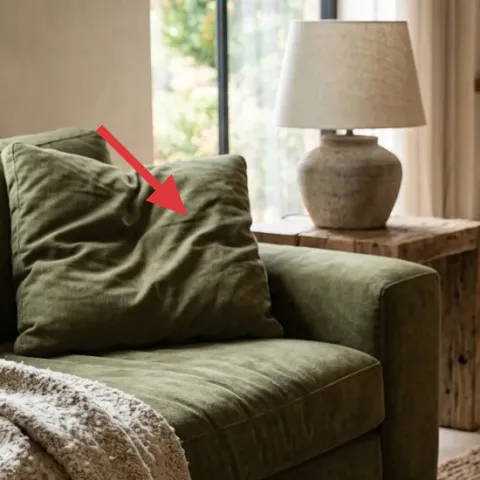
That olive throw pillow works because it’s a clean shape against a sofa that already has plush, rounded forms. The pillow gives you a second layer of olive color, but with a different texture and a flatter surface that catches light. If you only use a blanket, the sofa can look lumpy—adding a pillow prevents that by creating a visual pause. The trade-off is size planning: a pillow too big will crowd the sofa arm; too small and it disappears against the blanket.
Don’t pick a pillow with a completely different olive
If it leans neon or too brown, it won’t harmonize with the sofa and will pull attention away from the coffee-table styling.
Layer 4 — Wooden coffee table ($180) Warm wood you can DIY-match in a day
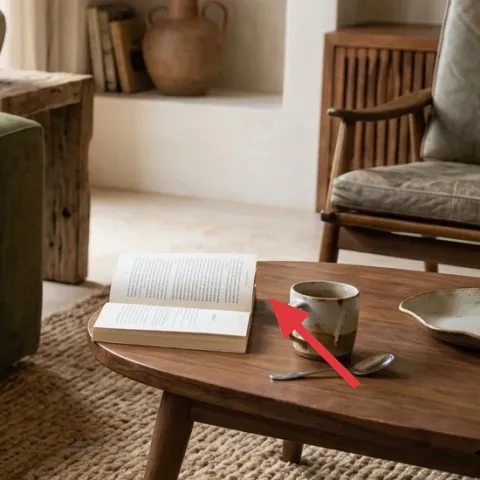
The wooden coffee table top is the warm anchor in this scene—books sit open, a ceramic mug is nearby, and the whole surface looks “lived in” without being cluttered. It also connects the room’s light wood floor to the rest of the palette, so the rug and sofa don’t have to do all the heavy lifting. The obvious alternative is buying a new table outright, but you can get much closer to the photo by refining the finish. Here the trade-off is time: staining takes prep, but it’s still a weekend project compared to shopping for an exact match.
Make it instead of buying it
DIY-match the wooden coffee table finish by sanding lightly and applying a warm stain so it echoes the room’s wood tones.
Materials
- Wood stain (warm tone) — 1 small can — hardware store — $25
- Wood conditioner — 1 can — hardware store — $15
- Sandpaper assortment (120/220 grit) — 1 pack — hardware store — $20
- Tack cloth — 1 pack — hardware store — $8
- Foam brush or stain brush — 1 pack — hardware store — $6
Steps
- Sand the table surface with 120-grit to smooth and scuff (keep edges even).
- Wipe dust thoroughly with a tack cloth.
- Apply wood conditioner following the grain direction.
- Let conditioner dry to the label timing, then lightly scuff if recommended.
- Stain the tabletop in thin, even coats, brushing with the grain.
- Wait for the first coat to dry, then add a second coat if you need deeper tone.
- Let the final coat dry fully overnight.
- Re-check the finish and remove any tacky residue with a clean cloth if needed.
- Use the table after cure time listed on the stain label.
Total DIY cost: $74 — saves about $106 over buying.
Match wood undertones, not just wood color
Warm stains keep the ceramics and lamp shade from looking disconnected from the floor.
Layer 5 — Table lamp with beige fabric shade ($80) Soft warm light that flatters olive
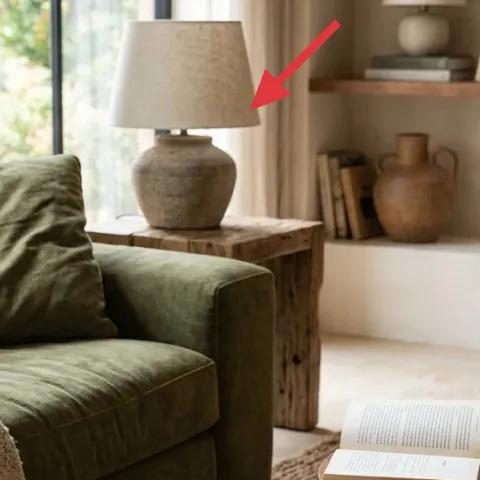
A table lamp with a beige fabric shade is the difference between “daytime nice” and “evening usable.” The shade pictured reads warm and diffused, so the olive sofa and woven rug look richer instead of shadowy. The trade-off is bulb choice: a harsh cool bulb makes fabric shades look dull and brings out gray tones in the rug. A warm, dimmable LED helps the whole vignette feel cohesive, especially when the coffee table has a book stack and ceramic mug that need visual clarity at night.
Use the lamp to set the room’s highlight height
Keeping the light centered around sitting height makes the shelf and chair area feel intentional.
Layer 6 — Wall shelf ($120) Styling space for ceramics and books without clutter
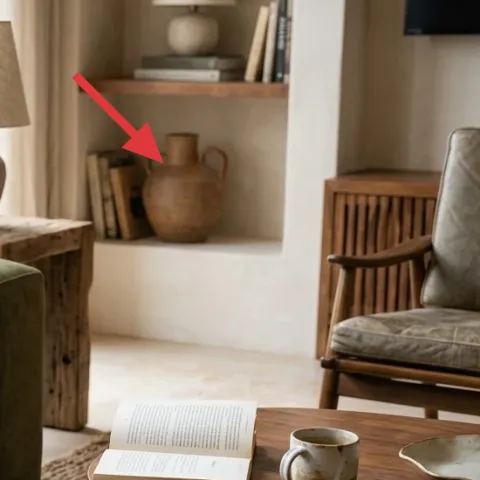
The wall shelf is doing subtle work: it lifts the ceramics and books up where they can frame the room, instead of stacking everything on the coffee table. In the photo, the shelf carries a ceramic vase and a ceramic jar next to a few books, which creates height variation over the chair-and-table zone. The trade-off is restraint—overfill it and it turns into “things,” not composition. Keeping it to a small grouping gives you that calm, curated vibe with minimal effort.
Cluster by height, not by category
Mix a taller vase with flatter book stacks so the shelf looks layered from across the room.
Layer 7 — Ceramic dish ($25) A small landing spot that makes the table feel used
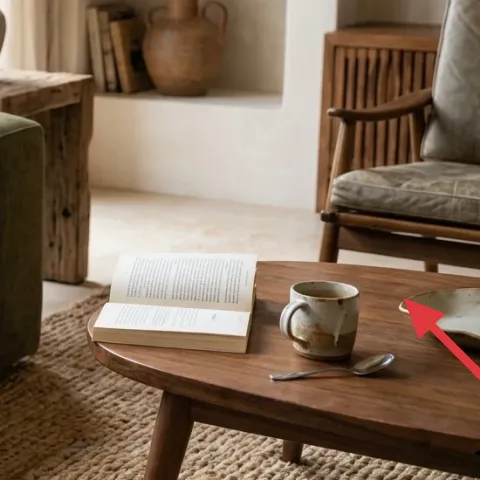
That ceramic dish on the coffee table is the tiny detail that makes the whole reading corner feel real. It gives the mug and book stack a “home” so the surface doesn’t look like it’s waiting for something. The trade-off is scale: a dish that’s too large dominates the table; too small and it’s just another object without purpose. Here the ceramic dish works because it matches the room’s warm, earthy materials and keeps the coffee-table styling grounded.
Let one surface piece do the grouping
If you already have a dish, you can keep fewer accessories and still get a complete look.
The cost, layer by layer
| Layer | Item | Cost |
|---|---|---|
| 1 | Woven area rug 5×7, natural neutral | $150 |
| 2 | Olive throw blanket | $40 |
| 3 | Olive throw pillow cover | $18 |
| 4 | Wooden coffee table refinish + finish (DIY ~$74) | $180 |
| 5 | Table lamp with beige fabric shade | $80 |
| 6 | Wall shelf (with mounting hardware) | $120 |
| 7 | Ceramic dish | $25 |
| Total | $613 | |
If you want a cheaper variant, keep the same layout and palette but downgrade the lamp shade or choose a smaller rug size. You can also skip the ceramic dish and use one less accessory on the coffee table to keep the look cohesive while staying under $700.
What worked, what didn't (across the whole room)
The win here is the repeat of warm materials: olive textiles, a woven rug, and warm wood around the coffee table. The room feels calm because the accessories stay grouped, not scattered. The lighting choice also matters—soft beige diffusion makes the olive sofa look richer instead of flat.
What worked
- The woven area rug anchors the seating zone so the olive sofa reads intentional, not accidental.
- Layering an olive throw blanket and an olive throw pillow keeps contrast within one color family.
- The wooden coffee table top supports books, a ceramic mug, and a ceramic dish without cluttering.
- The beige fabric lamp shade adds warm diffusion that flatters both rug texture and upholstery.
- The wall shelf gives vertical interest using ceramics and books, so the room stays balanced.
- Small functional decor (ceramic dish) makes the coffee-table styling look lived in.
What didn't
- A too-cool bulb would make the beige shade look gray and wash out the olive textiles.
- Overfilling the wall shelf turns it into storage instead of composition.
- Picking a pillow cover with a mismatched olive undertone makes the sofa feel disjointed.
- A rug with the wrong warmth level makes the wood coffee table look less cohesive.
What we'd skip if we did it again
Skip replacing the olive sofa or chair first. The quickest upgrade is texture and placement—rug, blanket, and pillow—because they change how the room reads without blowing the budget.
Skip a harsh, bright bulb choice for the table lamp with a beige fabric shade. Even a good lamp can look flat if the color temperature is too cool for fabric diffusion.
Skip over-styling the coffee-table surface. With the ceramic mug, book stack, and ceramic dish already present, fewer objects reads calmer and helps the wall shelf and rug do their jobs.
Frequently asked
How long does this living room refresh take?
Shopping and swapping textiles and decor usually takes 1–2 hours. Installing a wall shelf can take another 1–2 hours, depending on your wall type. The coffee-table DIY is the schedule wildcard: plan for a morning of sanding and staining, plus overnight drying and label-based cure time.
If I rent, can I still get this look?
The olive sofa and woven rug are already renter-friendly because you can swap textiles and keep your layout. For the wall shelf, choose a removable mounting approach if your landlord allows it, or place a shelf-free styling arrangement using the coffee table and chair area while you wait.
What if my room is bigger or smaller than the photo?
In a smaller living room, go slightly smaller on the woven area rug and keep the throw blanket and pillow scaled so they don’t overwhelm the sofa. In a larger room, keep the same olive-and-cream palette but add one more warm-wood touch (like an extra ceramic object) to avoid the scene feeling too airy.
Where should I shop for these pieces without overpaying?
Look for the woven area rug and throw blanket first, then build outward: once you match undertones, lighting and ceramics become easier. For the table lamp with the beige fabric shade, compare sales on lamp bases and shades separately so you can get warm diffusion for less.
What’s the biggest mistake people make with this style?
Mixing olive shades that aren’t in the same undertone is the most common issue. It makes the sofa look “close but not right.” Another frequent slip is overfilling the wall shelf, which turns the composition into visual clutter.
More in Living Room
How to build an olive-and-cream living room refresh for $700
A calm olive-sofa reading corner, pulled together with a woven rug, warm wood coffee table, and a beige-shaded table lamp. This living room…
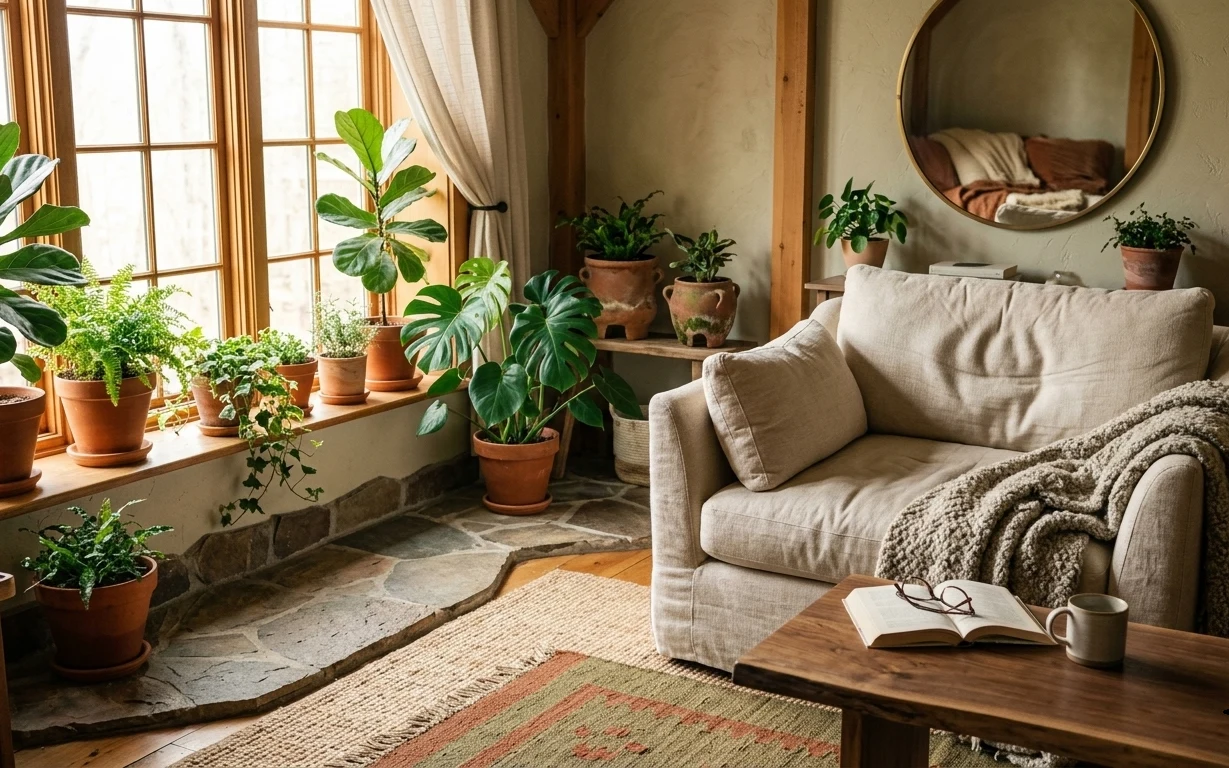
Green-and-cream living room seating area for $700
A renter-friendly refresh for a sunlit living room seating area built around one patterned rug, a cream sofa, and layered greenery. Total c…
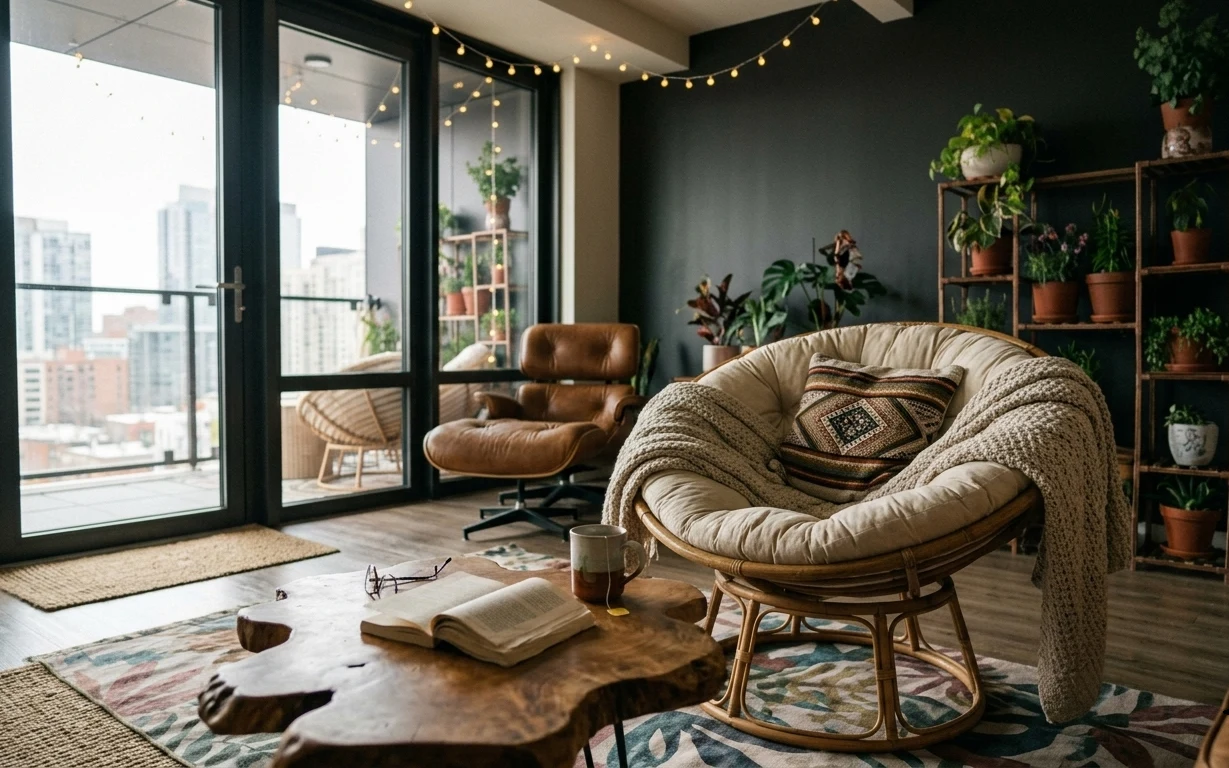
300 living room refresh ideas for a move-friendly seating corner
A sunlit living room seating corner in rich green and natural tan can be re-made for $300 using 7 move-friendly swaps. The biggest visual w…