- Best for
- Sunlit living rooms with plants
- Cost
- $655 (about $700 ceiling)
- Difficulty
- Easy (mostly swaps + styling)
- Time
- One weekend afternoon
Why sunlit terracotta accents are the living room seating area of 2026
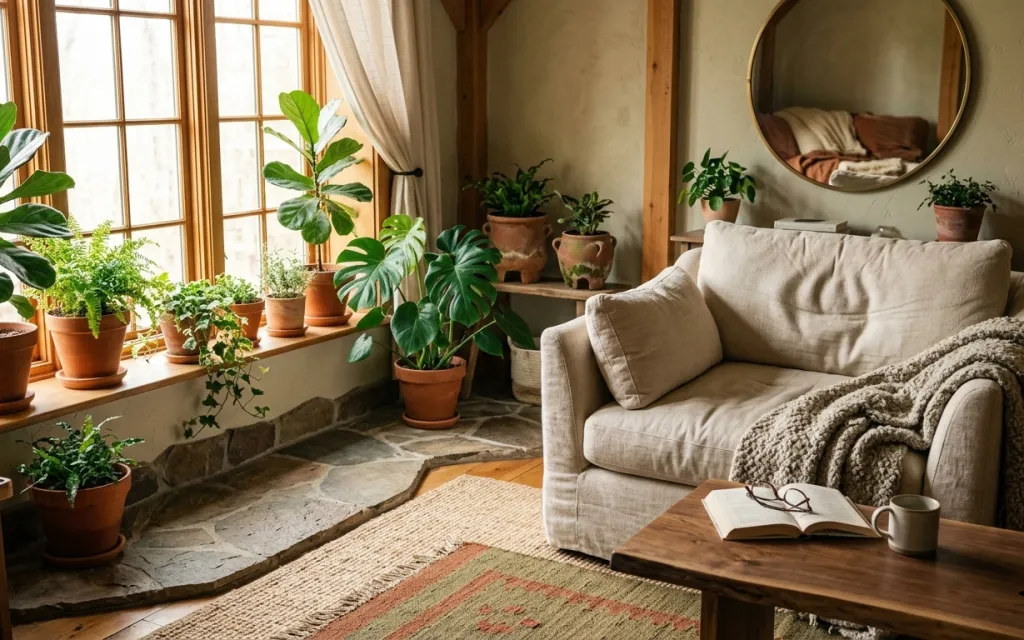
Natural window light is doing most of the heavy lifting here, and the styling reads “intentional” without being fussy. Start with a patterned jute-style area rug to bring texture to the stone floor, then layer an oatmeal knit throw over the cream sofa cushions for that lived-in softness. The warm wood coffee table keeps the palette grounded, while the round mirror adds a bright reflective hit at eye level. Finally, the grouped terra-cotta planter pots turn the windowsill into a visible design feature—like a seasonal set you can rearrange.
I used to overcomplicate plant styling by trying to make every pot match. This photo reminded me that the real move is repeating the same pot tone (terra-cotta) and letting the leaf shapes do the work. Years ago I also picked a “perfect” rug and then hated how it looked next to the stone floor—this patterned rug is far more forgiving. Once the base is textured and warm, everything else just has to repeat those materials in smaller doses.
Layer 1 — area rug (jute-style, patterned) ($150) Warm texture for the stone floor
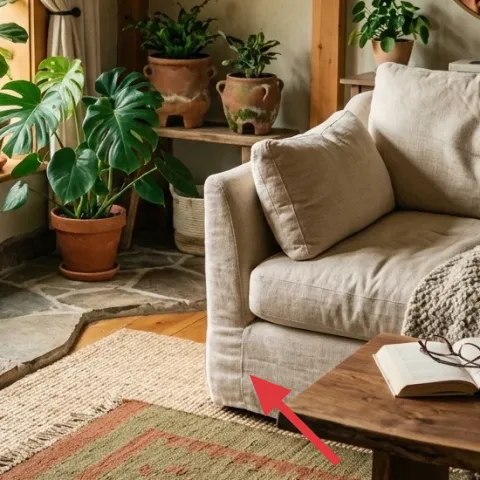
This jute-style patterned area rug is the anchor under the coffee table and sofa, and it’s what keeps the whole setup from feeling too bare against the stone floor. I like that the pattern has enough variation to hide everyday footprints and slight color shifts from plant shadows. If you go with a plain beige rug, you’ll lose the “designed” feel and the plants can look like they’re floating. The trade-off: textured rugs take a little more vacuuming attention, but they’re also the easiest layer to swap when you move.
Choose a pattern that matches the pot palette
Warm rug tones next to terra-cotta planters make greenery look richer, not washed out.
Layer 2 — throw blanket (knit, oatmeal) ($25) Softer edges on a cream sofa
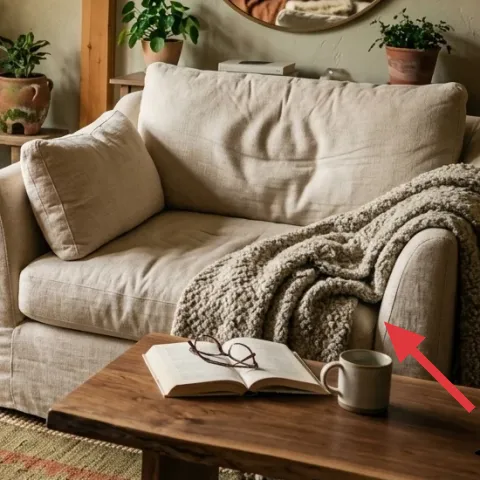
The oatmeal knit throw draped over the sofa arm adds a second texture right where your eye lands first, especially in bright daylight. It keeps the sofa from reading too flat (even though the sofa cushions look neatly tailored). Going for a smooth throw would be an “extra” instead of a texture layer, and the room would feel cooler by comparison. This is also one of those renter-friendly pieces that packs neatly—fold it into a closet and it’s ready for the next living room. Let the knit hang in a slightly uneven fold for that effortless structure.
Use it to repeat “warm” without changing color
Oatmeal reads close to cream, but the knit texture makes it feel warmer than it looks.
Layer 3 — sofa (cream linen look) ($250) The base that makes plants feel curated
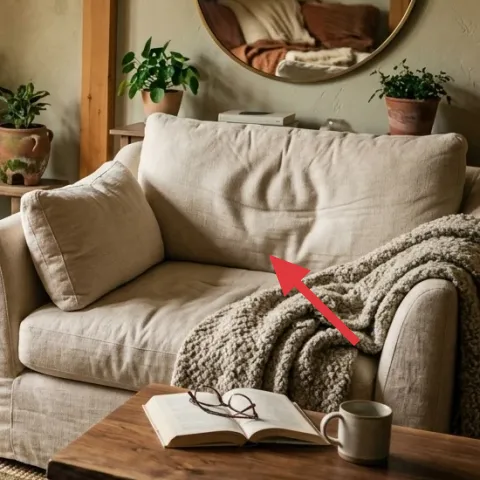
This cream linen-look sofa is doing the role of a neutral backdrop, so the terra-cotta pots and sage-green leaves can stay the focal point. If you had a darker sofa, you’d likely need a heavier-duty rug and brighter wall accessories to keep the room from feeling closed in. With a lighter sofa, the coffee table’s warm wood and the round mirror’s glow feel cohesive instead of competing. The trade-off is showing a bit more dust and pet hair than darker upholstery, so a quick brush/vac routine matters. Pick a “linen-look” fabric if you want that airy, no-fuss texture.
Skip slick, high-shine upholstery
A shiny fabric can reflect window glare and make the whole seating area look harsher.
Layer 4 — coffee table (warm wood) ($100) A grounded surface for books and mugs
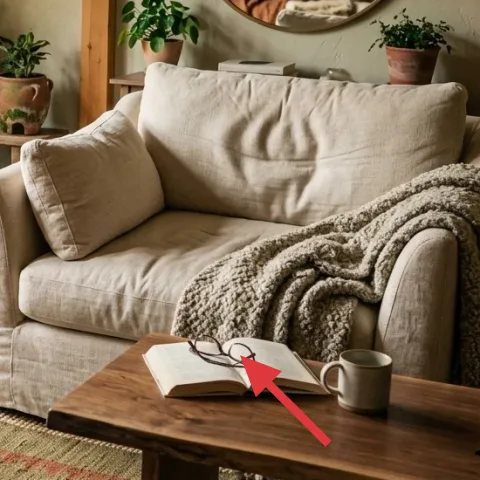
The warm wood coffee table adds a second material note—wood next to stone and linen—so the palette feels layered instead of monochrome. In this photo, the table surface also gives you a “styling stage” for a simple book-and-glasses moment and a mug, which makes the room look lived-in rather than staged. The temptation is to choose a table that’s too light or too shiny, but this tone is what plays nicely with terra-cotta and cream. Trade-off: wood surfaces show ring marks, so use coasters if the space is high-use.
Keep styling low and horizontal
A couple flat items on the tabletop look better than tall stacks beside the sofa arm.
Layer 5 — round wall mirror (brass tone) ($60) More brightness at eye level
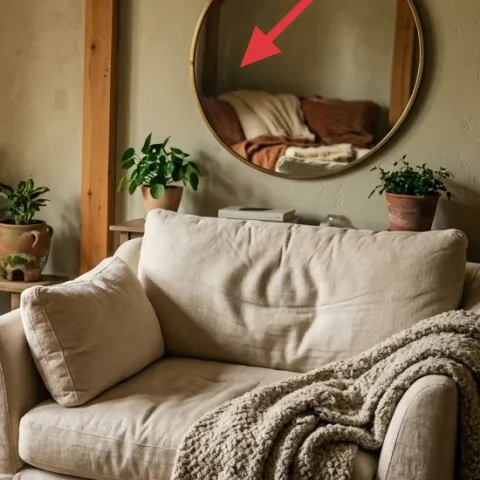
The round mirror with a brass-tone edge pulls light across the room and makes the sofa area feel bigger than it is. Placed across from the window wall, it also helps the greenery feel more “connected” to the seating area. A rectangular mirror can work, but the rounded shape softens the hard lines of stone and window framing—especially when the sofa is upholstered with rounded cushions. If you’re renting, treat this as a removable install: use Command-compatible methods that match the mirror weight and follow the manufacturer limits.
Position is doing half the decorating
Mirrors placed at eye level read like art; mirrors placed low read like clutter.
Layer 6 — indoor plant in a terra-cotta pot (tall leaf variety) ($30) Height that makes the sofa feel full
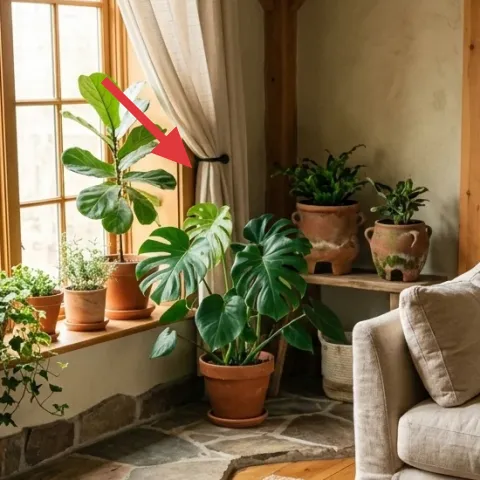
A tall indoor plant in a terra-cotta pot creates vertical movement next to the sofa, so the corner doesn’t feel like it ends at the cushions. This variety of leaf shape also adds visual rhythm: the big, rounded leaves echo the softness of the throw blanket and rug texture. Instead of buying multiple small plants (which can look scattered), go for one confident plant with a strong silhouette and pair it with smaller pots nearby. Trade-off: tall plants take a little more time to rotate toward the light, but it’s an easy weekly habit when the windows are close.
Rotate plants every week
Turning the pot keeps the leaves evenly shaped instead of leaning toward the brightest pane.
Layer 7 — terra-cotta planter pot set (grouped cluster) ($40) A repeatable pot tone for the whole corner
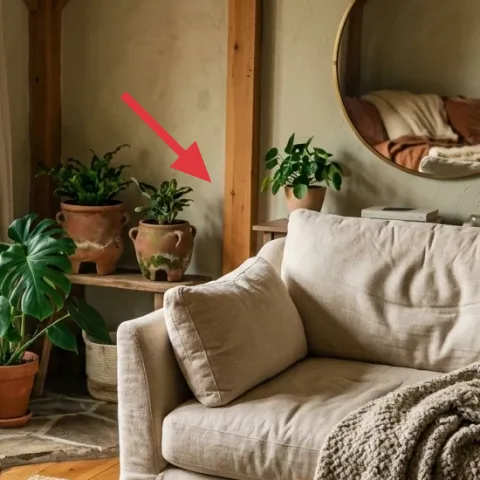
This clustered set of terra-cotta planter pots is what makes the greenery feel styled instead of accidental. Grouping pots at different heights makes the window ledge look intentional, and terra-cotta ties the rug, sofa, and warm wood together without adding more colors to manage. The obvious alternative is matching everything perfectly, but that often looks static—matching can erase the handmade vibe. The better route is consistent pot tone with slight variation in size and plant shapes, so the overall look stays cohesive even as you rearrange plants seasonally.
Make it instead of buying it
Paint a small set of terra-cotta pots in warm, muted tones so they blend with a cream-and-stone palette like the grouped planters in the photo.
Materials
- Terra-cotta pots — 3 small pots — $18
- Indoor acrylic paint (warm neutral set) — 1 small bottle — $9
- Craft sponge/brush — 1 pack — $3
Steps
- Wipe the pots clean and completely dry so paint grips evenly.
- Lightly plan a simple pattern (one pot solid, one pot mottled, one pot with a soft edge).
- Dip and dab acrylic paint with the sponge for a textured, terracotta-friendly finish.
- Use the brush to add thin bands near the rim for continuity across the set.
- Let the first layer dry fully before adding a second, lighter pass.
- Apply a final coat only where the terra-cotta shows through (keep it subtle).
- Let the paint cure overnight in a dry spot before styling with soil and plants.
- Rinse the tools with water right away so they don’t harden mid-project.
Total DIY cost: $30 — saves about $10 over buying.
The cost, layer by layer
| Layer | Item | Cost |
|---|---|---|
| 1 | Area rug (jute-style, patterned, approx 5×7) | $150 |
| 2 | Throw blanket (oatmeal knit) | $25 |
| 3 | Cream linen-look sofa | $250 |
| 4 | Coffee table (warm wood) | $100 |
| 5 | Round wall mirror (brass tone edge) | $60 |
| 6 | Indoor plant in a terra-cotta pot (single tall plant) | $30 |
| 7 | Terra-cotta planter pot set (grouped cluster) | $40 |
| Total | $655 | |
A cheaper variant keeps the same layout but swaps one splurge. For example, choose a smaller-area rug (around 5×7) and use a lightweight round mirror, then spend the saved amount on an extra mid-size terra-cotta pot for the windowsill.
What worked, what didn't (across the whole room)
The overall effect works because the texture stack is consistent: rug texture, knit throw texture, and linen-look upholstery all repeat in warm neutrals, while greenery provides the color. The mirror helps the brightness stay “open” even with many plants in one corner. The main drawback is upkeep—lots of leaves and a light sofa mean more routine cleaning than darker, smoother surfaces.
What worked
- The jute-style patterned rug grounds the stone floor and looks intentional under a coffee table.
- Oatmeal knit throw adds softness where the sofa reads most structured.
- Warm wood coffee table repeats the same earthy notes as terra-cotta planters.
- Round mirror reflects window light and keeps the seating area from feeling closed in.
- Grouped terra-cotta pots make greenery look curated instead of scattered.
- Tall plant height balances the sofa cushions so the corner feels “finished.”
What didn't
- Light upholstery shows dust faster, especially near sunny windows and high-traffic paths.
- Textured rugs need more frequent vacuuming to stay looking clean.
- Plants require regular rotation toward the window so they don’t lean.
- If pots don’t match in tone (even loosely), the greenery can look like random clutter.
What we'd skip if we did it again
Skip a perfectly matchy “set of everything” approach. When every pot, plant, and accessory is the same shade and size, the window ledge stops feeling styled by life and starts feeling like storage. Keeping one repeated tone (terra-cotta) while varying leaf shape and pot sizes makes the corner more believable.
Skip a shiny or very high-contrast rug. Against stone floors and bright windows, a glossy texture reads busy, and the pattern competes with the greenery. A matte jute-style rug with warmer undertones is far more forgiving and stays flattering under daylight.
Skip an install that’s too permanent. For renters, the round mirror should be removable using renter-safe hanging methods that match the mirror weight. If the mirror placement can’t be adjusted at move-out, you lose one of the biggest contributors to this look: bright bounce light around the sofa.
Frequently asked
How long does this living room refresh take?
Most of the time is styling, especially the plant group on the windowsill and deciding where the rug sits relative to the coffee table. Plan for about 3–5 hours if the sofa and table are already in place. If you’re DIY-painting the terra-cotta pots, give yourself an extra day for dry/cure time so everything is ready before you load the soil.
What if I’m not allowed to hang anything on the wall?
This look still works without the round mirror. Swap it with another renter-safe reflective surface you can place on a shelf or floor—just keep it round to maintain the soft lines. The rug, oatmeal throw, and plant grouping do the heavy visual lifting, so the room stays cohesive even with less wall decor.
Can I make the rug smaller if my living room is tight?
Yes—go down a size, but keep a consistent rule: the rug should extend far enough that the coffee table isn’t “floating” above the floor. If the sofa needs to sit fully on the rug, choose the largest size that fits and center it under the seating area. The goal is the same anchored feeling; it’s just scaled down.
Where should I shop for renter-friendly versions of these pieces?
For the rug and throw, look at home stores with easy returns and clear measurements. For the sofa and coffee table, thrift options often work if you prioritize fabric that tolerates sun and dust. Terra-cotta planters and indoor plants are easiest to source locally, and DIY-painting uses inexpensive acrylic supplies.
What’s the biggest mistake in a cream-and-terracotta plant corner?
Buying too many different pot colors at once. When the pots don’t share a warm terracotta tone, the greenery looks scattered instead of curated. Pick one pot tone to repeat, vary sizes, and let leaf shapes do the color work. That one choice makes the whole corner feel designed.
More in Living Room
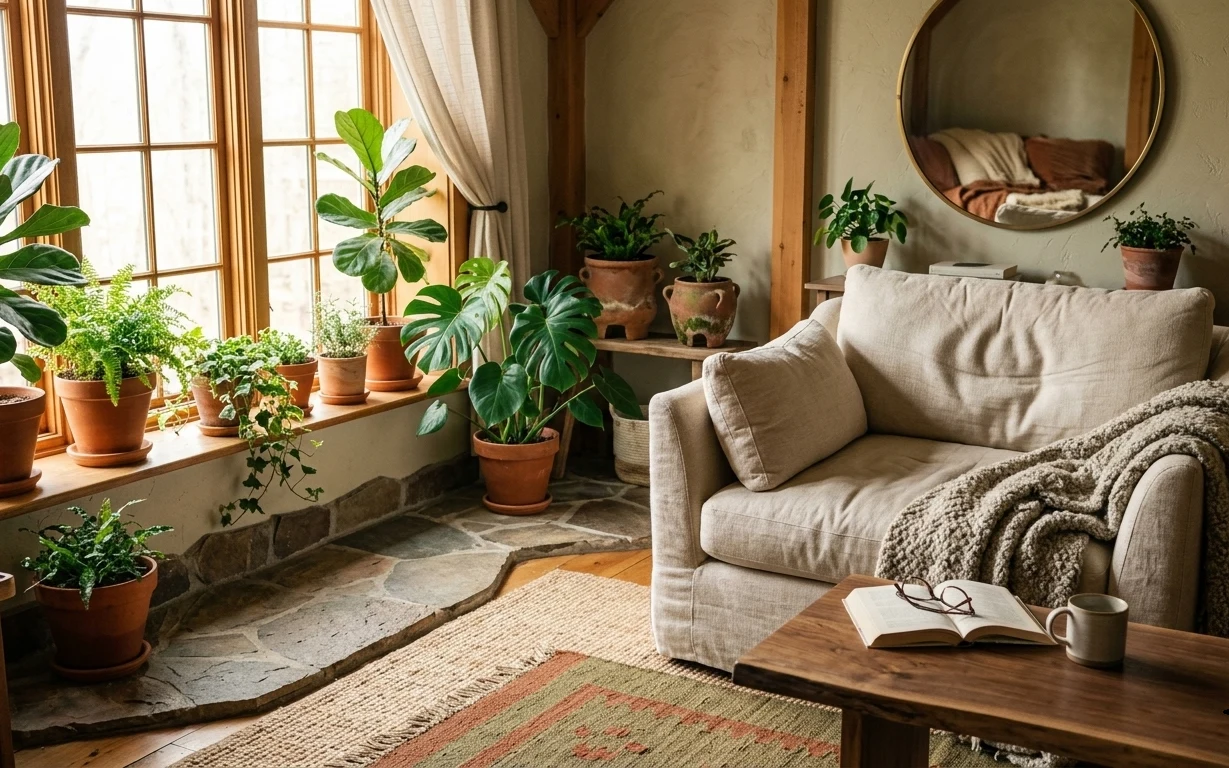
Green-and-cream living room seating area for $700
A renter-friendly refresh for a sunlit living room seating area built around one patterned rug, a cream sofa, and layered greenery. Total c…
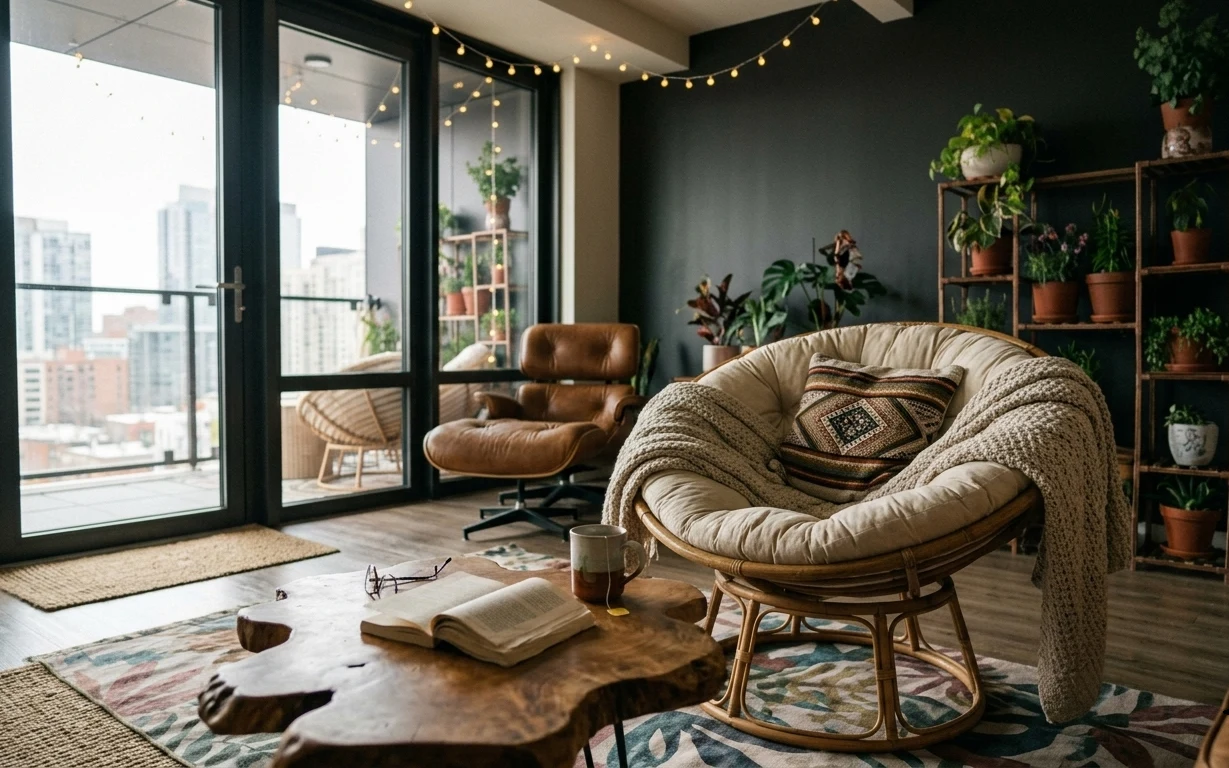
300 living room refresh ideas for a move-friendly seating corner
A sunlit living room seating corner in rich green and natural tan can be re-made for $300 using 7 move-friendly swaps. The biggest visual w…
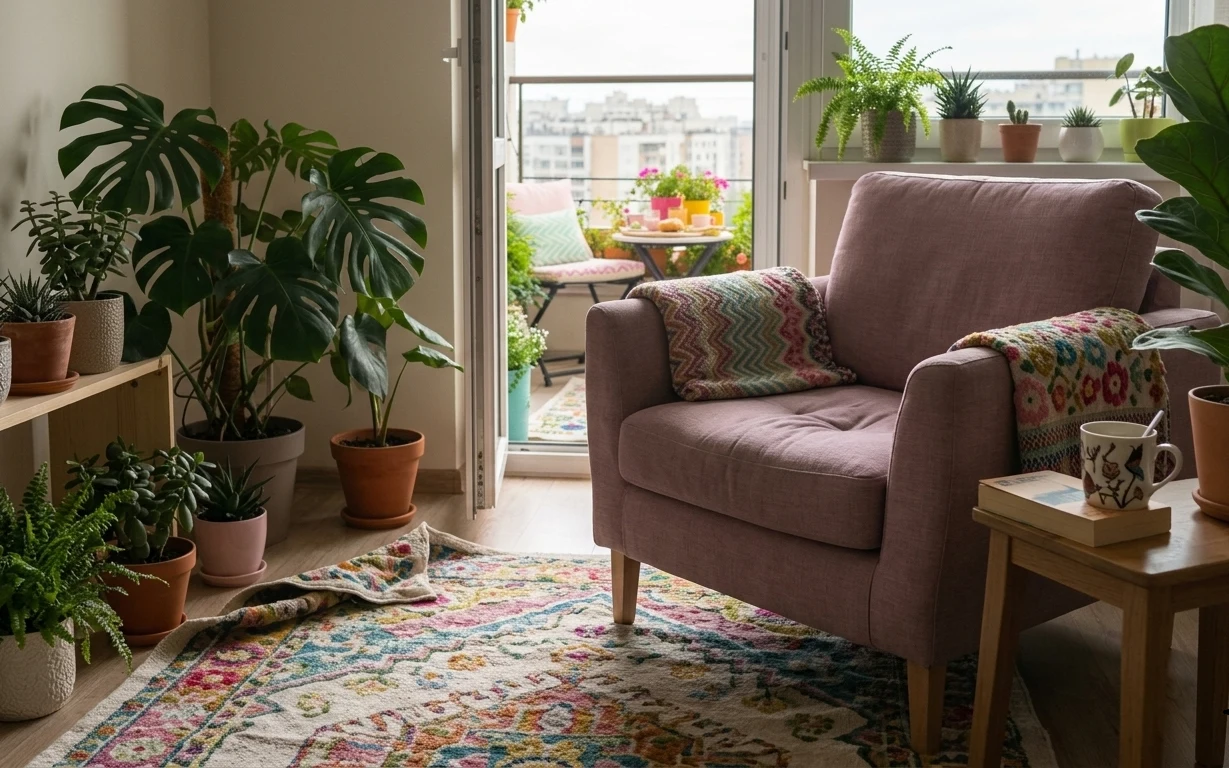
How to refresh a living room for under $500
A renter-friendly living room refresh for under $500: a bold multi-color rug, a patterned throw, and movable plant styling around the sofa …