- Best for
- quick renter refresh with bold textiles
- Cost
- under $500
- Difficulty
- easy (mostly buying + styling)
- Time
- about a weekend
Why an olive-and-green palette is the living room seating area of 2026
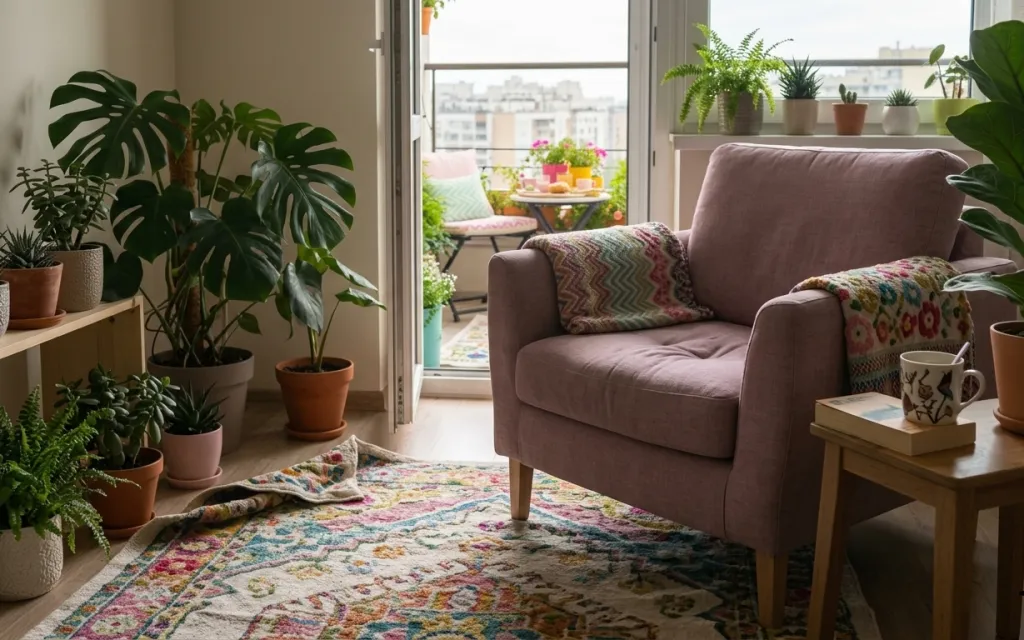
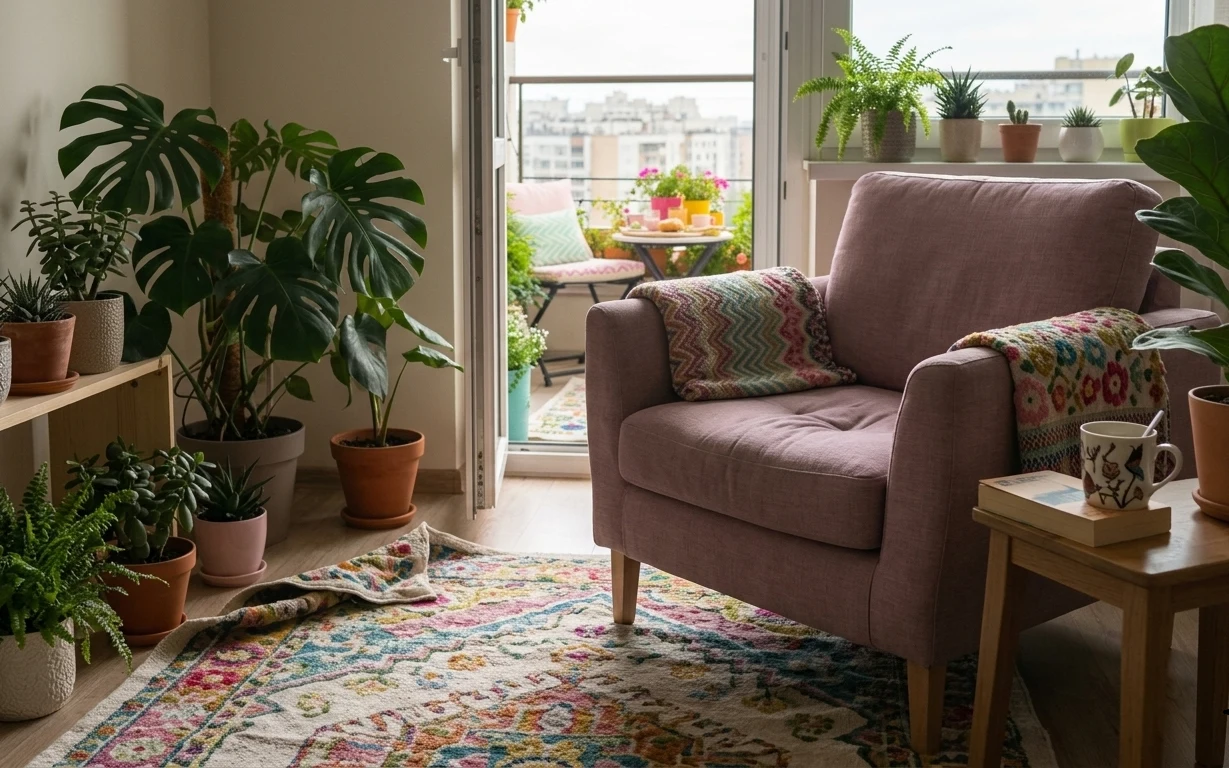
In the photo, the sofa reads warm and grounded, but the look doesn’t feel heavy because the rug brings a lively, multi-color pattern across the wood floor. The patterned throw draped over the arm adds movement, while the decorative pillow keeps the palette from looking random. On the plant side, the monstera-style leaves and small pots give that “window garden” feeling without needing any wall fixtures. This is achievable for renters because every piece here is freestanding or textile-based—swap it in and out with the lease.
The first time I tried a rug like this, I picked one “safe” color family and everything looked muted against my own beige sofa. What changed my mind was seeing how strongly the palette repeats: once the throw and pillow echoed the rug’s tones, the room felt intentional instead of accidental. I also learned not to over-style the coffee-table surface—one small ceramic moment is plenty when the plants already bring drama.
Layer 1 — multi-color area rug ($200) Pattern you can build the whole palette from
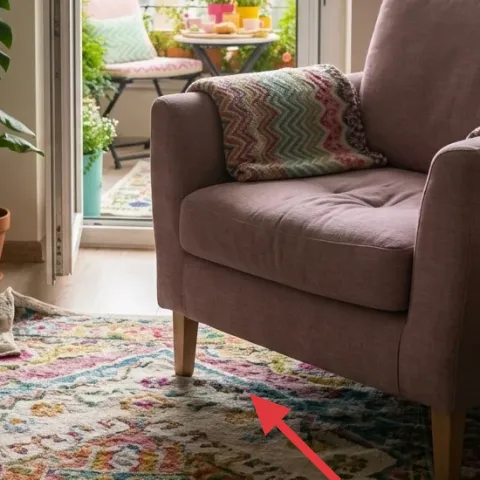
This multi-color area rug anchors the seating area on the wood flooring, and it does the color-matching work for you. Because the pattern already contains greens, warm neutrals, and pops of brighter tones, the rest of the styling can stay simple: drape a throw, add a pillow, and the room starts to read as one story. The trade-off is that a bold rug means you’ll want the sofa and side table to stay in quieter finishes so the pattern doesn’t compete. If the room feels busy, go for textiles with fewer shapes and more solid blocks in the same colors.
Pick the rug first, then shop your pillow tones
When you choose the rug’s dominant hues, the pillow and throw stop feeling like separate purchases.
Layer 2 — patterned throw blanket ($45) Light texture over the sofa arm
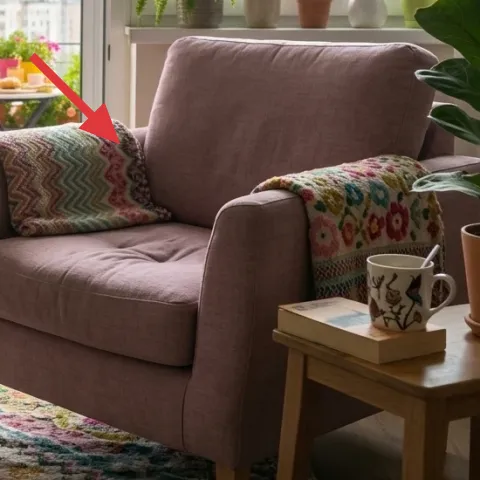
The patterned throw blanket sits over the sofa arm in the hero image, and that placement is key: it reads like casual styling instead of a folded accessory. The fabric adds softness against the sofa’s warm upholstery and gives the eye a place to land between the rug pattern and the plant greenery. I like this over adding another pillow because it covers more “surface area” for less clutter. The main trade-off is care—textured throws can snag, so choose a blend that tolerates everyday living if you have pets.
Why an arm drape works
Arms are the natural sightline in a seating area, so a throw shows up even when you’re not actively styling.
Layer 3 — dyed decorative pillow cover ($30) Match the rug without hunting a perfect print
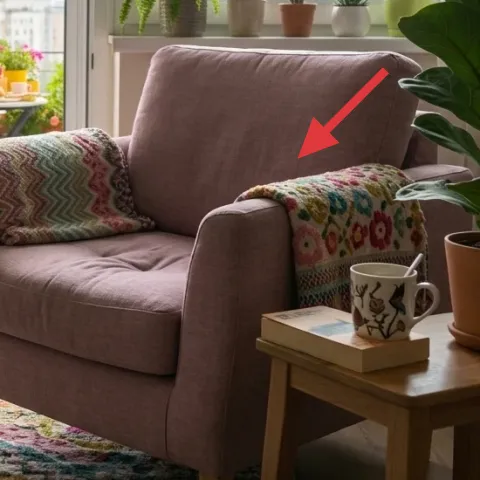
A decorative pillow cover in a rug-adjacent color makes the pattern feel curated. In the photo, the pillow sits near the center of the couch back, so it acts like a “color bridge” between the rug and the sofa’s warm beige tone. Buying a brand-new exact match can turn into a scavenger hunt, which is why a dyed cover is such a renter-friendly shortcut. The trade-off: dyeing takes a little planning on fabric type, so start with cotton/poly blends that take dye reliably.
Make it instead of buying it
DIY dyed pillow covers let you pull a specific rug tone into your sofa styling without trying to find an identical pattern.
Materials
- Fabric dye (for cotton) — 1 kit — craft store — $10
- Plain cotton pillow cover — 1 cover — home goods store — $6
- Rubber gloves — 1 pair — hardware/discount store — $4
- Plastic tub/liner — 1 — around the house — $0
Steps
- Choose the closest rug tone family (green, warm neutral, or a multi-color pop) and pick dye shade accordingly.
- Pre-wash the cotton cover to remove sizing so the dye grabs evenly.
- Mix dye with hot water in a tub liner, following the kit’s ratio for your target depth.
- Soak the cover, then keep it submerged and move it gently to prevent blotches.
- Rinse in cool water until it runs clear, then squeeze lightly (don’t wring hard).
- Air-dry fully, then press if needed for a smooth finish before putting it on the pillow.
Total DIY cost: $20 — saves about $10 over buying.
Layer 4 — wood side table ($80) Put your “still life” within reach
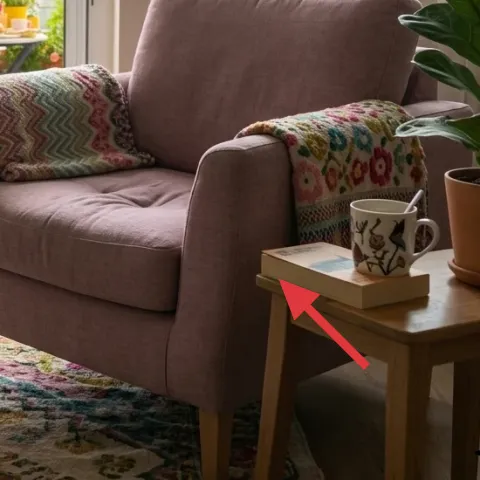
The wood side table in the hero image gives you a practical styling platform right next to the sofa, without making the room feel busy. Its simple shape keeps the visual weight lower than a tall cabinet, which matters when you’re already dealing with a patterned rug and big plant leaves. I’d rather style a single side table than add wall shelving because it stays moveable at lease end. The trade-off is that surfaces can look cluttered fast—stick to one functional item plus one decorative grouping.
Use the table height as a styling boundary
If your decor sits within a tight band on top, it looks intentional instead of scattered.
Layer 5 — ceramic mug and small decor ($35) A small object that warms the scene
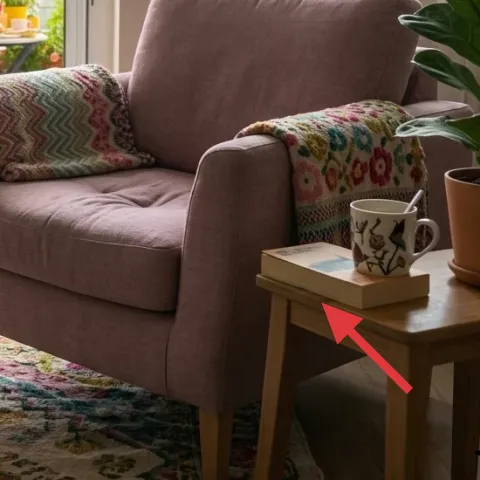
On the side table, the ceramic mug and small decor add a personal, everyday note that makes the plants and textiles feel lived-in. This is the kind of detail that reads from across the room, especially with the window light behind the plants. I’m choosing ceramic here instead of a larger centerpiece because renters can swap it out seasonally without changing anything built-in. The trade-off is scale: too many items start fighting with the rug pattern, so keep it to one mug/ceramic moment plus one nearby paper or tray-like organizer.
Don’t stack too high on the table
If decor rises above the sightline of the mug, the whole vignette starts to look accidental.
Layer 6 — monstera plant ($40) Big leaves for instant depth near the window
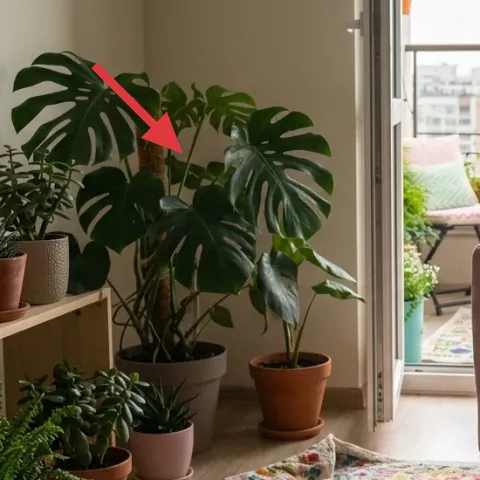
A monstera plant brings the “volume” that small plants can’t—its cut leaves create a lace-like texture that looks great against plain walls and warm sofa upholstery. In the hero, it sits on the left side near shelving, so it frames the seating area and balances the brighter open doorway in the background. I like this over adding another small pot because one larger statement plant reads more intentional and takes less arranging effort. The trade-off is space: give it room to spread so the leaves can actually look full.
Let the plant shape lead
Choose a plant with interesting leaf form; the styling becomes easier because the silhouette does work for you.
Layer 7 — small potted plant ($20) Finish with one extra “green note”
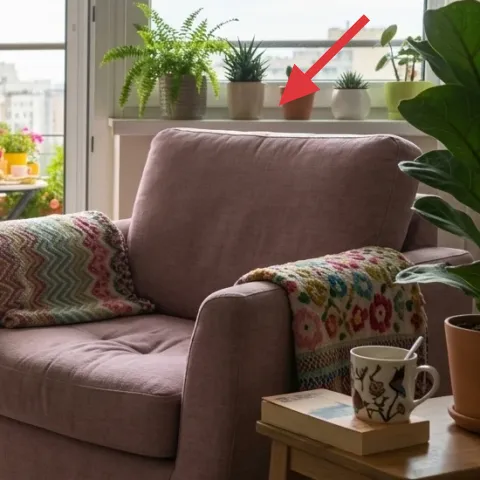
A small potted plant on the right side keeps the greenery from feeling one-sided. In the photo, those smaller pots and leaves help connect the plant shelf area to the sofa/side table side, so the room feels layered rather than placed. This is a cheaper swap than buying a second statement plant, and it still adds freshness to the color story. The trade-off is that small plants need occasional light rotation; otherwise they’ll tilt and the leaves can start to look uneven.
Rotate small pots weekly for symmetry
Quick turns keep leaf shape balanced so the room looks intentional.
The cost, layer by layer
| Layer | Item | Cost |
|---|---|---|
| 1 | Multi-color area rug (5×7) | $200 |
| 2 | Patterned throw blanket | $45 |
| 3 | Dyed decorative pillow cover (DIY equivalent retail price) | $30 |
| 4 | Wood side table | $80 |
| 5 | Ceramic mug and small decor | $35 |
| 6 | Monstera plant | $40 |
| 7 | Small potted plant | $20 |
| Total | $450 | |
If you want a cheaper variant, swap the multi-color rug for a smaller size or a flatweave runner, keep the throw and one dyed pillow cover, and choose one plant instead of two. That keeps the “color bridge” and softness while trimming the most expensive anchor.
What worked, what didn't (across the whole room)
The biggest win is that the rug and textiles repeat a tight set of colors, so the room feels assembled even when the styling is casual. The plants also work because they’re varied—one larger leaf form plus a couple smaller pots—so the eye keeps moving. The only miss to watch for is over-styling the side table when the rug already has a lot going on.
What worked
- The multi-color rug anchors the seating area and makes the sofa feel more intentional.
- Draping a patterned throw over the sofa arm keeps the look styled without extra clutter.
- The dyed pillow cover approach lets you echo rug tones without chasing an exact print.
- The wood side table gives a practical place for one ceramic moment near the seating.
- Monstera leaf shape adds depth and balances open-window brightness.
- Smaller potted plants prevent the greenery from feeling one-sided.
What didn't
- Stacking too many objects on the side table makes the rug pattern feel louder than it needs to.
- Choosing a pillow shade that doesn’t appear in the rug can make the sofa look mismatched.
- Using only small plants can flatten the room compared to the fuller monstera silhouette.
- Skipping a repeat of color across throw and pillow can make the palette look accidental.
What we'd skip if we did it again
Skip buying a matching pillow set that tries to replicate the rug pattern exactly. With a busy rug, exact matches can look manufactured, while a dyed cover that pulls one rug tone feels calmer and more cohesive.
Skip adding a second statement tabletop decor piece right next to the mug. A single ceramic moment plus a simple grouping reads intentional; more than that starts to compete with the throw and the rug.
Skip relying on only small plants for visual depth. Even one larger monstera-style plant gives a layered silhouette that makes the whole seating area feel finished without wall changes.
Frequently asked
How long does a refresh like this usually take?
Most of the time goes into rug placement (including living with it for a day) and doing a final pass on textile draping. If you’re dyeing a pillow cover, add an extra afternoon for washing, dyeing, rinsing, and letting it dry. Buying and setting the plants can be done in under an hour once you decide where each pot will sit.
Will this work in a small living room or studio?
Yes—keep the rug size as large as you can comfortably fit and anchor the sofa so the front legs sit on the rug. Instead of multiple small pots, use one larger plant plus one small accent so the seating area doesn’t feel crowded. For textiles, stick to one throw and one pillow cover colorway so the pattern stays readable.
What if I can’t dye a pillow cover right away?
No problem: buy a plain cotton cover in a neutral tone and choose a dye shade slightly lighter than your target. You can also buy a solid-color replacement cover that pulls directly from the rug’s dominant green or warm neutral. The goal is the same—color repetition—so the rug reads intentional with the sofa.
Where should I shop for the rug and throw if I want renter-friendly options?
Look for rugs with return policies and low-shedding fibers, especially if you’re moving soon. For throws, go for machine-washable blends that won’t snag easily. Garden centers or big-box stores are often the easiest place to find a monstera-style plant quickly—just inspect leaf quality before bringing it home.
What’s the biggest mistake people make with patterned rugs?
They either pick textiles in unrelated colors or they add too many decorative objects on top of the pattern. In this setup, the “fix” is repetition: let the rug do the heavy lifting, then echo its tones with the throw and one pillow cover. Keep tabletop styling minimal so the rug remains the focal point.
How do I make this move-friendly when the lease ends?
Everything in this plan is portable: rug, textiles, plants, and the side table. Before moving out, take photos of your layout so you can recreate it quickly in the next place. Pack plants carefully with light protective wrapping, and store the rug rolled rather than folded to prevent creases.
More in Living Room
How to refresh a living room for under $500
A renter-friendly living room refresh for under $500: a bold multi-color rug, a patterned throw, and movable plant styling around the sofa …
Under $700: warm walnut-and-cream living room seating area refresh
A renter-friendly living room seating area refresh that leans mid-century modern warmth: rug first, then lamp glow, plus a move-out-safe wa…
Under $600: boho living room nook refresh with move-friendly swaps
A boho living room nook, refreshed with renter-friendly textiles and freestanding swaps for under $600. The look leans warm amber light, de…