- Best for
- plant-heavy living room styling
- Cost
- $340 total (under $350)
- Difficulty
- easy: swap textiles + add small decor
- Time
- 2–3 hours
Why warm tan-and-rust styling is the plant-filled living room of 2026
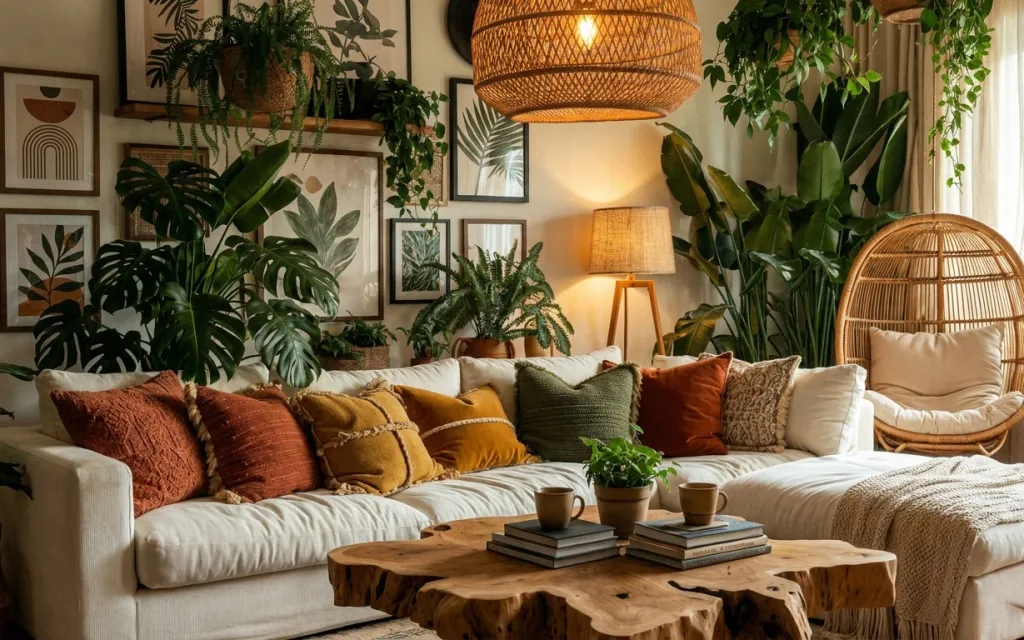
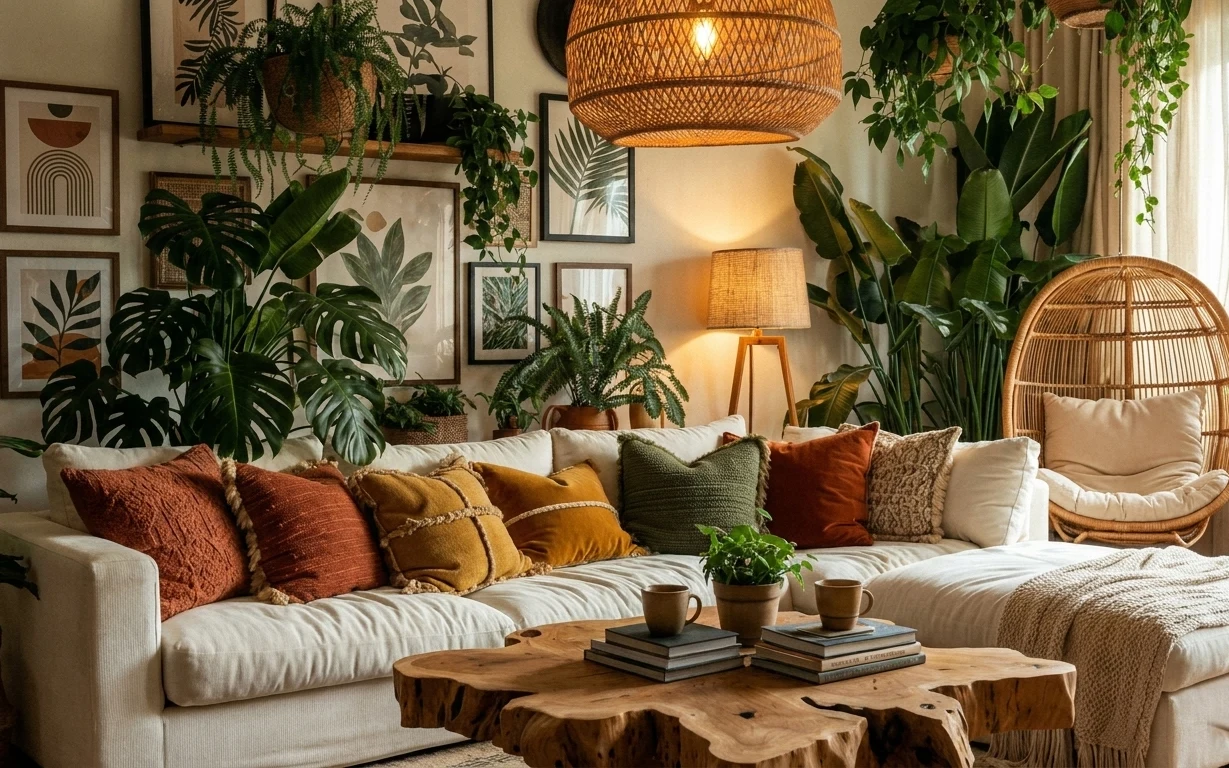
The first thing this room nails is texture: a cream upholstered sofa, a chunky tan knit throw draped across the seat, and multiple pillows in rust brown, mustard, and olive all read “designed,” not random. The organic slab coffee table keeps the palette grounded, while framed botanical wall prints echo the jungle energy outside the window. This is achievable on a renter budget because you’re styling what you already have—fabrics, tabletop objects, and wall decor—rather than committing to any irreversible upgrades. Warm, woven lighting also helps everything feel cohesive even when the plants are doing the heavy lifting.
I used to think plant-heavy rooms needed a matching “perfect” coffee table set-up, but that can get too precious. What changed my mind: the little mismatches—different leaf shapes, varied pillow textures, and a tray that isn’t perfectly centered—make it feel real. In this photo, the lamp and the knit blanket soften the whole scene, so the bold color pillows don’t overwhelm. That’s the balance to copy: texture first, then color, then the plants.
Layer 1 — organic slab coffee table ($120) Natural wood that anchors all the greenery
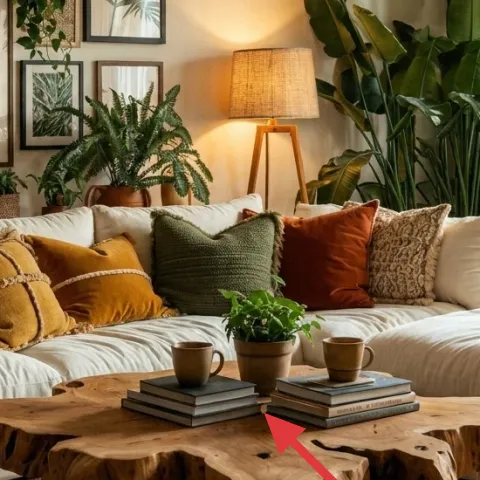
This organic slab coffee table sits low and broad in the foreground, so it becomes the visual anchor for the whole sofa scene. The rough, natural wood surface gives you that boho “handmade” rhythm even when everything else is soft—pillows, knit throw, and plants. If you went with a sleek glass or metal table instead, you’d lose the earthy contrast that makes the plants look intentional. The trade-off is upkeep: wood shows water marks faster, but it’s still easier than committing to anything permanent.
Go for texture, not shine
Matte or visibly grained wood reads warmer next to cream upholstery and woven lighting.
Layer 2 — tan knitted throw blanket ($25) A chunky drape that makes the sofa look “settled”
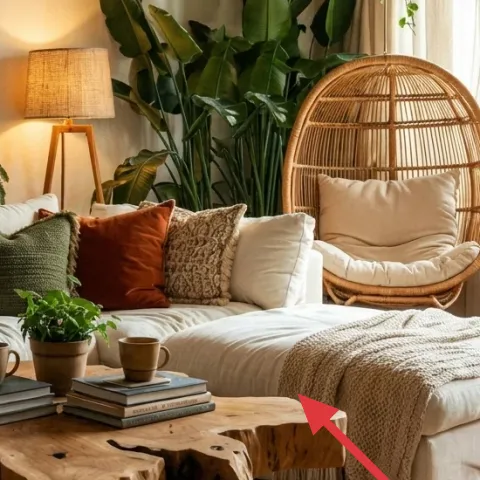
The tan knitted throw blanket is the quiet hero on the right side of the sofa. It adds chunky, imperfect texture right where your eye lands, and it also bridges the gap between the rust-brown pillows and the green plants. Choosing a knit over a smooth throw is the difference: knit texture catches the soft warm light and looks good even when it’s not perfectly folded. The obvious alternative—another patterned blanket—can start to compete with the pillow colors and framed botanicals. Here, the trade-off is going calmer on pattern and letting weave do the work.
Keep the color in the family
Tan/taupe works like a neutral buffer between olive leaves and rust pillows.
Layer 3 — rust brown throw pillow ($30) One warm accent that ties back to the walls
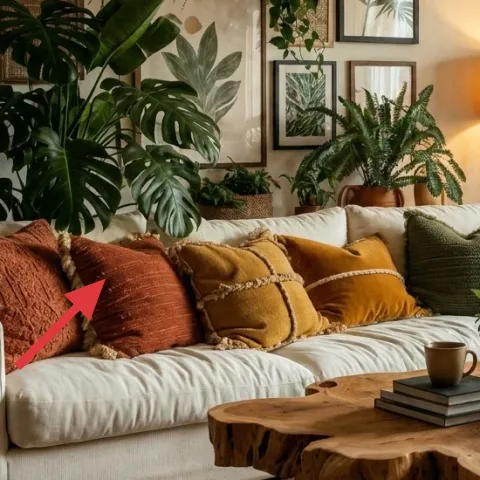
This rust brown textured throw pillow adds the “earth warmth” that keeps the cream sofa from looking flat. It’s also a practical styling choice: you can swap just one pillow cover and still get the same color story. If the room relied only on olives and mustard, it could tip into green-gold territory; the rust note pulls it back toward terracotta and natural woods. The trade-off is comfort vs. look—textured covers can feel a little more structured than super-smooth fabrics, but they hold their shape better on a sofa like this.
Don’t stack too many solids of the same tone
If all your pillows are similar warm browns, they blur together. Mix in at least one olive and one mustard.
Layer 4 — framed botanical wall prints ($60) Botanical art that repeats the plant palette
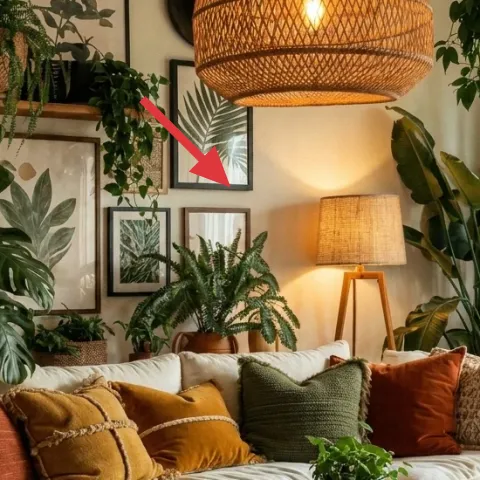
The framed botanical wall prints give the room a “curated garden” feeling, even when the plants themselves vary in leaf shape. This layer matters because it repeats the greens and tan tones at eye level, so the sofa and coffee table styling feels like part of a larger story. A single large print would be simpler, but the stacked arrangement reads more like interior magazines—layered, collected, and lived-in. The trade-off is spacing: keep frames evenly spaced so the wall doesn’t look accidental.
Use repeats, not copies
Let one or two print tones repeat, but vary leaf style so it stays organic.
Layer 5 — decorative tray on coffee table ($20) A small “style rule” for clutter

The decorative tray on the coffee table is what turns everyday items into a styling moment. In this setup, the tray groups little ceramics and keeps them from scattering across the organic wood surface. Without a tray, plant pots and cups can make the table look like it’s waiting for a reset, especially in a plant-filled room where everything already feels visually busy. A tray is also easy to renter-pack—no hardware, no wall changes—so it’s a win for both aesthetics and logistics. The trade-off is choosing a tray that’s wide enough; too small and it won’t visually consolidate.
Match the material family
Wood, woven, or warm-toned ceramics keep the tray from feeling random.
Layer 6 — small potted plants on the coffee table ($25) Bring the jungle down to table height
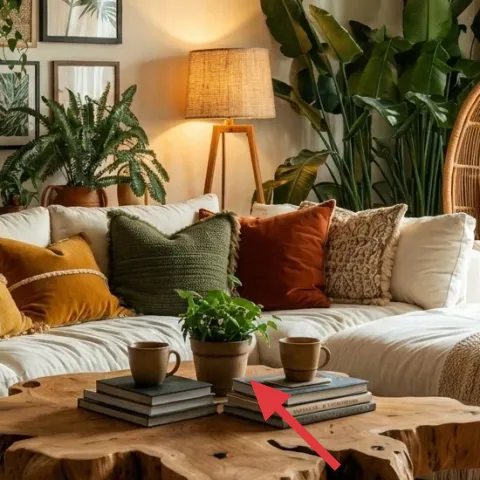
These small potted plants on the coffee table make the room feel intentional, not just plant-filled. By lowering foliage into the foreground, you get depth: leafy greens sit in front of the sofa and behind the tray, so the scene has multiple “zones” of interest. The obvious alternative—keeping plants only on the sofa or floor—can work, but it usually makes the coffee table feel emptier than it should. The trade-off is care: tiny pots dry out faster, so pick hardy options and rotate them toward the light.
Vary leaf shape in one cluster
A glossy leaf and a more textured leaf together look more natural than three identical plants.
Layer 7 — linen shade table lamp ($60) Warm glow that flatters the whole palette
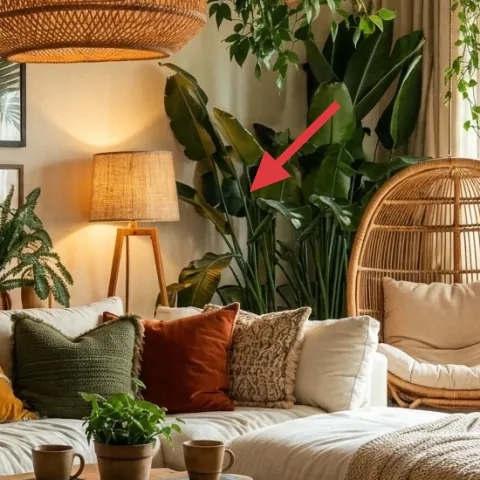
The linen shade table lamp adds the warm, diffused glow that makes the cream upholstery and woven textures look softer after dark. It also balances the larger woven rattan pendant lamp visually, so you’re not relying on one overhead light source. A plug-in lamp is renter-friendly, and it’s the easiest way to get that “evening” look without changing bulbs or fixtures you can’t uninstall. If you went with a harsh white LED bulb instead, the textiles and botanicals would look a little flat and green. The trade-off is placement—set it where it can spill light across the sofa, not just the table surface.
Dim is optional; diffusion isn’t
Linen shades soften color, even when you keep the lamp on at a steady level.
The cost, layer by layer
| Layer | Item | Cost |
|---|---|---|
| 1 | organic slab coffee table | $120 |
| 2 | tan knitted throw blanket | $25 |
| 3 | rust brown throw pillow | $30 |
| 4 | framed botanical wall prints | $60 |
| 5 | decorative tray on coffee table | $20 |
| 6 | small potted plants on the coffee table | $25 |
| 7 | linen shade table lamp | $60 |
| Total | $340 | |
If you want a cheaper variant, keep the coffee table shape but swap in a smaller tray and fewer accessories—just one tray cluster and two pillows. You can also choose one framed botanical print (instead of a fuller set) and stretch your budget on plants and lighting, where the impact shows fast.
What worked, what didn't (across the whole room)
The strongest win is texture layering: knit + upholstery + woven light all play nicely with the plant palette. The second win is grouping—pillows and coffee-table items sit in tight zones, so the room feels styled even with lots of greenery. The main miss to avoid is overshooting the warm tones: too many rust pillows or too-dark prints can make cream look dingy in daylight.
What worked
- The organic slab coffee table anchors the scene and keeps the plants from feeling scattered.
- A tan knit throw adds depth without adding another pattern to compete with botanical prints.
- A single rust textured pillow creates a warm bridge between cream upholstery and olive leaves.
- Small table-height plants add foreground depth, making the room feel fuller.
- Framed botanicals repeat the leaf colors at eye level, tying sofa and greenery together.
- Linen-shade lamp light flatters warm neutrals and softens the whole palette at night.
What didn't
- Too many strongly textured pillows can look heavy and make the sofa look cluttered.
- Skipping a tray on the coffee table makes ceramics and plant pots feel random.
- Relying on overhead light alone can flatten the cream sofa and mute the woven textures.
- Adding one more bold-colored pillow without balancing with olive can skew the palette.
- Using botanical art with only one green shade can fight against the mixed plant tones.
What we'd skip if we did it again
Skip a “matchy-matchy” pillow set. In a plant-filled room, the most believable look comes from mixing textures—knit throw + textured pillow cover + varied plant leaf shapes—so everything doesn’t feel like it came from one bundle.
Skip relying on overhead lighting as the only mood-maker. A linen-shade table lamp changes how cream upholstery reads, especially after dark, and it’s renter-friendly because it’s plug-in and movable.
Skip buying botanical wall art that’s all the same shade of green. Choose prints with warm tan and rust undertones (or at least one warm note), so the wall palette doesn’t fight the coffee table and throw colors.
Frequently asked
How long does this living room refresh take?
Plan on 2–3 hours for the first pass: swap the throw and one pillow cover, style the coffee-table cluster with a tray and small plants, and then set up the framed botanical prints. If you’re hunting for the exact pillow textures, add another hour for browsing and pickup. The real time-sink is making sure frames are spaced evenly and that plants get placed where they read from the sofa.
Is this renter-friendly if I can’t drill or anchor anything?
Yes—this look is built mostly from movable items: the throw, pillow covers, coffee-table styling, plug-in table lighting, and framed art you can hang with Command-style methods if your frames allow it. Avoid planning any permanent wall changes; the photo’s cohesion comes from textiles, repeat color, and object grouping rather than any irreversible installs.
What if my living room is smaller than this one?
If your sofa area is tight, keep the coffee-table styling but reduce the number of pillow covers to two or three colors max. Choose one “hero” botanical print size and hang fewer pieces higher up, so the wall doesn’t feel crowded. Small potted plants are perfect at table height because they add depth without taking up floor space.
What if my room is bigger and needs more visual structure?
Lean into scale. Go slightly larger with your framed botanical prints and keep the coffee table styling cluster centered, not stretched across the whole top. You can also add more plants around the sofa (still table-height friendly) so the plants feel like part of the architecture, not just decor.
Where should I shop for the easiest version of this look?
Start with textiles and small decor at big-box and home decor retailers: throw blankets, pillow covers, and lamp shades are the quickest wins. For framed botanical prints, look for sets at thrift stores or discount home sites where you can mix one or two tones. For plants, choose hardy varieties from nurseries—then style with small ceramic pots that match your tray.
What’s the biggest mistake people make when copying a plant-filled style?
Overbuying plants without organizing the rest of the scene. If plants outnumber your textiles, the room can feel visually loud instead of layered. The fix is simple: add a knit throw for texture, pick one warm accent pillow color (rust/brown), and use a tray on the coffee table so small objects look intentionally grouped.
More in Living Room
7 renter-friendly swaps for a plant-filled living room
A plant-filled living room refresh that looks styled (not fussy) using 7 renter-friendly swaps. This move-ready plan fits a $350 budget and…
How to build an olive-and-cream living room refresh for $700
A calm olive-sofa reading corner, pulled together with a woven rug, warm wood coffee table, and a beige-shaded table lamp. This living room…
Green-and-cream living room seating area for $700
A renter-friendly refresh for a sunlit living room seating area built around one patterned rug, a cream sofa, and layered greenery. Total c…