- Best for
- Daybed nooks and awkward seating corners
- Time
- 3–5 hours (plus drying time for DIY)
- Total cost
- $395
- Renter-safe
- Soft goods + removable decor
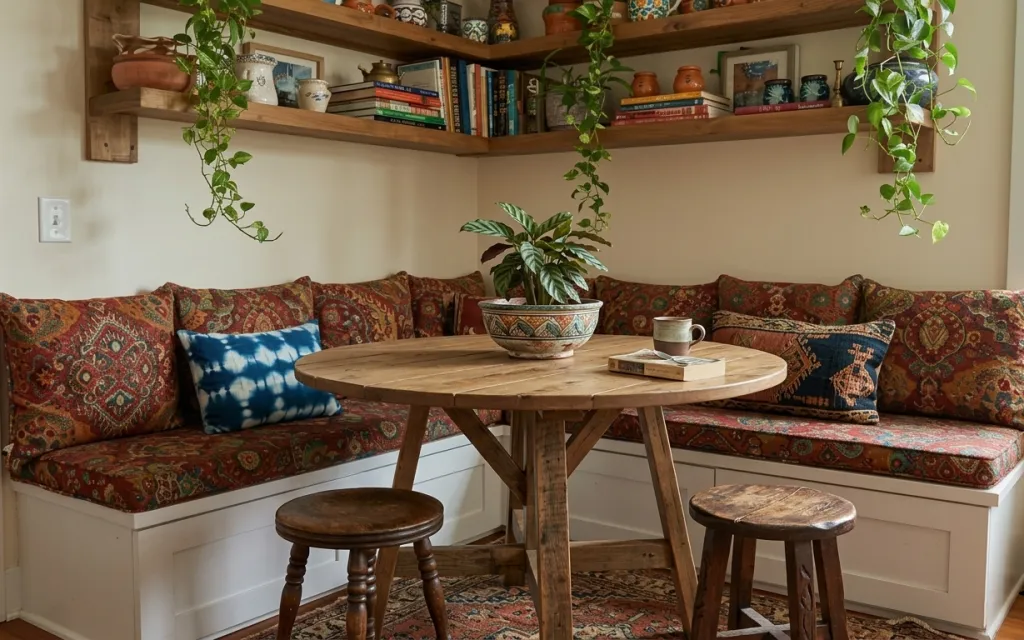
Why rust-and-greenshelf styling is the daybed nook of 2026
In this daybed nook, the shelves act like a backdrop, then the rug and pillows do the “colorwork” in the foreground. The rug’s warm pattern grounds the rust-and-cream pillows, and the tabletop reads as a steady, natural anchor. I’ve seen this exact mix in Apartment Therapy style roundups: bold textiles + visible wood tones + plants that trail instead of sitting still. For shared housing, it’s achievable because the core changes are all soft goods and freestanding decor, not anything you’d have to leave behind.
I used to overdo hard surfaces—one too many accent pieces on a shelf, one too many objects on the table. In this photo, the bowl and the books are there, but the eye still lands on the pillows first. That’s the balance shift: fewer categories, more repetition of texture (patterned cotton, woven/rust tones, and glossy ceramic). Once the colors repeat, the nook feels intentional without needing permanent installs.
Layer 1 — patterned area rug ($120) Patterned base that hides daily wear
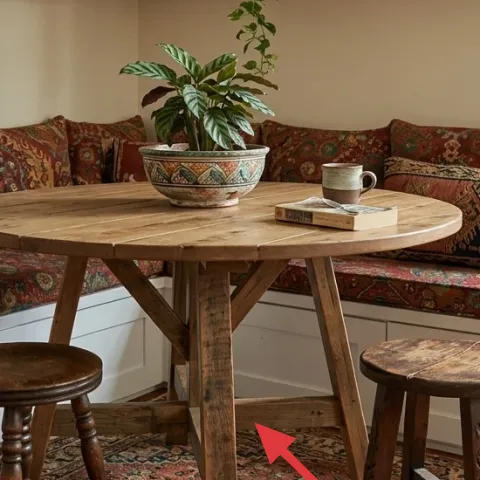
A patterned area rug is what keeps this daybed nook from looking like “just a bench with throw pillows.” The rust-red and cream tones pull the palette into focus, and the busy pattern is forgiving when you’re moving fast between classes or meetings. Choosing a rug over a runner is a trade-off: you give up a perfectly crisp border, but you gain coverage under the coffee-table zone. In photos like this, that coverage is what makes the space feel like a real living area rather than a hallway accident. Look for a size big enough that the table legs and at least the front stool feet land on it.
Go for pattern that already contains your pillow colors
If the rug repeats rust-and-cream, you’ll be able to swap pillow covers later without changing the whole room.
Layer 2 — wooden coffee table with angled legs ($100) Warm wood between the pillows and plants
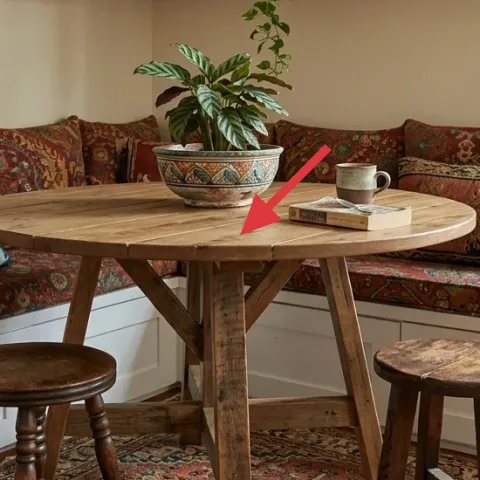
This wooden coffee table is the calm, practical middle—between the loud textile wall and the leafy garland. The angled legs add a little mid-century energy, but it’s still light enough in the visual sense that the rug pattern can keep going. The obvious alternative would be a metal or glass top, but that tends to clash with the earthy rust palette and makes everything feel a bit more “styled” than lived-in. With wood, the day-to-day stuff—cups, books, a ceramic bowl—blends into the look instead of standing out as clutter. Bonus for shared housing: you can usually move it with just one or two trips.
Use it as the “still life” spot
Keep objects here to one category (ceramic + a couple stacked books), so the table doesn’t compete with the pillows.
Layer 3 — patterned throw pillow (rust-and-cream) ($25) Adds texture without adding clutter
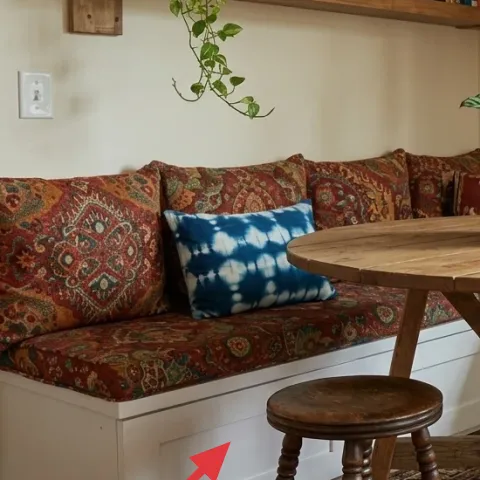
Those patterned pillows do double duty: they echo the rug’s rust-and-cream rhythm and add tactile texture against the smooth daybed base. I like this layered look better than going all solid, because solids can look flat in a bright, small nook—even with plants. The trade-off is that you have to commit to pattern harmony, but it pays off when you’re packing and unpacking. If you’re using a new rug or a new pillow, match on one dominant color (rust here, not every tiny motif). Pattern lets you keep the room interesting even when you only change one pillow cover at a time.
Match on one dominant tone, not every detail
Rust + cream is the link; the rest can be different motifs.
Layer 4 — blue tie-dye throw pillow ($25) A small pop that makes the nook feel alive
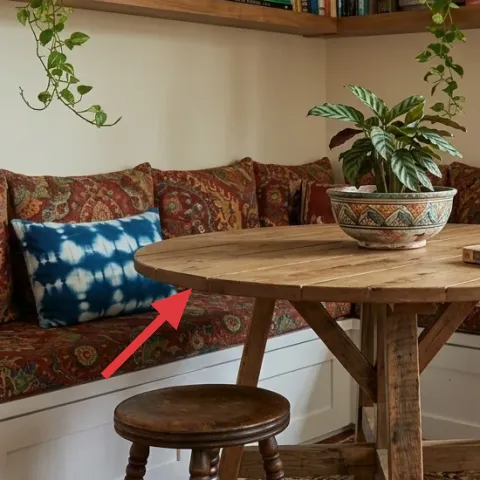
The blue tie-dye pillow is the “breathing room” color that stops the rust palette from getting heavy. It’s also an easy fix for impermanence: pillow covers are among the lowest-effort swaps you can bring from lease to lease. I’ve made the mistake of using blue only as a tiny accent (like a mug or one book)—it doesn’t read from across the nook. Here, the pillow scale is what makes the color land. Dyeing a simple cover is a great DIY because the mottled look forgives uneven saturation, so you don’t need perfect technique to get that lived-in effect.
Make it instead of buying it
DIY a blue tie-dye look on a plain cotton pillow cover so you can control the intensity and pack it easily for the next lease.
Materials
- Fabric dye powder (blue) — 1 kit — Michaels/Joann — $10
- Salt — 1 box — grocery store aisle — $3
- Plastic gloves — 1 pair — hardware/drug store — $2
- Plastic wrap — 1 roll — grocery store — $1
- Paper towels — 1 pack — grocery store — $2
Steps
- Soak the pillow cover until fully damp, then wring out so it’s evenly wet (not dripping).
- Crinkle or twist the cover, then wrap with plastic wrap to “hold” the folds in place.
- Mix the blue dye with hot water and salt per the kit directions until you have a smooth solution.
- Submerge or spoon-dye the folded sections, concentrating dye into the creases for that tie-dye mottling.
- Let it sit in the wrapped cover for the time listed on the kit for best color set.
- Rinse in cool water until it runs lighter, then air-dry fully before stuffing back onto the pillow.
Total DIY cost: $18 — saves about $7 over buying.
Layer 5 — ceramic bowl on the coffee table ($15) Small object styling that reads from across the nook
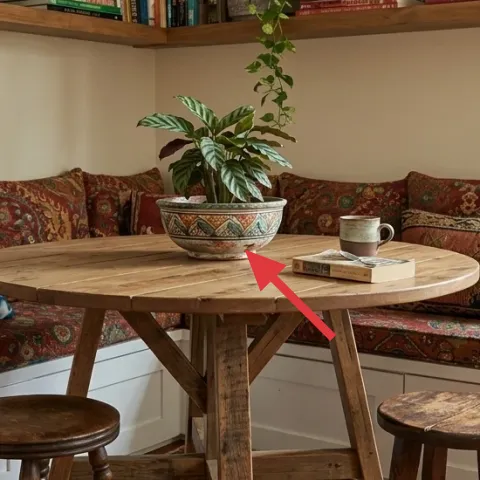
A ceramic bowl gives the tabletop a focal point without needing more furniture. It’s the kind of object you can swap depending on the season—still ceramic, still in the same spot—so the room doesn’t feel like it’s always “starting over.” The trade-off here is scale: you can’t go too small, or it disappears under the table’s wood grain and the rug pattern. In this photo, the bowl’s shape and earthy tone sit comfortably between the rust textiles and the dark green leaves overhead. It’s also easy to move compared with anything glass-heavy, which matters when you’re carrying items up stairs between leases.
Don’t stack random decor
Keep the table’s small-object styling to a single cluster (ceramic bowl + a book stack), so the pillows stay the hero.
Layer 6 — trailing green vine garland across the shelves ($30) Vertical movement that makes small spaces feel taller
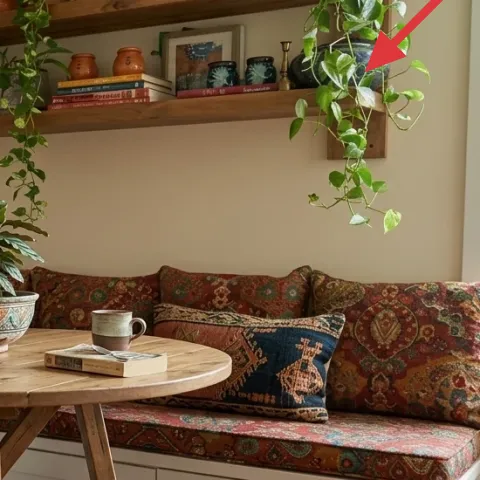
The trailing vine garland adds a vertical line that contrasts with the horizontal shelf layers and makes the nook feel more open than it is. Even though it’s “just plants,” it functions like a design element: it softens the hard wood and gives the shelf decor a natural, organic frame. A common alternative is a single potted plant, but then the top half can feel flat—especially with bold pillows already taking up the lower half. With vines, you get movement where your eye naturally looks first. For shared housing, choose a garland that’s easy to gather and repack, rather than something fragile that sheds everywhere.
Place plants to echo the shelf lines
If the shelves are in three levels, let the vines “break” into three sections too.
Layer 7 — floating wooden wall shelves ($80) Storage that doubles as a visual backdrop
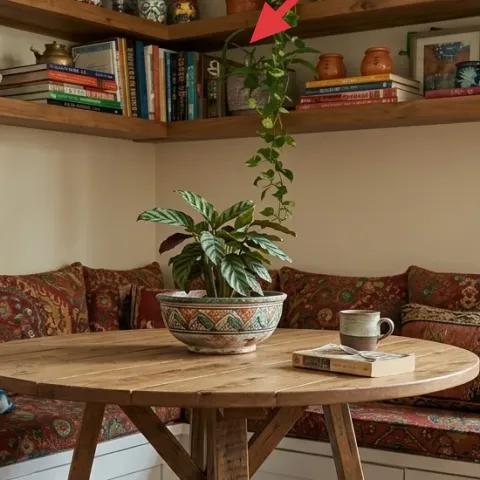
Floating wooden wall shelves do the heavy lifting in this nook because they create a styled backdrop behind the daybed. That backdrop is why the whole setup feels intentional even with lots of pillows: books and ceramics give you depth, color contrast, and texture. The trade-off is that shelves are a commitment, so you want pieces that are easy to remove and keep protected for the next move. In practice, that means choosing shelf units that can come down without damaging the wall (check what your lease allows). If shelves aren’t an option, the same look can be approached with a freestanding book ledge—but the key is repeating height variation behind the seating zone.
Use the shelves as your “color palette,” not a dumping spot
Group ceramics and books in pairs, then leave breathing space so the rug and pillows keep their punch.
The cost, layer by layer
| Layer | Item | Cost |
|---|---|---|
| 1 | Patterned area rug | $120 |
| 2 | Wooden coffee table | $100 |
| 3 | Patterned throw pillow cover | $25 |
| 4 | Blue tie-dye throw pillow cover (DIY equivalent) | $25 |
| 5 | Ceramic bowl | $15 |
| 6 | Trailing green vine garland | $30 |
| 7 | Floating wooden wall shelves | $80 |
| Total | $395 | |
If you want to keep it cheaper, start with one textile change: a patterned rug plus two pillow covers. Skip the shelf refresh and focus on tabletop ceramics and the vine garland, then add the coffee table second when you find one with the right wood tone.
What worked, what didn't (across the whole room)
This nook nails the balance between “busy pattern” and “quiet structure.” The rug and pillows create warmth, while the wooden coffee table and shelf backdrop keep the visual weight steady.
What worked
- The patterned rug ties the rust textiles into one continuous base under the coffee table.
- Pillow scale matters—the blue tie-dye reads even when the space is bright and busy.
- Wood tones (table + shelves) prevent the look from feeling like a costume of textiles.
- Trailing greenery adds height movement that makes the nook feel larger than it is.
- The ceramic bowl gives the tabletop a focal point without adding more clutter.
- Layering texture (patterned fabric, ceramic, wood grain, leaves) makes the space feel lived-in.
What didn't
- Too many small objects on the shelf would compete with the vine garland and pillows.
- A solid-color pillow would make the rust palette feel flatter against the patterned rug.
- Skipping the rug coverage (staying with a small mat) would make the coffee table look floating.
- A glassy tabletop would clash with the earthy rust tones and feel more formal than cozy.
- Using a single potted plant without trailing height would leave the top half visually quiet.
What we'd skip if we did it again
Skip replacing the daybed seating with a new upholstered piece. In shared housing, big furniture moves are expensive and annoying, and you lose the whole point of the “pack it up” refresh.
Skip going all-in on one color family. Rust + cream needs the counterweight of blue and green, and when any one note disappears, the nook starts to look one-note instead of coordinated.
Skip heavy wall commitments if the shelves or garlands aren’t allowed by the lease. The same rhythm can be created with freestanding book ledges and a repackable vine garland that detaches in minutes.
Frequently asked
How long does this kind of daybed nook refresh take?
For most shared-housing setups, the styling portion takes about 2–3 hours: rug down, table centered, pillows swapped, and the tabletop styled. The longest part is usually sourcing items (especially the rug pattern) and letting the DIY pillow cover fully dry. Add another hour if shelves or the vine garland need careful arranging so the height looks intentional.
Is this renter-friendly if my space has strict rules?
Yes—this plan is built around textiles and freestanding objects: a rug, pillow covers, a wooden coffee table, and tabletop ceramics. The only higher-commitment piece is the floating shelves; if they’re not allowed, swap that layer for a freestanding book ledge or a lightweight shelf unit that removes cleanly. Keep anything permanent out of the plan.
What if my daybed nook is smaller or bigger than the photo?
Smaller: shrink the rug size until the coffee table and stools still sit mostly on it, then use fewer pillows so the color doesn’t overwhelm. Bigger: you can scale the rug up and add a second ceramic object on the tabletop, but keep to one main motif. The goal is still the same—rug anchors the zone, pillows bring texture, and greenery adds vertical relief.
Where should I shop for these items without overpaying?
For rugs and pillow covers, start with big-box home stores for quick browsing, then check resale for the wooden coffee table tone and condition. Ceramics and small decor are often best at thrift shops or local antique stores because you’re not paying for brand-new manufacturing. For trailing garlands, online sellers with repackable sets are usually the fastest option.
What’s the biggest mistake people make in a daybed nook?
They add more stuff before they choose the anchor pieces. If you start with random decor, the nook feels busy but not cohesive. Pick the rug pattern first, then choose pillow covers that echo it, and only then place tabletop objects and greenery. That order keeps the refresh from turning into a pile-up.
Can I do the DIY pillow cover if I’ve never dyed anything?
Yes. Tie-dye is forgiving because the pattern hides uneven application, and you can keep the folds larger for a more blended look. The biggest success factor is dye timing and fully rinsing until the water runs lighter. Use gloves, protect your work surface, and air-dry fully before stuffing the cover back onto the pillow.
More in Small Spaces
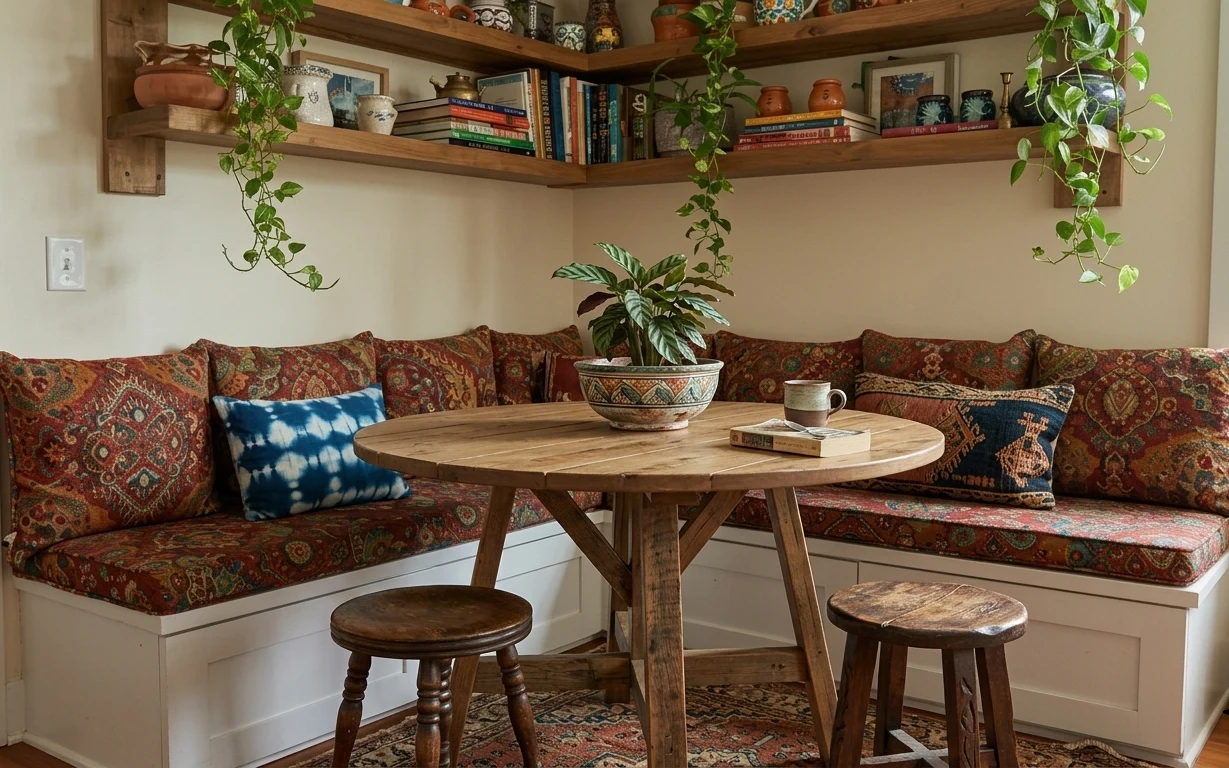
5 weekend-ready swaps for a $400 daybed nook refresh
Turn a daybed nook into a vivid, planty hangout with move-friendly swaps. This $400 plan focuses on a bold rug, a simple wooden coffee tabl…
How to refresh a laundry nook for under $400
A weekend laundry nook refresh on a $400 budget: add one patterned rug, warm shelf styling, and a framed print so the machines feel built-i…
Under $500: a move-friendly breakfast nook refresh
A small breakfast nook makeover with $500 of renter-safe upgrades: a jute rug, a blush pillow cover, and simple candle-and-ceramic styling.…