- Square footage
- Small footprint
- Cost
- $350
- Difficulty
- Easy to moderate
- Renter-safe
- Yes (paint only if you own)
Why sage-green cabinet refresh is the laundry nook of 2026
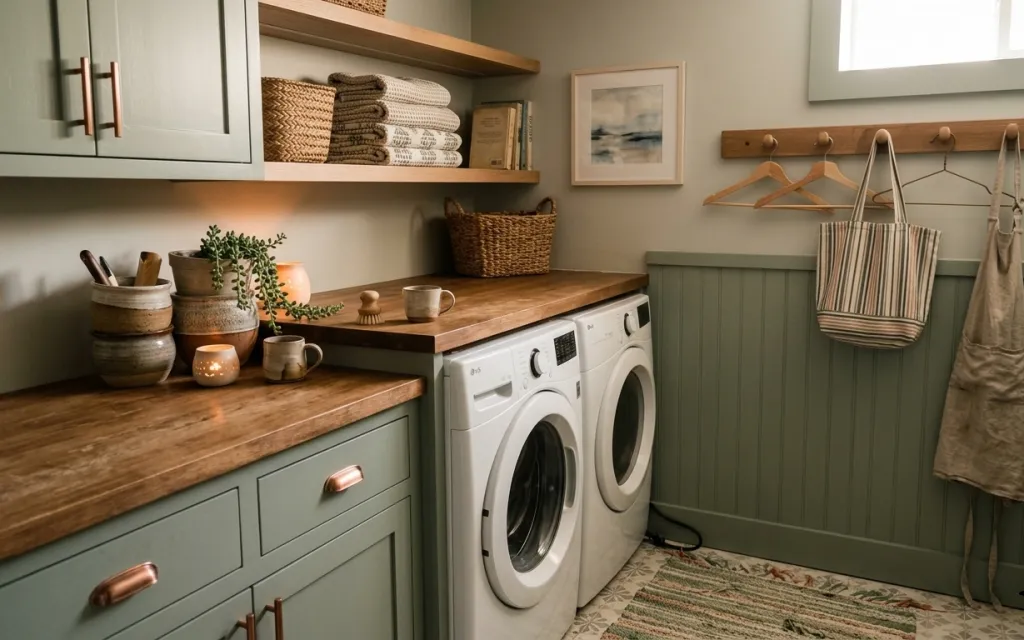
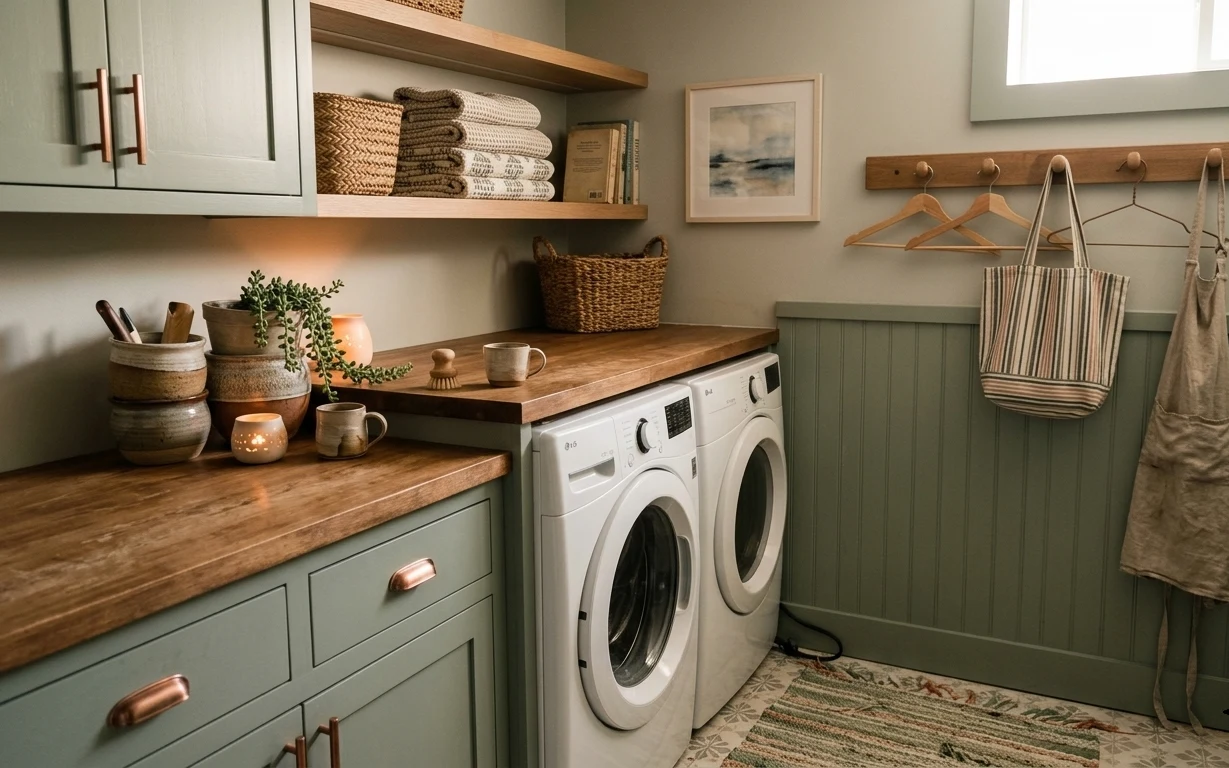
The first thing I notice here is how the sage paneling and warm wood shelves do the heavy lifting—without any renovation. That green reads soft and grounded, while the wood keeps the space from feeling sterile. On top of the machines, the counter styling mixes textures: woven basket, ceramic mugs, and a small potted plant. Even the towel hanging on the rail adds a linen texture you’d otherwise miss. For homeowners, this is a good weekend target: you can make it look “finished” fast by swapping the few visible details people actually see.
I used to obsess over big upgrades in my laundry corner, like new fixtures, and I’d still feel annoyed every time I walked in. The shift for me was realizing the eye lands on the rug, the wall art, and the shelf surfaces first—so those had to be the most intentional parts. Once I grouped items by texture (ceramic + woven + a bit of greenery), the whole room stopped looking like it was in “storage mode.”
Layer 1 — patterned area rug ($150) earth-tones underfoot
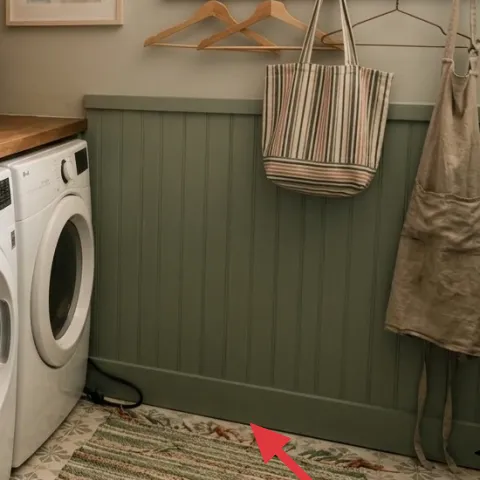
This rug anchors the whole laundry nook because it visually separates the “hard working” machines area from the rest of the room. In the photo, the pattern’s greens and neutrals echo the paneled wall, and the fibers look substantial enough to handle foot traffic. The alternative is going plain with a simple mat, but plain rugs make the space feel unfinished fast because the floor becomes the loudest surface. The trade-off with a patterned rug is maintenance—vacuuming the low pile and spot-cleaning quickly keeps it looking crisp.
Choose a pattern that repeats your wall color
Pull one shade from the paneling (like sage) into the rug so everything reads like one palette, not separate décor.
Layer 2 — framed wall art print ($25) a small print that breaks up the wall
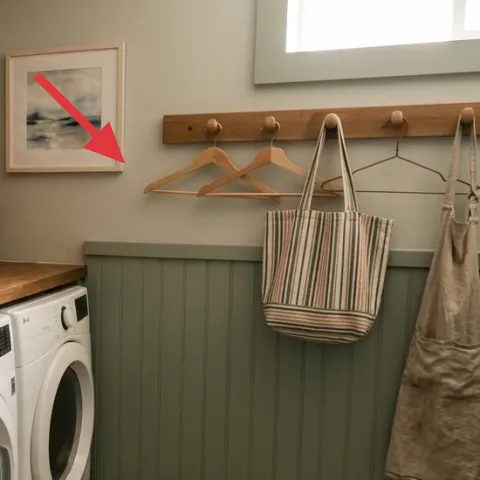
The framed print sits above the countertop and gives your eye somewhere to land before it hits the machines. It also adds a “designed” feeling without changing anything structural—especially important in a small laundry zone where big projects are tempting but rarely worth it. I like that the frame looks simple and light so it doesn’t compete with the coat rail and shelf. A common mistake is going for oversized art that overwhelms the machines; this size keeps the wall calm. The trade-off is that you’ll want to dust the glass or acrylic regularly so it stays clear.
Place art where your eye naturally stops
If the print is too high, it feels decorative; too low, it fights with shelf sightlines.
Layer 3 — ceramic mugs ($35) gives the counter a “served” look
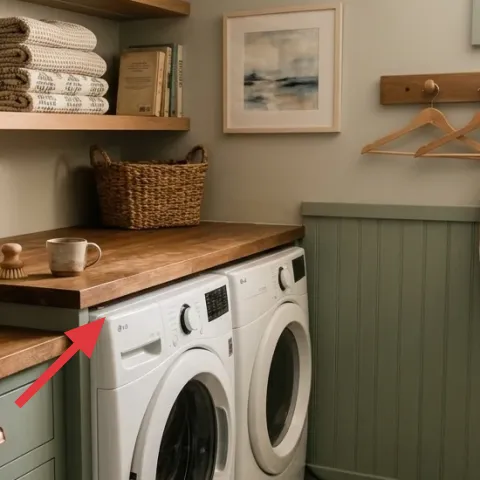
These ceramic mugs turn a practical countertop into a lived-in surface. They work here because the warm clay and creamy tones match the wood and keep the sage background from feeling too cool. Instead of storing everything in plain containers, the mugs add shape and height that makes the counter look styled, not cluttered. The obvious alternative is a single utensil holder, but one container never looks curated from a distance. The trade-off is you’ll occasionally wipe handles and rims so they don’t collect dust like the rest of the “hidden” laundry mess.
Mix one “pretty” item with one everyday item
Mugs read decorative, but they’re still useful—so the counter stays functional between cleanings.
Layer 4 — woven basket on shelf ($45) shelf storage that looks better than a bin
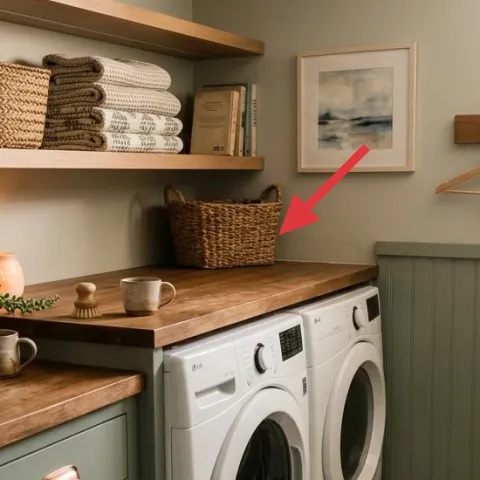
This woven basket adds that irregular texture that makes the wood shelves feel softer and more casual. It also quietly handles storage—things like extra towels, dryer sheets, or small laundry accessories—so the nook looks styled even when you’re not actively arranging it. I’m choosing this basket instead of a closed storage box because woven texture plays nicely with the painted wall and the ceramic pieces. The trade-off with baskets is that they don’t “disappear,” so the contents need a light hand: stack neatly and keep color around the same family.
Make it instead of buying it
DIY a painted woven basket so it matches the nook’s warm-wood tone without buying a new curated one.
Materials
- Paintable primer for porous surfaces — 1 can — Home improvement store — $18
- Chalk or all-purpose paint — 1 small can — Home improvement store — $7
- Small foam brush or mini roller — 1 set — craft store — $6
- Water-based clear topcoat (matte) — 1 small can — Home improvement store — $8
Steps
- Vacuum or brush the basket well, then dust with a dry cloth so paint sticks.
- Apply primer in thin coats, letting it dry fully between coats.
- Lightly scuff with fine sandpaper, then wipe off the dust.
- Paint with 2–3 thin layers, working around the weave for even coverage.
- Let the basket dry completely, then add a matte topcoat for durability.
- Wait until the topcoat cures before loading it with laundry supplies.
Total DIY cost: $39 — saves about $6 over buying.
Layer 5 — small potted plant on countertop ($35) a living height cue
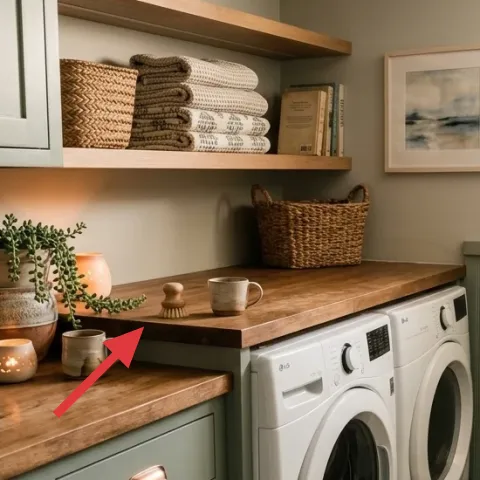
The potted plant adds a vertical “breathing” element on the countertop, and that matters because the rest of the space is mostly horizontal lines: shelves, the top of the cabinet, and the machines. In this nook, the greenery also softens the sage wall, so the scene feels less like a garage and more like a real room. I’d rather style a small plant than add another ceramic canister because plants bring movement and a fresher texture that never looks flat. The trade-off is care time—light watering and rotating the pot keeps it from leaning toward the window.
Don’t hide the light source behind décor
If the plant is near daylight, avoid stacking tall items in front of it so it doesn’t fade.
Layer 6 — ceramic canisters on countertop ($25) keeps small supplies from looking random
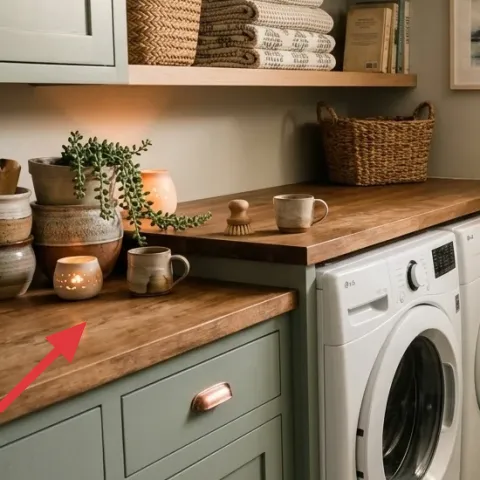
These canisters are doing quiet work: they corral small essentials and they visually repeat the ceramic theme already happening with the mugs. That repetition is why this looks intentional instead of “stuff on a counter.” I’m choosing canisters over a single clear container because opaque ceramics create softer shadows and feel warmer against the painted paneling. In a small space, clear containers can read like a display case for chaos. The trade-off is that you’ll need to refill and wipe them more often so nothing looks dusty or stained.
Match the finish, not necessarily the color
Keeping ceramic textures consistent creates harmony even when the shades shift slightly.
Layer 7 — towel hanging on hooks ($40) linen texture you actually see
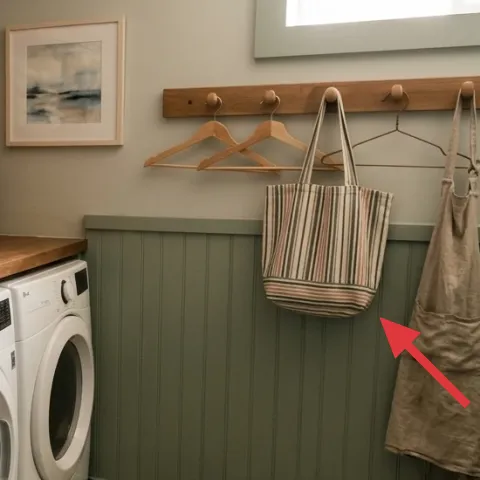
The hanging towel matters because it’s visible every time you come in—so it’s one of the highest-impact textile choices in a laundry nook. Here, the towel reads like linen or linen-blend, which makes it feel relaxed against the paneled wall and wood shelf. Swapping to a towel that’s too plush can look bulky and compete with the rail, while a thin towel can look accidental. The trade-off is that you’ll want to rotate towels so the one on display stays fresh and doesn’t get crusty at the edges.
Hang by folded thirds for a clean silhouette
Even a plain towel looks styled when it hangs in a tidy, repeatable shape.
The cost, layer by layer
| Layer | Item | Cost |
|---|---|---|
| 1 | Area rug (patterned, 8×10 style) | $150 |
| 2 | Framed art print (16×20) | $25 |
| 3 | Ceramic mugs | $35 |
| 4 | Painted woven basket for the shelf (DIY ~$39 materials) | $45 |
| 5 | Small potted plant (4–6 ft scale) | $35 |
| 6 | Ceramic canisters | $25 |
| 7 | Towel hanging on hooks | $40 |
| Total | $350 | |
If you want a cheaper variant, pick a smaller rug with the same color story (sage + warm neutral), choose a lower-cost framed print, and keep the ceramic pieces to one set. You can also skip repainting the basket and go with an unpainted natural weave if it already matches your wood tones.
What worked, what didn't (across the whole room)
These changes work because they respect the room’s existing structure: sage paneling, warm wood, and a compact footprint. The rug and wall print do the biggest visual organizing, while ceramic and woven pieces keep the counter from looking like “laundry storage.” The only misses are practical ones—if the plant or textiles aren’t maintained, the nook stops looking curated quickly.
What worked
- The patterned rug grounds the machines zone and makes the floor feel intentional.
- The framed print breaks up the wall so the rail and shelf don’t feel crowded.
- Ceramic mugs and canisters repeat texture, which reads as “designed” from across the room.
- The woven basket adds storage without adding visual heaviness.
- The small plant introduces vertical softness against the horizontal shelves.
- The visible towel turns a functional accessory into décor, not clutter.
What didn't
- If the counter items aren’t wiped often, ceramic shadows make dust look more obvious.
- Too much basket content looks messy fast—neat stacks keep the shelf looking calm.
- A plant that doesn’t get enough light starts leaning, which pulls attention off the palette.
- If the towel color doesn’t relate to the rug and wood tones, the rail looks random.
What we'd skip if we did it again
Skip replacing the machines or repainting the entire paneled wall. The photo already has a strong base—sage and warm wood. Most of the “new room” feeling comes from what’s visible at eye level: rug, wall art, and counter styling.
Skip adding too many small décor objects to the countertop. In a laundry nook, every extra item competes with the practical mess that shows up during use. Keep it to ceramics, one plant, and a couple of functional pieces.
Skip choosing either all-clear containers or all-white décor. Clear plastic can read utilitarian, and too much brightness can fight the warm wood. Matching texture—ceramic, woven, and linen—gives the calm look with less stuff.
Frequently asked
How long does a laundry nook refresh like this take on a weekend?
Plan for about 4–7 hours total, depending on whether you DIY the basket. The rug and framed print swaps are quick, but the real time sink is arranging counter items so they look balanced (ceramic height, woven texture, then one plant). If the basket needs priming and dry time, add another block of time so it doesn’t get tacky before topcoat.
What if I rent and can’t paint or DIY?
You can still get most of the look without paint. Prioritize the rug, framed print, and towel placement because they’re fully reversible. For the shelf, use a removable basket (or a natural weave you don’t need to coat) and stick to lightweight décor you can pack up. If your wall is already sage/neutral, let the textiles and ceramics do the heavy visual lifting.
My laundry nook is smaller—how do I avoid overcrowding?
Choose one statement textile (the rug) and one wall anchor (the framed print), then keep the countertop set tight: two mugs or canisters plus the plant. Avoid adding multiple decorative bins because they reduce breathing room around the machines. Also leave some “negative space” on the wood shelf so the basket doesn’t visually collide with towels and hooks.
What if my laundry nook is bigger—can I scale this up?
Yes. Go slightly larger on the rug if the floor allows, and consider adding a second framed print that matches the frame color. For storage styling, keep the same texture mix (ceramic + woven + greenery) but add one more usable container category—like one taller canister for lint rollers. The goal is still a curated rhythm, not more objects.
Where can I shop for the rug, framed print, and ceramics?
For budget rugs and framed prints, home goods stores and big-box retailers often have good color matches in farmhouse-friendly patterns. For ceramics, check craft stores and kitchenware sections that sell small canisters and mug sets individually. Woven baskets are easiest to find in home décor aisles, and plants are usually available in nurseries or garden centers with seasonal assortments.
Biggest mistake to avoid in a laundry nook refresh?
The most common misstep is styling the counter like a living room display—too many small items, too many heights, and no repeated materials. That makes the machines feel louder and the shelf clutterier. Repeat textures (ceramic, woven, linen) and use one plant for vertical interest so the space looks organized even mid-laundry.
More in Small Spaces
How to refresh a laundry nook for under $400
A weekend laundry nook refresh on a $400 budget: add one patterned rug, warm shelf styling, and a framed print so the machines feel built-i…
Under $500: a move-friendly breakfast nook refresh
A small breakfast nook makeover with $500 of renter-safe upgrades: a jute rug, a blush pillow cover, and simple candle-and-ceramic styling.…
How to refresh a home office corner for under $400
A small home office corner can look warm and put-together without permanent changes. This $400, move-friendly refresh uses a rug, sheer cur…