- Best for
- Warm color + softer textures
- Cost
- $365 (plus one DIY wall paint layer)
- Time
- One weekend
- Renter-safe
- Yes (swap paint DIY for removable wall options)
Why warm terracotta walls are the vanity and shower corner of 2026
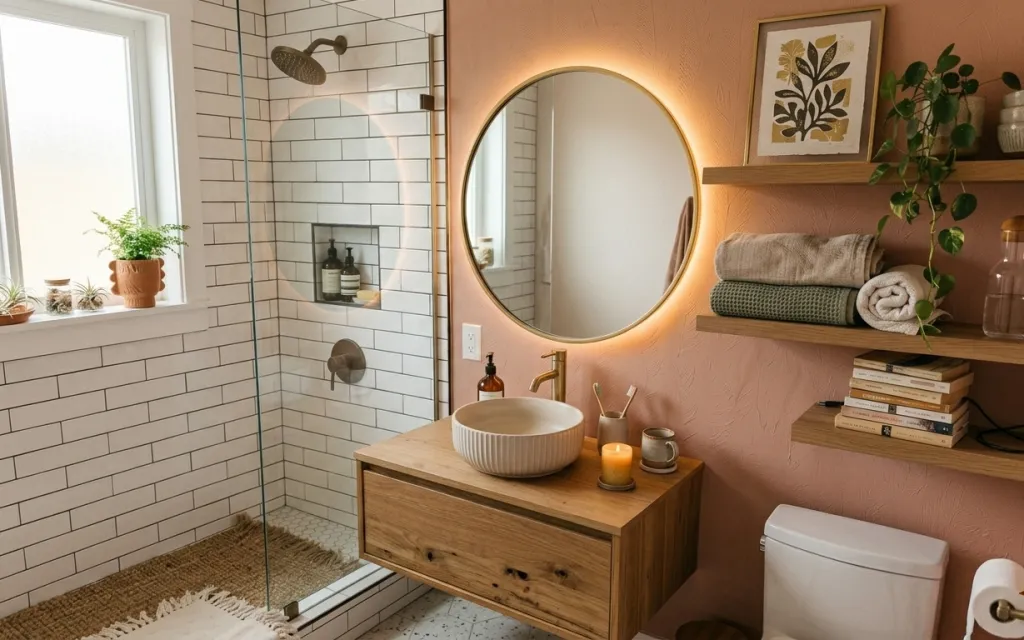
If you’ve ever stood in front of subway tile and thought, “This looks clean but a little hospital-y,” you’re not alone. In this corner, the warm terracotta painted wall is what makes the white tile, wood vanity top, and gray rolled towels feel intentional together. The textures do a lot of the talking—glazed tile shine, matte towel cotton, and a woven rug surface underfoot. For homeowners on a time-and-budget refresh, the order matters: change the wall tone first, then add the finishing softness.
I used to start with art and accessories, then wonder why the room still felt sharp. Here’s what finally clicked for me: you need one warm “anchor” surface before the small things can read as cozy instead of clutter. On this kind of bathroom tile background, the warm paint tone and the round mirror work like a visual pause—then the rug and towels read as comfort, not decoration.
Layer 1 — small textured area rug near shower ($80) Underfoot comfort that matches the tile
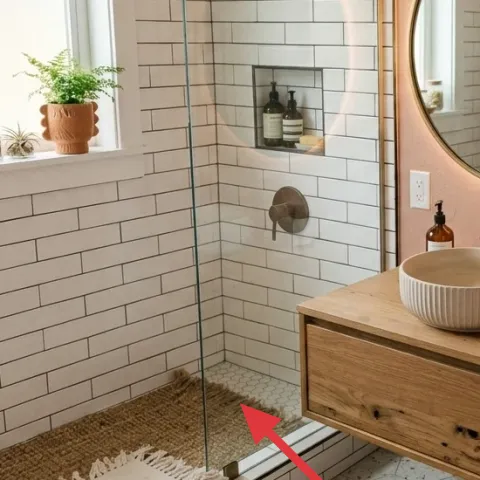
That small textured area rug by the shower door is the quickest way to soften the hard lines of white subway tile. Choose something with a little depth—looped or flatweave texture—so it doesn’t look like a temporary bath mat. This placement matters: it catches water-spray moments and gives your feet a clear “step zone” right before the vanity area. The trade-off is maintenance; textured rugs need quick vacuuming, especially in a humid bathroom. The upside is worth it because the rug also visually ties into the warm, earthy palette rather than competing with it.
Pick texture, not just color
In tile-heavy bathrooms, texture reads warmer than a plain flat weave—especially next to a wood vanity.
Layer 2 — framed botanical wall art print ($60) A calm focal point above the shelf line
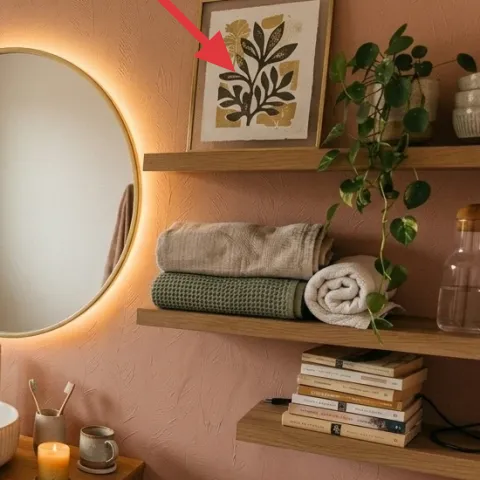
The framed botanical wall art print gives the wall a pattern that sits comfortably next to the clean grid of the shower tile. Since the art is on the upper right, it balances the round mirror’s curve and keeps your eye from bouncing straight across the room. Go for a print with muted greens or warm neutrals so it doesn’t turn the terracotta wall into an over-cooked orange. The trade-off is glass-and-frame glare—choose a matte finish or position it so reflections don’t wash out the details. When you match the print tones to the gray towels, the whole corner starts looking curated instead of “decorated.”
Let the frame color echo the vanity
If the frame has warm undertones, it blends better with light oak than a cool silver look would.
Layer 3 — terracotta planter on window ledge ($20) Small greenery that makes daylight feel softer
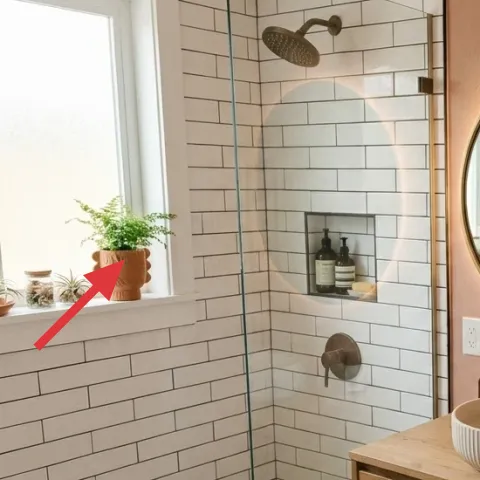
The terracotta planter on the window ledge adds a second texture note—baked clay—right where daylight hits the room. That matters because the white tile and glass shower enclosure can feel visually “bright” even in warm lighting. A terracotta pot also harmonizes with the warm painted wall, while the plant’s green brings freshness without adding another competing color. The trade-off is watering discipline; window-ledge plants tend to dry a little faster, especially if the glass gets sun. Still, this is an easy swap-and-adjust layer because you can rotate the plant seasonally.
Use terracotta to repeat the wall warmth
Repeating terracotta in one small object keeps the color family cohesive without making the room feel themed.
Layer 4 — glass jar candle on vanity tray ($20) One warm glow moment at countertop level
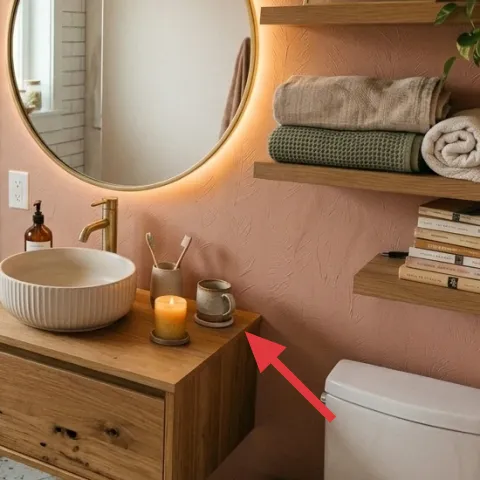
The glass jar candle on the vanity tray is a small object, but it changes how the vanity corner reads after dark. It gives you a warm light source that sits at the same “height” as grooming routines—so the room feels lived-in, not just styled for daytime. Keep the jar simple and the scent neutral; you want the visual warmth, not a competing vibe. The trade-off is that candles burn down, so this works best when it’s part of a routine swap. If the jar has ridges or a thick glass look, it also catches the ambient glow from the mirror area.
Don’t place it too close to towels
Keep candles away from rolled towel edges to avoid heat exposure in a warm bathroom.
Layer 5 — rolled gray towels ($30) The color link between tile white and terracotta warmth
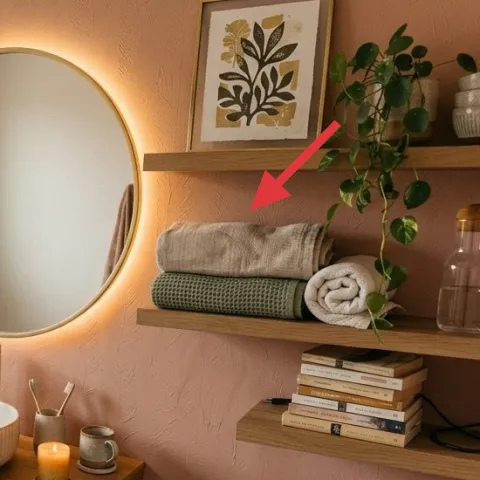
Rolled gray towels are doing a subtle job: they bridge white tile and warm terracotta with a neutral that isn’t too yellow or too cool. Roll them tightly enough to look intentional, but not stiff—soft folds read more natural than perfectly uniform cylinders. This towel choice also helps the corner feel hotel-clean without looking sterile. The trade-off is that gray shows dampness a little more than darker colors, so you’ll want to rotate your towels and keep them fully dry. Still, it’s one of the easiest refresh steps because you can swap towels in under ten minutes and instantly see the difference.
Match towel texture to the rug
If the rug feels rougher, choose towels with visible cotton loops rather than silky microfiber.
Layer 6 — round bathroom mirror ($100) Softer lines against the square tile grid
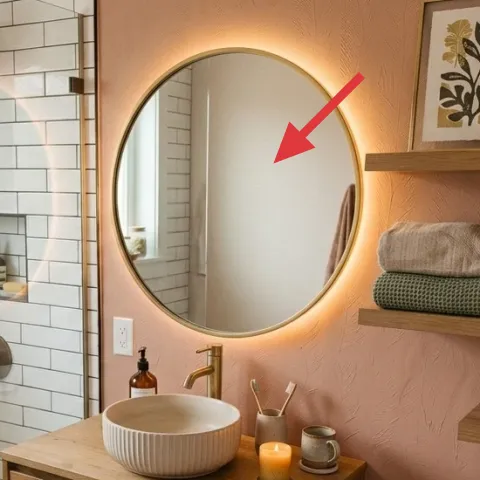
The round bathroom mirror is the shape shift that makes the tile wall feel less rigid. In a corner dominated by straight grout lines and rectangular surfaces, the circle brings visual softness and gives the eye a place to rest. This is also a practical win: a round mirror can make the vanity area feel slightly larger because it avoids hard right angles. The trade-off is that you may have to adjust how you style the countertop—round mirrors look best when clutter is controlled. Keep the mirror frame finish warm (light brass or warm metal tones) so it harmonizes with wood and terracotta.
Style the vanity to the mirror’s height
When small items sit below eye level, the mirror reads clean instead of crowded.
Layer 7 — textured painted wall in warm terracotta tone ($55) The warm anchor that changes everything
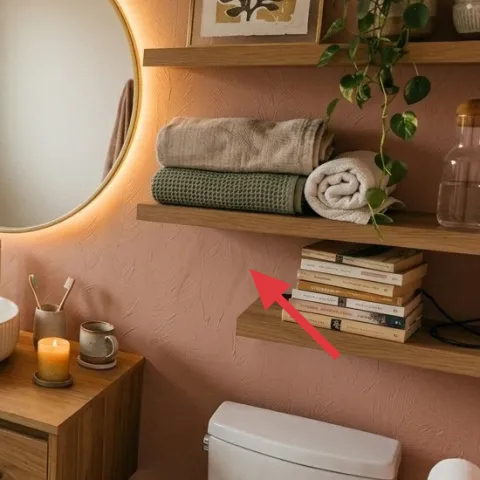
Make it instead of buying it
DIY the warm terracotta wall with paint and basic prep so the white tile stops reading cold and the whole corner feels cohesive.
Materials
- Interior paint (1 quart or small sample + enough for one wall) — 1 purchase — local paint store — $30
- Painter’s tape (1–2 rolls) — 1–2 rolls — hardware store — $8
- Foam roller covers + angled brush set — set — hardware store — $12
Steps
- Clean the wall with a damp cloth and let it fully dry.
- Apply painter’s tape along the tile edge, mirror edge, and shelf line.
- Stir paint thoroughly until the color looks even.
- Cut in around corners and edges with an angled brush.
- Roll the main wall areas with a foam roller in even sections.
- Let the first coat dry completely (follow the paint can for drying time).
- Apply a second coat, maintaining consistent pressure on the roller.
- Remove tape carefully while the final coat is still slightly flexible, then touch up tiny spots.
- Let everything cure fully before hanging or replacing items right against the wall.
Total DIY cost: $50 — saves about $5 over buying.
The cost, layer by layer
| Layer | Item | Cost |
|---|---|---|
| 1 | Small textured area rug near shower | $80 |
| 2 | Framed botanical wall art print | $60 |
| 3 | Terracotta planter on window ledge | $20 |
| 4 | Glass jar candle on vanity tray | $20 |
| 5 | Rolled gray towels | $30 |
| 6 | Round bathroom mirror | $100 |
| 7 | Textured warm terracotta wall paint (DIY equivalent) | $55 |
| Total | $365 | |
If you want a cheaper variant, downsize the rug and swap one accessory (like the candle jar) for a lower-cost option while keeping the paint tone and mirror shape—those are the two visual anchors.
What worked, what didn't (across the whole room)
The best-performing changes were the wall color and the round mirror shape, because they soften the square tile grid without requiring demolition. The textiles and small warm objects made the vanity corner feel calm instead of purely functional. The only friction point is that accessories in bathrooms need tighter organization, especially near the shower.
What worked
- Warm terracotta paint made the white subway tile look intentional instead of cold.
- The round mirror softened the corner’s geometry and helped the vanity feel less cramped.
- A textured rug by the shower added comfort and reduced the “hard floor” feel.
- Gray rolled towels linked the tile and wall colors with a neutral middle note.
- Terracotta planters repeated the wall warmth for a cohesive color story.
- The candle jar gave a warm, countertop-level glow when the room lightened down.
What didn't
- Too many small items on the vanity made the corner look busy under the mirror.
- Placing soft textiles too close to humidity meant the towels needed more frequent swaps.
- Shiny surfaces reflected light onto the framed print, making details harder to read from one angle.
- If the rug is very flat, it disappears visually and doesn’t soften the tile.
What we'd skip if we did it again
Skip swapping multiple countertop items at once. If the vanity gets too many small objects, the mirror and art lose their focal role and the corner reads cluttered instead of cozy.
Skip choosing a rug that’s just “bath mat thin.” A small, textured woven look is what brings warmth next to the tile and keeps your feet and visual rhythm happy in the same spot.
Skip picking wall paint based only on how it looks on a sample card. In warm indoor light next to white tile, terracotta needs a calibrated undertone—test on a section of the wall first so it doesn’t pull too orange or too brown.
Frequently asked
How long does this kind of bathroom refresh usually take?
Plan for a single weekend: one day for prep and painting the warm terracotta wall, plus a second block for swapping the rug, towels, and mirror-style accessories. If the only DIY is paint, drying time is the real schedule driver. Budget extra time if the wall needs cleaning, tape work, and a careful second coat.
What if I rent and can’t paint the wall?
Keep the same layout idea—anchor warmth on the wall—but replace paint with a removable option like peel-and-stick wallpaper designed for bathrooms or a large fabric wall hanging in a warm terracotta tone. The round mirror and rug still do the geometry and comfort work, so you can keep the “corner” effect without repainting.
Will this work in a smaller bathroom with less wall space?
Yes—lean into fewer anchors. If the framed botanical print feels too big, choose a smaller frame or center the print closer to the mirror so it doesn’t crowd. A smaller rug size still works as long as it sits in the “step zone” near the shower. The mirror shape remains the biggest geometry win.
What if my bathroom is bigger—should I add more decor?
Add one bigger visual layer rather than more small ones. For example, keep the same rug texture idea but swap the framed print for a slightly larger version, or add another terracotta planter on the shelf so the color repeats across more distance. The candle jar and towels can stay simple to avoid clutter under the mirror.
Where can I shop for these items without overspending?
For the highest impact per dollar, start with the mirror style (often available at big-box and mid-range home stores), then look for rug and towels at home goods retailers or department stores. Terracotta planters and the jar candle are easy to find online or in garden sections. For art, pick a botanical print with warm greens and neutrals to match the wall.
Biggest mistake to avoid in a tile-and-vanity corner?
Over-styling the vanity before the wall tone is settled. When the wall still feels cool, any accessories can look like random color bits instead of a cohesive palette. Paint or otherwise warm the main wall first, then add the rug, towels, and one or two countertop accents at the right height under the mirror.
More in Bathroom
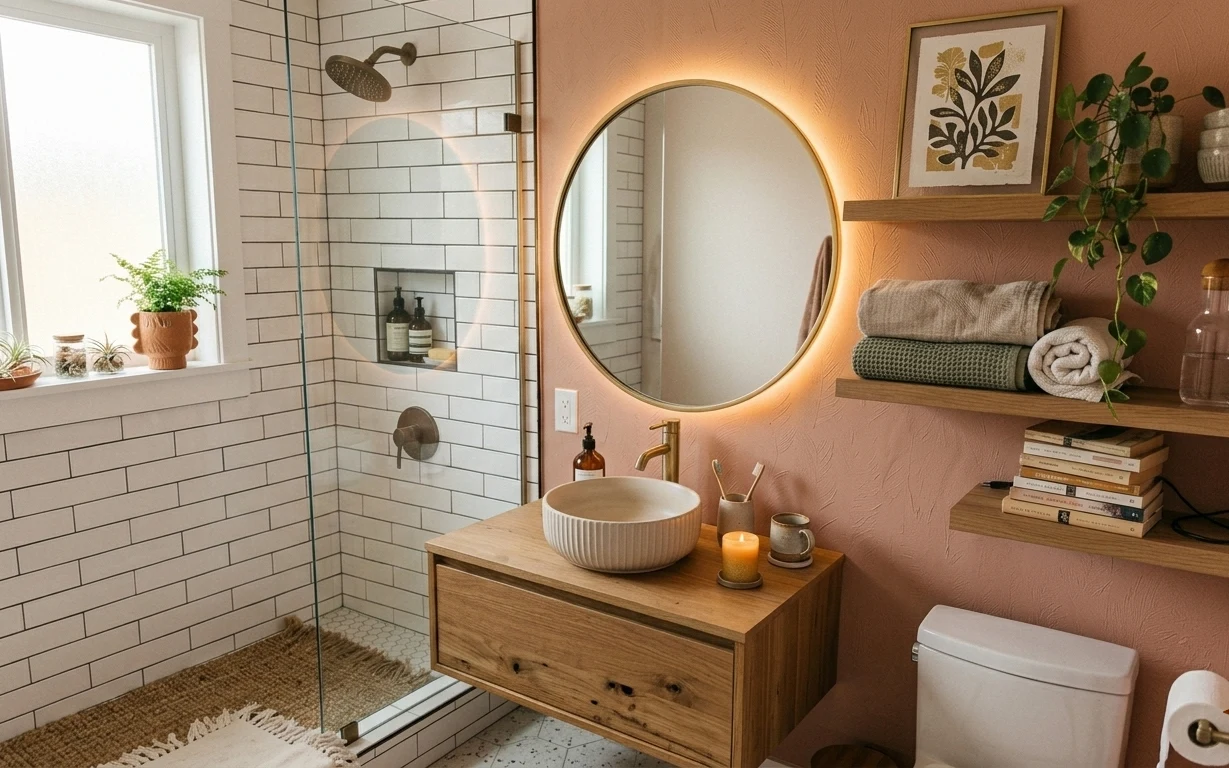
6 weekend upgrades for a vanity-and-shower corner for $400
A weekend refresh for a vanity and shower corner on a $400 budget: cozy textiles, a softer wall color, and a few easy styling swaps that ma…
Under $500: a terracotta-bathroom vanity refresh
A budget-friendly bathroom vanity refresh with warm brass lighting, a new bath mat rug, and a single peel-and-stick wallpaper accent wall. …
Brass-and-stone bathroom vanity nook refresh, $800
A soft-brass bathroom vanity nook refresh that leans on warm mirror light, a simple plant shelf, and a grounded jute-style rug. Built with …