- Best for
- Weekend balcony refresh
- Cost
- $700
- Difficulty
- Moderate DIY
- Time
- One weekend (about 6–9 hours)
Why warm wood-and-plant lighting is the balcony lounge of 2026
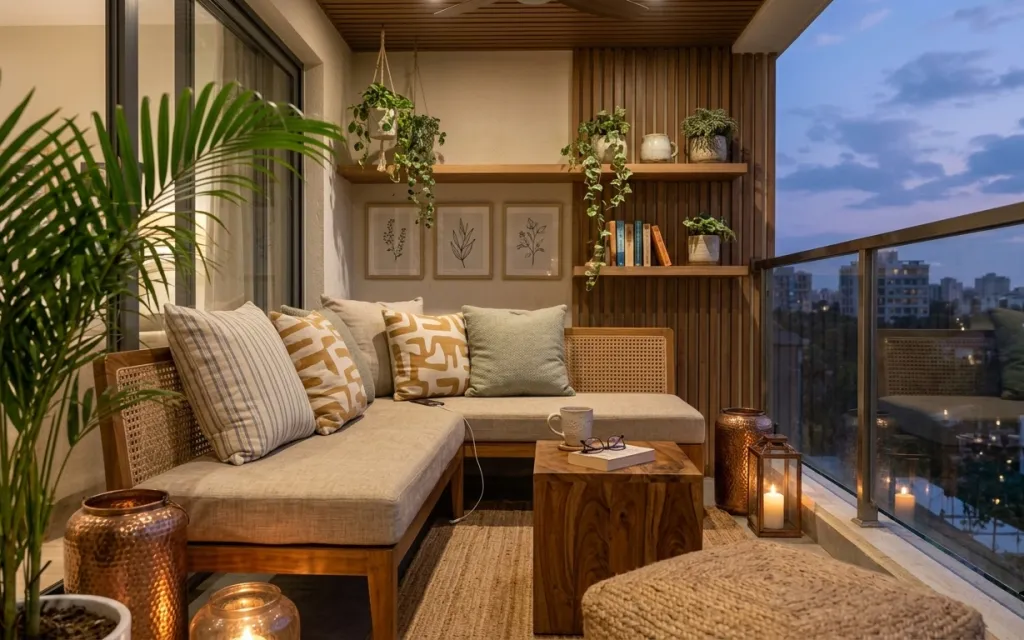
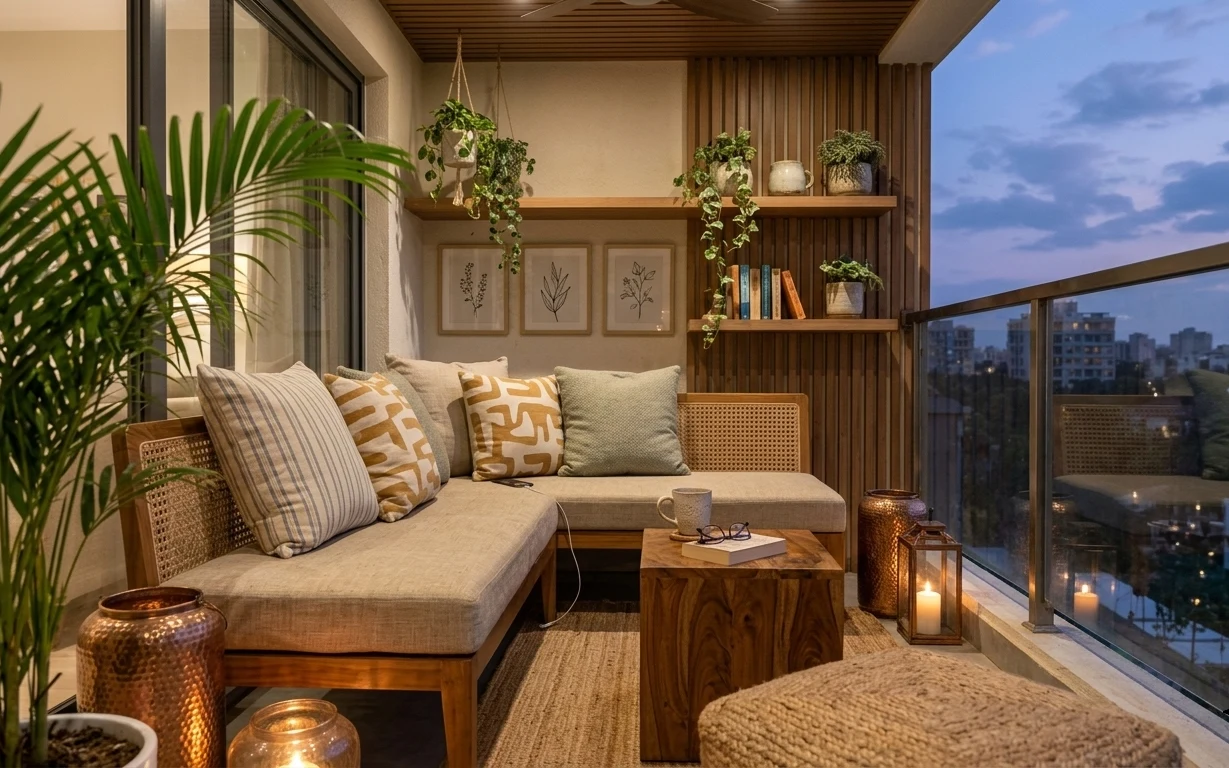
The first thing I’d copy from this balcony lounge is the warm, wood-and-sage combo: walnut tones, woven textures, and lots of green. Underfoot, the large area rug keeps the whole seating corner from feeling “floating,” especially with the warm glass-door glow and that light stucco wall behind. On top of the sofa, the throw pillows bring both stripe-and-pattern contrast and that piled-on-cushion comfort. Finally, the metal lantern with a lit candle turns the evening into something you actually want to stay outside for.
I used to chase “prettier” decor—more candles, more little objects—and it rarely changed how the space felt. The shift for me was choosing one surface to anchor the room (the coffee table) and then building outward: rug first, then textiles, then lighting. The result is calmer and more put-together, without needing new furniture.
Layer 1 — large area rug ($200) Sets the scale and softens the balcony floor
This large area rug is doing the heavy lifting: it frames the sofa-and-chaise zone and makes the balcony feel like a real living area instead of a pass-through. The warm neutral base also harmonizes with the walnut wood coffee table and the woven textures, so nothing fights the plants. A smaller rug would stop where your eye expects it—half the seating would feel “unmoored.” I’d choose an outdoor-friendly rug with a flat weave or tightly bound fibers so it holds up season to season. The trade-off is a higher upfront cost, but you save by not buying extra furniture to “finish” the corner.
Pick rug fibers that can take evening moisture
If your balcony gets dew or occasional rain, look for polypropylene or a tightly woven construction and plan for quick drying after storms.
Layer 2 — throw pillows ($30) Mix stripes and solids so it looks styled, not random
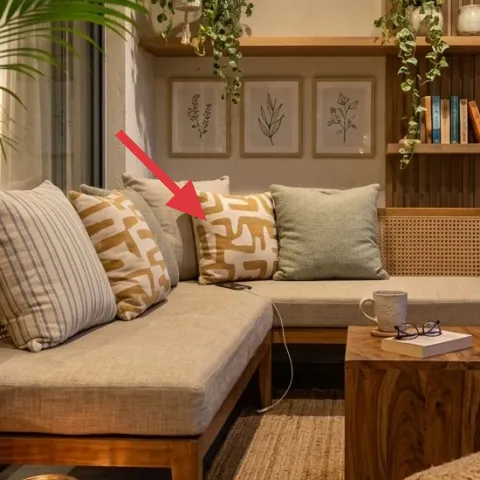
These throw pillows look like the sweet spot between cozy and structured: patterned pieces (stripe-style) paired with a couple of solid cushions. That mix matters because it gives the seating depth even when the balcony view is bright outside. If you only buy solids, the sofa can look flat; if you only buy prints, it can feel busy. A practical approach is two patterned covers plus two neutral covers, then adjust by how much color you want near the glass door. The trade-off is that pillow styling takes a minute—fluffing and flipping to get that “piled” angle—but it’s faster than replacing furniture.
Match pillow colors to the wood and plant tones
Pull one neutral from the rug and one tone from the greenery, and the cushions will blend naturally even with different fabrics.
Layer 3 — framed botanical prints ($120) Brings indoor-wall polish to the outdoors
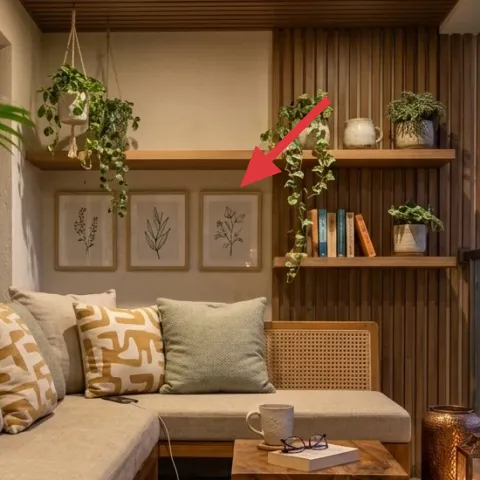
The framed botanical prints make this balcony feel intentional, not temporary. They echo the plants’ leaf shapes and give the light stucco wall some graphic structure, so the room doesn’t rely only on greenery. I like this move for homeowners because you can pick frames that match your existing wall hardware and keep the look consistent with what’s already there behind the seating. The trade-off is that wall decor is a little “planful”: level the frames and keep spacing even, or the whole trio looks off. Compared with swapping furniture, this is cheaper and much easier to change later without repainting anything.
Dry-fit the frames before the final hang
Use painter’s tape to outline each frame, then step back and check symmetry against the shelves.
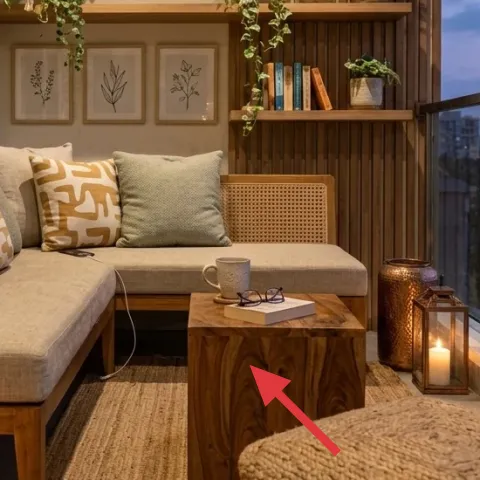
Layer 4 — wood coffee table ($180) Makes the corner feel finished at a fraction of new-furniture cost
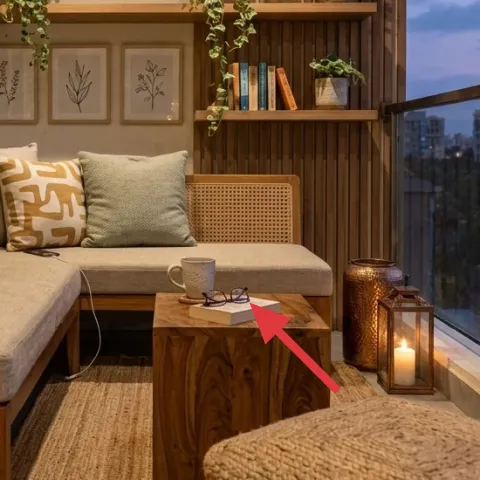
Make it instead of buying it
Refresh a worn wood coffee table with sanding and a new stain so it matches the walnut tone already in the balcony seating.
Materials
- Sandpaper (120/220 grit) — assorted sheets — hardware store — $15
- Wood stain (walnut tone) — 1 can — home improvement store — $18
- Outdoor clear coat (water-based) — 1 quart — home improvement store — $22
- Stain brush + foam applicators — 1 kit — hardware store — $6
- Lint-free cloths + tack cloth — 1 pack — hardware store — $5
Steps
- Sand the tabletop and edges with 120 grit, then switch to 220 grit for a smooth finish.
- Wipe off dust thoroughly with a tack cloth.
- Mask any hardware or areas you don’t want stained.
- Apply the first stain coat with a brush or foam applicator, working in the direction of the grain.
- Let the first coat dry fully per the stain label instructions (usually a few hours).
- Apply a second, lighter stain coat for a deeper walnut tone, then wipe off excess.
- Allow the stain to cure/dry completely again per label timing.
- Apply a thin clear-coat layer, then let it dry and cure fully before outdoor use.
Total DIY cost: $66 — saves about $114 over buying.
If you already have the table shape, staining is the fastest way to make it look “designed” instead of “borrowed.” This one reads warm walnut—notice how it pulls the rug’s beige tones and the surrounding woven textures into the same color family. A new coffee table can be pricey, and it rarely matches the exact undertone of your existing wood. The trade-off with DIY is time: sanding and cure windows mean you can’t rush the process, and you have to work in a ventilated spot. Once it’s done, though, it looks like you upgraded the whole lounge, because that top surface is where your eye lands first.
Don’t stain over dusty wood
Even a light film of dust can cause blotchy absorption—wipe, tack, and then stain.
Layer 5 — two floating wall shelves ($80) Adds vertical plant styling without crowding the seating
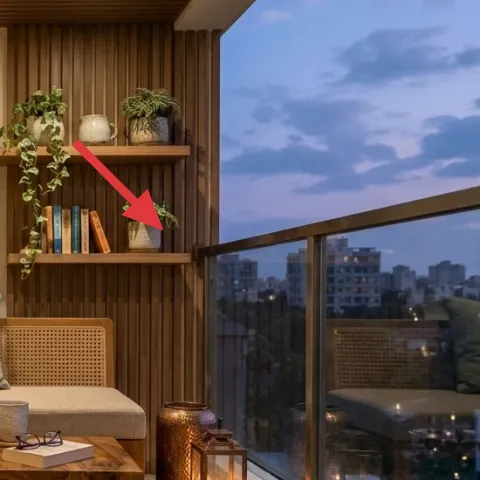
Those two floating wall shelves create the “height” this balcony lounge needs—without stealing floor space from the sofa. Notice how the small potted plants on the shelves keep the green theme going at eye level, while the shelf depth gives you room for a candle and a book stack. If you skip shelves and rely only on floor plants, the corner can feel heavy and low. The floating look also works with a weekend-decor mindset: you’re adding storage-like surfaces rather than changing the entire layout. The trade-off is hardware work—measure twice, keep them level, and anchor correctly so the plants don’t become a future problem.
Keep plant pots consistent in size
Using similarly sized pots makes the shelves look curated, even if the plants are different varieties.
Layer 6 — metal lantern with a lit candle ($30) Makes evenings feel calm and intentional
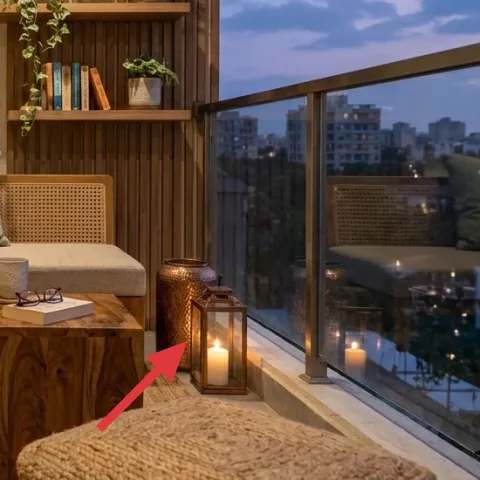
The metal lantern with a lit candle is the lighting mood-maker here: it adds a warm, flickering point of interest that doesn’t compete with the glass door brightness. I’d choose lanterns that look like this—open metal or textured glass—so the light reads even from across the seating. If you swap for an ultra-bright outdoor flood light, the balcony becomes a “workspace,” not a place to linger. The trade-off is safety and placement: keep the flame away from hanging plants and any drapey elements, and avoid spots where wind can tip it. With the right location, this one light source makes the whole lounge feel more layered after sunset.
Time your lantern lighting to the candle glow
Turn it on when the sun drops—glass doors often wash out smaller light sources in full daylight.
Layer 7 — hanging planter ($40) Adds a living “ceiling” moment over the seating
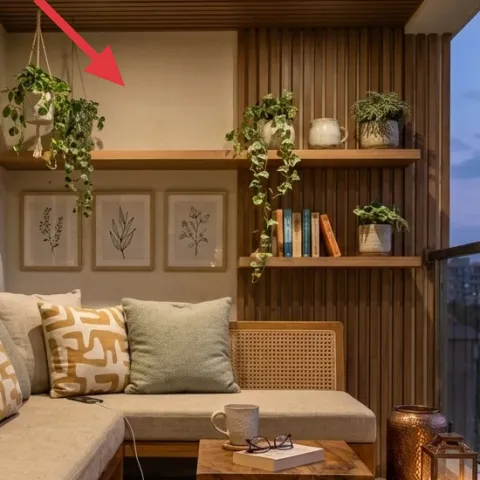
The hanging planter turns the balcony into a three-dimensional scene: rug at the bottom, sofa in the middle, greenery overhead. That top-down green is what makes the space feel lush without adding more bulk near the floor. You get the same effect with fewer objects than a second standing plant, and it balances the framed botanical prints on the interior wall. The trade-off is maintenance—hanging plants dry out faster—but on a balcony you can build a watering routine around the way your plants behave. If your balcony gets heavy wind, use planters with secure mounting and a pot that won’t rattle.
Hang so leaves don’t brush the sofa
Leave enough clearance that plants can sway without snagging cushions or pillows.
The cost, layer by layer
| Layer | Item | Cost |
|---|---|---|
| 1 | Large area rug | $200 |
| 2 | Throw pillow set (covers) | $30 |
| 3 | Framed botanical prints (set of 3) | $120 |
| 4 | Wood coffee table (DIY refresh equivalent) | $180 |
| 5 | Two floating wall shelves | $80 |
| 6 | Metal lantern with lit candle | $30 |
| 7 | Hanging planter | $40 |
| Total | $680 | |
A cheaper route is to keep the same layout but shop for a pre-owned rug, thrift frames in the same size range, and choose an inexpensive hanging planter that’s easy to swap seasonally.
What worked, what didn't (across the whole room)
The best-performing choices here are the ones that create “zones” (rug and wall decor) while still stacking softness and warm light. Plants feel cohesive because they repeat across floor, shelves, and overhead. The only part that can go wrong is buying lighting that’s too bright—then the warmth disappears.
What worked
- The large area rug anchors the sofa-and-chaise corner and hides balcony-floor scuffs.
- Throw pillows add pattern rhythm without needing a second seating piece.
- Framed botanical prints echo leaf shapes and keep the stucco wall from feeling bare.
- Floating shelves create vertical staging for small potted plants and books.
- The metal lantern adds warm candlelight that looks right through glass at dusk.
- The hanging planter adds height, making the lounge feel lush without crowding the floor.
What didn't
- Replacing the candle lantern with a harsh outdoor bulb makes the whole corner look utilitarian.
- Buying only solid cushions can make the sofa feel flat against the patterned rug.
- Skipping wall art forces all the “style energy” onto plants, which can look random.
- Overloading shelves with different pot sizes can make the arrangement look unplanned.
- Hanging a planter too low can lead to leaf contact with cushions during breezes.
What we'd skip if we did it again
Skip buying a new outdoor furniture set just to “get the look.” The rug, pillows, and lighting handle 80% of the visual job, and those changes are faster (and cheaper) than replacing seating.
Skip matching everything from one retailer. Mixing one patterned pillow cover, one neutral, and one warm-toned wood finish looks more intentional than buying a full set that reads catalog-perfect.
Skip bright overhead lighting for this corner. Instead, lean into one warm lantern and let the plants and framed prints do the rest of the decoration work.
Frequently asked
How long does this balcony lounge refresh take?
If you’re buying everything, plan for about 4–6 hours to lay down the rug, swap pillow covers, hang the framed botanical prints, and mount the two floating shelves. If you’re DIY-staining the wood coffee table, add sanding, stain application, and cure time—usually another 1–2 sessions. The exact timeline depends on dry and cure windows on your stain and clear coat labels.
What if I rent and can’t anchor shelves or hang frames?
For renters, switch to solutions that don’t require permanent anchors: use a freestanding plant stand for vertical greenery, and rely on leaning wall frames (if your landlord allows) or removable adhesive hooks rated for the frame weight. For lighting, keep the metal lantern and candle approach since that doesn’t require electrical work. The rug and pillow layers still deliver the biggest feel-change.
My balcony is smaller—how should I scale this?
Use the same order, just scale down: choose the widest rug size that can still reach under the sofa front edge, and keep pillow counts to two patterned plus two neutral. For shelves, consider one shelf instead of two or reduce the number of items per shelf so plants don’t look crowded. Hanging a planter is powerful in small spaces, but keep it high enough that leaves won’t brush cushions.
Where can I shop for these pieces on a budget?
For rugs and pillow covers, look for outdoor-friendly collections at home stores and online marketplaces with solid return policies. For framed botanical prints, match frame size across retailers so you can build the set consistently. Floating shelves and anchors usually come from big-box home improvement stores, while metal lanterns and hanging planters are easy to find at garden centers and seasonal decor aisles.
What’s the biggest mistake people make with balconies like this?
Overbuying “single-purpose” decor—like extra standalone lights or too many small plants—before grounding the seating with a rug. Without a rug, the arrangement reads scattered. Another common miss is choosing a harsh light source; warm lantern light is part of the look, especially when the glass door reflects daylight.
More in Outdoor & Patio
7 budget balcony upgrades for a $700 balcony lounge
A warm, plant-filled balcony lounge refresh that reads styled and intentional—on a $700 weekend budget. Focus on a bold rug, layered throw …
How to build a balcony seating nook for $300
A renter-friendly balcony seating nook built around a large woven rug, stacked pillows, a fringed wall hanging, plants, and warm plug-in la…
A layered outdoor patio seating area for $1000
A string-light and greenery outdoor patio seating area with cozy texture, built around a natural-fiber rug and a rattan hanging chair. This…