- Best for
- balcony seating nook
- Time
- 1 weekend afternoon
- Difficulty
- easy-to-medium
- Cost
- $255 total (about $300 budget ceiling)
Why warm beige-and-brown balcony seating nook is the balcony seating nook of 2026
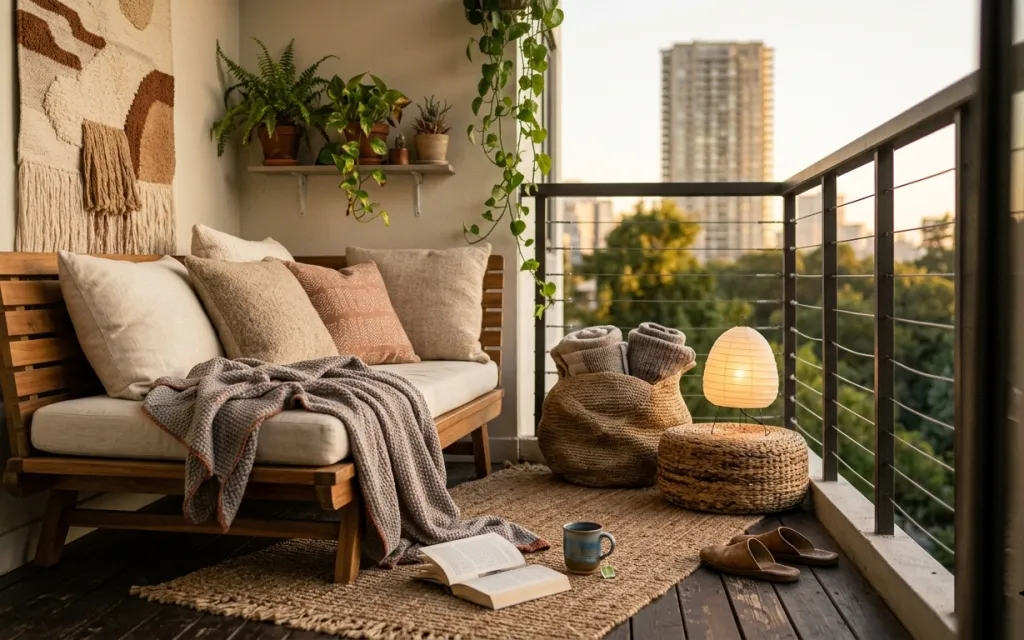
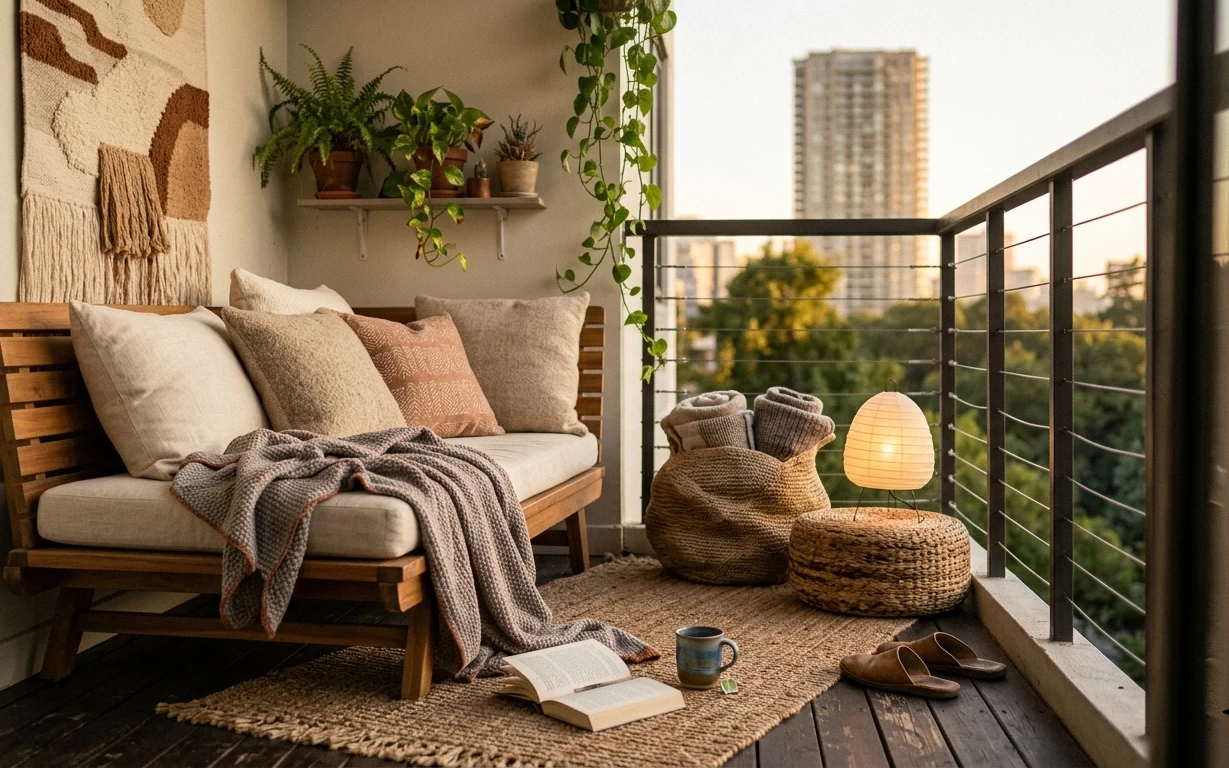
The starting point here is the texture combo: a large woven area rug under the bench, then soft pillows and a chunky throw that drape instead of sitting stiff. On the wall, the woven wall hanging tapestry with fringe brings pattern in a way paint never would—especially at arm’s reach from the railing. I love that the plant shelf and hanging greenery add “real life” without fighting the warm neutrals. For renter budgets, this look works because everything can be moved, swapped, or stored.
I used to overthink outdoor decor and try to make it look “finished” with too many matching pieces. The thing that changed my mind is how much the right rug and one textile-driven wall element do on a small balcony. Once the floor gets a grounded layer and the wall gets one tactile focal point, the plants and lamp simply support the vibe.
Layer 1 — large woven area rug ($80) Grounding texture for the bench zone
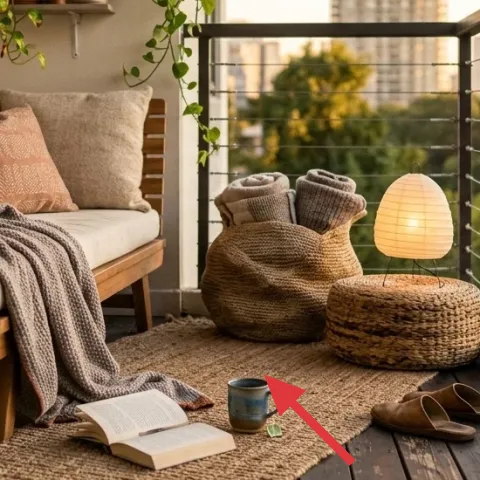
A large woven area rug in warm beige anchors the whole balcony seating nook, turning the slatted bench area into a defined “room” even though the space is open to the air. It also hides the small stuff—sand, dirt, and the inevitable scuffs from shoes—so the rug doesn’t look precious. I went woven here rather than a flat sheet-style mat because the raised fibers catch the warm plug-in lamp glow and read cozy at dusk. The trade-off is that you’ll need occasional shaking or gentle spot cleaning, but it’s still way easier than dealing with permanent flooring changes.
Choose a rug size that covers the bench footprint
When the front legs of the bench sit near the rug’s edge, the zone looks intentional instead of accidental.
Layer 2 — stack of throw pillows ($30) Soft cushions for lounging lengthwise
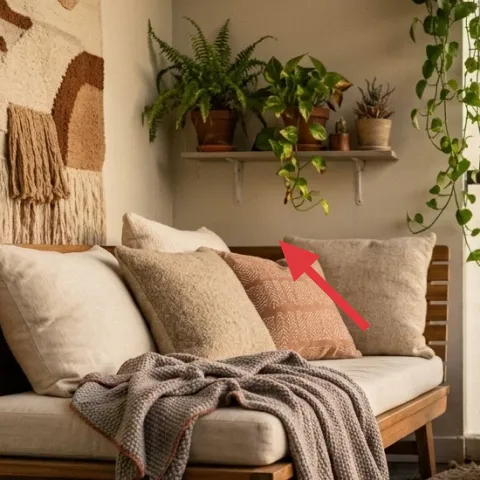
The stack of throw pillows on the wooden bench is what makes this setup feel comfortable for lingering, not just posing for a photo. Keeping the pillow tones in light cream and warm beige keeps the palette calm against the darker wood and railing. I’d skip a bunch of tiny specialty cushions—too many shapes can fight the woven rug’s texture—so the “pile” here is about layering similar sizes for a casual mound. The trade-off is that you may need to refresh covers seasonally, but pillow covers are one of the easiest renters swaps to pack away at move-out.
Stick to a tight color story
Neutral cushions let the plants and wall hanging do the visual heavy lifting.
Layer 3 — throw blanket ($25) Adds drape and movement over the bench
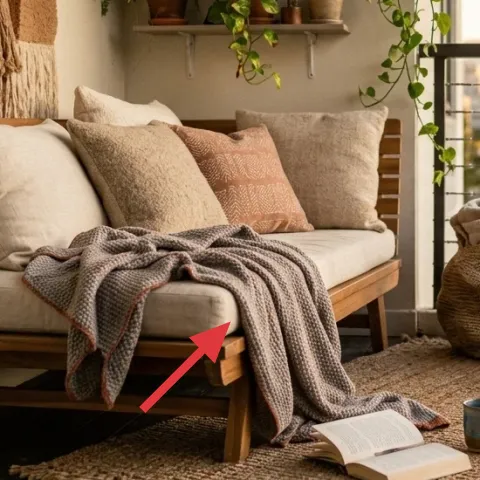
The throw blanket draped over the bench adds that lived-in texture you can’t fake with pillows alone. Because it’s slightly chunky, it creates soft contrast against the smoother woven rug fibers and the bench’s slats. I prefer a blanket that looks good folded and also looks good thrown casually—here it’s both wrapped and loosely tossed, which makes the seating feel effortless. If you choose a super-flat blanket, it can read “missing” the moment the wind or daylight changes. The trade-off is staying thoughtful about placement so it doesn’t slide off the bench every time you stand up.
Drape it where you actually sit
Let the blanket fall toward the seat edge so it’s ready to grab without reshuffling.
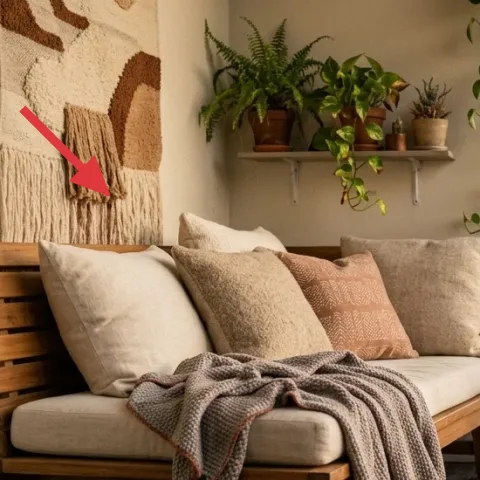
Layer 4 — woven wall hanging tapestry with fringe ($45) One no-drill focal point with pattern
Make it instead of buying it
This macramé wall hanging gives you the same fringe-and-warm pattern as the hero, using cord and a dowel—no permanent hardware.
Materials
- Macramé cord — 6–8 mm, ~50–60 ft — craft store — $12
- Wooden dowel — 1/2"–3/4" thick, ~24" wide — hardware store — $8
- Command hook — 1 large picture hook — $4
- Natural twine — ~20 ft — craft store — $6
- Small ring or tape — for bundling ends — $4
Steps
- Measure the dowel width and decide the final hanging width.
- Cut cord strands (enough for even spacing) and bundle them for faster knotting.
- Attach the cords to the dowel with a simple lark’s head knot.
- Create the pattern rows with alternating square knots for texture.
- Trim the fringe ends evenly so the bottom edge looks intentional.
- Hang the dowel on a Command hook and adjust cord tension before trimming any stray tails.
Total DIY cost: $34 — saves about $11 over buying.
On this balcony, the woven wall hanging tapestry with fringe is the visual “stop” that keeps the whole setup from reading like random pieces. A tapestry like this adds warmth, movement, and geometric texture at eye level—right where you want it when you’re seated by the railing. I’d choose a macramé-style look over a flat print because it catches light differently across the evening. The trade-off is that hanging it carefully matters; if the dowel isn’t centered, the fringe can pull the eye off-balance.
Don’t overload the hook placement
Use one properly rated Command hook and keep the hanging light—especially on windy balconies.
Layer 5 — small potted plants on wall shelf ($30) Makes the corner feel lived-in
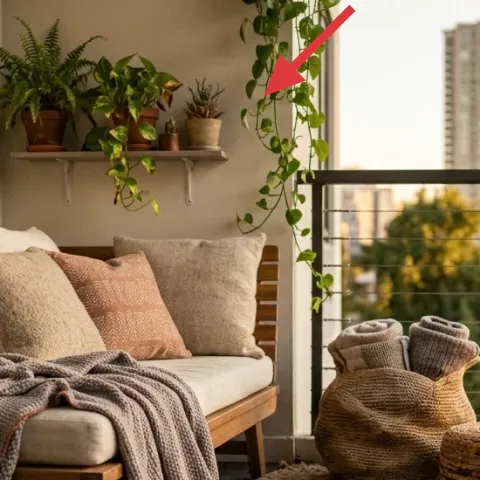
Small potted plants on the wall shelf bring color and softness without adding bulky furniture. Their earthy greens play nicely with the warm beige rug and cream pillows, so the palette stays cohesive instead of turning into a full-on garden display. I like using multiple pots rather than one large planter because it adds variety in height and scale, which reads natural from a seated angle. The trade-off is maintenance—plants need light and a quick check for water—but it’s the easiest “life” layer to swap out when seasons change. If the shelf feels crowded, remove one pot before adding more.
Mix textures, not just plant types
Wider leaves plus trailing pieces read more layered than all small leaf shapes.
Layer 6 — plug-in table lamp with fabric shade ($25) Warm glow after sunset
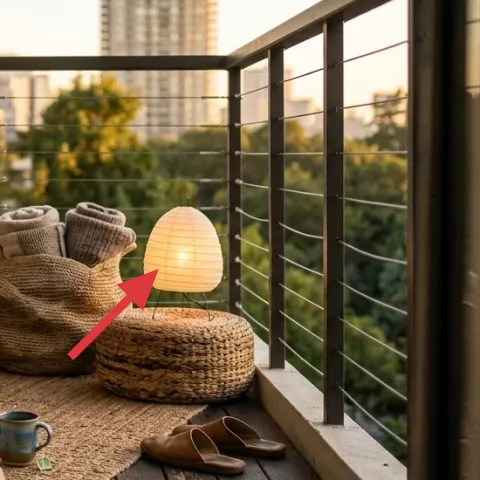
The plug-in table lamp with fabric shade makes the whole balcony feel warmer once the daylight fades, and it does it without any hardwired electrical work. The shade diffuses the light into a soft pool, which flatters the woven rug fibers and the fringe wall hanging at the same time. I’d rather place a single warm lamp than rely on harsh overhead light (or no light), because your plants and textures need softer illumination to look intentional. The trade-off is cord management—keeping the cord tucked and out of walk paths matters on a balcony floor. Choose a stable base so it doesn’t tip when doors or wind shifts.
Angle the lamp toward the rug
Light that lands on texture looks cozier than light aimed at blank railing.
Layer 7 — woven basket on balcony floor ($20) Extra seating or storage with texture
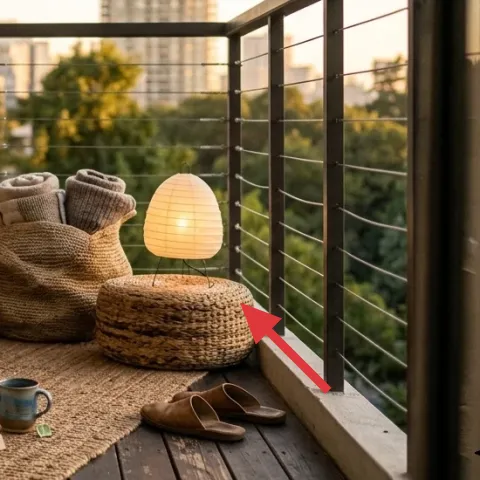
The woven basket on the balcony floor adds a grounded, natural texture that ties the rug and wall hanging together. It’s also a practical styling piece: it gives you an “extra surface” look for small cups or keys, and it can work as casual foot support while you’re seated near the bench. I prefer a woven basket here over a plastic bin because it disappears visually while still being useful. The trade-off is that baskets can flatten over time if they’re too squished—rotate it occasionally so the shape stays presentable. Keeping it in the same warm wood-and-beige family keeps the boho feel cohesive.
Use the basket for small, daily items
A cup or a pair of sandals instantly looks styled instead of cluttered.
The cost, layer by layer
| Layer | Item | Cost |
|---|---|---|
| 1 | Large woven area rug (5×7 or similar) | $80 |
| 2 | Throw pillow covers (set of 3) | $30 |
| 3 | Throw blanket | $25 |
| 4 | Woven macramé-style wall hanging (DIY equivalent) | $45 |
| 5 | Small potted plants for wall shelf (2–3 plants) | $30 |
| 6 | Plug-in table lamp with fabric shade | $25 |
| 7 | Woven basket for floor styling/storage | $20 |
| Total | $255 | |
If you want a cheaper variant, reduce the rug cost (look for smaller sizes or remnant woven styles), use one statement pillow cover instead of three, and swap one plant for a simple trailing option.
What worked, what didn't (across the whole room)
This balcony reads cohesive because the layers are mostly texture-based: woven rug, draped blanket, fringe wall hanging, and natural plants. The warm lamp glow also helps at night, so the corner still feels inviting after sunset. The only snag is that too much clutter (or cords) can visually break the calm palette fast.
What worked
- The woven rug defines the bench zone and hides everyday dust and scuffs.
- Neutral pillow tones keep the balcony looking intentional instead of busy.
- The throw blanket adds drape that looks good even when it shifts in the breeze.
- The fringed wall hanging brings pattern at eye level without any wall painting or drilling.
- Wall-shelf plants add layered height, so the setup feels full from a seated angle.
- The fabric-shade lamp creates soft pools of light across textures.
What didn't
- Using too many tiny decor pieces around the lamp made the floor feel crowded.
- Skipping rug size checks can leave the bench looking like it’s floating on bare floor.
- Plant placement can tip the palette toward “green overload” if heights aren’t varied.
- Letting the lamp cord run across foot traffic turned into a constant trip hazard.
What we'd skip if we did it again
Skip a matching full “outdoor set” of bench, cushions, and decor. Coordinated sets look polished at first, but they flatten texture and don’t give you that lived-in layering you get here.
Skip adding multiple small lights at once. One plug-in lamp with a fabric shade gives warmth without creating a cluttered constellation of cords and bases.
Skip hanging wall decor lower than eye level. The fringed tapestry reads best when it sits high enough to frame the seating, not when it drops into your peripheral vision.
Frequently asked
How long does this balcony refresh take?
Plan about 2–4 hours total if the rug and pillows are ready to go and you’re only arranging. The macramé wall hanging is the real variable—block out a relaxed afternoon plus a little time to trim and center the fringe. If you already have plants, the rest is mostly placement and cord management.
Is this renter-safe for a balcony or patio?
Yes—everything in this look is removable. The rug, pillows, throw, lamp, plants, basket, and wall hanging don’t require permanent changes. For the wall hanging, use a properly rated Command hook and keep the hanging lightweight, especially if your balcony gets wind.
What if my balcony is smaller than the one in the photo?
Go smaller on the rug (or choose a rug shape that still sits under most of the bench footprint), and keep pillow layers to one or two rather than a full stack. The plants are the one place not to crowd—aim for two to three pots plus one trailing element instead of many small fillers.
What if my balcony is larger and feels empty?
Use the same structure—rug plus one textile focal point plus plants—but add scale carefully: choose a slightly larger rug footprint, and consider adding one extra plant with a different leaf shape. Keep the lamp and basket count the same so the texture stays consistent rather than turning into a decor overload.
Where should I shop for these pieces without spending a lot?
Look for the rug and lamp at home goods stores or online marketplaces with clear size filters so you don’t overspend on the wrong dimensions. For pillows and throws, focus on natural fibers or woven looks. For the wall hanging, DIY cord and a dowel are usually cheaper than buying a finished piece.
What’s the biggest mistake people make with this kind of balcony styling?
Over-decorating the floor. On a small balcony, every extra base, candle stand, or small tray competes with the rug and draped textiles. Start with one rug, one draped throw, one lamp, and one basket—then add plants last so the palette stays coherent.
More in Outdoor & Patio
How to build a balcony seating nook for $300
A renter-friendly balcony seating nook built around a large woven rug, stacked pillows, a fringed wall hanging, plants, and warm plug-in la…
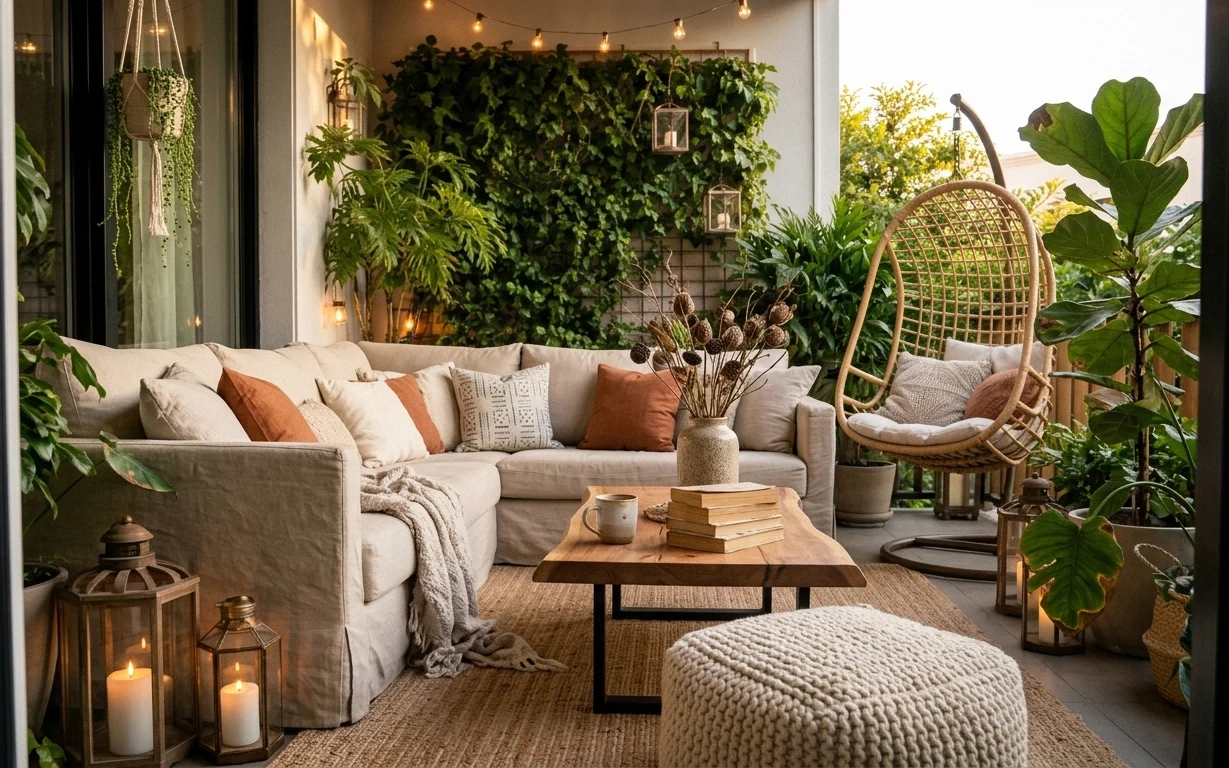
A layered outdoor patio seating area for $1000
A string-light and greenery outdoor patio seating area with cozy texture, built around a natural-fiber rug and a rattan hanging chair. This…
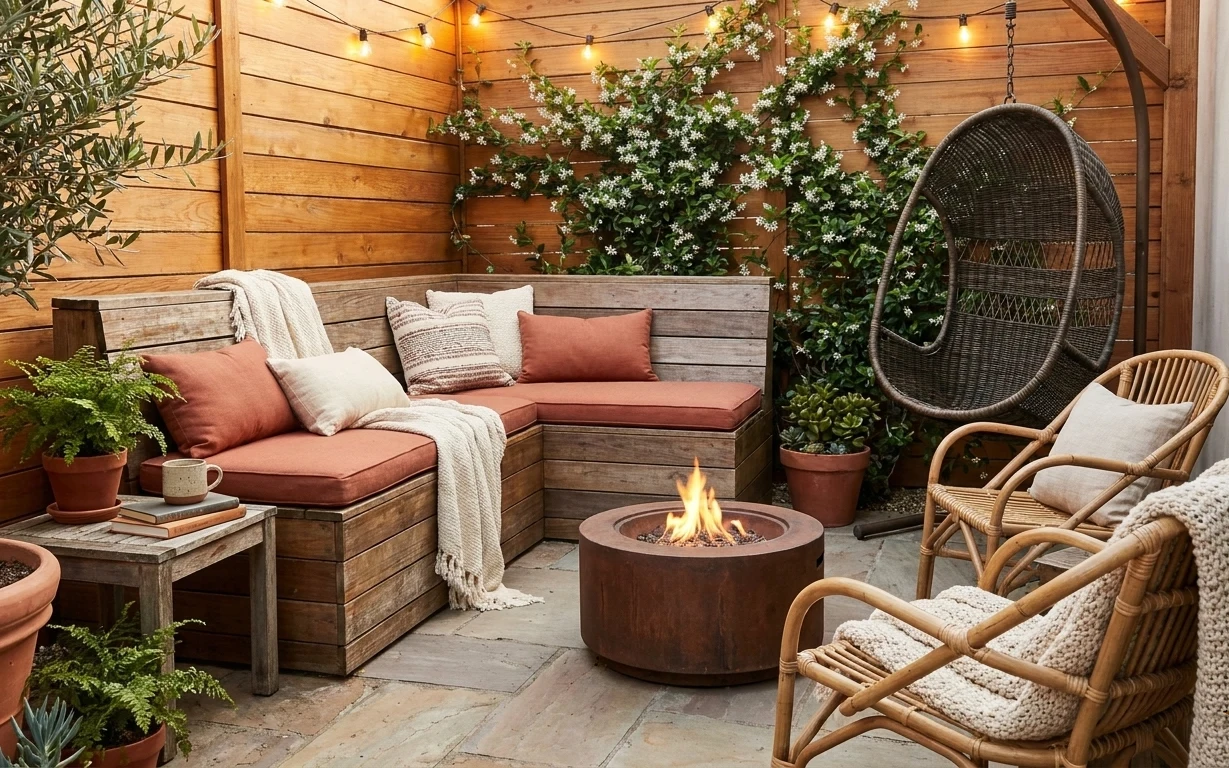
A fire pit patio corner that feels finished for $400
A renter-friendly refresh for a fire pit patio corner with 7 move-ready swaps, kept under $400. The key is pairing warm lighting and earth-…