- Best for
- Texture-heavy boho refresh
- Cost
- $755 total plan
- Difficulty
- Easy–moderate DIY
- Time
- One weekend
Why warm terracotta-and-jute style is the desert living room of 2026
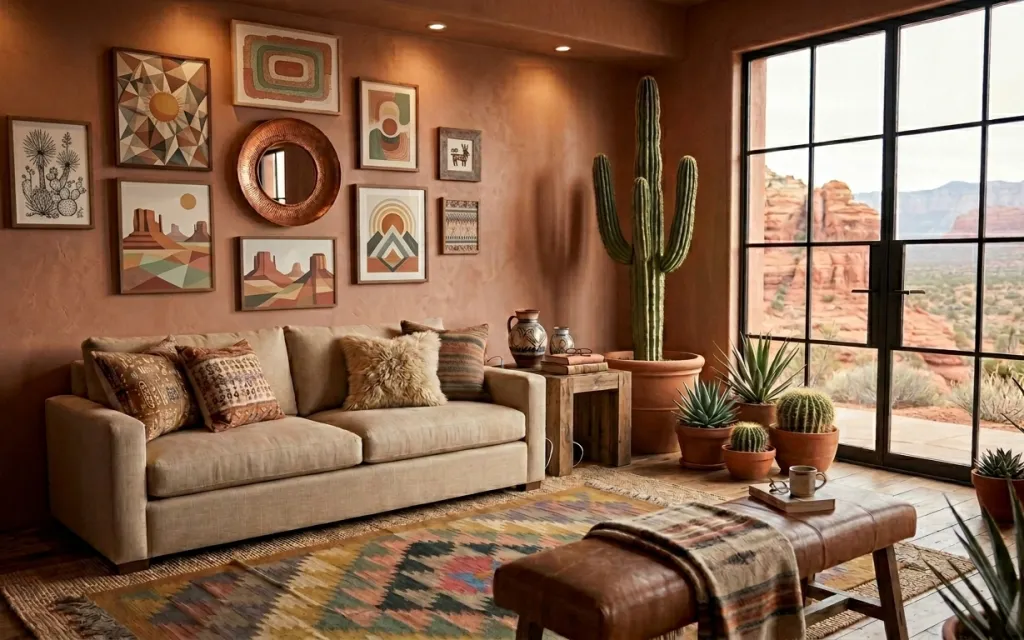
The first thing I noticed here is how the palette moves from terracotta walls to cream textiles without ever feeling matchy. The room mixes tactile surfaces—woven rug fibers, a plush throw drape, and the matte texture of framed prints—so nothing looks flat. Even the round woven wall mirror pulls in that same natural rhythm from the rug. For homeowners working on weekends, this kind of layered, earthy look is achievable because you can swap a few big visuals (floor covering, rug-scale wall art, and one plant cluster) without ripping anything out.
I used to think boho meant “more stuff, faster.” Then I did one room where I spaced my art by eye, centered the rug carefully, and limited the plant colors to terracotta + a single green tone. The change was immediate: the room stopped looking busy and started feeling intentional. This is that same lesson, just with desert-modern shapes and warm neutrals doing the heavy lifting.
Layer 1 — woven area rug ($200) anchored pattern underfoot
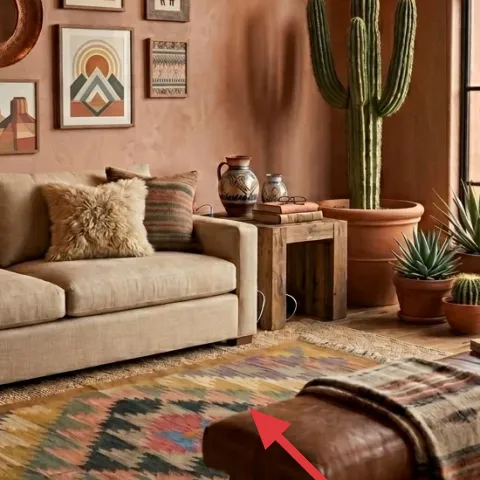
A woven area rug sits on the floor right in front of the sofa and visually sets the “zone” for lounging. Look for a design with multiple warm tones (rust, sand, and muted green) so it can borrow color from your wall art and plants instead of competing with them. The trade-off with a bold rug is that you’ll want to keep the sofa fabric and cushions in lighter, neutral territory so the rug remains the ground plane. If you’re choosing between a flat solid and a patterned rug, go patterned here—this is what gives the room movement at a distance.
Rug-size sanity check
Make sure at least the front sofa legs (or the whole sofa front edge) land on the rug so the room doesn’t look like it’s sitting on top of a mat.
Layer 2 — throw blanket draped on coffee table ($40) adds soft texture on wood
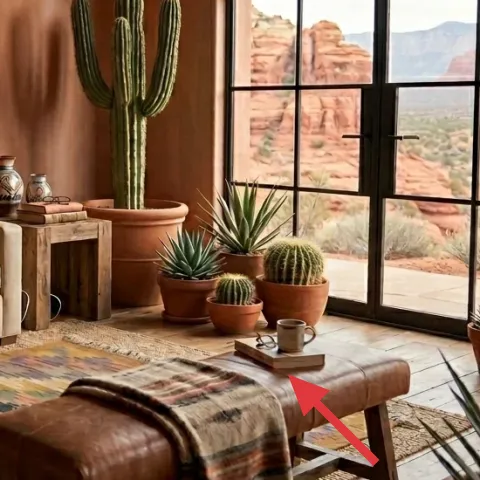
That draped throw on the wood coffee table adds a second texture story after the rug—plus it gives the room a “live-in” moment without adding more furniture. Choose a blanket with a slightly varied weave (not a shiny knit) so it reads as natural fibers under daylight. The visual benefit is strongest when the throw sits across the table surface at a relaxed angle instead of neatly folded. The trade-off is that it will need a quick fluff or straightening now and then; that tiny bit of upkeep is what keeps it from looking like clutter.
Match undertones, not exact colors
If your rug has muted green accents, repeat that same green warmth somewhere else—like in the throw pattern—without insisting on perfect color matches.
Layer 3 — set of framed wall art prints ($180) brings desert color without buying furniture
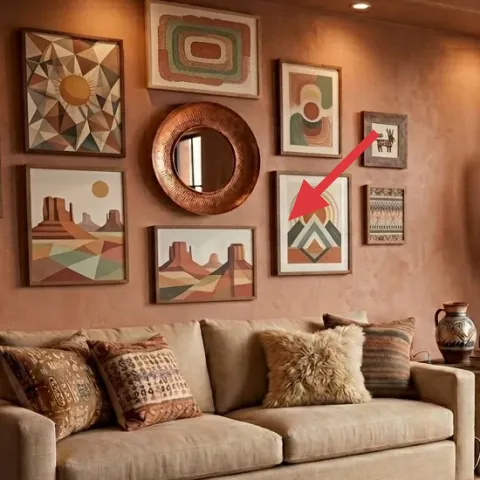
The framed print cluster is doing a lot of work: it creates the room’s vertical rhythm while echoing the geometric shapes of the mirror. The most effective version of this look is a mix of rectangles at different sizes, hung in a tight but not perfectly uniform grid. The trade-off is spacing—if frames are too far apart, it turns into “random art,” but if they’re too close, it can feel crowded. Centering the cluster on the wall above and beside the sofa keeps the composition cohesive and makes the room feel styled rather than decorated.
Build the grid on paper first
Lay the prints out on the floor and measure the spacing before you hang anything so the cluster looks intentional.
Layer 4 — round woven wall mirror ($100) repeats the rug’s natural texture
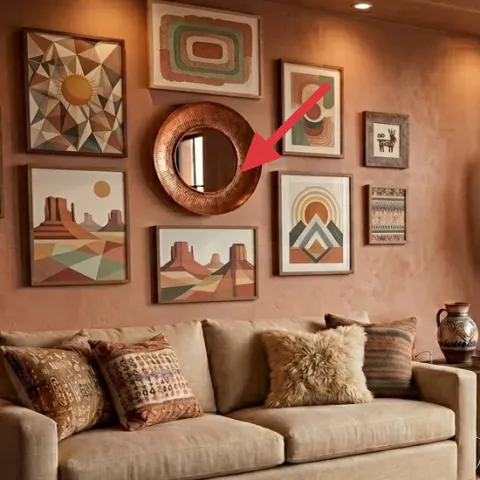
The round woven mirror is the “shape break” in an otherwise rectangle-heavy wall of prints. It’s mounted on the left wall area and works like a texture spotlight: you get that warm, light-catching weave without adding another flat, graphic rectangle. Pick a mirror with visible texture and an outer rim that’s wide enough to read from across the room. The trade-off versus a glossy round mirror is that woven surfaces can look less polished in harsh lighting—so let it sit in the same warm daylight that’s hitting the plants and rug here.
Don’t center it too high
If the mirror sits above eye level, the wall cluster loses balance; aim for a height that visually sits with the framed prints.
Layer 5 — wood coffee table ($140) gives you a practical desert-modern base
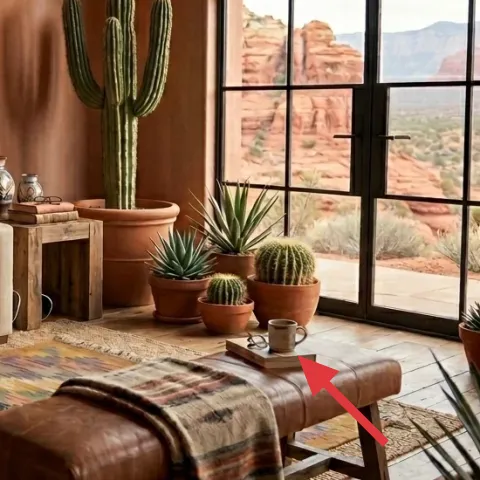
The coffee table grounds the seating area and gives you an actual surface for styling—without adding extra visual weight. A wood top with warm undertones keeps the room from going too cool, especially when your walls read terracotta. The reason it works here: the table is close enough to the rug and sofa to “belong” to the same zone, while the rounded edges make it feel more natural than boxy modern furniture. The trade-off is that wood surfaces show dust faster than darker finishes; plan for quick wipes so the styling looks crisp.
Use one surface story
Keep the tabletop styling to a small cluster so the rug stays the loudest element.
Layer 6 — terracotta plant pots set (on floor by window) ($60) warm up the desert palette
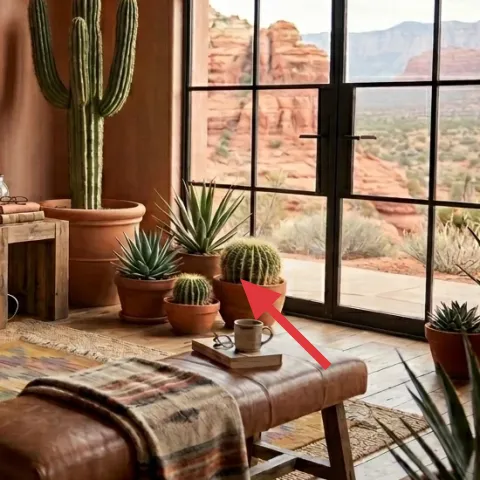
The terracotta pots by the window are the color bridge between the wall and the rug, and they bring depth because they sit at different heights. When pots share a similar tone, your plant cluster looks curated instead of accidental—even if the plants vary. The trade-off with terracotta is that plain clay can look a little flat; that’s exactly why a simple paint job can add dimension without making it look trendy. Since this is a homeowner refresh, you can also group the pots in a tighter line near the window to concentrate the visual impact.
Make it instead of buying it
Paint and seal your existing terracotta pots so they look richer and more intentional—then place them as a stacked cluster by the window.
Materials
- Acrylic paint (terracotta + one warm neutral) — small set — $15
- Spray primer for porous surfaces — 1 can — $10
- Small angled brush set — 1 pack — $8
- Matte clear sealer (for outdoor/indoor surfaces) — 1 can — $12
- Painter’s tape + drop cloth — 1 kit — $5
Steps
- Dry-wipe the pots, then scuff lightly so paint can grip.
- Mask any drainage holes with tape.
- Prime the pots in thin coats, keeping edges even.
- Let primer dry fully (check the label for timing).
- Paint terracotta tones in thin layers, rotating pots for smooth coverage.
- Let the painted layer cure until it feels dry to the touch.
- Apply matte clear sealer in light passes to protect the finish.
- Allow the sealer to cure completely before clustering near the window.
Total DIY cost: $50 — saves about $10 over buying.
Layer 7 — decorative ceramic jar and small pottery pieces ($35) adds a tabletop focal point
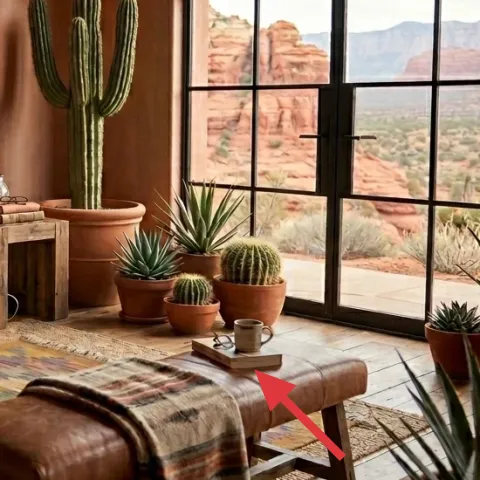
The small ceramic jar and pottery pieces on the side surface create a focal point without turning the coffee table into a clutter catch-all. These pieces work because they match the room’s material mood: matte ceramics that feel warm in daylight, not glossy chrome that would fight the rug. The key is scale—choose items small enough to sit comfortably without covering the throw or blocking the line of sight to the window. The trade-off with tiny decor is that it can disappear if your table is too bare, so cluster them in one triangle and keep the rest of the surface open.
Cluster in threes
Group jars, a small pot, and a flat object so the eye reads one arrangement instead of separate items.
The cost, layer by layer
| Layer | Item | Cost |
|---|---|---|
| 1 | Woven area rug 5×7 | $200 |
| 2 | Woven throw blanket | $40 |
| 3 | Framed art print set (5–7 prints) | $180 |
| 4 | Round woven wall mirror | $100 |
| 5 | Wood coffee table | $140 |
| 6 | Terracotta plant pots set (DIY ~$60 retail) | $60 |
| 7 | Decorative ceramic jar and small pottery pieces | $35 |
| Total | $755 | |
If you want a cheaper variant, pick a smaller rug size or swap the framed prints for fewer, larger pieces. Keep the coffee-table throw and one plant-pot cluster—they’re the two easiest ways to keep the room feeling styled even with less total spend.
What worked, what didn't (across the whole room)
This look succeeds because it repeats materials—woven, matte ceramic, and warm wood—across different heights. The wall cluster gives vertical energy, while the plants and terracotta keep it from feeling too “gallery.” The only friction point is that the more you mix bold patterns, the more careful you need to be about rug size and frame spacing.
What worked
- The woven area rug ties the sofa and floor together so the seating zone reads as one area.
- The throw blanket texture softens the wood coffee table and prevents the palette from feeling flat.
- The framed prints add geometry while staying warm because the colors stay within terracotta and cream.
- The round woven mirror breaks up rectangle shapes and echoes the rug’s natural texture.
- The terracotta pots near the window create consistent color rhythm at different heights.
- The small ceramic pieces on top give a controlled focal point without adding clutter.
What didn't
- If the frame cluster spreads too wide, it loses balance next to the mirror and sofa.
- Plain, uncoordinated pots can look dull against the terracotta walls and patterned rug.
- Over-styling the coffee table makes the throw look accidental instead of intentional.
- A rug that’s too small can shrink the seating zone and make the room feel less anchored.
- Trying to match exact colors in every item reads more costume than coordinated.
What we'd skip if we did it again
Skip buying a bunch of separate small wall pieces. A single tight set of framed prints (with mixed sizes) reads cleaner and looks designed faster.
Skip cheap, overly glossy decor for the coffee table. Matte ceramics and natural textures photograph better in daylight and blend with the woven rug.
Skip putting plant pots everywhere. Keep the cluster near the window and repeat terracotta + one green note so the desert vibe feels intentional, not random.
Frequently asked
How long does a refresh like this take?
Most homeowners can do it in one weekend if the rug is the only piece that needs delivery and the framed prints are pre-sized. Hanging art clusters and setting up the plant grouping usually take the longest—plan an afternoon for layout and leveling, plus a couple shorter sessions for styling the table and throw.
What if I rent and can’t change the walls?
This look still works by leaning on removable options. Use a no-drill mounting approach for the framed prints, and keep the heaviest visual work in the rug, throw, and plant cluster. Choose a mirror that’s easy to mount and stick with a framed set that you can rehang in the same stud locations later.
My room is smaller—should I scale the rug and art down?
Yes. In a smaller living room, choose a rug that still allows the front sofa legs (or at least the sofa front edge) to sit on it, and reduce the number of framed prints while keeping similar spacing. A larger rug with simpler tones often looks better than a smaller rug with a busy pattern.
Where can I shop for these items without overpaying?
Look for the rug and framed prints at a mix of marketplace and home decor retailers, then use a local thrift store for the woven mirror and ceramics. For plants and pots, garden centers and online plant shops often have the best prices in-season—then paint the pots yourself for a unified look.
What’s the biggest mistake to avoid in this style?
The biggest mistake is spacing: frames that aren’t centered as a cluster and a rug that’s too small both make the room feel temporary. Another common slip is buying plants with wildly different pot colors—stick to terracotta and one consistent green tone so the palette stays coherent.
More in Living Room
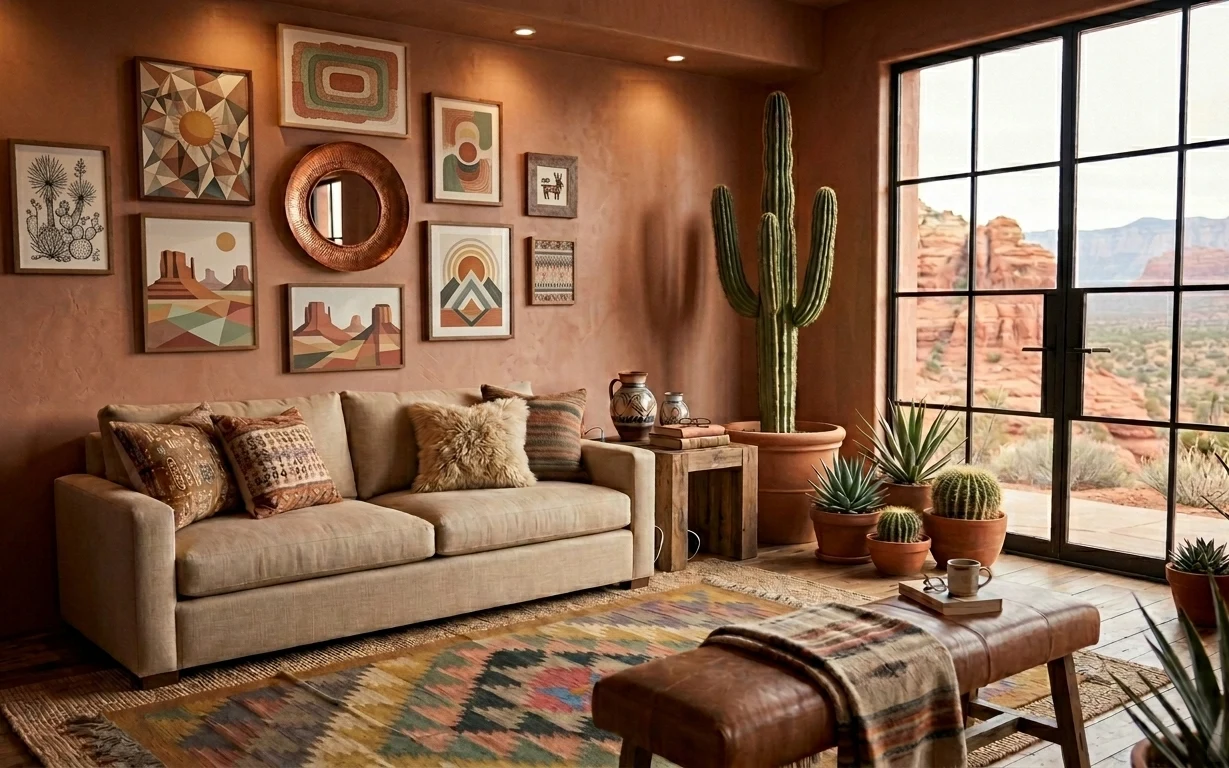
7 budget-friendly desert living room upgrades for $800
A desert living room refresh with 7 weekend upgrades, including a woven area rug, layered throw texture, and bold wall art. This $800 plan …
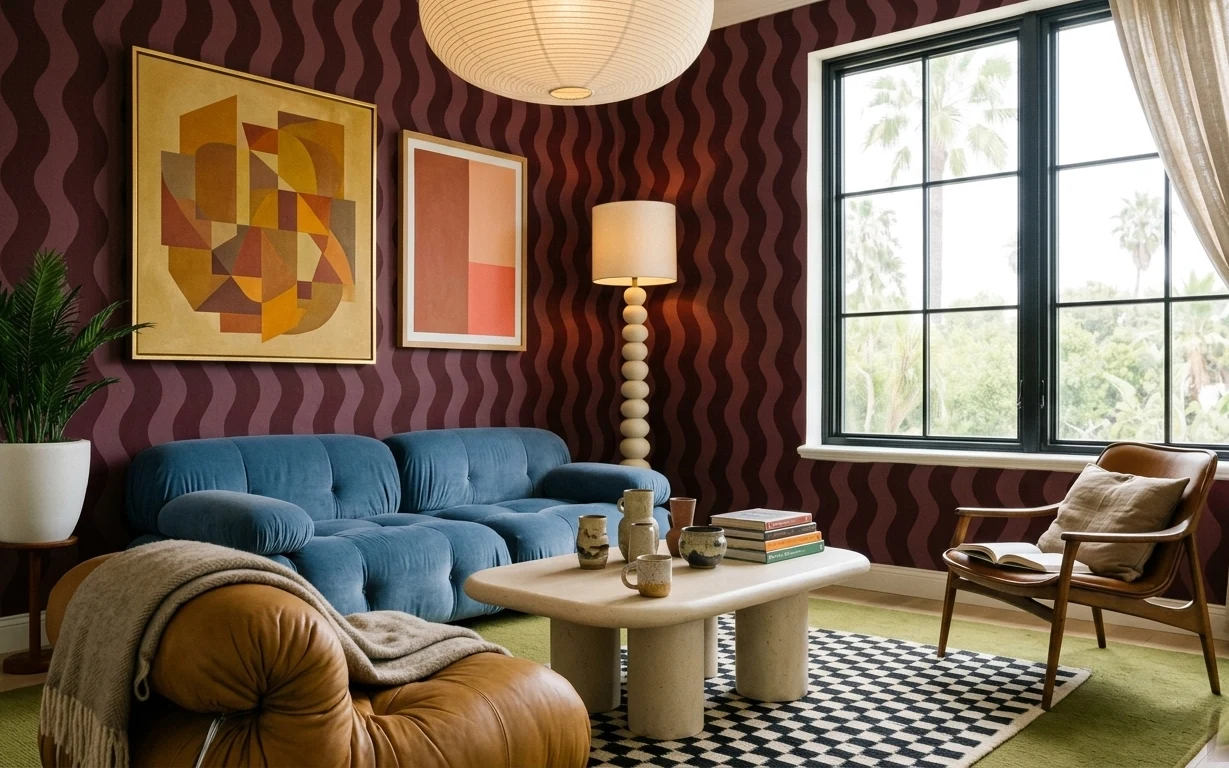
5 no-drill swaps for a renter-friendly living room nook, $700
A sunlit living room seating nook gets a maroon-and-cobalt makeover with no-drill renter upgrades. This $700 refresh leans on a patterned r…
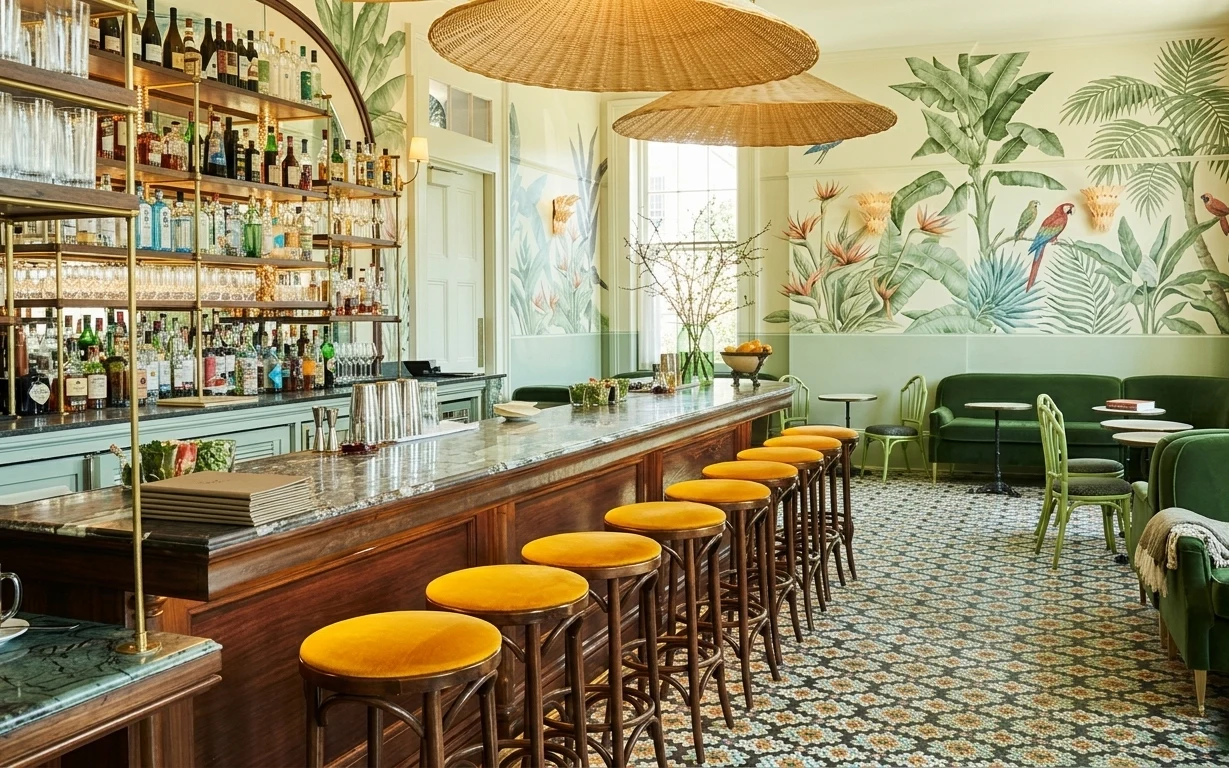
What $700 buys: a no-drill bar seating corner refresh
A move-friendly bar seating corner refresh built around peel-and-stick botanical wallpaper, a graphic rug, and renter-safe styling. This lo…