- Best for
- Textile-first bedroom refresh
- Time
- 1–2 weekends
- Total cost
- $550 (about $600 ceiling)
- Renter-safe
- No-drill swaps + removable wall art
Why the olive-and-rust palette is the move-friendly bedroom of 2026
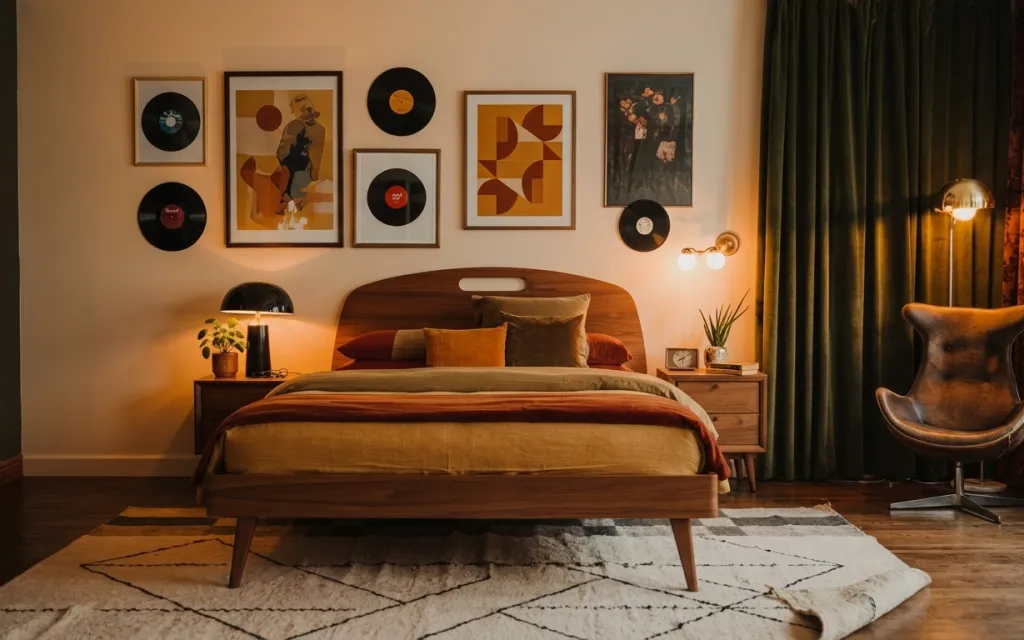
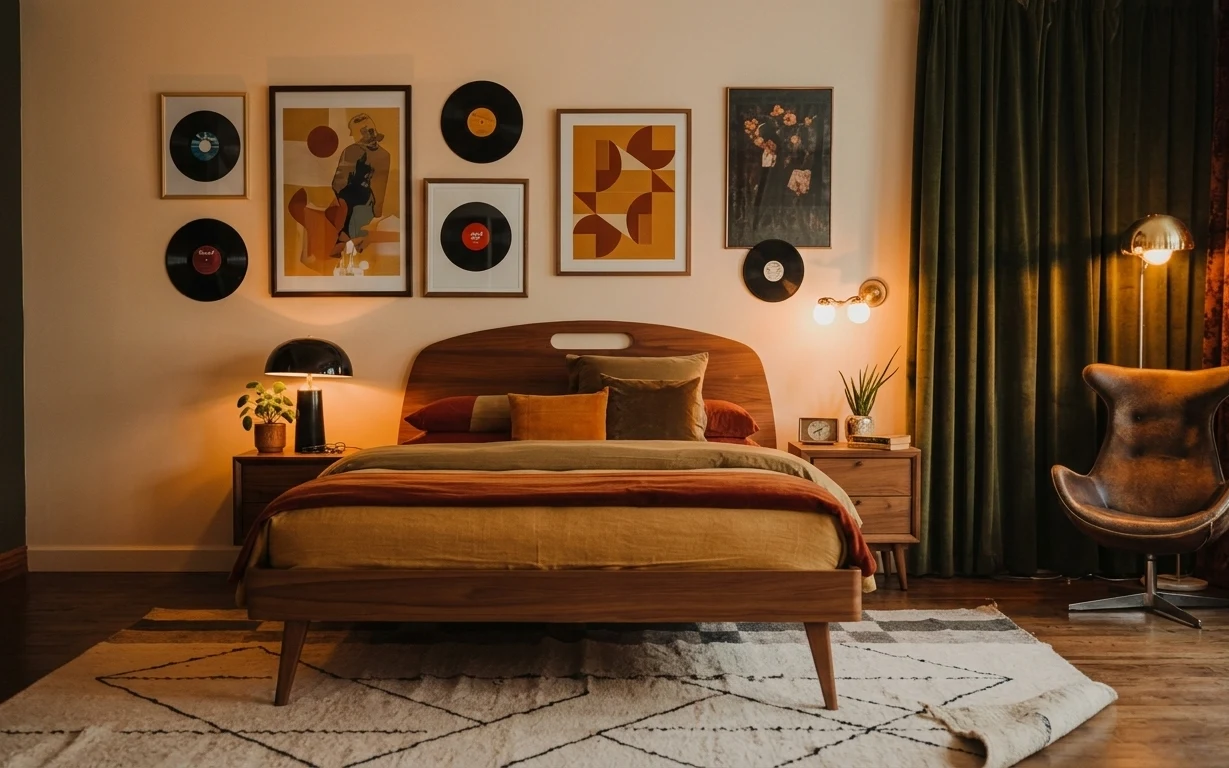
There’s a specific rhythm in this bedroom: warm wood, olive textiles, and that amber light bouncing off the beige walls. The beige area rug with its black geometric pattern grounds everything visually, while the olive throw at the foot makes the bed look “styled” without needing extra furniture. On the wall, the framed vinyl record cluster adds a personal, collectible texture that reads like art (not decoration). This is achievable in shared housing because every key piece is either soft goods or freestanding/clip-on-friendly swaps.
I used to think the fastest upgrade was “more wall stuff.” Then I lived through one move where I realized too many frames meant too many fragile corners in a cardboard box. What changed my mind here is how the grouping does the heavy lifting—one intentional wall story, then let the bed textiles and lamp do the rest.
Layer 1 — beige area rug with black geometric pattern ($160) Grounding base with visible contrast
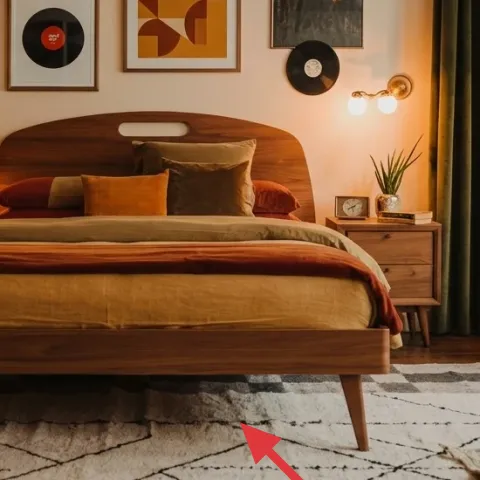
A patterned rug is the anchor here, not an afterthought. The beige base with black lines gives you structure under the bed and keeps the palette from turning flat beige-only. If you tried to “copy” this vibe with only pillows and art, the floor would still feel unfinished. The trade-off is that you’ll want a rug that’s actually easy to roll and re-pack—so choose a rug size and thickness you can manage alone. For move-friendly living, this is worth prioritizing first.
Roll from the darkest edge
Starting with the geometric side helps you keep the pattern aligned when you unroll it in the next place.
Layer 2 — dark green velvet curtain panels ($60) Window drama without hardware
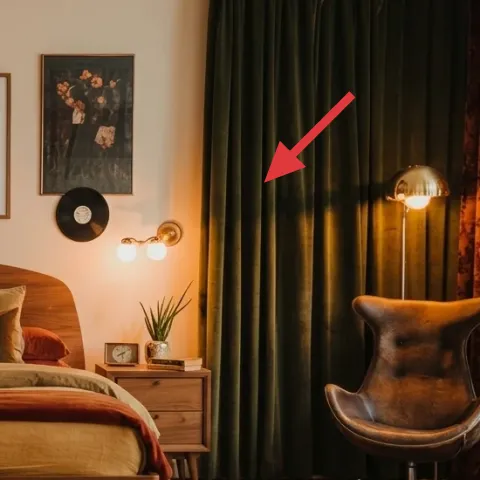
The curtains are what make the room feel heavier and warmer, especially against the light beige walls. In a shared space, you can’t assume you’ll get to replace blinds or track lighting, so curtains do the emotional work instead. Velvet-style drapes also photograph well and soften the sharp lines from the bed frame and rug pattern. The trade-off is that dark fabric shows lint, so regular quick shakes matter. Still, swapping in curtains is a straight-textile move you can dismantle and box quickly.
Let them skim the floor
That slight pooling look makes the bed feel taller and the whole room more “finished.”
Layer 3 — black table lamp on the left nightstand ($60) Warm bedside glow in one plug
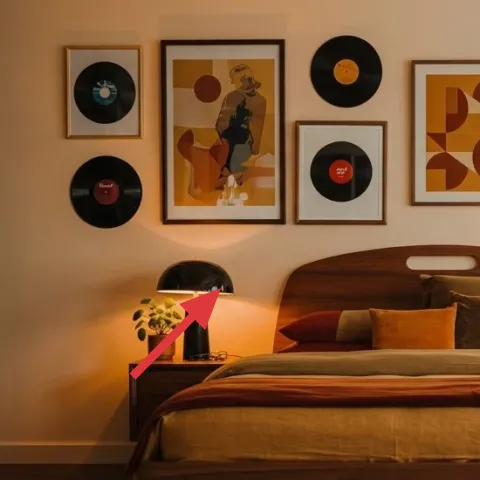
This black table lamp is small, but it changes the mood because it brings warm amber light at eye level. The brass and beige tones in the room already want a warm bulb—so you get that cozy lighting effect without touching any fixed fixtures. A plug-in lamp is also perfect for shared housing because you can swap it room to room. The trade-off is choosing a shade that won’t flatten the design; a darker base helps the lamp feel intentional, not “random.” If you’re choosing between lamp and art first, lamp usually wins because it affects everything else immediately.
Pick one warm bulb temperature
Use the same bulb warmth across lamps so the room doesn’t feel oddly mixed.
Layer 4 — cluster of framed vinyl records on the left wall ($180) Personal wall texture that reads as art
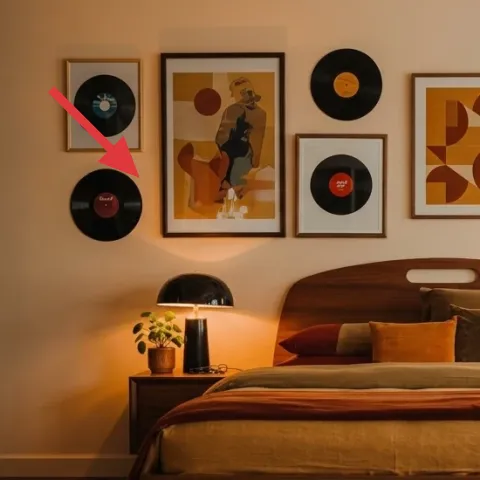
The framed vinyl record cluster adds a very specific kind of personality: round shapes, glossy highlights, and a sense of collection. It’s also easier than building a whole gallery wall from scratch—because the look comes from a repeatable group layout. In shared housing, the key is using lightweight, removable hanging methods (think hook-and-frame setups) so you aren’t dealing with permanent installs. The trade-off is that frames are fragile, so pack with paper or bubble wrap and label the corners. Still, one curated cluster beats a dozen separate “maybe” prints.
Avoid anything that pulls when removed
If you use adhesive, choose foam-core options that won’t leave plaster behind.
Layer 5 — olive throw blanket folded at the foot of the bed ($45) The styling piece that makes the bed look done
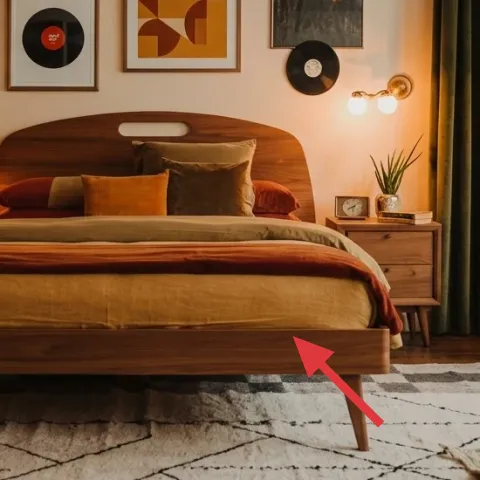
This olive throw folded at the foot gives the bed a deliberate styling moment without adding bulk. It bridges the headboard’s warm wood tones and the olive pillows, so the color story feels cohesive. The geometry of the rug already does a lot—so the throw’s smooth, solid color prevents the room from turning into “pattern overload.” The trade-off is you want a throw that folds neatly; if it’s too heavy, it becomes a chore to store between moves. A move-friendly throw should live in a vacuum bag or flat stack under the bed for easy packing.
Fold, don’t drape
A simple fold keeps it looking styled in photos and less likely to slide during the week.
Layer 6 — small potted plant on the left nightstand ($15) Fresh texture beside the lamp
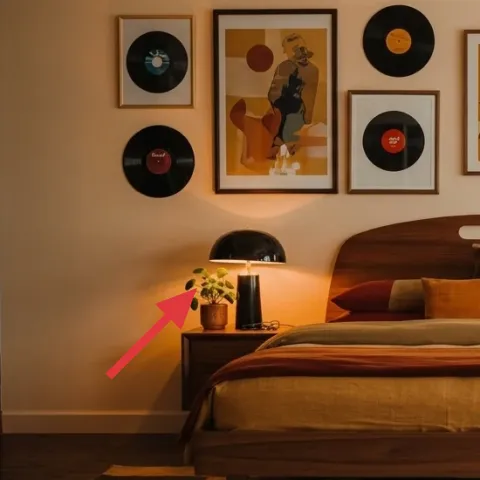
A small potted plant is a quick way to add texture and life right where your eye lands when you sit up in bed. Here, it also helps balance the darker lamp and the heavier framed pieces above, so the nightstand doesn’t feel like a “shelf for objects.” The trade-off is maintenance: in low-light rooms, you may need to rotate the plant or swap for something hardier. Still, plants are one of the easiest things to pack because pots are compact and you can bag stems. If you’re only adding one “living” element, choose the nightstand.
Pair scale with the lamp
Keep the plant shorter than the lamp shade so it feels curated, not cramped.
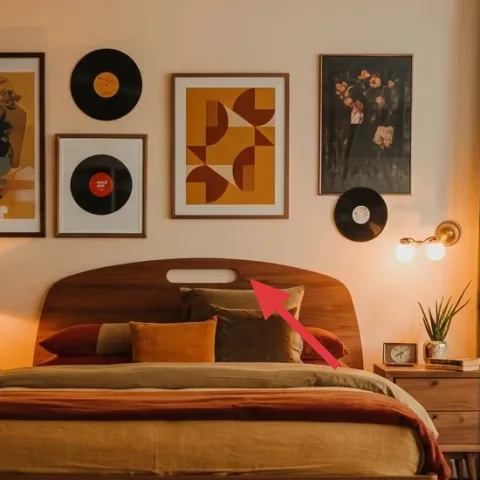
Layer 7 — dyed pillow covers for the olive pillows ($30) One color tweak you can redo anytime
Make it instead of buying it
DIY dyed pillow covers to deepen or shift the olive tone so the bed looks “intentional” without hunting for the exact set.
Materials
- Fabric dye (olive/green shade) — enough for 2 covers — craft store — $12
- Soda ash or dye activator — 1 box — craft store — $6
- Disposable gloves — 1 pair — grocery or pharmacy — $3
- Plastic drop cloth/tarps — 1 roll — hardware or big box — $4
Steps
- Prep covers: wash and dry so dye bonds evenly.
- Mix dye bath per package directions in a bucket or tub.
- Wet covers fully, then submerge and keep them moving in the dye bath.
- Soak for the recommended time to reach your target depth.
- Rinse until water runs mostly clear, then wash separately.
- Dry completely, then fluff and place back on the bed.
Total DIY cost: $25 — saves about $5 over buying.
Color is the fastest lever in this room, and pillow covers are the most renter- and mover-friendly place to pull it. By dyeing your existing covers (or plain ones you buy), you can land in that olive range that already shows up across the bedding and throw. The trade-off is that dye results depend on the starting fabric color—so start with covers that are close in tone, then dye darker rather than trying to jump lighter. This works particularly well here because the rug and wall art bring pattern and shine, letting the pillows stay calm.
Go one shade darker, not two
A subtle deepening keeps the room warm instead of muddy.
The cost, layer by layer
| Layer | Item | Cost |
|---|---|---|
| 1 | Beige area rug with black geometric pattern | $160 |
| 2 | Dark green velvet curtain panels | $60 |
| 3 | Black table lamp on the left nightstand | $60 |
| 4 | Cluster of framed vinyl records on the left wall | $180 |
| 5 | Olive throw blanket folded at the foot of the bed | $45 |
| 6 | Small potted plant on the left nightstand | $15 |
| 7 | Dyed pillow covers (DIY materials total $25) | $30 |
| Total | $550 | |
If you want to spend less, swap the rug for a smaller size or a lower-pile version, and choose curtains in a lighter-weight fabric so they pack flatter. Keep the lamp and the framed wall cluster, because those are the “visual anchors” that still read well at any budget.
What worked, what didn't (across the whole room)
This room works because it balances heavy elements (rug, curtains, wood) with soft ones (throws, pillows) and one strong lighting source. The framed vinyl cluster adds texture without needing a long gallery of mixed frames.
What worked
- The beige rug’s black geometry adds structure under the bed, preventing the olive palette from looking flat.
- Dark green velvet curtains make the space feel warmer without touching any fixed window components.
- The black table lamp provides amber warmth that makes wood and wall art read richer.
- The framed vinyl record cluster gives a collectible “story” instead of random wall clutter.
- Olive throw placement at the foot makes the bed look intentionally styled in under a minute.
- The small plant on the nightstand softens hard surfaces and keeps the vignette from feeling staged.
What didn't
- Dark curtains can collect lint, so they need quick shaking more often than lighter fabrics.
- Vinyl-in-frame wall pieces are visually bold, which means you have to pack them carefully when moving.
- If you pick a lamp with a cool bulb, the warm wood tones start looking washed out.
- Trying to match the exact olive shade with pillows is hit-or-miss, so dyeing or buying solid covers helps.
What we'd skip if we did it again
Skip replacing anything fixed or hardwired in the bedroom. This look relies on textiles, plug-in lighting, and removable wall art—so it stays lease-friendly and moves with you.
Skip adding more wall pieces than the record cluster. One curated grouping reads intentional; extra frames can fight the bed’s headboard shape and the rug’s pattern.
Skip “perfect matching” across every color. It’s better to keep the olive tone family and let the rug’s black lines and wood warmth do the coordination work.
Frequently asked
How long does it take to get a look like this in a shared bedroom?
Plan on one weekend for the big anchors: rug and curtains, then the bed styling with the olive throw. The second block of time goes to wall layout for the framed vinyl record cluster and getting the lamp and plant positions right. If you already own frames and a nightstand, expect closer to 4–6 hours total spread across a couple days.
What’s the safest way to hang framed vinyl records in a rental?
Use hanging methods that don’t require drilling or permanent hardware. The key idea is removable support that won’t pull paint: foam-core Command-style products are usually gentler than strips that can yank plaster when removed. Keep the frames lightweight, pack them flat, and label which wall area each one belongs to so re-install takes minutes, not hours.
What if my bedroom is smaller or my ceiling is lower?
If the room is smaller, keep the rug size as large as possible, but prioritize thickness you can manage alone. For curtains, hang them slightly higher than the window trim if your setup allows, so the vertical lines add height. On the wall, reduce the framed vinyl cluster by using the same mix of vinyl rounds and fewer prints, keeping the grouping centered behind or slightly off-center from the bed.
What if I don’t want to buy dark velvet curtains?
Choose a fabric that still reads warm and heavy on camera—crepe, woven blackout, or a thicker curtain panel in a deep olive or brown. The point is light control and texture, not the exact velvet label. If you go lighter, compensate with stronger lamp warmth and a darker-toned throw at the foot so the bed doesn’t look like it floats in brightness.
Where can I shop differently for this look without blowing the budget?
For the rug, consider a mid-range retailer’s “geometric neutral” selection or a patterned runner if you need something smaller. For the wall art, build the vinyl record look with a set of framed prints you can swap later, then add the round vinyl frames as the signature piece. The biggest value comes from textiles and lighting—buy those first and fill in smaller décor last.
Biggest mistake to avoid when copying this bedroom?
Overbuying wall art. People chase the number of frames, but this room works because the wall has one main grouping and the bed styling stays consistent in an olive family. If the rug and curtains are already doing the heavy color work, adding too many contrasting pieces can make the space feel busy instead of warm.
More in Bedroom
7 no-drill bedroom swaps for $600
A warm, olive-and-wood bedroom refresh that packs into boxes: update a beige patterned rug, swap in dark velvet curtains, add a bedside lam…
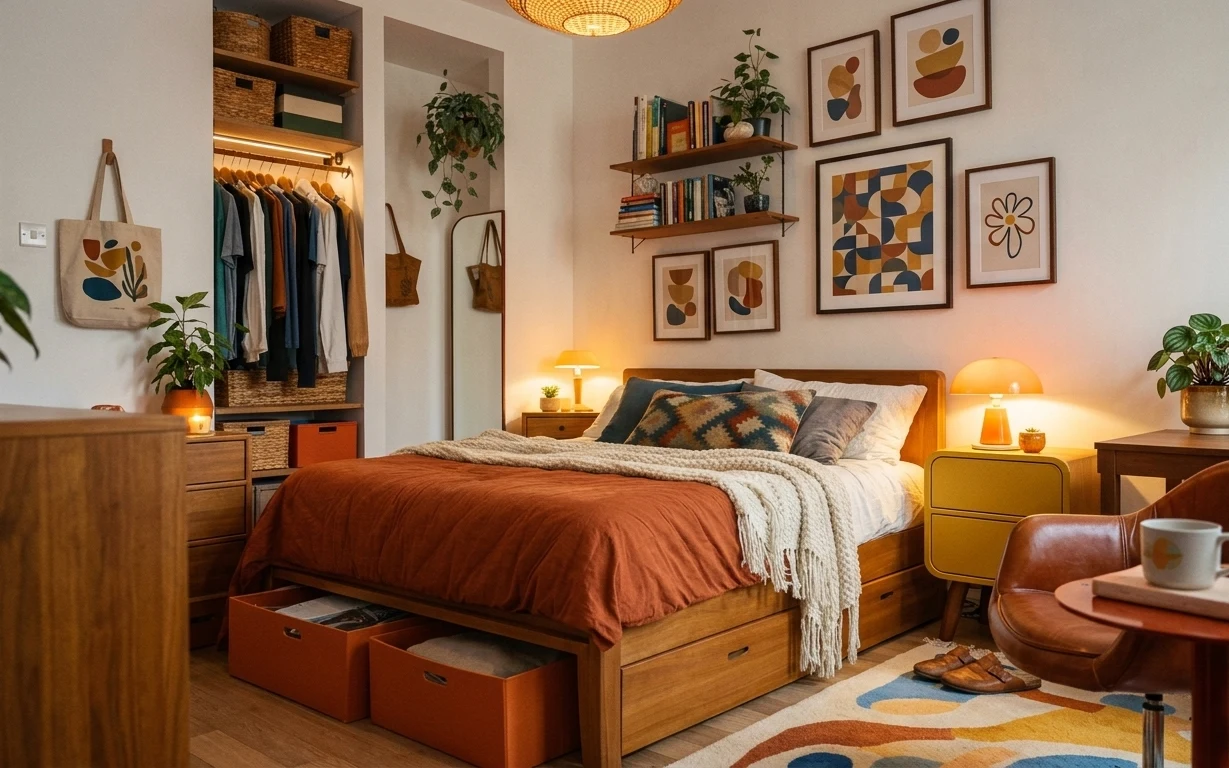
What $800 buys: a warm rust-and-brown cozy bedroom update
A warm rust-and-brown cozy bedroom refresh built for a weekend—$725 in parts, capped at $800. You’ll swap in a statement patterned rug, sha…
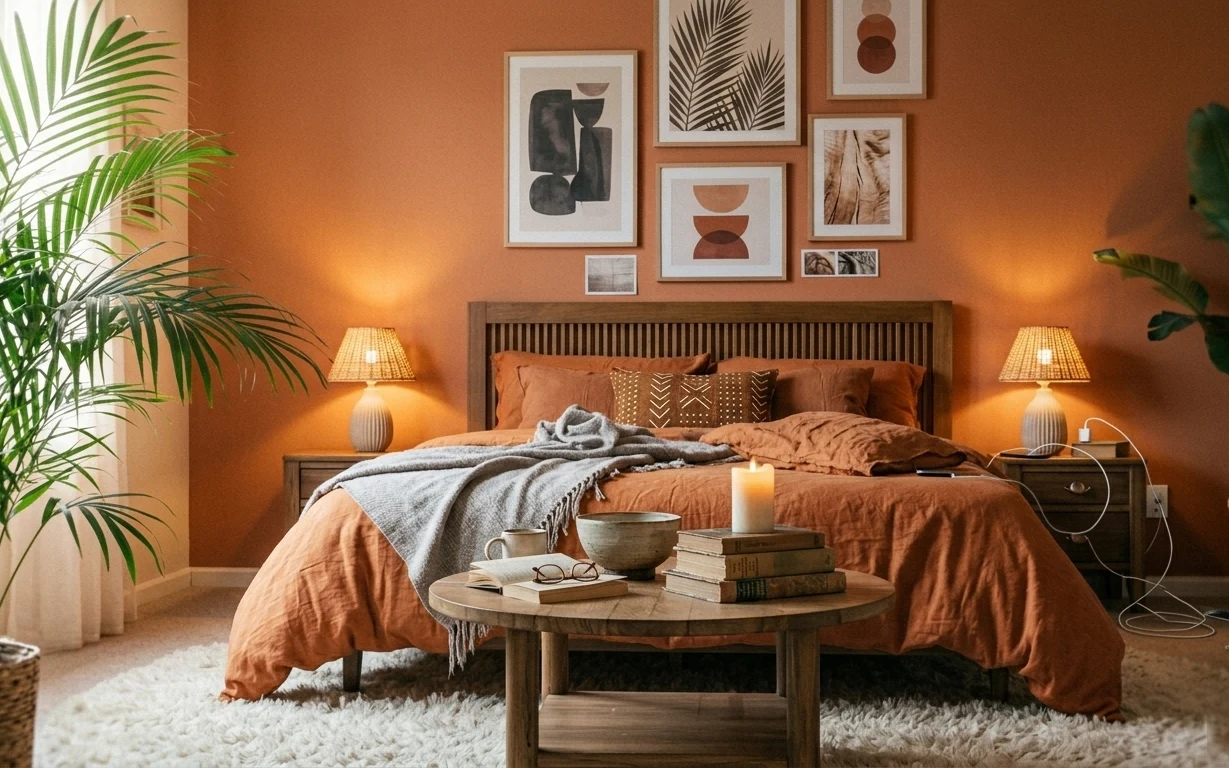
Warm terracotta boho bedroom refresh, $800
This warm terracotta bedroom retreat gets its cozy, styled feel from a plush shag rug, an orange-brown comforter, and warm table lamps. Wit…