- Best for
- Weekend bedroom refresh
- Time
- 1–2 weekends
- Total cost
- $725 in parts
- Renter-safe
- Mostly (paint not renter-safe)
Why warm rust-and-cream accents are the cozy bedroom of 2026
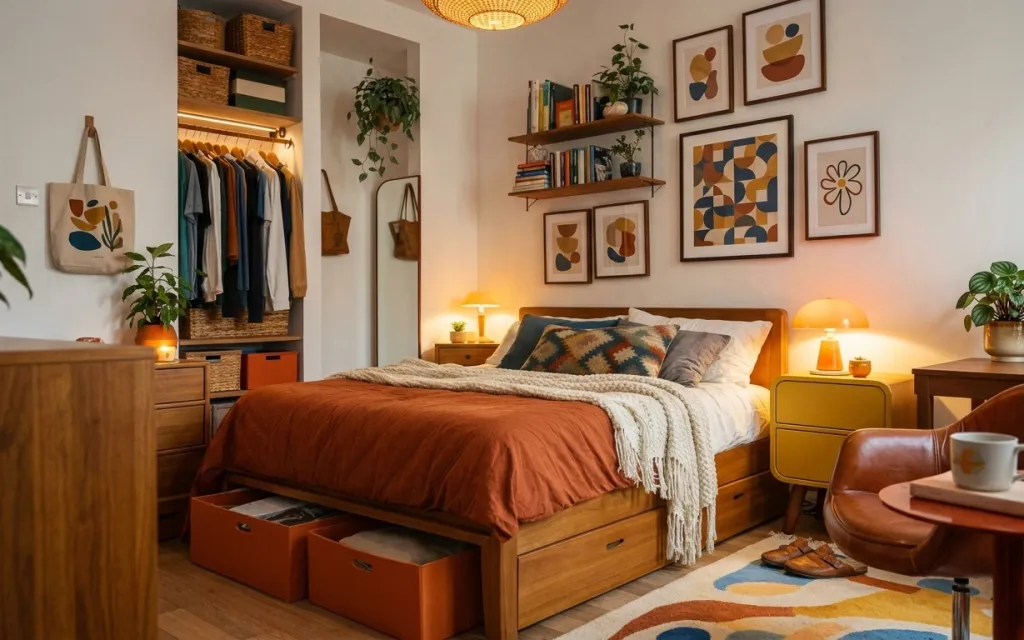
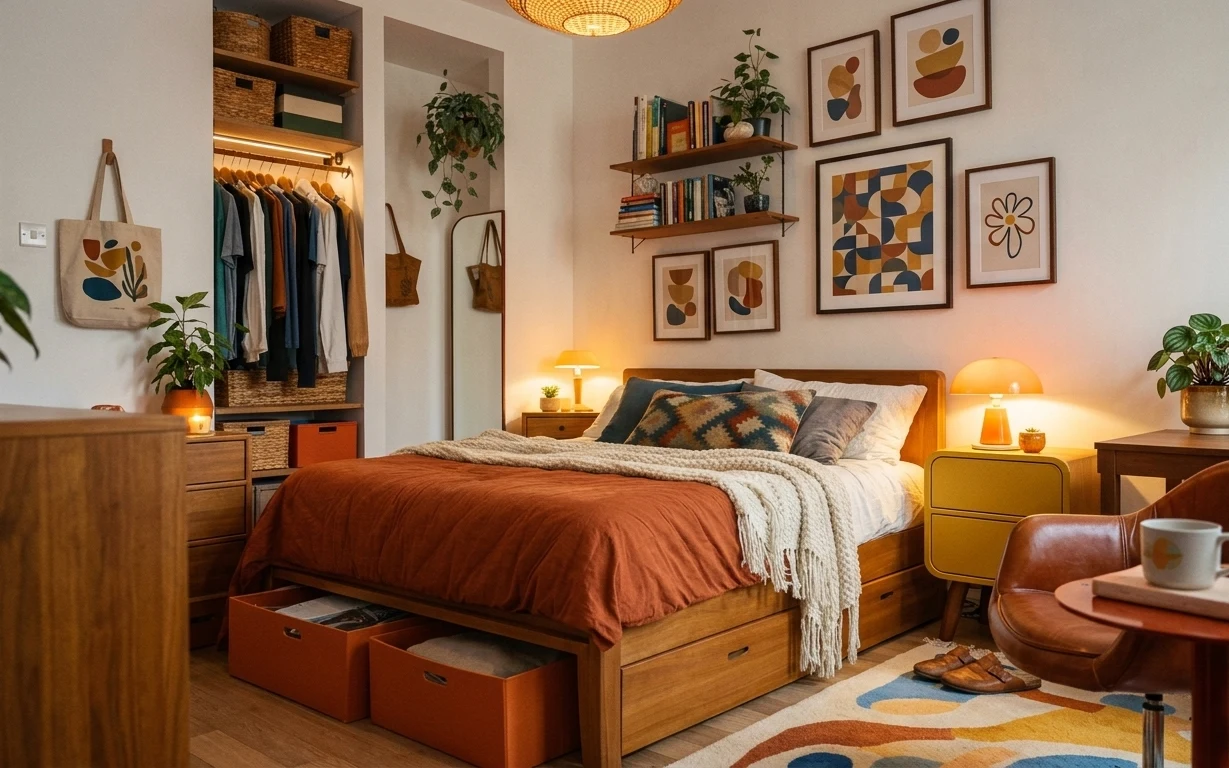
The first thing I notice in this room is how rust and warm brown play nicely with the painted white walls—there’s contrast, but it doesn’t feel loud. The light wood floor and the wood bed frame with storage drawers keep the foundation grounded. A patterned area rug anchors the seating corner and visually softens the whole space, while the gray throw blanket adds that lived-in texture. For weekend homeowners, this is achievable because you can keep most items in place and just upgrade the big-touch surfaces: rug, lighting, and wall backdrop.
I used to think wall art needed to match the bed throw exactly. This photo changed my mind: the frames have their own colors and shapes, and the bed still feels cohesive because the tones repeat (rust, warm browns, and white). Once I stopped chasing “exact,” the room looked more intentional in real life, not just styled for a camera.
Layer 1 — Area rug with abstract pattern ($200) Textured underfoot for instant warmth
The abstract area rug sits under the bed and visually connects the whole seating-and-sleep zone, which is why it reads as the room’s anchor. The warm rust and ochre tones echo the bed’s color, but the pattern keeps it from feeling one-note. I’d pick a rug like this over a flat solid because the geometry helps hide everyday wear—especially on light wood floors. The trade-off is choosing a pattern that won’t fight the art; sticking to warm neutrals and one main warm color makes it work. In this layout, a larger rug is what prevents “orphan furniture” from looking disconnected.
Choose a rug that reaches the bed’s width
If the rug only lands under the front edge, the bed visually floats. Aim for enough coverage that the pattern continues beneath the bed.
Layer 2 — Wood bed frame with storage drawers ($200) Storage you actually use
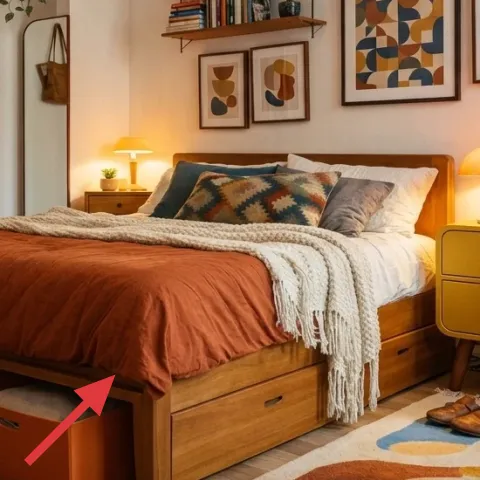
This bed frame does two jobs at once: it gives you a warm wood presence and it replaces the need for extra bins with its storage drawers. Visually, the straight lines balance the rounder textures elsewhere—like the woven ceiling pendant—so the room feels styled, not chaotic. I’d choose a storage frame over adding separate under-bed containers because drawers look cleaner in photos and are easier to access daily. The trade-off is weight and size: measure doorways and plan where the drawers will clear. Once it’s in, your bedding looks more “finished” without extra clutter around the edges.
Keep the drawer hardware consistent
If you’re upgrading a used frame, matching knobs or pulls to your lamp finishes makes the wood feel more intentional.
Layer 3 — Table lamp with white shade on the left ($60) Soft pool of light for evenings
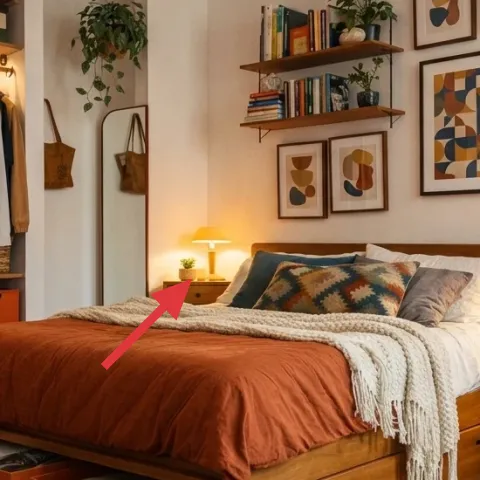
The left bedside lamp creates a warm glow right where your eyes land when you sit up in bed. Because it has a white shade, it spreads light instead of casting hard shadows, which helps the wall art feel cohesive. I’d pick a white-shade lamp over a darker shade for this room because the walls are painted white and you want the light to “stay bright” even when the bulb is warm. The trade-off is that white shades show dust faster than linen-look shades—so plan a quick wipe when you do seasonal cleaning. With two lamps instead of one overhead, the room reads softer all night.
Avoid cool bulbs next to earthy paint
Warm bedding tones look muddy under 4000K+ light. Stick to warm color temps so the rust stays rich.
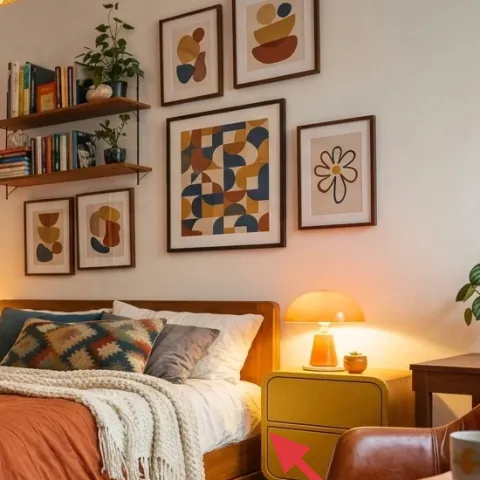
Layer 4 — Framed abstract art print on the right wall ($80) Color repeats that don’t need to match
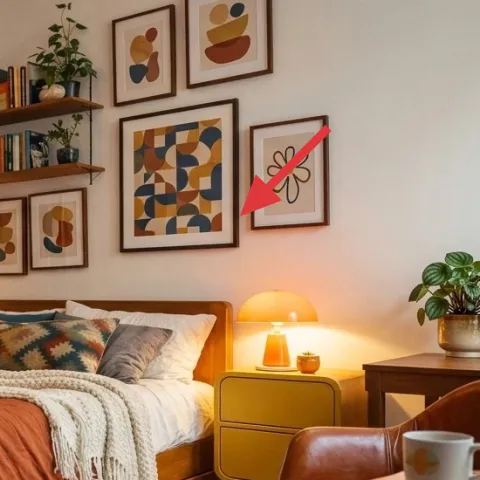
The framed abstract art on the right wall pulls the whole palette together through repetition—rusty shapes, creamy backgrounds, and warm neutrals show up again around the bed. It’s not decorative wallpaper; it’s a clear focal point that gives the room structure when the bed is made up with mixed textures. I’d rather invest in one or two standout prints than build a large multi-frame wall of tiny pieces, because it’s easier to keep scale right in a weekend setup. The trade-off is that you’ll need to live with the print’s colors for a while—so choose one that already contains at least one of your main bed tones.
Hang art so the bed doesn’t “compete”
Center the art so it sits roughly at eye level when seated, not flush with the mattress height.
Layer 5 — Gray throw blanket on the bed ($35) The texture bridge between everything
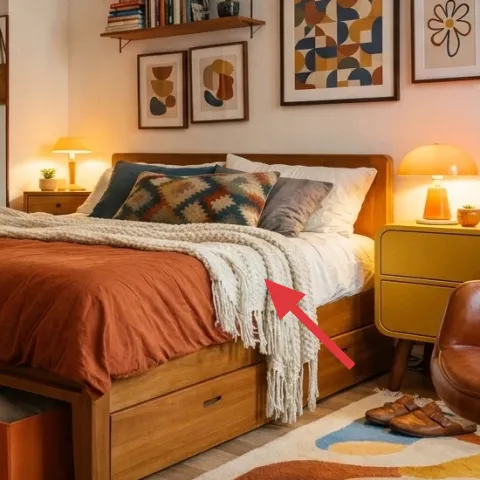
This gray throw blanket adds a mid-tone layer that connects the rust comforter to the cooler grays in the patterned pillows. The result is that the bed looks styled without needing extra matching pieces. I’d choose a throw like this over another rust-colored one because the contrast makes the warm tones feel deliberate instead of heavy. The trade-off is softness and drape: if the fabric is too thin, it won’t hold a “fold” across the bed, and the bed ends up looking flat. In this room, the gray’s purpose is mainly texture and contrast.
Fold it, don’t drape it
Neat folds read more styled than messy drapes, especially when you’re working with multiple colors.
Layer 6 — Wall shelf with decor on it ($80) Vertical warmth above the bedding
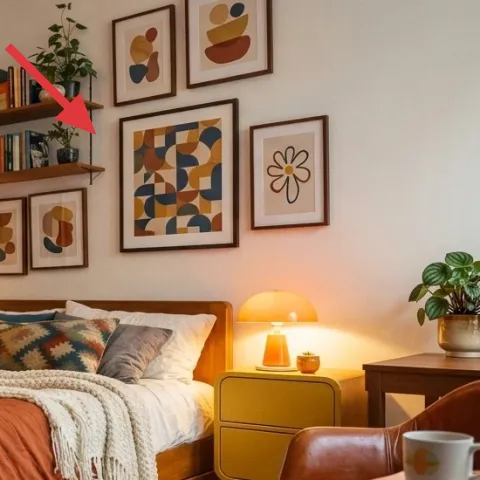
The wall shelf adds vertical storage and makes the wall feel “finished” above eye level, which is exactly where blank space tends to look unfinished. The wood tone ties into the bed frame, while the small plant and decor give the shelf a gentle organic rhythm. I’d choose a real shelf over more frames here because shelves add depth—prints are mostly flat color. The trade-off is that shelves can look cluttered fast; keep decor to a short stack and one plant so it stays airy. When the shelf is placed thoughtfully, it also reduces how busy the rest of the wall gallery feels.
Use one plant + one texture
A small plant plus a ceramic or book keeps the shelf styled but still easy to maintain.
Layer 7 — Painted white walls (bed wall section) ($70) A calmer backdrop for the art
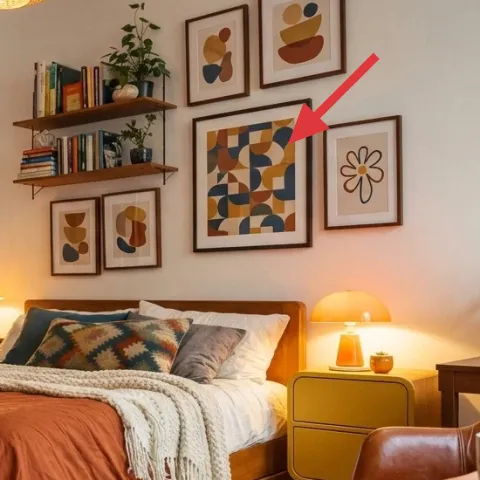
You can see how much the painted white walls help the room feel open and bright, especially with warm lighting. A paint wash on the bed wall section gives the framed art and the bed tones a more intentional background—less “plain wall,” more cohesive scene. I’d choose a warm-leaning white rather than going fully off-white or gray, because warm bulbs and warm wood already steer the palette; this is where you support that rather than fight it. The trade-off is prep time: walls need a clean surface and smooth edges so the finish looks even. Once it’s done, everything reads more settled, not just “new.”
Test a sample in the evening light
Warm lighting can shift paint undertones. Dry time and bulb color matter more than you think.
The cost, layer by layer
| Layer | Item | Cost |
|---|---|---|
| 1 | Area rug 5×7 (abstract pattern) | $200 |
| 2 | Bed frame with storage drawers (wood) | $200 |
| 3 | Table lamp with white shade (for bedside) | $60 |
| 4 | Framed abstract art print 16×20 | $80 |
| 5 | Gray throw blanket | $35 |
| 6 | Wood wall shelf for styling and small plants | $80 |
| 7 | Paint, 1 gallon (bed wall section) | $70 |
| Total | $725 | |
If you want a cheaper variant, prioritize the rug and bedside lamp first, then choose one larger framed print instead of multiple smaller ones. You can also size down the shelf or go with a simpler floating style to keep the wall look balanced.
What worked, what didn't (across the whole room)
The biggest win is the palette discipline: rust, warm browns, and white repeat across the rug, bedding, and lighting. The room also benefits from layered textures—throw blanket plus rug plus wall decor—so it never looks flat. The only frequent problem with this look is over-styling small surfaces.
What worked
- The patterned area rug anchors the bed and the chair area so the room feels planned.
- Warm bedside lighting keeps the room soft even when the walls are bright white.
- Rust comforter tones stay consistent through the rug colors, not exact matches.
- Gray throw fabric adds contrast and texture so the bed looks layered, not heavy.
- Wood shelves introduce vertical warmth above eye level.
- Framed abstract art gives the wall structure without needing full wallpaper coverage.
What didn't
- If the art cluster is too high, it competes with the bed and the shelf.
- A darker wall shade would make the warm bulbs feel dim instead of cozy.
- Too many small decor objects on the shelf turns the wall into clutter.
- Choosing a white-shade lamp with a yellow cast can fight the bed’s rust tones.
- A small rug makes the furniture look like separate zones.
What we'd skip if we did it again
Skip adding more small prints if the wall already has frames. One or two larger abstract pieces usually read clearer than a crowded grid, and they’re easier to hang straight in a weekend.
Skip cool-white bulbs. Warm bulbs are what keep rust tones rich and the painted white walls from looking sterile.
Skip over-decorating the shelf. A small plant plus one textured object keeps the vertical styling calm while letting the bedding and rug stay the main event.
Frequently asked
How long does this bedroom refresh take?
Plan on 6–10 hours for the “big visual” upgrades: rug placement, lamp adjustments, and art hanging. Painting a single bed wall section is another half-day to a full day depending on prep and dry time. If the shelf needs measuring and leveling, add 1–2 more hours. Most homeowners can finish comfortably within two weekends.
What if I’m a renter and can’t repaint the bed wall?
You can keep the rest of the plan and swap the paint step for something reversible, like peel-and-stick wallpaper on one wall section or a lighter-toned framed art addition. The key idea stays the same: give the bed and art cluster a calmer backdrop. For lighting, focus on warm bulbs and shade height so the room still feels soft.
My bedroom is smaller—do I need a bigger rug?
A rug that reaches at least the bed’s footprint is what matters. If space is tight, choose a smaller rug but place it so the front legs of the bed sit on top, not just the edge. In compact rooms, the rug pattern should still pull at least one of your main colors (rust or warm brown) so it visually ties the bedding and wall art together.
Where should I shop for these items without over-spending?
Start with the rug and lamp—these are the pieces that create the instant read. Look for rugs at home goods stores and marketplaces that offer returns, and choose a white-shade lamp that matches the existing finish on the bed hardware. For the framed print, aim for one cohesive abstract style rather than collecting multiple random frames.
What’s the biggest mistake people make in this style of bedroom?
The most common miss is trying to match every color exactly. In this look, cohesion comes from tone repetition—rust, warm browns, and white—plus texture layering. If one piece is slightly different, that’s fine; the room looks more lived-in when it’s “related,” not identical.
More in Bedroom
What $800 buys: a warm rust-and-brown cozy bedroom update
A warm rust-and-brown cozy bedroom refresh built for a weekend—$725 in parts, capped at $800. You’ll swap in a statement patterned rug, sha…
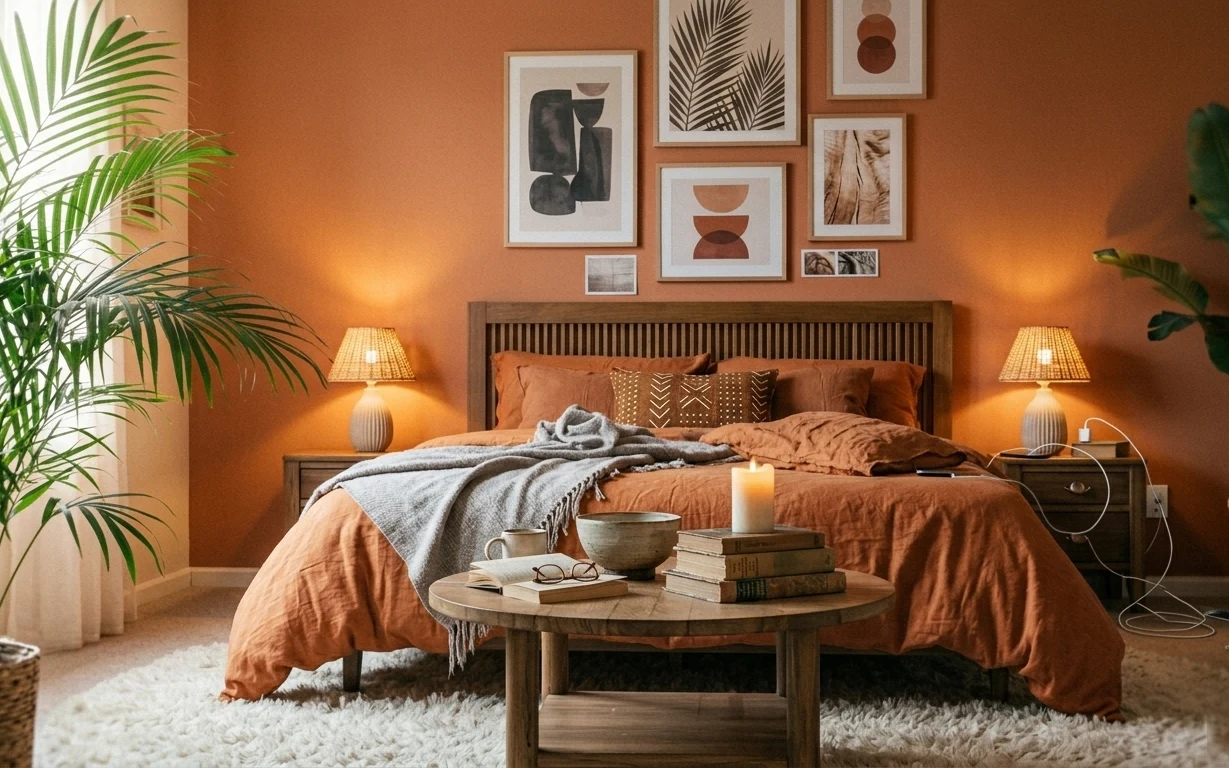
Warm terracotta boho bedroom refresh, $800
This warm terracotta bedroom retreat gets its cozy, styled feel from a plush shag rug, an orange-brown comforter, and warm table lamps. Wit…
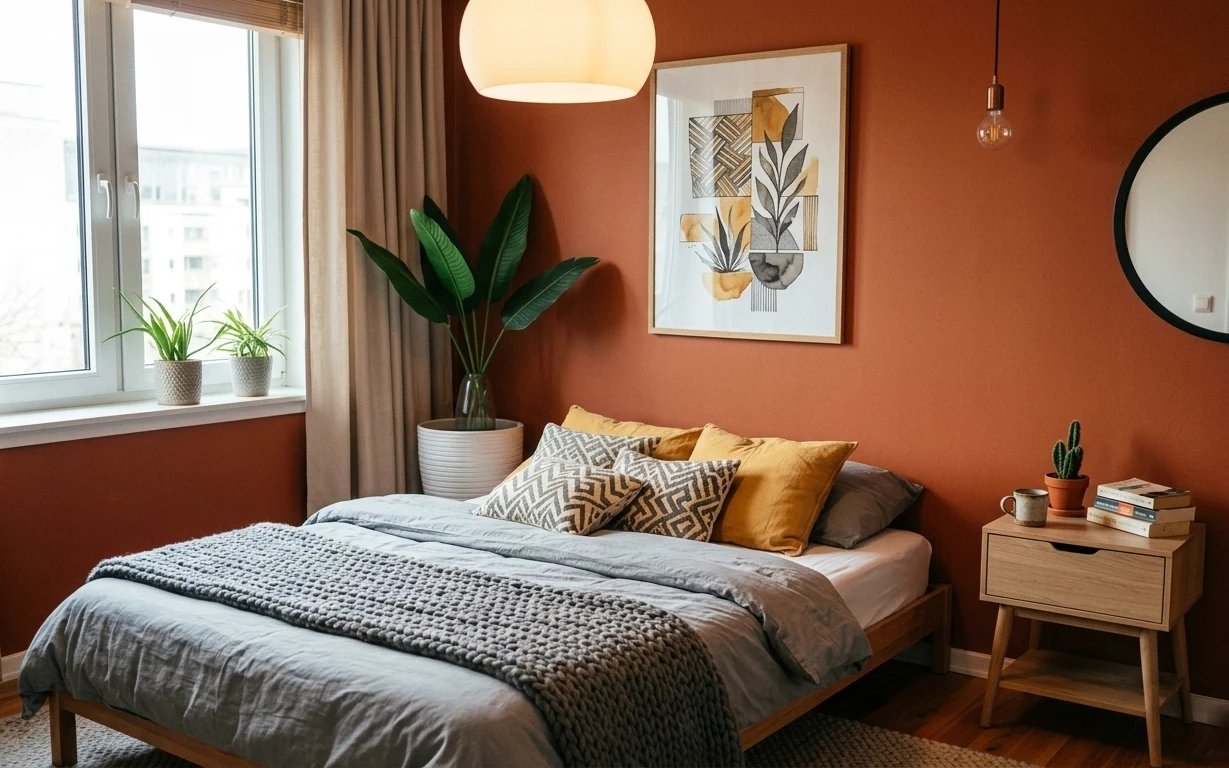
7 no-drill ways to style a terracotta bedroom for $400
A terracotta-and-beige bedroom refresh with move-friendly swaps: rug, curtains, framed art, throw textiles, a bedside table, and a round mi…