- Best for
- Students who share a living room
- Cost
- $580 total ($600 budget ceiling)
- Difficulty
- Easy (mostly swaps + one DIY print)
- Time
- 1 weekend afternoon
Why warm wood-and-olive workstation is the home office nook of 2026
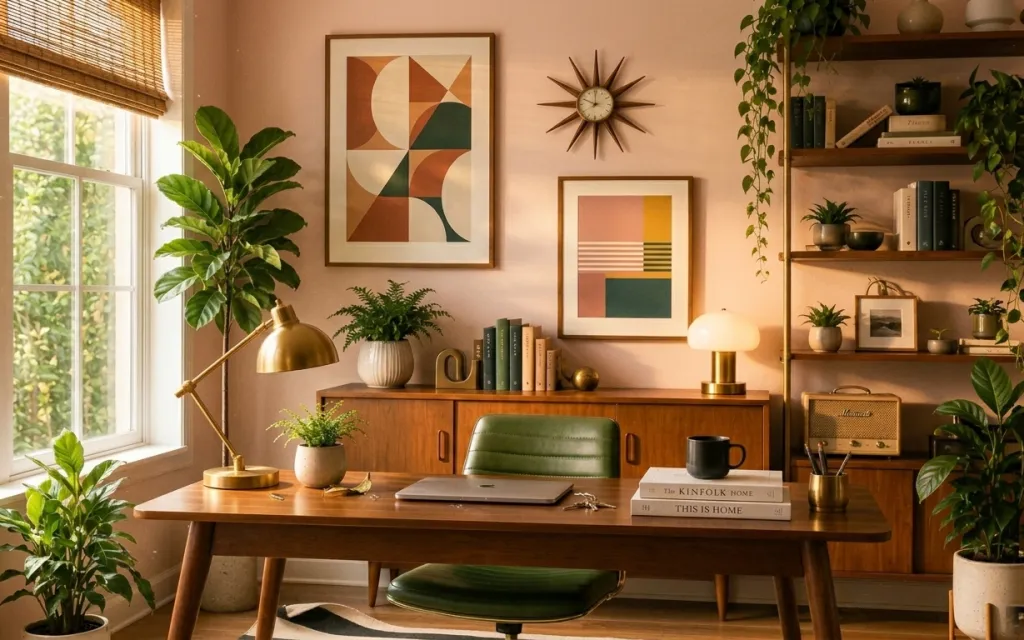
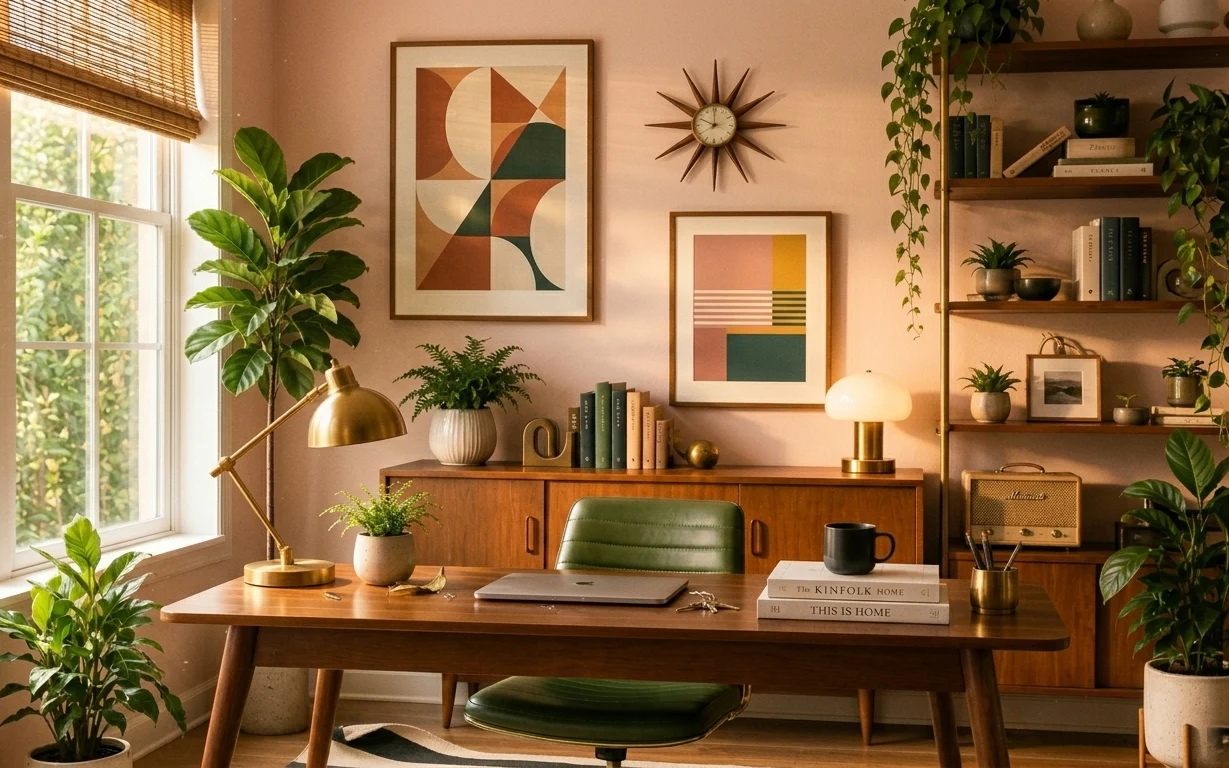
The hero is all about contrast: walnut-toned surfaces, brass-toned lamps, and that deep olive seat cushion that keeps the space from feeling too neutral. On the wall, two large framed abstract prints add graphic warmth, while the freestanding shelf gives you vertical “storage-as-style” with plants and a book stack. Even with daylight coming through the window with blinds, the lighting mix matters—brass desk lighting and a soft globe lamp make the corner feel usable at night. For shared housing, this palette is achievable because it’s mostly textile and tabletop swaps.
I used to obsess over “matching sets,” and then I realized the room still felt flat—like everything was the same height and the same visual weight. What fixed it for me was changing one thing at a time: adding a second lamp, then putting one plant group where my eyes naturally land. This nook works because it balances warm wood with green color and adds layers at desk height and shelf height without asking the wall for anything permanent.
Layer 1 — wooden desk ($200) A warm base for everything you touch
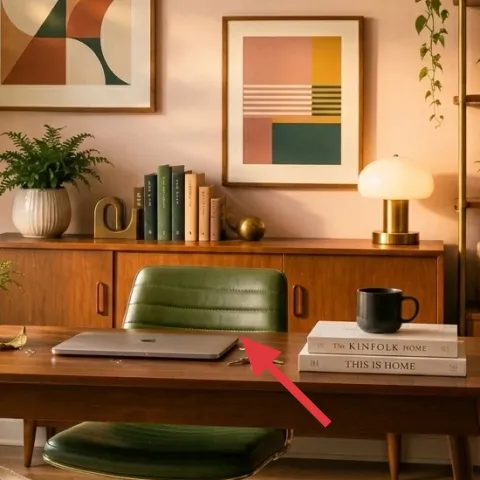
A wooden desk anchors the whole corner, because your day-to-day stuff sits on the tabletop: the books, the ceramic vase, and the lamps. In this setup, the desk’s warm tone is doing more than function—it’s the “neutral” that makes olive green feel rich instead of loud. The obvious alternative is to go for a cooler gray desk, but that fights the brass lighting and the window daylight. With a moveable desk, the trade-off is that you may need a few accessories you can pack in boxes—so keep everything that’s decorative and easy to dismantle.
Layer by height
When the desk reads warm on its own, you can bring in color through a cushion and plants instead of repainting anything.
Layer 2 — brass desk lamp ($60) Focus light without a harsh overhead
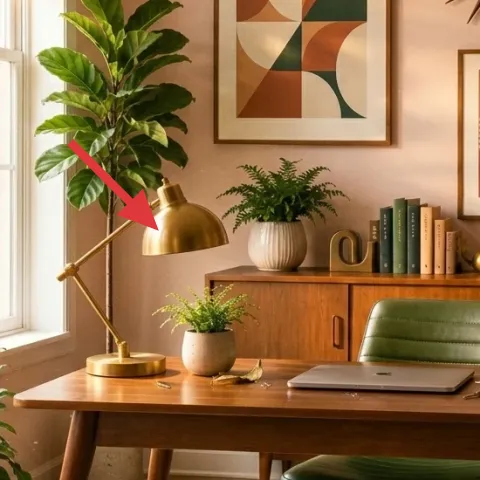
The brass desk lamp gives you directional light where you actually work—right above the desktop—so the corner doesn’t rely on the room’s ambient glow. Its warm metal plays nicely with walnut wood and prevents the beige walls from looking empty. A common mistake in shared housing is buying only one lamp and calling it “done,” but the desk still looks dim after dark. This brass lamp is an easy swap because it’s plug-in, and the trade-off is that you’ll style the cord so it stays tidy rather than letting it sprawl across the tabletop.
Pick a finish that matches your undertone
Brass reads warmer than chrome, which keeps the olive green cushion from turning dull.
Layer 3 — globe table lamp ($60) Soft light that flatters plants and prints
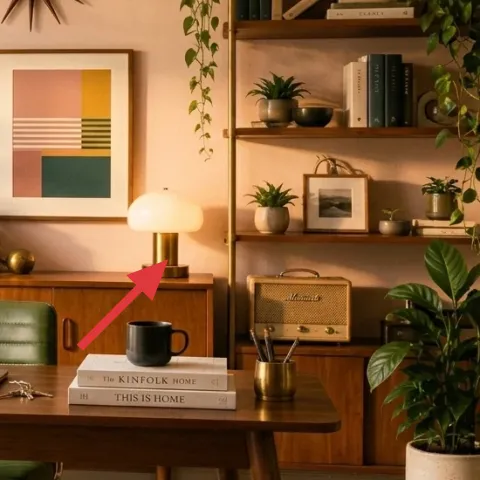
The globe table lamp adds the second lighting layer at credenza height, which matters because it changes how the framed abstract prints and the shelf plants look. With a single task light, you get glare and hard shadows; with a globe lamp, the room feels steadier and calmer. The alternative would be a bright white bulb everywhere, but that flattens the “warm daylight” feeling that already exists near the window with blinds. The trade-off is choosing a shade that isn’t too small—otherwise it won’t spread enough light to make the wall art feel intentional.
Don’t stack only one color temperature
If one lamp is significantly cooler, the beige walls can look gray instead of warm.
Layer 4 — olive green seat cushion ($30) Add color that packs flat
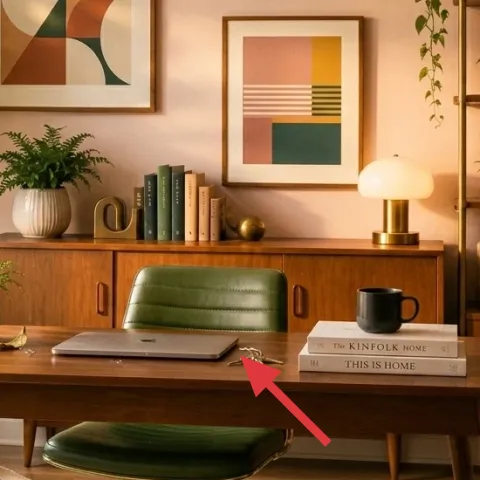
The olive green seat cushion is the quiet hero: it’s saturated enough to read “styled,” but it’s also practical because it’s a soft good you can remove and pack without moving furniture. In the photo, it sits where your eye naturally goes in a work nook, so the room’s palette doesn’t depend on permanent wall changes. The alternative is painting the chair or swapping the whole chair, but that’s heavier and harder to bring to the next lease. The trade-off with a cushion is that you may need to keep it protected from desk spills—use it as a color anchor and keep everything else neutral.
Match the cushion to one other element
Repeat olive green with small ceramics or plant pots so the color feels on purpose, not accidental.
Layer 5 — freestanding wall shelf with wood shelves ($120) Storage you can take with you
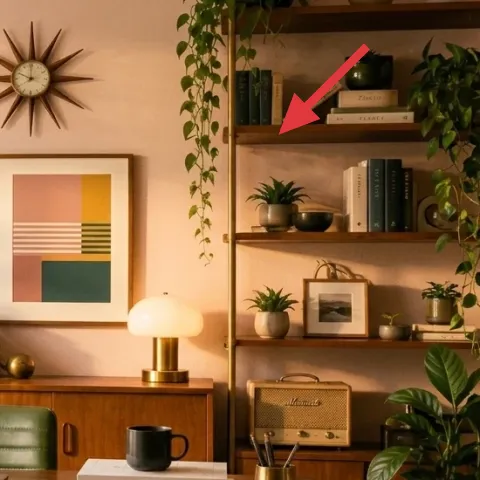
The freestanding wall shelf is how the nook stays “room-like” instead of just a desk in front of a wall. It holds plants and a book stack at multiple levels, so your shelf becomes a vertical composition—something framed art alone can’t do. For shared housing, the big advantage is that freestanding shelving is dismantlable and doesn’t demand drilling into light beige walls. The alternative would be wall-mounted shelves, but those often involve mounting hardware that you don’t want to fight during a move. The trade-off is that you’ll need to manage balance: keep heavier books lower, and cluster plants so they don’t pull the whole shelf visually off-center.
Use shelves as a “vertical rhythm”
Plants on the top shelf and books on the middle keep the corner from feeling top-heavy.
Layer 6 — large framed abstract print (DIY on cardstock) ($80) Graphic color without wallpaper
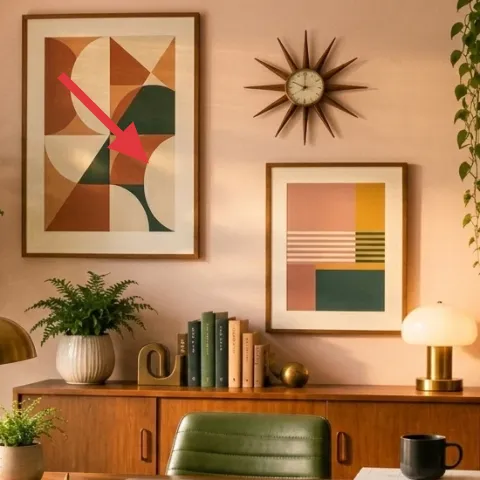
That large framed abstract print is what gives the nook its personality: bold shapes against warm beige, with terracotta and green cues that echo the plants and cushion. A lot of people default to peeling wallpaper or repainting, but those are permanent moves you usually can’t take with you. This DIY route keeps the same role—wall color and pattern—while staying renter-safe because you can make the art on cardstock and swap it in and out of the existing frame. The trade-off is that a DIY print is best when the shapes are clean and intentional, not overly detailed.
Make it instead of buying it
This hand-painted abstract on cardstock gives you the same warm, graphic hit as a framed abstract print—without spending on a new print.
Materials
- Cardstock sheets — 1–2 sheets — craft store — $10
- Acrylic paint set (assorted colors) — 1 small set — craft store — $6
- Small foam brush set — 3–4 brushes — craft store — $6
- Painters tape — 1 roll — hardware store — $5
- Gloss or matte varnish spray (optional topcoat) — 1 can — craft store — $3
Steps
- Cut cardstock to match the framed abstract print opening size.
- Plan shapes by marking light pencil guides, then remove the marks once you’re happy.
- Use painters tape to create crisp edges for blocks and curves.
- Paint the largest shapes first, letting each color dry to the touch.
- Peel tape slowly while paint is still slightly tacky for cleaner lines.
- Optional: seal with a thin varnish spray layer once everything is dry.
Total DIY cost: $30 — saves about $50 over buying.
Layer 7 — two potted plants on the shelf ($30) Bring life to the vertical composition
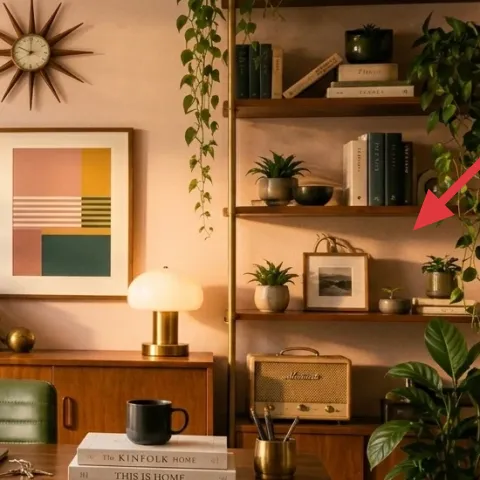
Those potted plants on the shelf keep the whole nook from feeling too “decor-only.” Because the shelf sits at eye level and above, plant leaves add texture and movement that framed prints can’t replicate. The visual payoff is strong: you get a green counterpoint to olive cushion and a soft organic shape against the geometric abstract print. The alternative is using only books and a ceramic vase, but the room starts to look flat once you remove the living texture. The trade-off is planning for light: cluster plants where daylight from the window with blinds can reach, and keep them easy to remove in one pass when you move.
Group leaves, not pots
Arrange so the foliage overlaps slightly; the pots can be simpler because the greens do the work.
The cost, layer by layer
| Layer | Item | Cost |
|---|---|---|
| 1 | Wooden desk | $200 |
| 2 | Brass desk lamp | $60 |
| 3 | Globe table lamp | $60 |
| 4 | Olive green seat cushion | $30 |
| 5 | Freestanding wall shelf with wood shelves | $120 |
| 6 | Large framed abstract print (DIY on cardstock) | $80 |
| 7 | Two potted plants on the shelf | $30 |
| Total | $580 | |
If the $120 shelf price feels steep, choose a smaller freestanding shelf unit or scale back to fewer shelf levels—keeping the same plant-and-book styling so the vertical rhythm still reads finished.
What worked, what didn't (across the whole room)
This nook succeeds because it stacks warm materials, lighting at multiple heights, and living texture from the plants. The result feels styled without depending on permanent wall changes. The only weak spot is when a corner has one lamp and no color anchor—then the desk looks functional but not “seen.”
What worked
- The brass desk lamp focuses light on the tabletop without fighting the daylight near the window.
- The globe table lamp smooths shadows so the framed abstract prints feel balanced after dark.
- The olive green seat cushion adds saturated color where your eye naturally lands.
- The freestanding wall shelf creates a moveable vertical gallery for plants and books.
- The large framed abstract print gives geometric structure to warm beige walls.
- The plant grouping adds organic texture that keeps the shelf from feeling too curated.
What didn't
- Relying on overhead light only makes the shelf and wall art look harsher than they do in daylight.
- Using too many small decor items on the shelf blurs the visual focus around the book stack.
- Choosing a cooler-toned cushion color can make the brass lighting feel off.
- Skipping a second lighting layer leaves the wall prints dim, even when the desk lamp is on.
- Setting the plants too far apart makes the shelf composition feel accidental.
What we'd skip if we did it again
Skip replacing anything fixed or built-in. In shared housing, it’s tempting to spend on big upgrades, but the look here is built from moveable items—table lamps, a cushion, framed art, and a freestanding shelf.
Skip “matching everything” from the same retailer. The point of this nook is contrast: brass with walnut wood, geometric prints with leafy plants, and a globe lamp paired with a more directional brass desk lamp.
Skip adding small decor on top of the book stack without a plan. Instead, keep one clear anchor per shelf level—plant cluster, then books, then one ceramic vase—so the corner reads intentional from across the room.
Frequently asked
How long does this move-friendly refresh take?
The swap part—lamps, cushion styling, shelf arrangement, and moving framed art—usually fits into an afternoon. The DIY hand-painted abstract on cardstock is the only step that adds real time, mostly drying. Plan for one extra block if you choose to use a thin optional topcoat. On a normal weekend, this lands around a half day to a full day, depending on how crisp you want the shapes.
Is this renter-friendly if I can’t drill or use heavy hardware?
Yes—the core choices are plug-in lighting, textile color, framed art, and a freestanding wall shelf. That means you’re not relying on mounting into walls or changing fixed items. For the framed abstract, the simplest path is making a new cardstock print that goes inside the existing frame style you already own (or that you can move with you).
What if my home office nook is smaller than the photo?
Scale the shelf and keep the “stack” idea: one plant cluster, one book zone, and one framed print. If the desk is narrower, you can still use both lamps as long as the cords are managed and the globe lamp doesn’t crowd the shelf edge. Prioritize the olive green seat cushion as the color anchor, because soft goods are the easiest way to keep the look cohesive without adding more furniture.
Where should I shop if I want the same warm mid-century feel on a budget?
For the desk and lamps, look for mid-century or “brass and wood” listings at local thrift stores or resale apps, then pair with a warm-toned globe table lamp you can test before committing. For the cushion and framed abstract, focus on textiles and wall art that can pack flat or swap quickly—search for olive green cushion covers and geometric abstract prints. The DIY cardstock print keeps the budget predictable.
What’s the biggest styling mistake in a work nook like this?
The biggest mistake is using only one light source and leaving everything else the same height. Without the second lighting layer and a vertical shelf composition, the wall prints and plants look darker and less intentional. Another common misstep is scattering small items across the shelf without a focal order; the composition works best when plants, books, and a ceramic vase have their own “zone.”
More in Living Room
7 no-drill style swaps for a home office nook
A warm, mid-century home office nook can look styled (and still moveable) on a generous $600 budget. This plan uses seven no-drill upgrades…
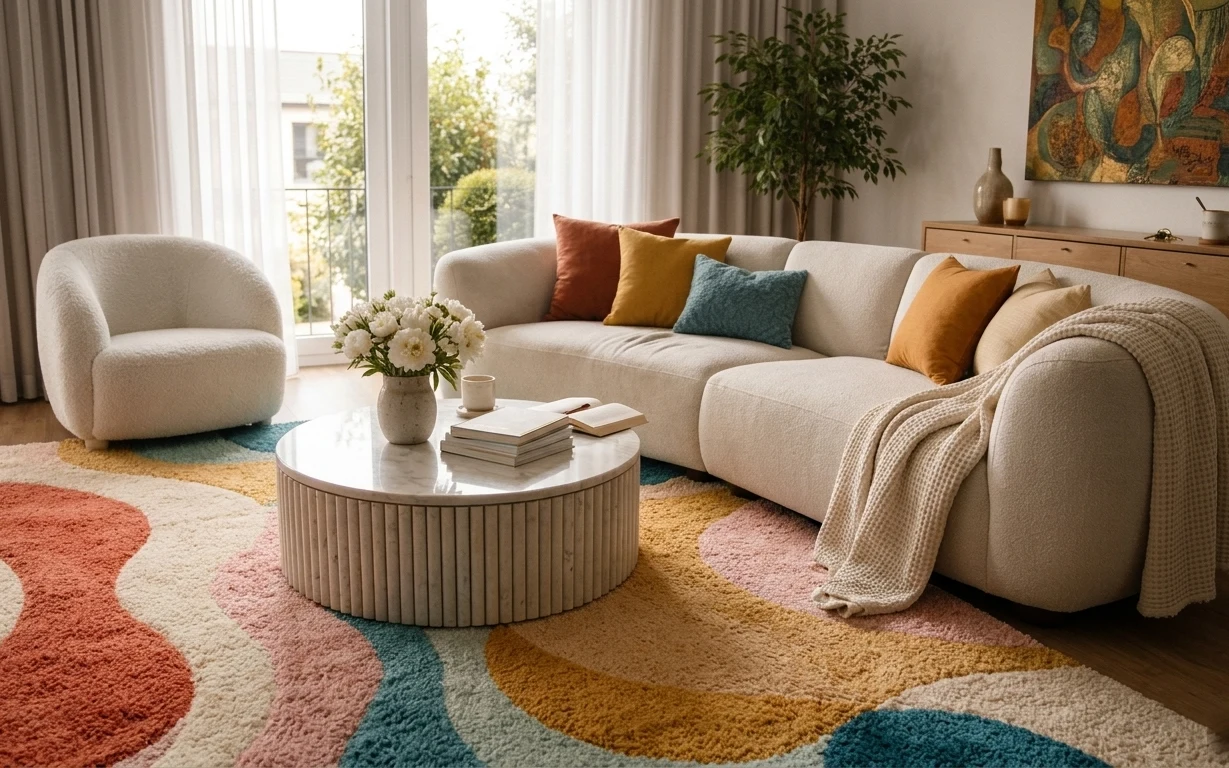
7 no-drill ways to style a living room for $350
A renter-friendly living room seating area refresh for $350: swap in a patterned rug, update textiles, and add move-friendly decor on the c…
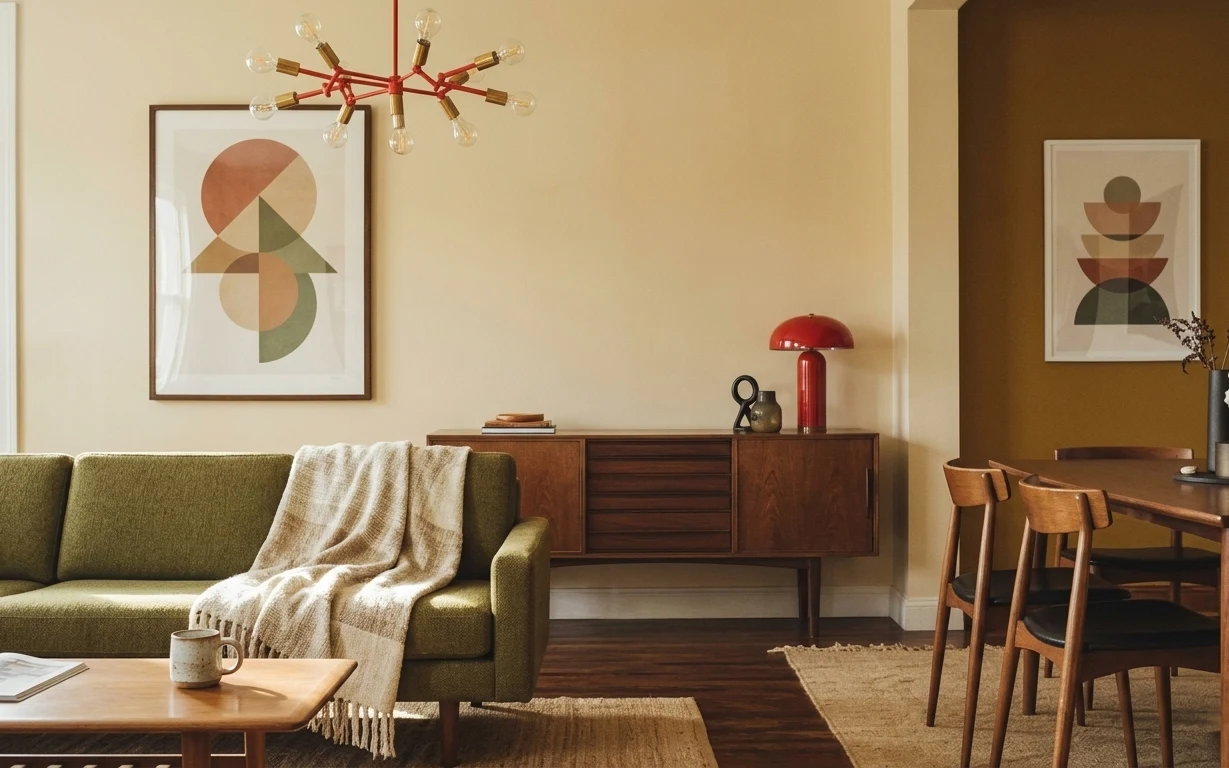
How to style a mid-century living room for $500
A move-friendly living room refresh built around warm walnut tones and olive textiles, all for $500. Seven swaps focus on rug, throw, art, …