- Best for
- Move-ready living room refresh
- Time
- Weekend (2–4 hours)
- Total cost
- $537 build list
- Renter-safe
- No-drill styling + removable art
Why warm modern orange is the orange-sofa living room of 2026
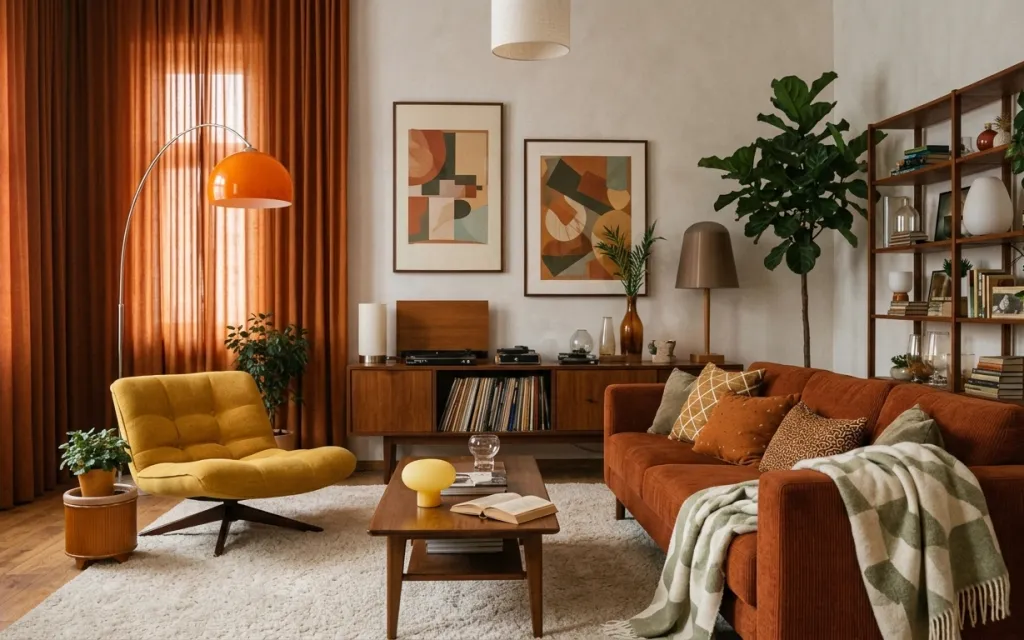
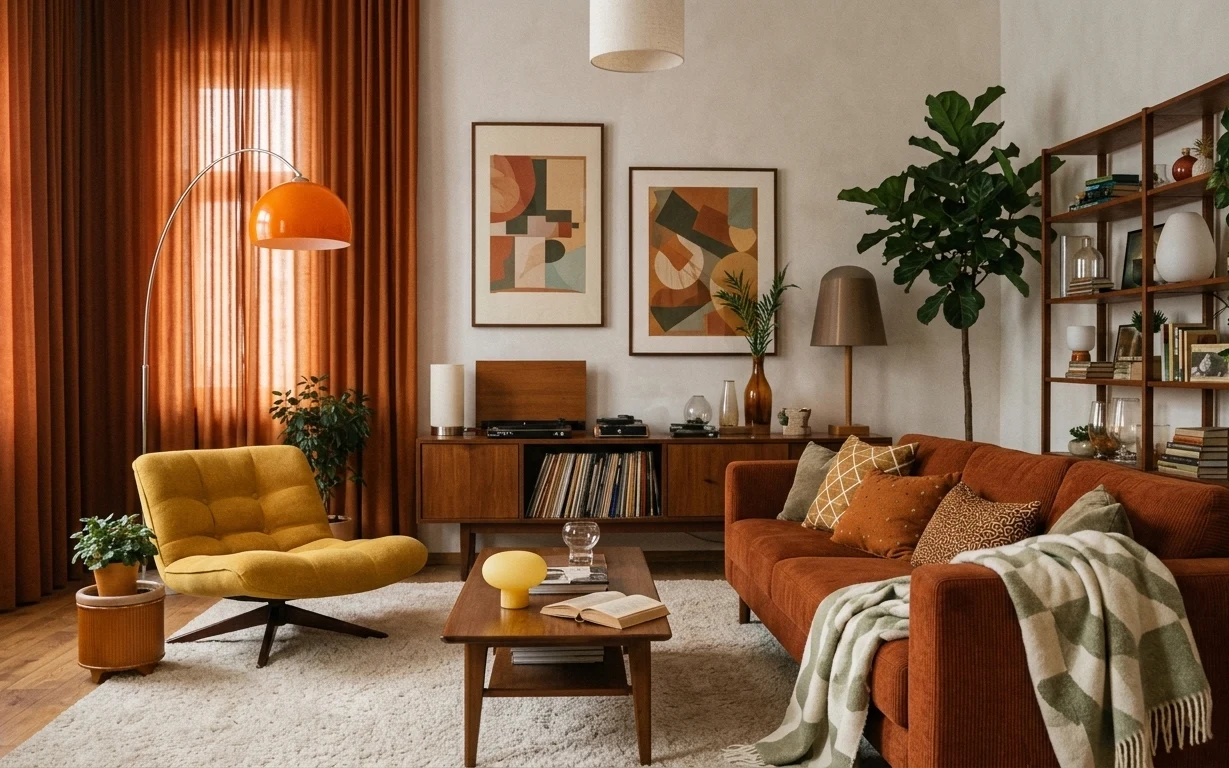
The fastest way to get from “we moved in last week” to “this is ours” is to copy the color and material rhythm you already see here: warm orange upholstery, soft cream walls, and the grounded calm of a light, textured rug. In this photo, the orange fabric sofa reads bold but wearable because the throw blanket and patterned pillow keep the palette busy in a good way. The dark-wood coffee table adds contrast, while the framed abstract prints bring small graphic energy without taking over. For shared-housing limits, that’s exactly the sweet spot: visible style, low commitment, and easy packing.
I’ve made the mistake of going too neutral and then wondering why the room looks unfinished—like it’s missing a personality switch. The turn happened the first time I added a single warm-toned anchor (color on upholstery beats color on walls every time for renters). Orange works especially well with mustard accents and warm lighting, because the whole palette keeps leaning “sunset,” not “caution-vest.” Once that anchor was in, I could build the rest with textiles and small art instead of big, heavy moves.
Layer 1 — area rug ($80) Texture underfoot that hides real-life mess
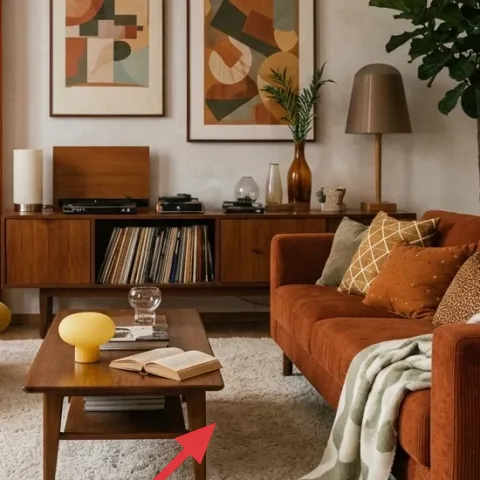
This area rug acts like a soft boundary under the seating, and in a move-friendly living room it’s doing double duty: it warms up the light wood flooring and it visually “sets” where the coffee-table moment belongs. Choose a 5×7 in a cream/tan base with a subtle pattern or low-sheen texture, so it reads styled without showing every mark. The trade-off is that super-white rugs look amazing in listing photos, but they punish daily life. The orange sofa already brings plenty of color, so this rug should feel grounding—not loud.
Pick a rug with a low-contrast pattern
It still looks intentional while forgiving coffee spills and scuffed shoes.
Layer 2 — orange fabric sofa ($250) The biggest color anchor, bought once
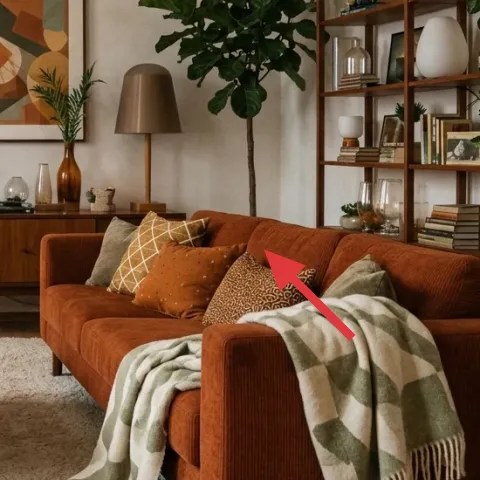
The orange fabric sofa is the room’s anchor because it supplies both color and shape at the largest scale in the frame. For shared housing, the smart approach is to buy the easiest-to-swap item—the seating silhouette—then build everything around it with removable textiles and art. A thrifted or used orange sofa can be cheaper than you think, and it’s more “move-proof” than wall color or fixed lighting. The trade-off is weight and logistics: it’s not the DIY project you lug alone, so plan for delivery or help for one move. Once it’s in, the rest of the refresh becomes easy.
Don’t overthink upholstery texture
If it’s too delicate, it won’t survive shared-house life—aim for fabric that wipes clean.
Layer 3 — wood coffee table ($60) A warm, grounded surface for small rituals
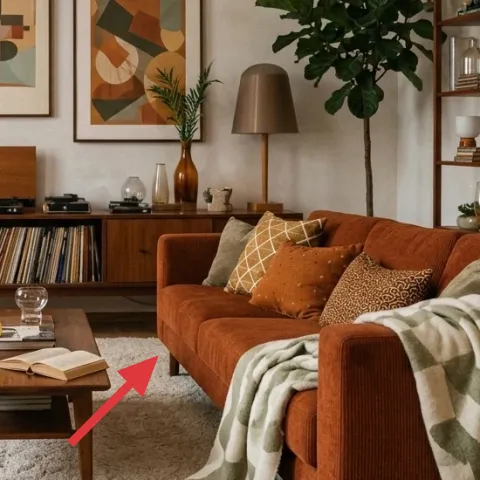
The wood coffee table ties the warm palette together and gives you a place for “everyday styling”: a book stack, a small plant, and the lamp moment you want to look intentional. In this photo, the table’s simple lines keep the room from feeling crowded even with lots of objects on shelves. For renters, the advantage is that a coffee table is straightforward to move, and most models break down or can be re-homed easily. The trade-off versus a sleeker glass top is that wood has more visual warmth, but it also shows wear slightly faster—still worth it for the color harmony it brings.
Match the finish family, not the exact shade
If your shelves are darker, let the table be mid-tone wood; it reads cohesive without chasing perfection.
Layer 4 — framed abstract wall art print ($80) DIY the graphic, keep the color
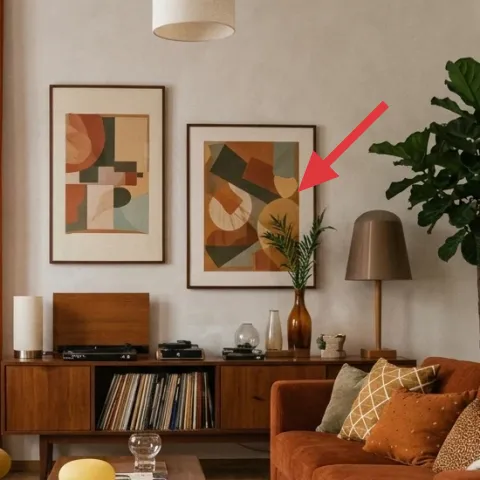
The framed abstract wall art print gives the wall something to do, but it stays removable and light enough for a yearly-ish move. The key is to pull the colors you already have—burnt orange, warm neutrals, and a touch of olive/green energy—so the art doesn’t fight the sofa. Going DIY here is also practical: you can make a composition that matches your shelf styling and still swap it out next time the palette changes. The trade-off is time: it’s not instant, but it’s a one-afternoon project. The reward is that the room looks designed, not decorated around a random frame.
Make it instead of buying it
DIY an abstract artwork on cardstock, then frame it in a simple frame you already own or can buy used.
Materials
- Cardstock (thick) — 2 sheets — craft store — $6
- Acrylic paint set — 1 small set — craft store — $10
- Painter’s tape — 1 roll — hardware aisle — $8
- Small brush set (or 1–2 craft brushes) — assorted — craft store — $6
- Matte clear spray (optional) — 1 can — craft store — $4
Steps
- Choose 3–4 colors that echo the room (burnt orange, warm cream, and a muted green).
- Cut cardstock to your frame opening size and lightly scuff the surface for grip.
- Use painter’s tape to block simple geometric shapes (circles, rectangles, or angled bands).
- Paint the largest shapes first, then fill smaller details while the base is dry.
- Remove tape once the top layer is dry to reveal clean edges.
- Let everything dry fully, then add tiny contrast marks for depth.
Total DIY cost: $34 — saves about $46 over buying.
Layer 5 — orange throw blanket ($25) Soft warmth that reads styled even folded
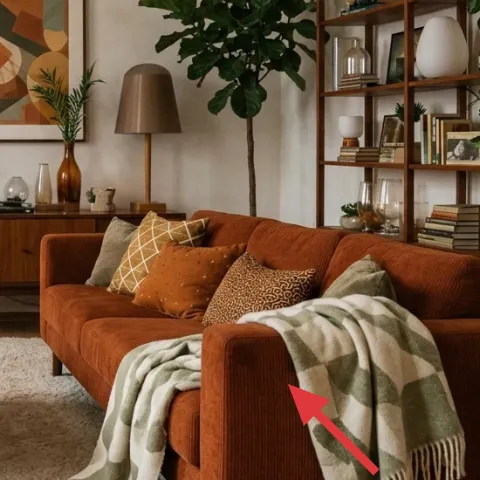
This orange throw blanket is the quick-textile layer that makes the sofa look “finished,” because it adds movement and softness where the upholstery is visually uniform. Drape it over the arm or across the seat so part of the blanket hangs naturally—folded neatly often reads too formal in a shared living room. The trade-off is practicality: a patterned blanket hides wear better than smooth solid knits, but it can clash if the palette is already busy. In this setup, the blanket color is your bridge between the sofa and the warm accents in the room, so keep the print subtle and the tone consistent.
Lay it so you can see the weave
Texture is what sells the look from across the room.
Layer 6 — patterned throw pillow ($12) The small print that keeps the color from getting flat
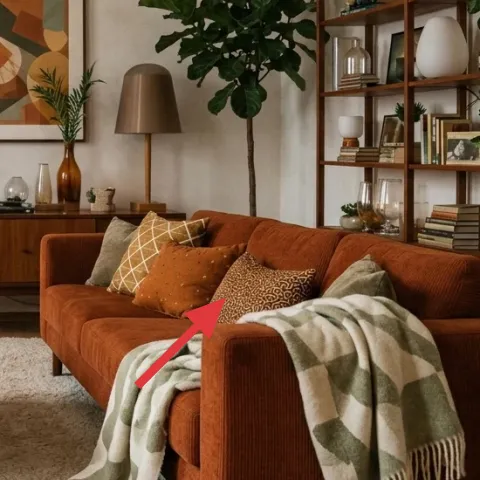
A patterned throw pillow is where you add a second micro-pattern without changing the room’s main color. Because pillows are easy to swap during moves, this is the layer that can follow seasons: you can keep the orange sofa and change pillow covers instead of replacing big furniture. The trade-off versus buying plain solids is that pattern can feel dated if you choose something too loud, so go for a small-scale geometric or earthy motif that echoes the abstract art. In this photo, the pillow’s warm tones and pattern scale work because they don’t compete with the framed prints.
Repeat one color from the art
Even a small echo makes the whole palette feel intentional.
Layer 7 — floor vase planter with leafy plant ($30) Height that makes shelves feel curated
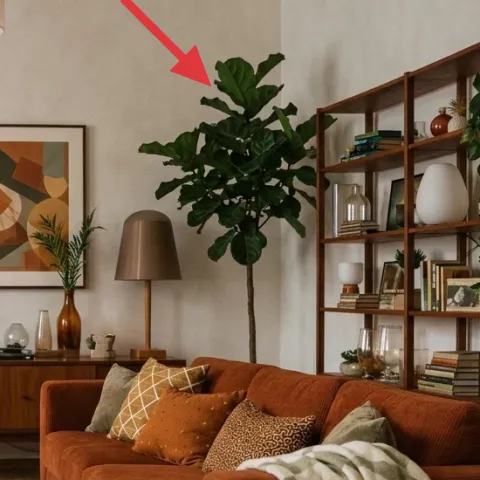
The floor vase planter with leafy plant brings vertical life and soft volume, which is especially helpful when you have built-in-looking book shelving and a few framed prints. This is the layer that makes the living room feel “alive,” but it’s still move-friendly because you can pack the pot and any loose leaves with minimal fuss. The trade-off is that plants take maintenance—so choose something hardy and easy to keep in your light level. If the plant looks too busy against the orange sofa, move it a little farther toward the shelving so it acts like a visual buffer instead of a competing focal point.
Use the plant as a height anchor
Place it where it visually balances the ceiling light and sofa line.
The cost, layer by layer
| Layer | Item | Cost |
|---|---|---|
| 1 | Area rug 5×7 | $80 |
| 2 | Sofa (thrifted) | $250 |
| 3 | Coffee table (thrifted) | $60 |
| 4 | Framed abstract wall art print (DIY) | $80 |
| 5 | Throw blanket | $25 |
| 6 | Throw pillow cover | $12 |
| 7 | Floor vase planter with leafy plant | $30 |
| Total | $537 | |
If you need a cheaper path, swap one textile layer first: choose a neutral throw blanket and keep the orange only in the sofa + art. Another quick savings move is sourcing the coffee table and rug from used listings, then spending $15–$20 more on a plant with a fuller shape.
What worked, what didn't (across the whole room)
This palette works because the warm orange anchor is balanced by cream walls, a grounded rug, and smaller graphic elements that repeat the same color family. The result feels styled without relying on anything permanent.
What worked
- The light-toned rug keeps the room from looking too heavy next to the orange sofa.
- Layered textiles (throw + pillow) add interest without changing the big furniture.
- The abstract framed prints bring pattern control—graphic, but not cluttered.
- Wood surfaces in the coffee table and console unify warm tones across different objects.
- Leafy plant height makes the shelving feel composed instead of purely stocked.
What didn't
- If the throw blanket is too thin, the sofa arm looks unfinished and flat.
- Overmatching finishes (exact wood-to-wood) can look fussy; mid-tone variety reads better.
- Very high-contrast wall art can fight the orange upholstery; keep the palette warm.
- Buying all new decor at once makes the room feel sterile; mix thrifted and new.
What we'd skip if we did it again
Skip matching sets for everything. In shared housing, the quickest way to get “catalog look” that doesn’t travel well is buying coordinated furniture suites; mixing a wood coffee table with secondhand seating feels more natural and packs better.
Skip expensive wall treatments. No peel-and-stick wallpaper or permanent paint is worth it here when framed art and textiles can carry the same warm style—and move with you to the next lease.
Skip buying the biggest item without a move plan. Even if the sofa is your anchor, it needs delivery help; prioritize pieces you can transport safely, then spend on easy-to-swap textiles for the visual payoff.
Frequently asked
How long does this kind of living room refresh take?
Plan for about 2–4 hours if most items are already in hand and you’re mostly styling: rug placement, throw and pillow positioning, and arranging the framed print. The DIY abstract piece adds another window of time for painting and drying, but it’s still usually a single afternoon project. The real time saver is buying textiles in advance so you aren’t waiting on deliveries mid-styling.
Is this renter-safe for shared housing if I’m only allowed to take items down quickly?
Yes—this plan stays in the “take it with you” category. Rug, pillows, throw blanket, coffee table, and a framed print all pack up into boxes. The DIY art can go into a frame or a reusable mount, so it doesn’t rely on permanent wall changes. The only thing that can be fussy is moving larger seating, so delivery or help for the sofa is part of staying safe and stress-free.
What if my room is smaller or larger than the photo?
For smaller rooms, keep the rug closer to 5×7 and avoid adding multiple large artworks—pick one framed print and let it do the graphic work. For larger rooms, you can go bigger on the rug and add one additional pillow cover, but don’t stack too many throw layers at once. The main rule: one dominant color anchor (the sofa) and two smaller rhythm-makers (art + textiles).
Where should I shop differently for this look on a budget?
For the sofa and coffee table, prioritize thrift stores, resale apps, and local vintage listings—these are often priced well below new. For the rug and textiles, buy from retailers with easy returns or look for used rugs in good condition. The framed abstract is the easiest swap to DIY using a cardstock piece you can remake cheaply, then frame in a simple, consistent size.
What’s the biggest mistake people make with warm-orange living rooms?
The most common misstep is adding orange in too many competing forms without a grounding layer. If the room only has orange color, it can read loud instead of warm. Put the orange on one anchor (upholstery), then balance with cream/neutral walls, a textured rug, and one small print or geometric art piece. Textiles do the rest, and they’re the easiest to adjust later.
More in Living Room
7 no-drill swaps for a $600 orange-sofa living room
An orange-sofa living room refresh with renter-safe, move-friendly swaps: a warm rug base, a comfy seating anchor, and layered textiles. Th…
How to make a living room seating area feel styled for under $400
A renter-friendly living room seating area refresh that leans into warm lamp light, layered texture, and blue-and-cream patterning—all move…
What $700 buys: a terracotta boho living room renter refresh
A terracotta-and-cream boho living room refresh with no-drill upgrades: rug, lamp, plants, and renter-friendly wall art. Includes a macramé…