- Best for
- Earthy-textured living rooms with renter-friendly wall decor
- Cost
- About $700 total ceiling
- Difficulty
- Easy (mostly textiles + plug-in lighting)
- Time
- One weekend plus a little styling
Why terracotta-and-brick texture is the living room of 2026
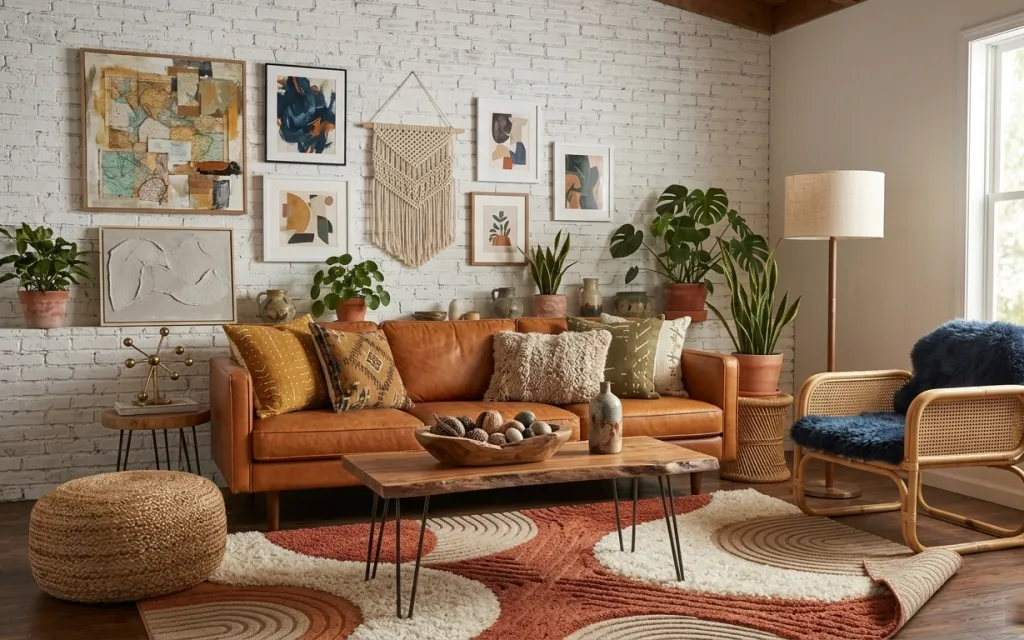
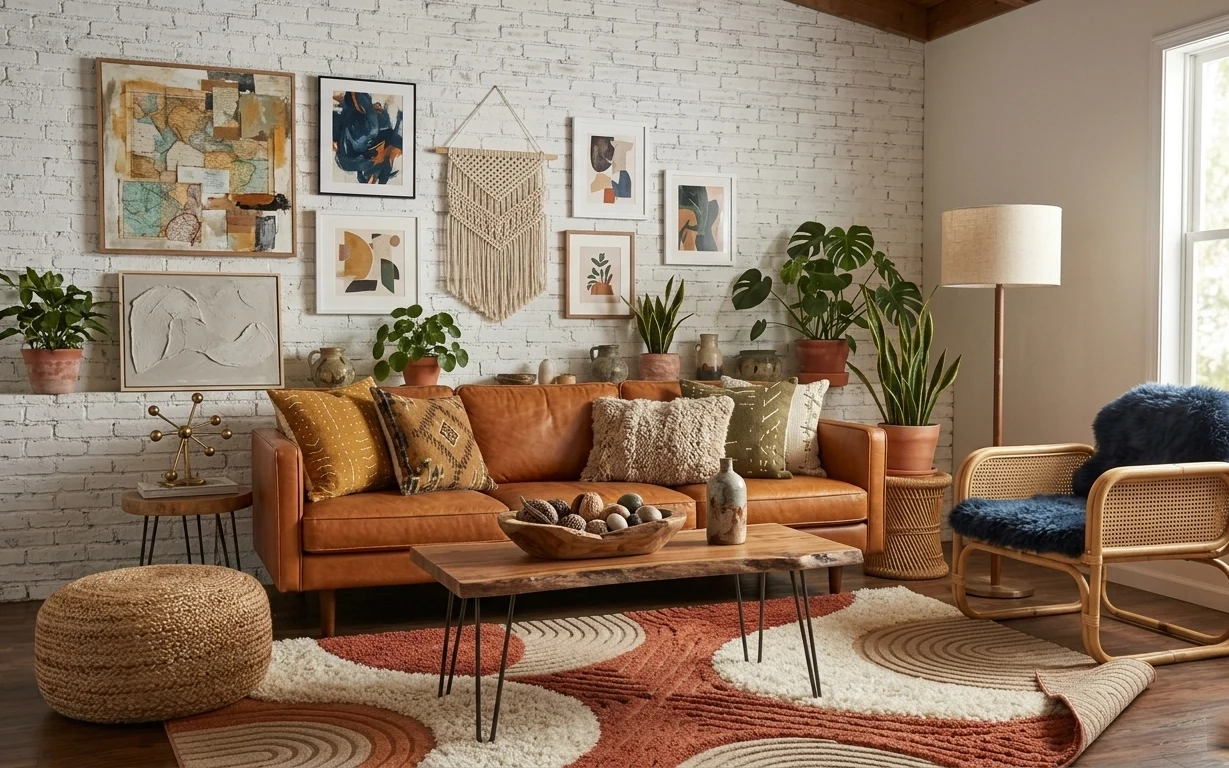
The easiest part of this setup is also the most honest: it’s built on texture. There’s a patterned rug in warm terracotta and cream, an orange leather sofa with mixed throw pillows, and a wooden coffee table that keeps everything feeling earthy (not precious). On the wall, framed prints and a macramé hanging give the white brick a reason to exist—so it doesn’t feel like a blank grid. This is achievable on a renter budget because every swap is removable: textiles, freestanding seating, plug-in lighting, and wall decor that hangs without hardware drama.
I used to think brick walls wanted “more paint” or a big matching set of art. Then I tried hanging a macramé-style piece above my own sofa and realized the texture did the heavy lifting. The change I’ll keep making? Stop fighting the wall color and start building contrast with warm materials—terracotta pots, natural fibers, and framed prints with off-white matting.
Layer 1 — floor rug ($200) pattern that grounds warm tones
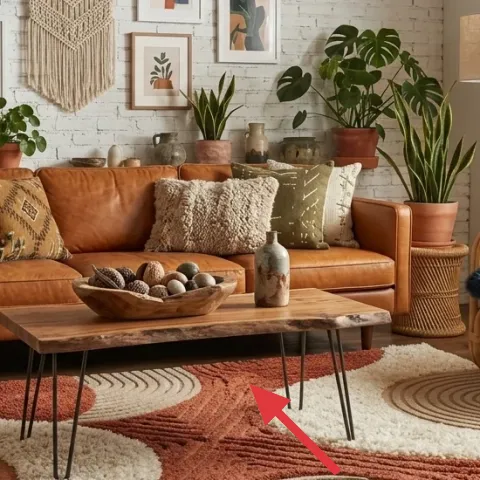
Start with the rug, because it decides the whole palette. In the photo, the floor rug mixes terracotta, cream, and muted rust in a pattern that reads like hand-placed shapes instead of a single solid “style statement.” Choose a similar tone range so it harmonizes with the orange leather sofa instead of competing with it. The trade-off is practical: bold patterns hide wear better than delicate ones, but they still look best when the sofa and coffee table sit squarely on top. This is the difference between “decorated corner” and “a room that feels finished.”
Build the rug as the anchor
Let the sofa front and the coffee table legs fall on the rug so the pattern feels intentional, not accidental.
Layer 2 — wood coffee table ($80) mid-century lines with everyday function
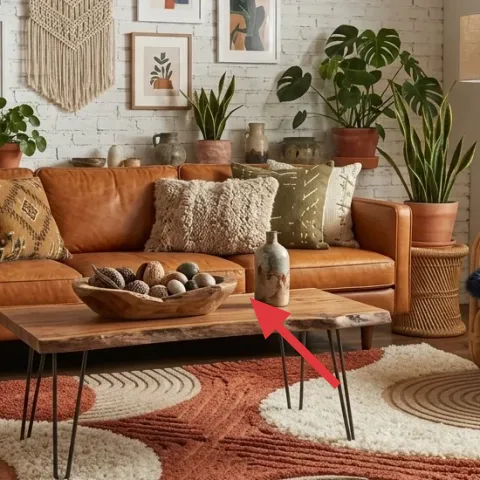
The wood coffee table ties the room together because it repeats the warm, natural material notes already happening in the rug and plants. It’s low enough to keep sightlines open to the framed art and tall enough to act like a real surface for the wooden bowl centerpiece. If there’s a temptation to buy a glass top, resist it—glass can make this palette feel cooler than it needs to be. The trade-off with wood is upkeep: use a coaster and keep it simple, since small dents and water rings are part of the “lived-in” look here. A coffee table like this makes the styling choices on top look curated instead of scattered.
Keep the styling bowl-simple
A single centerpiece with mixed textures is easier to maintain than filling the whole tabletop.
Layer 3 — floor lamp with cream shade ($120) soft daylight-to-evening glow
A plug-in floor lamp with a cream shade makes the whole room feel warmer after dark without stealing attention from the wall. In the hero, the lamp sits to the right and adds a vertical “pause” next to the rattan armchair, so the eye doesn’t bounce straight from rug to sofa. This choice beats overhead-only lighting because it creates layered brightness: light at the floor level and texture on the brick wall. The trade-off is placement—if the lamp base is too close to the chair, it can feel crowded. Aim for a clean path from sofa to chair so the glow feels welcoming instead of blocked.
Don’t chase a bulb color
If the shade is creamy but the bulb is too cool, the terracotta tones will look flat.
Layer 4 — rattan armchair ($80) breathable texture beside the leather
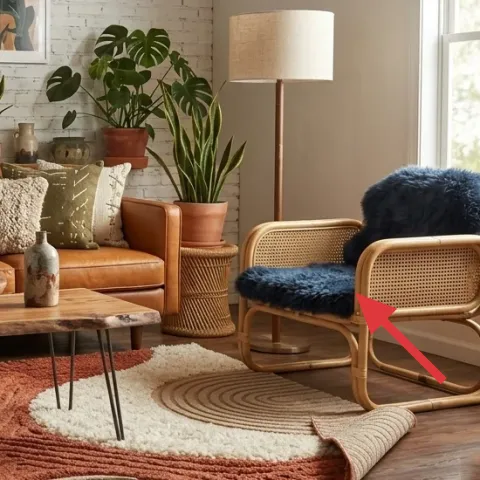
The rattan armchair is doing a lot of work: it adds airy texture next to the orange leather sofa and keeps the room from feeling heavy. Rattan’s open weave reads warm and coastal-adjacent, which is exactly why it plays so well with the patterned rug. The obvious alternative would be a solid upholstered accent chair, but that usually makes earthy rooms feel one-note. The trade-off with rattan is that it shows dust sooner than smooth surfaces, so quick wipe-downs matter. Styling-wise, pair it with something soft nearby (like the woven throw blanket) so the seat looks usable, not just decorative.
Let the weave contrast do the styling
Keep nearby decor in similar warm tones—no need for extra patterns on every surface.
Layer 5 — framed wall art print ($80) one print to repeat the palette
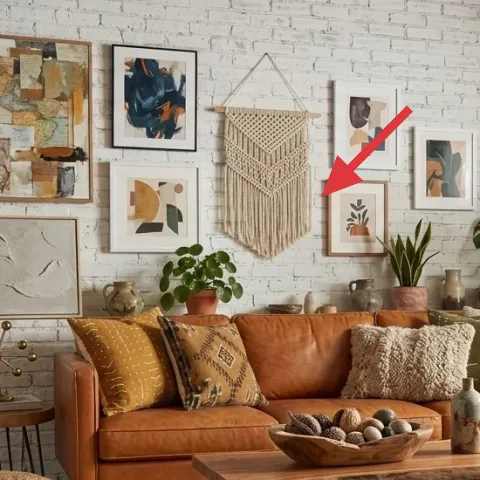
In this photo, framed wall art prints are spaced like a calm grid, and each piece echoes the room’s earthy palette—muted shapes and warm neutrals against the white brick. Pick one framed print first, then expand later if you want, because starting with a single anchor prevents “too many prints too fast.” If you’re tempted to choose a high-contrast poster, you’ll likely fight the brick texture instead of working with it. The trade-off is that framed art is more visually “specific,” so it benefits from matting or lighter tones. Aim for a similar warm/off-white look so it blends with the terracotta, not against it.
Hang at eye level, then adjust spacing
Measure from the floor to the center of the art, and use small shifts to line up the grid.
Layer 6 — potted plants in terracotta pots ($60) the live color that stays soft
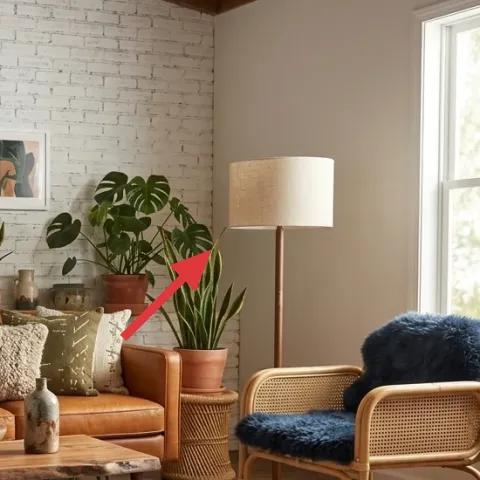
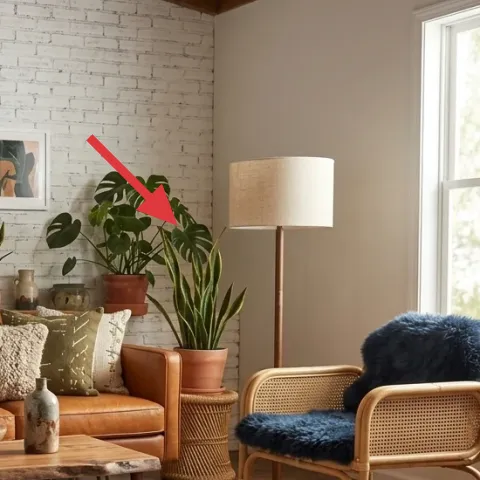
The potted plants in terracotta pots add “color without loud paint.” They pull warmth from the rug and match the room’s earthy materials, while the leaves keep the palette from feeling flat. In the hero, you can see multiple pots clustered across the mantel shelf, which is why the wall reads as styled even when the framed art isn’t changing. The obvious alternative is to buy just one plant, but that can look lonely against a brick wall. The trade-off with a plant cluster is ongoing care—rotate pots for even light and wipe leaves now and then. When you do, the whole room feels more relaxed and less staged.
Cluster, don’t scatter
Group terracotta pots closer together so they read as one arrangement.
Layer 7 — macramé wall hanging ($55) vertical texture over the sofa zone
Make it instead of buying it
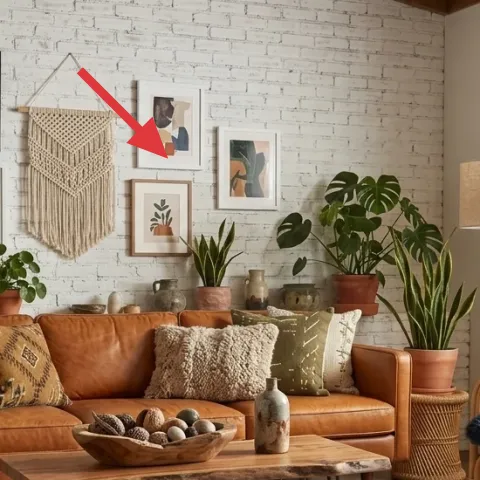
This macramé wall hanging recreates the airy knot pattern above the framed art, using simple cord, a dowel, and Command-hook hanging.
Materials
- Macramé cord — 2 rolls (about 120–180 ft total) — craft store — $15
- Wood dowel — 1 (about 1/2 in × 12 in) — craft store — $10
- Command Strips / removable hooks — 1 set — $8
- Scissors/comb (if needed) — 1 set — $12
Steps
- Cut cord strands to your desired hanging length (measure from dowel to bottom fringe).
- Fold strands in half and tie them around the dowel to form the top attachment row.
- Separate strands into working sections and begin basic knotting (repeat a single pattern for consistency).
- Continue the knot rows until the hanging reaches the same overall height as the hero.
- Trim ends evenly, then lightly comb or fluff fringe so it reads airy (not tangled).
- Attach the dowel to a removable hook using the hanging loop or a cord wrap.
Total DIY cost: $45 — saves about $10 over buying.
The cost, layer by layer
| Layer | Item | Cost |
|---|---|---|
| 1 | Floor rug (patterned, terracotta/cream tones) | $200 |
| 2 | Wood coffee table | $80 |
| 3 | Floor lamp with cream shade (plug-in) | $120 |
| 4 | Rattan armchair | $80 |
| 5 | Framed wall art print | $80 |
| 6 | Potted plants in terracotta pots (cluster) | $60 |
| 7 | Macramé wall hanging | $55 |
| Total | $675 | |
A cheaper way to get the same vibe: swap a higher-priced rug for a similar terracotta/cream pattern, choose a smaller-framed print set, and start with two plants instead of three.
What worked, what didn't (across the whole room)
The room’s best move is its material mix: terracotta rug tones, warm wood, and plant texture keep everything cohesive even with bold shapes. The lamp and chair placement also make it feel balanced from day to evening. The only weak spot is that it’s easy to overdo—too many competing patterns can blur the palette instead of clarifying it.
What worked
- The patterned floor rug anchors the orange sofa and prevents the palette from feeling one-note.
- Wood coffee table surfaces make styling feel intentional, especially with a single centerpiece bowl.
- The cream-shade floor lamp adds warm light that flatters terracotta and brick together.
- Rattan seating brings breathable texture next to leather, keeping the room from feeling heavy.
- Framed prints create an organized wall rhythm without needing any permanent fixtures.
- Terracotta pots on the mantel shelf repeat the color story and add softness at multiple heights.
What didn't
- Buying multiple accent patterns at once can make the wall and rug feel too busy.
- Choosing a cool-toned light bulb can wash out terracotta instead of warming it.
- Using only one plant often reads “temporary,” especially against a white brick wall.
- Overfilling the coffee table with objects makes the room look cluttered rather than styled.
- Picking wall art with wildly different color temperatures can make the grid look disconnected.
What we'd skip if we did it again
Skip replacing the wall with a new feature or permanent treatment. White brick is already doing the background work; focus on renter-safe swaps like textiles, plug-in lighting, and removable wall decor so the room looks “finished” without permission headaches.
Skip a matching set-and-everything approach. Buy the rug and one framed print first, then add plants and one extra texture piece; that prevents the common mistake of having too many different patterns fighting for attention.
Skip going all-neutral. This palette stays coherent because the terracotta tones repeat in the rug, plants, and sofa accessories—so keep that one warm color family consistent, even if the individual items differ.
Frequently asked
How long does this living room refresh take for a renter?
Plan for about 4–6 hours if you’re mostly swapping textiles, adding a plug-in lamp, and hanging removable wall art. The macramé part is the time variable—factor in a couple of evenings depending on knot speed. The real “time cost” is spacing wall art and adjusting rug placement so the coffee table sits on the rug confidently.
Is the macramé wall hanging renter-safe on a brick wall?
Yes, as long as it uses removable Command hardware. Use Command Strips or removable hooks to attach the dowel loop (no drilling, no anchors). Brick can be textured, so press firmly and follow the product’s wait time before hanging anything heavy. If you want extra peace of mind, use two hooks spaced apart for weight distribution.
What if my room is smaller than this one?
Keep the same idea, but scale the anchor pieces. Choose a smaller floor rug that still covers the front legs of the sofa and at least the coffee table feet. Use fewer framed prints (start with one) and cluster two plants instead of three. A single macramé hanging can replace multiple wall textures if your wall has limited space.
What if my living room is bigger?
Lean into repetition and spacing. A larger rug that extends farther past the coffee table will help the room feel more expansive. Add one more framed print (or a larger framed print) to keep the wall from feeling sparse. For lighting, consider keeping the floor lamp but placing it so the glow lands on the chair side, not behind the sofa.
Where should I shop for pieces like these?
For the rug and framed art, look at online marketplaces that offer frequent sales, plus local thrift or vintage shops if you can check measurements. Plug-in lamps are easiest to find at home stores and online lighting retailers. For terracotta pots and plants, garden centers are reliable; local nurseries also help with picking plants that match your light conditions.
What’s the biggest mistake with this look?
The most common misstep is mixing too many competing patterns or color temperatures. If the rug pattern is busy, keep pillows and wall art in warm neutrals and off-white accents. Also avoid using a cool bulb in the floor lamp—terracotta looks best with warm lighting that doesn’t flatten the orange and rust tones.
More in Living Room
What $700 buys: a terracotta boho living room renter refresh
A terracotta-and-cream boho living room refresh with no-drill upgrades: rug, lamp, plants, and renter-friendly wall art. Includes a macramé…
7 no-drill swaps for a leather-sofa lounge, up to $600
A leather-sofa lounge can look finished fast with small, move-friendly swaps. This $600 refresh focuses on rug texture, botanical wall art,…
What $700 buys: a renter-friendly living room seating refresh
A warm, boho renter-friendly living room refresh in a tight palette—brown sofa energy, amber floor lamp, and botanical wall styling—built f…