- Best for
- Layered renter-friendly living room styling
- Cost
- About $700 all-in
- Difficulty
- Easy (mostly rugs, lighting, and styling)
- Time
- 1–3 hours to set up
Why warm brown-and-amber lamp corner is the living room seating area of 2026
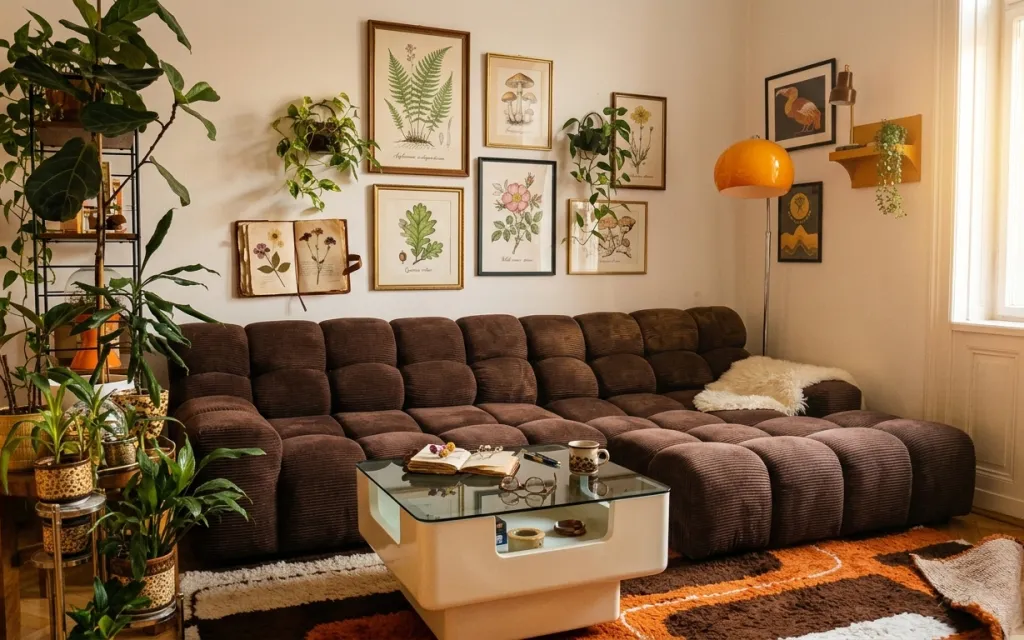
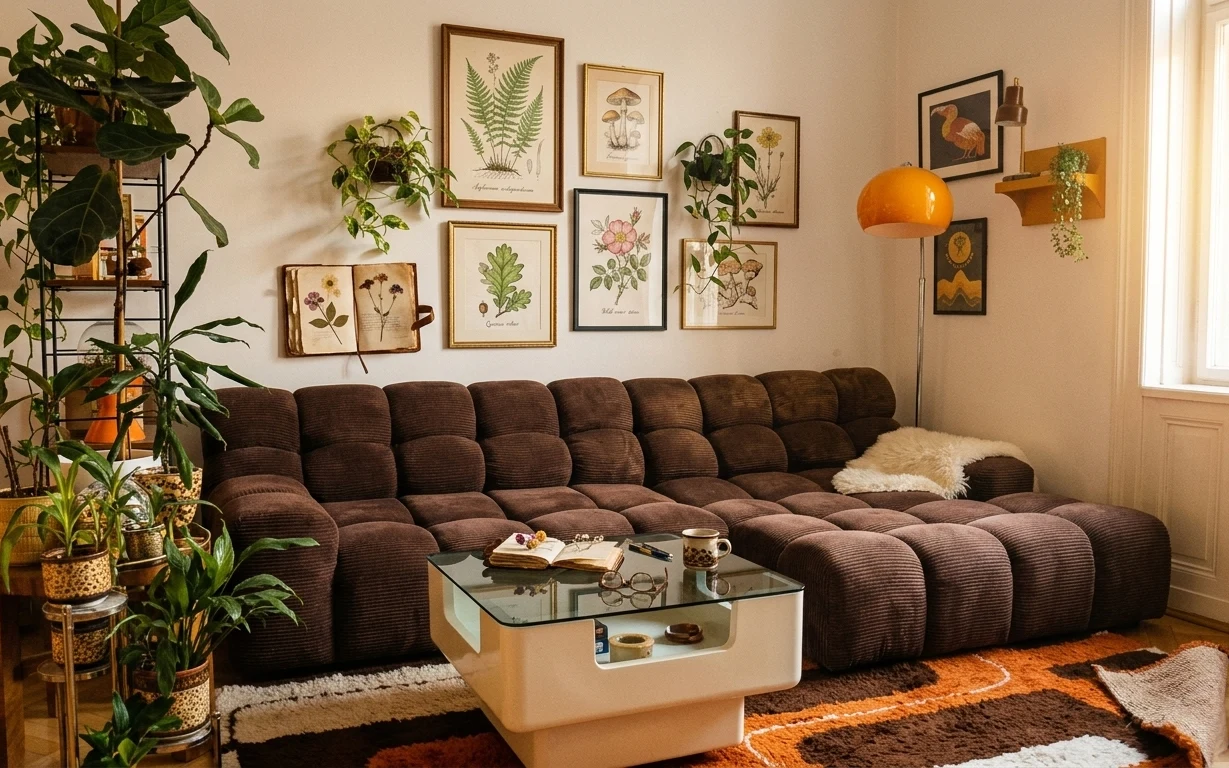
If you want this kind of boho warmth, start with the big visual beats: the brown sofa texture, the cream-toned wall, and that orange glass floor lamp glow. In the photo, the patterned rug pulls in the orange and keeps the whole setup grounded, while the white faux-fur throw adds contrast on the sofa. The framed botanical mix also matters—each print brings a different shape, but they all stay in the same earthy palette. For renters, everything here works because it’s mostly freestanding styling and removable wall art.
I used to overthink wall art size, and I’d end up hanging something that looked fine at arm’s length but felt small once I stepped back. What changed my approach was doing a “proportion test” with painter’s tape on the floor first—then choosing frames that match that scale. That’s also why this botanical cluster reads intentional instead of scattered.
Layer 1 — patterned area rug with orange and cream stripes ($150) Pulls the orange thread through the whole seating zone
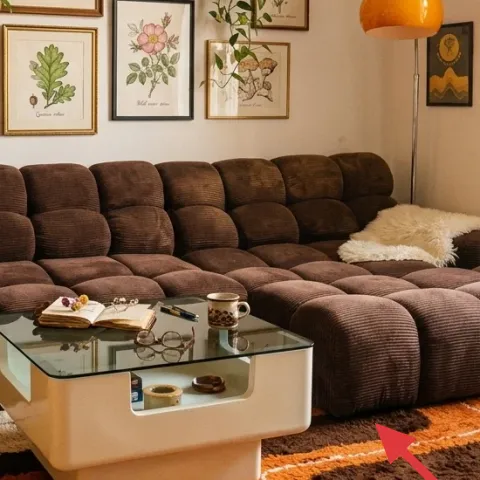
That patterned area rug sits under the coffee table and extends out toward the plant stand, so it visually stitches the seating area together. The orange-and-cream stripe palette is doing double duty: it warms up the cream walls and it keeps the brown sofa from looking heavy. The alternative would be a plain solid rug, but you’d lose the “collected” feeling that makes this room look layered instead of flat. A rug like this also hides the everyday stuff—shoes and tiny spills—better than light neutrals.
Start with the coffee table footprint
Choose a size where the rug shows a little beyond the table edges—enough to frame it, not crowd it.
Layer 2 — orange glass floor lamp with black stand ($100) Adds warm light without any hardwiring
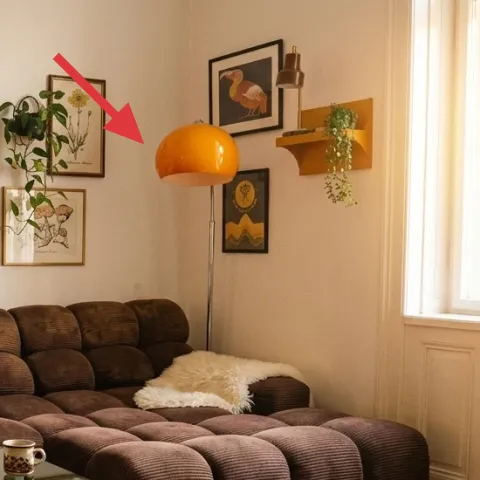
This orange glass floor lamp is placed on the right side of the seating area, where it can “paint” the wall and sofa with amber light. That’s why the room feels cozy even when the lamp is the only obvious lighting source: the glass shade reflects warm highlights and makes the browns look richer. The trade-off is simple—an orange shade is a bold choice—so the rest of the palette stays cream, wood, and plant green. For a renter-friendly setup, a plug-in lamp means you’re moving the look with you at lease end.
Amber glass reads softer than it sounds
Because the floor lamp sits away from direct sightlines, the light blooms instead of looking harsh.
Layer 3 — cluster of framed botanical prints (gallery set) ($150) Brings structure to the warm, plant-forward palette
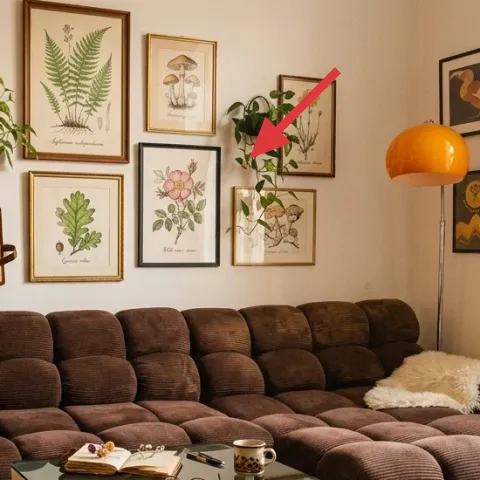
On the photo wall, the framed botanical cluster creates a grid-like rhythm: different frame sizes, but a consistent botanical theme. It works because the prints echo what’s already happening in the room—leaf shapes, muted greens, and warm paper tones—so nothing feels random. The obvious alternative is buying one large print, but that tends to overpower a small living room wall. A clustered set gives you flexibility: if you’re off by a few inches, it still looks intentional. Keep mat colors and frame finishes consistent so the variety stays curated.
Make it instead of buying it
DIY a macramé wall hanging to replace part of the botanical cluster’s visual interest while keeping the look warm and textural.
Materials
- Macramé cord — ~2mm, 120–180 ft — craft store — $22
- Wood dowel — 12–18 in — hardware/craft store — $10
- Command Strips (for a no-drill mounting) — 1–2 pairs — $8
- Small scissors/snips — basic household — $6
- Decorative tassel/rope accents — small bundle — $10
Steps
- Cut cord strands to a workable length (longer if you want a dramatic drop).
- Anchor the strands around the dowel using a tight knot or wrap.
- Work a simple knot pattern in rows, keeping the spacing even across strands.
- Trim ends so fringe hangs uniformly.
- Attach tassel or accent rope at the bottom for movement.
- Plan the mounting height by holding it against the wall while standing back.
Total DIY cost: $56 — saves about $94 over buying.
Layer 4 — glass-top coffee table with white base ($120) Makes the room feel lighter next to a big sofa
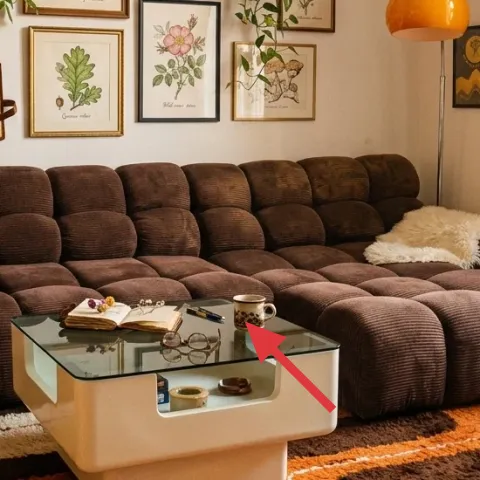
The glass top is doing the quiet magic here: it keeps visual weight off the floor when the sofa is chunky and deeply textured. You also get a clear surface for styling—vases, books, trays—without it looking cluttered. If you swapped this for a heavy wood coffee table, the room would likely feel darker and more boxed-in against the cream walls. The white base ties into the lighter wall and rug highlights, so the table feels like it belongs instead of floating. The trade-off is practical: glass shows fingerprints, but a quick wipe makes it worth it.
Don’t style the glass too busy
Too many small items make reflections messy—stick to one tray and a short stack of books.
Layer 5 — white faux-fur throw on the sofa ($35) Adds contrast texture on the brown upholstery
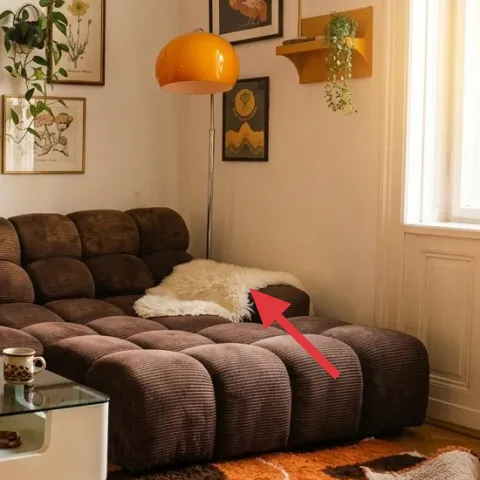
That white faux-fur throw is placed over the sofa right side, where it catches light and breaks up the uniform brown upholstery texture. Contrast is the point: brown reads warm and grounded, and the fur reads soft and wintry in a good way. The easy alternative would be another dark throw, but it wouldn’t create that “layered depth” feeling that makes the seating area look styled, not just furnished. A throw also fits renter reality: it’s inexpensive compared to furniture and it packs down easily when you move.
Fold, don’t dump
Keeping the throw in a neat fold looks intentional and prevents it from slipping into the seat.
Layer 6 — white decorative tray on the coffee table ($25) Keeps small items from turning into visual clutter
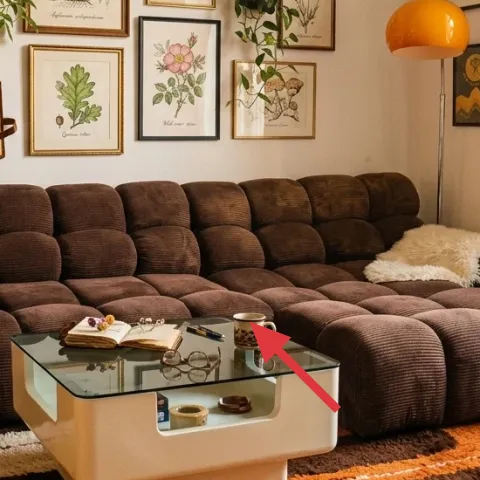
This white decorative tray sits on top of the coffee table and gives the room a “contained” feel—mugs, small decor, and everyday objects look planned instead of scattered. Trays are the renter’s best friend because they let you change the contents without replacing furniture. The white finish also ties to the table base and balances the darker rug and sofa. If you use a tray with warmer cream or off-white tones like this, it softens the contrast so the orange lamp doesn’t dominate. The trade-off: you’ll need to lift items to clean underneath, but it’s quick.
Use the tray like a mini scene
One book stack plus one small object looks more styled than five random finds.
Layer 7 — tall multi-tier plant stand (metal, black) ($60) Turns wall space into vertical styling without drilling
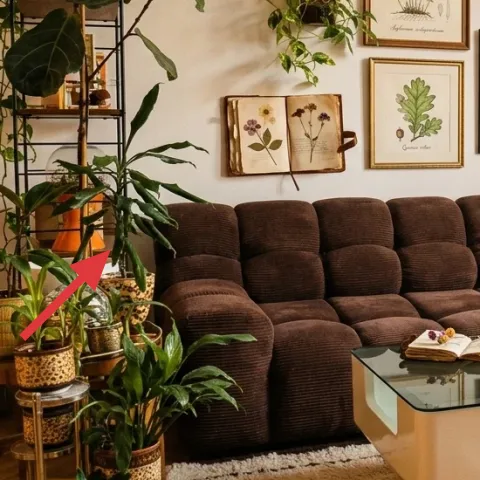
The tall multi-tier plant stand adds height on the left side of the room, which is exactly what a big, low sofa needs—more vertical movement. Because it’s a freestanding piece, you’re not relying on wall anchors, and you can shift it with the season or when you rearrange. The metal frame keeps it airy instead of bulky, and the terracotta pots warm up the plant greens against the cream wall. The alternative would be placing all plants on the floor, but that tends to flatten the room and crowd walking paths. This stand also helps different plant shapes look “curated” rather than accidental.
Group plants by leaf texture
Mix broad leaves with spikier shapes so the stand reads intentional from across the room.
The cost, layer by layer
| Layer | Item | Cost |
|---|---|---|
| 1 | Patterned area rug with orange and cream stripes | $150 |
| 2 | Orange glass floor lamp with black stand | $100 |
| 3 | Cluster of framed botanical prints (gallery set) (DIY alternative available) | $150 |
| 4 | Glass-top coffee table with white base | $120 |
| 5 | White faux-fur throw on the sofa | $35 |
| 6 | White decorative tray on the coffee table | $25 |
| 7 | Tall multi-tier plant stand (metal, black) | $60 |
| Total | $640 | |
If a full botanical cluster feels like too much, choose two framed botanical prints and let the macramé wall hanging carry the rest of the wall texture. That keeps the palette cohesive while cutting the budget in half.
What worked, what didn't (across the whole room)
The room’s best moves are the three big anchors: the patterned rug, the amber orange floor lamp, and the botanicals that mirror the plants. The glass coffee table and white tray keep everything from feeling heavy, even with a deep brown sofa. The only spot that needs restraint is tabletop styling, because reflections can make small clutter look louder.
What worked
- The orange-and-cream rug repeats the lamp color so the seating area feels intentional, not accidental.
- The orange glass floor lamp creates warm, layered lighting without any hardwiring changes.
- Botanical frames add a structured look that matches the plants’ leaf shapes and muted greens.
- The glass-top coffee table keeps the room visually light beside a chunky sofa.
- The white faux-fur throw adds high-contrast texture where the eye lands on the sofa.
- The white tray contains everyday items so the coffee table reads styled, not messy.
What didn't
- Too many small objects on the coffee table make reflections chaotic on the glass surface.
- A botanical cluster that’s too large for the wall can start to feel crowded rather than collected.
- Plant stand oversizing can narrow pathways, so scale it to the room’s walking space.
- Matching every frame to exact dimensions can flatten the personality—mixing size is what works here.
What we'd skip if we did it again
Skip a solid, high-pile rug in a single dark color. In a room with a brown sofa and cream walls, it tends to feel heavy and hides the warm orange that’s doing most of the visual work.
Skip adding multiple tall lamps in matching styles. One orange floor lamp gives you the warm glow; extra floor lighting can flatten the cozy contrast and compete with the botanicals.
Skip overfilling the coffee table. The glass top already catches attention, so a short tray scene (a tray plus a small stack) keeps the room looking calm instead of busy.
Frequently asked
How long does this kind of living room refresh usually take?
Most of the work is placement: rug positioning, lamp location, and arranging the framed botanical cluster (or its DIY substitute). A typical renter setup takes about 1–3 hours total. If you’re doing the macramé wall hanging, plan another session for knots and trimming—no drying time is involved since there’s no cure-step.
Is this renter-friendly if the wall is off-limits?
Yes. The main strategy is keeping the big items freestanding: the rug, floor lamp, coffee table, and plant stand. For the wall area, you can use removable mounting options appropriate to your frames (or swap the cluster for a macramé piece mounted with no-drill methods). Nothing requires drilling, anchors, or replacing landlord fixtures.
What if my living room is smaller than this photo?
Go slightly smaller on the rug or reduce the number of botanical frames, keeping the same palette. For the lighting, prioritize a single statement floor lamp rather than multiple sources. On a compact wall, two frames plus macramé texture usually looks more intentional than a full gallery cluster that crowds the space.
Where should I shop for pieces like the rug and floor lamp?
For the rug, look for orange-and-cream striped or abstract patterns with low pile for easier living. For lighting, search for plug-in floor lamps with glass or amber shades. Coffee tables and trays are widely available in home stores and marketplaces—focus on the vibe (glass + light base) more than brand names.
What’s the biggest mistake people make with a setup like this?
Over-styling the glass tabletop. When there are too many small items, reflections make everything look cluttered. Keep it to one tray scene and limit the number of objects. The other common miss is choosing a rug color that doesn’t repeat the lamp’s warmth—repeat the orange tone for cohesion.
More in Living Room
What $700 buys: a renter-friendly living room seating refresh
A warm, boho renter-friendly living room refresh in a tight palette—brown sofa energy, amber floor lamp, and botanical wall styling—built f…
A bright, colorful dining corner for $600
A shared-housing dining nook refresh with seven move-friendly swaps, built around framed art, bold chair color, and a simple flower vase. G…
5 move-ready swaps for a $600 living room refresh
A warm wood, rust, and cream living room can look intentional even in shared housing. With a $600 refresh and move-friendly pieces (rug, so…