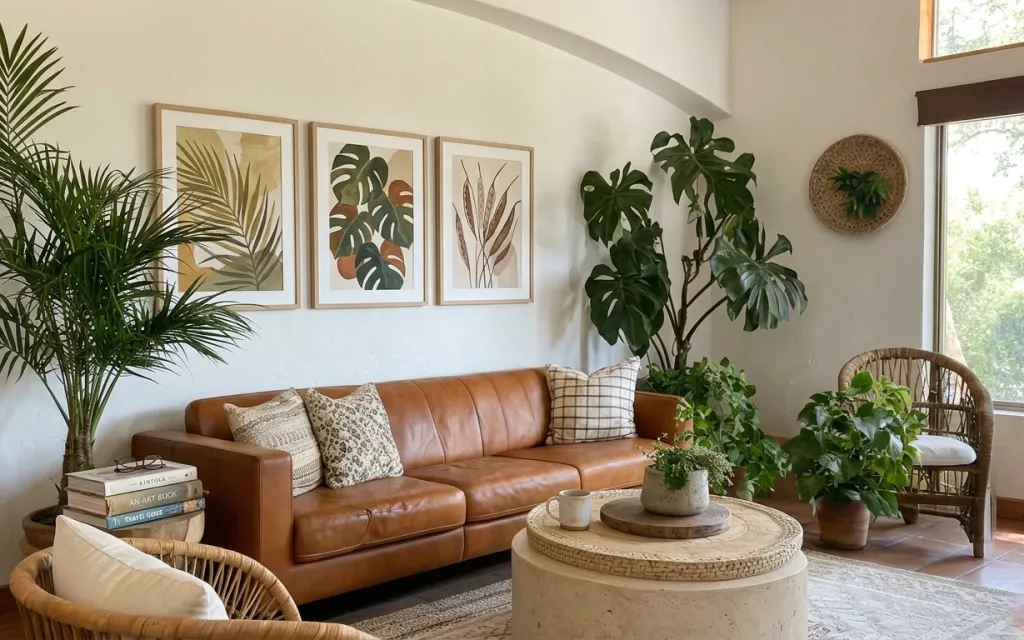
- Best for
- Plants + wall-art balance
- Time
- 2–4 hours, mostly styling
- Total cost
- $575 (under $600)
- Renter-safe
- No-drill textile + freestanding swaps
Why warm brown-and-green is the leather-sofa lounge of 2026
The fastest way to make a leather sectional feel “done” is to soften the edges around it. In this photo, the warm brown leather, the neutral area rug, and the cream-and-beige throw pillows all read as one palette, not separate buys. The framed botanical prints give the wall a clear focal point, while the layered plants—especially the green leaves—add motion without adding more furniture. For shared housing, this combo is realistic because it relies on textiles and freestanding pieces that move in boxes.
I used to chase the perfect matching set—until I realized my place looked like a showroom, not like a home. The turning point for me was leaving the big items “as-is” and spending on contrast: a rug with texture and one patterned pillow that breaks up the dominant material. Here, the grid-pattern throw pillow does that job, and the plants bring the organic depth that keeps it from feeling flat.
Layer 1 — brown leather sectional sofa ($270) A warm anchor that reads mid-century
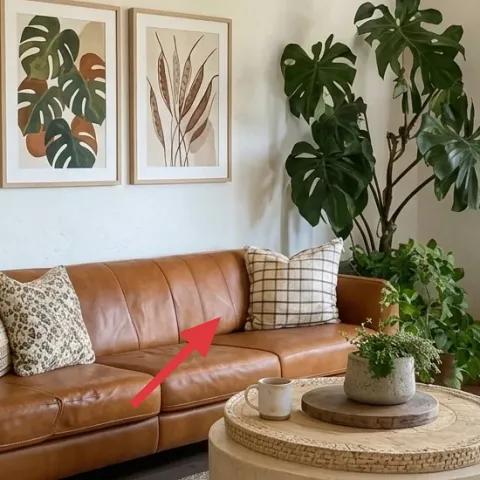
A brown leather sectional sofa is doing the heavy lifting in this room: it’s smooth, warm, and structured enough to support all the plants and paper textures around it. In a move-friendly setup, the trade-off is obvious—you may not find “the exact same” shape every time. Still, shopping for a similar warm-brown leather or faux-leather sectional (or a smaller sectional that works in your layout) keeps the palette consistent across leases. It beats chasing a trend-upholstery sofa, because leather-like surfaces photograph well in daylight and don’t fight the earthy greens.
match undertones, not brand names
When you’re choosing a replacement leather, aim for the same warm undertone (caramel/cognac), so your rug and prints don’t look too cool.
Layer 2 — neutral area rug ($120) Texture underfoot so the leather doesn’t feel too glossy
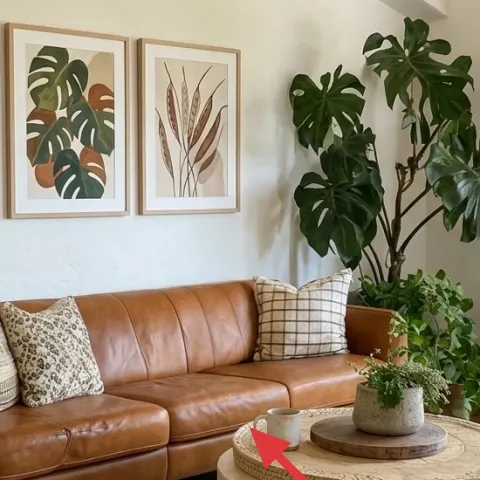
The neutral area rug is the quiet stabilizer here. It visually stretches the lounge area, tones down the shine of the leather, and creates enough pattern to let the framed botanical prints look intentional instead of random. If you skip a rug, the floor-to-sofa transition can feel abrupt, especially on light tile. I like rugs in natural fibers or low-contrast woven patterns because they hide everyday marks and still feel styled. The downside is you’ll want a rug that’s machine-washable (or at least spot-clean friendly) so you’re not stuck babysitting it during busy weeks.
the rug is the “canvas”
Pick the rug first, then let the pillow and print colors echo what’s already on the rug.
Layer 3 — set of framed botanical prints ($60) A wall focal point that echoes the plant life
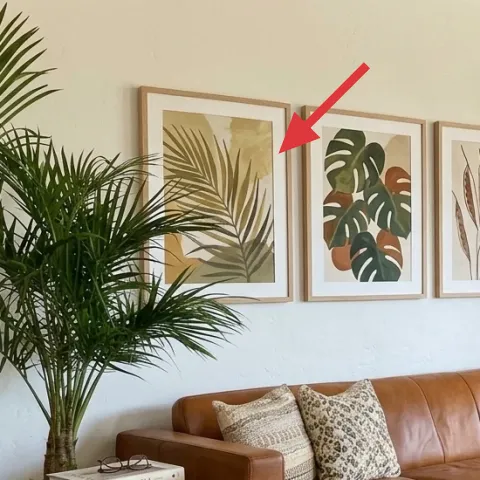
The set of framed botanical prints works because it repeats the same language as the plants: leaf shapes and organic lines. Framed prints also stay apartment-friendly—you can pack them flat, keep them safe in bubble wrap, and rehang in a new neighborhood setup. The trade-off is scale: if you go too small, the wall reads empty, and the sofa becomes the only focal point. This is why a tight grouping (three pieces, roughly aligned) looks more curated than a single loner frame. Swap in watercolor botanicals, palm sketches, or line-drawing plants—just keep the colors warm (creams/earth greens) to stay cohesive with the leather.
keep frames in one finish family
Choose wood tones or light metal finishes that match so the grouping looks like one plan.
Layer 4 — throw pillow with grid pattern ($30) Instant contrast against the leather
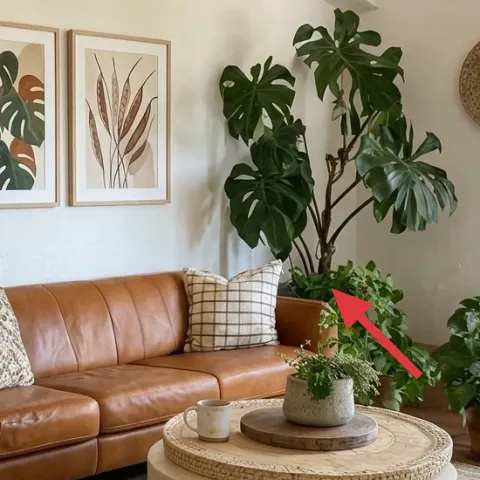
The grid-pattern throw pillow brings structure to a room full of curves and leaves. It’s the contrast piece: while the sofa reads smooth and the plants read organic, the grid adds right angles so the whole setup feels designed instead of accidental. The trade-off is that grid patterns can look “busy” if you stack too many prints—so keep the rest of the pillows more neutral and texture-forward. Here, the grid pillow also ties visually into the framed botanical art without competing with it. In other words: it’s small, but it changes how the room holds together.
Make it instead of buying it
DIY dyed pillow covers to recreate a grid-like contrast colorway using fabric dye on a plain light cover—cheaper than a new patterned insert.
Materials
- Light cotton pillow cover (18×18 or similar) — 1 — craft store — $12
- Fabric dye (neutral/earth tone) — 1 kit — craft store — $6
- Salt — 1 small box — grocery store — $4
- Disposable gloves + plastic wrap — 1 set — discount store — $2
Steps
- Pre-wet the pillow cover so the dye spreads evenly.
- Mix dye with water per the kit instructions, then add salt for better color hold.
- Apply dye selectively to mimic a grid by working in lines and reworking edges where needed.
- Wrap the cover in plastic to keep it from drying too fast, then let it sit until the dye sets.
- Rinse in cool water until runoff clears, then wash once on cold.
- Air-dry fully before inserting it into the cover.
Total DIY cost: $24 — saves about $6 over buying.
Layer 5 — round stone coffee table ($80) A tabletop that makes plant styling easier
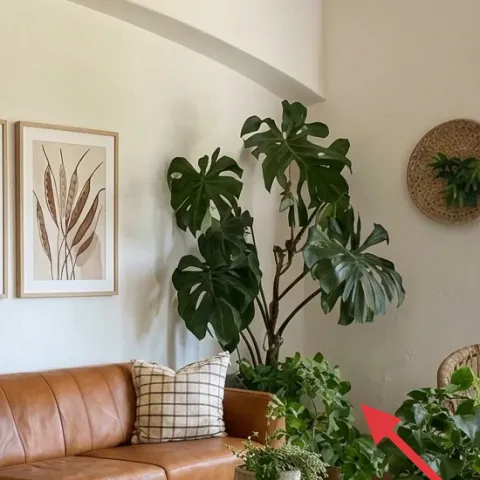
A round stone coffee table keeps the lounge feeling fluid. The shape matters: with a sectional that has straight lines, a round top softens sightlines and makes it easier to style objects without a “corner pile.” In this photo, the tabletop gives the plants a grounded spot, and the stone texture also ties back to the rug’s natural tone. The trade-off is weight—stone-look surfaces can be heavier than wood—so if you’re moving often, you may need a lighter stone-effect option or a thinner slab. Still, for shared housing, the round silhouette is the part that counts for the look, not the exact material.
don’t over-style the top
Two plants max on a coffee table keeps it from feeling cluttered when you’re packing and unpacking.
Layer 6 — small plant in a white pot on the coffee table ($25) A bright green focal point at eye level
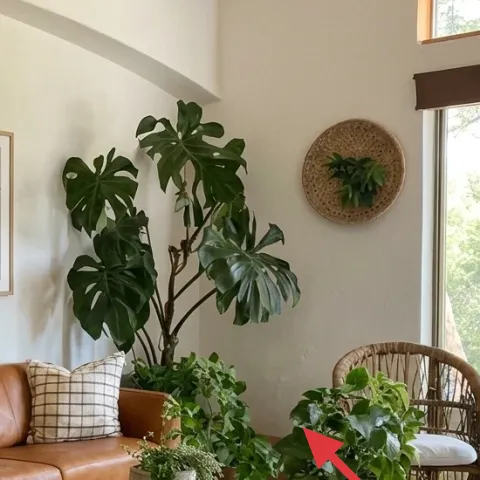
The small plant in a white pot on the round coffee table gives you a controlled dose of green right where you look. White pots help the leaves pop against warm browns, and the scale is perfect for a coffee table moment without taking over the room. If you rely only on the tall floor plants, the center of the room can look empty. This is why a small tabletop plant works as a “bridge” between the wall art and the sofa. The trade-off is maintenance—leafier plants want consistent watering—so choose a plant you can realistically keep alive during finals, internships, and move-week schedules.
repeat the leaf shape
Try to match leaf style (broad vs. narrow) across the plants so the room reads cohesive.
Layer 7 — woven wall plant basket ($90) Wall life without permanent installs
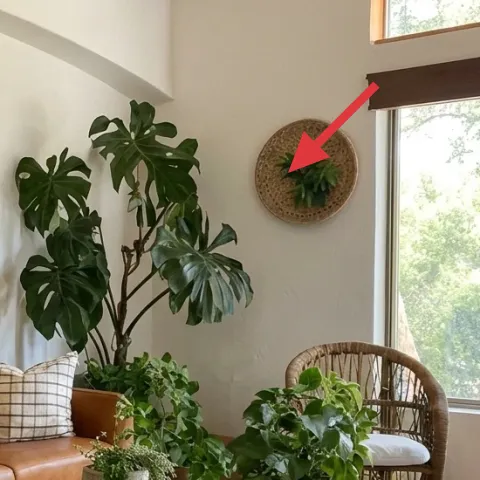
The woven wall plant basket adds vertical interest without adding more floor clutter. It’s also a smart renter/shared-housing move: wall baskets can be swapped out seasonally, and they make the wall feel lived in while keeping the sofa and rug doing most of the heavy design work. The trade-off is attachment method—adhesives vary by wall type—so plan for a removable hook system rather than anything that risks paint. When you choose this look, the woven texture is the key: it echoes the rug and the chair materials so the room feels stitched together. This is especially useful if your living room layout doesn’t give you enough space for another tall plant.
match basket texture to one other material
If your rug or chair is woven, pick a basket with a similar weave tightness for a calmer look.
The cost, layer by layer
| Layer | Item | Cost |
|---|---|---|
| 1 | brown leather sectional sofa | $270 |
| 2 | neutral area rug | $120 |
| 3 | set of framed botanical prints | $60 |
| 4 | throw pillow with grid pattern (DIY dyed cover) | $30 |
| 5 | round stone coffee table | $80 |
| 6 | small plant in a white pot on the coffee table | $25 |
| 7 | woven wall plant basket | $90 |
| Total | $575 | |
If you want a cheaper version of this look, trade the sectional for a smaller thrifted leather-style sofa or choose a budget jute-style rug, then keep the plant styling and botanical frames as the “always worth it” pieces.
What worked, what didn't (across the whole room)
The room’s strongest move is how the materials repeat: warm brown leather, neutral rug texture, and woven plant elements all play the same game. The plants then do the livable “color” work in green, so the wall art doesn’t need to be loud. What didn’t work as well in early drafts of this style was stacking too many patterned pillows at once; the grid reads best when the rest is calmer.
What worked
- The neutral area rug grounds the leather sectional and reduces the glossy feel on tile.
- The framed botanical prints create a clear wall focal point that matches the plants’ leaf shapes.
- The grid-pattern throw pillow adds right-angle contrast against softer curves and leaves.
- The round stone coffee table makes plant styling look intentional from every angle.
- Using white pots and woven textures keeps greens bright instead of murky.
- Wall plant basket adds vertical interest without taking up walking space in the lounge.
What didn't
- If the rug has too much busy pattern, the room can feel chaotic next to the botanical frames.
- Too many patterned pillows at once makes the grid look accidental instead of contrast-driven.
- Choosing a wall attachment that isn’t removable can limit what you’re willing to try on a rental wall.
- Overfilling the coffee table with plants makes it harder to keep the center of the room tidy.
What we'd skip if we did it again
Skip adding another big furniture piece to “balance” the sofa. When the room already has a warm anchor and a rug, extra seating often just blocks plant placement and makes the lounge harder to pack and move.
Skip mixing too many different frame finishes in the botanical set. One wood tone or one metal tone keeps the wall from reading like separate buys, which is especially important in shared housing where you don’t control the whole space.
Skip a second patterned pillow unless it’s doing a specific job (like color echoing). The grid-pattern throw pillow works because it’s singular—pair it with textured solids and let the plants supply the rest.
Frequently asked
How long does this kind of lounge refresh take?
For most shared-house setups, plan for a couple hours. Rug placement and pillow styling are fast, and framed prints can be swapped into your new layout in minutes. The only part that stretches time is DIY dyeing for the pillow cover—most of that is hands-off soaking and drying. If you buy pre-made prints instead of DIY, the whole thing can be a one-afternoon move.
What’s the renter-friendly way to hang botanical frames?
Look for removable hanging methods that don’t rip paint, especially on plaster or textured walls. If a landlord’s wall condition is unknown, go conservative: use low-profile removable hooks rated for the frame weight and test in a corner first. The key is keeping the frames light enough to lift solo, then packing them with the same bubble wrap you used the first time. That way you can rehang without drama.
If my living room is smaller, what changes first?
Start by scaling down the rug and keeping the plant count disciplined. In a smaller lounge, one larger plant plus one tabletop plant can replace two or three floor plants, and the coffee table styling should stay minimal. For wall art, keep the botanical set but choose a tighter spacing so it doesn’t dominate. The grid pillow still works—just keep the rest of the textiles in a single neutral story.
If my living room is larger, how do I avoid it feeling empty?
Add height before you add width. A taller plant near the sofa or a higher wall plant basket makes the vertical volume feel intentional without forcing another piece of furniture. For the rug, choose a bigger size so the sofa sits fully on it. Consider a third botanical print only if it keeps the same palette, but don’t add it just to fill space—let the plants do the organic layering.
Where can I shop for these exact pieces without overspending?
For rugs and framed prints, a mix of online marketplaces and thrift shops works well, especially if you filter for natural tones and botanical line drawings. For plants, local nurseries often have better leaf health than random big-box shipments. If you’re sourcing a leather-look sofa, thrift and resale are usually where the budget wins happen—just prioritize comfort and undertone warmth.
What’s the biggest mistake people make with this lounge style?
Over-patterning. When there are already botanical prints on the wall and layered greenery, a second grid pillow or multiple competing patterns can make the sofa area feel busy. Another common miss is choosing a rug that’s too bold—then the leather and plants look like they belong to different rooms. Keep pattern to one hero textile (like the grid pillow) and let texture and leaves carry the rest.
More in Living Room
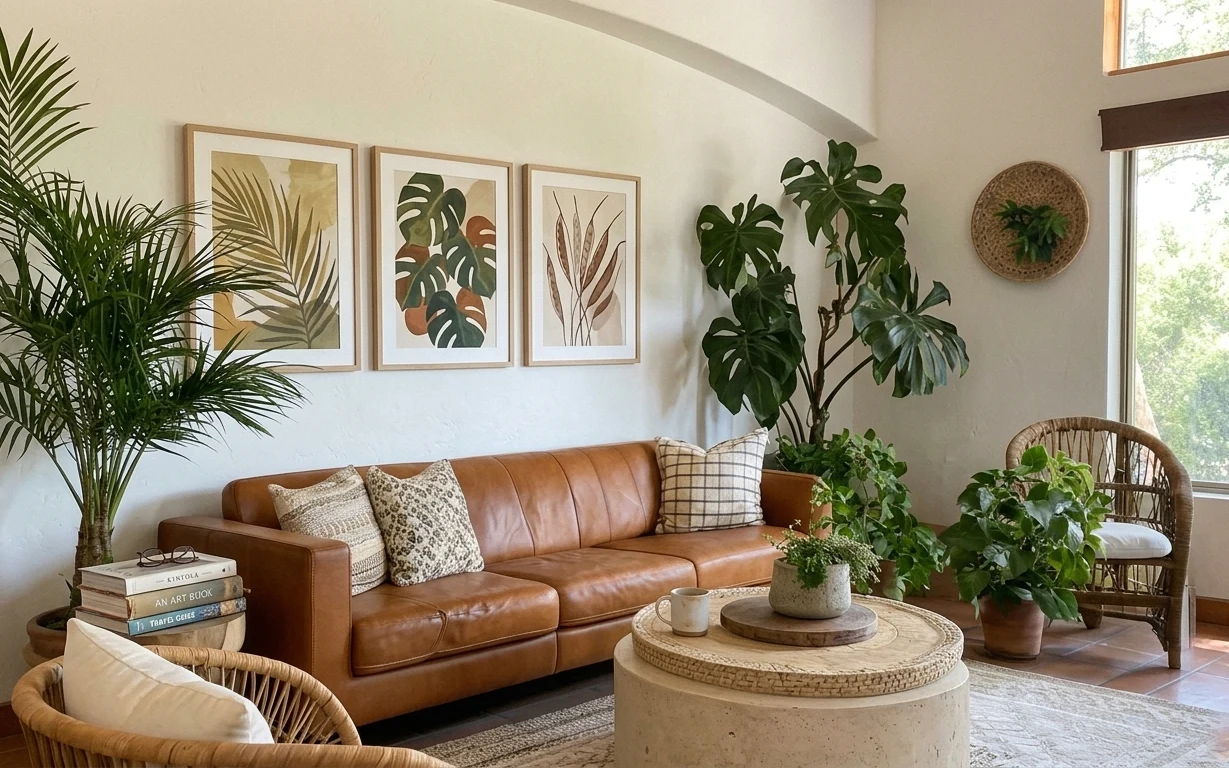
7 no-drill swaps for a leather-sofa lounge, up to $600
A leather-sofa lounge can look finished fast with small, move-friendly swaps. This $600 refresh focuses on rug texture, botanical wall art,…
What $700 buys: a renter-friendly living room seating refresh
A warm, boho renter-friendly living room refresh in a tight palette—brown sofa energy, amber floor lamp, and botanical wall styling—built f…
A bright, colorful dining corner for $600
A shared-housing dining nook refresh with seven move-friendly swaps, built around framed art, bold chair color, and a simple flower vase. G…