- Best for
- Renters who want a statement wall with no drilling
- Cost
- Around $790 total
- Difficulty
- Moderate (wallpaper alignment)
- Time
- 1 weekend
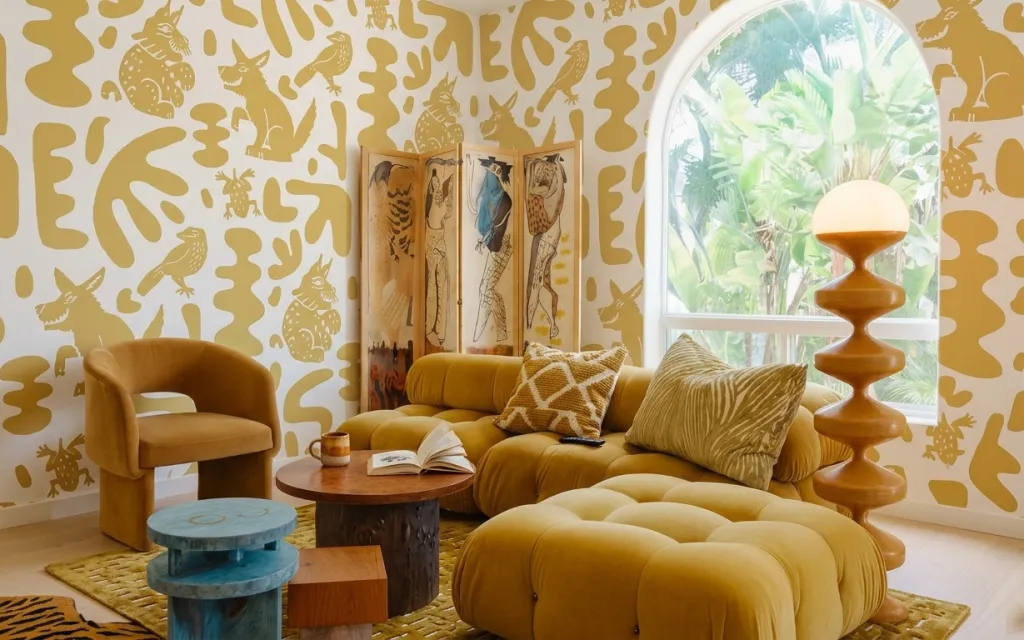
Why warm ochre-and-mustard boho is the mustard jungle living room of 2026
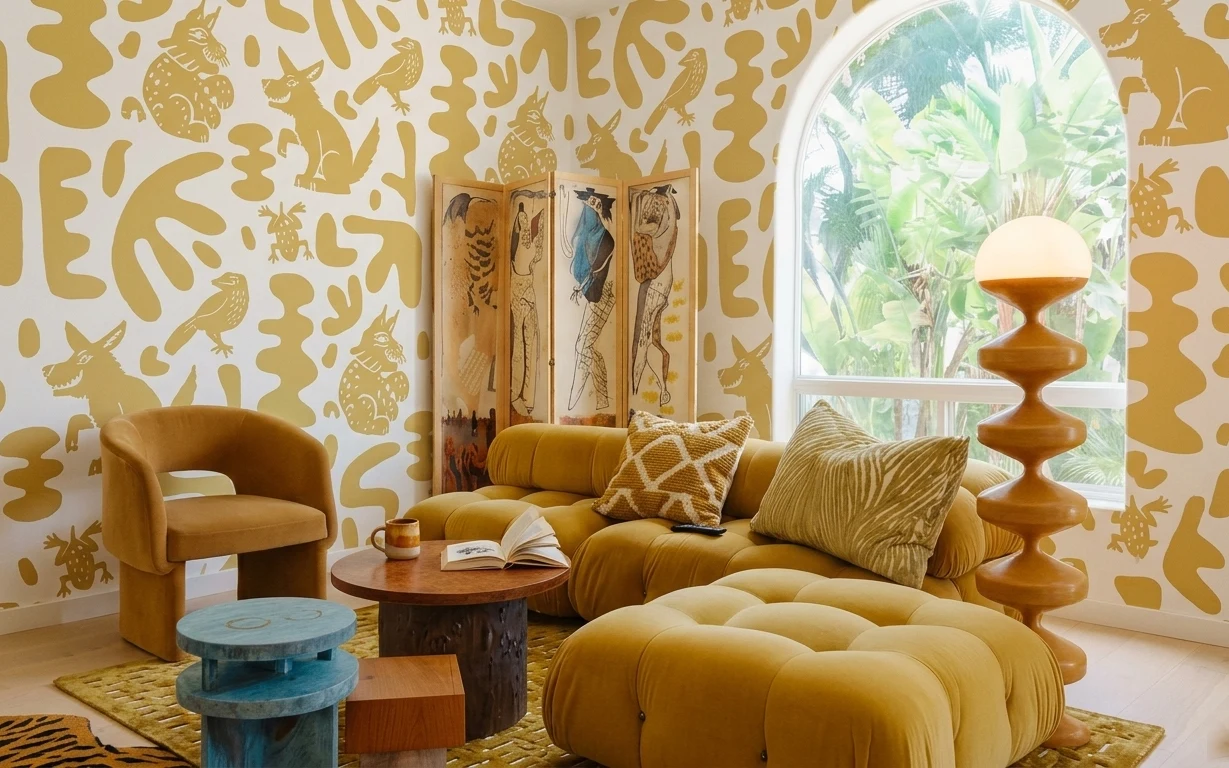
That mustard-on-mustard wall is doing the heavy lifting, and it’s exactly the kind of pattern you can bring in with peel-and-stick wallpaper (no paint required). In the photo, warm tan upholstery, a round wood coffee table, and two different throw pillow textures keep the jungle feel from getting overwhelming. Even the lighting reads cozy because the white shade softens the saturated colors instead of fighting them. For renters, this setup works because most of the “bold” parts are swap-friendly: textiles, plug-in lighting, and wall art you can take down cleanly.
I almost overdid the theme the first time I tried animal-print wallpaper—too many matching objects, and it started looking costume-y. What changed my mind was simplifying the repeat: one big pattern on the wall, then only solids + one secondary print in the textiles. In this room, that restraint is the whole point. The coffee table keeps it grounded in real wood, while the lamp adds warmth at night when saturated color can otherwise feel flat.
Layer 1 — Area rug ($200) Patterned underfoot, hides real-life mess
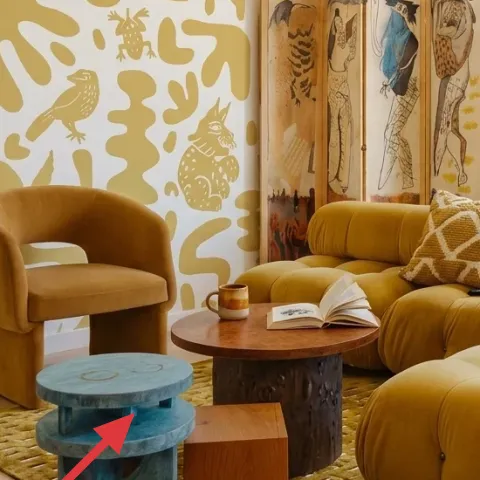
A patterned area rug is the foundation here, and it’s the quickest way to make mustard feel intentional instead of loud. In the hero, the rug’s warm neutrals and graphic lines echo the wallpaper without forcing everything to match exactly. Choosing a rug with a bit of contrast also matters for renters: it visually disguises the tiny scuffs and everyday spills that always show up first. The trade-off is that a busy rug can feel visually “louder” on bare floors, so keep your coffee table and chair legs more minimal in shape and color.
Pick for traffic, not for photos
If you expect spills, choose a pattern with multiple tones—your future self will thank you more than the aesthetic will.
Layer 2 — Peel-and-stick jungle animal wallpaper ($150) One statement wall, no lease drama
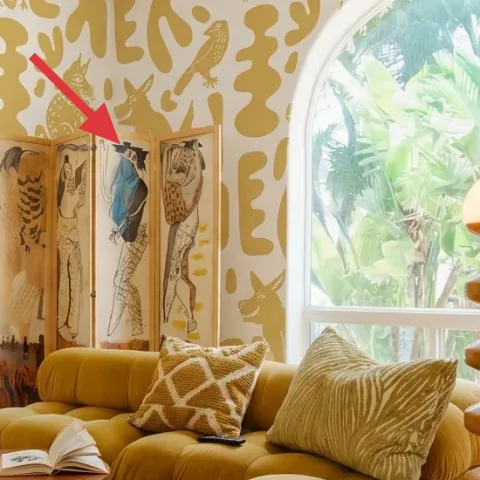
Wallpaper is the print driver in this space, and going peel-and-stick keeps it renter-safe and reversible. The jungle animal pattern in the photo reads graphic and lively, but because it sits on a single wall, it doesn’t swallow the whole apartment. This is also the layer that makes the rest of the palette look “finished,” because the mustard tone becomes a consistent undertone for the pillows, rug, and lighting. The trade-off is planning: you’ll spend a little time aligning the repeat, and the seams can show if the wall is uneven.
Why it still looks curated
Even with a loud pattern, the room works because the furniture stays warm and simple in shape—no extra competing prints.
Layer 3 — Framed animal print artwork ($80) DIY-ready paper art in a matching frame
Make it instead of buying it
Replace the framed animal print with a hand-painted abstract on cardstock so the wall stays bold while the cost stays renter-friendly.
Materials
- Cardstock (at least 11×14) — 1 sheet — craft store — $6
- Acrylic paint set (small) — 1 set — art supply store — $14
- Basic 11×14 frame — 1 frame — thrift store or discount retailer — $35
- Craft paper (to protect the table) + paintbrushes basics — 1 bundle — craft store — $10
Steps
- Cover your surface with craft paper so cleanup is fast.
- Sketch a loose composition (big blocks of color, not detailed animals).
- Paint the first background layer and let it dry fully before adding details.
- Add 1–2 accent shapes in mustard, tan, and brown tones; let dry.
- Soften edges with a dry brush (light, minimal passes) and dry again.
- Optional: add one thin line or pattern stripe for visual “animal-print” energy; dry.
Total DIY cost: $65 — saves about $15 over buying.
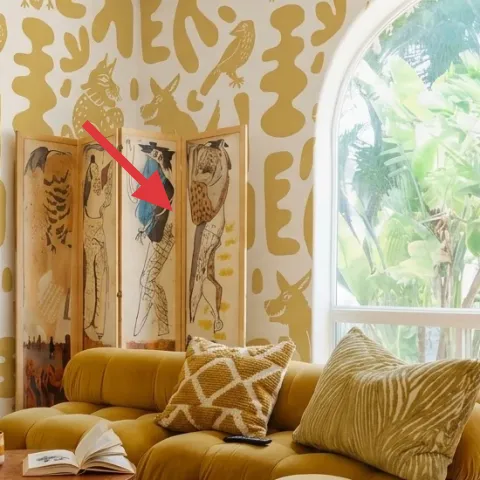
Instead of going perfectly literal, this is where you keep the vibe while giving yourself flexibility. In the hero, the framed animal artwork sits right between the wallpaper pattern and the sofa textiles, so your eye has a clear focal point without needing more furniture. A DIY abstract print also makes it easier to match the exact shade of mustard you’re using elsewhere. The trade-off is that hand-painted prints take a little trial—so choose a simple composition that still reads from across the room.
Don’t over-detail
If the painting gets too busy, it competes with the wall wallpaper instead of acting like a calmer middle note.
Layer 4 — Solid mustard throw pillow ($30) A color match that looks intentional
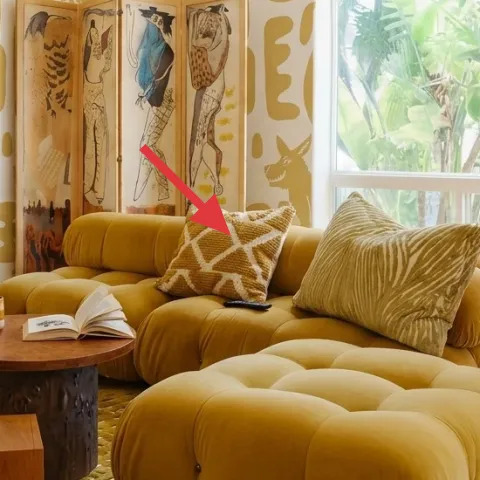
A solid mustard pillow is the easiest way to tie everything together when your wall is already patterned. In the hero, the solid pillow sits on the mustard sofa and keeps the palette cohesive, so the room reads warm instead of chaotic. Solid textiles also photograph better than highly detailed prints when the lighting shifts—especially with afternoon daylight coming through the window. The trade-off is that solids can feel a little flat on their own, which is why pairing one solid with one patterned pillow (next layer) is the smarter move.
Use one “anchor” tone
Pick the most repeated color from the wallpaper and buy one solid pillow in that exact family.
Layer 5 — Patterned throw pillow ($30) One secondary print to keep it dynamic
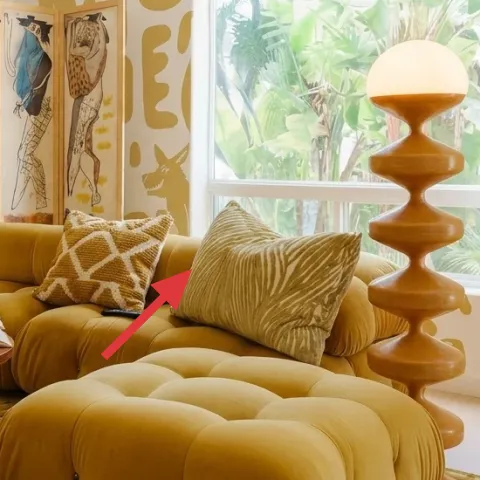
The patterned pillow is what makes the sofa feel styled rather than just “covered.” In the photo, the textured, zebra-like pattern adds rhythm against the wall’s jungle shapes, but it stays in the same warm earth range. This lets you keep the overall look boho without turning it into a full-on matching set. If you only had solid pillows, the room would feel one-dimensional; if you had too many prints, it would feel busy. The sweet spot is one secondary pattern that repeats colors already present in the rug and wallpaper.
Why the pillow placement matters
Put the patterned pillow slightly toward the center so it lands in the “line of sight” from the coffee table.
Layer 6 — Round wooden coffee table ($180) Warm wood that grounds saturated color
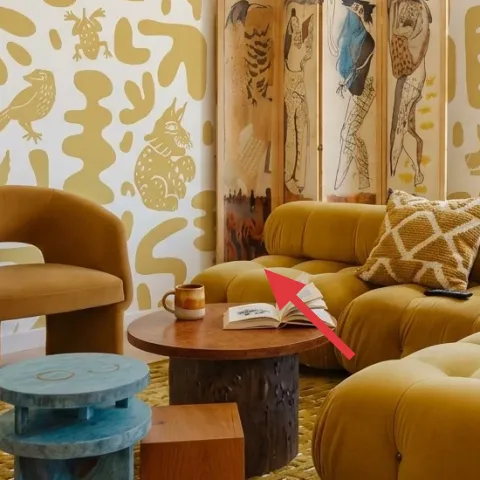
A round wooden coffee table is the grounding element that keeps the room from feeling too sharp. In the hero, the table’s dark wood tone balances the bright mustard wallpaper and upholstery, and the rounded edges soften the overall silhouette. It also gives you a natural place to style small objects—like a candle cup and an open book—without needing extra décor that would compete with the wall print. The trade-off is sizing: round tables look great when they don’t overpower the rug, so measure your sofa width and leave breathing room around the perimeter.
Style with one height + one flat object
One candle cup or vase (vertical) plus one book (flat) keeps the surface intentional.
Layer 7 — Stacked wood floor lamp with white shade ($120) Plug-in warmth for evenings
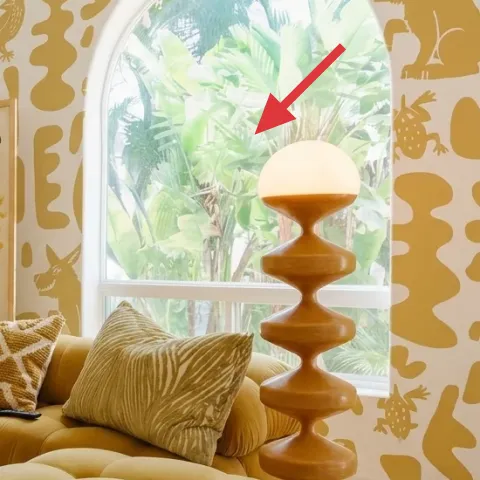
A plug-in floor lamp with a white shade is how you make mustard feel cozy after dark. The stacked wood base in the photo adds sculptural texture, while the white shade prevents the light from turning yellow and harsh. Because the lamp is freestanding, it’s renter-friendly—you can move it when you rearrange and pack it away at move-out. The trade-off is lamp placement: if it sits too far from your seating, you’ll lose that soft pool of light over the sofa and rug.
Warm bulb tip
Choose a warm LED temperature (2700K-ish) so the mustard reads flattering, not neon.
The cost, layer by layer
| Layer | Item | Cost |
|---|---|---|
| 1 | Area rug | $200 |
| 2 | Peel-and-stick jungle animal wallpaper | $150 |
| 3 | Framed animal print artwork (DIY) | $80 |
| 4 | Solid mustard throw pillow | $30 |
| 5 | Patterned throw pillow | $30 |
| 6 | Round wooden coffee table | $180 |
| 7 | Stacked wood floor lamp with white shade | $120 |
| Total | $790 | |
A cheaper variant keeps the wall bold but swaps the coffee table for a smaller or thrifted wood one, and chooses pillow covers on sale. You can also pick a rug with a simpler pattern so the palette stays warm without paying for a larger size.
What worked, what didn't (across the whole room)
The best part of this look is how the wallpaper sets the theme, while warm wood and repeat colors in the textiles keep it from feeling chaotic. The lighting choice also matters: the white shade makes saturated mustard feel soft instead of harsh. The only drawback is that busy pattern density can sneak up on you if you add too many prints elsewhere.
What worked
- One peel-and-stick jungle wallpaper wall creates a clear focal point without affecting the whole home.
- A patterned area rug grounds the bright palette and hides the small everyday scuffs.
- Solid mustard and patterned throw pillows balance each other while keeping a consistent warm undertone.
- Round wooden coffee-table edges soften the composition against the graphic wall print.
- A stacked wood floor lamp with a white shade keeps evenings flattering, not neon.
What didn't
- Trying to match multiple animal-print items can make the room feel like a themed costume.
- If the wallpaper seams aren’t aligned carefully, they become visible once the room is lit at night.
- Choosing a very small rug size shrinks the “styled” feel and makes the sofa look disconnected from the floor.
- Using cool-toned bulbs can turn mustard into something harsher instead of warm and rich.
What we'd skip if we did it again
Skip adding a second big wall graphic. With jungle wallpaper already doing the pattern work, the framed artwork should act like a calm bridge—too many focal points makes the whole wall feel visually noisy.
Skip buying matching furniture in the same color family. A tan armchair shape is fine, but if you chase “perfectly coordinated mustard” in every piece, the room loses depth and starts reading flat.
Skip placing the floor lamp so far from the seating that it only lights the floor. The lamp should spill light onto the sofa zone, or the saturated colors will look dull once the daylight drops.
Frequently asked
How long does this mustard jungle living room refresh take?
Most of the time goes to the peel-and-stick wallpaper wall—measuring, lining up the repeat, and smoothing as you go. Plan for about a half-day to a full day for wallpaper, then a couple of hours for styling: rug placement, pillow swaps, lamp position, and framing the artwork. If it’s your first time with peel-and-stick, it’s worth giving yourself extra buffer for alignment.
Will this still work if my living room is smaller?
Yes—keep the wallpaper to one wall and scale the rug so the front legs of the sofa can land on it. For a tighter footprint, use fewer pillows (one solid and one patterned) and choose a floor lamp that doesn’t block your main walkway. The key is maintaining one bold pattern zone while letting wood and textiles act as the visual “breathers.”
What if my living room is larger—how do I prevent it from looking empty?
In a bigger room, the look needs more “air” to feel intentional. Use the same formula—wall pattern plus anchored rug—but consider slightly larger rug size so it reaches farther under the coffee table. You can also add one more small styling object on the coffee table (for example, a candle cup) rather than adding another large print.
Where should I shop for renter-safe pieces like the lamp, rug, and wallpaper?
Look for plug-in floor lamps and patterned rugs at retailers with easy returns, since fit is everything. For wallpaper, prioritize peel-and-stick brands with clear instructions and strong removal reviews. For the framed artwork, a basic thrift or discount frame is easiest—then DIY the print or use a small art print you can swap later.
What’s the biggest mistake people make with jungle or animal-print decor?
The biggest mistake is stacking too many matching prints at once—wall, pillows, and additional framed pieces all competing for attention. A better approach is exactly what this room does: one main pattern wall, one secondary pattern in textiles, and solids in between. That keeps the palette warm and designed, not costume-like.
Is peel-and-stick wallpaper really removable at move-out?
It’s designed for removal, but removal success depends on how it’s applied. Smooth out bubbles carefully, don’t overstretch, and avoid direct heat that can weaken adhesive. When it’s time to move, peel slowly from a corner and keep the sheet supported as you pull. Taking your time usually makes the difference between “clean removal” and “tears.”
More in Living Room
7 no-drill ways to build a mustard jungle living room
A mustard jungle living room, made renter-safe with no drilling and pack-away styling. This $1000 budget focuses on one bold wallpaper wall…
8 weekend upgrades for a dining corner, $1000
A dining corner refresh built around a patterned area rug, warm amber pendant lights, and a tight framed art cluster—plus one paint update.…
A shelf-styled living room for $600
A renter-friendly sofa corner refresh inspired by olive, mustard, and botanical shelf styling—built from 7 no-drill layers for about $600. …