- Square footage
- Small porch zone
- Cost
- $560 total / $600 budget cap
- Difficulty
- Easy (one paint DIY)
- Renter-safe
- Yes—freestanding decor + paint-only
Why sunlit rattan-and-terracotta setup is the porch seating area of 2026
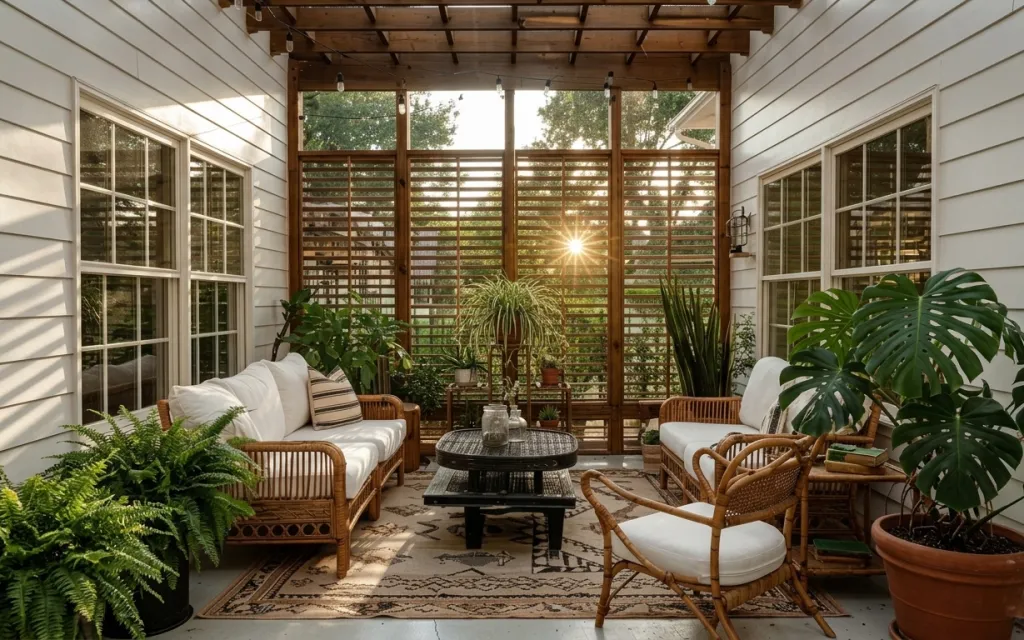
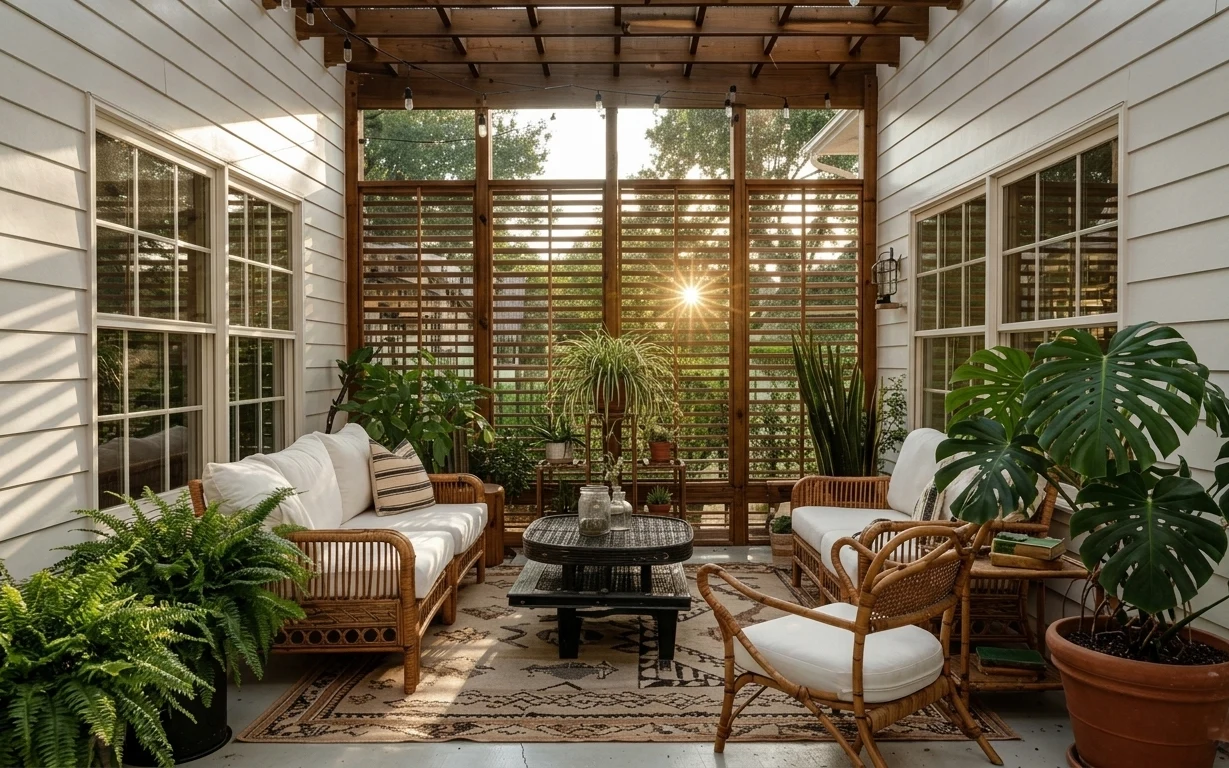
The vibe here is all about texture stacking: a patterned outdoor rug grounds rattan armchairs, while greenery adds movement and depth between the seats and the coffee table. Notice the mix of materials—wicker’s open weave, the matte tabletop, and the glossy glass jar candle holders on top. Even the light is doing the styling, with warm sun catching leaves and highlighting the terracotta tones. For shared housing, this is achievable because every piece is freestanding and packs down (rug rolls, planters travel, and chairs stack or disassemble with minimal fuss).
I used to think “outdoor décor” meant buying one matching set and calling it a day. Then I moved into a place where the porch got less sun, and the whole look felt flat. The fix was simple: bring in a patterned rug for contrast, add a small cluster on the tabletop, and repeat terracotta in at least two places. That’s exactly what this setup is doing, even before considering the plants.
Layer 1 — outdoor area rug ($200) pattern that makes the seating feel intentional
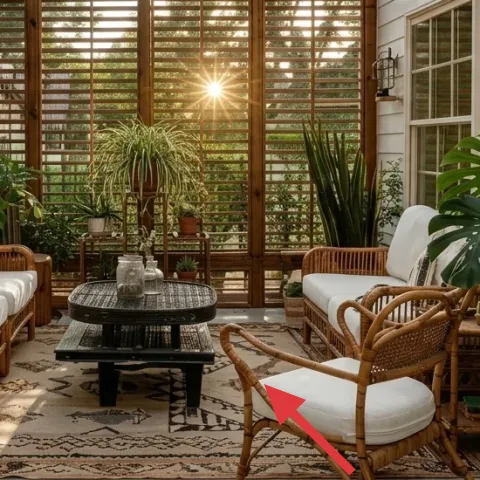
This outdoor area rug is the anchor: the pattern reads like a grid in the sunlight, and it visually separates the chairs from the porch floor. The trade-off is that you’ll want to choose a rug you can shake out and roll without stressing the pattern—no fragile handmade edges. A rug like this also lets the terracotta and plant greens look brighter, because the base isn’t pure white. If the porch board layout is prominent, a bold rug pattern helps your eye stop “measuring” the floor and start seeing a designed zone.
Go for an outdoor rug with tighter pattern spacing
In bright sun, loose patterns can blur; tighter repeats stay crisp from across the porch.
Layer 2 — two wicker armchairs ($100) open-weave seating that stays breezy
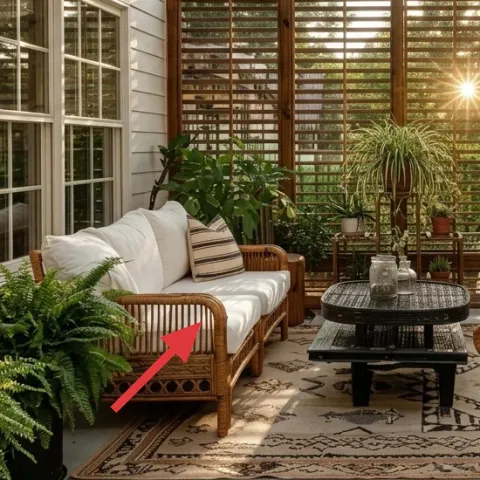
Two wicker armchairs give you that airy, boho texture without adding heavy visual weight. In the hero, the chair backs and arms catch light, so they don’t “disappear” the way solid plastic chairs can. The compromise is durability: wicker looks best when it’s protected from constant weather, so keep cushions inside or covered when needed. In a shared-house move, the chairs are also the right kind of furniture—freestanding and usually easy to coordinate with different tables and rugs as your layout changes.
Keep the cushion look simple
Neutral cushion covers let the rug and plants do the color work.
Layer 3 — round outdoor coffee table ($120) a low surface for tabletop styling
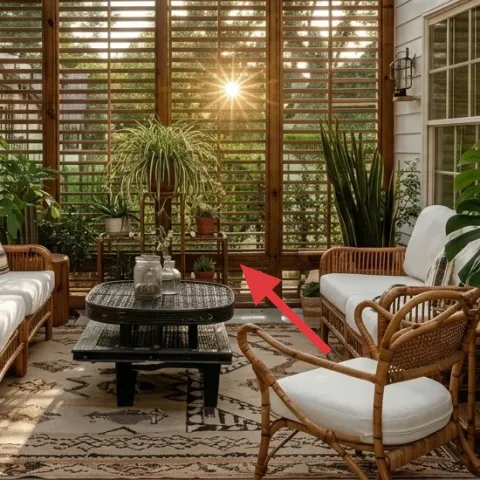
The round outdoor coffee table works because it connects both seating corners and gives the plants and glass accents a stage at eye level. A round top also softens the lines of the porch boards and railing slats, which matters when you’re dealing with lots of straight architectural edges. The trade-off is that you’ll want something stable and flat-footed; flimsy legs can wobble with frequent rearranging. If the obvious choice is a rectangular side table, this is the better move-friendly option because round tables make conversation feel centered even when the chairs shift slightly.
Choose an outdoor finish that wipes clean
That one decision makes seasonal potting and spills less stressful.
Layer 4 — black outdoor wall light ($40) a small vertical accent near the seating
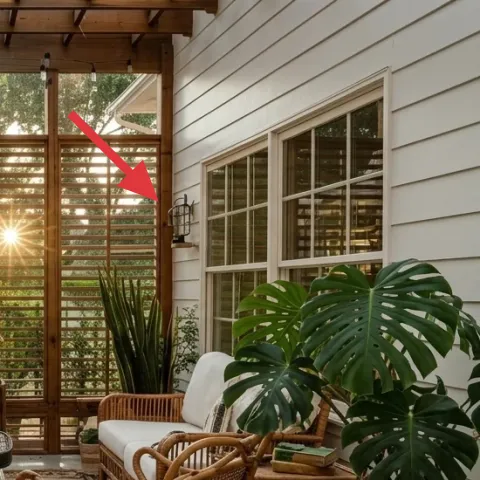
The black outdoor wall light is a finishing note that adds vertical structure—especially when the rest of the styling is horizontal (rug, table, planter rims). In the photo, it sits on the white siding, so the contrast reads clearly without competing with greenery. The trade-off is that outdoor lighting can feel “too exposed,” so the best approach is to keep the rest of the palette warm and natural. If a fixed outdoor fixture isn’t part of your lease, aim for something plug-in or clip-style that still gives you that same silhouette.
Don’t fight the siding color
If the wall is bright white, avoid very light hardware finishes that wash out in sun.
Layer 5 — glass jar candle holders on coffee table ($25) reflect-the-sun sparkle for the tabletop
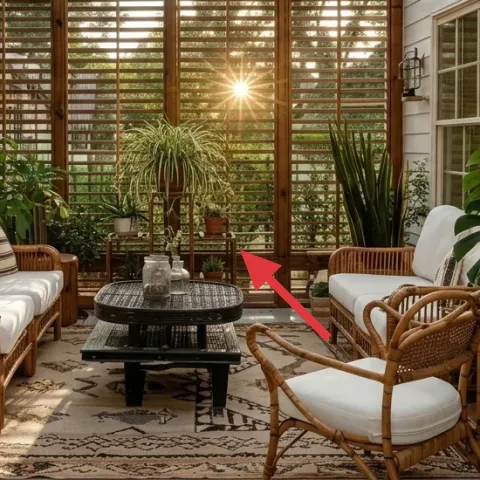
Those glass jar candle holders are small, but they change how the whole porch photographs and feels after dark. Glass adds highlights without adding another color family, so it keeps terracotta, wicker, and plant greens in the lead. The compromise is that glass needs a quick wipe—smudges show up fast when the sun hits. Still, it’s a great move-friendly choice: it’s lightweight, packs in a box, and you can keep the cluster consistent across apartments.
Cluster three items instead of one big centerpiece
That small grouping makes the coffee table feel styled, not staged.
Layer 6 — terracotta pot (leafy plant) ($45) make the warm-green repeat feel intentional
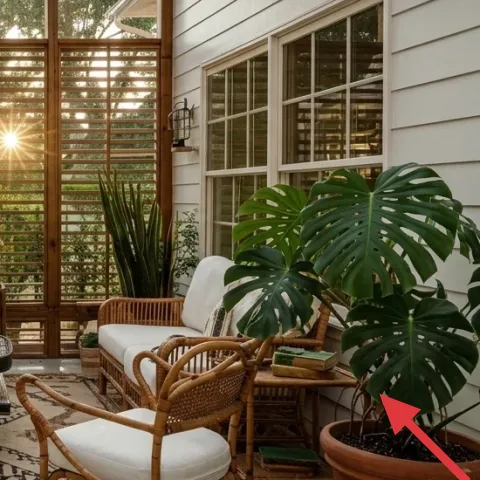
That terracotta pot is doing two jobs: it repeats the warm clay tone already present in the room, and it frames the leafy plant so the center of gravity stays low and natural. The trade-off is that terracotta styling can look “plain” if the pot is the only terracotta color you have—so adding a matching set nearby (or painting one to echo the other) keeps the look cohesive. For shared housing, it’s also an easy swap because you can take the pot, plant, and any decorative finish with you.
Make it instead of buying it
This terracotta pot gets a painted finish so the warm clay repeats across the porch without buying a whole new matching plant setup.
Materials
- Terracotta pot(s) — 1–2 medium pots — local garden shop — $20
- Acrylic paint — 1 small bottle — craft store — $8
- Paint tray + disposable sponge brush — 1 set — dollar store — $3
- Painters tape — 1 roll — hardware aisle — $2
- Waterproof clear acrylic topcoat — 1 small can — craft store — $1
Steps
- Set up on cardboard and clean the terracotta with a dry brush so paint sticks.
- Mask stripes or a simple pattern with painters tape, keeping edges crisp.
- Apply the acrylic paint in thin coats, letting each coat fully dry before the next.
- Remove tape while the paint is still slightly tacky so the lines stay sharp.
- Let the pot dry completely, then lightly topcoat with clear acrylic for scuff resistance.
- Wait for the topcoat to dry fully before potting up or moving outdoors.
Total DIY cost: $34 — saves about $11 over buying.
Layer 7 — large fern in a black pot ($30) the leafy “depth layer” in the foreground
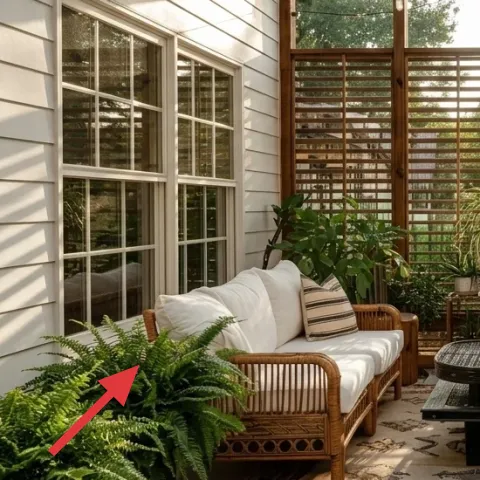
The large fern in a black pot gives you that front-of-image lushness, and it’s the easiest way to add depth without redesigning the whole porch. Fern fronds also fill space between the chair legs and the rug pattern, so the area feels complete rather than edited. The trade-off is that ferns are a bit pickier about light and watering—so choose a spot that matches the plant’s needs and don’t let it dry out too long. In a move, a black pot is easier to style with almost any rug pattern or chair cushion color you bring next.
Keep the pot color dark if your rug is patterned
Dark pots calm the visual noise and keep the rug looking like the focal layer.
The cost, layer by layer
| Layer | Item | Cost |
|---|---|---|
| 1 | Outdoor area rug | $200 |
| 2 | Wicker armchair pair (or close set) | $100 |
| 3 | Round outdoor coffee table | $120 |
| 4 | Black outdoor wall light | $40 |
| 5 | Glass jar candle holders (table cluster) | $25 |
| 6 | Painted terracotta planter set (DIY) | $45 |
| 7 | Large fern in a black pot | $30 |
| Total | $560 | |
If you want a cheaper variant, prioritize the outdoor rug and one chair first, then swap the wall light for a plug-in lantern or string-light clip set. You can also start with one larger plant instead of two pots and build the terracotta repetition over two weeks.
What worked, what didn't (across the whole room)
This porch reads “styled” because the materials repeat (terracotta + wicker) and the objects are placed in three heights: floor rug, tabletop cluster, and wall light. The biggest downside is that too many separate colors can fight in strong sun, so staying within terracotta, white, and leaf green keeps everything coherent.
What worked
- The patterned outdoor rug makes a distinct seating zone even when the porch floor is very busy.
- Wicker armchairs add texture without blocking the light coming from the windows and doorway.
- The round coffee table keeps the center of the arrangement feeling open and conversational.
- Glass jar candle holders add small reflective highlights that look good in golden-hour light.
- Terracotta in a pot and small accents creates a repeating warm note that anchors the greenery.
- The fern in front fills the visual gap between rug and chairs so the space feels finished.
What didn't
- A single plant pot can look “accidental” when the porch has strong architectural lines.
- Skipping the tabletop cluster makes the coffee table feel like leftover furniture instead of décor.
- Too much shine (or too many glossy pieces) can overpower terracotta and cast odd reflections.
- Outdoor wall accents can feel out of place if the rest of the palette isn’t warm and natural.
What we'd skip if we did it again
Skip buying matching décor sets. A rug + chair + plant palette gives the same “put-together” effect, but it’s easier to mix as you move and the porch layout changes.
Skip lightweight, unstable tables. A wobbly coffee table is the kind of small frustration that ruins outdoor hang time, especially when you’re rearranging for friends.
Skip adding more colors than terracotta, leaf green, and warm neutrals. Strong sun amplifies contrast, so extra hues can make a porch feel busy instead of intentional.
Frequently asked
How long does this porch refresh take?
The shopping-to-styling part usually lands around a long afternoon. Rug + chair placement is quick, then the rest is mostly plant positioning and a tabletop cluster. The DIY painted terracotta pot adds drying time, but the hands-on steps are straightforward and beginner-friendly.
Is this renter-friendly if I can’t change outdoor lighting?
Yes. The look still works if the black outdoor wall light stays as-is or if lighting changes aren’t allowed. Swap the “light accent” role with a plug-in lantern, a small clip-on porch light, or even a battery string-light arrangement that gives a similar vertical cue.
What if my porch is smaller than the photo?
Use the same three-layer strategy—rug as the base, one chair (not two) as the anchor, then repeat terracotta with one pot and a small tabletop cluster. Keep plants grouped rather than spread out so the seating feels complete. If the floor is tiny, go for a rug with the densest pattern so it reads intentional rather than empty.
What if my porch is bigger and needs more coverage?
Scale up the rug first, then increase plant mass on the corners. Add a second tabletop cluster or a second matching pot near the second chair so the arrangement doesn’t look like one “island” in the middle.
Where should I shop for these pieces if I’m moving soon?
Look for outdoor rugs and planters at big-box home stores or garden centers for easy returns and straightforward sizing. Wicker chairs often show up at thrift and resale shops, and glass jar candle holders can be found in home décor aisles. Prioritize freestanding items that fit in a rental van.
Biggest mistake people make on porch setups like this?
They buy one hero item and then stop. Without the rug anchor, terracotta repetition, and a small tabletop cluster, the space can look like “furniture on a porch” instead of a seating area. The win is balancing one grounded base with two supporting layers—plants and tabletop styling.
More in Outdoor & Patio
7 porch upgrades for a $600 renter-friendly refresh
Turn a sunlit porch seating area into a more polished, move-with-you setup with $560 worth of renter-friendly swaps (plus one DIY). This pl…
7 patio seating nook swaps for a $600 outdoor refresh
A patio seating nook can feel finished without a renovation: warm woven light, string lights, and a layered rug. This $600 weekend refresh …
7 swaps for a $700 balcony nook refresh
Turn your balcony nook into a place you actually use with 7 budget-friendly refresh swaps, totaling $630. This weekend-ready plan leans on …