- Best for
- Layering cozy textiles in a renter bedroom
- Cost
- About $525 total for the look
- Difficulty
- Easy (mostly decor + soft goods)
- Time
- 2–4 hours
Why warm sage-and-mustard palette is the cozy bedroom of 2026
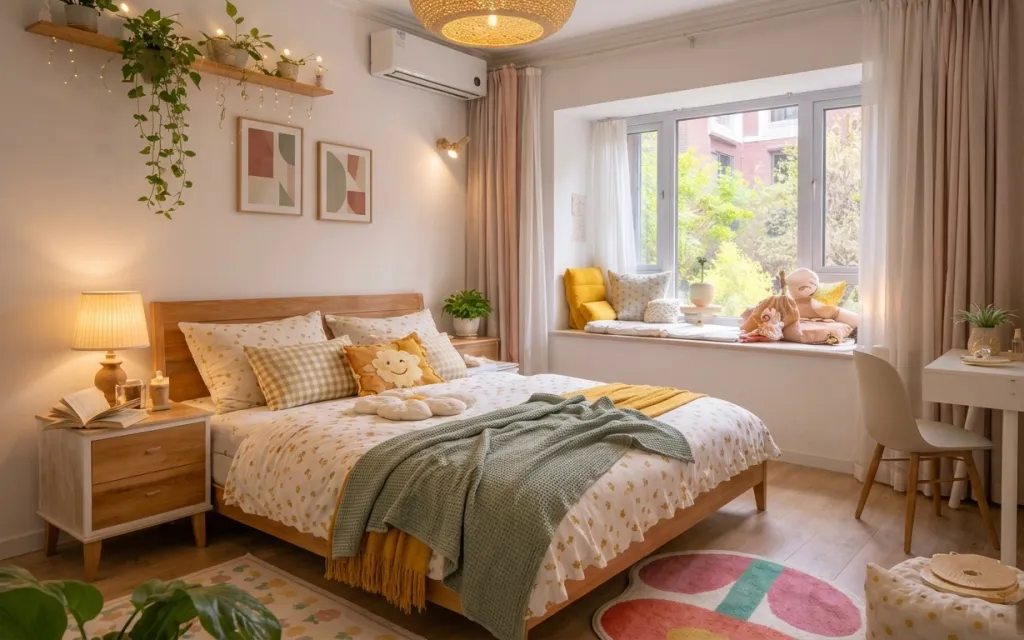
Warm beige walls, wood furniture, and a sage-green knit throw create the main color story, and the rest is just repetition. You can see three texture types doing the heavy lifting: the printed bed cover, the chunky knit throw, and the soft lamp shade over on the nightstand. The framed prints add a clean, graphic pause against the cozy textiles, while the multi-color area rug keeps the room from feeling flat. This is achievable on a renter budget because the big changes are all swappable and move-friendly.
I used to think the easiest way to “finish” a bedroom was adding more wall art. Then I tried it once with too little underfoot and the room still looked unfinished. This time, I started with the rug and repeated the same color notes in the throw and pillows. Once the textiles anchored the palette, the framed prints felt intentional instead of decorative noise.
Layer 1 — area rug (5×7, soft multi-color pattern) ($200) Pattern underfoot that turns the bed into the focus
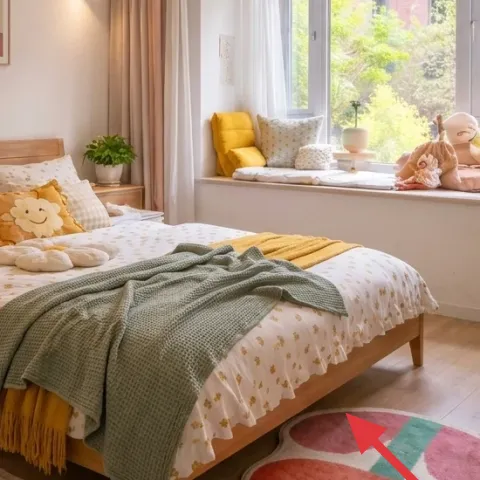
A patterned area rug in a soft multicolor layout grounds the wood bed frame and keeps the whole room from leaning too “matchy.” In the photo it sits under the bed and spills a little into the walking zone, which makes the bed area feel intentional even before any wall decor goes up. The trade-off with a rug like this is that you need to commit to keeping the rest of the palette calmer—so the throw and bed cover don’t compete with the print. If you have pets or little spills, the busy pattern is also more forgiving than a solid.
Choose a pattern with two neutrals
When the rug includes beige plus one accent tone (here, sage and a hint of mustard), it’s easier to coordinate pillows and throws without buying a whole new color wheel.
Layer 2 — plug-in table lamp with linen shade ($50) Warm bedside light without a hardwire headache
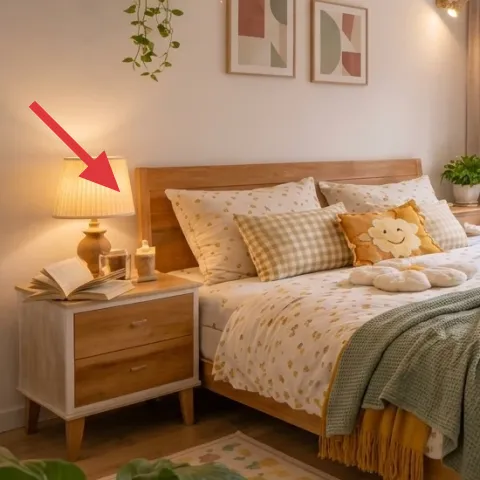
The plug-in table lamp on the nightstand is what makes the room feel calm at night. The shade reads as linen or linen-blend, which diffuses the bulb into a softer glow than a glossy or highly reflective lamp would. This choice over the obvious alternative—replacing the overhead light—is that renters can keep their landlord setup intact and still change the mood. Set the lamp so it lights the bed zone, not the empty wall, and the whole room instantly feels staged. Bonus: a table lamp is easy to pack up when the lease ends.
Put the lamp on the nightstand, not the floor
Bedside light reads brighter and cozier when the light source sits at eye level while you’re lying down.
Layer 3 — green knit throw blanket ($35) Sage texture that repeats the room’s accent color
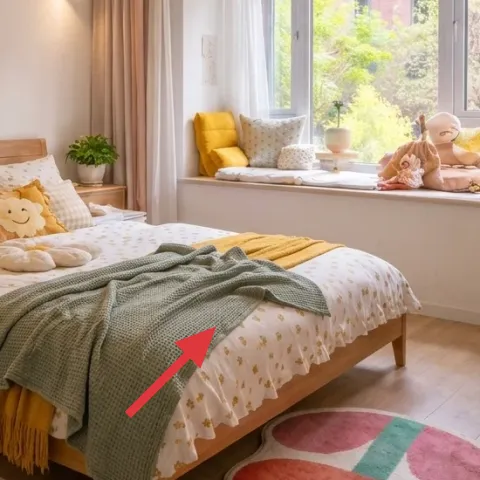
The green knit throw is doing more than covering the bed’s edge—it adds a second, tactile color layer right where your eye lands when you walk in. Its chunky texture contrasts with the smoother printed bed cover, which keeps the bed from looking flat or purely decorative. Choosing a knit over a sleek throw also makes the color feel softer and more forgiving, especially with warm beige walls nearby. The trade-off is that knit throws shed a little fluff, so quick lint-roller passes help. Fold it once, drape it with some hang, and avoid smoothing it into a too-perfect rectangle.
Let one corner fall naturally
That slight asymmetry keeps a rented look from feeling staged by “straightening everything.”
Layer 4 — framed wall print (DIY hand-painted abstract on cardstock) ($40) Graphic wall calm you can switch at move-out
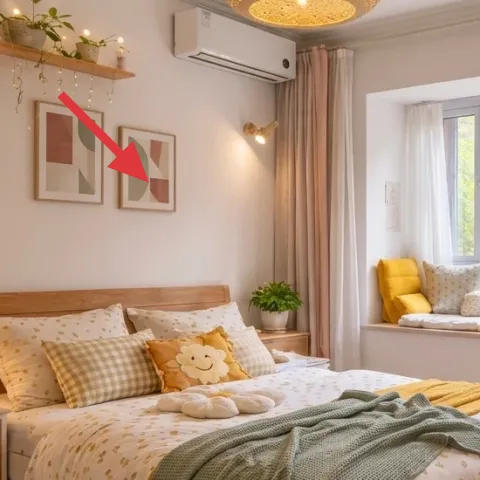
Two framed prints keep the walls from feeling empty while still letting the bed textiles be the main event. In the photo, the prints are graphic and airy—warm neutrals with soft shapes—so they don’t fight the rug’s pattern. This layer works because it adds structure: straight frame lines against curtains and bedding that are visually softer. The trade-off with buying framed art is cost, but framed prints are easier to replace than furniture, and they move with you. If the walls are tricky in your rental, you can hang frames with removable hooks meant for pictures.
Don’t overhang the frames too low
If the bottom edge dips into the curtain line, the room can feel smaller. Aim for eye-level center height when standing.
Layer 5 — printed bed cover ($90) The pattern that ties the palette together
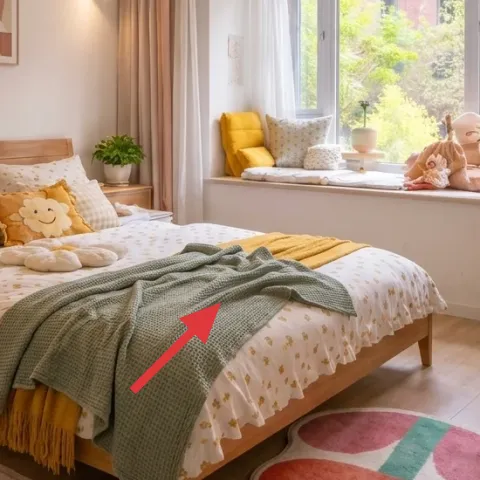
The printed bed cover is the largest textile surface in the room, so it sets both color and personality. It’s subtle enough to play well with mustard and sage accessories, but it still gives visual interest so you’re not relying on pillows alone. Choosing a printed cover over a solid one is what prevents the bed from blending into the light walls. The trade-off is laundering: patterned covers show lint less, but you’ll still want to check care labels and follow them. Style-wise, keep the throw and pillows slightly layered rather than stacking everything into one tight pile.
Repeat one accent color in two places
In this room, sage shows up on the throw and in the overall color read of the rug, so the look feels coordinated without feeling matchy.
Layer 6 — two drawer nightstand ($80) Warm wood storage that supports the lamp and small decor
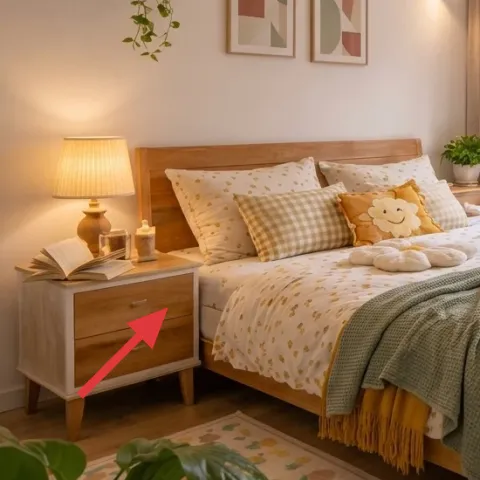
The two-drawer nightstand gives the bed area a practical “landing zone” for a lamp, a stack of books, and small ceramics. Visually, its warm wood tone bridges the light floor with the bed frame, which is why the room feels cohesive even when the bedding pattern is busy. This choice over using a floating shelf is that drawers reduce clutter—so the bedroom always reads styled, even on messy days. The trade-off: you lose some wall space, but you gain real storage. A nightstand like this also makes the lamp look more intentional because the light has a purpose.
Style one vertical element
A book stack or tall plant beside the lamp adds height without adding extra objects.
Layer 7 — small potted plant on window ledge ($30) Soft greenery that makes the room feel lived-in
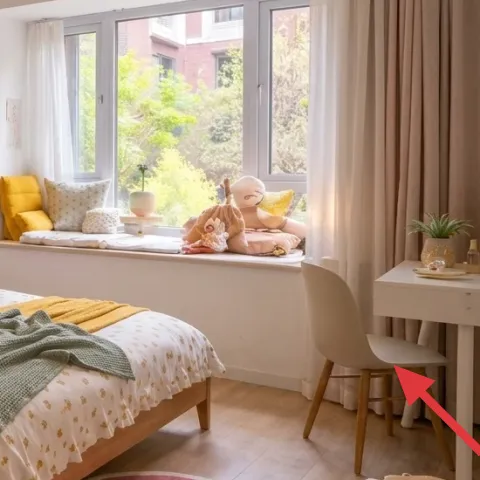
The small potted plant on the window ledge adds an organic layer that offsets all the straight lines: bed frame, curtains, and furniture edges. Plants also bring in the room’s green notes, so the sage throw doesn’t feel like it came from nowhere. This works better than adding more framed art because greenery adds movement and depth without making the wall busier. The trade-off is maintenance—window plants need light and quick watering checks—but it’s worth it for that fresh, calm feel. If you want the same effect with less fuss, choose a plant that matches your light level.
Keep the pot color neutral
When the pot reads cream or terracotta-like, it blends with warm wood and doesn’t fight the rug.
The cost, layer by layer
| Layer | Item | Cost |
|---|---|---|
| 1 | Area rug (patterned, ~5×7) | $200 |
| 2 | Plug-in table lamp with linen shade | $50 |
| 3 | Green knit throw blanket | $35 |
| 4 | Framed wall print (16×20) | $40 |
| 5 | Printed bed cover | $90 |
| 6 | Two drawer nightstand | $80 |
| 7 | Small potted plant (window ledge) | $30 |
| Total | $525 | |
A cheaper variant is to keep the rug and lamp, but swap the nightstand for a simpler thrifted wood option and choose a lower-cost framed print. The printed bed cover can be sourced on sale or sized up only if it still looks right at the foot of the bed.
What worked, what didn't (across the whole room)
The biggest win is the layering: rug underfoot, knit throw at the bed edge, and warm light at night. The second win is repetition—sage and warm neutrals show up across textiles, frames, and small decor, so everything feels intentional. The only part that can go off-track is wall styling: when framed art is too heavy or too low, it competes with the curtains and makes the room feel busy.
What worked
- The patterned rug anchors the bed zone and softens the look of wood furniture.
- The plug-in lamp provides warm light where you actually need it: the bedside reading angle.
- Sage-green knit texture adds depth against the smoother printed bed cover.
- Framed prints create clean lines that balance curtains and layered bedding.
- The warm wood nightstand visually connects the floor, bed frame, and decor.
- Small greenery on the window ledge brings in natural color without adding clutter.
What didn't
- Picking only solid neutrals can make the bed area feel flat next to the patterned rug.
- Oversized wall frames can crowd the curtain line and shrink the perceived height.
- Too many small decor objects on the dresser can compete with the plant and toy setup.
- If the throw is folded too neatly, the bed reads less cozy and less lived-in.
What we'd skip if we did it again
Skip adding more frames before the bed textiles are locked in. The bed cover and throw already set the room’s visual rhythm, and extra wall elements can start fighting the pattern scale. Pick the rug and bed first, then choose the frames so the colors match the rug’s neutral base.
Skip matching bedroom sets that include every piece from the same collection. One good nightstand and one warm lamp are enough; everything else should come from the same palette, not the same product line. Mixing materials—wood, linen, knit—keeps it from looking cookie-cutter.
Skip a too-bright daylight bulb. Even with beautiful decor, harsh color temperature makes beige walls and warm wood look dull. A warm bulb in the plug-in lamp helps the textiles look softer and keeps the whole room feeling calm at night.
Frequently asked
How long does this kind of bedroom refresh take?
For most renters, plan on 2–4 hours. The biggest time-sink is choosing sizes—matching a rug to bed scale and making sure the framed prints sit at eye-level. Set up the plug-in lamp and place the throw before hanging frames, then do a quick “walk-through test” from the doorway and from the bed.
Can this work in a rental where I can’t drill or wall-mount?
Yes. Use removable picture hooks for the framed prints and keep everything else either freestanding (lamp, nightstand) or textile-based (throw, bed cover, rug). Avoid replacing landlord fixtures; the look here gets its impact from movable items that pack away cleanly.
What if my bedroom is smaller than the photo?
Go smaller on scale, not on color. Pick a rug that still lets the front legs of the bed sit on it, choose a throw that’s draped but not bulky, and keep pillows to a compact mix. For the wall, use one or two frames instead of multiple pieces so the eye has room to breathe.
What if my bedroom is larger?
Add scale with the rug and bed cover first, then consider second-level styling on the nightstand (a taller plant or a larger ceramic vessel). Keep the framed prints consistent in tone so the wall stays cohesive. If the window area feels empty, greenery and one soft accessory are easier wins than adding more furniture.
Where should I shop differently to keep the budget under control?
Prioritize the rug and lamp, then bargain shop around them. Look for the rug during seasonal sales, and choose a plug-in lamp with a simple linen shade that won’t require a shade swap later. For framed prints, choose one to start and add the second later if the wall still feels empty.
What’s the biggest mistake renters make with this kind of cozy bedroom look?
Overbuying decor before the main textile pieces are chosen. If the bed cover and rug don’t share a neutral base, everything else looks off even when colors “sound right.” Pick the big three—rug, bed cover, and the throw—then coordinate the frames and small plant.
More in Bedroom
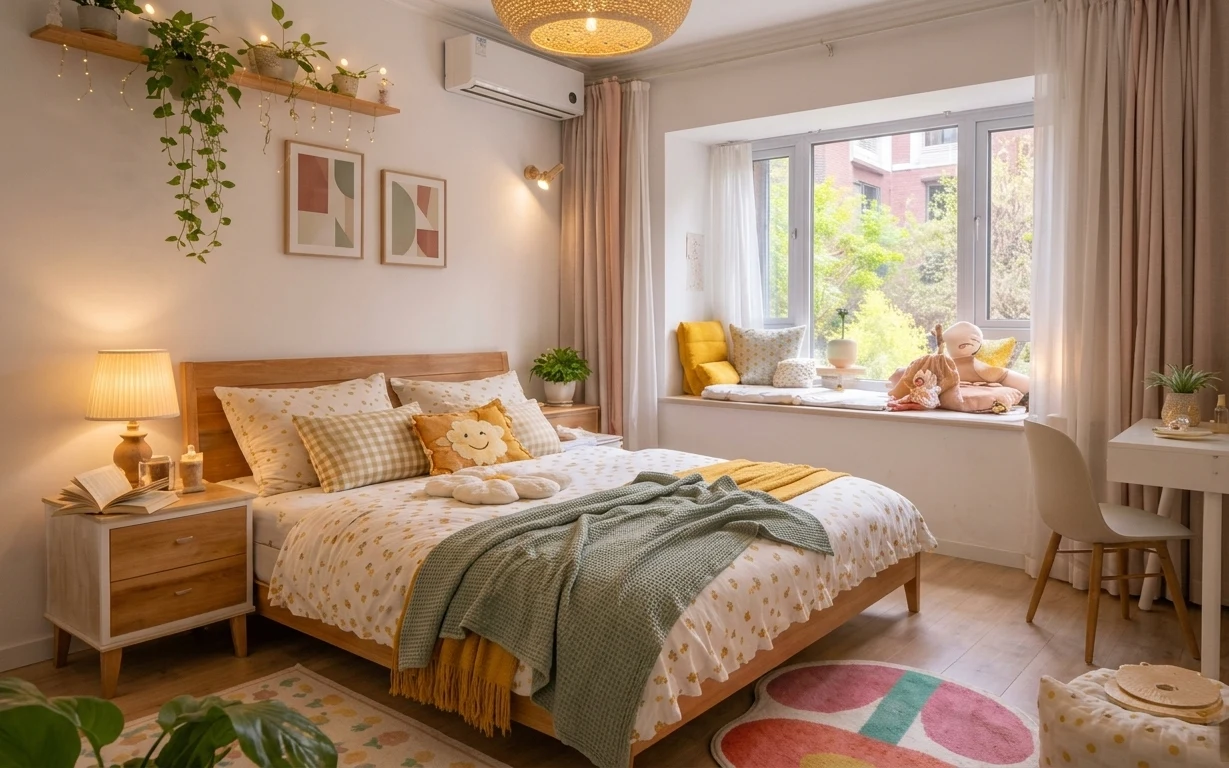
7 rental-friendly bedroom swaps for a $600 refresh
A move-friendly bedroom refresh for renters under $600, built from 7 specific swaps visible in the photo. Focus: a patterned rug, warm beds…
Under $500: move-friendly bedroom refresh with warm art + textiles
A move-friendly bedroom refresh for shared housing built around a patterned rug, cozy cream throw, and warm terracotta accents. This plan k…
Under $500: a move-friendly arched bed nook refresh
A renter-friendly refresh for an arched bed nook using 7 swap-ready layers—jute rug, cream linen-texture bed cover, sheer curtains, and sty…