- Best for
- Textile-first rental makeovers
- Time
- 2–4 hours
- Total cost
- $490 (about $500 max)
- Renter-safe
- Yes — no drilling, packable layers
Why terra-cotta-and-cream bedding styling is the move-friendly bedroom of 2026
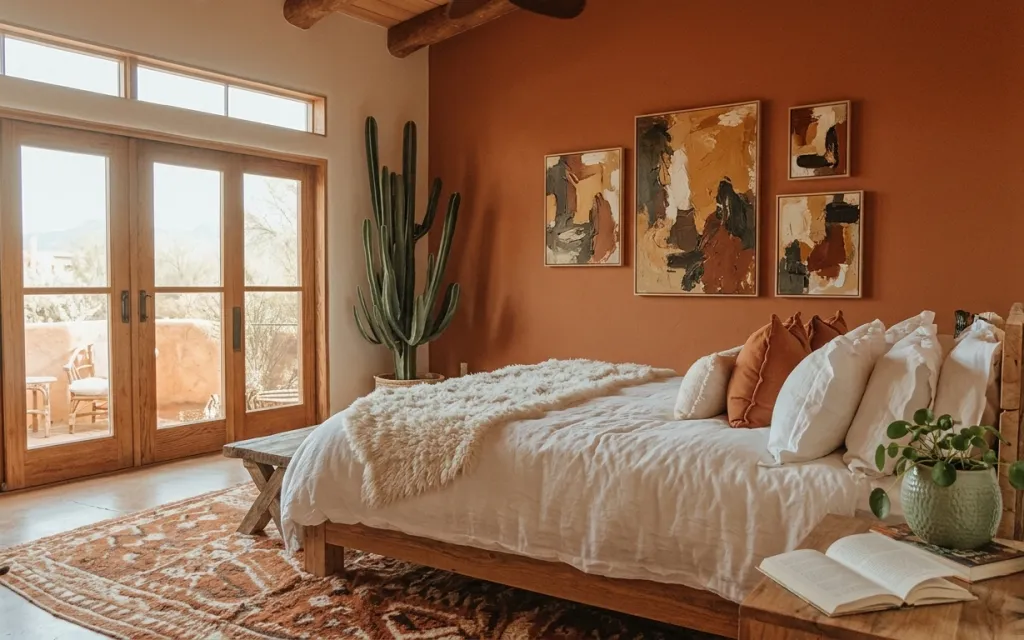
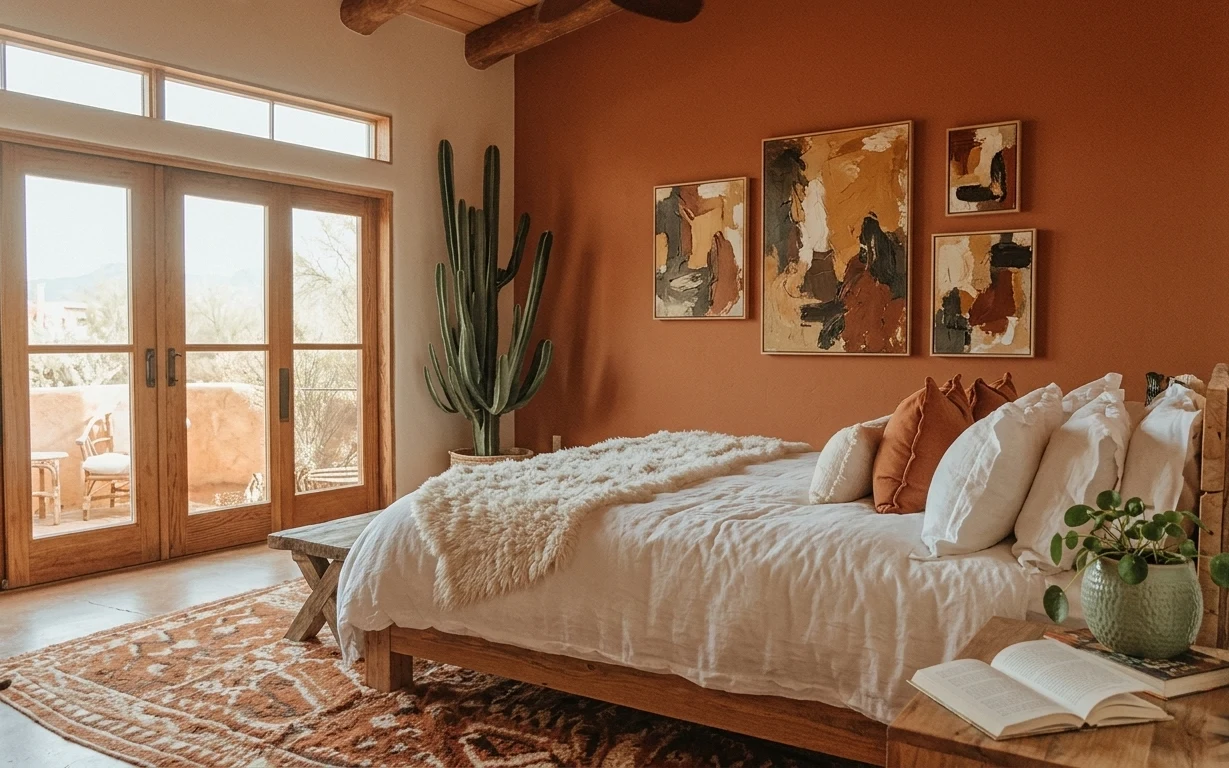
The starting point here is the warmth: a patterned area rug anchors the room, and the bed reads layered thanks to a creamy throw blanket and mix-and-match pillows in cream and tan. On the wall, five framed abstract prints keep the palette tight—no big mural required. Even the greenery is doing work: the tall cactus adds vertical shape, and the ceramic vase keeps the night-stand moment from feeling flat. For shared housing, this combination is realistic because it’s all packable and doesn’t depend on changing the fixed stuff. It’s the kind of color story you see in Apartment Therapy and design books that lean into terracotta + bone neutrals.
I used to chase “perfect matching” in rentals, and it backfired every time—too many identical beige pieces made rooms look unfinished in daylight. Here, the texture mix is the trick: the rug’s woven pattern, the soft blanket drape, and the matte pillow fabric each feel different up close. The first time I styled a room like this, I added one too many prints and it looked busy; this version stays calm by keeping the frames the same size family and letting the rug do most of the patterning.
Layer 1 — patterned area rug ($200) Rust-and-cream texture underfoot
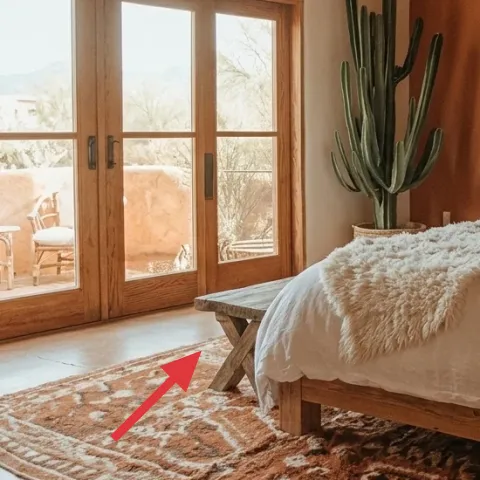
A patterned area rug is the quickest way to make an otherwise plain rental bedroom feel intentional. In the hero, the rug sits under the bed and pulls in the room’s rust-and-cream tones, which makes the rest of the palette look “chosen,” not accidental. The trade-off is that rugs are more noticeable than, say, a small pillow swap—so sizing matters. If the room feels too busy, choose a rug with a similar value range (light creams + mid rust) instead of going for high-contrast black-and-white. For moving, this is still manageable because a 5×7 can roll and fit into a van.
Pick a rug with a similar value range
If your rug has both light cream and mid-tone rust, it will harmonize with warm bedding faster than color-matching one exact shade.
Layer 2 — cream throw blanket ($50) The soft drape over the bed
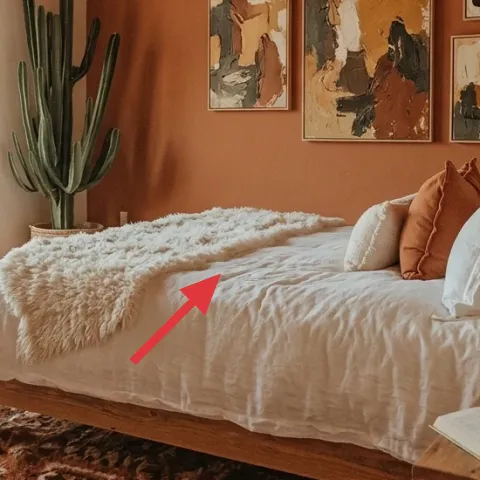
The cream throw blanket gives the bed depth without adding more “stuff” to pack. It’s placed along the top edge of the bed, so it reads instantly when you walk in, and it also softens the harder lines of the wood bed frame. I like this choice over adding another bulky blanket because it folds neatly and still shows texture in photos and in person. Look for a throw with a visible nubby or fuzzy surface so it contrasts with smoother pillow fabric. This is one of those layers you’ll keep using even when you swap pillows or frames later.
Let texture do the talking
A blanket with visible loft keeps the color story warm even if your pillows are simple.
Layer 3 — tan throw pillows (covers) ($30) Swap-in color that packs flat
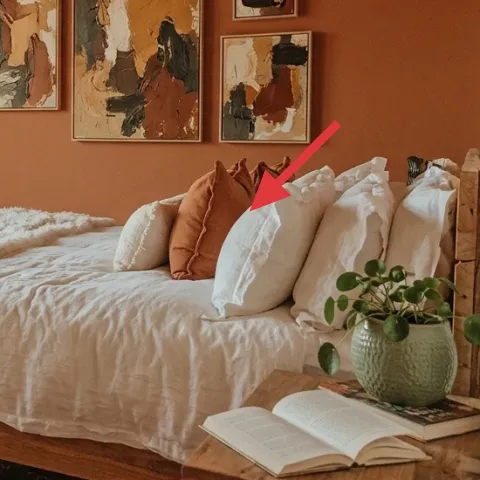
These tan pillows are the bridge between the rug’s rust tones and the cream bedding. They’re also the most move-friendly “color” in the room: pillow covers pack flat, and you can swap them to match your next lease’s light. The trade-off is that covers don’t look full if the fill is thin—use plump inserts or add stuffing so they keep their shape. Compared with buying a new duvet cover or changing wall color (not realistic in rentals), this delivers the same warmth shift with zero permanent installs. In shared housing, it’s the easiest way to make your side of the bed feel finished.
Make it instead of buying it
DIY-dye inexpensive neutral pillow covers to the exact tan you want, so you can match the rug and stay within a tight rental budget.
Materials
- Neutral cotton pillow covers (2) — 2 pack — thrift/discount — $12
- Fabric dye (tan/umber) — 1 kit — craft store — $4
- Salt (for dye setting) — 1 small box — grocery — $2
- Plastic gloves — 1 pair — pharmacy — $5
- Plastic tote + old towel — 1 set — around the house — $0
Steps
- Pre-wash the covers to remove sizing so the dye takes evenly.
- Mix dye in warm water according to the kit, then stir until fully dissolved.
- Wet the covers, then dye them in batches if needed to avoid patchiness.
- Let the dye sit for the kit’s recommended time, stirring occasionally.
- Rinse in cool water until runoff runs clearer.
- Dry fully, then test color under daylight before committing to both covers.
Total DIY cost: $23 — saves about $7 over buying.
Layer 4 — framed abstract art print (left of cluster) ($80) One frame, big color payoff
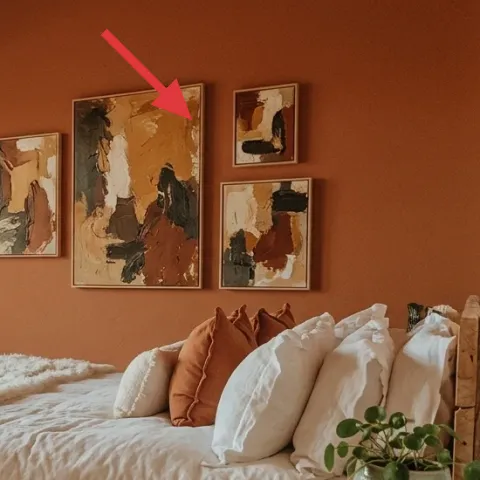
This framed abstract art print is doing the “style steering” on the wall by bringing in both warm terracotta and muted neutrals. Because the hero uses multiple small frames, each print has to be visually cohesive; the colors echo the rug and pillows so your eye doesn’t bounce around. The trade-off is that frames can feel fussy if you pick unrelated prints—so stick to a consistent palette and similar paper tones. For shared housing, choose lightweight frames that hang without drilling and store well in moving boxes. If your landlord won’t allow nail holes, a few command-hook options can keep this look intact for the next lease.
Don’t overload with oversized frames
Big gallery pieces can overwhelm a small bedroom; keep prints moderate and let spacing stay airy.
Layer 5 — framed abstract art print (right of cluster) ($80) Continue the palette without adding clutter
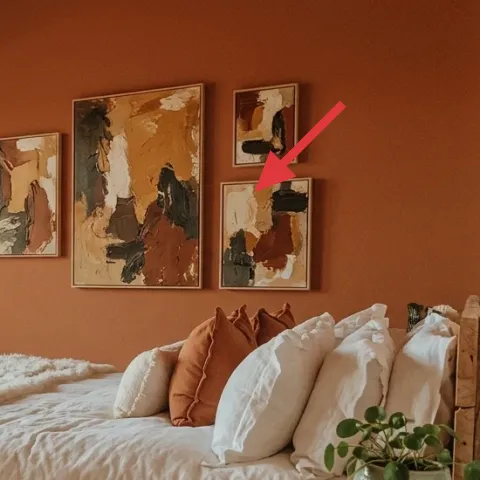
The second framed print keeps the wall from feeling lopsided and completes the warm abstract “conversation” across the space. In the hero, the right-side print adds darker shapes, which balances the brighter tones near the bed and makes the rug feel more grounded. This is a better move than adding a single large statement print because you can scale up or down depending on wall access and what your housing rules allow. For moving, multiple small frames are also easier to pack than one huge piece—each can go in its own box corner. Keep frame size consistent so the group reads intentional from across the room.
Keep frame sizes in the same family
Even if the art is different, matching frame dimensions makes the cluster look curated.
Layer 6 — tall green cactus in a terracotta pot ($35) Vertical shape near the windows
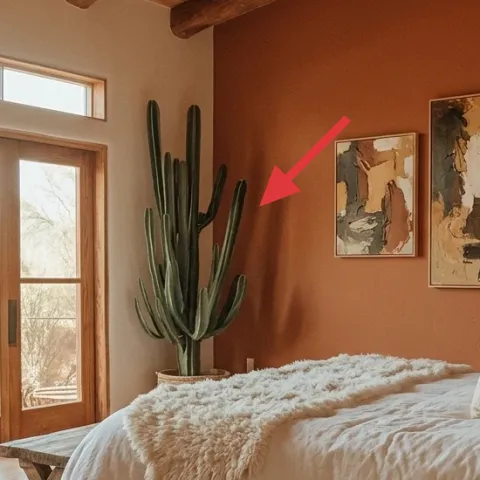
A tall green cactus adds vertical rhythm, which matters in a bedroom with a low, wide bed. It also reinforces the palette: deep green contrasts with the terracotta wall and warm rug, so the room feels alive without adding another color family. I’d rather place one sculptural plant like this than scatter smaller plants because it’s easier to maintain and easier to pack—plants are already work during moves, so keep it simple. Choose a plant in a lightweight terracotta pot (or use a plastic nursery pot inside a decorative one) for easier transport. Positioning it near the window makes the shadows and texture look softer throughout the day.
Go for “one statement plant”
One tall plant makes the look feel styled faster than multiple small pots.
Layer 7 — open book on the side table ($15) A lived-in detail on display
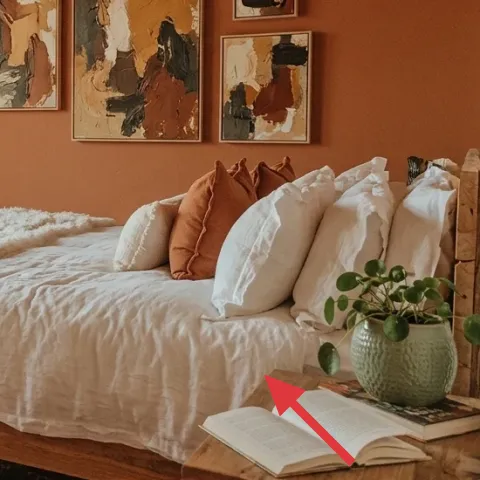
The open book is the small detail that makes the bedroom feel like someone actually uses it. In the hero, it sits on the wood side table and adds light color contrast next to the deep green vase, without competing with the wall art. This is a smart choice over decorative storage boxes because books are easy to swap out after the move—or after you get tired of the cover. The trade-off is that you have to keep it tidy; an open book will look messy if it’s crumpled or cluttered around it. Keep one “moment” on the table: one book and one small ceramic or plant.
Limit the bedside surface to one moment
Book + one decor item keeps the table from turning into visual clutter.
The cost, layer by layer
| Layer | Item | Cost |
|---|---|---|
| 1 | Area rug 5×7 with rust-and-cream pattern | $200 |
| 2 | Cream throw blanket (fuzzy texture) | $50 |
| 3 | Tan pillow covers (DIY dyed) — retail equivalent | $30 |
| 4 | Framed abstract art print 16×20 (left) | $80 |
| 5 | Framed abstract art print 16×20 (right) | $80 |
| 6 | Indoor plant: tall cactus in terracotta pot (4–6 ft) | $35 |
| 7 | Decorative book stack / open book styling | $15 |
| Total | $490 | |
If the rug budget is tight, pick a smaller 5×7 with the same warm value range, and spend the difference on one better throw blanket texture. Everything else stays the same because the color story comes from terracotta + cream, not from expensive hardware.
What worked, what didn't (across the whole room)
This look works because it uses warm color in repeatable places: the rug sets the palette, textiles add softness, and the framed prints bring abstract warmth without needing any permanent changes. The plant and book details make the bedroom feel lived-in instead of styled-only. The one thing that can go wrong is trying to match everything too precisely.
What worked
- The rug pattern repeats the terracotta tones, so the room feels pulled together without wall changes.
- Textural layering on the bed (throw + pillows) adds depth even when the bedding is simple.
- Two coordinated framed prints create balance across the wall instead of a single heavy centerpiece.
- The tall cactus adds vertical structure near the windows, keeping the bed from feeling too wide.
- A single open book on the side table reads “used,” which makes styling look natural.
What didn't
- Matching frame colors perfectly can look stiff; a slightly varied frame finish still reads intentional.
- If the pillows are too flat, the tan tones won’t show the soft contrast against the rug.
- Adding too many prints of different palettes makes the wall feel busy instead of warm.
- If the rug pattern is too contrasty (black-heavy), it fights the terracotta wall color.
What we'd skip if we did it again
Skip a “matching set” approach—like buying a whole duvet cover set in one exact beige. In shared housing, you’ll change bedding sooner than you think, and a single beige block makes the room look unfinished beside patterned art and a textured rug.
Skip oversized wall pieces. A big print can look dramatic, but it’s harder to hang without risk in rentals and it’s heavier to pack. Multiple medium frames keep the same warm abstract energy while staying move-friendly.
Skip extra bedside clutter. The hero works because the side table has one moment—open book and a ceramic vase with leaves. When surfaces fill up, the room loses the calm, editorial feeling and becomes visually loud.
Frequently asked
How long does this bedroom refresh take?
Plan on 2–4 hours total. Rug placement and bedding layering usually takes the first hour, then it’s mainly frames: position, level, and hang using no-drill mounting. If you DIY-dye pillow covers, add another day for rinsing and drying time, but it still doesn’t require specialty tools.
Will this work in a rental where I can’t drill into the wall?
Yes. The only wall elements here are framed abstract art prints, which can be hung with no-drill mounting options that don’t damage plaster or paint. Keep frames light, test one hook placement first, and use a consistent frame size family so the cluster reads intentional even if spacing is slightly off.
What if my bedroom is smaller or the bed is against a different wall?
Keep the same strategy, just adjust scale. If space is tight, choose a 5×7 rug variant and let the rug stop under the front half of the bed. For wall art, reduce from five frames to three in the same warm palette so the room feels curated, not cramped.
Where should I shop for the rug and framed prints?
For a warm rust-and-cream rug, look at home stores and discount furniture retailers, then filter by similar value range (cream plus mid-tone terracotta). For frames, aim for lightweight frames in the same size family and shop for abstract prints with terracotta and neutral papers.
What’s the biggest mistake for this room type?
Buying too many color-changing pieces at once—like a new comforter, wall art with a different palette, and a high-contrast rug. The fix is to anchor the palette with the rug and repeat the warm tones through pillows and prints. That way, everything stays coherent even as you swap details.
Can I keep the look if I move in a year?
That’s the whole point. A 5×7 rug rolls, pillow covers pack flat, framed prints can go into individual boxes, and the cactus plus ceramic vase are easy to transport in protected containers. If your next bedroom’s light is different, swap only the pillow covers and keep the frames and rug as your stable base.
More in Bedroom
Under $500: move-friendly bedroom refresh with warm art + textiles
A move-friendly bedroom refresh for shared housing built around a patterned rug, cozy cream throw, and warm terracotta accents. This plan k…
Under $500: a move-friendly arched bed nook refresh
A renter-friendly refresh for an arched bed nook using 7 swap-ready layers—jute rug, cream linen-texture bed cover, sheer curtains, and sty…
5 boho bedroom swaps for a $600 refresh
A warm, move-friendly bedroom refresh under $600: rug + chunky knit throw + pillow color, plus no-drill wall art and a soft lamp glow. Desi…