- Best for
- Color-rich renter corner styling
- Cost
- About $715 total
- Difficulty
- Easy (no-drill swaps)
- Time
- 2–3 hours for setup
Why sage-and-peach details are the sunlit seating corner of 2026
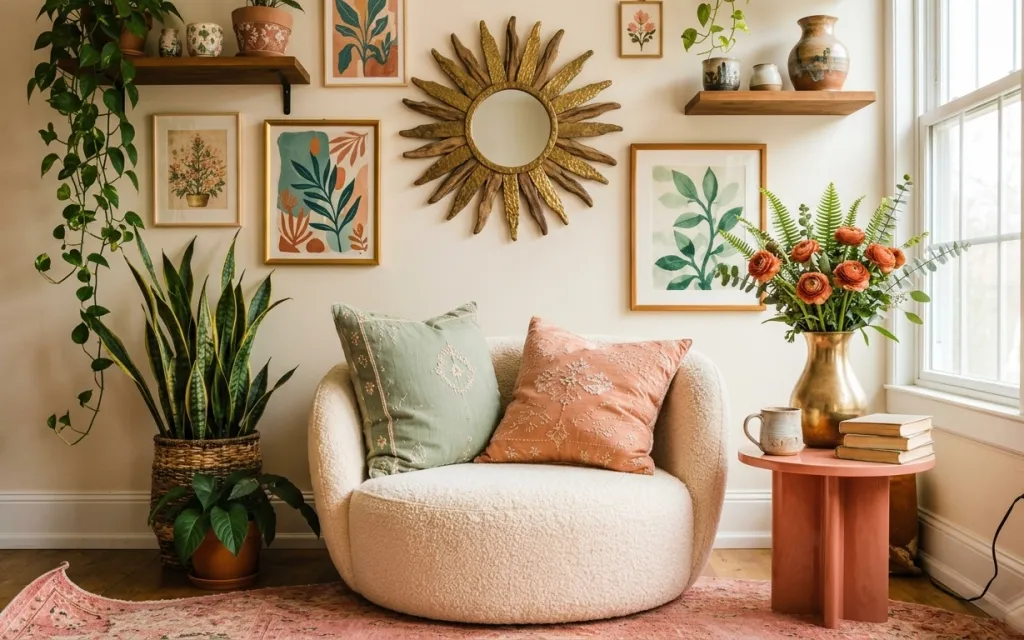
The easiest way to copy this vibe is to treat the room like it has three “zones”: texture underfoot (that rose/pink rug), softness on the chair (sage-and-peach pillows), and a warm focal point high on the wall (the sunburst-style wall mirror). The wall art uses botanical shapes and earth tones, which keeps everything from feeling too sweet. Look for the same mix of materials: creamy boucle, woven textures in planters, and framed paper art instead of glossy prints. For renters, the bonus is that every piece here is portable or wall-hung with removable hardware.
I almost overthought this one while styling my own place—my instinct was to match every frame and cushion perfectly. The photo works because it doesn’t: the botanicals vary slightly in color, and the pillows lean more “palette” than “pattern match.” When I stopped chasing exact coordination and focused on repeating green and terracotta, the whole corner started to read as intentional. That’s the trick to make this look feel collected, not costume.
Layer 1 — pink/rose patterned area rug ($150) Grounds the whole corner
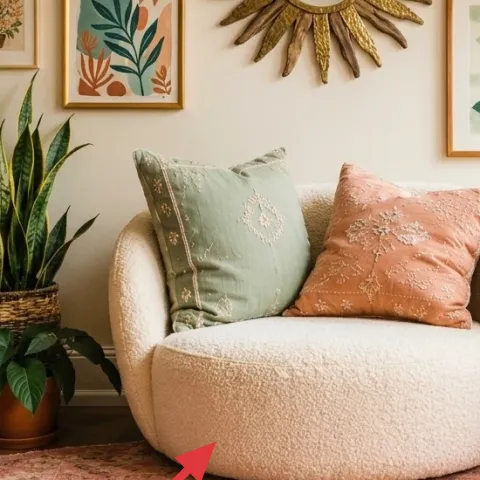
A patterned pink/rose rug is doing more work than it looks like—it creates a warm base for the cream armchair and makes the wall colors feel connected instead of floating. In a bright room, the rose tones read fresh rather than fussy, especially when you keep the rest of the palette in neutrals and greens. The alternative would be a plain neutral rug, but that would remove the “energy” that makes this corner feel styled. Trade-off: patterns are less forgiving if your sofa is already heavily patterned, so this choice is best when your seating fabric stays fairly solid.
Pick a rug with mid-tone patterning
If the print is too pale, daylight can wash it out; mid-tone contrast helps it stay visible from across the room.
Layer 2 — coral round side table ($80) Adds color at eye level
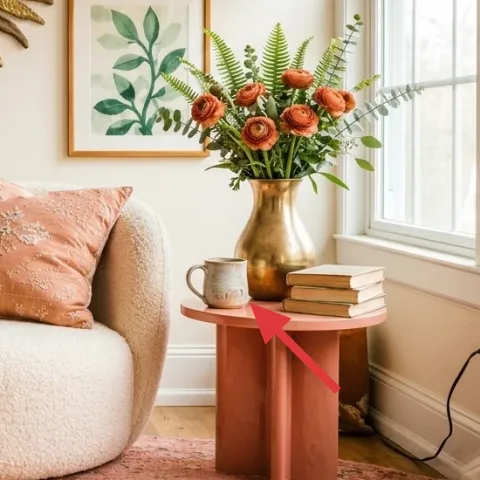
The coral round side table gives the corner its pop without adding visual clutter. Because the top is small, it’s easier to style for the camera: books stack neatly, and a ceramic mug brings in a casual, lived-in note. The obvious alternative is a neutral wood or black side table, but those can make the rug and wall art feel like they’re carrying the entire look. This coral works because it echoes the rug’s rose family. Trade-off: bright colors can date faster, so stick with a simple shape that’s easy to swap later.
Keep the objects tall and grouped
Stack books and let one small item (like a mug) anchor the front edge so the tabletop reads intentional.
Layer 3 — boucle armchair in cream ($250) Makes the softness feel expensive
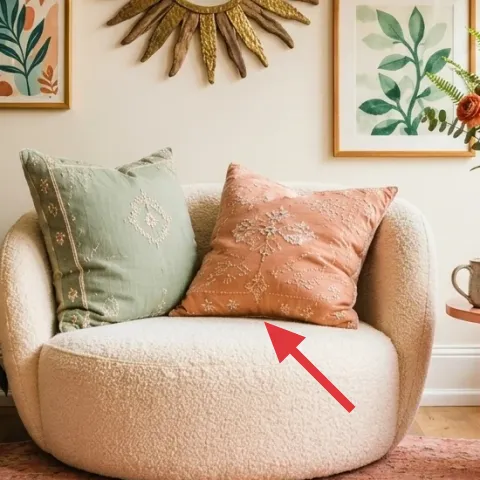
The cream boucle armchair is the texture engine here—its tightly looped surface makes even plain accessories look richer. Since the walls are busy with botanical frames and the mirror is bold, the chair’s neutral fabric keeps the corner from tipping into “too much.” The alternative would be a sleek chair in linen, but it won’t catch the daylight the same way, and it can make the rug look louder than it should. Trade-off: boucle shows lint and hair more than smooth fabrics, so planning for quick vacuum passes matters.
Choose a cream tone close to your wall
When the chair and wall are in the same family, the rug becomes the main color player.
Layer 4 — sage and peach throw pillow covers ($30) Blends nature and warmth
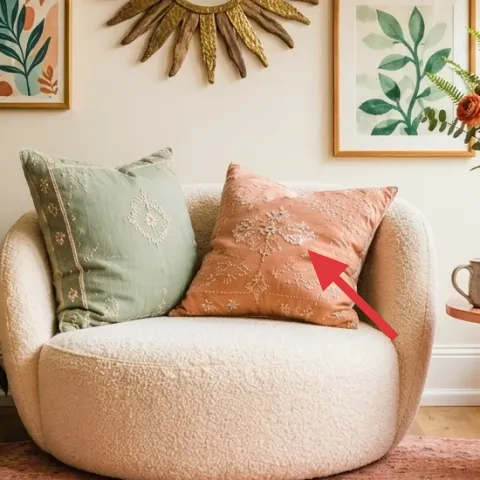
These sage and peach throw pillow covers are the “palette” layer that connects the botanicals on the wall to the rose rug underfoot. The sage feels leafy and calm, while the peach keeps the corner warm—together they mirror the orange/green tones in the framed art and flowers. If you swapped them for all-green pillows, the room would read flatter; if you went all peach, it could tip too sweet. Trade-off: throw pillows are easy to swap, so it’s worth buying covers you can reuse as your seasons change.
Don’t match the exact print colors
Aim for color families (sage/peach) instead of copying the leaf shapes—exact matches can look staged.
Layer 5 — framed botanical wall art with green leaves ($40) Adds the “collected” look
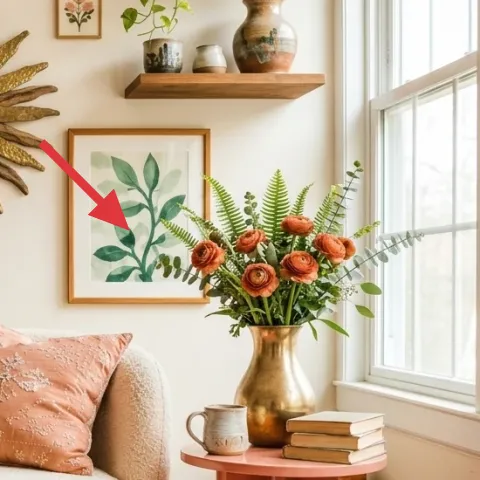
A framed botanical wall art print with green leaves keeps the corner from feeling like a single-theme textile moment. In this room, the green is the bridge between the snake plant, the pillows, and the framed wall cluster. The alternative would be one large abstract print, but the small-scale botanical variety is what gives the wall depth and rhythm. Trade-off: multiple frames mean you have to be okay with asymmetry—this isn’t a perfectly aligned gallery. It looks intentional when you group them by color family, not by exact size.
Use removable wall-hanging hardware
For renters, Command Strips or removable hooks keep you from damaging the wall while still creating a stable frame arrangement.
Layer 6 — sunburst-style wall mirror ($120) Creates a warm focal point
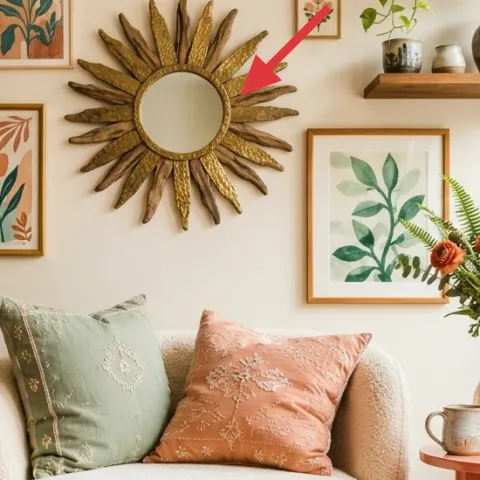
The sunburst-style wall mirror is doing double duty: it’s decorative, and it bounces daylight back into the seating area. Its gold tone picks up the warm metals you naturally see elsewhere—like the brass vase—so the whole corner reads like one story. Swapping it for a plain round mirror would lose that sculptural, “sunny” shape that frames the botanical art. Trade-off: mirrors can be trickier to hang straight because the face catches light, but once it’s aligned, it becomes the anchor that makes everything else feel styled.
Center it on the tallest point of the chair wall
The mirror should feel “over” the seating corner, not like it’s floating beside it.
Layer 7 — snake plant in woven basket ($45) Adds vertical life
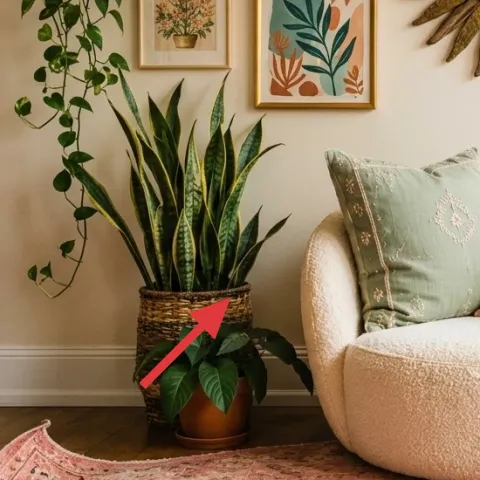
The snake plant in a woven basket pot adds height and a textured, natural silhouette on the left side of the chair. That woven container matters because it ties into the room’s other tactile elements: the rug’s pattern, the chair’s boucle texture, and the stacked styling objects on the table. The alternative—skipping the plant—would make the corner feel flatter and more purely decorative. Trade-off: snake plants like bright light but don’t need frequent watering, so they’re a low-fuss fit for renters who won’t remember a weekly routine.
Angle the plant slightly toward the seating
Even a small turn makes the silhouette feel more intentional in photos.
The cost, layer by layer
| Layer | Item | Cost |
|---|---|---|
| 1 | pink/rose patterned area rug | $150 |
| 2 | coral round side table | $80 |
| 3 | boucle armchair in cream | $250 |
| 4 | sage and peach throw pillow covers (set) | $30 |
| 5 | framed botanical wall art with green leaves | $40 |
| 6 | sunburst-style wall mirror | $120 |
| 7 | snake plant in woven basket | $45 |
| Total | $715 | |
Cheaper variant: swap the rug for a simpler rose-toned 5×7, choose a smaller round side table, and pick one framed botanical instead of multiple frames. That keeps the palette (sage, peach, rose, green) while trimming the biggest ticket items.
What worked, what didn't (across the whole room)
This corner reads cohesive because the colors repeat (sage, peach, green, rose) and the textures vary (boucle, woven, framed paper, plant leaves). The wall mirror and botanicals create the focal hierarchy so the chair and rug stay supportive instead of competing.
What worked
- The pink/rose rug anchors the cream chair and keeps daylight from washing out the seating corner.
- The coral side table adds a bold, warm note without making the wall art feel louder.
- Boucle texture on the chair makes pillows look curated even when patterns are varied.
- The sage-and-peach pillow covers tie the botanicals, plant, and rug into one repeating palette.
- The sunburst-style mirror reflects light and gives the wall a sculptural focal point.
- The snake plant brings vertical shape and woven texture to balance the framed wall cluster.
What didn't
- A plain neutral rug would have made the room feel flatter, especially with busy botanicals.
- Skipping the mirror’s warm gold tone makes the brass vase and framed colors feel disconnected.
- All-one-color pillows would remove the seasonal warmth that comes from peach alongside sage.
- Choosing a low-texture chair fabric blunts the daylight effect that boucle gives in this corner.
- Over-matching every frame color can look too staged instead of collected.
What we'd skip if we did it again
Skip the idea of matching every framed botanical print exactly. The photo works because the frames vary while the shared thread is palette (green leaves, warm earth tones, and cream paper). Repeating color families reads collected, while perfect matching can feel like a “set” even when the objects are new.
Skip a second, similar accent table. One coral round side table keeps the color pop intentional and gives the tabletop room for books and a mug. If the corner gains another small surface, the objects compete with the mirror and the framed wall art.
Skip buying pillows in only one direction—either all cool sage or all warm peach. The balance here is what makes the corner feel lively under bright daylight. Two pillow covers that split warm and leafy hues create that natural rhythm without adding extra pattern chaos.
Frequently asked
How long does this kind of refresh take for a renter?
Most of the time goes to styling and spacing: rug placement, moving furniture slightly for the mirror height, and arranging the framed botanical wall art cluster. If the rug and chair are already in place, plan about an hour for the floor and tabletop, then 45–60 minutes for wall alignment. Buying items online can add lead time, but the on-the-day work is usually straightforward.
What if I’m working with a smaller living room?
Keep the same palette but scale one item down. A smaller rug can still carry the rose/pink pattern, and the mirror can remain the focal point if it’s centered over the chair. For the wall art, use fewer framed botanical prints—three instead of four—to prevent crowding. Choose a side table that’s narrower and style it with fewer objects: just books plus a single ceramic mug.
What if my room is larger or has higher ceilings?
Go bigger rather than adding more pieces. A larger rug helps the seating feel grounded, and a slightly larger sunburst-style wall mirror can maintain the focal balance. For the wall cluster, keep the same botanical idea but increase spacing between frames so the arrangement still reads as intentional. On the table, consider stacking taller books so the tabletop doesn’t look too short against the chair.
Where should I shop to recreate this look without landlord changes?
For the quick wins, start with portable basics: rugs, pillow covers, planters, and a coral side table are widely available from home goods and secondhand marketplaces. For the wall, look for framed botanical prints and removable-hanging-ready hardware so you can swap later. A sunburst-style mirror is often easier to find in thrift and vintage shops—gold tones are especially common.
What’s the biggest mistake people make with this type of corner?
Overdoing the matching. People try to buy pillows, prints, and the rug in the exact same shade intensity and end up with a flat, overly “coordinated” look. Instead, repeat color families—sage, peach, green, rose—while letting textures and print styles vary. The chair’s cream boucle and the mirror’s warm gold give you cohesion even when items aren’t identical.
Can I hang the mirror and framed art without damaging the walls?
In most renter setups, yes. Use removable picture hooks or Command Strips rated for picture weight, and follow the installation directions closely (surface prep matters). If your frames are heavier, use fewer pieces but make sure the hardware matches the load. The goal is to keep the wall intact while still achieving a stable, aligned look.
More in Living Room
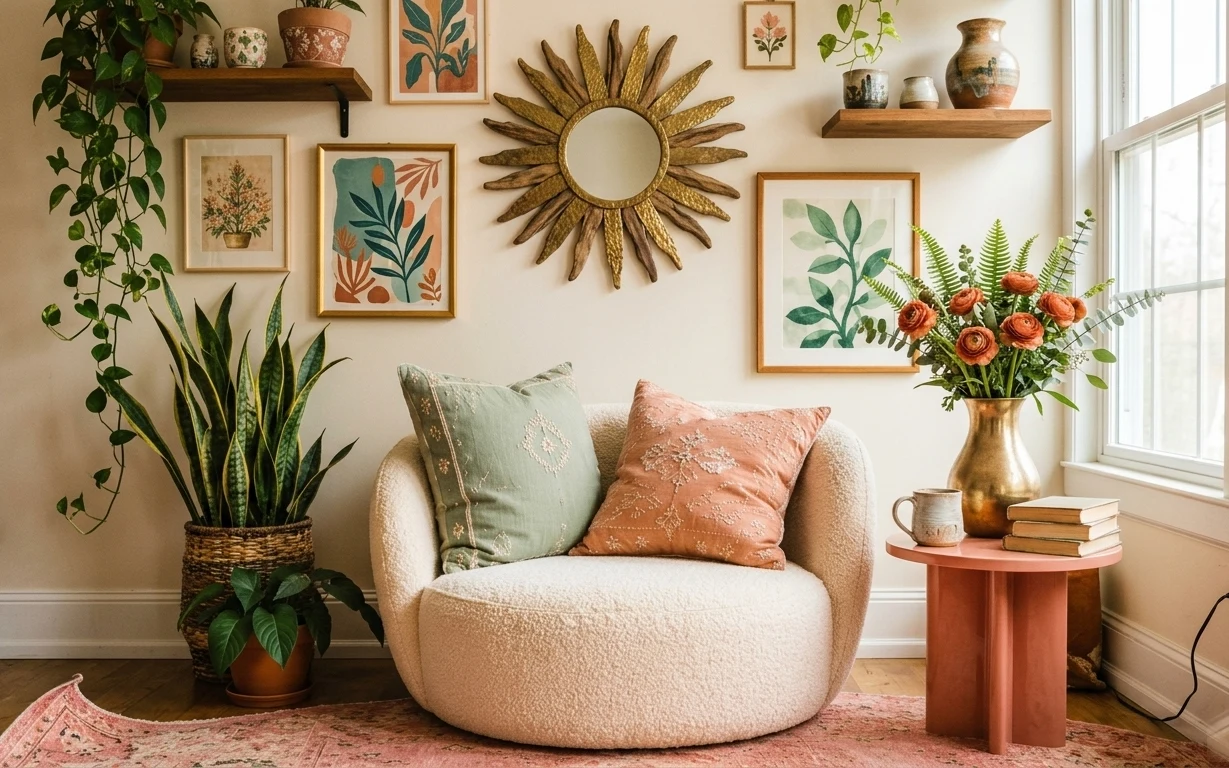
7 renter-friendly swaps for a sunlit seating corner, $1000
A renter-friendly plan for recreating a sunlit seating corner with pink patterned flooring, earthy pillows, botanical wall art, and plant s…
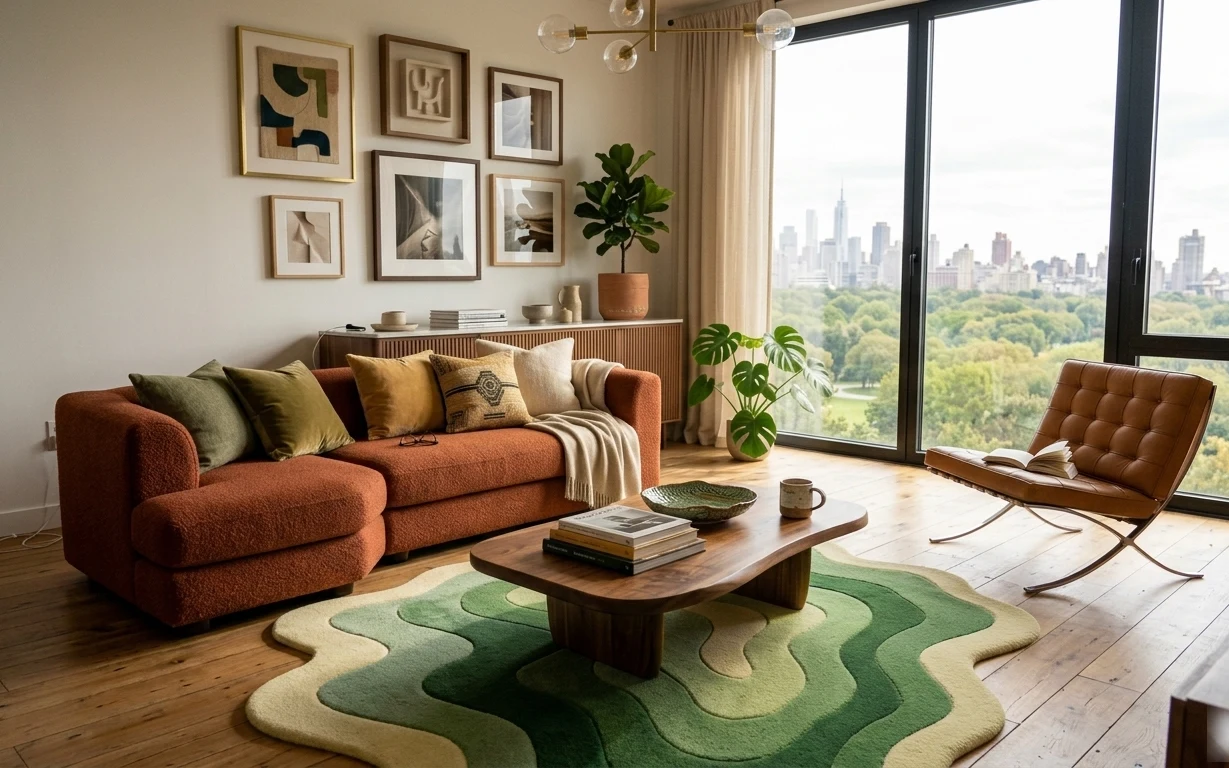
6 renter-friendly living room swaps for a $600 refresh
A bright renter living room refresh under $600: rug + throw + layered pillows, with one framed print, curtains, and a terracotta plant for …
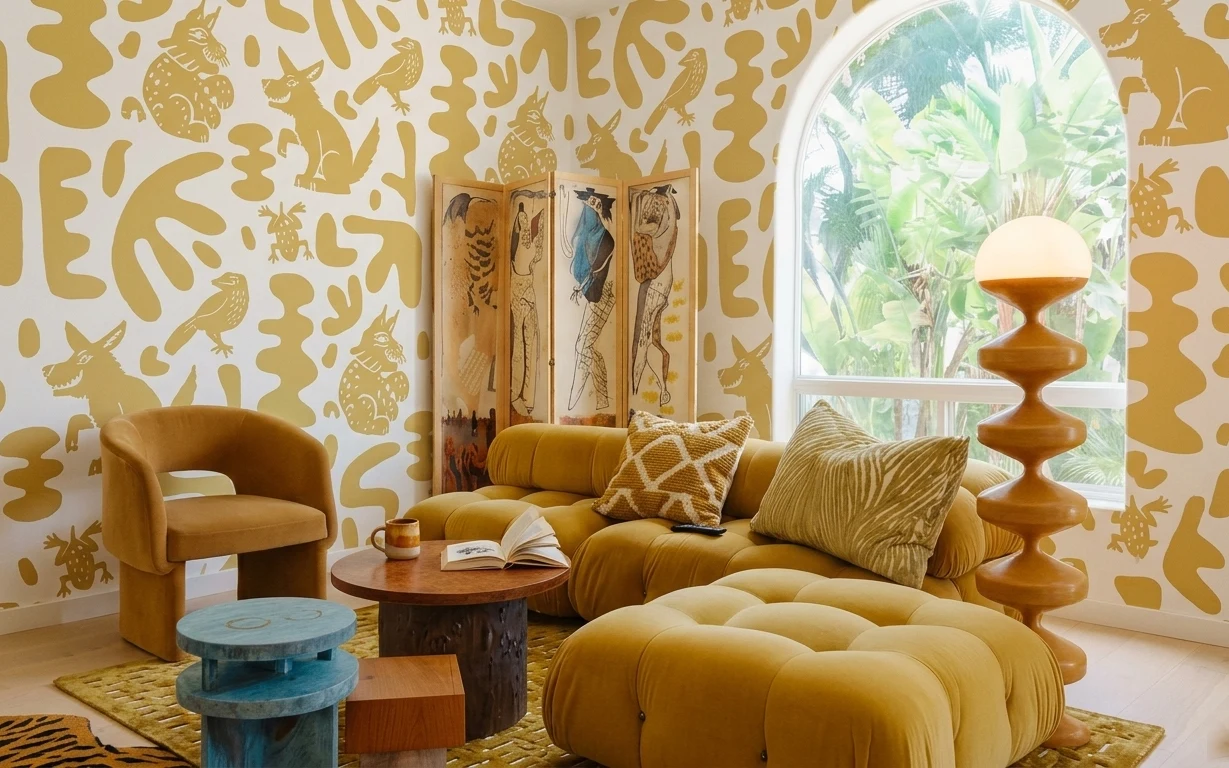
7 no-drill ways to build a mustard jungle living room
A mustard jungle living room, made renter-safe with no drilling and pack-away styling. This $1000 budget focuses on one bold wallpaper wall…