- Square footage
- 45–90 sq ft (hallway/nook)
- Cost
- $615 total plan
- Difficulty
- Easy (mostly styling)
- Renter-safe
- Removable swaps only
Why warm orange-and-cream hallway nook is the no-stress moving setup of 2026
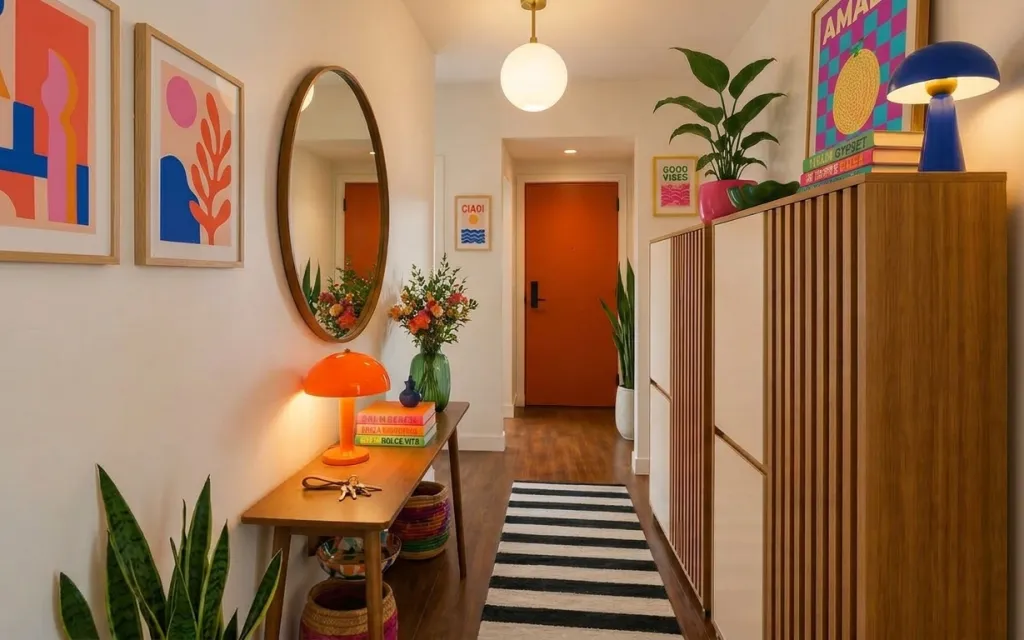
The best thing about this look is how it layers “small moments” along a narrow path: the orange table lamp, the oval mirror, and a runner rug that actually makes the floor feel finished. The cream wall is the calm base, while the colorful framed prints and the red-pot plant add punch without clutter. Under the hood it’s all textiles and lightweight swaps—striped rug, framed art, and a vase—so the visual payoff is big and the packing is easy. This is also the kind of approach you see in publications like Domino: fewer, bolder accessories placed at eye level.
I used to overdo hallway décor and then regretted it during my next move. My mistake was treating the hallway like a living room—too much stuff, not enough “anchors.” Here, each piece earns its spot: the mirror bounces light down the hall, and the lamp adds warmth where overhead light can feel harsh. Once that clicked, the whole thing stopped feeling busy and started feeling composed—even in a shared space where you don’t control the permanent layout.
Layer 1 — Vase with orange and red flowers ($25) A fresh color pop by the doorway
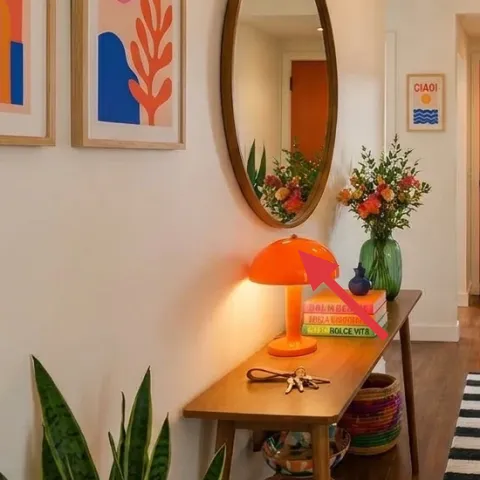
A vase with orange and red flowers brings the “just-arrived home” feeling without taking up floor space. In the photo it sits on the small wooden side table, so it reads from the hallway line—perfect for shared housing where the entry path is what everyone sees. The trade-off is that floral arrangements are seasonal, so the smarter play is to treat this as a repeatable swap: keep the vase, switch the stems. That way the look stays cohesive after a move, even when you buy flowers at different prices.
Change only the stems, not the container
A consistent vase shape keeps your hallway palette steady even when you switch flower options month to month.
Layer 2 — Framed colorful abstract print 1 ($35) One bold square to set the color story
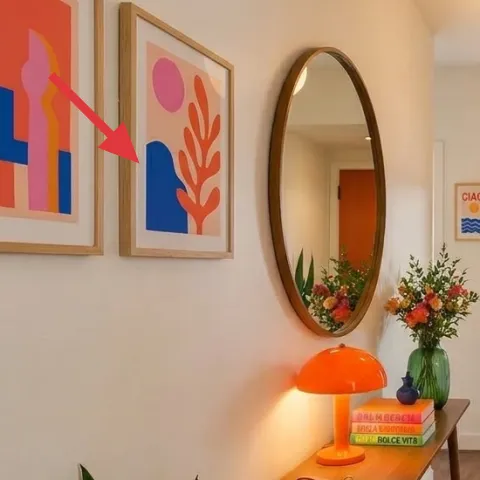
This colorful abstract print is the “north star” for the hallway’s palette: orange plays off the lamp, and blue/peach tones echo the other art on the wall. A framed print is also a great move-friendly choice because it packs flat and can be rehung with removable hardware later. The obvious alternative is adding another small object on the side table, but that tends to compete with the lamp and flowers. Framed art gives structure at eye level—where a narrow hallway needs it most.
Make it instead of buying it
DIY a single abstract print on cardstock to match the orange-and-cream vibe, then slide it into a frame you already own (or buy cheaply).
Materials
- Cardstock, 8.5×11 inches — 2 sheets — craft store — $2
- Acrylic paint (assorted colors: orange, coral, blue, cream) — small set — craft store — $10
- Small flat brush — 1 — craft store — $5
- Black fine-tip marker or pen — 1 — craft store — $3
- Painter’s tape — 1 roll — craft store — $3
Steps
- Cut cardstock to the frame’s opening size, leaving a consistent border.
- Lightly tape off 2–4 blocks of color so edges stay crisp.
- Paint the large shapes first, then layer smaller marks for contrast.
- Let the paint dry fully before adding line details with a fine-tip pen.
- Remove tape slowly to keep straight lines.
- Trim any stray paint on the border with a craft knife against a scrap board.
Total DIY cost: $23 — saves about $12 over buying.
Layer 3 — Green leafy plant in a red pot ($35) Vertical life to soften the hallway line
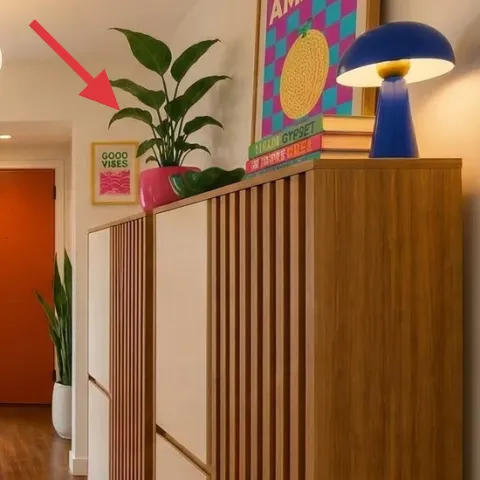
A leafy plant in a red pot gives instant “texture and height” in a hallway that otherwise runs flat—walls on one side, console on the other. In the photo, the plant sits near the top of the console zone, so it reads as part of the display and not as a random corner add-on. The trade-off is light: plants need a bit of brightness to look full, so this is best for hallways that get daylight. If the light is weaker, swapping to a smaller artificial plant is tempting, but the real-leaf look is what makes the palette feel fresh instead of decorative-only.
Pick a pot color that matches your “one accent”
The red pot ties into the orange lamp and flower tones so everything feels intentional, not sprinkled.
Layer 4 — Orange table lamp ($60) Warm glow that feels intentional, not harsh
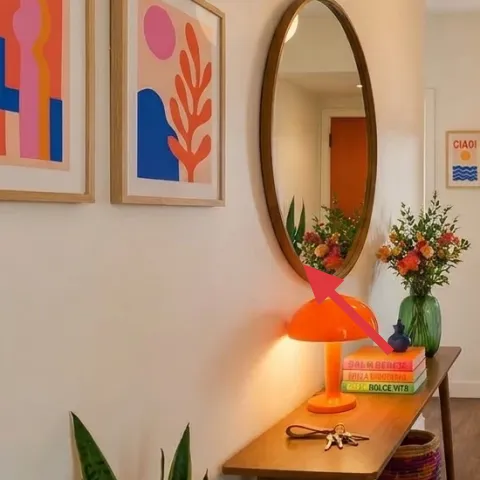
The orange table lamp does two jobs at once: it adds warm light, and it echoes the hallway’s strongest accent color. Because it’s on a small side table, it works even when the floor area is tight—no need to anchor anything to the wall or ceiling. If you went with a plain white lamp, the hallway would still function, but it would lose the personality that makes the entry feel like yours. The trade-off with a colorful lamp is that it becomes a color reference for everything else, so keep your art and accessories in a similar warm range.
Use a warm bulb for the same tone
A 2700K–3000K bulb keeps the orange reading cozy instead of dusty.
Layer 5 — Oval wall mirror ($80) Light bounce without taking over the space
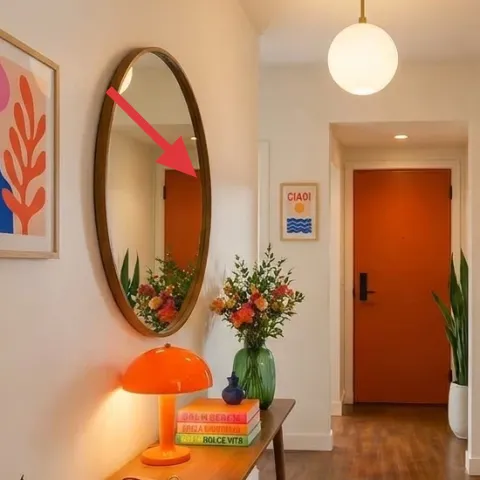
An oval mirror makes the hallway feel longer because it reflects light and shows a bit of depth down the corridor. The oval shape matters—compared to a rectangle mirror, it softens edges and looks less “catalog” in a narrow space. Since this is a shared-housing setup, the practical win is removability: mirrors pack better than bulky furniture and can be kept for the next place. The trade-off is weight—use caution when lifting and carrying—but this is still an easier move than swapping a fixed built-in.
Skip anything that requires drilling
Use removable hanging methods rated for the mirror’s weight, so the next lease doesn’t come with wall repair headaches.
Layer 6 — Striped area rug runner ($180) The flooring “finisher” that hides the stress
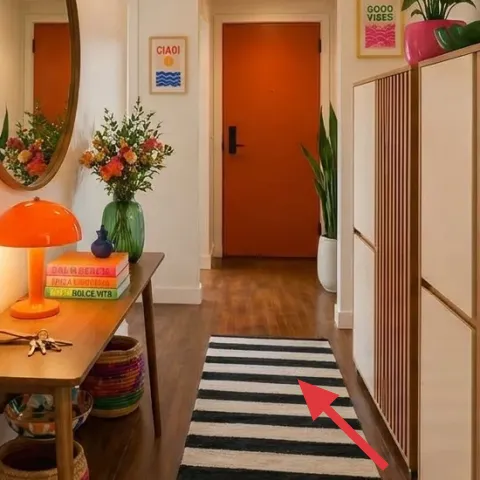
A striped runner rug is the hallway upgrade that reads instantly: it frames the walkway and makes the wood floor look styled instead of unfinished. In the photo, the black-and-cream stripes also give the mirror and console a visual grid to sit within, so the colorful art doesn’t feel scattered. The trade-off is that hallway rugs see more traffic, so a design-forward rug should be washable or at least easy to blot quickly. If the budget is tighter, a smaller runner can still work, but keeping the pattern contrast helps it feel “intentional” rather than decorative.
Pattern contrast makes narrow halls feel wider
High-contrast stripes give a clear visual direction down the corridor.
Layer 7 — Wood console cabinet with vertical slats ($200) One storage/display anchor on the right
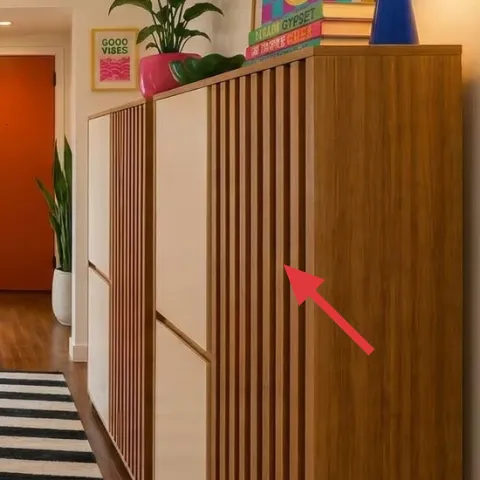
This wood console cabinet is the structure of the hallway: the vertical slats add rhythm, and the warm wood tone ties together the table surface, mirror frame, and the room’s overall warmth. Placing it on the right side creates a clear “display zone” for the lamp, vase, and accessories—so the hallway doesn’t rely on the floor alone. The obvious alternative is a low bench, but vertical texture looks more architectural and less clutter-prone when space is tight. The trade-off is that consoles take more care during moves; choosing something that fits a van and has sturdy legs keeps it realistic.
Keep the top surface styled, not piled
One lamp, one small vase, and one small accessory is enough to keep the console readable from the doorway.
The cost, layer by layer
| Layer | Item | Cost |
|---|---|---|
| 1 | Vase with orange and red flowers | $25 |
| 2 | Framed colorful abstract print 1 (DIY ~$23 materials) | $35 |
| 3 | Green leafy plant in a red pot | $35 |
| 4 | Orange table lamp | $60 |
| 5 | Oval wall mirror | $80 |
| 6 | Striped area rug runner | $180 |
| 7 | Wood console cabinet with vertical slats | $200 |
| Total | $615 | |
A cheaper variant is to downsize the rug first (smaller runner, same stripe contrast) and choose a simpler frame for the abstract art. Keeping the orange lamp and oval mirror still makes the hallway feel finished without paying for the biggest-ticket pieces.
What worked, what didn't (across the whole room)
This hallway reads styled because the accessories stack at eye level and at floor level in a planned way. The warm lamp color and the mirror bounce keep it from feeling sterile, even though the space is narrow.
What worked
- The oval mirror adds depth down the hall, so the space feels longer instead of blocked off.
- The orange lamp provides warm light where overhead can feel clinical in a shared space.
- The striped runner gives a “layout” to the hallway, which makes the rest of the décor look intentional.
- The console’s vertical slats add rhythm and texture without piling up clutter on the top surface.
- Color-matched art keeps the palette consistent: orange, blue, and cream stay in conversation.
- The plant softens the straight lines and makes the hallway feel lived-in, not staged.
What didn't
- Overstyling the side table with too many small items blurs the lamp-and-vase focal point.
- Choosing a mirror shape that’s too boxy can make the hallway feel harsher and more narrow.
- Picking a low-contrast rug can look muddy under warm light instead of crisp and graphic.
- Going for a plant that’s too small for the height of the console makes the display look unfinished.
- Having art that doesn’t echo the lamp color turns the hallway into separate “random” zones.
What we'd skip if we did it again
Skip matching wall décor sets that look like they came from the same retailer bundle. In a hallway, repetition reads fast, and it’s harder to make the space feel like your own across moves. One strong framed print plus a mirror does more for less visual noise.
Skip buying a new rug if the budget can’t cover a runner with real contrast. Without bold stripe contrast, the rug often looks like a generic hallway covering instead of a design anchor. If costs are tight, choose a smaller runner in the same palette rather than going dull.
Skip adding extra décor to the console top “because it’s empty.” In narrow hallways, surface clutter travels and shows in every photo angle. One lamp, one vase, and one small accessory keeps the display readable—and packable for the next lease.
Frequently asked
How long does this hallway nook refresh take?
Most of the work is just placing items: art at eye level, the rug centered along the walkway, and the console styling. For a shared-housing move, budget a couple of hours to source pieces and a half-day to set everything in place. If DIYing the abstract print, add another 1–2 hours for making and drying, plus a quick frame swap.
Is this realistic for renters or shared housing where I move often?
Yes, because the big elements here are removable: a framed print, an oval mirror, a plug-in table lamp, a runner rug, and a standalone console. The only “integration” is visual—color matching—so nothing relies on permanent changes. Packing is straightforward since most pieces break down into boxes that fit a rental van.
What if my hallway is longer or wider than in the photo?
If it’s longer, keep the runner pattern going and consider shifting the console down to create a balanced entry zone. If it’s wider, you can let the mirror sit a bit higher and widen the styling on the console top (still within “one lamp + one focal accessory” rules). The key is maintaining eye-level anchors so the décor doesn’t compete with the walkway.
What’s a good place to shop for these items without overspending?
Look for the rug and lamp in department stores or rug specialty sites during promos, then fill in frames and smaller décor from thrift stores or resale apps. For the console, check marketplace listings for mid-century inspired wood pieces that are sturdy and not too heavy. Plants and flowers can be bought locally right before styling.
What’s the biggest mistake people make in small hallways?
Overcrowding one surface. The side table and console top should feel curated, not stocked, because hallways show everything from multiple angles. Another common miss is picking wall art that doesn’t match the lamp color temperature or accent palette—then nothing feels connected. One bold art piece plus echo colors from the lamp and flowers fixes most of that.
Can I skip the console cabinet and still get the same vibe?
You can, but replace it with another single anchor: either a narrow console-style shelf unit that stands on legs or a freestanding narrow cabinet. The goal is still “one organized display zone” that holds the lamp and vase together. Without an anchor, the hallway can look like separate objects rather than a composed nook.
More in Small Spaces
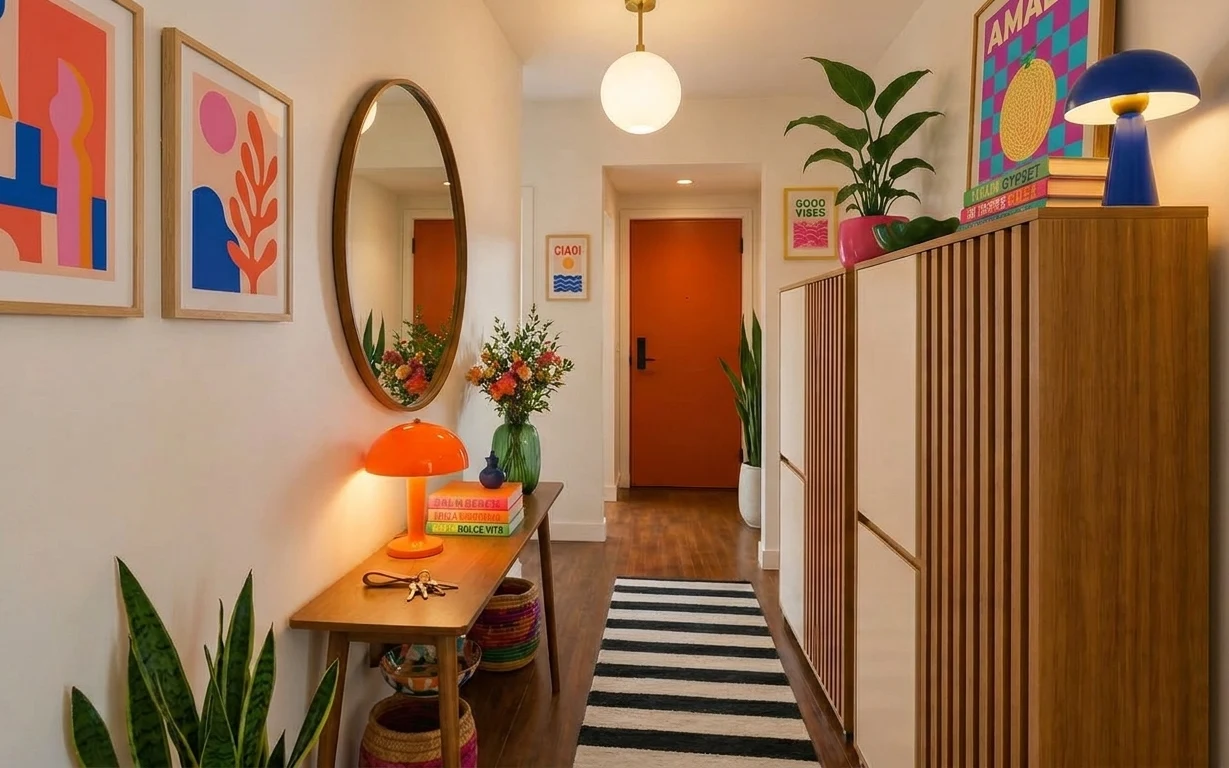
7 small upgrades for a bright hallway nook, $700
A bright hallway nook refresh for shared housing that all packs up in boxes. This $700 plan uses color-block abstract art, warm lighting, a…
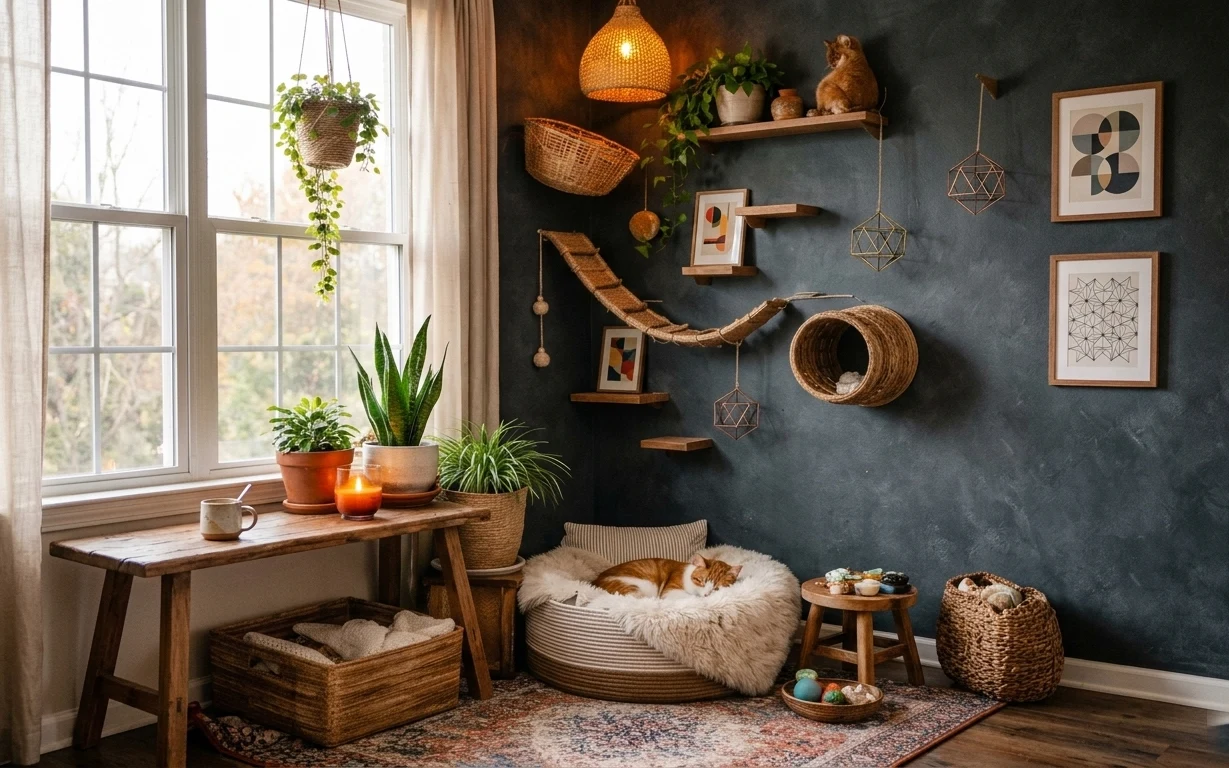
7 no-drill upgrades for a window-and-cat corner, $600
A window-and-cat corner can feel intentional without permanent changes. For about $600, this refresh uses 7 no-drill swaps—rug, curtains, f…
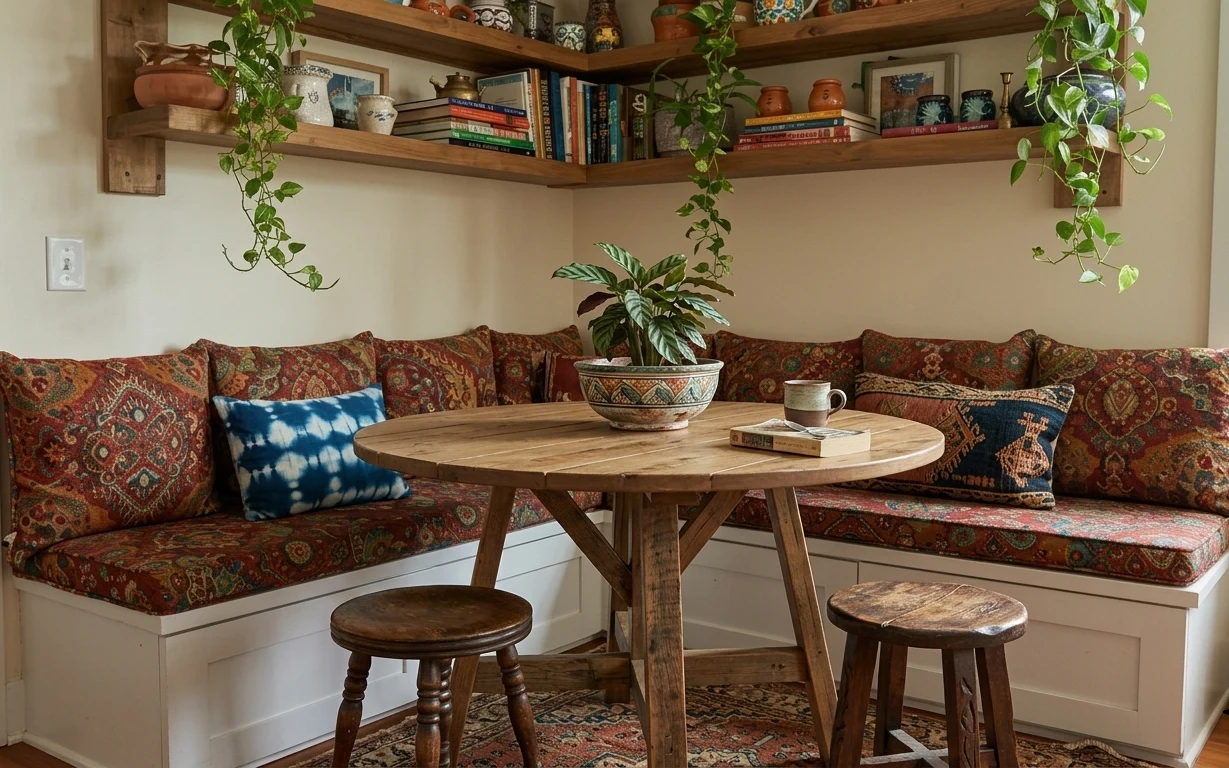
5 weekend-ready swaps for a $400 daybed nook refresh
Turn a daybed nook into a vivid, planty hangout with move-friendly swaps. This $400 plan focuses on a bold rug, a simple wooden coffee tabl…