- Best for
- Weekday-to-weekend bedroom refresh
- Cost
- $1,075 total look cost
- Difficulty
- Confident DIY
- Renter-safe
- No—wall shelf and curtain changes usually need measuring
Why warm brass-and-wood styling is the sunlit bedroom of 2026
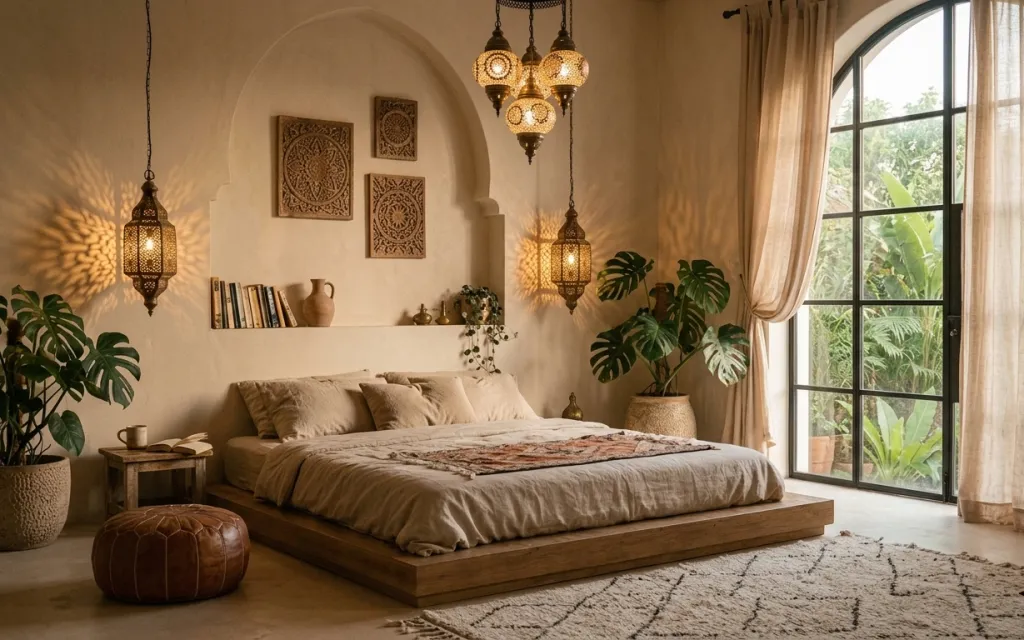
That curved-arch wall and warm wood platform bed already set the mood, so the upgrade is mostly about framing the light. Cream curtain panels soften the edges near the window, while layered textiles—duvet cover, pillows, and a throw blanket—keep the bed from looking too “catalog.” Under everything, a light patterned area rug adds texture without taking over the room. The trick for homeowners is to spend where your eyes land first: curtains, bed zone, and the grounding rug.
The first time I tried this kind of warm neutral palette, I picked decor that was too matchy and ended up with a flat, sleepy look. In this setup, the textures do the work: plaster-like walls, wood grain, and woven rug pattern all bounce the warm light differently. I also learned to add one “wow” element in small doses—here it’s the styling shelf and framed wall art—so the room feels curated, not crowded.
Layer 1 — curtain panels (cream, floor-length) ($80) Frame the window with soft height
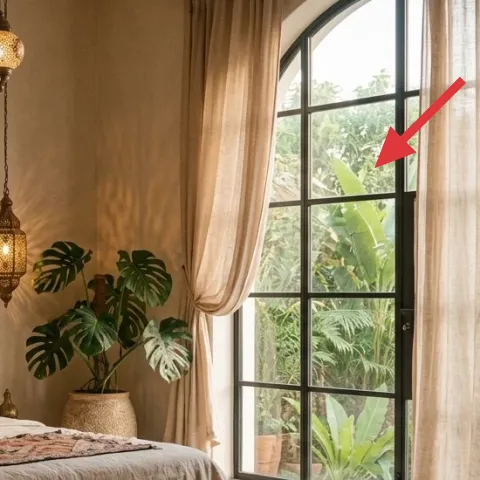
Cream curtain panels drape down beside the large window, which immediately makes the whole bedroom feel taller and calmer. The color reads warm against the plaster-like walls, and the sheer/airy look keeps daylight from getting blocked. Choosing curtains that hang close to the sides of the glass is the practical alternative to “just adding a rod”—it’s what makes the window feel designed instead of temporary. The trade-off: curtains are bulkier to hem and handle than most accessories, but the payoff is visible the moment you step into the room.
Let the curtains “kiss” the floor
Floor-length panels look intentional; short curtains pull the eye downward and make the room feel smaller than it is.
Layer 2 — framed square wall art set ($160) Add pattern without turning the wall busy
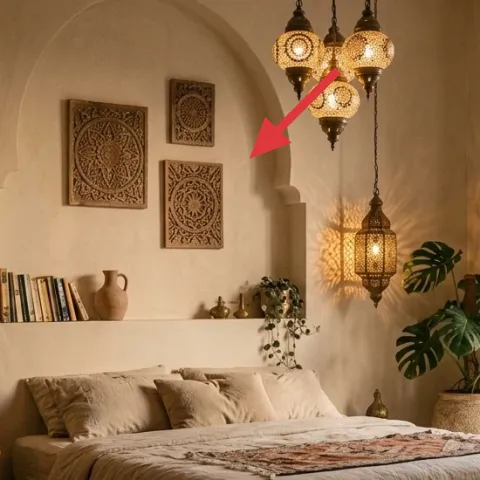
The two framed square pieces centered near the arch area give the room a graphic rhythm that matches the rug’s patterning. This works because the art sits at eye level, so it supports the bed instead of competing with it. I’ve made the mistake of going too large with prints in a bright room—then everything feels crowded once the daylight kicks in. Instead, a compact set of framed wall art keeps the visual weight controlled and gives you a clear focal point. The trade-off is that you’ll want to measure spacing before mounting so the pair looks symmetrical.
Match the art scale to the wall’s “breathing” area
On curved, niche-like walls, smaller frames read more balanced than a single oversized statement.
Layer 3 — area rug (patterned, light neutral) ($200) Ground the bed zone with texture
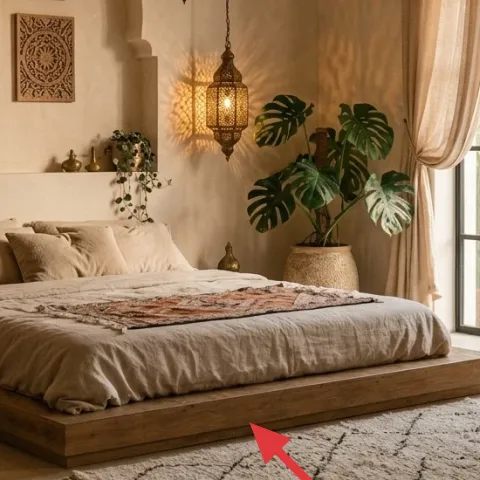
The patterned area rug anchors the platform bed and makes the whole sleeping area feel finished, not floating. Because the rug sits under the front third of the bed, it visually ties the wood floor to the textiles—especially the duvet cover and throw blanket. This is the kind of upgrade that feels instantly “done” compared with adding just a small runner, which usually looks like an afterthought. The pattern is light enough to let the window light stay bright, but bold enough to prevent the neutral palette from flattening. Trade-off: a patterned rug is slightly harder to hide stains, so regular spot cleaning matters.
Use the bed as your rug ruler
Aim for enough rug width that at least the front legs sit fully on it, so the bed feels properly seated.
Layer 4 — wood wall shelf with decor ($120) Create a “landing strip” for small treasures
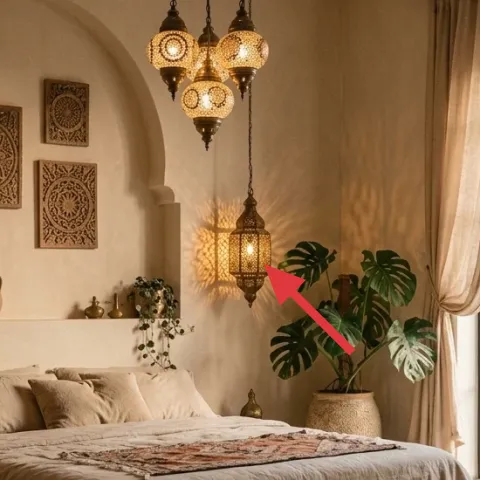
This wood wall shelf is the organizing move that makes the bedroom feel styled rather than staged. It holds a vase and books, which gives you vertical variety without introducing another big color block. The shelf also helps the room’s sightline: you see it the moment you look past the bed toward the wall, so it becomes a quiet focal point. Choosing a real shelf (not just a couple of loose items on the wall) keeps the clutter effect away. Trade-off: you’ll need to edit the shelf—too many pieces turns the calm, warm look into visual noise.
Vase + books beats “everything at once”
Lean on one taller object and one horizontal cluster for a composition that holds up from across the room.
Layer 5 — platform bed frame (warm wood) ($400) Set the warmth base for every other choice
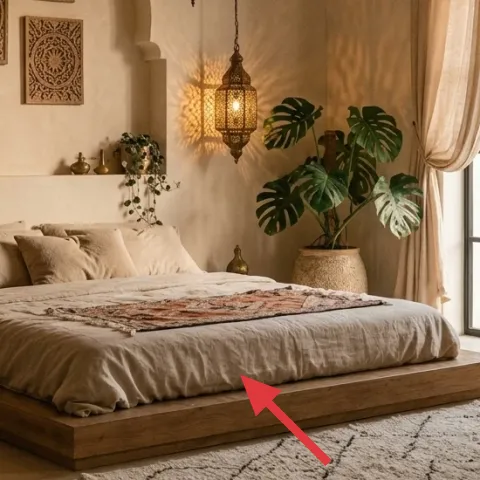
The platform bed frame in warm wood is the structural anchor that keeps the bedroom from feeling too delicate. With a wood base under the duvet cover, it adds a grounding line that balances the airy curtains and the lighter rug pattern. If you’re working from a blank-ish bed setup, the frame is usually the first upgrade worth doing—textiles are easy to swap later, but the bed silhouette defines the whole room. The trade-off is cost and bulk: getting the size right matters, and moving it takes a plan. Once it’s in, everything else looks intentional.
Don’t size the bed like it’s just “furniture”
Check room circulation and rug coverage first; a too-tight bed layout makes even a beautiful palette feel cramped.
Layer 6 — large potted plant in ceramic planter ($80) Bring life to the corners near the light
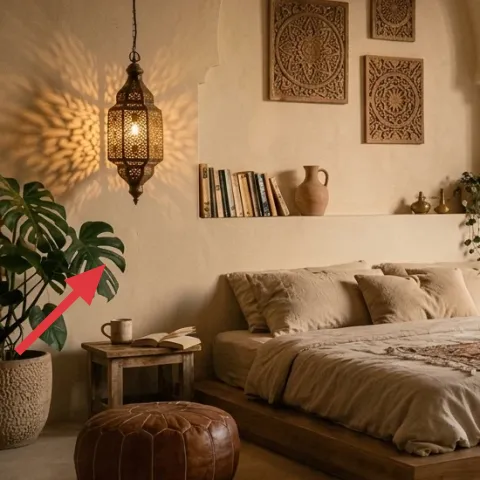
A large potted plant in a textured ceramic planter keeps the bedroom feeling lived-in, not overly curated. The green breaks up the cream-and-warm tan palette, and the leaf shapes echo the organic movement of the rug’s pattern. Positioning it where natural light reaches—near the left side of the bed zone—also helps it feel connected to the window area rather than “placed somewhere.” The trade-off: plants want consistency. Water and light checks take a little rhythm, but the reward is a bedroom that stays visually fresh without changing anything else.
Choose one big plant instead of several small ones
One substantial plant reads more intentional at a glance and avoids the scattered look.
Layer 7 — ceramic planter pot (large, textured) ($35) DIY a color-coordinated pot instead of buying new
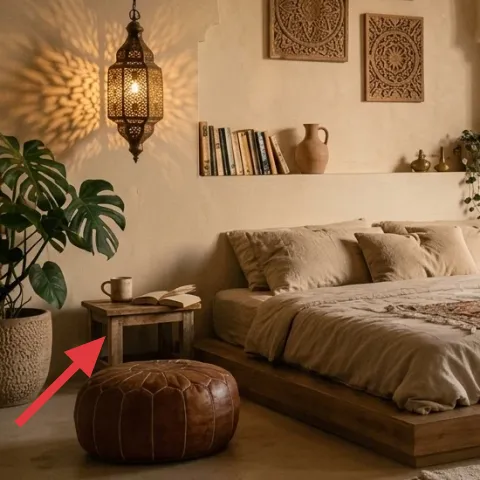
Make it instead of buying it
Paint a terracotta-style planter in warm, muted tones so it matches the room’s cream-and-brass palette and looks finished without buying a new pot.
Materials
- Painter’s tape — small roll — $6
- Matte interior wall paint (warm neutral) — 1/2 pint — $12
- Clear matte sealer — small can — $8
Steps
- Clean the planter thoroughly with soap and water, then let it dry completely.
- Lightly scuff the surface with fine-grit sandpaper so paint grips.
- Mask any areas you want to stay natural using painter’s tape.
- Apply the first thin coat of matte paint and let it dry.
- Add a second thin coat for even color coverage and let it dry.
- Seal the painted surface with a clear matte sealer and allow it to cure before styling.
- Re-check edges and touch up any thin spots.
- Place the planter back where it gets the same light the room already has.
Total DIY cost: $26 — saves about $9 over buying.
This works because a coordinated pot gives your plant and shelf styling a single color story. The bedroom already leans warm—cream textiles, warm wood, and brass tones—so a muted, painted pot looks cohesive rather than random. The biggest “win” is that you keep the plant’s scale while upgrading the color impact. The trade-off is that painted planters need a little care if you accidentally get soil moisture on the surface, so a clear matte sealer and a dry placement habit help.
Keep the finish matte, not glossy
Matte paint reads softer in warm daylight and doesn’t fight the rug’s texture.
The cost, layer by layer
| Layer | Item | Cost |
|---|---|---|
| 1 | Curtain panel pair (84") (cream) | $80 |
| 2 | Framed art print 16×20 (set of 2) | $160 |
| 3 | Area rug 5×7 (patterned) | $200 |
| 4 | Bookshelf / wall shelf (decor shelf) | $120 |
| 5 | Bed frame (platform) | $400 |
| 6 | Indoor plant (4–6 ft) | $80 |
| 7 | Ceramic planter pot (medium/large) | $35 |
| Total | $1,075 | |
If the budget shifts, the cheapest swap is usually the curtain panel pair: choose a similar warm-cream fabric and keep the bed textiles and rug pattern unchanged so the room still reads cohesive.
What worked, what didn't (across the whole room)
The strongest result comes from a clear hierarchy: curtains frame the window, the rug seats the bed, and the shelf plus art gives the wall a purposeful focal point. The palette stays cohesive because the materials—wood, plaster, textiles, and ceramic—repeat warmth without getting matchy.
What worked
- Cream curtain panels add vertical softness next to the window and make the bed area feel taller.
- Patterned rug texture grounds the platform bed and prevents the neutral palette from looking flat.
- Framed square wall art gives a controlled focal point near the arch wall without crowding.
- A wall shelf with vase and books creates styling structure, so it never feels like clutter.
- Large green plants break up warm tan and keep the room from feeling too beige.
- Matching planter color (even via DIY) ties plant styling to the rest of the palette.
What didn't
- Too many small decor items on the shelf would compete with the rug pattern instead of supporting it.
- If curtains are hung too short, daylight still arrives but the window looks unfinished.
- A rug that’s too small makes the bed feel like it’s floating on top of the floor.
- Warm woods plus warm neutrals can skew dusty if the plant isn’t kept healthy and hydrated.
- Skipping framed wall art leaves the arch wall visually loud in the wrong way—mostly empty.
What we'd skip if we did it again
Skip buying a second, smaller rug “to make it cozy.” A single correctly sized patterned area rug is what seats the bed zone; stacking rugs often looks accidental and adds cost without clarity.
Skip going too matchy with the shelf styling. One vase, a small cluster of books, and a little negative space reads more intentional than lining everything up by height.
Skip oversized wall art in a curved, niche-like section. The framed square scale is what keeps the wall calm; bigger frames tend to crowd the arch and pull attention away from the bed.
Frequently asked
How long does this sunlit bedroom refresh usually take?
Plan for a weekend if you’re keeping the changes focused: curtains and a rug position can be done in a day, and shelf + framed wall art spacing can be completed in another. If you DIY the planter, add drying/curing time for paint and sealer. Realistically, it’s often 6–10 hours total, not counting delivery delays.
What if I rent and can’t mount the shelf or art?
For renters, the easiest adjustment is to swap the wall shelf and framed wall art for freestanding styling: a tall floor plant stand or a narrow console-like surface near the window, plus framed pieces using existing furniture height rather than wall mounting. Keep the rug and curtains unchanged—those are the biggest “room-feel” drivers.
My bedroom is smaller—how do I scale this look?
Use the same order of operations: curtains first (so the window reads taller), then rug size so the bed is seated, then wall art scaled down or spaced tighter. If the room feels narrow, consider a slightly lighter rug pattern and fewer shelf items so the wall doesn’t feel busy. Keep one large plant rather than many small ones.
Where should I shop if I want a warm brass-and-cream style on a budget?
Start with basics in mainstream retailers (curtains and rugs), then hunt for character pieces like framed art and textured ceramic planters at secondhand stores. Wall shelves and bed frames can be sourced from big-box stores with the right finish so you don’t spend extra on shipping. Matching warm undertones matters more than exact brands.
What’s the biggest mistake for this kind of bedroom palette?
The most common miss is choosing everything in the same “beige family” without texture contrast. The fix is simple: keep warm cream for curtains and textiles, then add real texture through the patterned rug and ceramic planter finishes. Frame the wall with art that’s proportional and centered so the palette feels curated.
More in Bedroom
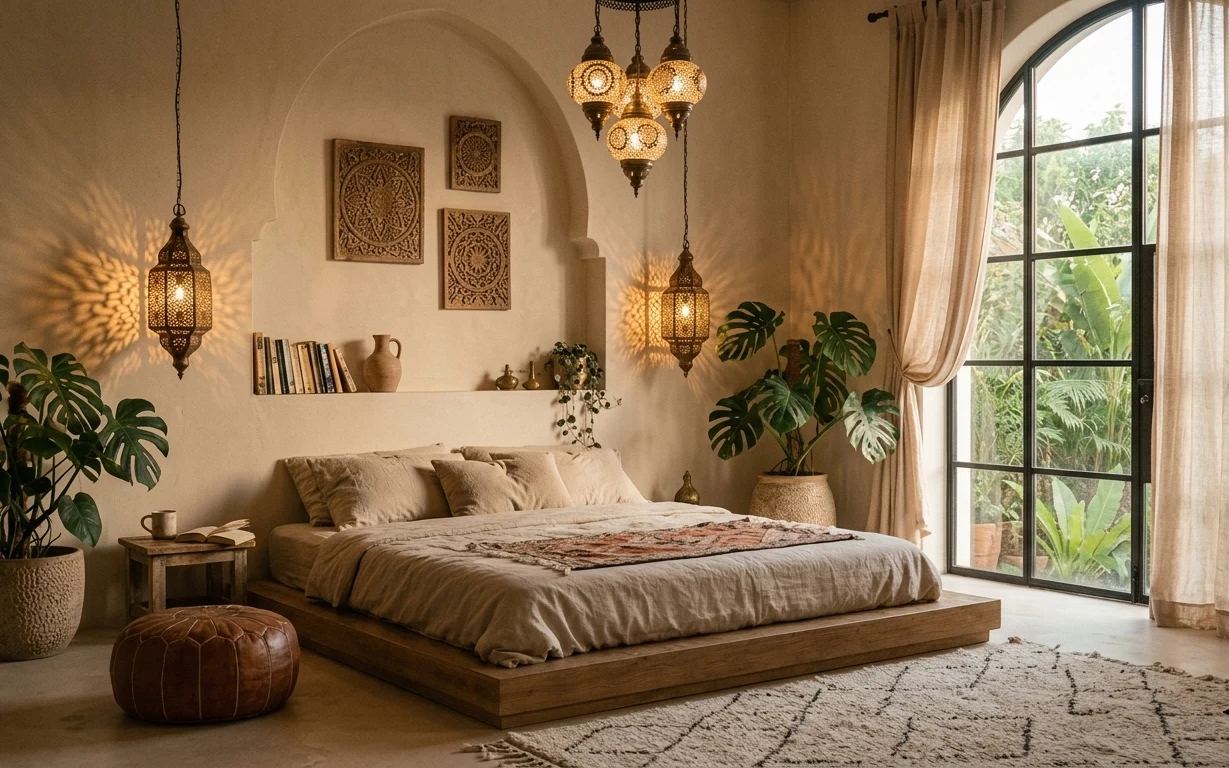
A calmer sunlit bedroom with earthy neutrals for $1500
A sunlit bedroom refresh that leans into warm brass, cream curtains, and textured neutrals—built around seven visible changes. With a $1,50…
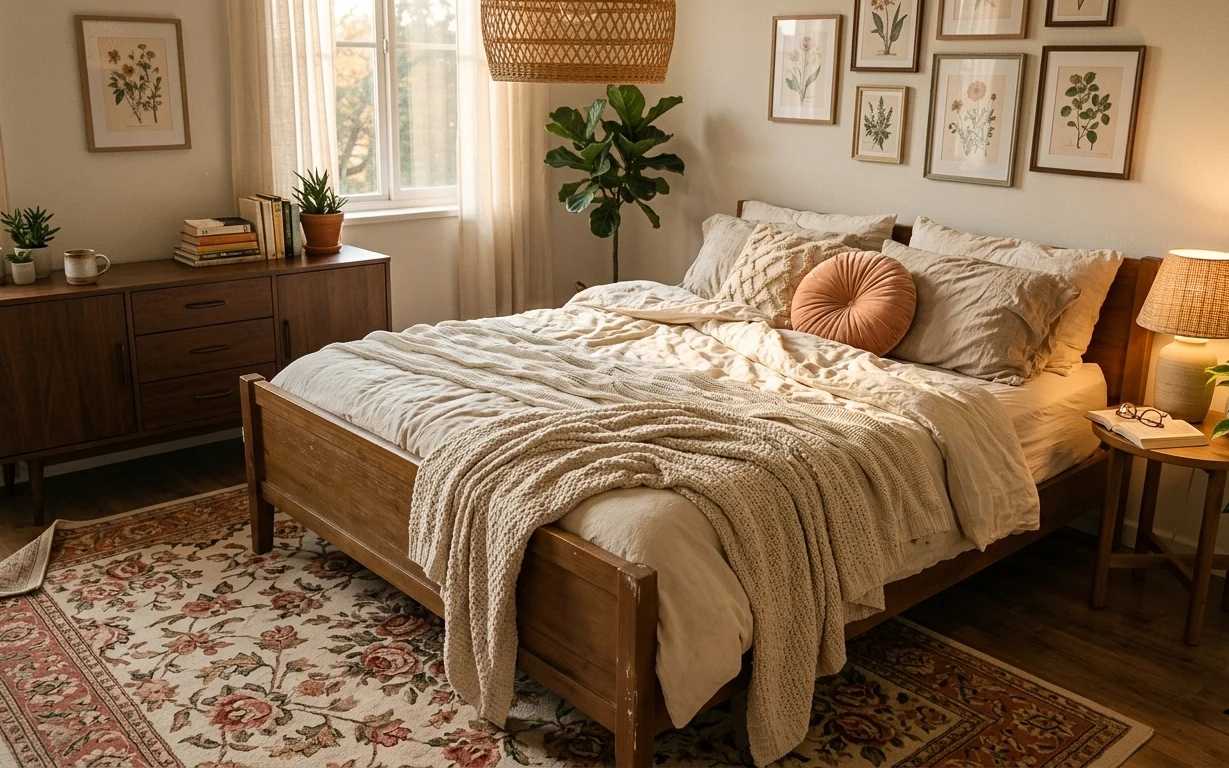
6 renter-friendly ways to style a bed nook for $400
Warm walnut-and-cream bed nook, styled with no-drill swaps you can pack up when your lease ends. For about $400, this refresh layers a vint…
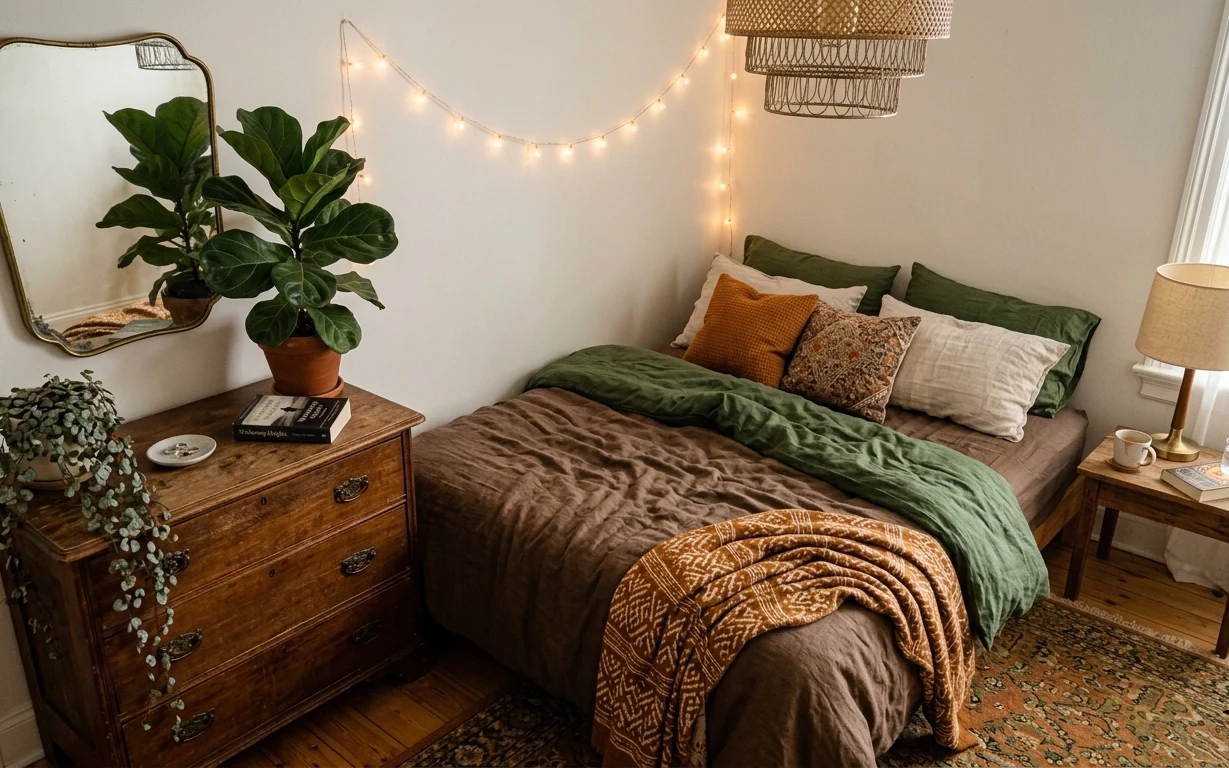
7 no-drill bedroom swaps for a $500 renter-friendly reset
A warm, earthy boho bedroom refresh built from move-friendly swaps: patterned rug, plug-in lamp, string lights, and layered throws. Total D…