- Best for
- After-work hangouts and weekend entertaining
- Weatherproof
- Choose outdoor-rated cushions and use a covered spot for plants
- Difficulty
- Confident DIY
- Cost
- $1,280 total layers (under $1,500 budget)
Why cream-and-walnut patio styling is the outdoor seating nook of 2026
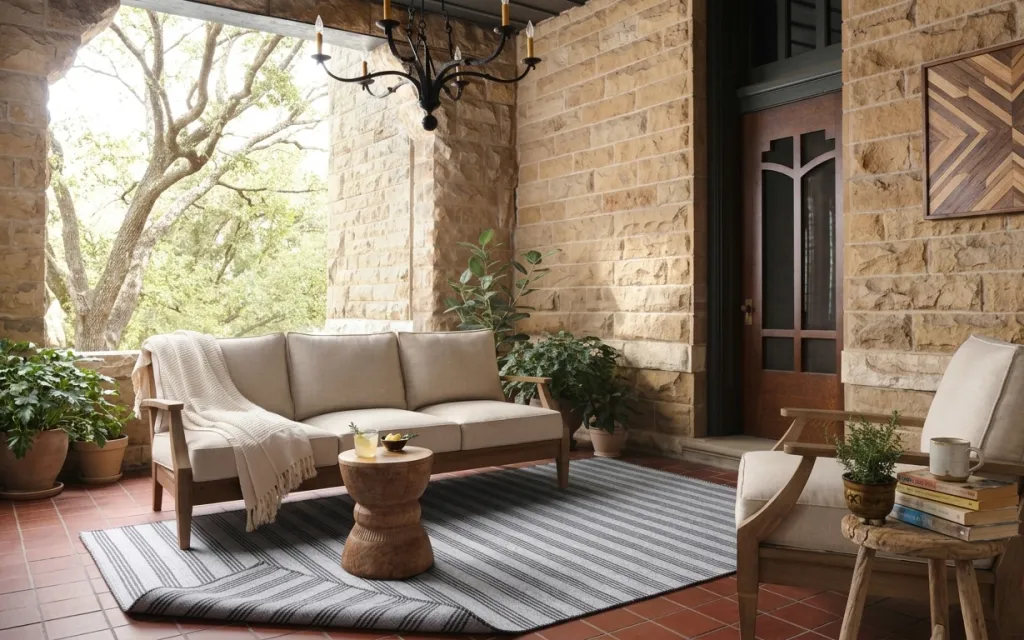
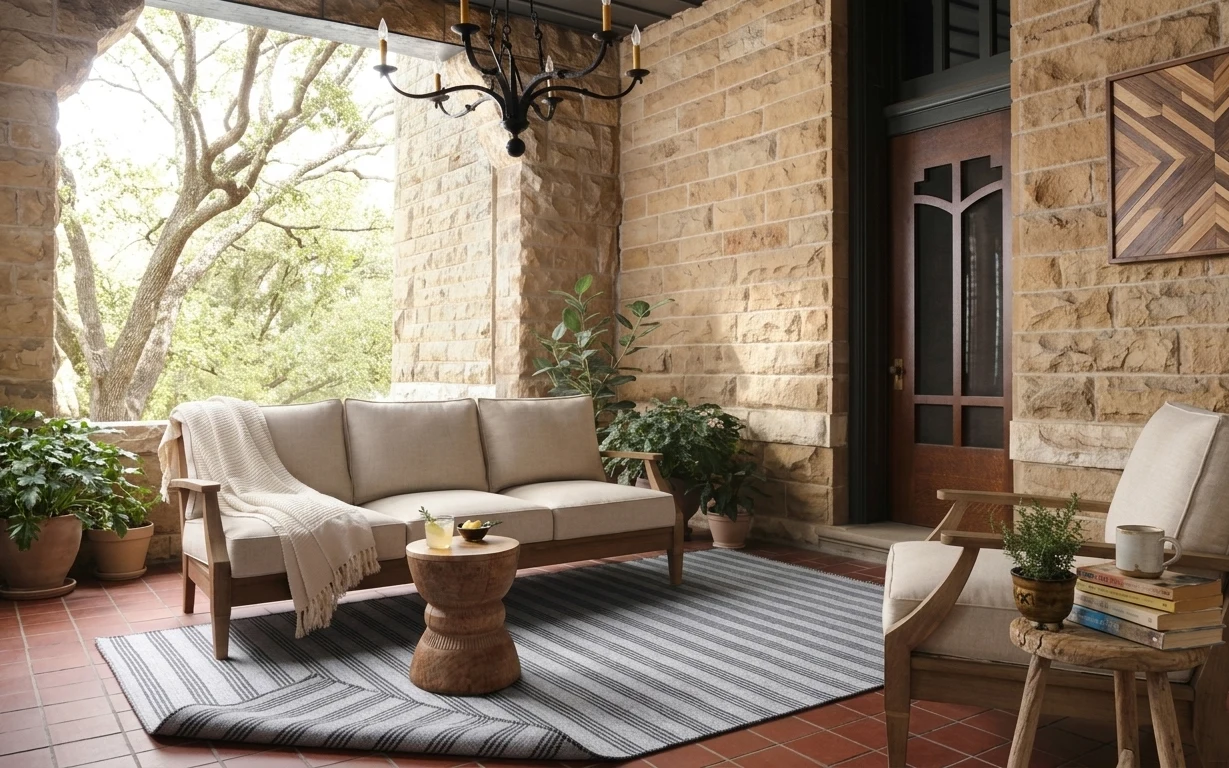
The photo reads like a lived-in living room that happens to sit outdoors: a cream upholstered sofa, a black-and-cream striped area rug on terracotta tile, and warm green plants framed by tan stone. The textures do the heavy lifting—woven rug fibers, soft upholstery, and the matte terracotta planters keep the palette from feeling flat. For homeowners, the satisfying part is choosing the most visible fix first: lay the rug, then layer lighting and seating so the whole corner starts “belonging.”
I’ve made the same mistake twice: I used decorative pillows first and only later realized the rug needed to be darker and busier to hide tile scuffs and mud marks. Here, the stripe pattern acts like built-in cleanup camouflage. The other thing I didn’t expect to matter as much? How the chandelier’s black metal repeats the dark accents in the wall art, so the corner feels designed instead of scattered.
Layer 1 — Striped area rug 5×7, black-and-cream ($200) Grounds the seating
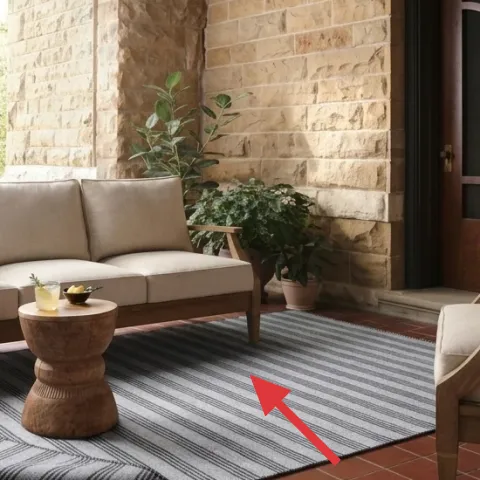
A 5×7 black-and-cream striped rug is the base layer because it gives the sofa, coffee table, and armchair one shared “zone” to sit inside. On terracotta tile, stripes also add a little visual contrast—without turning the floor into noise. The trade-off is that stripes will show white-foot wear less than a solid cream rug, but you’ll still want a rug pad or rug grippers if water ever puddles. Choosing a pattern this clear makes the rest of the styling easier: you can keep upholstery light and let the rug do the pattern work.
Rug first, then furniture placement
Start by centering the rug under the coffee table, not under the sofa—your eye will read the table as the focal point.
Layer 2 — Black wrought-iron chandelier ($120) Adds warm overhead light
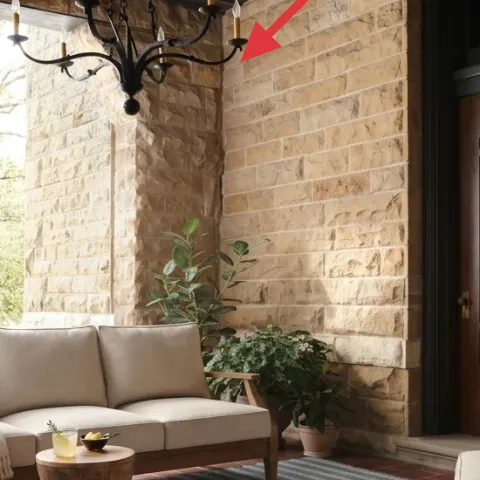
This black wrought-iron chandelier brings the whole corner into “evening mode” with multiple arms and candle-style bulbs, even though the space is technically outdoors. Its dark metal is important: it ties to the dark frame of the geometric wall art and keeps the tan stone from looking overly beige. The trade-off is mounting and electrical safety—if you’re not comfortable with wiring, swap to a plug-in-rated outdoor chandelier or have an electrician handle the hard part. Either way, the visual win is the same: height, shine, and a focal point above the sofa.
Repeat the darks
When you use black metal overhead, keep one more black detail (art frame, lantern, or small accessory) so it doesn’t float.
Layer 3 — Cream upholstered outdoor sofa ($600) Keeps the corner airy
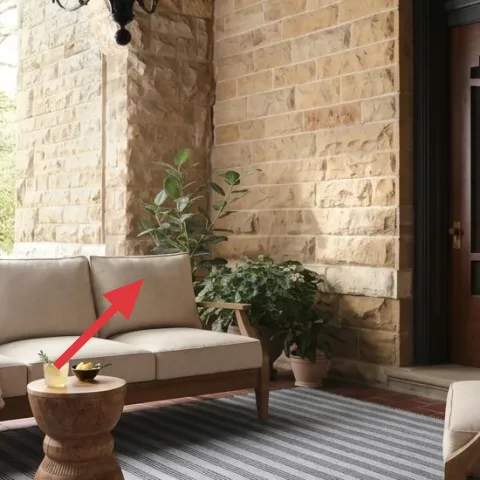
The cream upholstered outdoor sofa is doing more than offering seats—it sets the tone. Against light tan stone, cream reads bright and calm, and it gives you a flexible palette for rugs, plants, and wall art. The reason this works here is scale and softness: the sofa is wide enough to anchor the rug, and the upholstery texture makes the space feel comfortable without adding more pattern. The trade-off is maintenance—cream fabric shows dust faster—so the best move is to use throws or covers and stick with washable outdoor-safe textiles.
Watch for fabric fade outdoors
Sun and reflected heat can fade lighter upholstery. Choose outdoor-rated fabrics if this corner gets direct afternoon light.
Layer 4 — Round carved wooden coffee table ($120) Makes the center feel grounded
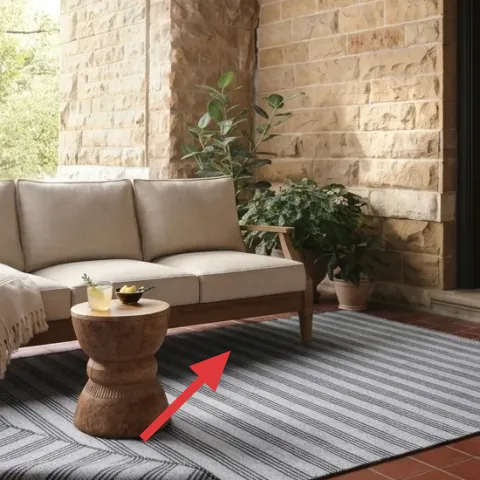
A round carved wooden coffee table is the best “middle” choice because it matches the warm wood tones already present in the armchair and keeps the seating area from feeling boxy. The rounded top also softens sightlines in a room with lots of straight lines (stone brick, door trim, and the wall opening). The trade-off with round tables is they can feel smaller than rectangular ones, so keep styling minimal: a couple of small candles, a tray, or a shallow bowl reads intentional instead of cluttered. When you’re on terracotta tile, the round shape also makes it easier to angle around for chairs and traffic.
Style with one height, not three
Use one taller item (like a candle jar) plus low pieces so the table doesn’t visually tip upward.
Layer 5 — Wood framed armchair with cream seat cushion ($120) Adds a second seating angle
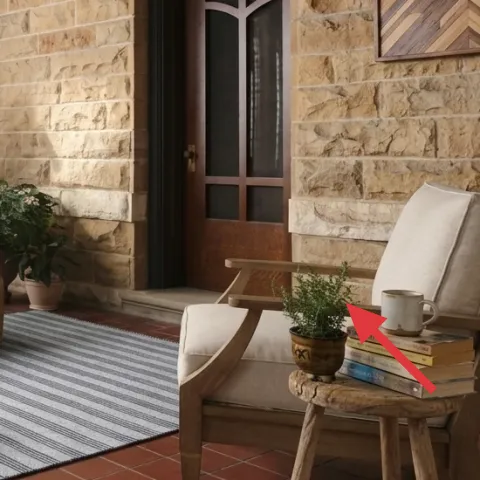
The wood framed armchair with a cream seat cushion completes the “conversation” layout by adding an angled seat that’s separate from the sofa. It’s especially useful when your wall has openings (doorways or niches) because chairs can pull you toward the view instead of blocking it. The trade-off is that you’ll need to anchor it with accessories—here, the small side table and stacked books help the chair feel styled, not dropped into place. Visually, the chair’s wood tone repeats the coffee table, so you get cohesion without matching every element exactly.
Match woods by undertone
Don’t chase exact wood color. Aim for the same warmth—oak/walnut warmth usually looks cohesive.
Layer 6 — Framed geometric wall art with dark frame ($80) Pulls the stone wall into the palette
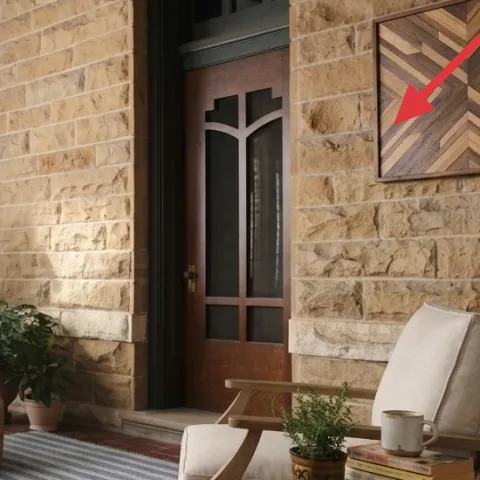
That framed geometric wall art gives the right-side stone wall a clear focal point and adds a graphic pattern that balances the rug stripes. Because the frame is dark and the inner shapes are warm wood tones, it echoes the chandelier metal and the wood furniture without duplicating them. The trade-off is you have to live with the artwork’s style decision for a while—so picking something geometric with warm materials is a safer bet than an all-over trend. If you’re hanging it, measure height from the sofa back so the center aligns with eye level while you’re seated.
Hang by “seated eye” height
Center the art so it lands around eye level when you’re on the sofa, not while standing on the patio.
Layer 7 — Terracotta planter / pot (medium) with leafy plant ($40) Adds life without clutter
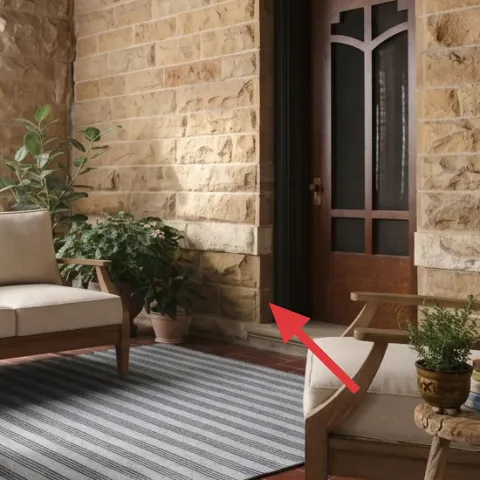
Plants are what make an outdoor seating nook feel like a destination instead of furniture on tile. A medium terracotta planter works because the color sits between the tan stone and the cream upholstery, and terracotta naturally looks at home with wood and woven textures. The trade-off is weight and weather: terracotta can be heavy and can crack if water freezes in winter, so keep it in a sheltered spot if you’re in a freeze-prone climate. Styling-wise, fewer plants with enough negative space looks more intentional than stuffing every corner.
Let the planter breathe
Keep plant clusters to one “main” pot plus one supporting pot, so the seating remains the hero.
The cost, layer by layer
| Layer | Item | Cost |
|---|---|---|
| 1 | Area rug 5×7, black-and-cream | $200 |
| 2 | Plug-in outdoor chandelier (black wrought iron) | $120 |
| 3 | Cream upholstered outdoor sofa | $600 |
| 4 | Round carved wooden coffee table | $120 |
| 5 | Wood framed armchair with cream cushion | $120 |
| 6 | Framed geometric wall art with dark frame | $80 |
| 7 | Medium terracotta planter/pot | $40 |
| Total | $1,280 | |
If you want a cheaper version of this look, swap the sofa for a smaller loveseat or a thrifted outdoor set, choose a 6×9 rug with a similar stripe direction, and pick wall art from a framed print sale rack.
What worked, what didn't (across the whole room)
This corner works because the pattern and texture are balanced: stripes anchor the floor, the sofa stays neutral, and the dark metal overhead repeats the art frame. The plants add warmth and movement without taking over the sightlines. The one thing to be careful with is keeping the styling intentional so the coffee table doesn’t start feeling like storage.
What worked
- The black-and-cream stripe rug creates a defined “room” inside open patio space.
- Warm, multi-arm chandelier lighting makes the seating area feel intentional after dusk.
- Cream upholstery balances the tan stone so the palette stays bright and not heavy.
- The round carved coffee table softens the geometry of brick and wall lines.
- Wood tones repeat across coffee table and armchair, keeping the corner cohesive.
- Geometric wall art brings pattern to the stone wall without adding more furniture.
What didn't
- Cream throw accents can show dirt faster outdoors, especially near foot traffic.
- Terracotta planters can be heavy; moving them for cleaning or weather is annoying.
- Over-accessorizing the coffee table makes the pattern rug feel busier.
- If chandelier bulbs are too bright, the corner can look harsh instead of warm.
- Hanging art too high against stone can disconnect it from the seated eye line.
What we'd skip if we did it again
Skip matching everything. In this nook, the cohesion comes from undertones (warm wood, black accents, cream upholstery), not from buying an identical set. Matching every piece by brand can look stiff against stone textures.
Skip going too small on the rug. A narrow rug makes the sofa look like it’s floating, and it won’t hide tile scuffs the way a 5×7 does. If the patio is tight, choose the biggest size that still leaves a workable walking path.
Skip placing plants randomly. Use one medium terracotta planter as the “main” anchor, then add a smaller supporting pot nearby. That keeps the seating area as the focal point instead of turning the corner into a plant stand.
Frequently asked
How long does this outdoor seating nook refresh take?
Plan on one full weekend. Rug placement and furniture positioning can be done in an hour or two, then you’ll spend the rest of the time on lighting, wall art, and styling. If you’re confident with mounting, chandelier setup is the only part that can stretch a project—otherwise, using a plug-in outdoor-rated chandelier makes timing easier.
If I rent, can I still get this look?
Yes, by focusing on textiles and styling. Swap in a rug that fits the seating zone, add removable outdoor cushions or seat pads, and use peel-and-stick outdoor-safe hooks only for lightweight wall art. For lighting, choose a plug-in fixture so you’re not changing wiring. Keep plants in movable pots so the corner is easy to reset.
What if my patio is smaller than this?
Shrink the footprint, not the idea. Keep the rug as the anchor: choose the largest stripe rug that still allows comfortable walkways. If you can’t fit a coffee table like this, use a smaller round table with the same wood tone. For wall art, pick a slightly narrower frame so it still sits near seated eye level.
What if my patio is bigger?
Use scale to your advantage. Go bigger on the rug so the sofa and chair sit fully inside the pattern boundary. Add one more plant “layer” (one medium, one smaller) rather than more small items everywhere. Consider adding a second small tabletop so drinks and candles have a dedicated home.
Where should I shop for pieces that match this style?
For the rug and upholstery colors, look for black-and-cream stripes in outdoor-safe or UV-rated materials. For the dark metal lighting and framed geometric art, home decor retailers and lighting shops that carry farmhouse or traditional fixtures work well. For wood furniture and coffee tables, thrift stores can be great if the upholstery feels solid and weather-ready.
Biggest mistake to avoid in an outdoor living corner?
Buying neutral pieces without choosing a strong “anchor” first. When the rug is the last thing you pick, the whole palette can drift and end up looking flat against stone or tile. Start with the rug pattern and scale, then add cream upholstery and dark accents so the corner reads like one cohesive space.
More in Outdoor & Patio
How to build an outdoor seating nook for under $1,500
A cream-sofa outdoor seating nook gets grounded with a black-and-cream striped rug, warm lighting, and layered natural textures. This weeke…
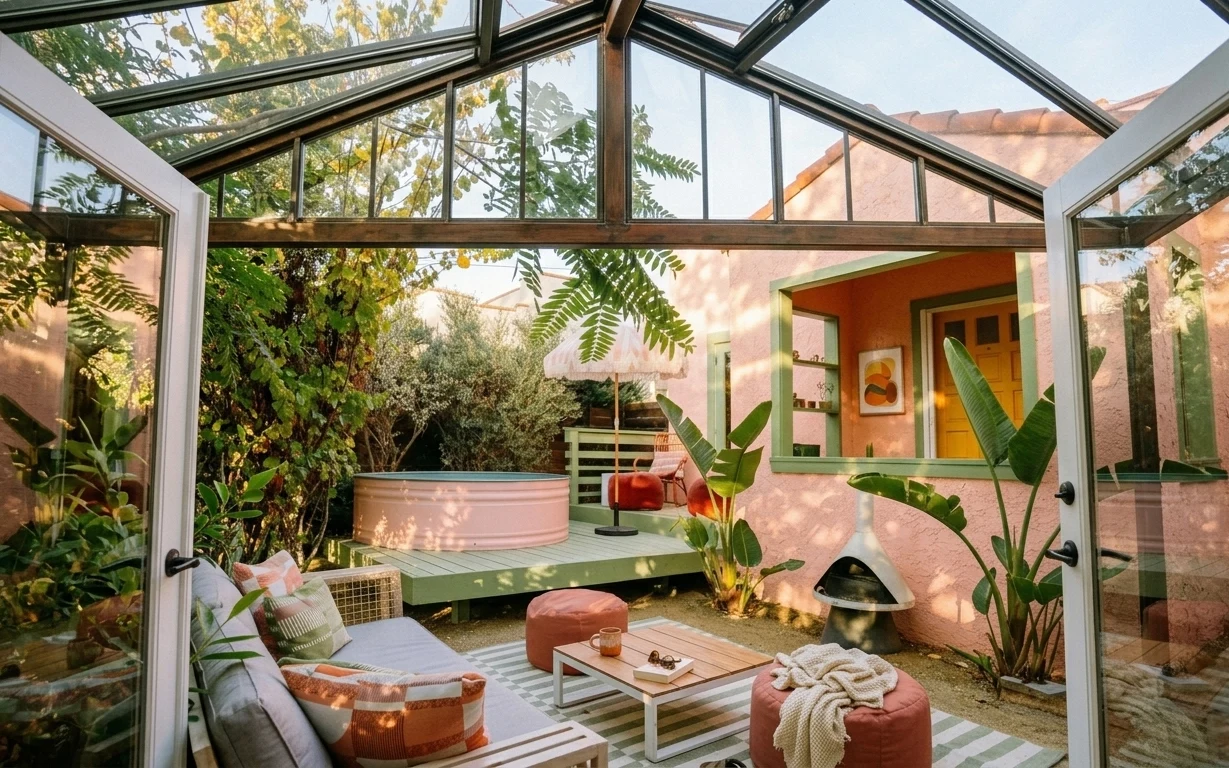
How to style a patio daybed nook for under $700
A patio daybed nook already has great bones—this $700 weekend refresh adds stripes, soft seating layers, and brighter wall art around the d…
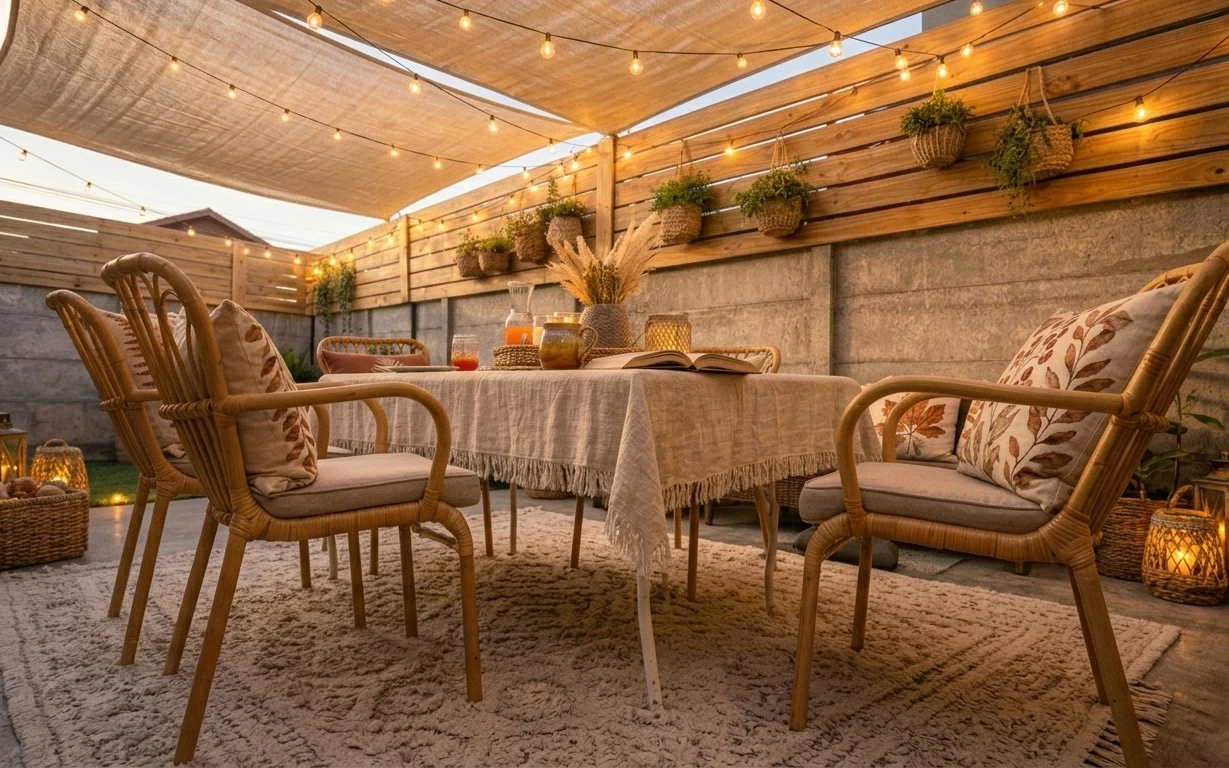
A cozy covered patio seating area for $400
A $400 covered patio seating refresh that’s easy to pack: a neutral area rug, a fringed table runner, one leaf-print pillow, lantern light,…