- Best for
- a patio daybed refresh
- Season
- spring through early fall
- Weatherproof
- use outdoor fabric paint and rinse-clean materials
- Cost
- $680 total / about $700 to plan
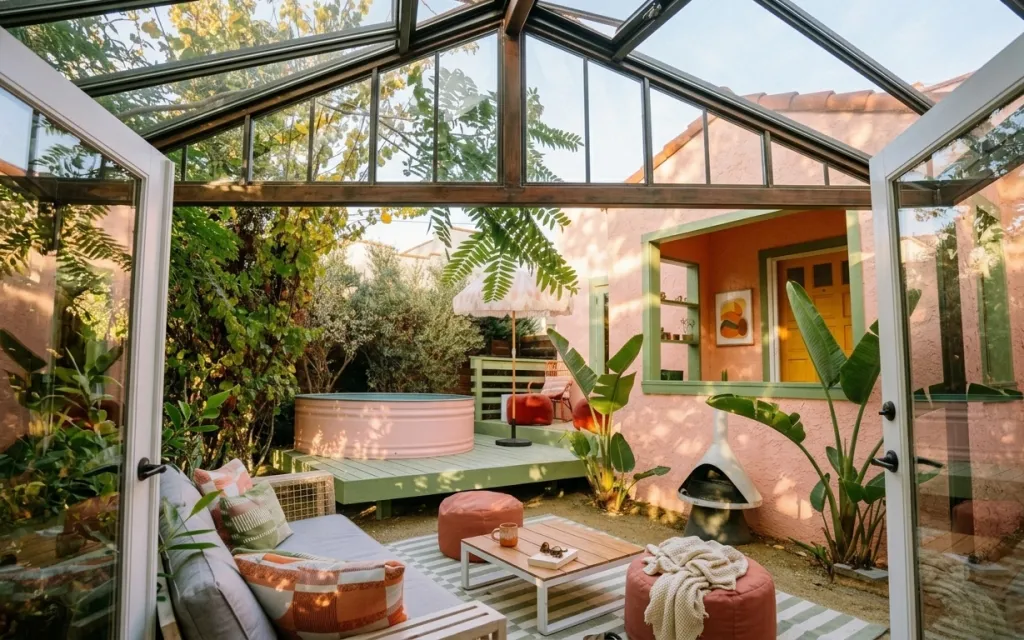
Why terracotta-and-green stripes are the patio daybed nook of 2026
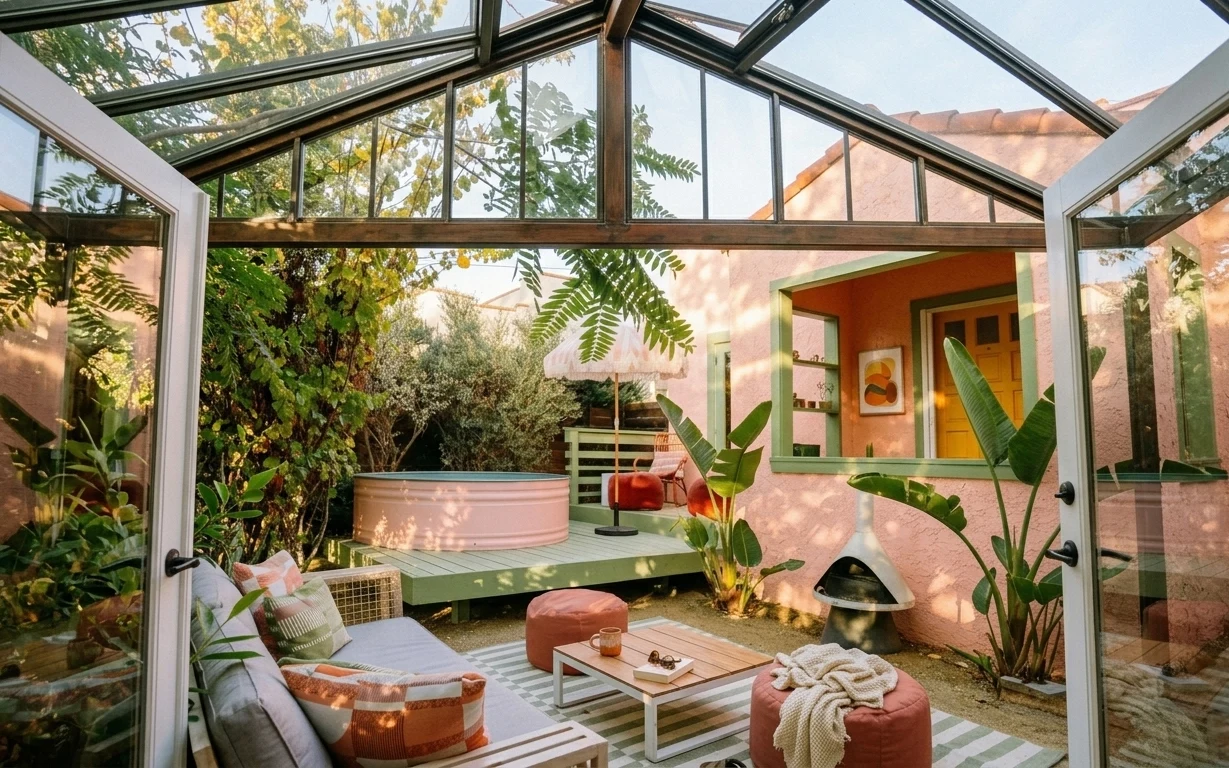
Sunlight hits this outdoor daybed zone for long stretches, so the details matter: the striped outdoor rug or mat grounds the seating area, while the outdoor coffee table gives you a place for a book and a mug. The textured stucco wall and the terracotta-colored planter planter box behind everything are already warm, so the palette stays cohesive when you repeat green and cream through pillows and shade. This is also a weekend-friendly refresh for homeowners because nothing has to be demolished—just swap textiles, paint one shade, and add one framed moment.
I once overthought an outdoor setup and tried to match everything down to the last color. It looked “coordinated” in a bad way—flat. What changed my mind was noticing how repeating one bold pattern (stripes) next to real plants reads as intentional, not matchy. Here, the striped patio umbrella and the striped pillows do the heavy lifting, and the framed wall art keeps the doorway feeling finished.
Layer 1 — striped outdoor rug or mat ($80) Grounds the daybed zone
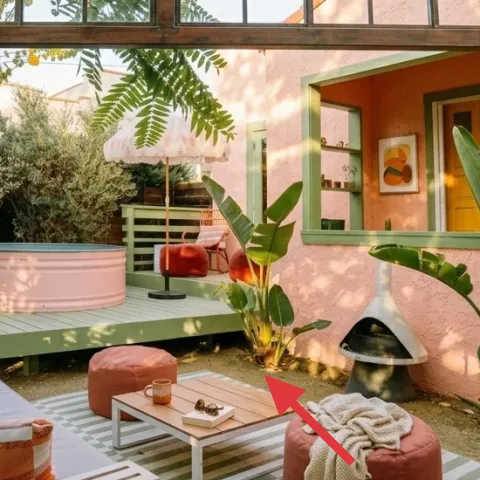
A striped outdoor rug or mat does three jobs at once: it visually defines the seating footprint, it softens hard tile, and it reinforces the striped theme that already shows up in the daybed textiles. In this photo, the rug’s pattern sits under the coffee table and extends toward the daybed cushions, so the whole nook feels “styled,” not accidentally furnished. The trade-off is that a rug like this needs quick rinsing after muddy days, but the payoff is a cleaner shape to the space. If you’re choosing one thing to buy first, make it this.
Put the rug under the table
Even if the daybed barely touches the edges, having the coffee table sit on the rug makes the zone feel complete.
Layer 2 — outdoor daybed with cushions ($250) Creates the lounging layout
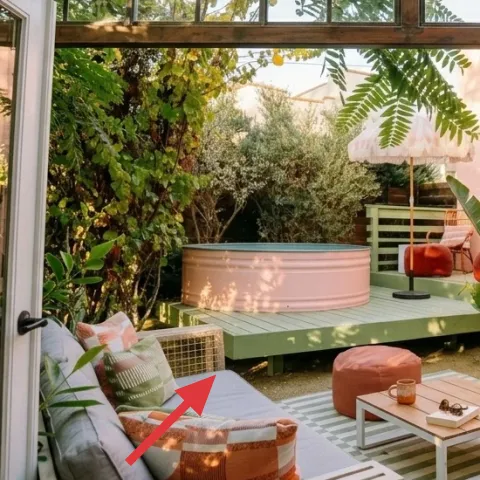
The outdoor daybed with cushions is the anchor piece here, and it’s doing more than providing a place to sit. Its height and spread create a natural “stage” for the framed wall art and plants, which is why the doorway wall feels like part of the seating plan instead of a background. Choosing a daybed with plush, weather-ready cushions also means you can keep the look bright in sun without worrying it’ll look sad by late afternoon. The decision that matters most is cushion color: cream reads relaxed against terracotta and green, while darker cushions can feel heavy outdoors.
Go lighter than you think
Cream cushions show texture and pattern better, which is exactly what you want next to a stucco wall.
Layer 3 — striped outdoor cushion pillows ($30) Pulls the pattern through
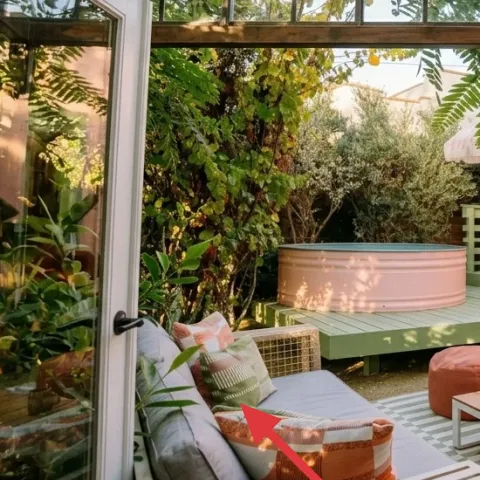
Striped outdoor cushion pillows keep the nook from feeling like a single, one-and-done purchase. Because they’re on the daybed’s most visible surfaces, they repeat the stripe language already coming from the umbrella, rug, and table styling. This is the option I’d pick over adding yet another solid pillow color—stripes add rhythm and make the space feel designed even when you’re keeping the palette tight. The trade-off is that stripe direction matters: aim for horizontal bands to match the rug’s movement, so the patterns don’t “fight” when you’re looking from the doorway.
Don’t mix stripes too many ways
One stripe scale is usually enough; add texture with throws or plants instead of adding a second stripe thickness.
Layer 4 — outdoor coffee table ($60) Gives you a styling surface
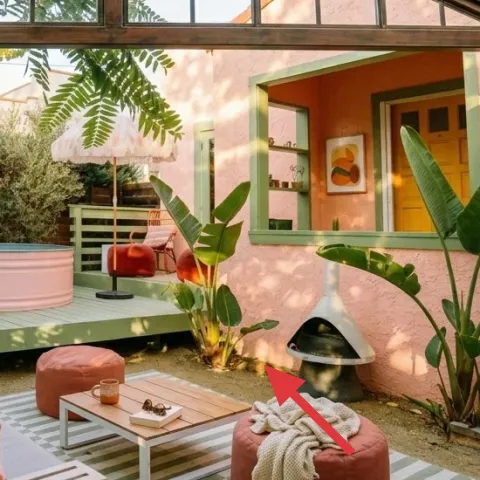
The outdoor coffee table is small, but it’s where the nook becomes functional. Its top gives you a place for a couple of objects that read well in daylight: a book, a small tray, and a warm accessory that ties into terracotta. Visually, the table also breaks up the daybed’s long shape and helps the eye move from cushions to plants. A key choice here is the finish—light surfaces keep everything feeling airy against green leaves and bright rug stripes. If you try to do this with a dark metal table, it can look visually heavy under afternoon sun.
Style with one height and two flats
Use one taller item (like a plant or utensil) and keep the rest flatter to avoid clutter on a small table.
Layer 5 — painted striped patio umbrella ($100) Makes the shade look intentional
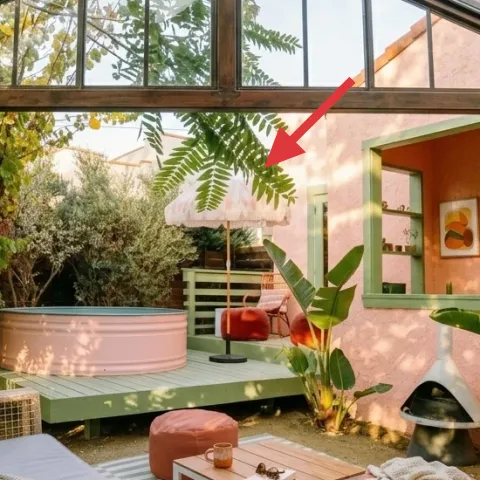
In this nook, the striped patio umbrella reads like a ceiling panel—so its color and stripe spacing affect everything around it. Repainting it is a faster way to “correct” the palette than replacing all the cushions and textiles, especially when you already love the terracotta-and-cream direction. The umbrella is also a practical focal point: you can keep the plants as-is and still get a noticeably fresher look by evening out the umbrella’s stripes. The trade-off is drying time; outdoor fabric paint can take longer in humid weather, so plan the weekend timeline accordingly.
Make it instead of buying it
Paint a striped patio umbrella to match your rug-and-cushion stripe direction, so the whole nook feels coordinated without replacing textiles.
Materials
- Outdoor fabric paint (cream tone) — 1 small can — paint store — $20
- Outdoor fabric paint (terracotta tone) — 1 small can — paint store — $18
- Painter’s tape (1–2 rolls) — 2-inch width — hardware store — $12
- Foam brush set or small roller — set — art store — $8
- Drop cloths or plastic sheeting — 1 roll — hardware store — $7
Steps
- Set the umbrella on a protected surface and remove any loose fabric pieces.
- Clean the fabric so paint bonds well, then let it fully dry.
- Tape along the existing stripe edges to create crisp bands.
- Base-coat the cream areas with fabric paint using a foam brush.
- Let the first coat dry per label instructions, then check stripe alignment.
- Paint the terracotta bands over the taped sections.
- Let the umbrella dry fully before removing tape.
- Allow full cure time before folding or closing the umbrella.
Total DIY cost: $65 — saves about $35 over buying.
Layer 6 — framed wall art with a circular design ($80) Gives the doorway a focal point
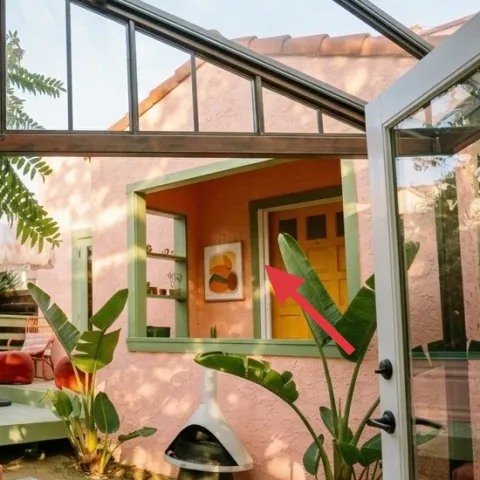
Framed wall art with a circular design is doing the quiet work of making the interior wall feel part of the outdoor scene. Because it’s visible between plants and seating, the art becomes a “landing zone” for your eye—especially when the umbrella stripes frame it from above. This layer is worth it because even perfect cushions can look scattered when there’s no finished focal point on the wall. The trade-off is that placement matters: hang it at a height that stays readable from the daybed, not from standing height in the hallway. If the frame is too low, it competes with plant leaves.
Match the room’s warm tones
Choose wall art with at least one terracotta or cream element so it doesn’t fight the plants.
Layer 7 — large potted plant with broad green leaves ($80) Adds life and height
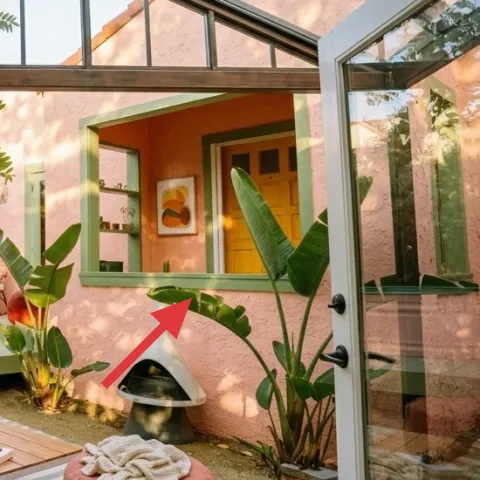
A large potted plant with broad green leaves adds the vertical softness that a daybed and coffee table alone can’t provide. In this photo, the plants sit close to the wall and on the patio edge, so they visually connect the doorway and the seating. That height is what keeps the nook from feeling like “just furniture in a courtyard.” It’s also the easiest way to make the space feel cared for without adding more patterns. The trade-off is maintenance—these plants want consistent watering in sun—but the color payoff is instant every time you walk outside.
Cluster by volume, not by variety
Use a big-leaf plant for structure, then add smaller greenery to fill the gaps.
The cost, layer by layer
| Layer | Item | Cost |
|---|---|---|
| 1 | Striped outdoor rug or mat (5×7) | $80 |
| 2 | Outdoor daybed with cushions | $250 |
| 3 | Striped outdoor cushion pillows (set) | $30 |
| 4 | Outdoor coffee table | $60 |
| 5 | Striped patio umbrella | $100 |
| 6 | Framed wall art with circular design | $80 |
| 7 | Large potted plant with broad green leaves | $80 |
| Total | $680 | |
If you want a cheaper variant, prioritize layers 1, 3, and 6: swap to a smaller outdoor mat, pick two patterned pillow covers, and choose a single framed print instead of larger wall pieces. Keep the plants but refresh one grouping with a new pot so the height still reads the same.
What worked, what didn't (across the whole room)
The best part of this setup is how the stripe theme repeats across the rug, pillows, and umbrella, which makes the whole patio feel planned instead of random. The plants and the framed wall art also do real work by adding height and a clear focal point near the doorway.
What worked
- The striped outdoor rug or mat visually defines the daybed zone on hard tile.
- Cushion pillows with stripes echo the umbrella pattern for a consistent rhythm.
- The outdoor coffee table creates a practical styling surface for small objects.
- The framed wall art with a circular design anchors the doorway and prevents visual clutter.
- Large potted plants add height so the nook feels lush, not flat.
- Repeating terracotta and cream keeps the look warm even in bright daylight.
What didn't
- Too many different stripe scales can make pillows and the rug feel like they’re competing.
- If the umbrella stripes don’t match the rug direction, the whole palette reads busier than intended.
- A dark coffee table can feel heavy next to bright plants and patterned textiles.
- Wall art placed too low gets visually swallowed by plant leaves and cushions.
- Using only solids (no stripes) can flatten the zone and hide the daybed’s structure.
What we'd skip if we did it again
Skip a “matchy” shopping spree where every pillow and outdoor fabric comes from the same set. The point of this nook is repetition (stripes and warm tones), not identity. Mix one bold pattern with greenery so the look stays layered and lived-in instead of theme-park perfect.
Skip replacing the daybed first. Even if the daybed is the biggest piece, the fastest visual upgrades happen with the striped outdoor rug or mat, the striped outdoor cushion pillows, and the umbrella shade.
Skip tiny wall art that’s hard to see from the daybed. The framed wall art with a circular design is most helpful when it’s readable between plants, so size and placement beat adding more pieces.
Frequently asked
How long does this patio daybed nook refresh take?
Most of the work is quick: swapping the striped outdoor rug or mat, adding striped outdoor cushion pillows, and styling the outdoor coffee table can be done in a few hours. The one timing variable is the umbrella paint. Plan an extra day for drying and a full cure window before closing it. If weather is humid, stretching that paint time is worth it.
What if I’m renting and can’t paint the umbrella?
Go with a slipcover approach: keep the umbrella as-is and focus money on the striped outdoor rug or mat, pillows, and potted plants. You can also refresh the look by adding framed wall art with a similar terracotta-and-cream palette. The goal is the same—repeat stripes and warm tones—without permanent changes.
My patio is smaller—what should I scale down?
Keep the striped outdoor rug or mat, but choose a smaller size and center it under the outdoor coffee table first. Use fewer striped outdoor cushion pillows so the pattern doesn’t feel crowded. For plants, prioritize one larger potted plant for height plus one smaller potted plant near the daybed, rather than multiple mid-size pots.
If my patio gets less sun, will these colors still work?
Yes. Cream and terracotta show up best in softer light, and the striped patio umbrella adds contrast even when the sun is indirect. If the space feels dim, pick slightly higher-contrast stripe colors on the umbrella and keep the framed wall art readable (not too close to shadowed plant leaves).
Where should I shop differently to get the look for less?
For the rug and pillows, look for outdoor-rated versions at big-box home stores and summer sales. For the framed wall art, search for prints in basic frames rather than boutique labels. The plants are often where costs vary most—buy one larger potted plant for structure instead of several smaller ones.
Biggest mistake on patio daybed setups like this?
Overdoing the pattern. Stripes are doing the coordinating work here—rug, pillows, and umbrella repeat the theme. If every textile has a different print, the nook stops looking styled and starts looking busy. Keep one repeating pattern and add texture with greenery, throws, or warm-toned accessories.
More in Outdoor & Patio
How to style a patio daybed nook for under $700
A patio daybed nook already has great bones—this $700 weekend refresh adds stripes, soft seating layers, and brighter wall art around the d…
A cozy covered patio seating area for $400
A $400 covered patio seating refresh that’s easy to pack: a neutral area rug, a fringed table runner, one leaf-print pillow, lantern light,…
7 porch upgrades for a $600 renter-friendly refresh
Turn a sunlit porch seating area into a more polished, move-with-you setup with $560 worth of renter-friendly swaps (plus one DIY). This pl…