- Best for
- Adding comfort around fixed tile
- Cost
- ≈ $333 total
- Time
- 1–2 hours
- Renter-safe
- No-drill styling
Why warm terracotta-and-pink accents are the shower bench nook of 2026
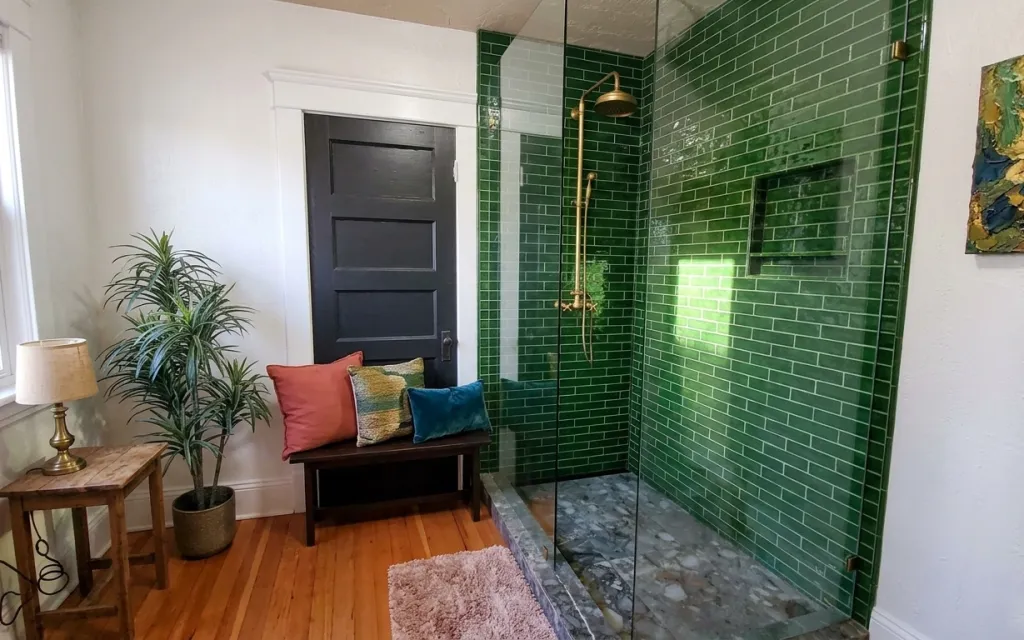
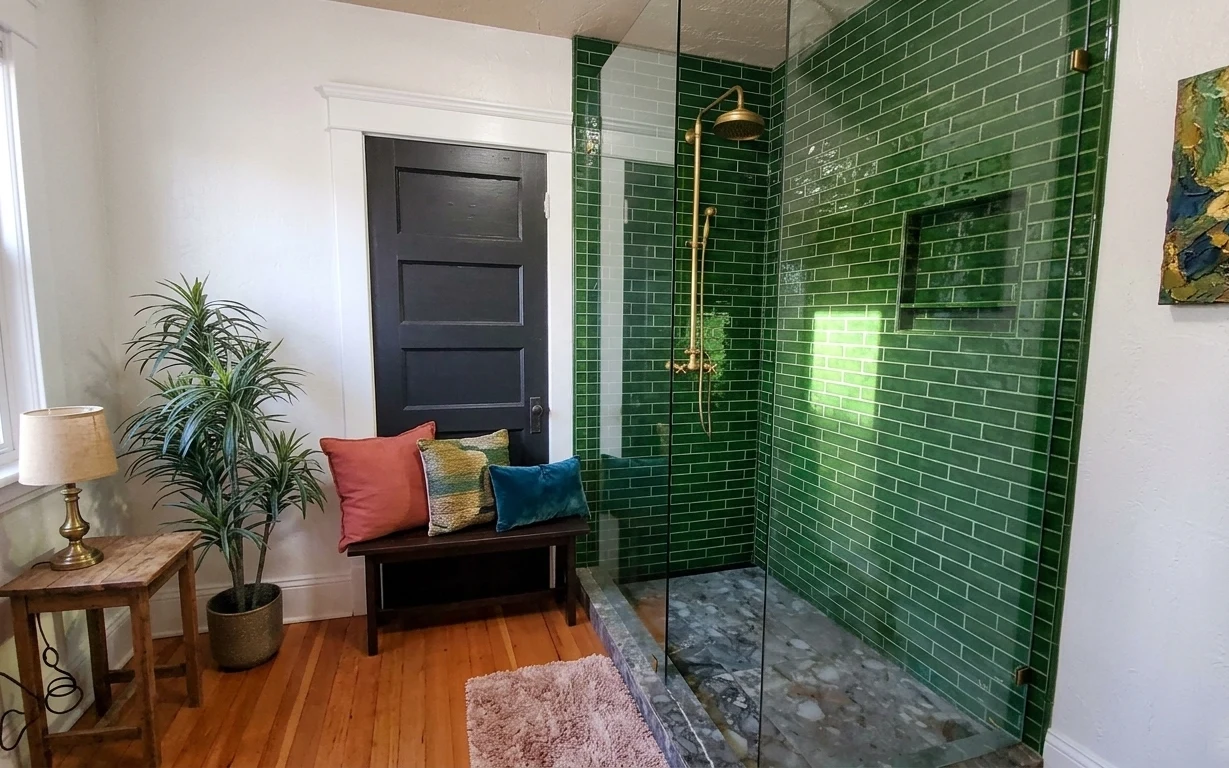
The easiest way I’ve found to make a bathroom feel like “yours” is to stop fighting the tile and start styling around it. In this photo, the green tile reads bold, so the pink bath rug adds a fuzzy, almost spa-like landing, while the wood bench and side table keep everything grounded. The two pillow textures (one soft solid orange, one cool teal) also add color without committing to any permanent changes. Because the pieces are moveable—nothing here depends on drilling—the look is realistic for shared housing.
I used to try to “fix” every bathroom with more wall color, then I’d regret it the moment I moved. What changed for me was focusing on removable comfort: rugs, freestanding lighting, and throw pillows that can travel. I also learned to repeat the same two or three materials—here it’s wood, plush textiles, and art—so the room looks intentional even with fixed surfaces doing the heavy lifting.
Layer 1 — Pink bath rug ($80) Step-on softness for wet floors
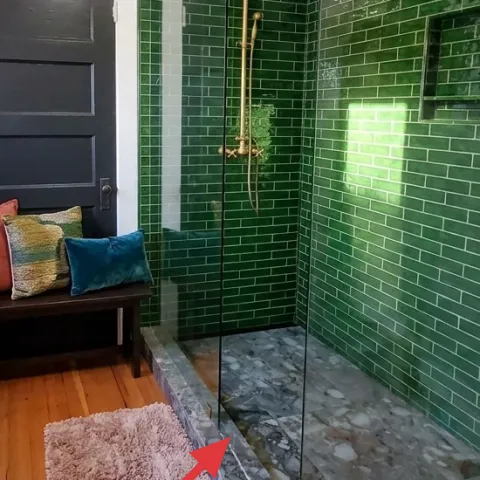
A pink bath rug is the fastest mood reset because your feet feel it before your eyes do. The pile in the hero image looks plush and slightly textured, which helps make the whole shower bench area feel cushioned instead of cold. Picking a color with a little warmth (like the dusty pink here) matters against the green tile; cool-gray options can make the bathroom feel clinical. The trade-off: rugs show water marks and lint more easily, so aim for a rug that’s machine-washable if your shared-house schedule is chaotic.
Choose a washable weave
If the rug doesn’t wash easily, it’ll start looking “tired” fast in a shared bathroom.
Layer 2 — Dark wood shower bench ($95) Heat where the tile is cold
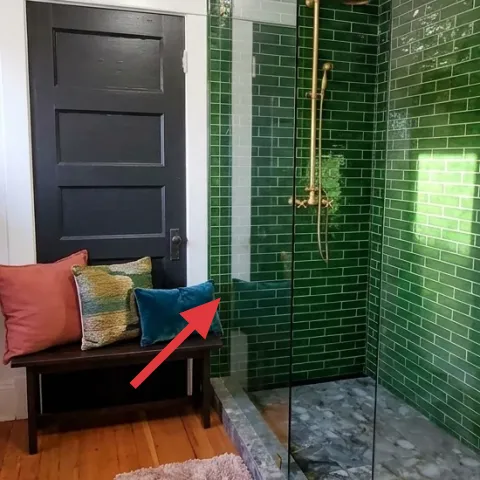
This dark wood bench anchors the whole scene because it brings a human, matte texture into a space dominated by glossy tile and glass. It also gives you a practical surface for styling—without needing any wall changes—so you can keep the look consistent across moves. If you went with a metal bench instead, the area would read harsher and darker against the green. The trade-off you accept with wood: keep it dry around the edges and choose a finish that can handle occasional splashes.
Repeat the wood elsewhere
Wood shown in more than one spot makes the color story feel deliberate instead of random.
Layer 3 — Orange square decorative pillow ($30) Velvety warmth on the bench
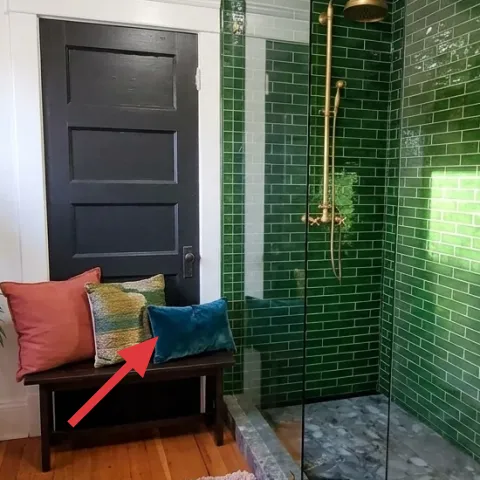
The orange pillow adds a warm, slightly earthy pop right on the bench, which is where your eye lands first. It works especially well next to green tile because orange sits opposite green on the color wheel, so the contrast feels lively rather than muddy. A pillow also stays renter-friendly: it’s light, packable, and you can swap it for a different cover next season without replacing furniture. The trade-off: accents like this can look too saturated in bright daylight, so choose a dusty orange (more clay, less pumpkin) to keep it balanced.
Skip neon shades
Neon orange against strong green tile reads costume-y and gets tiring after a few weeks.
Layer 4 — Teal square decorative pillow ($18) A cool counterpoint
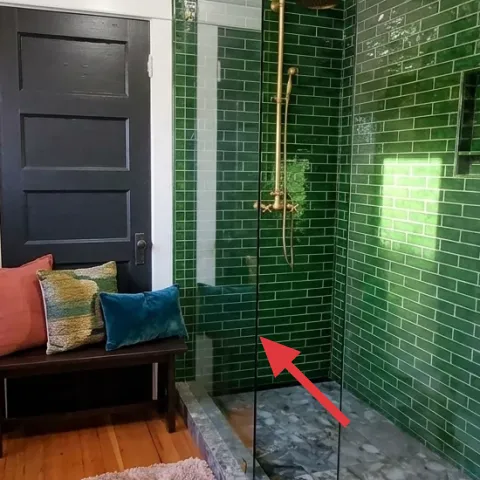
The teal pillow is the “calm” partner to the orange one—cool enough to soften the boldness of the tile, but saturated enough to stay visible. Visually, it also breaks up the bench’s dark wood so the whole vignette feels lighter. If the bench only had one pillow color, the look would feel flatter; adding a second accent color creates depth without adding clutter. The trade-off is sizing: keep pillow covers square and similar in scale so the bench styling doesn’t look lopsided.
Stack colors, not patterns
When the tile is already patterned, solid pillows let the colors do the work.
Layer 5 — Wood side table ($60) A landing spot for everyday rituals
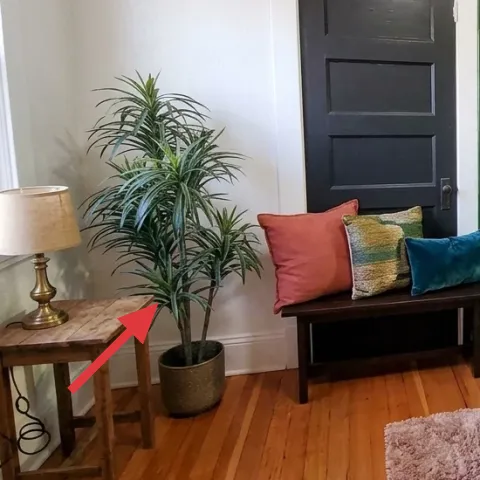
A small wood side table extends the “wood warmth” beyond the bench and creates a place for the kind of things that disappear in a shared bathroom—towels, skincare, a candle, or simply a tray. In the hero image, the table’s light natural wood balances the darker bench and prevents the corner from feeling heavy. The trade-off: side tables take up floor footprint, so choose one with a compact top and consider how it clears the shower path. For move-friendly decorating, prioritize a table that’s under about 30 inches tall and easy to wrap in a blanket for transport.
Keep it freestanding
Freestanding tables are the easiest to move when the next lease starts.
Layer 6 — Potted tall plant ($25) Soft vertical life in a tight corner
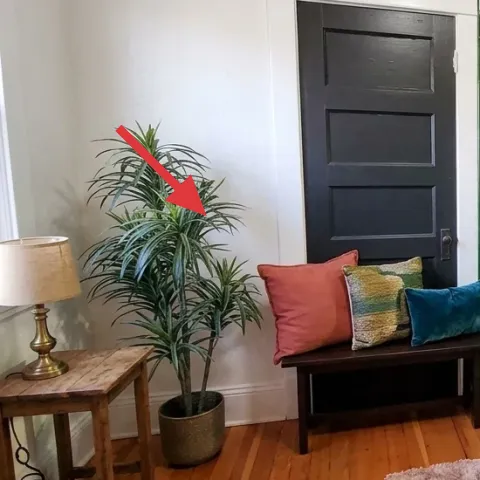
A potted tall plant brings shape and softness right where tile and glass can feel too rigid. It also makes the corner read “designed” instead of just decorated, because the greenery gives you a vertical rhythm that matches the shower height. In this photo, the plant’s long leaves add a little movement, which makes the whole nook feel less static. The trade-off: plants need light and occasional watering, so choose a spot that gets window brightness and use a pot with a saucer if the floor is prone to splashes.
Pick a plant that tolerates bathroom humidity
If it’s a steamy bathroom, go for something sturdy that won’t get crispy.
Layer 7 — Framed abstract wall art ($25) Color on the wall, not the grout
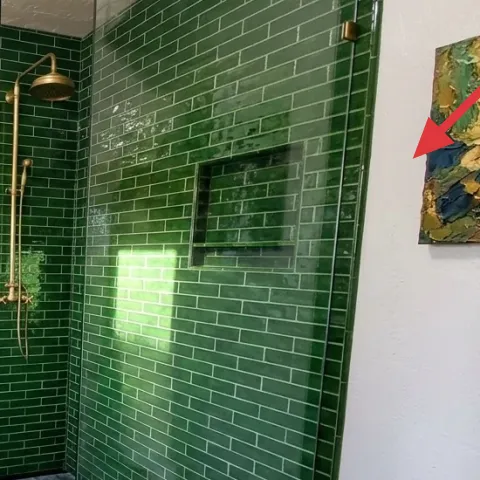
Framed abstract wall art helps the room feel finished without touching the fixed tile. The hero image’s artwork includes blues and warm tones, echoing the teal pillow and the orange accent so everything feels connected. Choosing a smaller print is key in a bathroom: it doesn’t compete with the shower glass lines, and it’s easy to pack into a flat box. The trade-off is placement—avoid mounting hardware that could damage walls. Stick to removable hanging options that won’t pull paint when you leave.
Match one color, not all of them
Pull a single note (like teal or warm orange) from the art so it feels intentional.
The cost, layer by layer
| Layer | Item | Cost |
|---|---|---|
| 1 | Pink bath rug | $80 |
| 2 | Dark wood shower bench | $95 |
| 3 | Orange square decorative pillow | $30 |
| 4 | Teal square decorative pillow | $18 |
| 5 | Wood side table | $60 |
| 6 | Potted tall plant | $25 |
| 7 | Framed abstract wall art | $25 |
| Total | $333 | |
A cheaper variant is to swap the side table and one pillow color: choose a smaller lamp-free surface (or a thrifted plant stand) and keep just one accent pillow with the rug for the main color hit.
What worked, what didn't (across the whole room)
This nook succeeds because it repeats warm wood and soft textiles around an otherwise fixed, bold tile backdrop. The color story stays coherent: pink and orange warm up the space, while teal cools it down.
What worked
- The pink bath rug makes the shower zone feel intentionally cushioned instead of cold and hard.
- Dark wood furniture adds warmth that balances the glossy tile and reflective glass.
- Two pillow colors (orange plus teal) create contrast without introducing competing patterns.
- The plant gives vertical softness, so the corner doesn’t feel boxy.
- Framed art pulls color up into eye level, so the room feels finished.
- Every listed element can pack and move with the lease.
What didn't
- Any rug that isn’t washable will look worn fast in a shared bathroom.
- If one accent pillow is a bright orange, it can fight the tile instead of partnering with it.
- A side table that’s too tall blocks the bench styling and makes the nook feel cramped.
- Hanging wall art with the wrong method can damage plaster or leave residue when you move.
- A plant that can’t handle bathroom conditions will quickly look unhappy.
What we'd skip if we did it again
Skip anything that relies on wall changes, like permanent mounting or tricky hanging methods. Bathrooms are where you’ll most regret hardware choices, especially in shared housing where you move before you “make it permanent.” Stick to freestanding pieces and removable hanging options that come off cleanly.
Skip matching-too-perfect decor sets. When the tile is already a statement, trying to buy a coordinated “bathroom kit” makes the room feel generic. Better to mix one warmth (wood), one soft landing (rug), and two accent colors (orange and teal) in smaller, movable pieces.
Skip oversized decor in this corner layout. A tall, heavy table or a too-big frame can crowd the shower glass lines and make the nook feel cramped. Keep scale tight so the bench, pillows, and rug stay the star trio.
Frequently asked
How long does this shower bench nook refresh take?
Most of this look is plug-and-play: place the rug, set the bench pillows, and position the side table, plant, and framed abstract art. Plan on 30–60 minutes for layout and styling, plus extra time if you’re swapping pillow colors or testing a wall-art placement method. If you’re shopping for one missing piece (like the plant or the art), the main time cost is usually deciding what color reads best against the green tile.
What makes this renter-friendly if the bathroom has fixed tile?
The key is that none of the changes depend on repainting, replacing fixtures, or permanent mounting. The rug, side table, bench, pillows, plant, and framed art are all moveable and can be boxed up when the next lease starts. Even the wall art is chosen for a removable approach, so you’re not betting on a specific landlord setup staying the same.
If my space is smaller, how do I scale it down?
Keep the color story, reduce the footprint. Choose a smaller rug size that still covers the step area, use one accent pillow instead of two, and go for a plant that’s tall but slim. For wall art, opt for a slightly smaller framed abstract print rather than moving it higher or larger. The goal is to preserve the “soft landing + warm wood anchor” without crowding the shower glass line.
If I want it brighter, what should I change first?
Start with textiles. Swap the pink rug for a lighter shade and pick a more saturated teal pillow (or add a second teal accent in the pillow rotation). Then consider moving the plant or choosing a plant with lighter leaves so the corner feels less visually heavy. The green tile will stay bold, so brightness comes from soft goods and light colors—not from trying to cover the tile.
Where can I shop for the pieces that match this look without overspending?
For the pink bath rug and pillow covers, look at home goods retailers and resale apps that let you filter for washable textiles and square pillow sizes. The wood side table and framed abstract art are often easiest to find locally or online secondhand, especially if you’re flexible on wood tone. For the plant, a basic hardy option from a plant shop works—just make sure it tolerates indoor bathroom humidity.
What’s the biggest mistake people make in a bathroom like this?
Trying to compete with the tile by adding too many competing colors or too many patterns. Green tile already does the heavy lifting, so your job is to soften the experience with plush textiles and repeatable materials (wood + framed art + a couple of accent colors). When rugs or pillows are overly neon or too many patterns appear at once, the whole corner starts to feel busy instead of calming.
More in Bathroom
How to soften a shower bench nook for $400
A shower bench nook refresh that works with fixed tile: add a plush pink rug, warm wood, and two accent pillows for a cleaner, calmer look.…
Under $1,000: a modern farmhouse bathroom vanity refresh
A warm off-white bathroom vanity wall can look polished without a renovation. This modern farmhouse refresh uses 7 visible upgrades—from a …
What $350 buys: a plant-filled renter-friendly bathroom refresh
A plant-filled bathroom refresh for renters built around no-drill swaps. Focused on a patterned bath rug, stacked towels, and renter-safe p…