- Best for
- Dining-nook balance: rug + linen + plants
- Cost
- About $400
- Difficulty
- Easy
- Time
- 1 weekend
Why warm wood-and-green table styling is the dining nook of 2026
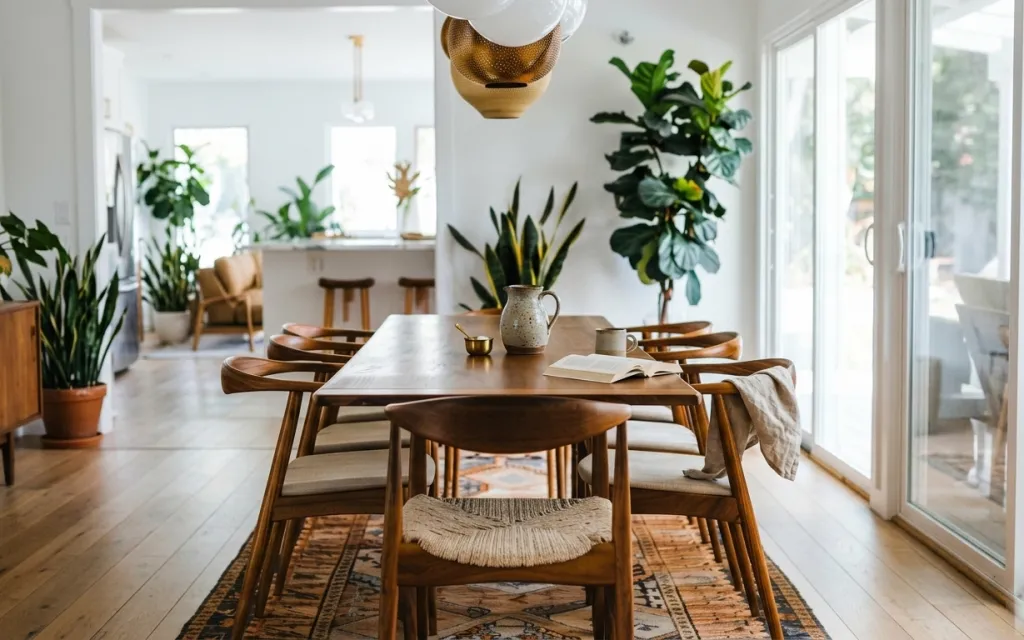
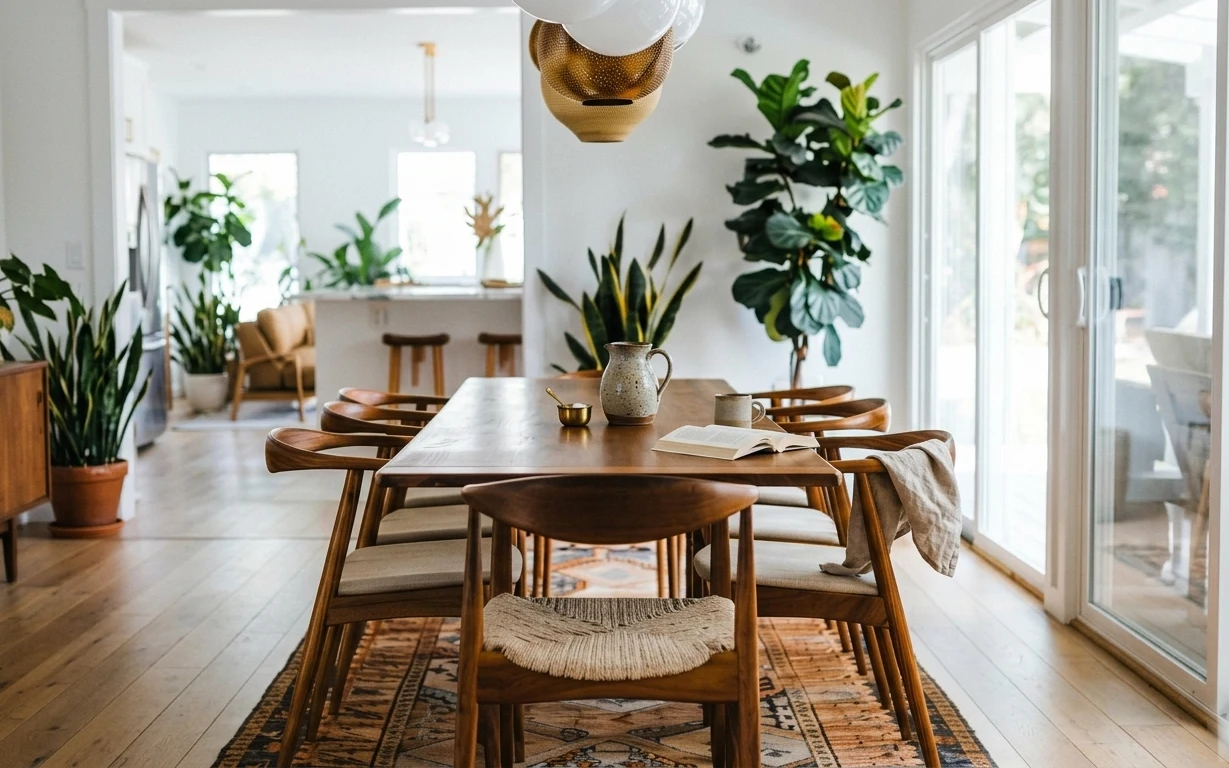
The easiest way to copy this look is to treat the table like a still life and the floor like a foundation. In the photo, you can see the patterned area rug grounding the whole setup, plus a light-colored table runner/placemat that keeps the surface from feeling bare. The ceramic pitcher and brass dish add small shine without going “full glam,” and the linen throw brings softness to the wood chairs. It also helps that the plants—especially the tall one near the windows—pull the palette toward green instead of gray.
I’ve made the mistake of buying “pretty” décor that doesn’t actually help the room read as intentional. The shift for me was choosing pieces that repeat texture: linen on the table and chair, warm ceramics in the center, and the same wood tone in the seating. Once those textures repeat, you can keep the styling simple and still get that calm, put-together feel—without permission from your landlord.
Layer 1 — patterned area rug 5×7 (renter-friendly) ($180) Underfoot grounding that hides daily life
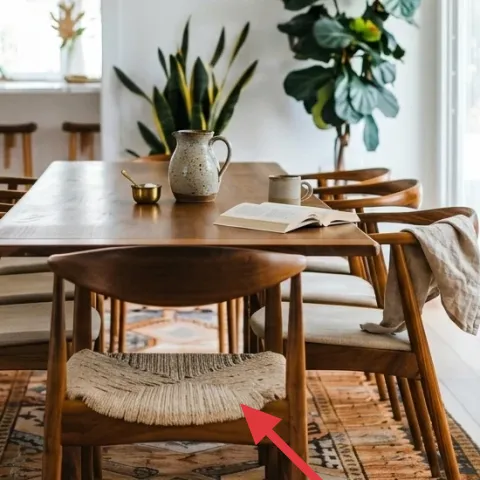
The rug is doing more work than it looks like it’s doing. It’s a patterned, flatwoven-style area rug that sits under the dining table and chairs, visually anchoring the whole zone on the light wood floors. Choosing a rug with multiple tones (rather than solid cream) is the renter move here because it masks the little scuffs and crumbs that happen at the table. The trade-off: you give up “high-pile” softness, but you gain practicality and a cleaner look under chairs. Size matters too—this is the kind of 5×7 that fits a dining nook without swallowing the walkway.
Pattern choice
Pick a rug with both light and dark threads so it reads rich in daylight but doesn’t show stains the first week.
Layer 2 — linen table runner/placemat on dining table ($25) Adds a light, textured line
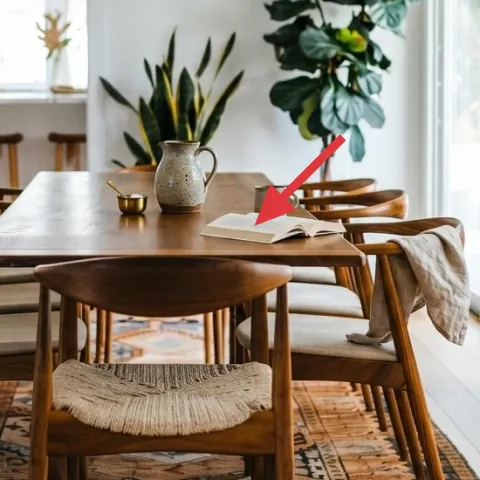
A light linen runner/placemat is the simplest way to make a dining table feel styled instead of accidental. In the hero, that light strip softens the warm wood table and creates a visual pause for the objects on top—ceramic pitcher, brass dish, and the open book. Linen also plays nicely with the room’s palette: it echoes the chair throw’s fibers while staying neutral enough not to fight the rug. The trade-off is keeping it intentionally simple; if the runner is too long or too patterned, it crowds the centerpiece. Keep it centered and let the objects do the real “storytelling.”
Why this works
Linen’s matte texture reduces glare from the bright windows, so the table looks calm rather than shiny.
Layer 3 — ceramic pitcher on the dining table ($30) Warm, handmade-looking “center”
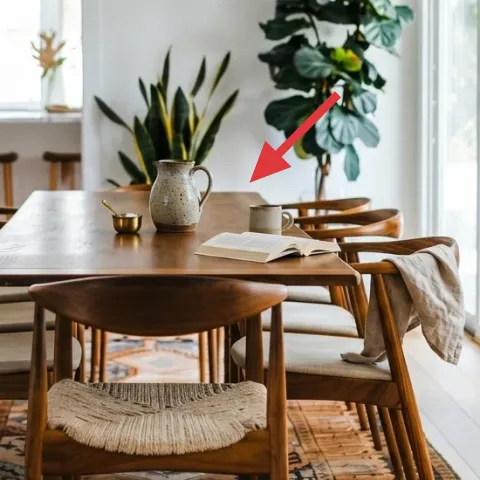
The ceramic pitcher is a small object, but it’s the anchor of the tabletop composition. It sits near the center of the table and adds texture contrast against the smooth wood and the flat rug pattern. Choosing a pitcher (instead of a tall vase) keeps the height manageable in a dining nook, which matters when chairs and place settings share the same space. The trade-off: you’re not buying “utility” like a utensil holder—this is purely visual. Still, it makes the brass dish and the open book look more intentional, like they belong together.
Style rule
Group one ceramic + one metallic object, then add one paper element (like the book) to keep the look human.
Layer 4 — terracotta planter pot for the leafy plant (DIY) ($35) DIY color that matches the room
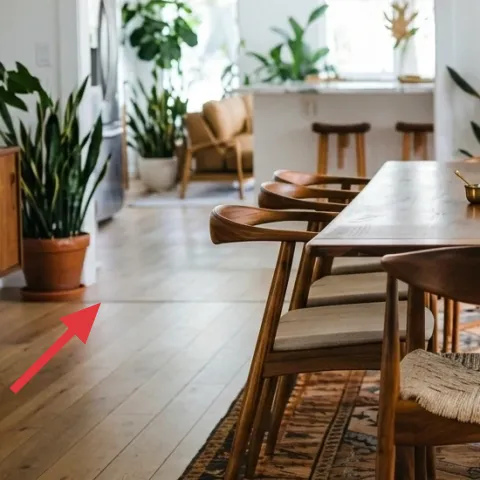
Make it instead of buying it
Repaint a terracotta planter pot with a muted, warm finish so the plant looks built-in to the dining nook’s palette.
Materials
- Terracotta planter pot (1) — 1 pot — craft store — $12
- Acrylic paint (warm neutral) — 1 small bottle — craft store — $8
- Foam brush or sponge — 1 pack — craft store — $4
Steps
- Wash and dry the terracotta pot thoroughly so the surface isn’t dusty.
- Lightly scuff any shiny spots with a dry cloth only (no sanding needed if it’s matte).
- Apply the acrylic paint with a sponge for soft, mottled coverage.
- Let the first coat dry, then add a second coat only where terracotta shows through.
- Blend the edges with the foam brush so it looks organic, not “painted on.”
- Use the pot as a planter (with an inner liner if needed) once the paint is dry to the touch.
Total DIY cost: $24 — saves about $11 over buying.
One pitfall
If the pot gets painted when it’s dusty, the color will look patchy—wash and dry first.
Layer 5 — linen throw draped over a dining chair ($40) Softens the wood without clutter
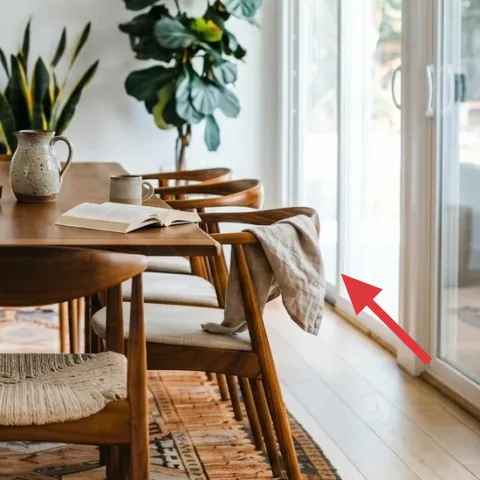
The linen throw draped over a dining chair adds that “lived-in but styled” texture that you can’t get from décor alone. In the photo, it’s casual and slightly rumpled, which keeps the dining nook from looking like a staged show home. Linen is the right material here because it reads airy next to wood, and it also repeats the fiber language of the table runner. The trade-off is care: a throw can shift or bunch if someone stands up mid-meal, so it needs a quick straighten now and then. Still, it’s one of the easiest no-drill upgrades because it packs away in seconds.
How to place it
Drape it over the chair seat back, then pull the fabric edge slightly forward for that relaxed fall.
Layer 6 — brass small dish on the dining table ($35) Warm shine in a small, contained amount
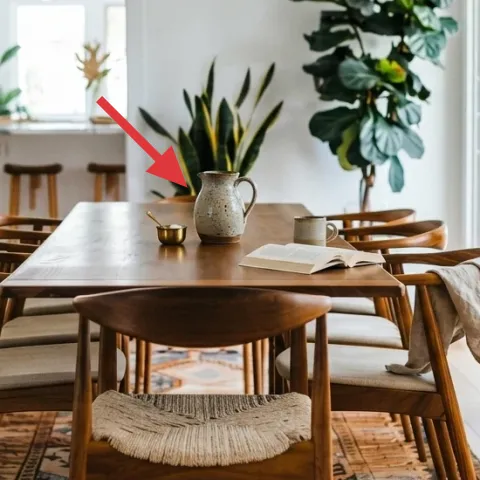
A brass small dish gives you a little light-catching moment without demanding attention like a lamp or chandelier. It sits on the tabletop alongside the ceramic pitcher and book, and the warm metal tone ties in with the walnut chair frames. This is the choice you make when you want “gold” in the room but you don’t want to repaint anything. The trade-off is scale: too large and it starts to feel like a catchall; too small and it disappears. Keep it to a small catchment for jewelry or a single little object, and it will look intentional instead of random.
Pair it simply
Let the dish hold one item max—otherwise the tabletop stops reading as calm.
Layer 7 — tall leafy potted plant near the windows ($45) Adds height where the eye naturally lands
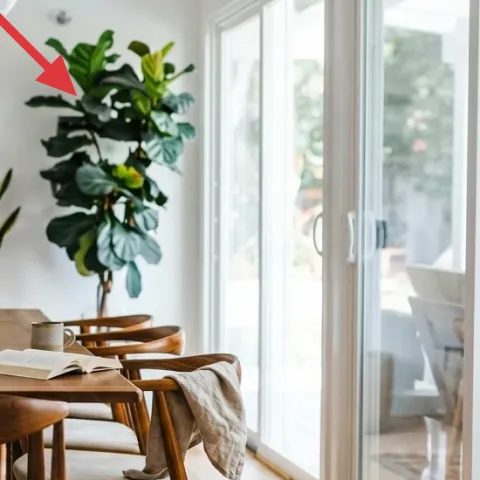
The tall leafy potted plant near the windows brings vertical energy and makes the nook feel fuller, even though it’s mostly greenery. In the hero, it frames the bright daylight and adds contrast against the white walls and light wood floor. This is the renter win: plants are movable and replaceable, and they don’t require landlord approvals the way wall upgrades do. The trade-off is ongoing care—plants want light and occasional watering—but the payoff is a room that looks softer and less “empty.” If one plant is all that fits, choose one that’s tall enough to reach above table height.
Quick placement check
Keep the plant where it can “lean” into the seating zone visually—corner placement often works best.
The cost, layer by layer
| Layer | Item | Cost |
|---|---|---|
| 1 | Patterned area rug 5×7 | $180 |
| 2 | Linen table runner/placemat | $25 |
| 3 | Ceramic pitcher | $30 |
| 4 | Painted terracotta planter set (DIY) | $35 |
| 5 | Linen throw for chair | $40 |
| 6 | Brass small dish | $35 |
| 7 | Tall leafy potted plant | $45 |
| Total | $390 | |
If you want a cheaper variant, swap the patterned rug for a simpler neutral jute or flatweave look, and choose one plant instead of two—keep the linen runner and pitcher combo so the table still feels styled.
What worked, what didn't (across the whole room)
This dining nook styling works because the textures repeat: linen on the table and chair, ceramic and brass on top, and greenery to balance the warm wood. The patterned rug also prevents the room from looking too bare under natural light.
What worked
- The patterned area rug keeps everyday marks from turning the dining zone into a stain map.
- A light linen runner makes the table feel composed even with simple objects.
- The ceramic pitcher adds handmade texture without raising visual noise.
- Brass accents bring warmth that complements walnut chairs in daylight.
- A draped linen throw softens the wood and makes seating feel more inviting.
- A tall plant near the windows adds height and keeps the nook from feeling flat.
What didn't
- Too many small objects on the table would compete with the rug pattern and make the nook feel busy.
- A solid light-colored rug alone would show spills faster on light floors.
- If the throw is folded too neatly, the chair looks staged instead of relaxed.
- Using a planter that clashes in undertone can make the plants look pasted-on rather than integrated.
- Overly large brass pieces can steal attention from the center arrangement.
What we'd skip if we did it again
Skip wall art or shelf styling for this specific look. The hero reads cohesive because the “action” lives on the floor and tabletop—plants and textiles do the work, while the white walls stay calm.
Skip going all-in on matchy-matchy. It’s tempting to buy a full set of décor in one finish, but this dining nook feels better when only one or two metallic notes (like brass) repeat, and everything else stays warm and natural.
Skip high-maintenance styling when renters need flexibility. The rug, linen, pitcher, and plants are easy to lift and pack when the lease ends—heavy wall hardware or permanent changes would be the bigger hassle for less payoff.
Frequently asked
How long does this dining nook refresh take?
Most of it is placement and styling, not construction. Budget about an hour to set up the rug and chair styling, another hour for tabletop objects, and 30–60 minutes for plant positioning. If you DIY the planter, add a bit of extra time for paint coats—overall it’s still a one-weekend project.
Will this work in a smaller dining area?
Yes—scale the rug and keep the plant strategy simple. If a 5×7 is too wide, go with the closest smaller standard size you can find and center it so at least the front chair legs sit on the rug. For plants, one tall plant near the windows plus a smaller tabletop greenery is usually enough.
What if the room is bigger than this photo?
In a larger dining zone, keep the same styling ingredients but increase rug size first, since it defines the seating “room within a room.” Then consider doubling up on height—either a larger rug and taller plant or two plants at opposite sides—so the tabletop stays balanced without adding clutter.
Where should I shop for the rug and linen pieces?
For rugs, look for flatwoven patterns in major retailers or local rug shops where you can confirm return policies. For linen runner and throw, home goods stores and online marketplaces with fabric blends are the fastest path—aim for natural-looking fibers rather than glossy synthetics so it matches the photo’s matte calm.
What’s the biggest mistake people make with a dining-nook styling like this?
Over-styling the tabletop. When the rug is patterned, the table needs restraint: one centerpiece object (like the ceramic pitcher), one metallic accent (like the brass dish), and one paper element (the open book). If everything becomes a “feature,” the room loses the calm, curated feel.
Is this renter-friendly at move-out time?
Yes. The rug, runner, throw, dish, pitcher, and plants are all removable and don’t require wall changes. The only DIY piece is a repainted terracotta planter, which you can swap back to a plain one or take with you easily.
More in Living Room
How to style a dining nook for under $400
A renter-friendly dining nook refresh for under $400, built around a patterned rug, a light runner, and plant-and-textile styling. This loo…
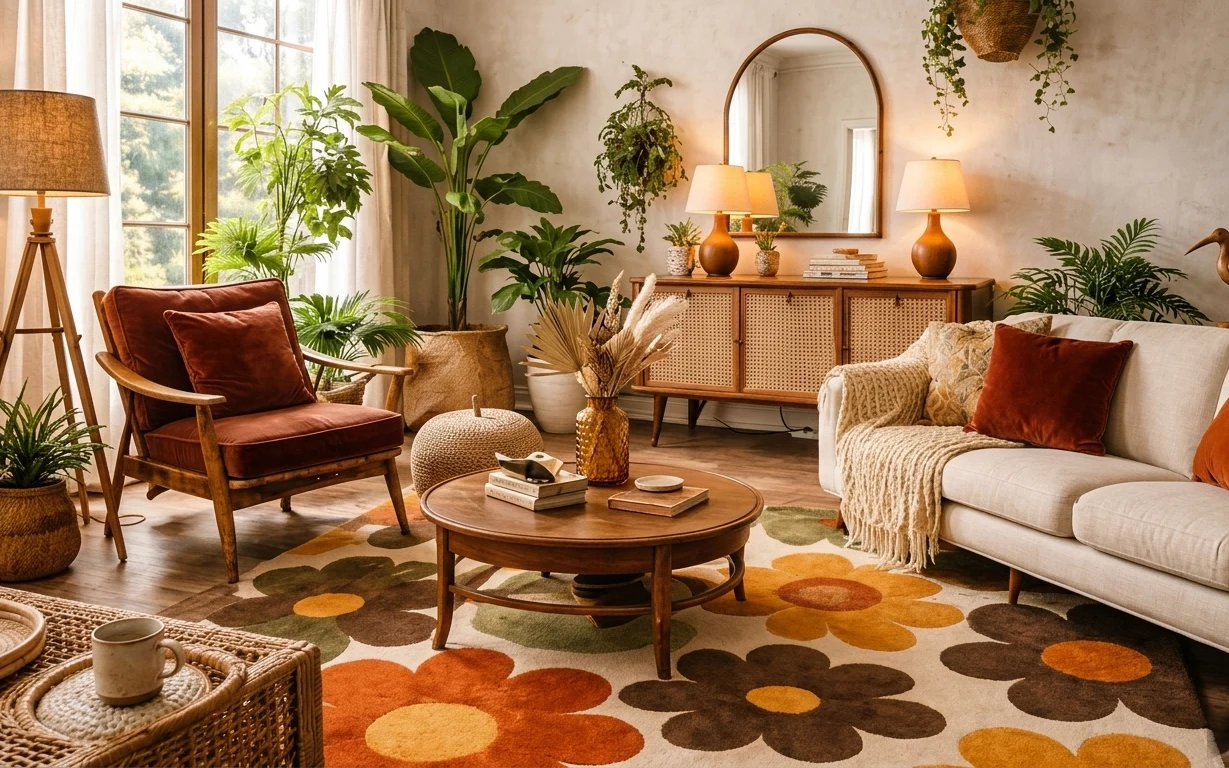
7 no-drill upgrades for a boho living room, $600
Warm, boho living room updates that pack and move with shared-housing life. With a $600 refresh budget, swap in an earth-toned rug, sheer c…
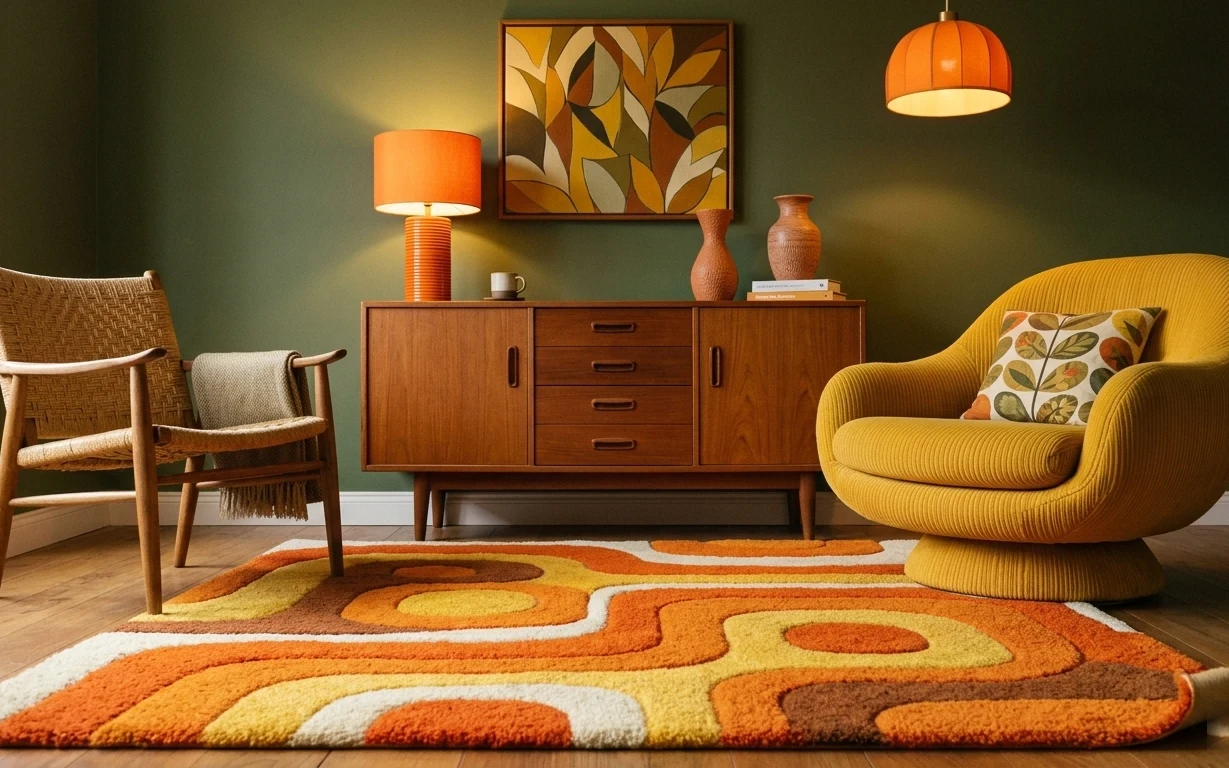
7 practical weekend swaps for a living room seating corner, $800
A mid-century living room seating corner, refreshed with 7 budget-friendly swaps totaling $800. Focus on a bold multicolor rug, a remade ab…