- Best for
- Shared-house kitchen island styling
- Time
- 1–2 weekends
- Total cost
- $510 (under $600 budget)
- Renter-safe
- No-drill swaps & packable décor
Why rust-and-sage counter styling is the island seating area of 2026
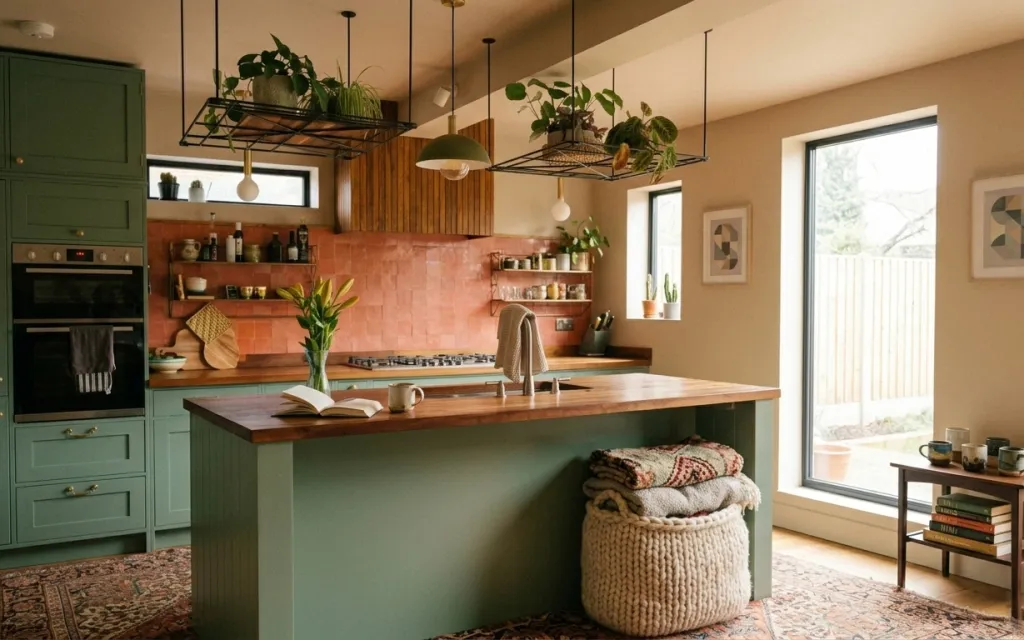
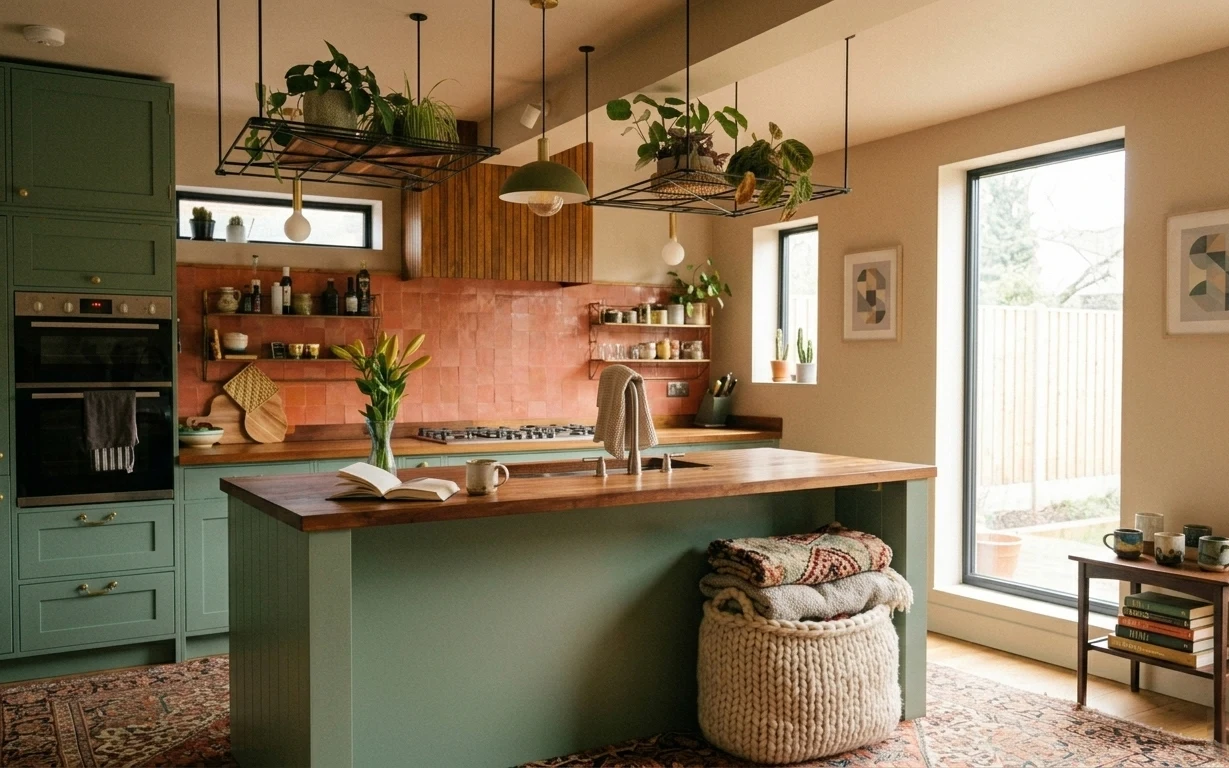
That terracotta tile backsplash does a lot of heavy lifting, and the rest of the room stays intentionally quiet so it can breathe. In this setup, warm walnut wood and the framed abstract print create a “designed” rhythm, while the area rug pulls the color story down to the floor. The knit-covered storage seat adds a tactile, family-room kind of softness, and the leafy plant in a vase keeps the countertop from looking flat. For shared housing, this is achievable because every piece here is either soft goods or something that can pack into a few boxes.
I used to overthink kitchen styling and end up with décor that couldn’t survive moving days. One time I bought a wall shelf and realized, mid-leases, that I’d have to take it down with the same tools I didn’t want to own. Now I aim for items that stay intact in their own packing—rug rolled, framed print boxed, textiles folded—so the look changes with the room, not with the landlord’s rules.
Layer 1 — Area rug with rust and muted pattern ($200) Grounds the island zone
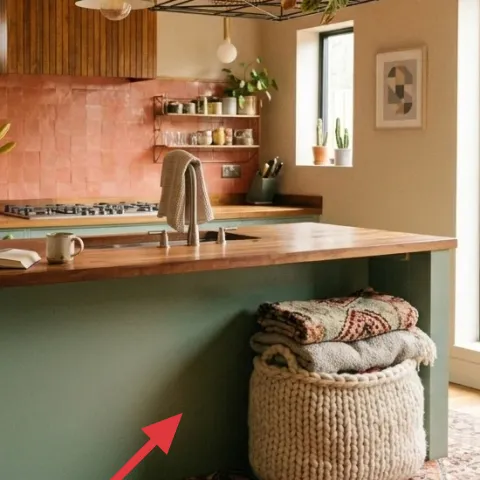
An area rug like this (rust tones with a muted pattern) is how the kitchen starts feeling like a real hangout space instead of “just a work zone.” It visually anchors the wood countertop and makes the knit-covered storage seat feel placed on purpose, not shoved in. The trade-off is that rugs need a little care—spills happen in kitchens, especially near the island—so a pattern with movement is the point. If you’re tempted to choose a solid rug, you’ll lose some of the hide-ability that makes this look survive everyday use.
Use a pattern rug to forgive splash marks
Rusty speckles and tonal variation make weekly cleaning easier than you’d think.
Layer 2 — Small side table with coffee books ($80) Makes counter clutter look intentional
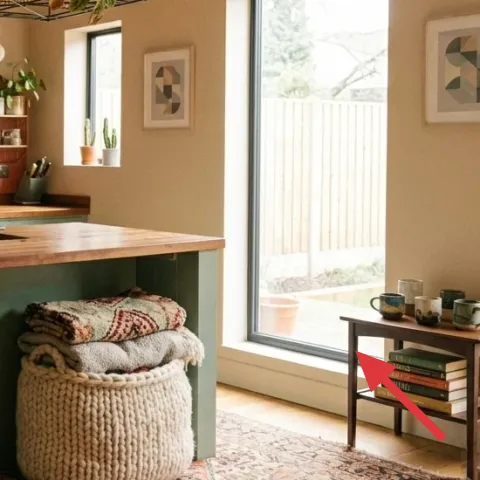
A small side table gives you a designated “landing pad” for mugs, a book or two, and a couple of small ceramics—exactly what kitchens need when there’s no dedicated bar cart space. Here, the warm wood tone also matches the countertop, which is why the whole island area feels cohesive even with lots of greens and terracotta happening. The trade-off: you don’t get that extra prep area, so the goal is styling and quick grab-and-go, not chopping. Choose a table that’s light enough to move when your next lease starts.
Match woods, not finishes
Walnut, oak, and even “golden” woods can work together—just keep the warmth family consistent.
Layer 3 — Framed abstract print on the right wall ($80) Adds color without changing anything fixed
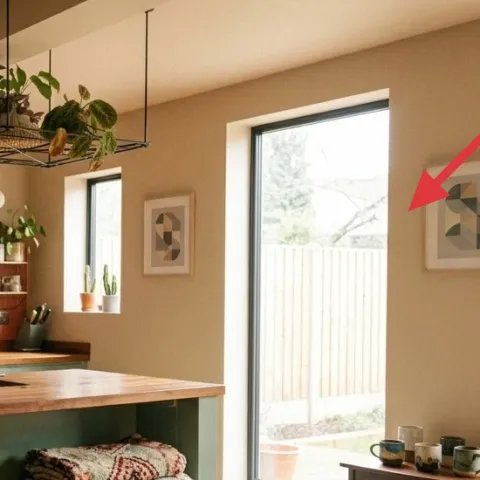
Framed art like this is one of the safest ways to make a rented kitchen feel curated. It repeats the room’s abstract geometry and brings the rust-and-cream story up to eye level, so the terracotta backsplash doesn’t have to do all the work. The key trade-off is that art needs a frame you can pack intact; flimsy frames crease in transit. Since hardwired décor rules vary by landlord, this approach stays removable—box it when you move and set it back up with no drama.
Make it instead of buying it
Make a hand-painted abstract on cardstock, then slide it into an inexpensive frame so you get the same wall effect for less.
Materials
- Cardstock — 1 sheet (8×10) — paper craft store — $2
- Acrylic paint set — 1 mini set — craft store — $10
- 8×10 frame — 1 — thrift store/home goods — $20
- Small paintbrush set — 2 brushes — craft store — $6
- Artist tape — 1 roll — craft store — $5
Steps
- Lightly tape off 2–3 geometric areas on the cardstock to control edges.
- Paint the first shapes with a warm base color; let it dry fully.
- Layer in a second color that echoes the backsplash (rust) and a neutral (cream/white).
- Pull off tape slowly, then touch up any thin lines with a brush.
- Once dry, slide the cardstock into the frame.
- Repeat box-tested packing: wrap the frame in paper so corners don’t chip during a move.
Total DIY cost: $43 — saves about $37 over buying.
Layer 4 — Leafy plant in a vase on the island ($25) Adds life at countertop height
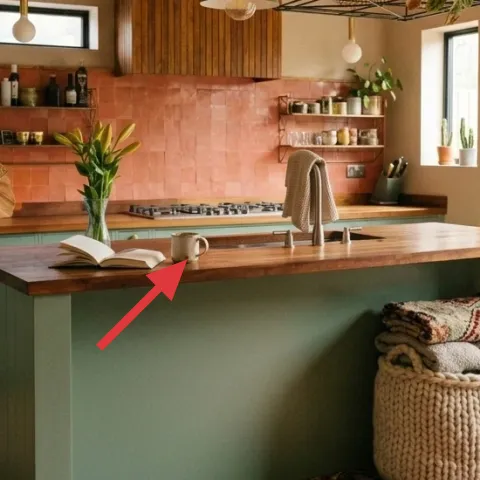
A leafy plant in a vase is the quickest way to keep a kitchen from reading “cold” or all-hard-surfaces. Placed on the island, it sits exactly where you see it while you cook, which matters more than adding greenery high up on a shelf. The plant’s texture also echoes the softness of the knit-covered storage seat, so the room feels balanced rather than sharp. The trade-off is that plants aren’t instant; you need a quick watering routine and a spot where the light works. That said, this is still one of the easiest items to pack—vase wrapped, plant trimmed if needed.
Pick a plant you can handle in small containers
Choosing something that survives being moved makes the whole look repeatable in the next rental.
Layer 5 — Knit-covered storage seat in front of the island ($60) Softens the whole kitchen
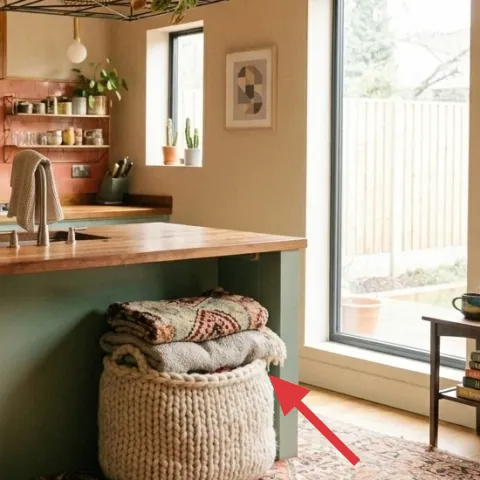
This knit-covered storage seat is doing more than being cute—it changes the way your eye reads the room by adding a cozy material between the rug and the island. Because it’s a rounded, textured object, it also makes the pendant lights and clean cabinetry lines feel less strict. The trade-off: you’re committing to a maintenance level that’s higher than smooth décor, since knit fabric can snag or pick up crumbs. Still, it’s movable and fold-friendly compared to built-ins, so it’s ideal for shared housing where everything has to travel.
Don’t use an ultra-delicate knit near cooking traffic
Keep it positioned so the seat isn’t the first thing your hands bump into mid-cooking.
Layer 6 — Ceramic mug set on the side table ($35) Makes the coffee corner feel real
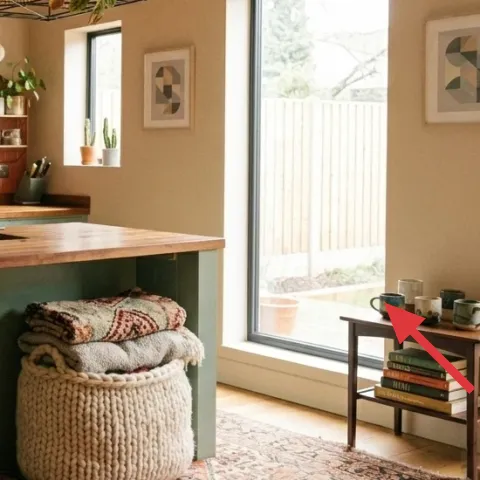
A matching ceramic mug set turns “random dishes” into a styled moment without adding a single new wall obligation. Here, the mugs sit on the side table near the books, which gives the room a casual ritual—grab a mug, open a book, keep moving. The trade-off is that you need to commit to a set (or a cohesive mix) so it reads intentional instead of cluttered. Ceramic also works well for rentals because it packs in padded boxes and doesn’t rely on permanent installation.
Choose one glaze family
If the colors look related—cream, warm brown, or deep green—the set reads cohesive.
Layer 7 — Linen dish towel set for the stove area ($30) Adds texture where your hands already are
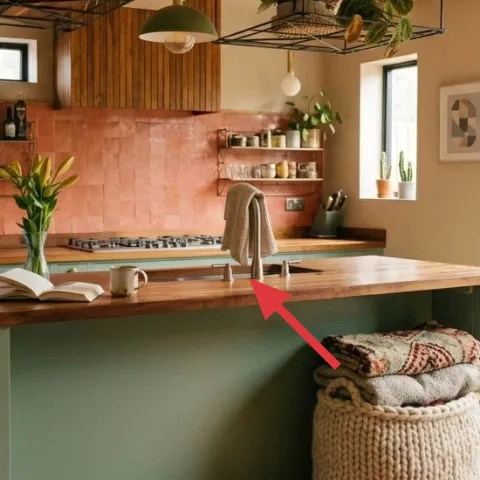
Linen dish towels are a small upgrade that changes the “finished” look faster than people expect. Tucked near the stove area, they repeat the soft, natural texture you see in the rug and the knit storage seat, so the kitchen feels layered rather than flat. The trade-off is purely practical: towels need washing, and you can’t treat them like wall décor. But that’s why they work here—every laundry cycle resets the look. Pick colors that echo terracotta and warm neutrals, and rotate between two sets so the kitchen stays styled.
Keep two sets so it always looks fresh
One towel gets used; the other can wait folded and crisp.
The cost, layer by layer
| Layer | Item | Cost |
|---|---|---|
| 1 | Area rug with rust and muted pattern | $200 |
| 2 | Small side table with coffee books | $80 |
| 3 | Framed abstract print (DIY ~$43 in materials) | $80 |
| 4 | Leafy plant in a vase | $25 |
| 5 | Knit-covered storage seat | $60 |
| 6 | Ceramic mug set | $35 |
| 7 | Linen dish towel set | $30 |
| Total | $510 | |
If you want a cheaper version, keep the rug and the framed print as your two anchors, then swap the side table for a thrifted ladder shelf or simple tray on a counter. Reduce the ceramic set to two mugs and use one plant instead of a taller vase moment.
What worked, what didn't (across the whole room)
The room’s best trick is material contrast: terracotta tile and wood get softened with knit texture and a patterned rug. The greenery keeps the countertop from feeling like an empty stage. The only downside is that the more you style the side table and island, the faster it invites “kitchen clutter” energy if towels and mugs aren’t reset often.
What worked
- The rust-toned rug anchors the island zone and makes the flooring feel intentional.
- The framed abstract print adds color at eye level without relying on changes to fixed features.
- Leafy greenery on the island makes the kitchen look alive instead of purely functional.
- The knit-covered storage seat softens hard edges and adds comfortable texture near seating.
- The side table creates a repeatable “mugs and books” ritual that looks styled.
- Linen towels keep the soft, natural palette showing right where hands move.
What didn't
- Too many small objects on the island can drift into clutter if mugs aren’t contained.
- Textiles near cooking can get messy quickly, so you need a rotation habit.
- Natural textures like knit can snag if the space gets high traffic during cooking.
- Plants can look “droopy” fast if the light or watering routine doesn’t match.
- When the rug is new, it can feel too visually busy until it’s cleaned and flattened.
What we'd skip if we did it again
Skip a solid, low-contrast rug. In a kitchen, spills and crumbs are inevitable, and the patterned rug here hides everyday reality while still tying into the rust-and-wood palette.
Skip over-styling the island surface with lots of micro-decor. Keep it to one plant moment, one towel moment, and a clear serving area so the kitchen stays usable between moves.
Skip a “permanent-feeling” wall display. Stick to framed prints you can pack, or DIY art that fits an existing frame size—so the look follows you when the next lease starts.
Frequently asked
How long does this kitchen refresh take?
Most of it is shopping and placement. If everything is ready (rug delivered, frames in hand, textiles washed), plan on about 3–5 hours of layout time across one weekend. The DIY framed abstract takes another 1–2 hours plus drying time. The slow part is deciding on one consistent rust-and-cream color direction so the island feels cohesive.
What if I’m in a rental where I can’t change anything on the walls?
This approach doesn’t require wall changes beyond removable décor. Framed art can be hung using non-damaging methods (what your building allows) or temporarily set near the same wall. The rest of the look—rug, side table styling, towel rotation, and plants—doesn’t depend on wall updates at all.
Can I make it work with a smaller kitchen?
Yes—scale down the side table and keep the rug as the anchor. In a smaller layout, use the rug to define a “soft landing” in front of the island and pick one plant moment rather than multiple shelf planters. Keep the storage seat smaller or replace it with a compact knit stool, but preserve the knit texture so the room stays balanced.
What if my kitchen has different colors than the photo?
Follow the material logic, not the exact palette. If you don’t have terracotta tile, choose a rug colorway that echoes whatever warm element you do have (warm wood, honey cabinets, or a rust-toned accent). Keep one framed print with geometric shapes, then use towels and one plant to carry the tone across the room.
Where can I shop for budget versions of these items?
For rugs, look at discount home stores and online marketplaces that offer 5×7–8×10 sizes. For the side table and knit storage seat, thrift stores and used furniture apps can be the fastest. The framed print can be DIY like in this post, while towels and plants are easiest from big-box retailers and local garden centers.
What’s the biggest mistake people make with island styling?
The most common miss is treating the island like a display shelf. Too many small items compete with the work area and make the kitchen feel cluttered quickly. Instead, pick three repeatable roles—one plant, one towel set, one container group (mugs or ceramics)—and leave the rest of the countertop clear for daily use.
More in Kitchen & Dining
Rust-and-sage island seating area refresh, $600
A move-friendly island seating area kitchen refresh for shared housing, built from 7 swap-in layers up to a $600 total. The look leans rust…
6 renter swaps for a $300 galley kitchen refresh
A warm, green-and-copper galley kitchen look you can recreate as a renter for $300. Focus on countertop styling, a framed botanical print, …
5 weekend swaps for a $600 kitchen nook refresh
A kitchen nook refresh with curtain panels, a framed geometric print, and a patterned rug—plus small plant and countertop styling upgrades.…