- Best for
- Earthy color + texture layering
- Cost
- $885 total (7 layers)
- Difficulty
- Confident DIY
- Time
- One satisfying weekend
Why this olive-and-rust palette is the sofa seating area of 2026
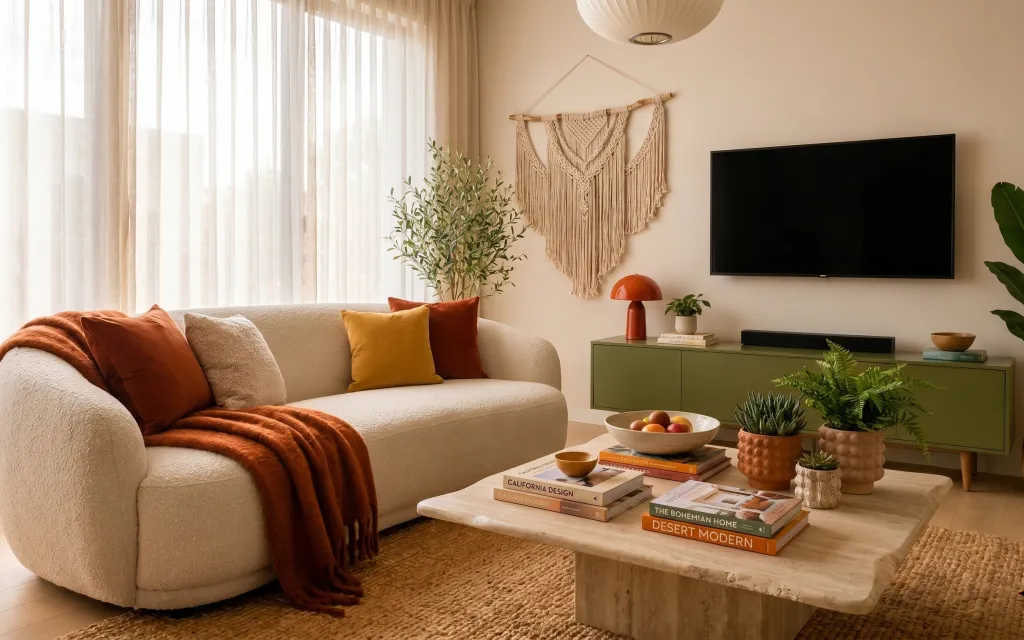
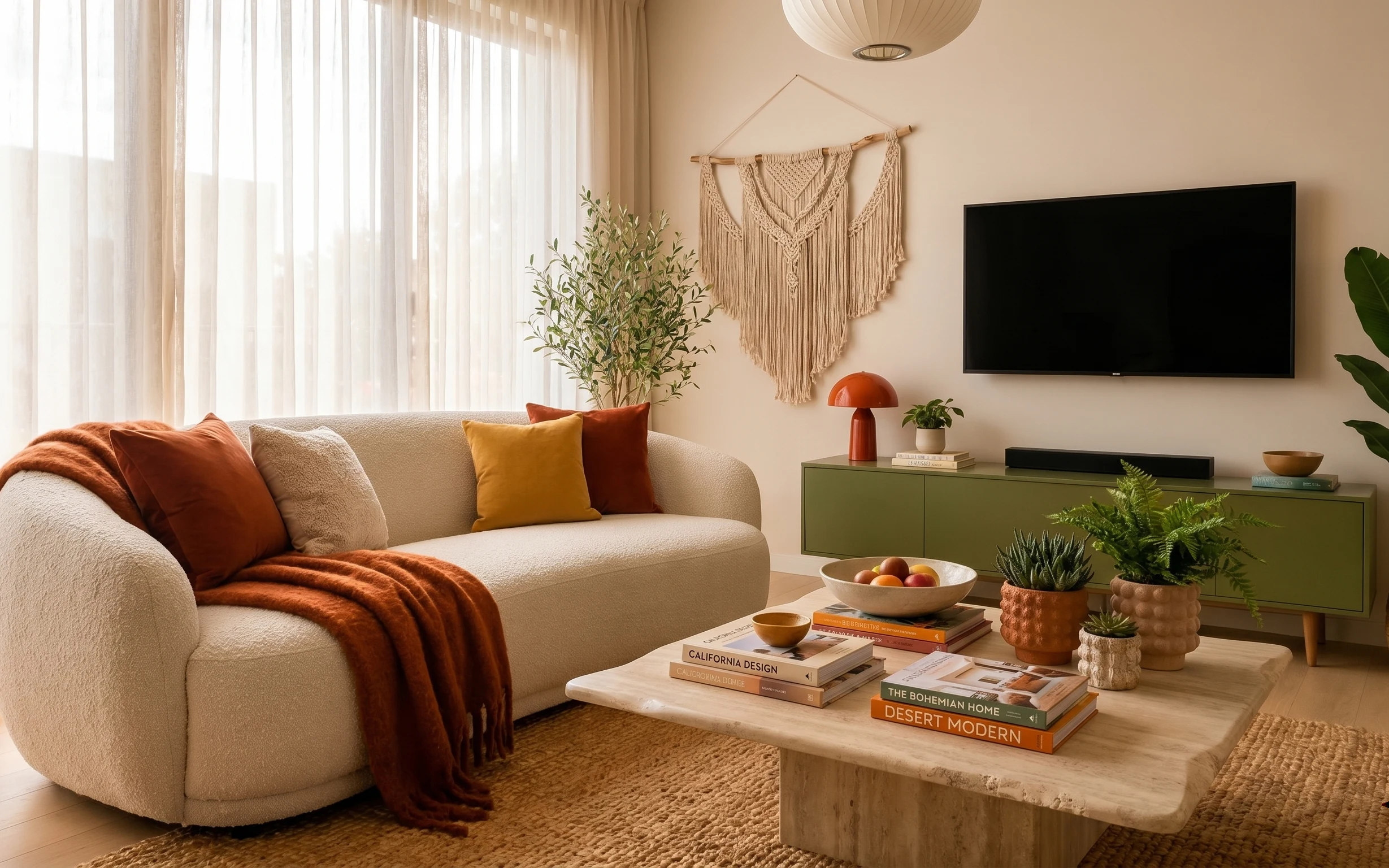
In the photo, the room reads as soft-first: cream upholstery, a fuzzy-looking rug, and sheer beige curtains that diffuse the daylight. Then the palette flips warm—there’s that rust orange throw and an orange table lamp with a rounded shade. The olive green sideboard anchors everything, while the macramé wall hanging adds height and texture without adding clutter. For homeowners working on a weekend, this is the best kind of refresh: mostly decor swaps, with just enough “why didn’t I do this sooner?” structure (curtains, rug size, and vertical wall texture).
I used to overthink “cohesion,” like everything had to match on day one. This kind of setup is what changed my mind: I stopped chasing identical tones and started repeating materials—woven fibers, matte ceramics, and upholstered texture. One mistake I made early on was going too small with the rug; here, the larger cream rug makes the sofa feel anchored instead of floating.
Layer 1 — cream area rug ($200) Texture under the sofa
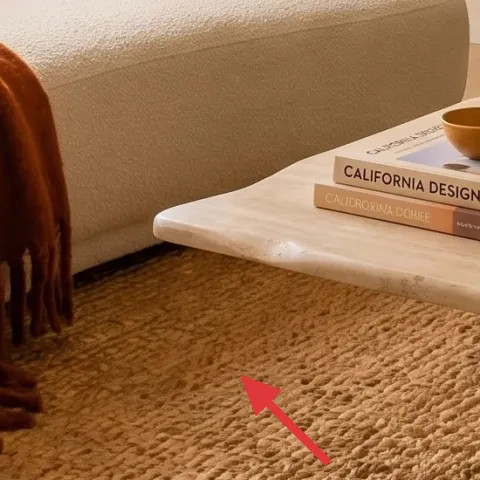
A cream area rug is doing two jobs here: it makes the sofa feel grounded, and it softens the contrast between the light floor and the warmer rust accents. I’d choose a rug like this over a bold pattern because the room already has visual movement—curtain stripes, plant leaves, and the macramé’s fringe. The trade-off is that you’ll need to treat it like a “lived-in” textile (rotate seasonally, vacuum often), but the payoff is a calm base color that lets olive and rust show up clearly. In daylight, it also helps the room look brighter instead of heavier.
Pick the rug for sofa feet, not just the room size
For a seating area, aim for the front legs of the sofa to land on the rug—otherwise the whole layout can feel unplanned.
Layer 2 — beige curtain panels ($80) Higher light, softer edges
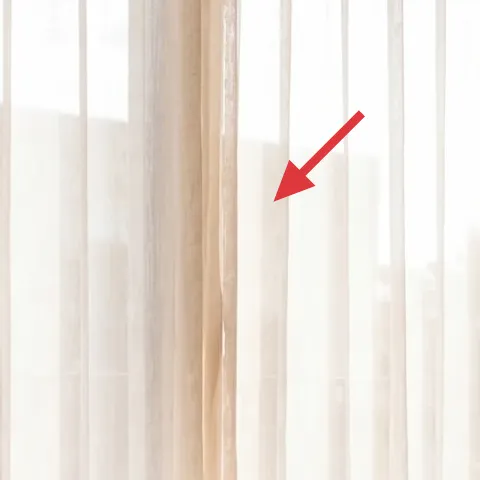
Those beige curtain panels create a gentle veil over the left-side window, which is why the room feels airy even with warm colors. If you swap in curtains too short or too thin, you lose that “diffused” look and the daylight turns harsh. This is also one of the fastest ways to add height: hang curtains to visually pull the eye up, especially next to a TV wall where your eye otherwise drops to the screen. The trade-off is care—sheers show dust faster than heavier drapes—but the payoff is that the palette stays warm without turning orange-y all day.
This works because they soften contrast
The curtains blur the line between the bright window and the cream walls, so the sofa and sideboard feel intentional instead of separate.
Layer 3 — rectangular coffee table ($120) Styling surface you’ll actually use
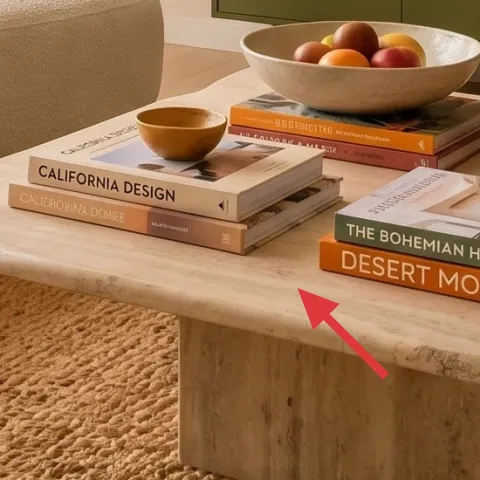
A rectangular coffee table is what turns this into a lived-in living room, not just a picture wall of decor. In the hero, the tabletop reads light and practical, which lets book stacks, a bowl, and small vases sit without the room feeling cluttered. I’d choose a top like this over a smaller round table because this palette already has several “linear” elements—curtain verticals and the sideboard’s cabinet doors—so a clean rectangle feels balanced. The trade-off is you need to style in a deliberate grouping; otherwise it can look like random objects.
Don’t forget negative space
If every inch of the coffee table is filled, the warm orange throw and olive sideboard stop reading as the focal points.
Layer 4 — macrame wall hanging ($45) Fringed vertical texture
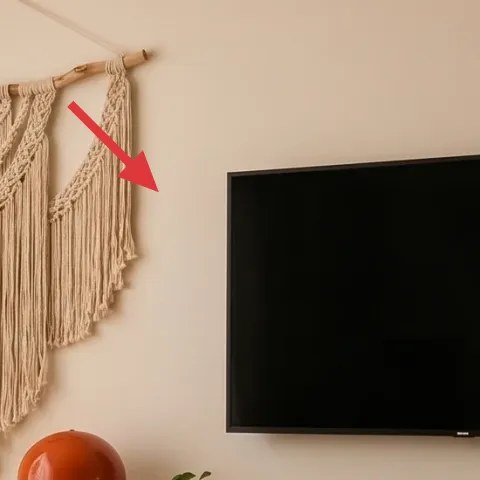
The macramé wall hanging is the room’s vertical exclamation point—it adds texture above the couch without blocking light or needing complicated installation. I’d rather spend time on a woven piece than add another frame set because it brings movement (fringe) and softness that matches the rug and curtains. The trade-off is that macramé can look “busy” if it’s too small or too dark; here, the natural fiber color keeps it calm against the off-white wall. This is also a great DIY target because you control scale and fringe length.
Make it instead of buying it
DIY a macramé wall hanging in natural fiber so it matches the palette and lands at the same height as the hero piece.
Materials
- Macramé cord (natural) — 3–4 skeins — craft store — $20
- Wood dowel (for the top bar) — 1 piece (about 24–30in) — hardware store — $10
- Command Strips (for mounting) — 1 multi-pack — big-box store — $8
- Measuring tape + scissors — on hand — $0
- Comb/brush for fluffing ends — on hand — $0
Steps
- Measure the width you want, then cut cords with extra length for the fringe.
- Attach cords to the dowel using a simple larkshead-style start knot.
- Work the main pattern with consistent knot spacing, checking width every few rows.
- Trim fringe to an even length once the body is finished.
- Fluff and straighten the strands so the wall shape reads clean.
- Mount with Command Strips at the marked height and level it before the final press.
Total DIY cost: $38 — saves about $7 over buying.
Match fiber color, not necessarily exact shade
Natural macramé works even if yours leans slightly warmer—what matters is that it stays in the cream-to-tan family.
Layer 5 — orange table lamp ($60) The warm “evening switch”
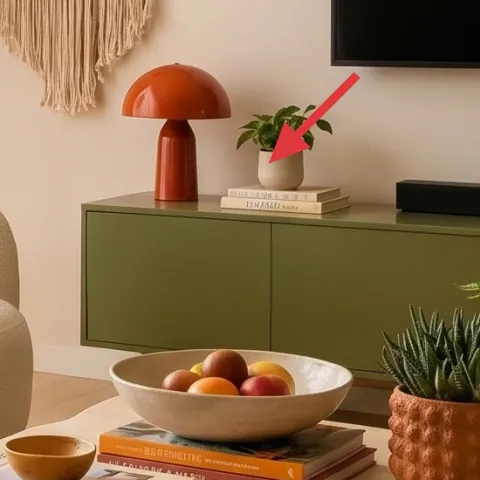
An orange table lamp is what makes this palette feel warm after dark, not just “pretty in daylight.” The shade is rounded and friendly, which is important with all the straight lines in the TV wall and the cabinet doors. I’d choose this over a cooler ceramic lamp because your sideboard is olive and your textiles are rust; those color families need a warm light source to stay coherent. The trade-off is that an orange lamp can overpower if the room is already saturated—so the rest of the palette stays neutral here (cream rug, beige curtains, off-white walls).
Use lamp height to keep the TV wall from feeling flat
A lamp on the sideboard adds a different height level than the TV and couch back, which keeps the eye moving.
Layer 6 — green sideboard ($300) Storage + color anchor
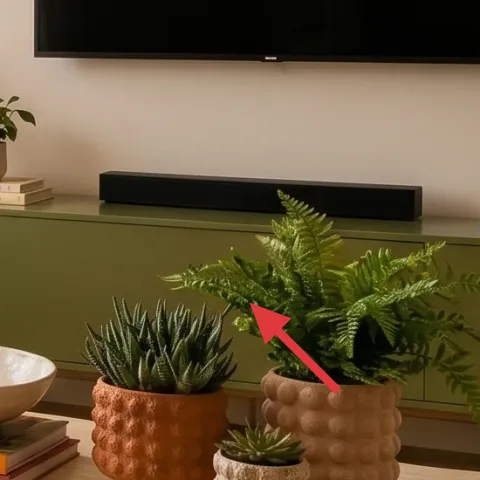
That green sideboard turns the room from “decorated corner” into a complete composition. It anchors the color story because olive shows up again in the plants, and it gives a clear base for styling—lamp, small plant, and the TV shelf element. I’d rather invest here than in another wall frame because you’re buying both storage and a strong background plane. The trade-off is you’ll want to keep the top surface curated so it doesn’t feel like a cluttered buffet. For a weekend refresh, it’s also a rare item that changes how the whole wall reads immediately.
Style in a 2–1–2 rhythm
Group two taller items, one centered anchor, and two smaller accents so the sideboard looks intentional from across the room.
Layer 7 — small potted plant on sideboard ($30) Freshen the palette
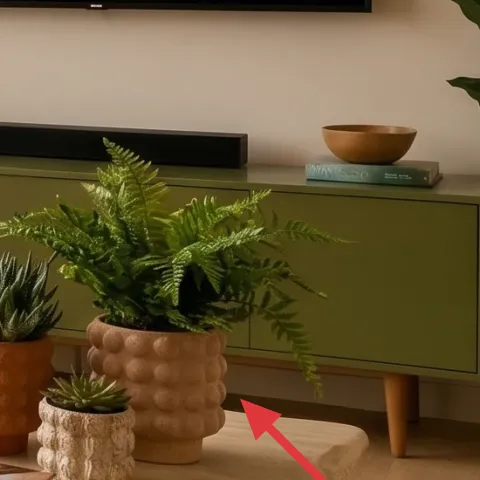
A small potted plant gives the room that “someone actually lives here” layer, and it also ties the palette back to the tall leafy plant near the sofa. I’d choose a plant with matte leaves or a softer texture over something glossy because the rest of the room leans tactile—curtains, rug fibers, macramé fringe, and ceramics. The trade-off is that plants require a little maintenance, but you only need to check watering every week or two to keep it looking good. On the sideboard, the plant also balances the lamp visually so the area doesn’t lean too orange-and-olive.
Keep it slightly forward of the cabinet edge
Placing the plant closer to the room side helps it read clearly in photos and from the sofa.
The cost, layer by layer
| Layer | Item | Cost |
|---|---|---|
| 1 | Cream area rug 8×10 | $200 |
| 2 | Beige curtain panel pair (84") | $80 |
| 3 | Rectangular coffee table | $120 |
| 4 | Macrame wall hanging (DIY retail-equivalent) | $45 |
| 5 | Orange plug-in table lamp | $60 |
| 6 | Green sideboard/low console | $300 |
| 7 | Small potted plant | $30 |
| Total | $885 | |
If you want a cheaper variant, swap the sideboard for a simple wood console and keep the lamp + rug + curtains as the big-ticket anchors. A more affordable coffee table and a smaller plant can still work as long as the rug stays large enough under the sofa.
What worked, what didn't (across the whole room)
This setup nails warmth through repeat materials: cream fibers, natural macramé, matte ceramics, and a rust-orange textile. The olive sideboard makes the wall feel intentional, and the curtains keep daylight soft. The only weakness is that surfaces can look busy quickly—so the styling needs restraint.
What worked
- The cream rug anchors the curved sofa and keeps the seating area from floating on the light floor.
- Beige curtain panels diffuse window light and soften the contrast with the TV wall.
- The macramé wall hanging adds vertical texture without making the wall look crowded.
- The orange table lamp brings warm evening contrast against off-white walls.
- The green sideboard acts as both color foundation and practical styling space.
- Plants add recurring green so the palette feels tied together instead of random.
What didn't
- If the coffee table is over-styled, it competes with the macramé fringe and pillows.
- Short curtains would flatten the window area and make the room feel shorter.
- A too-small rug would break the layout and make the sofa look disconnected.
- Bright, glossy decor pieces would fight the natural fibers and ceramics.
- An orange lamp in a cooler-toned room would skew the palette overly warm.
What we'd skip if we did it again
Skip adding another framed print or another small decor cluster right above the TV. The macramé already brings texture and a vertical focal point, and stacking too many “statement” items makes the wall feel busy instead of balanced.
Skip a rug that’s smaller than the sofa footprint. In photos this is the difference between “intentional seating area” and “furniture on flooring,” and you’ll notice it every time you walk in.
Skip curtains that don’t reach high enough. Even if the fabric is pretty, the visual height loss changes how the whole palette reads—your olive sideboard and lamp will look heavier than they do here.
Frequently asked
How long does this kind of living room refresh take?
Most of the time is in the “big anchors”: rug placement, curtain measuring/hanging, and setting the coffee table and sideboard styling. If you’re doing the DIY macramé wall hanging, plan a solid afternoon to get the pattern going, plus a second block for trimming, fluffing, and mounting. Total time is usually 6–10 hours spread across a weekend.
What if I rent—can I still get this look?
Yes. The rug and pillows/throw are fully reversible, and you can do curtains with a tension rod or a properly hung rod if you’re allowed. For the macramé, use removable mounting options (like Command-style strips) and avoid anything that damages paint. The sideboard and table lamp are also easy to swap out later if you choose neutral pieces.
My room is smaller—how should I scale these choices?
In a smaller room, keep the rug anchored under the front sofa legs and choose curtains that visually pull upward. You can go lighter on plants (one plant on the sideboard instead of two) and use fewer decor objects on the coffee table. The macramé can stay the same height, but choose a slightly narrower width so it doesn’t overwhelm the wall.
Where’s the best place to shop for these items without overpaying?
For textiles and big anchors, start with discount home sites and big-box stores for rug and curtain options, then check resale for the coffee table and sideboard. The lamp can be found new for less when you shop by bulb/lampshade style. For the macramé, buying a small supply kit or cords in bulk often beats a finished piece.
What’s the biggest mistake people make with this exact color palette?
The biggest mistake is going too matchy. If everything is a bright rust-orange, the room can feel loud. Instead, repeat materials and keep the majority of surfaces in cream and off-white, then add olive and rust as “accent threads.” The lamp and throw should echo the wall fibers, not compete with them.
More in Living Room
Under $1,000: olive-and-rust living room refresh
A cozy sofa seating area with rust-orange accents, cream textures, and an olive sideboard. This weekend refresh adds seven high-impact swap…
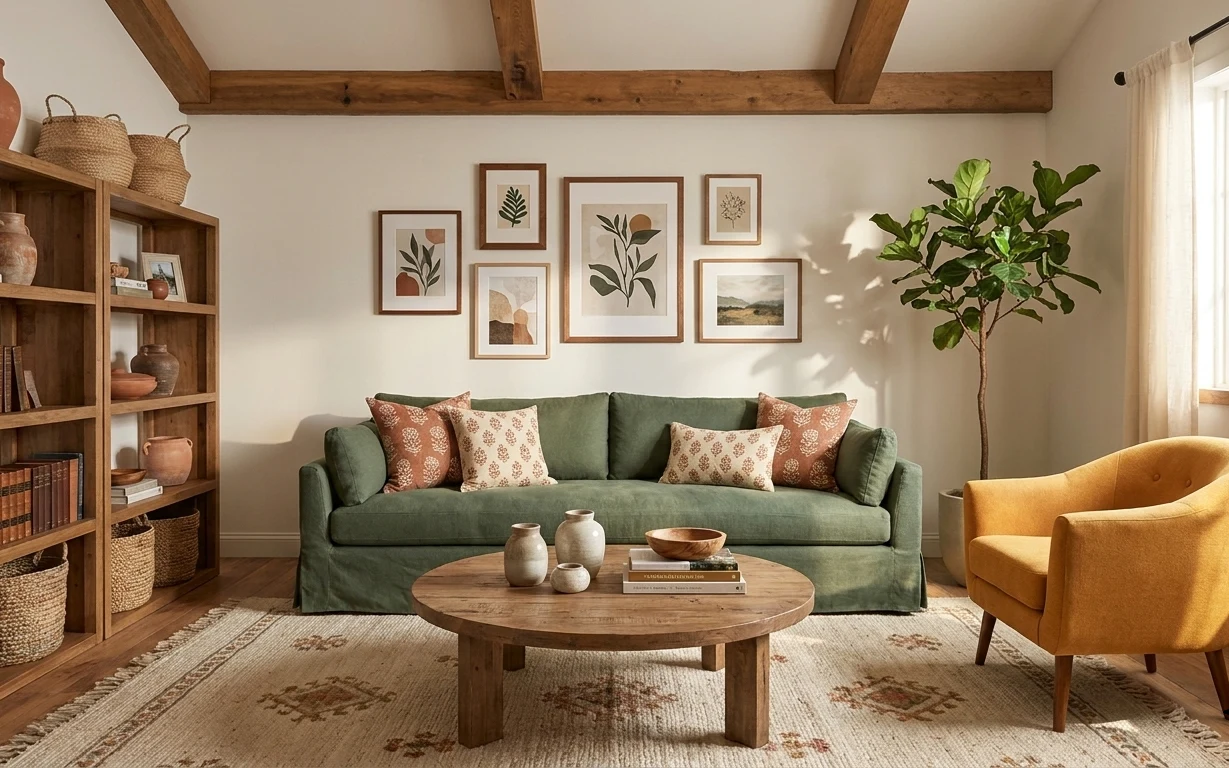
Under $600: earthy-green living room seating refresh
A move-friendly living room refresh that recreates the olive-green, terra-cotta, and warm-wood look. All-in for under $600 with 7 renter-sa…
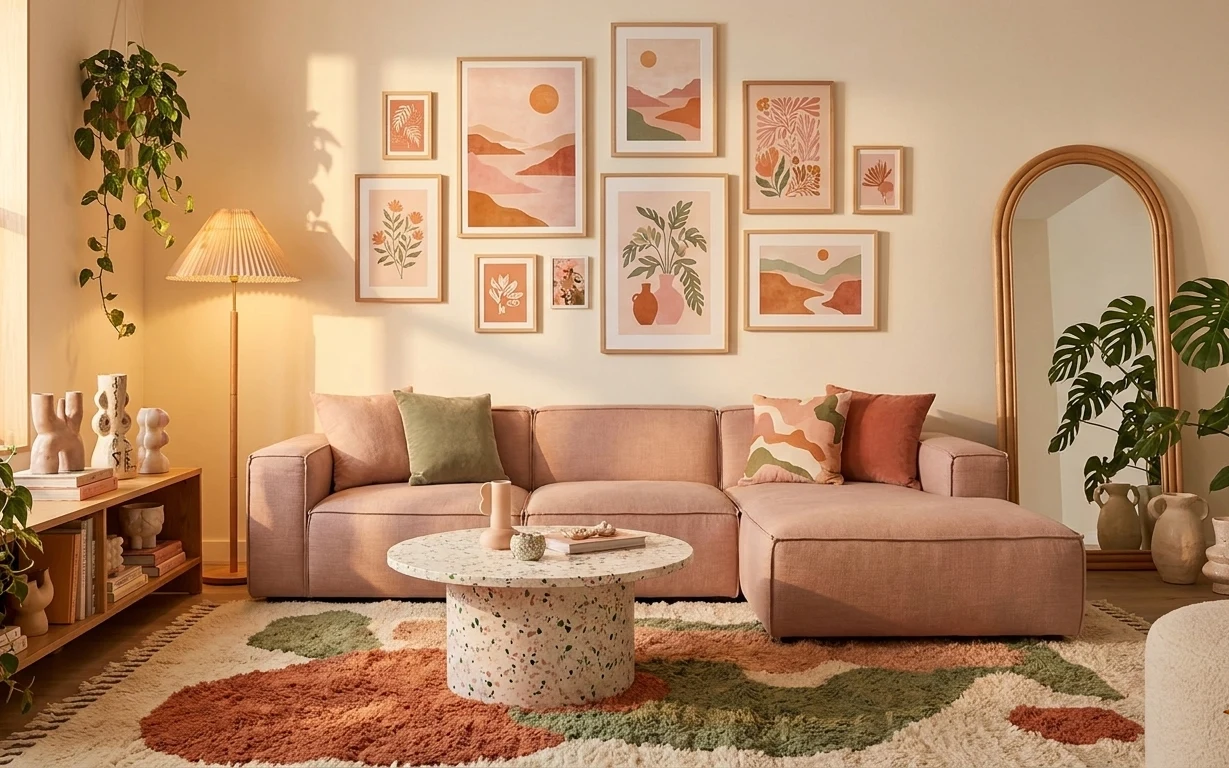
Under $700: earthy living room refresh with move-ready swaps
An earthy living room refresh that leans on warm lighting, a patterned rug, and mix-and-match art. This renter-friendly setup stays move-re…