- Best for
- Evening hosting
- Cost
- $830 total
- Difficulty
- Weekend-project
- Time
- 6–9 hours
Why this warm shiplap and earthy patio setup is the patio living area of 2026
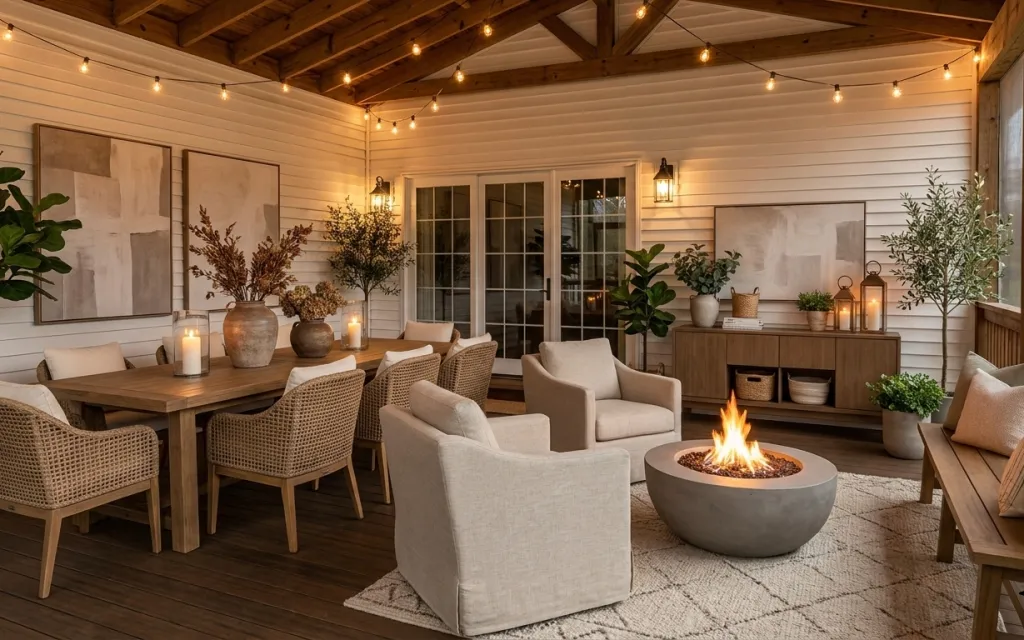
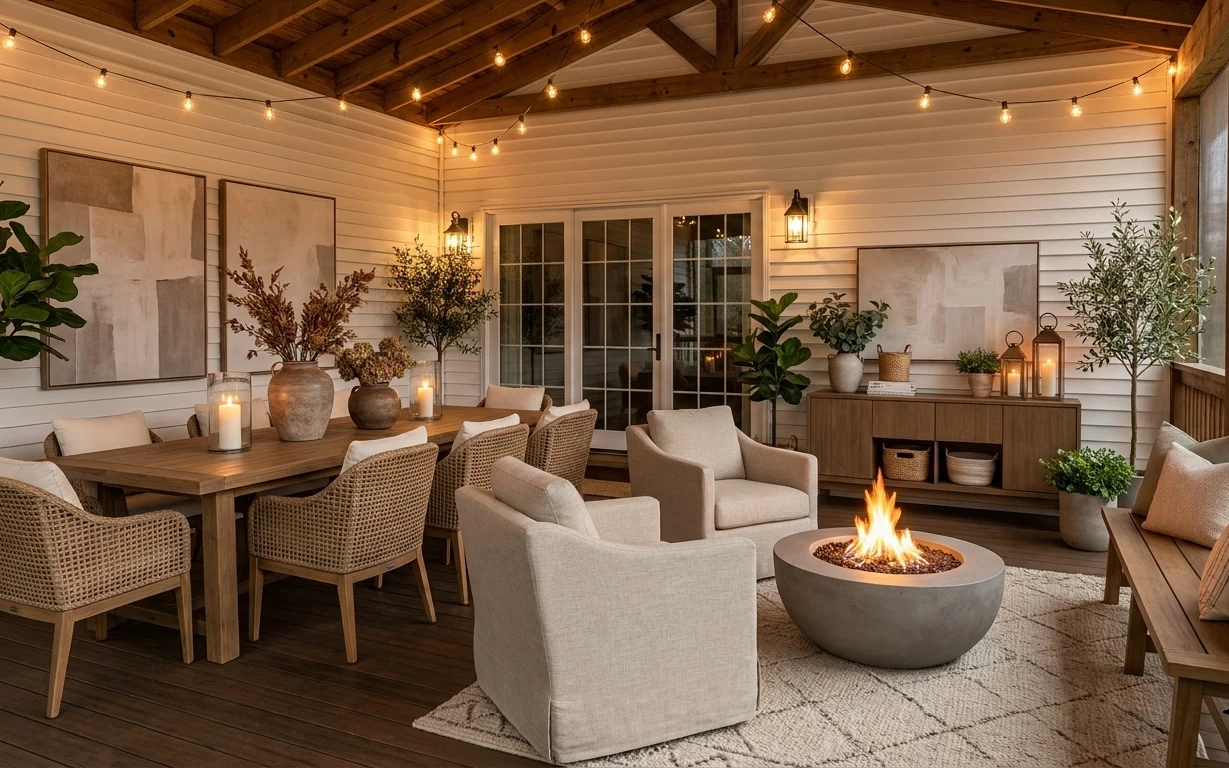
What sells this patio living area is the rhythm: a grounded area rug, soft seating with light cushions, and a wood-and-wicker dining table that invites lingering past “just eating.” The warm shiplap wall and wood ceiling beams keep everything cohesive, even with multiple textures—woven upholstery, matte ceramic pots, and the smooth curve of the fire pit bowl. For the homeowner refresh, you can aim for the same balance by choosing just a few high-visibility anchors and repeating the materials in smaller doses.
I used to overdo outdoor lighting, adding one more string strand “for extra brightness.” This arrangement taught me the opposite: the light is warm and spaced, not harsh, so the seating reads cozy instead of cluttered. Once I matched the lamp glow to the rug’s neutral tone and kept the wall art to a simple triptych, the whole space looked finished without feeling busy.
Layer 1 — area rug ($200) Brings the seating into one anchored zone
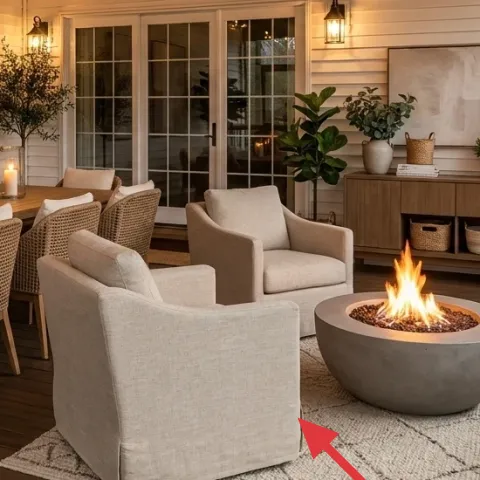
This area rug sits under the front edge of the outdoor seating and frames the fire pit area so the whole patio reads as one conversation. The neutral pattern works because it doesn’t fight the warm shiplap wall or the medium brown wood tones; instead, it softens the room and adds texture where the eye otherwise hits planks. A smaller, cheaper rug often leaves the seating “floating,” so this choice leans into size and a pattern you can repeat with pillows and ceramics. The trade-off is extra effort to vacuum and spot-clean, but the visual payoff is immediate.
Pick the rug first, then match the cushion tone
Using the rug’s beige/stone colors as your pillow guide keeps every outdoor seating layer from looking random.
Layer 2 — wood dining table ($180) Creates a strong center for hosting
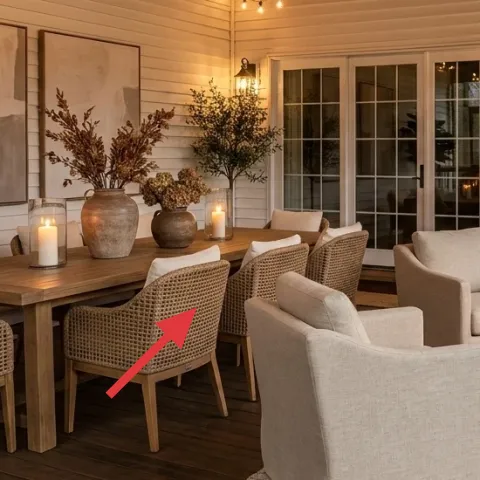
The wood dining table gives the patio an obvious focal point for coffee, conversation, and dinners, especially because it’s positioned right between the seating and the wall. Choosing a solid, medium-brown table matters: it echoes the wood ceiling beams and keeps the room from feeling too cool against the light shiplap. The alternative—going for a thin, metal table—can work, but it usually reads colder and makes the rug look heavier by comparison. This one accepts a simple styling trade-off: fewer decorative items, but higher contrast with candles and ceramic pots.
Leave a little tabletop breathing room
In this layout, the table styling is clustered, not packed—so the surface still looks inviting instead of cluttered.
Layer 3 — indoor-outdoor sofa ($300) Keeps the seating soft without competing with the wall
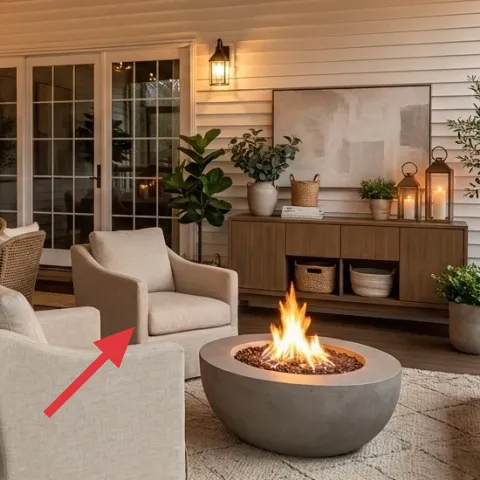
The indoor-outdoor sofa’s light upholstery and squared silhouette are what keep the patio feeling airy against the bold wall texture. It’s also practical: the cushions support lounging, while the neutral tone lets the rug pattern and ceramic pots provide most of the visual detail. I’d normally reach for a darker fabric, but that’s exactly how outdoor spaces get heavy fast—especially with wood floors and shiplap. The trade-off here is that light cushions show dirt sooner, so pairing the sofa with a washable pillow strategy is part of making it work long-term.
Avoid mixing too many patterns on day-to-day cushions
If the rug is patterned and the wall is textured, keep pillow patterns minimal so the room doesn’t read busy.
Layer 4 — framed abstract wall art (triptych) ($80) Anchors the whole wall with one repeatable graphic
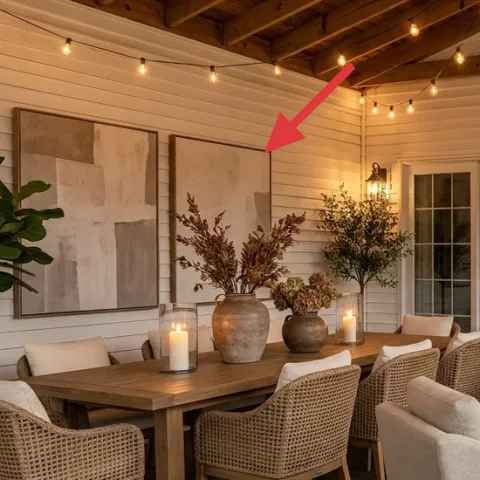
This framed abstract wall art triptych sits at eye level and does the job of “real decor” without needing more furniture. The muted shapes echo the patio’s palette—warm neutrals, medium brown, and soft contrasts—so the wall doesn’t feel blank, but it also doesn’t compete with the string lights overhead. Buying a matching set is easy, but DIY is where you can choose the exact tones and keep it aligned with your rug. The trade-off is time: a DIY takes focus, but it also makes the wall feel personal rather than generic.
Make it instead of buying it
DIY a three-panel abstract triptych that matches the rug’s neutrals and the shiplap’s warm tone, then slide it into matching thrifted frames.
Materials
- Thrifted wooden picture frames—3 pieces (fits your wall art size) — $18
- Canvas board or heavy paper panels—3 at the same size — $12
- Off-white craft paint — 1 small bottle — $10
- Warm gray craft paint — 1 small bottle — $6
- Brown/earth tone acrylic paint — 1 small bottle — $14
Steps
- Measure each frame opening and cut the paper/canvas panels to fit.
- Lightly sand the panels if using canvas board so paint goes on smooth.
- Paint an off-white base coat across all three panels.
- Block in abstract shapes with warm gray using painter’s tape edges for crisp borders.
- Add a small number of brown marks (think brushy rectangles or soft curves) to each panel.
- Let everything dry fully, then test placement of the triptych before sealing and inserting.
Total DIY cost: $60 — saves about $20 over buying.
Layer 5 — string lights ($15) Adds warm overhead “ambient” without fixtures
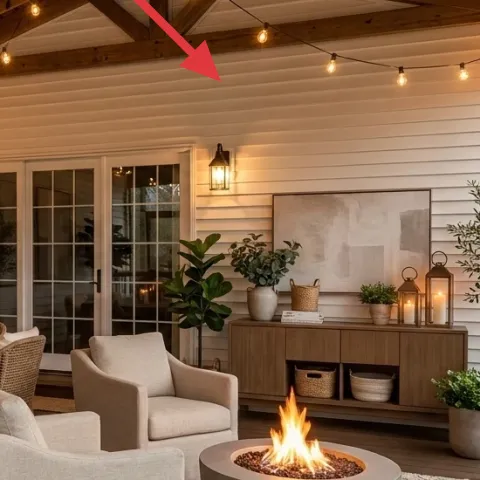
String lights run along the ceiling beams and create that soft, golden layer you can’t replicate with a single lamp. In a patio living area, overhead light changes the feel more than almost anything else because it brightens faces and makes the rug look warmer. The big decision is spacing and warm color: tight spacing with a cool white bulb can read like a backyard party, but warm bulbs and even spacing keep it calm. Instead of installing new lighting, this is a plug-in style choice that’s easy to move or adjust as seasons change.
Keep the cords off the floor
Running the lights along the beams prevents trips and keeps the look crisp from every seating angle.
Layer 6 — candles in glass holders ($15) Softens hard edges for nights
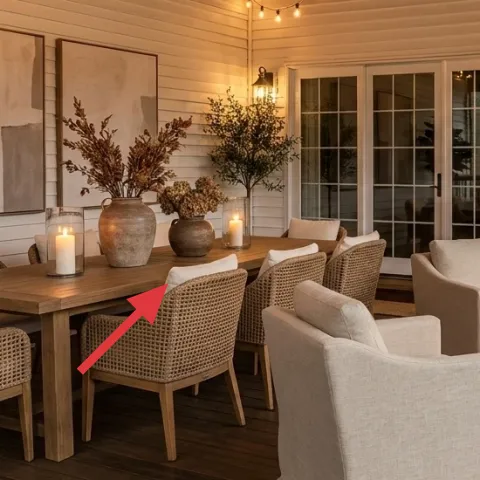
The candles in glass holders add small points of glow that echo the string lights—just closer to the table and seating. Because they’re clustered (not scattered everywhere), they feel intentional and match the modern farmhouse calm of the wood table and neutral textiles. A single candle can look skimpy, while too many becomes visual noise; the sweet spot here is a few grouped holders that sit near dinner-height surfaces. The trade-off is safety and maintenance: glass holders mean less mess, but they still need monitoring outdoors and quick extinguishing when wind picks up.
Use candlelight to “connect” zones
Placing candles on the dining table helps link the seating area to the wall side without adding more furniture.
Layer 7 — large leafy potted plant ($40) Brings height so the patio doesn’t feel flat
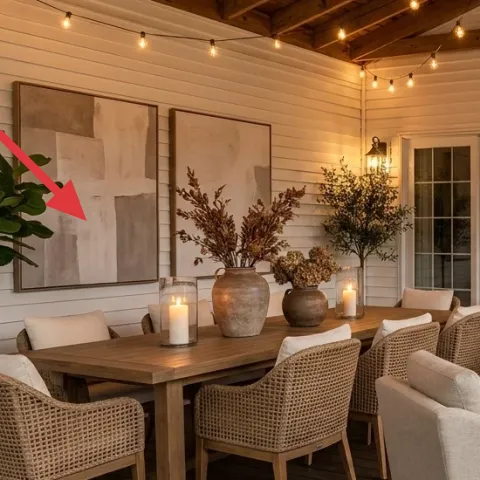
The large leafy potted plant on the left side adds vertical shape and softness against the straight lines of shiplap and the grid of framed art. You get an outdoor garden feel without needing extra landscaping, and its darker leaves offer contrast to the warm whites on the wall. Going too small is the most common mistake—then the plant disappears and the space looks unfinished. The trade-off is that plants need consistent watering, but a larger plant often means fewer replacements because it holds its presence longer between seasonal refreshes.
Choose one tall plant, then repeat small planters
A tall anchor plus smaller ceramics reads intentional instead of random.
The cost, layer by layer
| Layer | Item | Cost |
|---|---|---|
| 1 | Area rug 5×7 | $200 |
| 2 | Wood dining table | $180 |
| 3 | Sofa (outdoor-friendly fabric) | $300 |
| 4 | Framed abstract wall art triptych | $80 |
| 5 | String lights (set) | $15 |
| 6 | Candles in glass holders | $15 |
| 7 | Indoor/outdoor leafy potted plant (4–6 ft) | |
| $40 | ||
| Total | $830 | |
If a $200 rug feels like too much, choose a rug in the same neutral family (beige/stone) in a smaller 5×7 size and place it only under the seating fronts. Keep the same warm candle and string-light setup so the glow still does the heavy lifting.
What worked, what didn't (across the whole room)
This patio living area works because the anchors agree—warm neutrals repeat, the wall gets one graphic triptych, and overhead string lights keep the evenings soft. The few styling accents (candles and plants) support the big pieces rather than competing with them.
What worked
- The area rug grounds both the sofa and the fire pit zone, making the patio feel intentionally designed.
- Medium-brown wood furniture echoes the ceiling beams, so warm tones read cohesive instead of random.
- The framed abstract triptych adds structure on the shiplap wall without adding extra clutter.
- String lights provide a warm overhead layer that flatters faces and softens nighttime shadows.
- Candles in glass holders create small glow points that visually connect dining and seating.
- A tall potted plant adds vertical balance, preventing the space from feeling flat against the wall.
What didn't
- Light upholstery can show dust and pollen faster outdoors, so cushion maintenance becomes part of the plan.
- If the rug pattern is too bold, it competes with the wall art shapes and makes the scene feel busy.
- Overloading the table with too many ceramics at once reduces the calm, staged feel.
- Cool-white string lights can fight the warm wood and make the patio feel harsher after dark.
- If plants are all the same height, the shiplap wall loses depth and starts to look “one-note.”
What we'd skip if we did it again
Skip adding another large wall piece just because the shiplap feels blank. One framed abstract triptych gives the wall a clear focal anchor, and repeating smaller decor elements is enough—especially with string lights overhead.
Skip a cool-white bulb for the string lights. Warm bulbs and gentle spacing keep the patio living area feeling calm, and the rug’s neutrals look richer instead of gray.
Skip going too small on the rug. If the rug doesn’t reach far enough under the seating fronts, the furniture reads like separate “islands,” even when everything matches color-wise.
Frequently asked
How long does this patio refresh take on a weekend?
Plan on about 6–9 hours total for the non-DIY swaps: rug placement, setting up lighting, candle styling, and lining up the dining table. The longest part is DIY wall art because it involves measuring and letting paint layers dry. If the thrifted frames already match your panel sizes, the DIY can move faster.
Can I do this if I rent?
Yes—especially the rug, string lights, candles, and potted plants. For the framed abstract triptych, choose frames that can hang with renter-safe methods (or use hardware that doesn’t damage the wall). The goal is to keep any wall changes reversible so the patio can be re-styled without leaving permanent marks behind.
What if my patio is smaller than the photo?
Use the same rule of anchors: one rug, one dining table focal point, and one tall plant. Scale down the dining chairs and keep candle clusters to two or three holders instead of multiple heights. With smaller outdoor spaces, avoid extra overlapping patterns—let the rug carry texture and keep pillows more neutral.
What if my patio has a stronger dark wall or less shiplap?
Follow the same color logic, not the exact materials: keep the rug in warm neutrals and choose string lights with warm bulbs. If the wall is darker, consider slightly brighter candle holders and a wall art set with clearer contrast. The idea is to keep the wall readable at night without changing the lighting plan.
Where should I shop for these items without overpaying?
For the rug, look for outdoor-friendly materials at discount home stores and end-of-season sales. String lights and candles are usually best bought in multipacks online or at big-box retailers. Thrifted frames plus a DIY paint plan is a budget win for the triptych, and it avoids paying for a premium “matching set.”
What’s the biggest mistake people make on outdoor living area styling?
The most common miss is skipping the anchored rug, which makes everything look temporary. The second mistake is overloading the table or pillows with too many competing patterns. When the rug and wall art set the tone, then repeating neutrals in candles and plants brings cohesion without visual clutter.
More in Outdoor & Patio
Under $1000: patio living area refresh with 7 weekend upgrades
A patio living area can look styled (not staged) with a warm rug, one anchored dining table, and layered light. This $1000 weekend refresh …
Under $700: patio seating refresh with 7 budget upgrades
A warm, wood-heavy patio seating area can look intentional without a renovation. This weekend-friendly refresh uses 7 swaps (rug, seating s…
Under $300: move-ready pallet patio nook refresh with 7 layers
A pallet patio nook already has the structure—so this $300 refresh focuses on move-friendly textiles, light, and plant styling. Seven layer…