- Best for
- weekend refresh that feels finished
- Cost
- $980 total
- Difficulty
- Confident DIY
- Time
- one weekend (plus cure time for paint)
Why warm wood-and-olive sofa seating area is the move-friendly nook of 2026
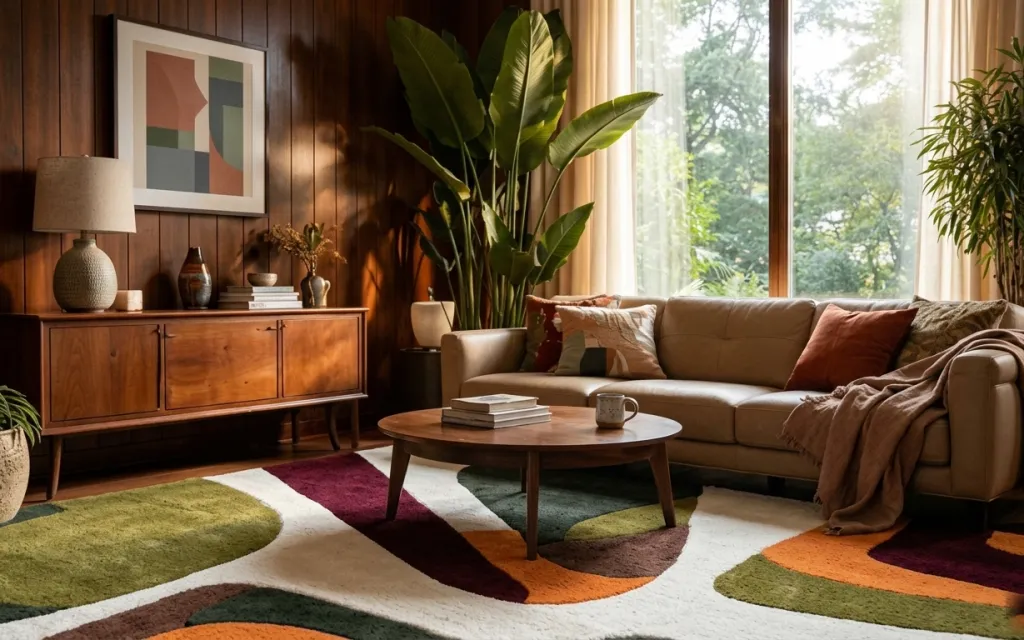
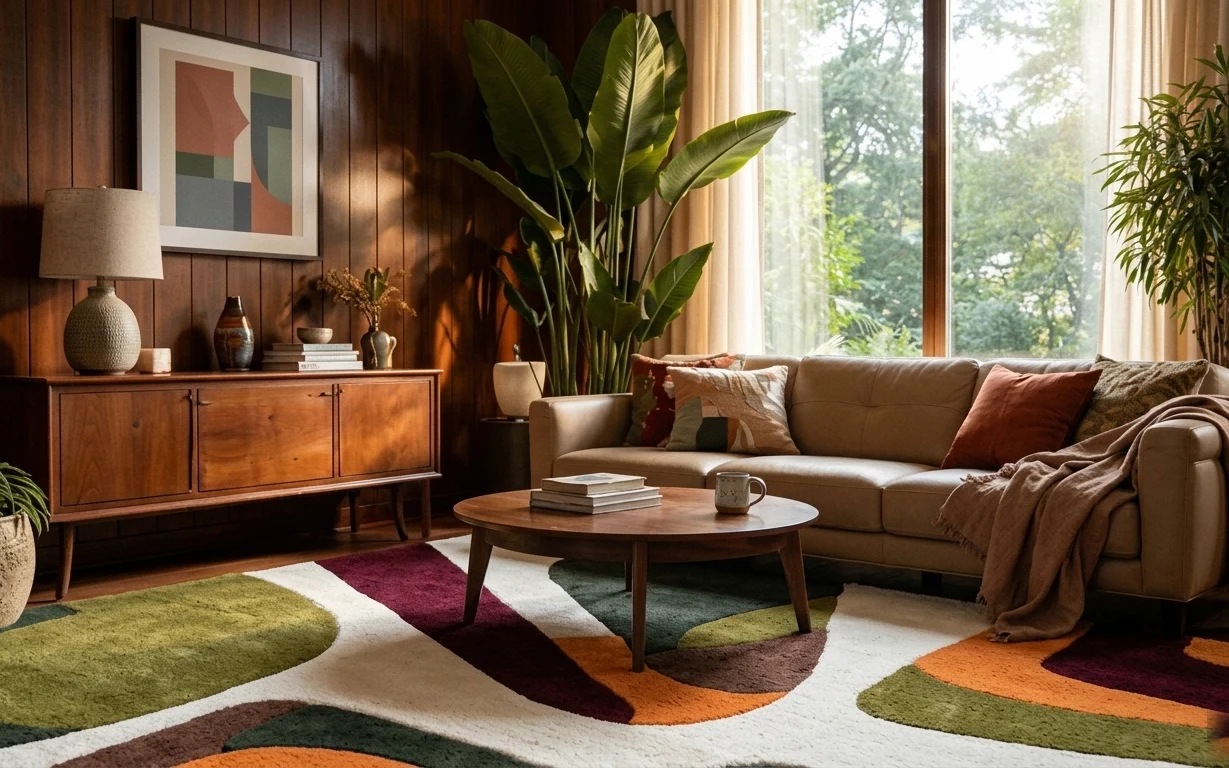
The first thing I noticed is how the room’s warm wood panel wall and cream seating already set the tone—you just need “grounding.” That’s exactly what the large multicolor area rug does: it spans the center, echoes the leaf-green in the plants, and keeps the coffee table from floating. Under it, the wood coffee table adds a low, grounded surface, while beige floor-length curtains bring softness back to the window. For a reference point, the color rhythm feels close to a Jonathan Adler–style mix of bold accents with warm neutrals, but the execution stays weekend-manageable: paint, hang, and style.
I made the mistake once of swapping a rug and calling it done—then everything looked like separate furniture. Here, the trick is that the rug, curtains, and console all “agree” on warm undertones: beige fabric, honey wood, and olive-green leaf shapes. The framed abstract artwork also matters because it gives the wall a visual anchor above eye level. Once I started choosing pieces that share at least one color lane (cream, olive, or rust), the room read intentional instead of accidental.
Layer 1 — large multicolor area rug ($200) Color-band mapping for the center
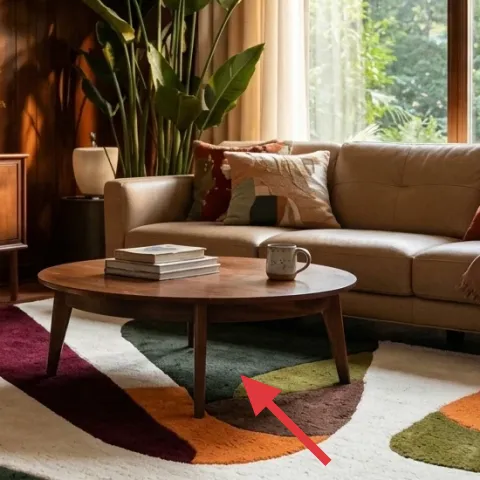
This large multicolor area rug sits under the sofa and centers the coffee table, so it becomes the room’s “floor plan.” The advantage of choosing a rug with clear color bands (olive, rust, cream, and warm earth tones) is that it ties together the greenery and the warm wood without making the wall feel busy. The trade-off is scale: a rug that’s too small will cut the room in half, so commit to coverage that reaches past the front legs. After that, the coffee table reads naturally like the next focal point instead of an island of wood.
Anchor the coffee table with rug edge coverage
Position the rug so the coffee table sits comfortably centered, with rug border visible on all sides—this stops the table from looking “stuck on top.”
Layer 2 — wood coffee table ($180) A low, warm surface that keeps sightlines open
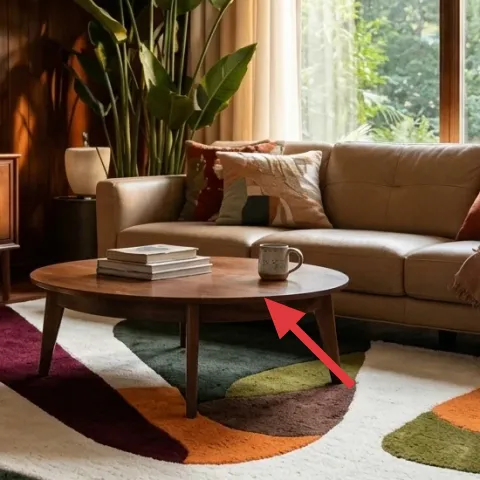
The wood coffee table is the quiet connector here: it’s warm enough to match the wood console and panel wall, but low enough that the plant and window still pull the eye. I like this over a glass-top option because the rug’s bold colors would look like they’re floating, not supported. The trade-off with wood is that it can show wear faster, so keep styling simple—one mug, a small stack, and a surface texture you can wipe down. When the table matches the room’s wood tone, everything feels cohesive even with colorful textiles.
Match undertones, not exact wood
It’s okay if the console wood and coffee table wood aren’t identical—just keep them in the same warm family so the rug colors don’t fight.
Layer 3 — beige floor-length curtains ($80) Softer window edges for a wood-heavy room
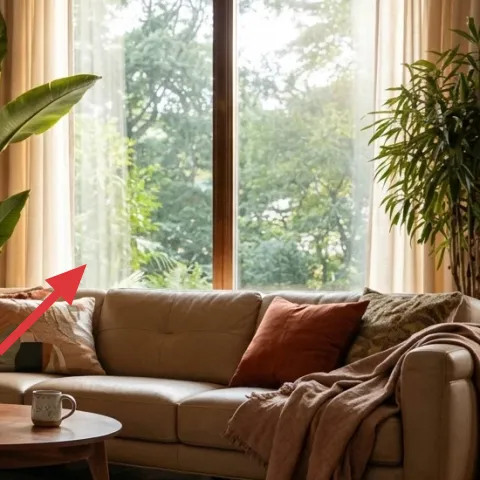
Beige floor-length curtains do a lot of heavy lifting in this sofa seating area because the wall is so visually strong. The fabric provides a vertical softness that balances the wood paneling and gives the plant near the window a cleaner “stage.” Choosing floor-length (not cropped) matters: it makes the room feel taller and keeps the window from visually punching a hole in the space. The trade-off is that lighter curtains show wrinkles, so steam or iron before hanging. Once they fall in a steady line, the whole room looks calmer.
Hang as high as ceiling height allows
Higher placement stretches the curtains upward, which helps the room feel larger without changing anything structural.
Layer 4 — large framed abstract artwork ($80) A wall anchor that echoes the rug’s modern rhythm
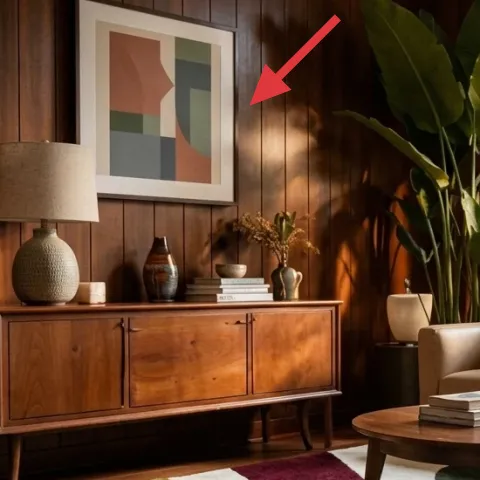
The large framed abstract artwork gives the wood-paneled wall a “center of gravity” above the console, so the left side doesn’t feel like storage with decor. I’d pick a framed piece like this over a small gallery set because the wall is already patterned; bigger art reads cleaner and fewer pieces means less visual clutter. The trade-off is you have to get the scale right—too small and it will disappear against the paneling. Centering the artwork and leaving breathing room from the console surface keeps the composition intentional.
Don’t size down just to “fit” the wall
On strong wood panel walls, small art can look like an afterthought. Go for a bolder scale so it actually anchors the console.
Layer 5 — table lamp with beige fabric shade ($60) Warm, textured light that matches the neutrals
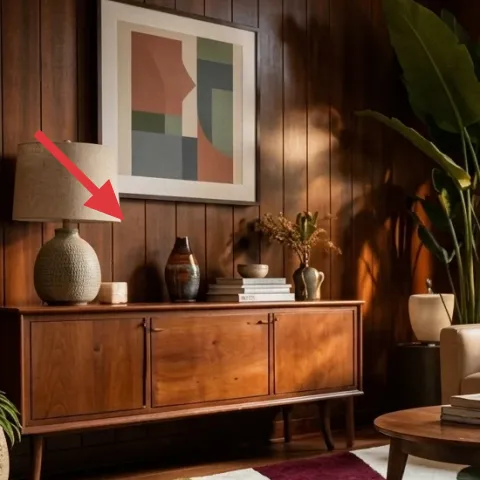
This table lamp with a beige fabric shade adds warmth without introducing a new color lane. The fabric texture also complements the rug’s softness underfoot and keeps the lighting from feeling too sharp against the paneled wall. I’d choose a fabric shade over a glossy ceramic drum because it diffuses daylight into a gentler glow at night. The trade-off is that fabric shades can trap dust, so a quick brush or lint roll matters. When you pair it with the curtain softness and cream tones, the lamp helps the room feel layered instead of flat.
Place lamps to support the art + seating triangle
The goal is that light reaches the sofa area and the console, not just the lamp itself sitting in a corner.
Layer 6 — large leafy potted plant near the window ($80) Vertical movement to balance the rug’s pattern
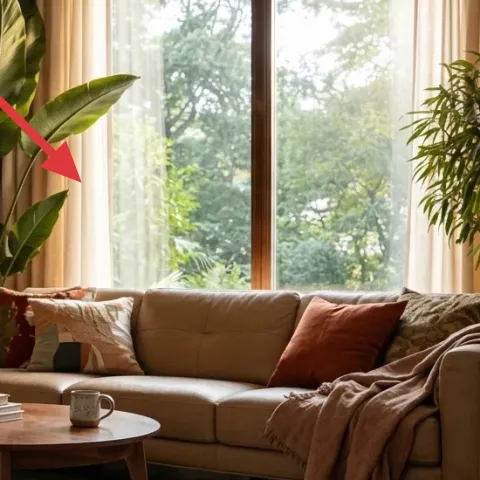
The large leafy potted plant near the window brings the room’s green tones to life, and that’s what keeps the multicolor rug from feeling random. Its height counters the horizontal lines of the sofa and rug, so the eye travels naturally from curtains to leaves to artwork. The advantage of choosing a plant with bold leaf shapes is visual texture—more interesting than a tiny tabletop plant when the room is wood-heavy. The trade-off is maintenance: rotating the pot weekly and wiping leaves keeps it looking lush. In this space, that care pays off quickly because the plant is in plain view.
Rotate the pot for even leaf shape
A small weekly rotation keeps the leaves facing the room, so it looks full from the sofa—not lopsided.
Layer 7 — wood console sideboard ($300) Painted structure that makes styling look deliberate
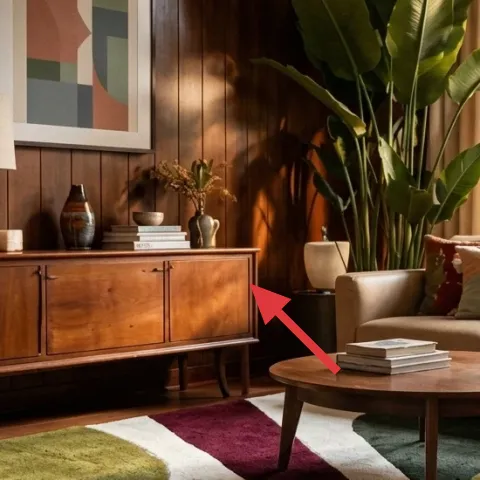
The wood console sideboard is the best “mid-budget reset” piece because it’s both functional and visually dominant on the left wall. Painting the cabinet doors and top slightly alters the whole color story, which is exactly what homeowners want when they’re refreshing fast. The trade-off is time: painting takes prep, drying, and a little patience to make the finish look even on wood grain. I’m treating the sideboard as the palette setter—warm, clean, and ready for the lamp, books, and vases already shown. Once the base looks fresh, even small styling changes read like a bigger redesign.
Make it instead of buying it
This DIY refresh paints the wood console sideboard so the doors and top match the room’s warm neutrals and the rug colors feel intentional.
Materials
- Paint for cabinets/wood — ~1 quart — home improvement store — $70
- Primer for wood (stain-blocking if needed) — ~1 quart — home improvement store — $40
- Roller + foam brush set — small kit — home improvement store — $15
- 120–220 grit sandpaper pack — home improvement store — $10
- Tack cloth + disposable gloves — home improvement store — $5
Steps
- Clean the console thoroughly with degreaser and let it dry.
- Lightly sand all painted areas to dull the finish for adhesion.
- Wipe with tack cloth to remove dust.
- Apply a stain-blocking primer in thin coats.
- Let primer cure fully (follow the can’s dry-to-recoat and cure guidance).
- Sand lightly with fine grit for a smooth finish, then wipe again.
- Apply the first paint coat with a foam brush/roller for even coverage.
- Let paint cure fully before handling and adding a second coat.
- Apply a second paint coat, then check edges and door faces for runs.
- Let the final coat cure completely before restyling.
Total DIY cost: $140 — saves about $160 over buying.
The cost, layer by layer
| Layer | Item | Cost |
|---|---|---|
| 1 | Large multicolor area rug | $200 |
| 2 | Wood coffee table | $180 |
| 3 | Curtain panel pair (84") | $80 |
| 4 | Framed art print 16×20 | $80 |
| 5 | Table lamp with beige fabric shade | $60 |
| 6 | Indoor plant (4–6 ft) | $80 |
| 7 | Sideboard / console table | $300 |
| Total | $980 | |
A cheaper variant keeps the rug and curtains but swaps the console-side finish to a stain instead of full paint, or chooses a smaller plant size so the “green vertical” still shows without going big.
What worked, what didn't (across the whole room)
This room’s best moves are the ones that create structure: a large rug that spans the seating zone, curtains that soften the window edges, and a console that holds styling like it belongs. The plant and framed abstract artwork add modern rhythm without fighting the warm wood panel wall.
What worked
- The multicolor rug anchors the sofa seating area and echoes the plant greens.
- Beige curtains add vertical softness against the strong wood paneling.
- The framed abstract artwork creates a clear focal point above the console.
- The table lamp with fabric shade keeps the lighting warm and diffused.
- The large leafy plant provides height and texture where the rug is visually loud.
- A warm wood coffee table ties together surfaces instead of introducing a new material.
What didn't
- When styling on the console gets too tall, it crowds the artwork and looks top-heavy.
- If the rug shifts even a few inches, the seating zone stops feeling centered.
- Using a very bright, cool lamp bulb can fight the warm wood panel wall tones.
- Overstuffing pillows in matching colors makes the room feel “paint-by-numbers.”
What we'd skip if we did it again
Skip a small rug. On a sofa seating area, a too-tiny rug makes the coffee table feel separate and forces the eye to hop instead of staying anchored.
Skip matching every accessory to the exact same beige. Warm rooms look best when there’s variation in texture—fabric, ceramic, and wood grain—while still sharing undertones.
Skip buying a second “statement” wall piece. The large framed abstract artwork already does the job against the wood panel wall; spend that energy on curtains, rug placement, or console finish.
Frequently asked
How long does this kind of living-room refresh take?
For a mostly-swap weekend, plan 4–7 hours across the rug placement, curtain hanging, and styling. If you paint the wood console sideboard, add drying/curing time: active work is usually 2–4 hours, but you’ll want to respect the can’s cure guidance before fully handling and restyling.
What if I’m a renter and can’t paint the console?
Keep the console hardware and focus on reversible styling: swap in a new rug and curtains, then rework what’s on top (books, vases, and the lamp). You can also consider a temporary color change with peel-and-stick wallpaper on a single door panel, but only if it stays clean after removal.
My sofa is a different size—how do I choose rug coverage?
Aim for a rug that reaches under the front legs of the sofa and still shows border on both sides. If your seating is wider, go up a size so the coffee table stays centered. The goal is for the rug to create one continuous seating “zone,” not two separate islands.
Should I match curtain color to the walls or to the sofa?
In warm wood rooms, beige curtains usually look best because they sit between the wall tone and the sofa tone. That lets the rug’s stronger colors do the visual work. If you’re unsure, choose a fabric with a similar undertone (warm cream over cool white).
Where should the artwork sit relative to the console?
Center the framed abstract artwork above the console so it visually “lands” in the same zone the lamp lights up. A common mistake is putting it too low; when in doubt, err higher so the artwork remains the wall’s focal point above the clutter.
What’s the biggest styling mistake in rooms like this?
Over-collecting on the console. This room works because the items are spaced: a lamp for light, books for height, and ceramics/vases for texture. If everything is tall or reflective, the wall feels busy and the rug’s pattern loses its grounding role.
More in Living Room
Under $1000: warm wood-and-olive sofa seating area refresh
A warm, wood-paneled sofa seating area gets a more intentional look with a multicolor rug, layered window curtains, and a cohesive console …
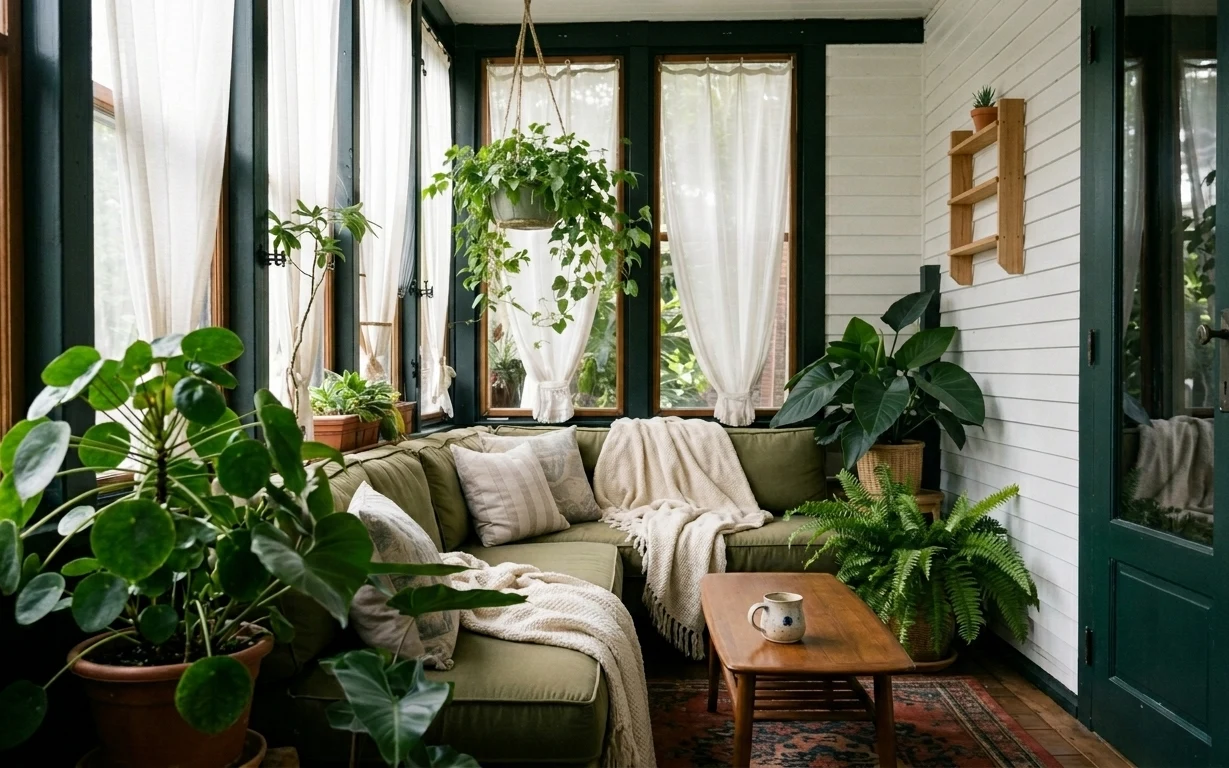
7 no-drill swaps for a plant-filled living room corner, $500
A plant-filled living room corner can look styled (not cluttered) with $500 of move-ready swaps. This plan leans on patterned rug grounding…
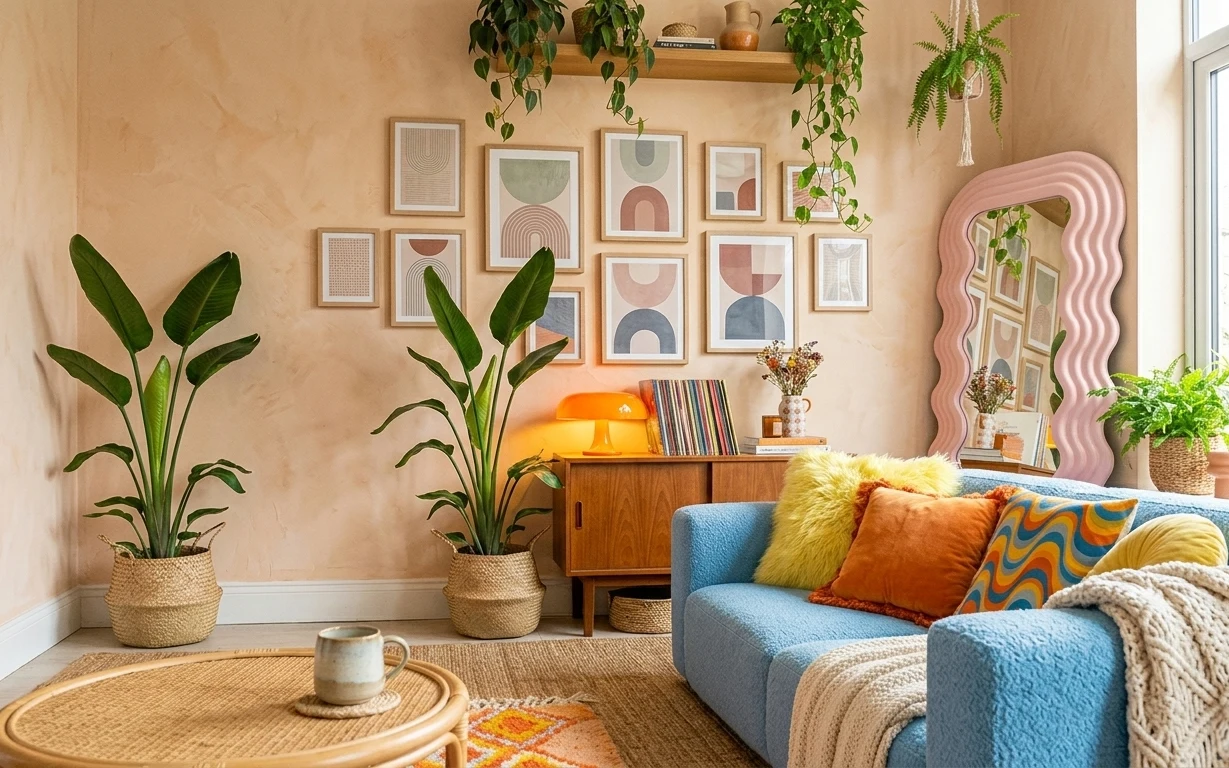
7 renter-friendly swaps for a $400 sofa seating area refresh
A $400 refresh for a renter’s sofa seating area using 7 no-drill upgrades: a woven jute-style rug, yellow faux-fur pillow, orange-shade lam…