- Best for
- Weekend refresh with big visual anchors
- Cost
- $1,365 total (under $1,500)
- Difficulty
- Confident DIY
- Time
- 1–2 weekends
Why sage-green and terracotta is the living room dining-kitchen of 2026
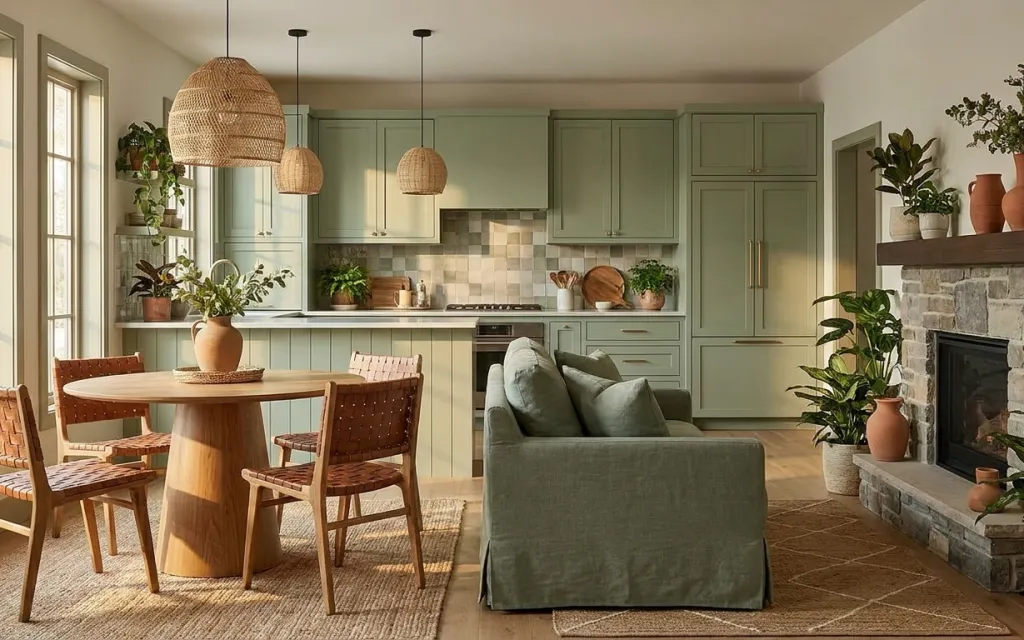
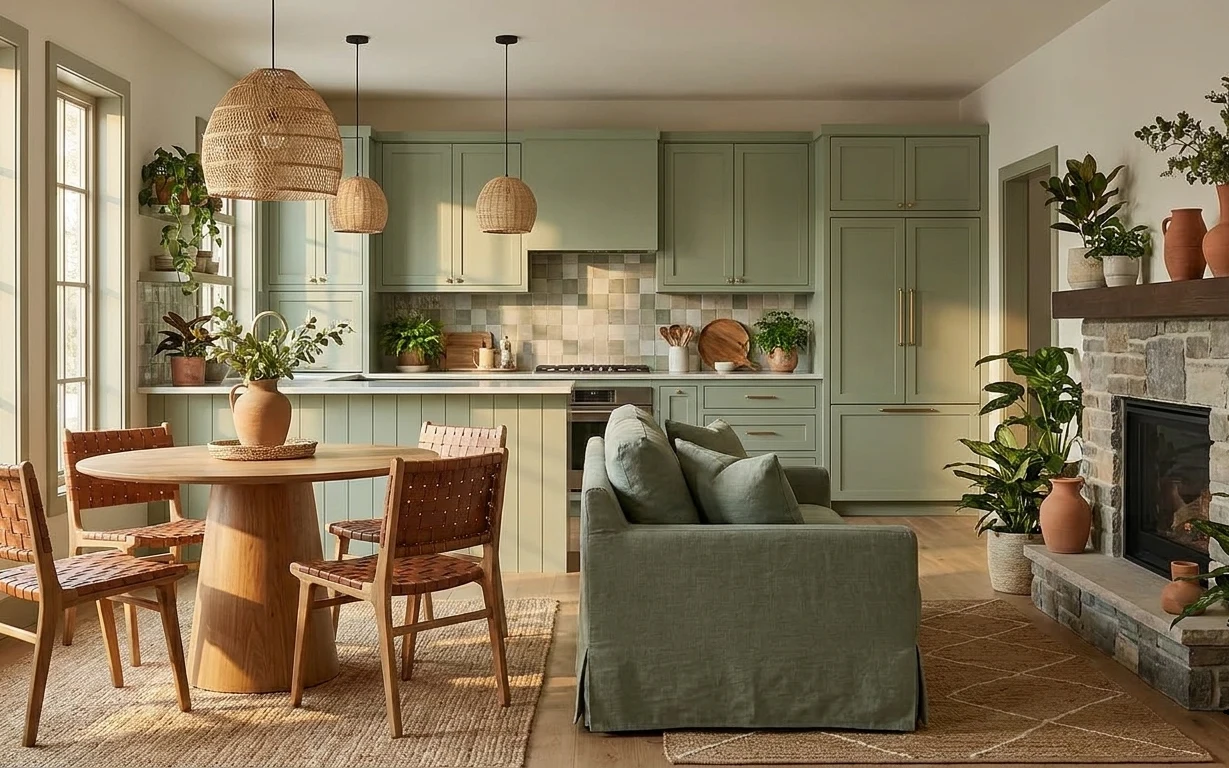
Start with the contrast you can see immediately: a sage-green kitchen backdrop plus warm terracotta pots, then soften it with an earthy area rug. In this setup, the textures matter—light wood dining surfaces, woven rattan pendant shades, and the stone fireplace surround all add different kinds of “quiet.” If your place is new-to-you (or still in its first-year furniture phase), this is achievable because you can pick one anchor color family and repeat it in plants and soft goods rather than buying a whole new set at once.
I used to overthink “matching,” especially with plants. On my own place, I once bought three different neutral pots and ended up feeling like the plants belonged to separate rooms. What changed my mind was repeating one warm material—terracotta—so the greenery looks collected instead of scattered. Here, the green sofa and the painted cabinetry do the heavy lifting, and the terracotta brings it back to human scale.
Layer 1 — area rug ($200) sized to anchor the dining-and-fireplace zone
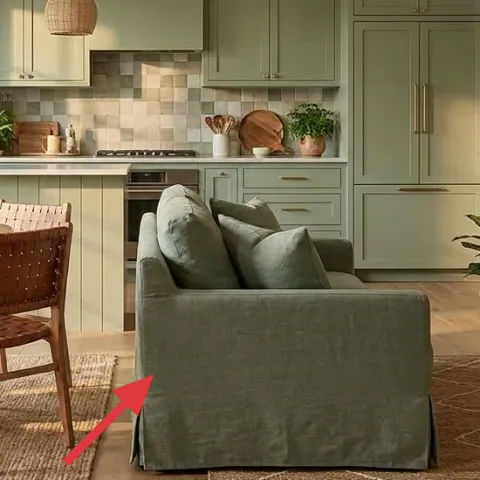
This area rug sits under the dining table legs and carries your eye across to the fireplace side, which is why the whole room feels grounded instead of chopped into zones. The weave reads warm and slightly textured, so it handles everyday scuffs without looking like it needs perfect floors. The trade-off is that a rug this size isn’t a “quick toss” purchase—you’ll want the front chair legs and part of the sofa-facing area to land on it. If you go smaller, the dining chairs and sofa start to float visually, especially against the light wood floor.
Run it long, not just wide
Let the rug extend far enough that the dining chairs still sit on it when you pull them out.
Layer 2 — rectangular dining table ($400) warm wood that plays nicely with painted cabinets
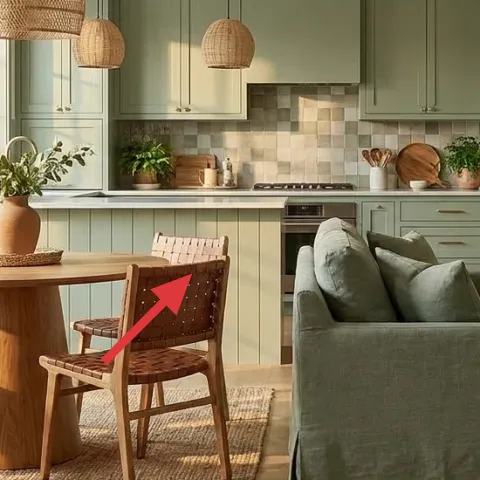
The rectangular dining table is the linear counterpoint to all the vertical kitchen cabinetry—its warm wood tone also softens the cool sage greens. This shape works well in open-plan rooms because it visually “frames” the seating even when you’re also looking at a fireplace. I’d choose this over a dark table if you’re trying to keep the room bright in daytime photos like this one; dark wood can make the space feel tighter against cream walls. The downside of going warm wood: it can show wear faster, so a rug under it (Layer 1) becomes extra important.
Match the undertone, not the exact shade
Your table doesn’t need to be the same color as the fireplace surround—just in the same warm family.
Layer 3 — green upholstered sofa ($600) cushion depth with a color that matches the kitchen
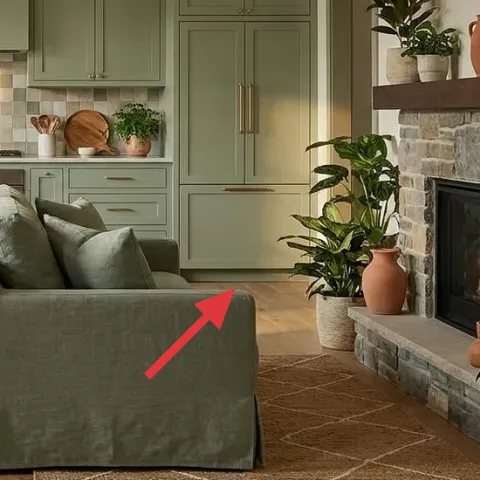
The green upholstered sofa is the biggest visual anchor here, and it works because the green echoes the painted kitchen cabinetry instead of fighting it. The upholstery reads slightly textured, which helps it look less formal than a smooth microfiber piece and more lived-in with time. You could go beige for “safe,” but beige won’t create the same connection between dining and kitchen. The trade-off: a green sofa is a commitment, so pick a shade that feels gray-green or sage-green—not neon—and test it against your actual daylight. This setup looks cohesive because the sofa color is repeated again in the palette.
Avoid overly cool blue-greens
If your undertone pulls blue in daylight, it can make cream walls look yellow and highlights harsh underpendant light.
Layer 4 — terracotta pot ($40) DIY-ready terracotta to repeat the warm note
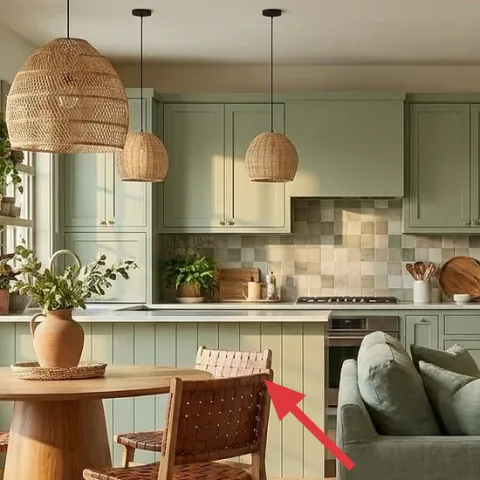
That terracotta pot is doing more than holding a plant—it’s repeating the warm material family that shows up elsewhere in the room. Terracotta is especially good in modern farmhouse styles because it reads handmade, even when the rest of the room is clean-lined. The obvious alternative is a white pot, but in this color scheme a white pot can feel too “fresh” and separate from the sage-green cabinetry and stone fireplace. Instead, go with painted terracotta so you can control the exact warmth and get a better match to your rug and wood tones.
Make it instead of buying it
DIY painted terracotta planters to match the warm tones in the rug and wood without buying another whole decorative set.
Materials
- Terracotta pots (2) — 6–7 in — local garden shop — $12
- Primer for ceramics/terracotta — 1 can — hardware store — $8
- Acrylic craft paint, warm clay color — 1/2 pint — craft store — $6
- Matte clear sealer — small can — hardware store — $9
- Foam brush or small roller — 1 pack — craft store — $4
Steps
- Wash the terracotta pots to remove dust, then let them fully dry.
- Lightly scuff the surface with fine sandpaper so primer bonds.
- Apply ceramic/terracotta primer in thin coats.
- Let primer cure fully per the can label.
- Paint your clay color in 2 thin coats, letting each dry completely.
- Let paint cure overnight before sealing.
- Seal with a matte clear sealer, using thin, even strokes.
- Let the pots cure before watering plants.
Total DIY cost: $39 — saves about $1 over buying.
Layer 5 — terracotta vase ($30) the tabletop and mantel accent in a warm ceramic tone
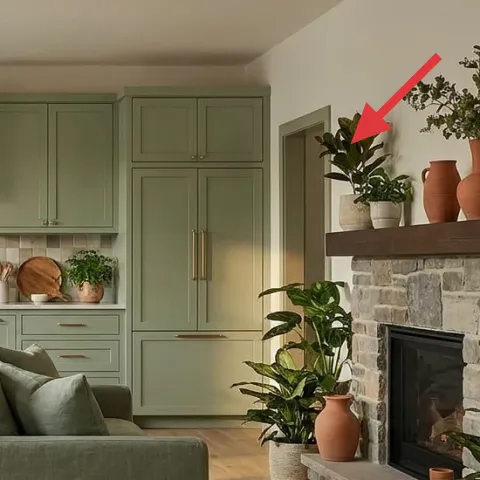
The terracotta vase on the right side shelf creates a warm focal point that visually balances the cooler kitchen cabinetry. Its shape reads sculptural next to the stone fireplace surround, and that matters because it gives the room “vertical interest” without adding another wall piece. The trade-off is that ceramic accents can look random if they don’t repeat elsewhere, so keep the color story consistent with the terracotta pots and any warm wood surfaces. I’d pick a single larger vase over multiple tiny ones here—fewer objects look more intentional in open-plan rooms where you’ll see them from multiple angles.
Group by material, not by pattern
One warm ceramic family (terracotta) looks collected; mixed styles look accidental.
Layer 6 — indoor plant in terracotta pot ($80) greenery that softens stone and painted wood
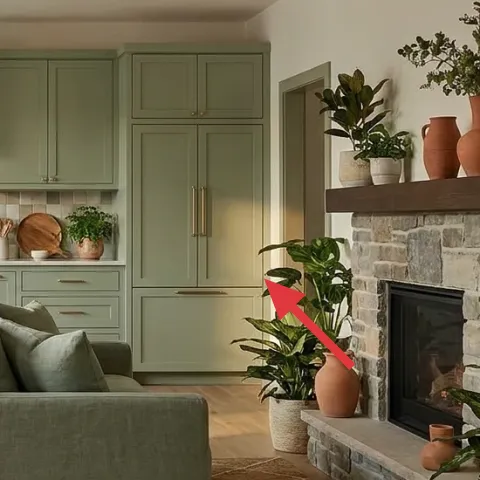
This indoor plant in a terracotta pot adds softness right where the room is visually heavy: stone fireplace surround and cabinetry depth. Plants also add scale variety—vines and leaves fill the “gap” between shelves and floors, which makes the room feel styled without adding more furniture. The obvious alternative is adding another decor object, like a ceramic container, but that won’t bring the living texture contrast that greenery does. The trade-off: plants need consistent light, and the pot should stay stable—use a saucer and check drainage if you water on a schedule.
Keep it close to the color repeat
Terracotta pots help the plant feel part of the palette, not stuck on top of it.
Layer 7 — terracotta pot ($15) a small supporting plant container near the fireplace edge
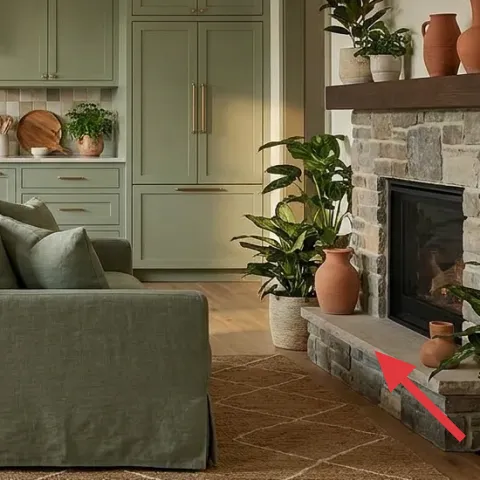
That smaller terracotta pot near the fireplace side works like a “supporting actor” that keeps the warm palette continuous across the room. It’s a smart placement because the fireplace area is naturally attention-grabbing; adding a matching pot prevents the corner from feeling like an island. The scale is the key trade-off: too large and it competes with the main plant and vase, too tiny and it looks like an afterthought. This size is enough to repeat the warm clay note while letting the stone and greenery stay the stars.
Use one small pot to finish a corner
If a corner looks blank, repeat terracotta in a smaller vessel first.
The cost, layer by layer
| Layer | Item | Cost |
|---|---|---|
| 1 | Area rug 8×10 | $200 |
| 2 | Rectangular dining table | $400 |
| 3 | Green upholstered sofa | $600 |
| 4 | Terracotta pot (DIY ~$39 in materials) | $40 |
| 5 | Terracotta vase | $30 |
| 6 | Indoor plant in terracotta pot | $80 |
| 7 | Small terracotta pot | $15 |
| Total | $1,365 | |
If you need it cheaper, keep the green sofa and rug, then swap the dining table for a lighter wood option and use one fewer plant container. You’ll still get the same palette repetition—sage-green + terracotta—without paying for two larger ceramics.
What worked, what didn't (across the whole room)
The strongest wins here are palette repetition and scale control: the rug anchors the dining-to-fireplace path, and terracotta shows up often enough to feel intentional. The green sofa connects the living side to the painted cabinetry so the open-plan view reads cohesive. The only places this look can wobble are when pots feel mismatched or when the rug is too small and chairs start to float.
What worked
- The area rug covers the dining chair zones so the room reads like one piece, not three.
- The rectangular dining table shape matches the cabinetry lines and keeps traffic flow clear.
- The green sofa echoes the painted kitchen cabinetry, creating an easy color thread across sightlines.
- Terracotta pots and vases repeat warmth against cream walls and stone textures.
- The indoor plant softens the stone fireplace surround with living texture and height.
- A small matching pot near the fireplace edge prevents the corner from feeling unfinished.
What didn't
- A rug that’s even slightly small can make dining chairs look like they’re standing off the floor.
- Too many different pot colors can turn the palette into clutter instead of a collected look.
- If the green sofa pulls too blue in daylight, it fights the cream walls.
- Placing ceramics without repeating terracotta nearby can feel like “random decor.”
What we'd skip if we did it again
Skip swapping random decorative items first. In this room, the heavy structure is the palette (sage-green cabinetry and cream walls) plus the big furniture blocks (sofa and rug). If those aren’t right, small ceramics won’t save the overall read.
Skip choosing a rug based only on color. The scale is the real job: make sure dining chair legs stay on the rug and that the rug reaches toward the fireplace side.
Skip mixing terracotta with too many other warm finishes at once. One repeated warm family (terracotta and warm wood) gives a modern farmhouse look; mixed pottery can make the corners feel busy.
Frequently asked
How long does this kind of refresh usually take for a homeowner?
Plan for 1–2 weekends. Day one is usually delivery and placement: rug spread, sofa positioning, and dining table alignment. Day two is the details—pot placement, plant settling, and any final styling edits to keep terracotta repeating. If you’re painting terracotta pots, add an extra evening for curing time and avoid watering until the sealer is fully set.
What if I rent—can I still do this look?
Yes, you can keep the strategy without the permanent work. Choose a removable area rug and upholstered sofa (or a sofa cover if that’s your situation), then bring in terracotta through planters and vases. Wall changes aren’t required because the look here depends on furniture scale and repeated warm materials. The key is to repeat terracotta consistently in at least two locations.
My room is smaller. Should I go down a rug size?
Don’t drop rug size automatically—measure first. For a smaller room, aim to keep the dining chair front legs on the rug when the chairs are pulled in. If your dining zone is tighter, prioritize rug coverage under the table perimeter, then keep the plant and vase grouping compact so it doesn’t overwhelm the fireplace side.
Where should I shop for these pieces without overspending?
Start with the rug and sofa, because scale matters most there. For rugs, use online filters for 8×10 and “jute or sisal look.” For sofa, look for mid-range upholstered options in sage-green. For terracotta, garden centers and home stores are often better than furniture retailers—plants and pots are easier to find in consistent warm tones.
What’s the biggest mistake people make in a modern farmhouse living room?
They buy one large item in the right style and then scatter everything else in unrelated materials. In this room type, terracotta repetition is the glue: pots and vases should echo the warm clay note, while greenery softens stone. If you choose multiple pot colors, the palette stops reading cohesive.
More in Living Room
Under $1500: modern farmhouse living room refresh
A $1500-or-less living room dining-kitchen refresh built around a warm rug, a green sofa, and terracotta plants. This weekend project uses …
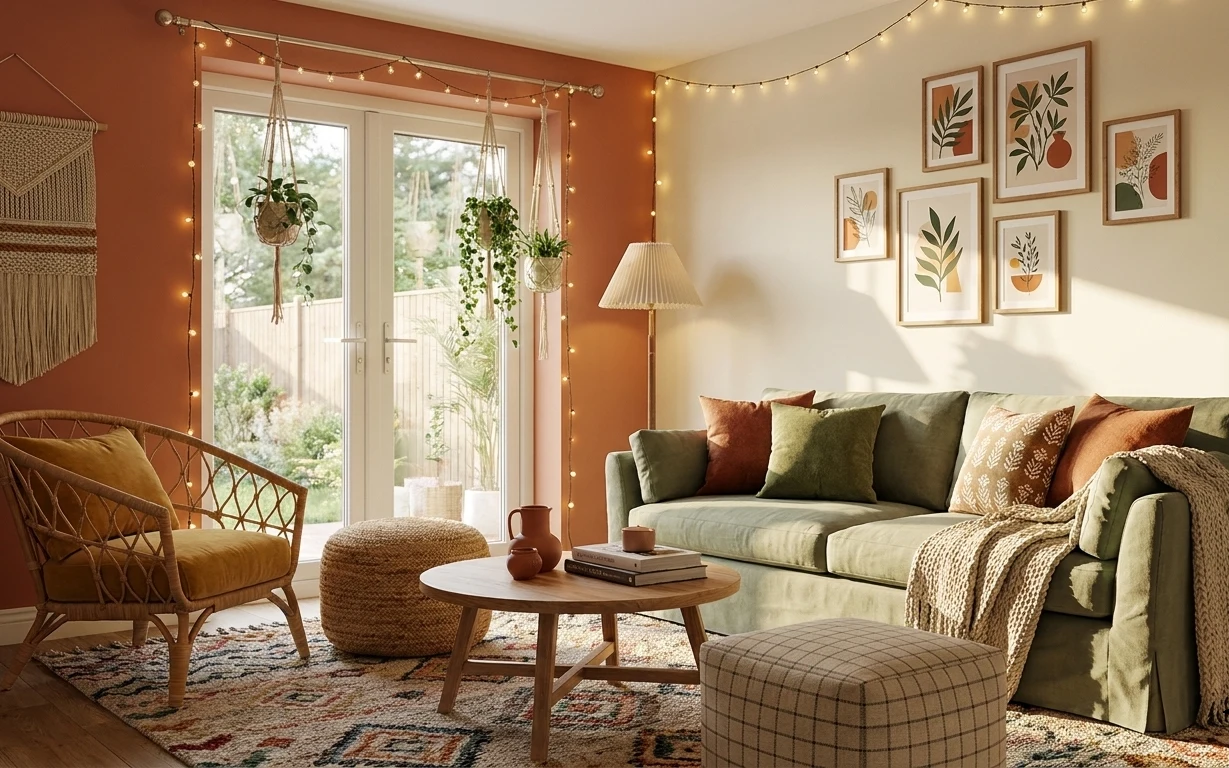
Under $600: move-friendly living room refresh with 7 swaps
A plant-filled, rust-and-sage living room style is easy to rebuild for your next lease. Here are 7 move-friendly swaps (under $600 total) t…
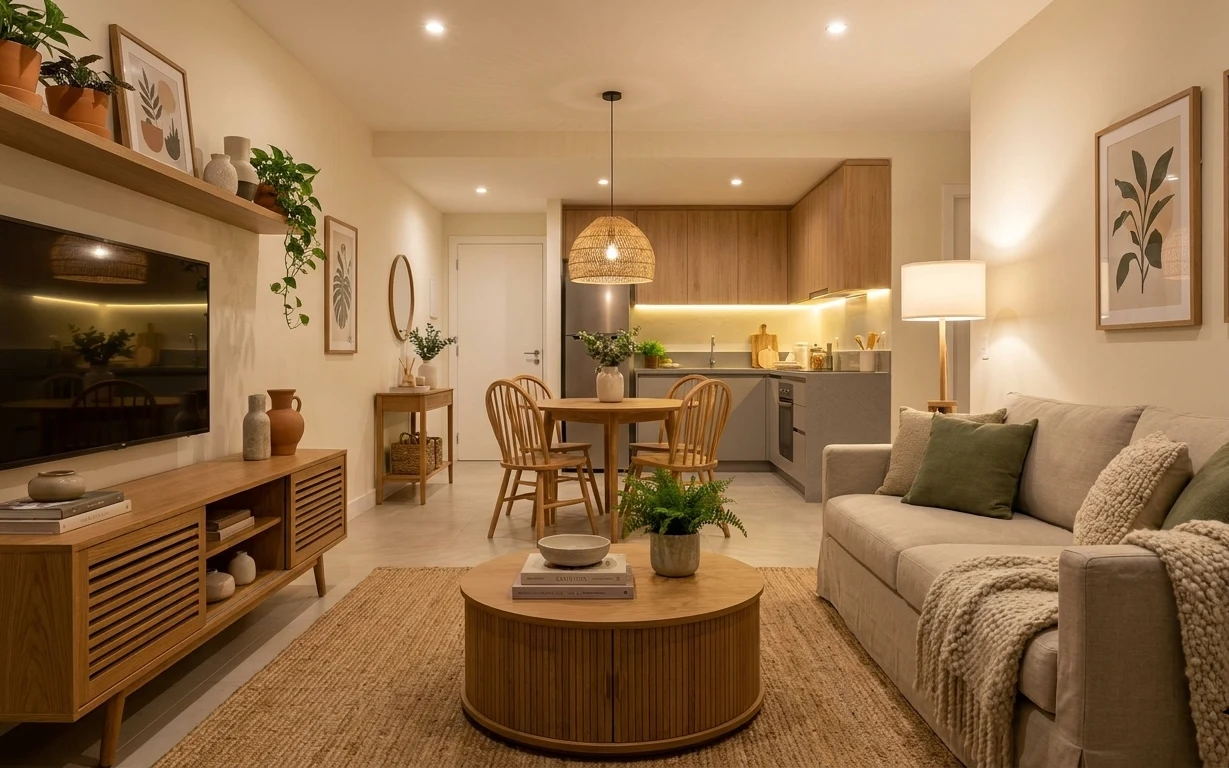
Under $700: a homeowner's warm-modern living room refresh with seven plant-forward layers
A complete seven-layer homeowner refresh for a small open-plan living room — cream sofa with olive pillows, a refinished thrifted brass flo…