- Best for
- textile-first living room refresh
- Cost
- under $600
- Difficulty
- weekend-friendly
- Time
- 4–6 hours
Why rust-and-sage botanicals are the living room vibe of 2026
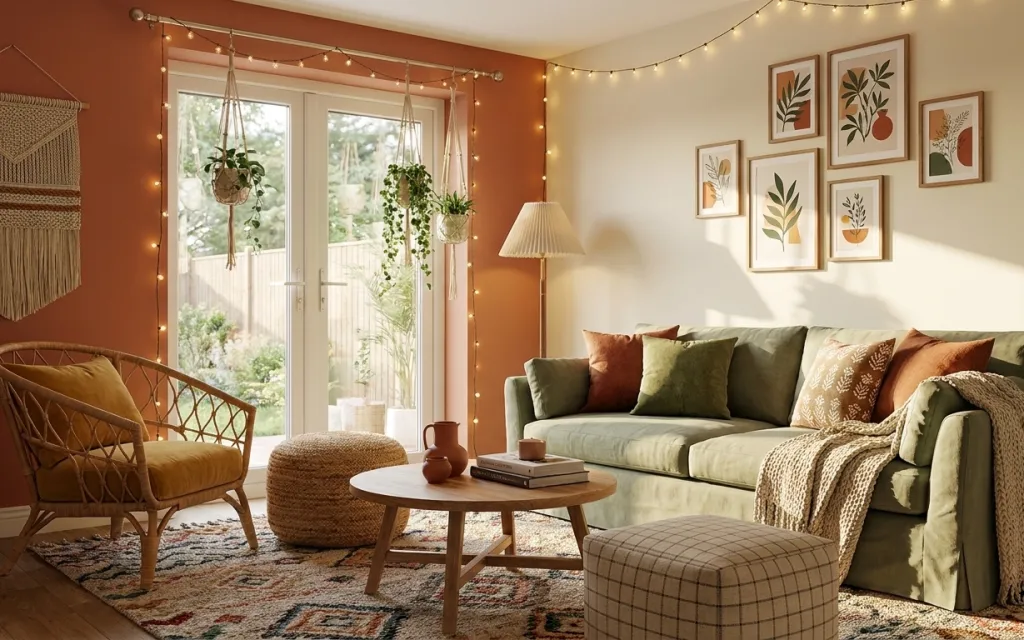
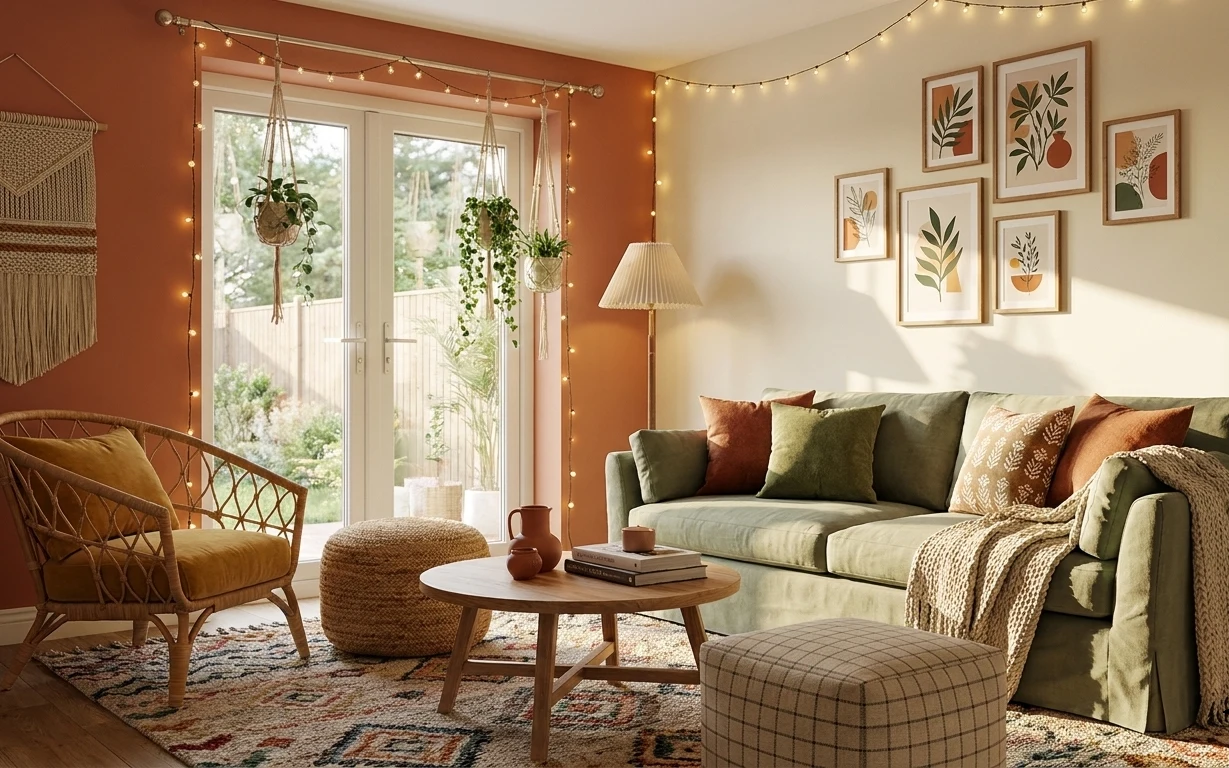
The first thing you notice is how the palette behaves: rust-terracotta on the wall, sage green on the sofa, and cream tones in the throw and rug. The rug’s vintage-inspired pattern gives the room somewhere to “land,” while the sofa’s textured pillows keep the whole thing from looking flat. Then the warm string lights and the woven macramé add a slow, organic rhythm against the clean window light. All of it is renter-manageable because the big visual moments are fabric, frames, and lightweight décor.
I used to overthink lighting when I moved in—like, I’d search for the “perfect” lamp before I even unpacked the boxes. But this arrangement is different: the string lights do the early cozy work, and the table lamp only has to add a second layer of warmth. The mistake I made last year was buying something tall and heavy that took two people to carry. This time, everything here stays light enough to grab on a busy move day.
Layer 1 — Area rug ($150) patterned underfoot so everything else can stay simple
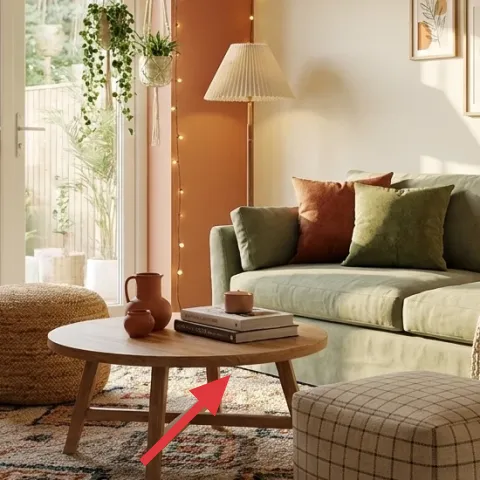
This area rug anchors the whole room because it’s the only true “surface” that holds pattern. In the photo it’s warm-toned and multicolored, which matters: it hides the little life-stains that show up in shared housing, from muddy shoes to dropped snacks. The alternative—going too neutral with a plain jute-style rug—usually makes a bold wall feel louder than it should. A patterned rug also gives your furniture placement a default center line, so the coffee table and sofa read as intentional instead of temporary.
Pick the pattern first, then match pillows
Once the rug is in, you can choose pillow colors (sage, cream, warm brown) by pulling from it instead of guessing.
Layer 2 — Throw pillows ($20) sage-and-terracotta cushions to repeat the wall color
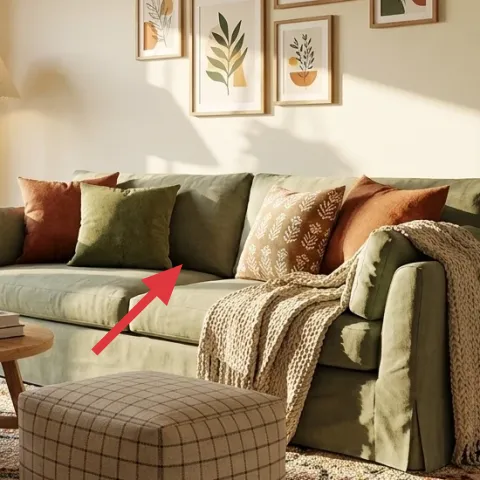
These throw pillows work because they repeat the room’s two big visual notes: garden-soft green and warm clay-brown. They’re also a practical shared-housing choice—you can swap covers without touching anything fixed. The alternative is buying a whole new sofa, but most rentals don’t allow that kind of weight or commitment. With pillow covers, the trade-off is that you need a few extras on hand, because covers are what you actually re-style for each season. In this look, the mix of solids and a subtle pattern keeps it from reading as “single-note” boho.
Texture is doing half the work
Woven and lightly textured pillow covers make the colors feel warmer, even in daylight.
Layer 3 — String lights along ceiling/wall ($15) warm sparkle without a hardwire project
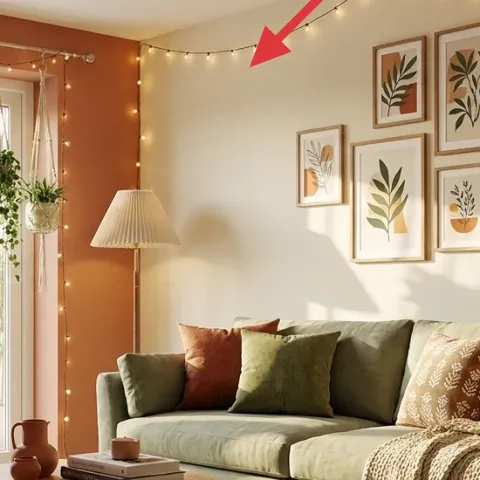
String lights add movement and softness, and they’re renter-friendly because they stay modular. In the photo, the lights are draped along the ceiling line and down toward the wall, which visually stretches the room taller. The alternative—replacing the overhead fixture—would break the “don’t replace fixed things” rule fast. Here, the trade-off is that you need a plan for placement so the cords don’t tangle. A string-light set also changes the whole mood after dark, while still being easy to pack in a box the next time you move.
Route cords to land near outlets
Choose a loop path that keeps the visible cord short and hides the slack behind the lamp or sofa edge.
Layer 4 — Macramé wall hanging ($70) woven wall texture that comes down in one piece
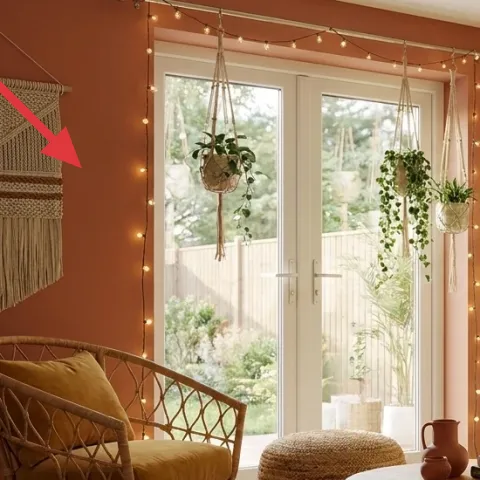
The macramé wall hanging gives the rust wall a tactile focal point without adding more paint, shelves, or hardware. It’s placed left in the photo, which balances the cluster of framed botanicals on the right. If you’re trying to avoid drilling or heavy installs, this style is a sweet spot: it’s visually bold, but physically light. The trade-off is sizing—oversized macramé can look tangled in small rooms—so aim for one statement piece rather than a full wall of rope. This also photographs well, because the fringe moves and catches the light from the string lights.
Make it instead of buying it
DIY the macramé wall hanging using pre-cut cord and a simple dowel so the whole woven piece packs flat and stays renter-safe.
Materials
- Macramé cord — ~200–250 ft — craft store — $20
- Wooden dowel (or branch) — 1 piece, ~24–30 in — hardware store — $12
- Command hook + strip set (for temporary hanging) — 1–2 sets — grocery/department store — $8
- Jute twine (for securing ends) — 1 roll — craft store — $6
- Sandpaper (for smoothing dowel) — 1 small sheet — hardware store — $2
Steps
- Cut cords to length, then group them evenly around the dowel span.
- Tie cords onto the dowel using a secure larkshead-style knot.
- Work the pattern with square knots in rows, keeping tension consistent.
- Form the top section ties so the piece hangs straight.
- Secure the bottom with twine wraps, then trim ends evenly.
- Hang using Command hooks on the wall where the framing cluster needs balance.
Total DIY cost: $48 — saves about $22 over buying.
Check hook type for your wall
If the wall has a rough or delicate surface, do a small test with the specific Command hook before committing.
Layer 5 — Framed botanical prints (multiple) ($120) a tidy grid that reads like a greenhouse
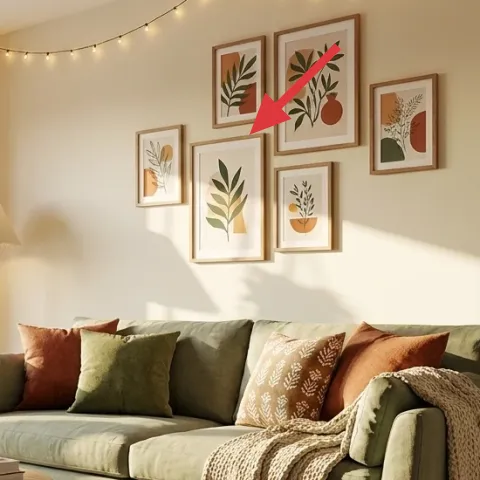
The framed botanical prints are doing the “garden” part of the room, and the arrangement matters: they’re grouped so your eye moves from one leaf drawing to the next instead of getting stuck on one print. Using frames also keeps the look portable—take them down, pack in two flat stacks, and you’re set for the next lease. The alternative is going all-in on a single oversized print, but that’s riskier in shared spaces where wall space changes. The trade-off with a multi-frame set is alignment—measure the spacing once so the grid stays calm, not chaotic.
Keep the frames consistent, mix the plants
Matching frame color (wood or cream) lets the botanicals vary without looking random.
Layer 6 — Plug-in table lamp ($55) a shade that makes the warm palette feel softer
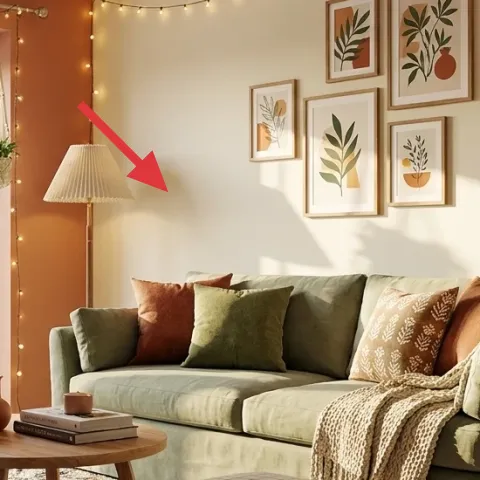
The table lamp provides a focused pool of light that makes the sofa and rug feel cozy even when daylight fades. In the photo, the shade is a light neutral, which avoids harsh glare and keeps the rust wall from looking overly saturated. The alternative is relying on string lights alone—pretty, but usually too diffuse for reading or evening tasks. A plug-in lamp is also the shared-housing win: it doesn’t need installation and it travels in a car-sized move. The trade-off is bulb tone—cool bulbs fight the warm color story, so choose a warm white.
Use warm white bulbs for the whole color story
A warmer bulb temperature makes sage green feel more like “garden” and less like “office.”
Layer 7 — Wood coffee table ($140) the serving surface that ties the seat to the décor
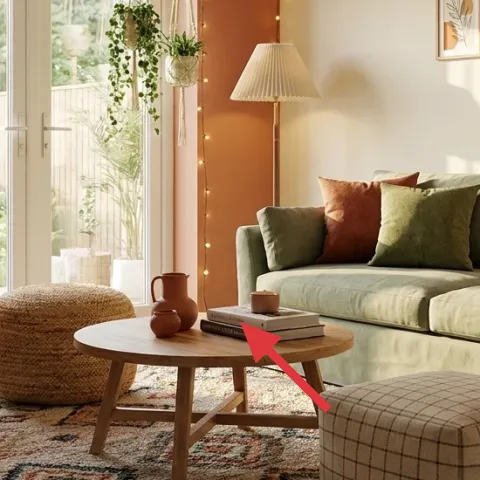
The wood coffee table is the visual connector in the middle of the room: it’s where the terracotta vase and little plant sit, and it bridges the rug’s pattern with the sofa’s texture. A coffee table like this also keeps the plant styling contained, so the room doesn’t feel like décor is floating everywhere. The alternative—using a small tray or a bench as a “temporary” surface—can work, but it rarely holds up to daily shared-house life. The trade-off is footprint: make sure it leaves enough walking clearance between the sofa and the chair. When it’s the right size, it makes the whole setup feel more intentional without being heavy.
Balance objects by height, not by quantity
One tall vase plus a low plant reads richer than five small items stacked together.
The cost, layer by layer
| Layer | Item | Cost |
|---|---|---|
| 1 | Area rug (5×7 style, patterned) | $150 |
| 2 | Throw pillow covers (set of 2) | $20 |
| 3 | String lights (set) | $15 |
| 4 | Macramé wall hanging (DIY equivalent) | $70 |
| 5 | Framed botanical prints set (5–7 frames) | $120 |
| 6 | Plug-in table lamp with neutral shade | $55 |
| 7 | Wood coffee table | $140 |
| Total | $570 | |
If the budget needs to shrink, the easiest swap is downsizing the framed botanical set (fewer prints, same frame color). Keeping the rug and string lights saves the room’s biggest “feel,” while a smaller picture cluster still delivers the greenhouse vibe.
What worked, what didn't (across the whole room)
This layout works because it repeats a tight color story (rust, sage, cream) through textiles, frames, and light. The room also stays move-friendly because the key pieces are portable and the pattern lives mostly in fabric instead of permanent changes.
What worked
- The patterned rug hides daily wear and gives the furniture a stable “home base.”
- String lights bring warm ambience without any hardwired ceiling work.
- The macramé adds vertical texture that softens a bold rust wall.
- Framed botanical prints create a clear focal wall that’s easy to pack.
- Pillow colors echo the wall so the sofa reads intentional, not accidental.
- The coffee table makes styling practical, not just decorative.
What didn't
- A too-dark lamp bulb can make sage green look heavy instead of fresh.
- Overstacking small décor objects on the table makes the middle feel cluttered.
- Hanging the framed prints without measuring spacing turns a grid into a diagonal scramble.
- If the string-light cord shows too much length, the warm effect reads messy.
What we'd skip if we did it again
Skip buying a second matching “set” of furniture for this look. In shared housing, the fastest path to style is repeating materials (wood, cream, woven textures) rather than buying new seat pieces that don’t travel well.
Skip cool-white bulbs. Even a pretty lamp shade will look wrong when the light temperature fights the rust-and-sage palette, and you’ll end up changing bulbs after the first evening.
Skip placing framed prints too high. When the frame cluster sits at an uncomfortable eye line, you lose the greenhouse effect and the wall decoration stops reading as a cohesive group.
Frequently asked
How long does this living room refresh take?
Plan on about 4–6 hours if the rug and lamp are already in hand. Hanging the string lights takes the least time once you find the outlet path. Framed botanical prints usually take the most time because you want even spacing. The macramé is the wildcard—if you’re using a simple knot pattern, it’s a great afternoon project, but perfecting the fringe and trimming takes a little patience.
Will this work in a rented place where the wall is tricky?
Yes, because the biggest visual moves are portable: a patterned rug, pillow covers, plug-in lighting, and freestanding styling. For the wall hanging and framed prints, use renter-safe hanging methods like Command hooks designed for your wall type. If the wall is especially delicate, test a small spot first. The key is choosing temporary hardware and avoiding anything that leaves residue.
What if my living room is smaller than the photo?
Go slightly smaller on the rug and reduce the number of framed prints. Keep one strong anchor: either the rug pattern or the framed botanical cluster, not both as maximum scale. For pillows, stick to two to four cover looks rather than spreading everything across the sofa. String lights can stay, but shorten the visible run so the room feels airy instead of crowded with cords.
Where should I shop for these move-friendly pieces?
For the rug and pillow covers, home retailers and online marketplaces are easiest because you can sort by size and color. String lights are widely available and usually come in a complete kit. For framed botanical prints, look for a set that includes multiple prints in matching frames. The macramé cord and wooden dowel are common at craft stores, and the lamp is usually simplest to find at mainstream lighting retailers.
What’s the biggest mistake people make with this kind of living room styling?
Overloading the center with too many small objects. When the coffee table and pillows both compete for attention, the room starts to feel busy instead of botanical. A better rule is: one focal cluster on the wall, one anchored surface pattern (the rug), and then just one or two decorative pieces at table height.
More in Living Room
Under $600: move-friendly living room refresh with 7 swaps
A plant-filled, rust-and-sage living room style is easy to rebuild for your next lease. Here are 7 move-friendly swaps (under $600 total) t…
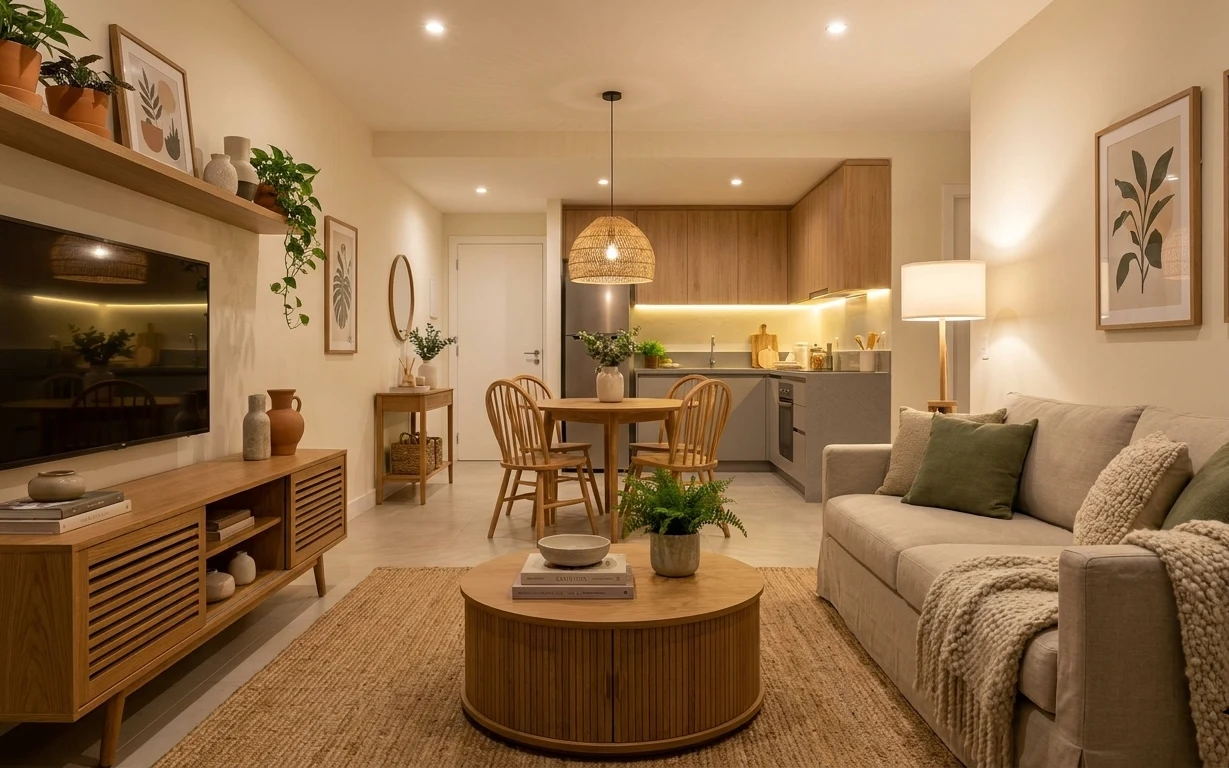
Under $700: a homeowner's warm-modern living room refresh with seven plant-forward layers
A complete seven-layer homeowner refresh for a small open-plan living room — cream sofa with olive pillows, a refinished thrifted brass flo…
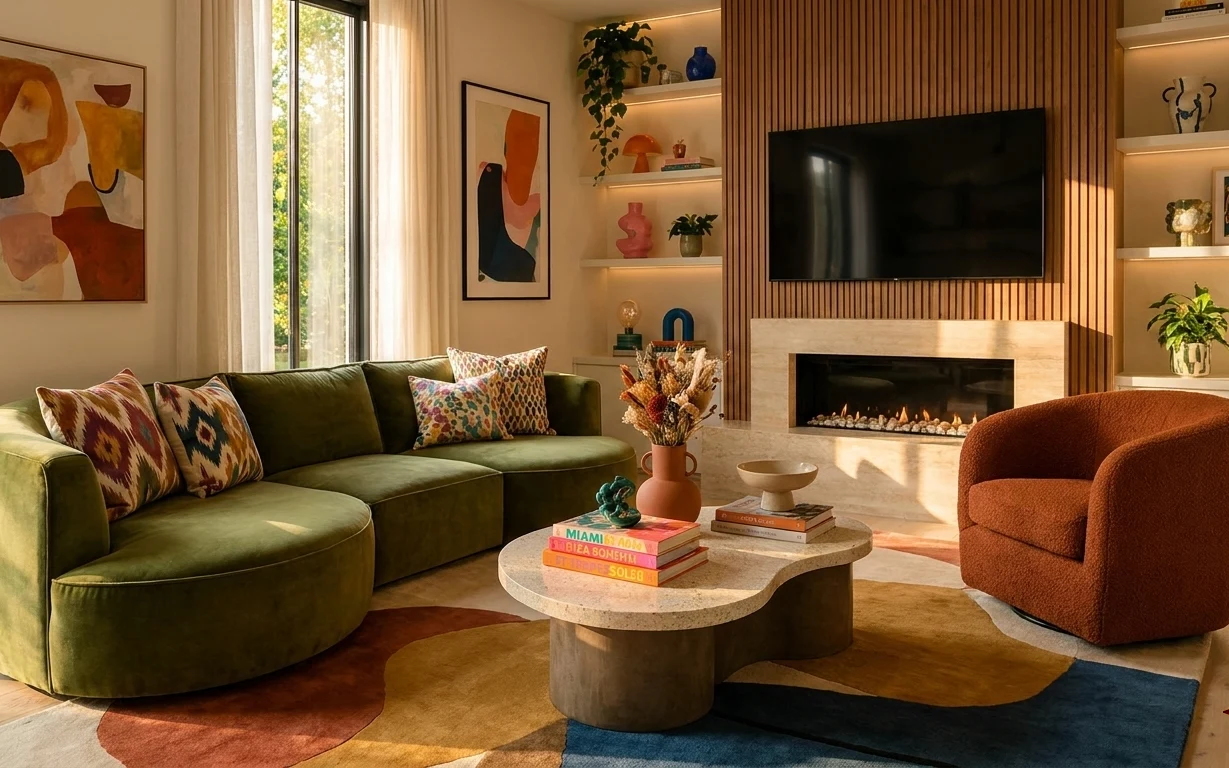
Under $600: eclectic living room swaps that look settled
A warm, olive-and-rust living room look—made renter-friendly with 7 movable swaps. Plan for about $600 total and focus on rug scale, layere…