- Best for
- Small, movable bathroom styling
- Cost
- Under $300 total
- Difficulty
- Easy (mostly textiles + swaps)
- Time
- About 2–3 hours
Why terracotta-tiled calm is the bathroom of 2026
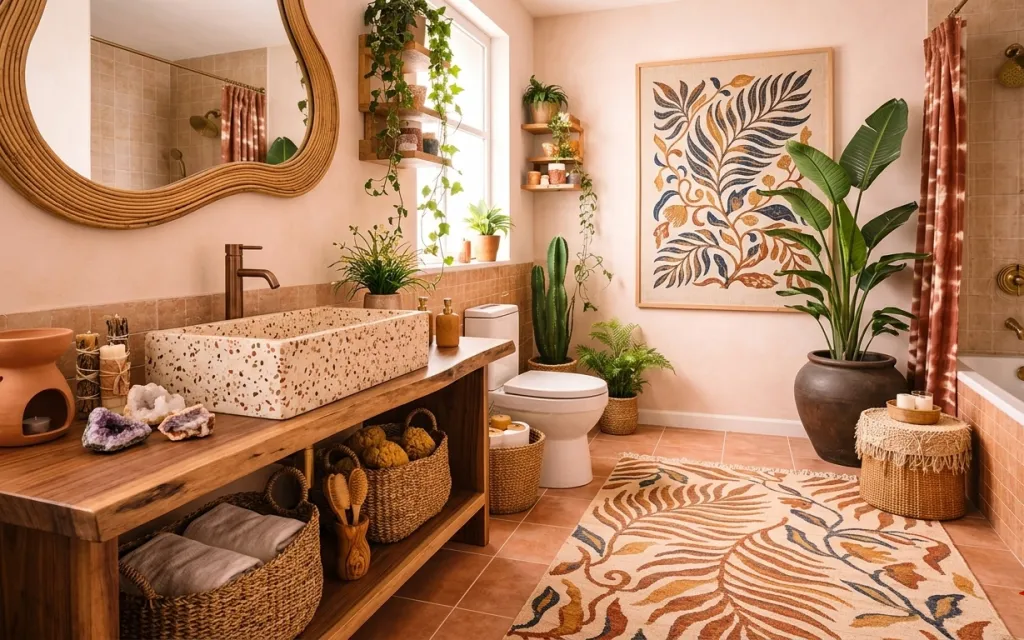
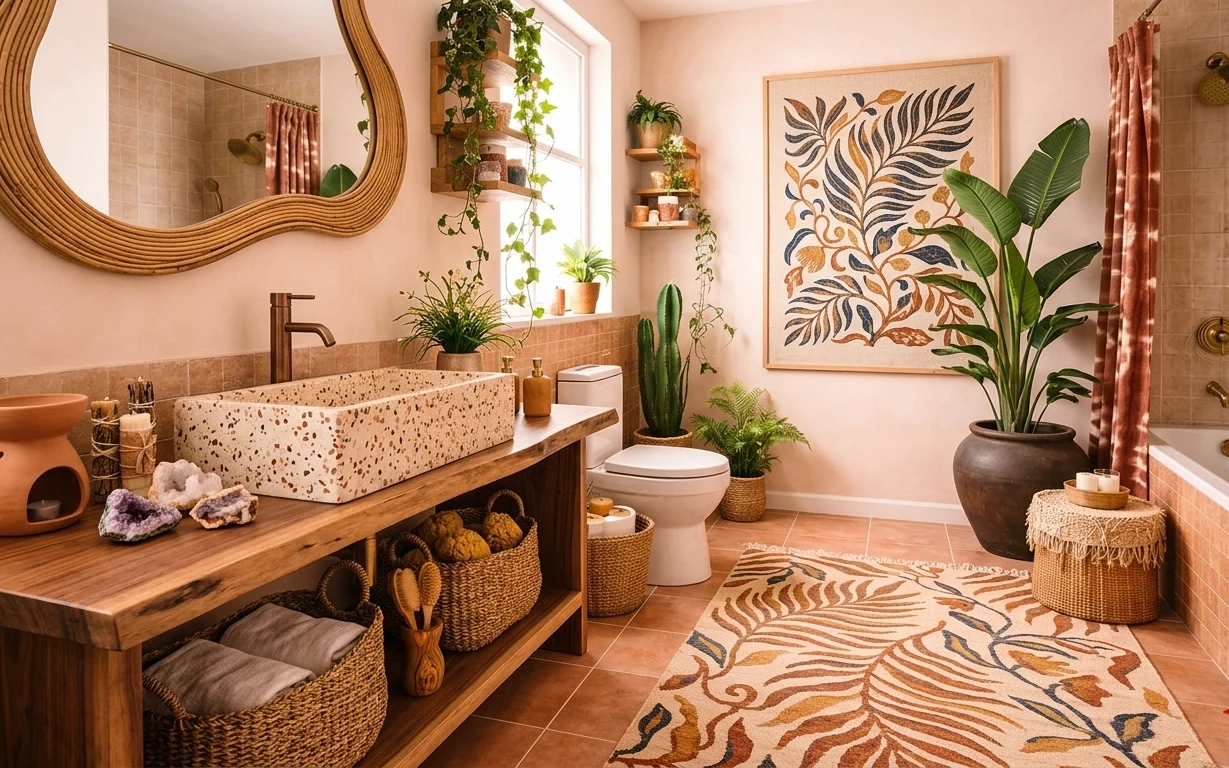
This bathroom’s palette is doing the heavy lifting: terracotta tile reads warm, while cream tones soften everything. The big visual rhythm comes from textile pattern—the patterned rug and the rusty shower curtain both echo the same earthy heat. You can also feel the materials mix: rattan’s texture at the mirror, leafy greens in the corner, and the wood warmth from the vanity. For shared housing, this is the kind of refresh that doesn’t fight the existing layout—it builds a “room within the room” using things you can pack.
The first time I tried to mimic a spa look, I went too literal and bought a matchy set. It looked fine in photos, then felt flat in real life. This time, I leaned into contrast instead: a busy floor pattern paired with quieter wall styling, plus plants that add shape even when the light changes. The result feels lived-in, not themed—exactly what you want when you know you’ll move in a year or two.
Layer 1 — area rug (patterned terracotta/cream) ($80) Underfoot warmth that hides tile reality

The patterned area rug anchors the bathroom instantly, and it’s doing more than decoration—its earth-toned swirls help mask the little messes that happen around a shower. In the hero, the rug’s terracotta-and-cream palette echoes the tile and keeps the space from feeling like “just tile and fixtures.” The trade-off is that a busy pattern asks you to keep nearby items mostly neutral, so the vanity shelves don’t compete. A simple edge trim and a non-slip backing (sold separately) will keep it from shifting without any permanent install.
Pick a pattern with the same temperature as your tile
If your tile is warm, search for terracotta, clay, or sand tones—cool grays tend to make the whole bathroom look dull.
Layer 2 — shower curtain (rusty brown) ($60) Color that frames the tub without touching it
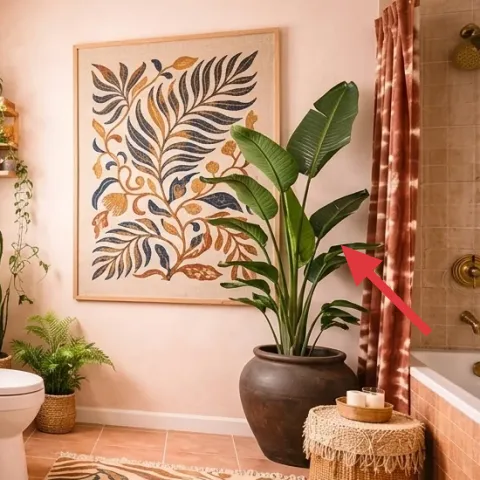
The shower curtain is the color “window” in this bathroom—rusty brown pulls the terracotta theme into the wet zone without making the walls feel louder. Since it’s a textile swap, it’s also the most move-friendly lever: roll it up, tuck it into a box, and you’re done. The hero shows curtain length and drape that cover the sides rather than floating as a short panel, which helps the tub area read intentional. The trade-off is steam and water exposure—choose a machine-washable fabric and plan to replace it sooner than a couch throw.
Keep hardware simple to avoid the “bathroom store” look
Look for a curtain that falls well even with basic rings or a standard tension setup.
Layer 3 — large round rattan mirror ($40) Rattan texture that makes the tile feel softer
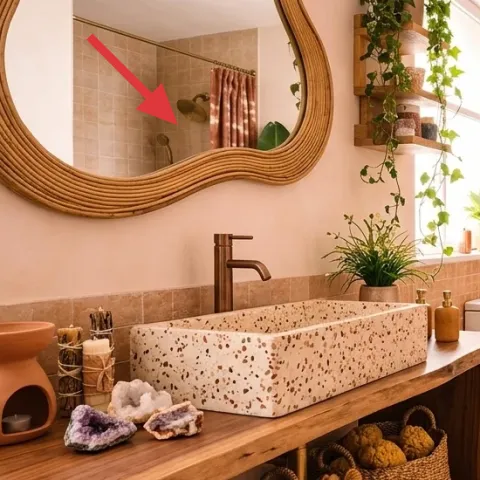
The large round rattan mirror adds a natural, woven texture that counters the flat surfaces of tile. Visually, it also widens the space—round shapes help bathrooms feel less boxy than rectangular frames. In the hero, the mirror sits high on the wall and reads as a focal point beside the vanity, so you don’t have to rely on heavy wall art for personality. The trade-off is that rattan wants gentle handling; avoid wetting it directly and wipe dust with a dry microfiber cloth.
Don’t hang anything that risks pulling paint
If your landlord has painted over plaster, skip sticky strips that peel; use whatever renter-safe hardware your building allows.
Layer 4 — framed botanical print ($25) A printable-style art moment in a removable frame
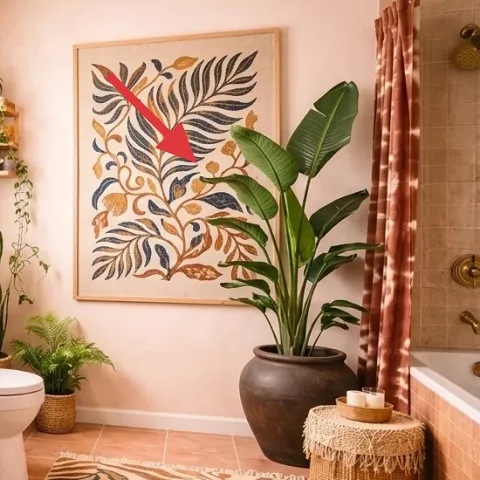
The framed botanical print gives the bathroom a focal point that still stays light and breathable. Here, the palette inside the print matches the room—browns, greens, and cream—so it doesn’t fight the plant life or the rug pattern. Because it’s in a frame, it’s easy to replace with something that’s both portable and renter-safe. The trade-off is scale: if you go too small, it can get swallowed by the wall; too large and it can compete with the mirror.
Make it instead of buying it
This replaces the framed botanical print with a hand-painted abstract on cardstock that you slide into a renter-friendly frame or clip frame.
Materials
- Cardstock, 8.5×11 or 12×16 — 1–2 sheets — craft store — $10
- Acrylic paint set (small tube colors that match terracotta/cream/green) — 1 set — craft store — $4
- Painter’s tape — 1 roll — hardware store — $1
- Clear packing tape (for sealing the edges) — 1 roll — around home — $0
- Scrap paper for testing marks — 1 stack — around home — $0
Steps
- Lightly tape off a few “leaf” shapes on the cardstock so the edges stay clean.
- Block in a cream base with a flat brush, then let it dry fully.
- Paint terracotta swirls and thin branches over the base.
- Layer in muted greens for leaf-like curves, then remove tape once paint is mostly set.
- Let the whole piece dry completely before sealing the edges with clear packing tape.
- Trim to fit and slide into a frame you already have or can buy renter-safe.
Total DIY cost: $15 — saves about $10 over buying.
Layer 5 — large potted snake plant ($30) Leaf volume that reads “designed” even when you move
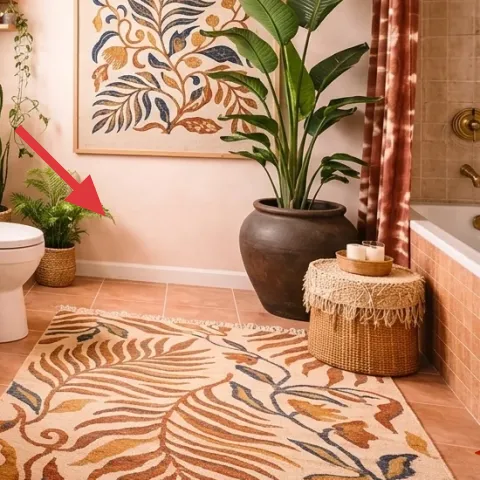
The tall snake plant brings vertical shape, which matters a lot in bathrooms where tile and fixtures naturally feel horizontal. In the hero, it sits beside the window area, and the spiky silhouette adds a crisp contrast to the softer curtain folds and rug pattern. This is also one of the easiest “style systems” to refresh: you can swap the pot later, but keep the plant shape for consistency. The trade-off is maintenance—snake plants are forgiving, but they still need a light check and occasional wipe-down of leaves so dust doesn’t dull the green.
Match plant scale to the corner, not the shelf
In tight bathrooms, one taller plant reads cleaner than three small ones fighting for space.
Layer 6 — woven storage basket ($20) Texture + function on the vanity shelf
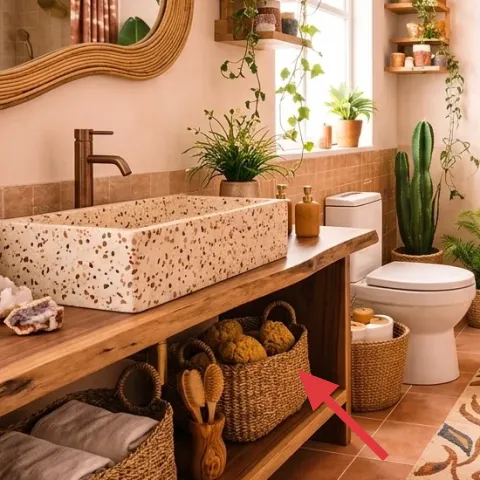
Woven baskets are a quiet upgrade because they solve two problems at once: storage and visual warmth. The hero uses baskets on the open vanity shelving, which keeps bathroom essentials contained while still letting the wood and rattan textures show through. The key decision is size—choose a basket that fits your shelves snugly so it doesn’t look like an afterthought. The trade-off is that woven fibers can catch stray moisture, so use them for dry items (cotton, hair ties, spare towels) rather than anything that splashes directly.
Go for natural color, not dyed
Raw jute or natural tan blends better with terracotta tile than saturated browns.
Layer 7 — ceramic plant pot (on woven stool) ($15) A small repeat of the terracotta story
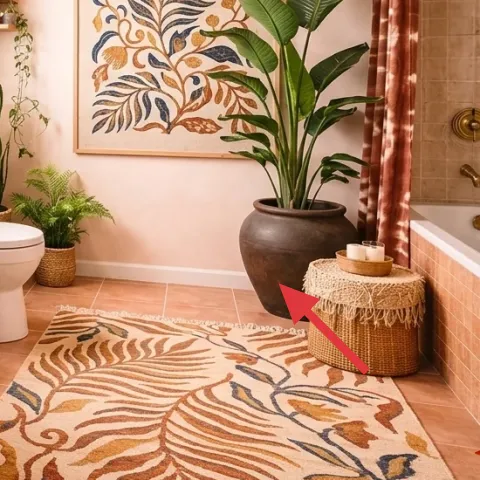
A small ceramic pot or planter on a woven stool adds a second “echo” of the terracotta theme without adding another big focal point. In the hero, it also acts like a landing pad for styling—pairing with a tiny plant brings life to the corner while keeping the shelf area uncluttered. This layer works best when the pot’s color is close to your rug’s terracotta notes, not an exact match. The trade-off is that small pots dry out faster, so it helps to pick a plant that tolerates a little variation in watering.
Repeat one accent color within 3 feet
When terracotta shows up on rug and pot, the whole bathroom reads cohesive even with different textures.
The cost, layer by layer
| Layer | Item | Cost |
|---|---|---|
| 1 | Area rug 5×7, terracotta/cream pattern | $80 |
| 2 | Curtain panel pair (84"), rust brown | $60 |
| 3 | Large round rattan mirror (24–36") | |
| $40 | ||
| 4 | Framed botanical print (16×20) | $25 |
| 5 | Indoor plant (snake plant) + ceramic planter | $30 |
| 6 | Woven storage basket | $20 |
| 7 | Ceramic plant pot (medium) | $15 |
| Total | $270 | |
If the $80 rug feels like too much, swap to a smaller 2×3 patterned runner-style rug ($60). Keep the rust curtain and the plant styling—those two still carry the “warm spa” read.
What worked, what didn't (across the whole room)
The overall verdict: the bathroom reads intentional because the warm palette repeats in three places—rug, curtain, and ceramic accents—while textures keep it from feeling flat. The mirror and framed print add focus at eye level, so the room doesn’t depend on the window’s light. The main misses are mostly about upkeep, not aesthetics.
What worked
- The patterned rug hides scuffs and makes the tile floor feel softer underfoot.
- The rust shower curtain gives the tub area a clear “finished” frame without permanent changes.
- The rattan mirror adds warmth and texture that balances smooth tile surfaces.
- Plants create vertical structure, which keeps bathrooms from feeling visually heavy.
- Woven baskets reduce countertop clutter while keeping the shelf styling cohesive.
- Ceramic accents repeat terracotta notes so the palette feels designed, not random.
What didn't
- Too many small decor items on the vanity competes with the rug pattern.
- Mirrors can show water spots quickly if the bathroom runs steamy after showers.
- Rust curtains show lint faster than neutral whites, so washing schedules matter.
- Woven baskets need a light-touch approach around splash zones.
- Plant pots that are too small dry out faster in warm bathrooms.
What we'd skip if we did it again
Skip going all-in on matchy sets (like coordinating curtain, rug, towels, and art in the same shade). In this kind of room, the “designed” feel comes from repetition plus texture variation, not identical colors everywhere.
Skip a tiny rug. Bathrooms need a rug that can anchor the floor visually; otherwise, the tile reads dominant and the pattern looks decorative instead of structural.
Skip wall items that require risky removal hardware. For shared housing, it’s better to choose framed pieces that come down cleanly and store flat than to gamble on anything that could damage plaster or paint.
Frequently asked
How long does a bathroom refresh like this take?
Plan for about 2–3 hours total: rug unroll + placement, curtain swap, then styling the vanity shelves and corners. The framed botanical DIY (if you do it) can be extra time on top of that, mostly waiting for paint to dry and then assembling it into a frame. If the frame already exists, assembly is fast.
Is this doable in shared housing if you can’t drill or paint?
Yes—this plan avoids fixed-fixture changes and focuses on renter-safe items. The only “wall” piece is framed art and the mirror, both of which can be chosen to match your building’s allowed hanging method. Everything else—rug, curtain, baskets, and plants—packs into boxes and can be re-styled in a new bathroom.
What if my bathroom is smaller or has different lighting?
In smaller bathrooms, keep the rug footprint generous but choose a pattern that isn’t overwhelming—still terracotta/cream, just slightly calmer. In darker bathrooms, go lighter on cream tones in the rug and curtain, and consider placing the mirror so it catches daylight from the window. Plants help too, but keep them scaled to the corner.
Where should I shop to get these looks cheaply?
For rugs and curtains, start with warehouse-style retailers, home resale groups, and marketplace listings, because you’ll find the color story without paying for “designer” markup. For the rattan mirror and framed print, search secondhand first; natural materials and frames are often cheaper second time around.
What’s the biggest mistake people make with this type of bathroom decor?
The most common miss is buying lots of small decor items that don’t repeat a palette. If the rug is patterned and the shower curtain is warm, keep the countertop styling limited to baskets, one plant, and a couple of matching ceramics. Balance texture (rattan, woven baskets, ceramic) with restraint in object count.
How do I keep the woven and natural textures looking good in a humid bathroom?
Treat woven baskets and rattan gently: keep them away from direct splashes, wipe down after showers, and let items dry fully. For the curtain, a regular wash cycle helps prevent lint buildup in the rust shade. Plants do best with wipe-downs of leaves so natural textures stay crisp rather than dusty.
More in Bathroom
Under $300: earthy bathroom refresh with 7 move-ready swaps
A terracotta-and-cream bathroom refresh built for shared housing, with 7 move-ready swaps under $300. The look hinges on a patterned rug, a…
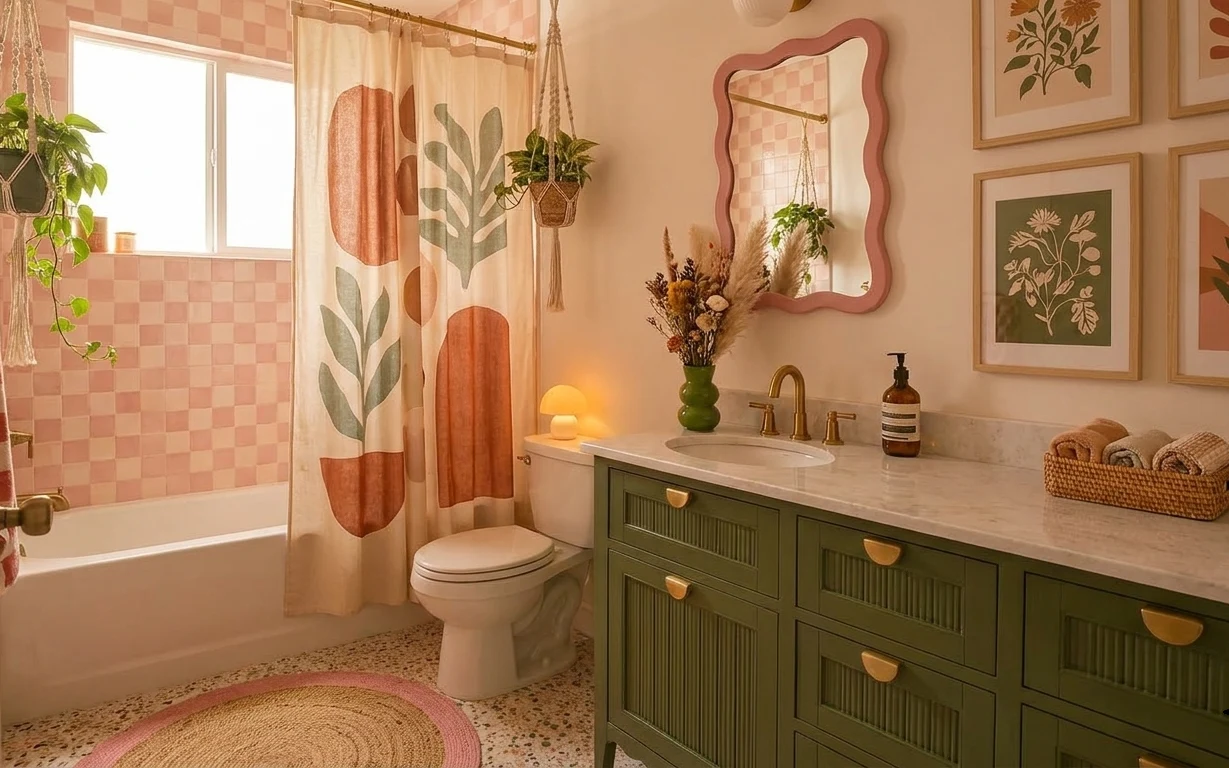
Under $350: olive-and-terracotta bathroom vanity corner refresh
An olive-and-terracotta bathroom vanity corner makeover that packs up with you: rug, shower curtain, wall art, a warm candle moment, and a …
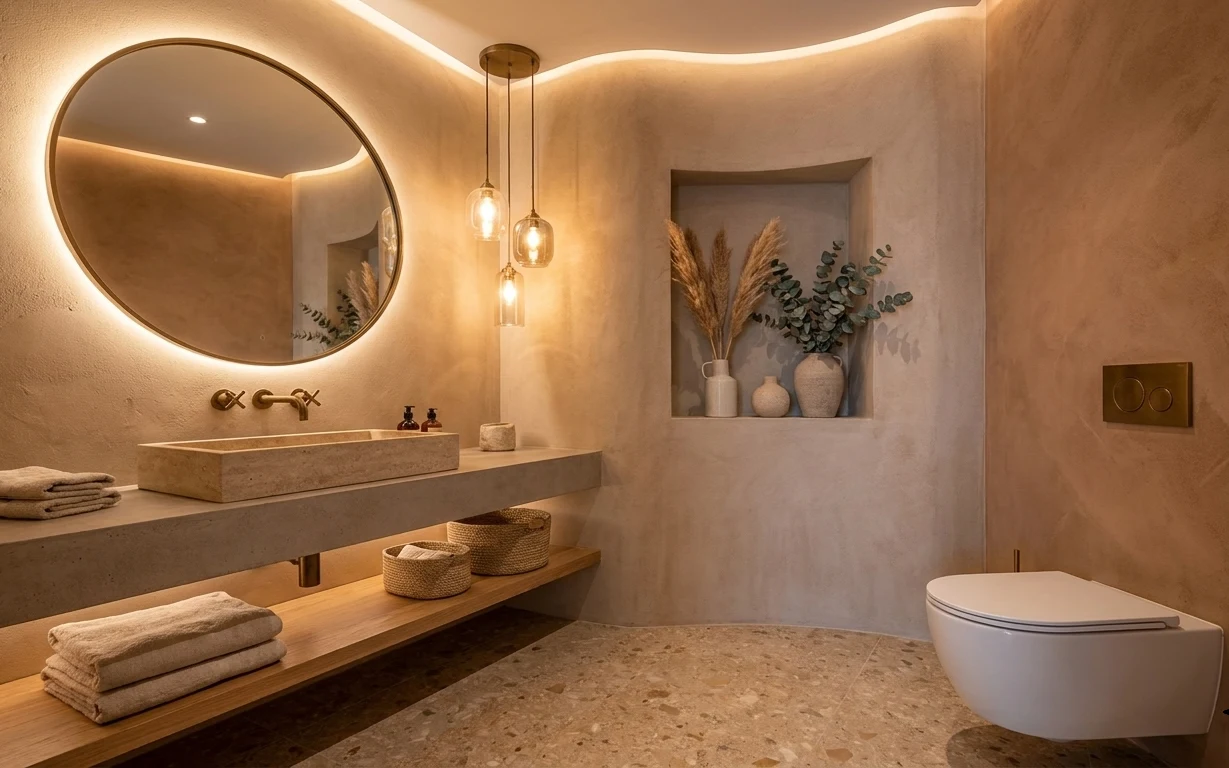
Under $350: renter-friendly spa bathroom refresh with 7 layers
A renter-friendly spa bathroom refresh that uses 7 swaps—bath mat, folded towels, a woven shelf basket, one candle, and niche styling—witho…