- Best for
- Color + softness in a renter-stable bathroom
- Time
- About 2–3 hours total
- Total cost
- About $340
- Renter-safe
- Yes (no drilling or fixture swaps)
Why olive-and-terracotta bathroom vanity corner is the move-friendly nook of 2026
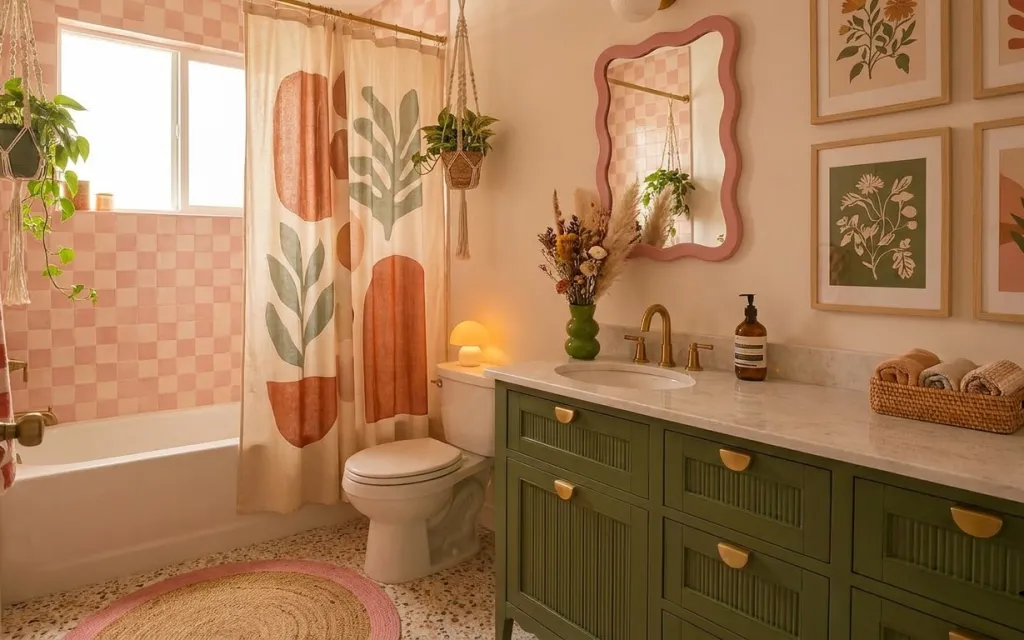
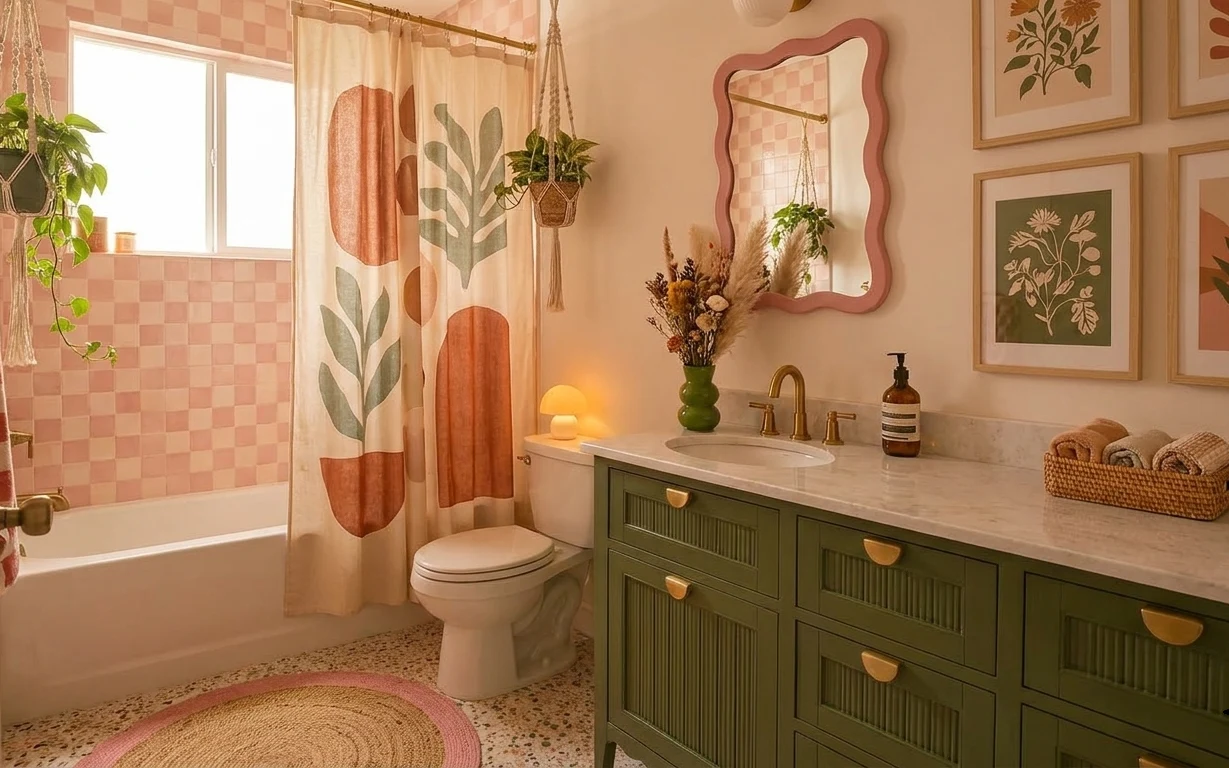
In the photo, the vibe is all about warm terracotta, olive green, and creamy tile—plus soft glow from a small lamp. The patterned shower curtain, round pink bath rug, and woven towels keep the space from feeling too “utility.” That wood-framed mirror gives you instant height without any building work, and the framed botanical print adds a gentler, botanical rhythm to the hard surfaces. It’s a look that works in shared housing because the changes are all fabric, decor, and freestanding pieces that pack in a few boxes.
I caught myself once reaching for the “upgrade the whole bathroom” mindset—then remembered how quickly shared spaces turn into the next lease. This kind of refresh is my favorite workaround: you keep the fixed plumbing as-is, then you swap what your hands actually touch (soft goods) and what your eyes land on first (mirror, wall art, lighting). The result feels finished without feeling permanent.
Layer 1 — round pink bath rug ($80) grounds the sink-and-toilet zone

A round pink bath rug sits right where your feet land—soft underfoot against the cool tile and a color that echoes the terracotta tones nearby. The key is shape: a circle reads warmer than a rectangle and looks intentional next to the straight lines of the vanity and shower surround. Choosing a rug you can fold flat matters for shared housing moves; no curling corners in boxes. The trade-off is coverage: it won’t “solve” the whole floor the way a wall-to-wall runner would, but it does define the vanity corner with one easy swap.
Pick a rug with a washable, non-slip backing
Bathroom floors get wet quickly; a non-slip backing keeps the rug from shifting when someone steps out of the tub area.
Layer 2 — patterned shower curtain ($30) adds the biggest color hit with zero installs
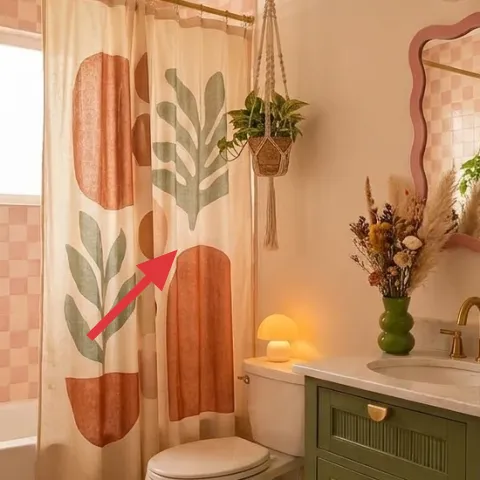
The patterned shower curtain is the color anchor in this bathroom—terracotta shapes and an organic plant motif that read cozy rather than “plain white.” Swapping curtains is also the rare change that feels high-impact while staying renter-safe: no drilling, no patching, and it rolls up or folds neatly for the next place. A curtain can also help “blend” the tile’s permanence by giving your eyes a softer layer in front of it. The only trade-off: curtains show wear faster than wall art, so it’s worth choosing a fabric you’ll actually enjoy washing and re-hanging.
Go for a print scale that matches your room’s patterning
When tile already has a repeat, smaller motifs can feel busy—this curtain’s larger shapes keep the look balanced.
Layer 3 — woven basket with folded towels ($35) keeps the vanity top usable
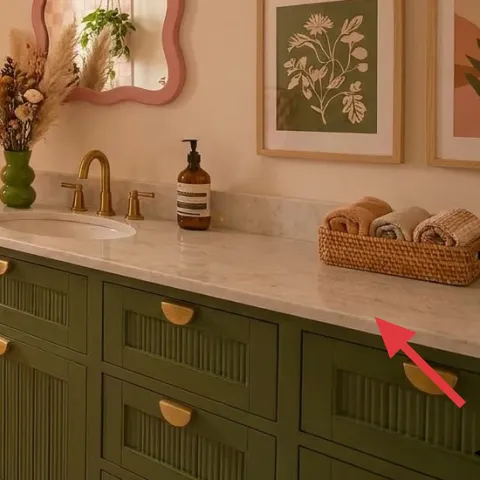
The woven basket with folded towels gives you a tidy, tactile landing spot instead of stacking towels in a corner. Woven texture also plays nicely with the wood-framed mirror and the tile, because it adds a “natural” surface that feels warm even under bathroom lighting. I like using one basket rather than lots of small bins—it’s easier to pack and easier to restyle when roommates swap hand-me-down towels. The trade-off is that a basket won’t hide everything like a cabinet would, but it does create order in the visible zone around the sink.
Use the basket as a daily “landing tray”
Keep one face cloth and one hand towel inside so the vanity stays styled without extra arranging.
Layer 4 — framed botanical print ($25) softens the walls without committing to paint
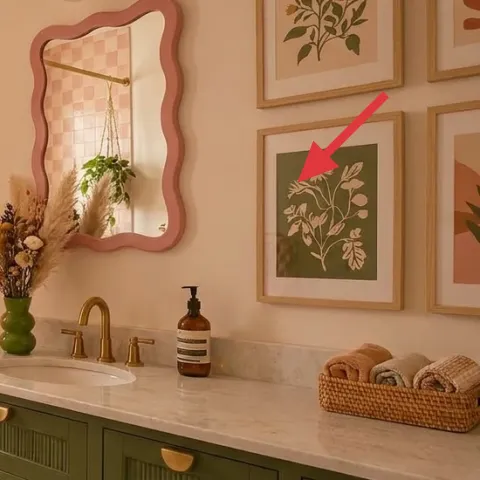
A single framed botanical print adds that “collected” feeling you can see in the hero—greens and warm background tones that echo the plants and terracotta accents. Framed art is also one of the easiest move-ready changes: wrap it in paper, put it in a box, and it’s ready for the next wall. Compared with trying to change lighting temperature or tile tone, art gives you control with minimal risk. The trade-off is scale: a too-small print can feel lost in a wide wall, so match the frame size to what’s already there.
Stick to frames you can hang with removable methods
In shared housing, Command-style hooks or other no-drill hangers keep you from dealing with wall repairs later.
Layer 5 — small candle jar on the vanity ($15) adds a warm, bathroom-friendly glow
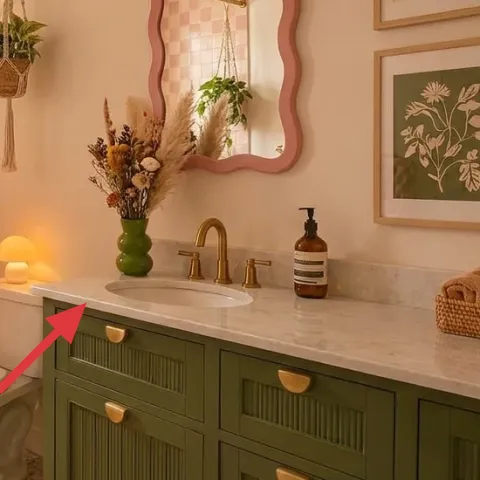
The small candle jar on the vanity creates the gentle warmth in the photo—especially when the room lighting feels a little flat against tile. A jar style matters because it’s stable, contained, and visually tidy in a space where loose items tend to look cluttered. The candle also bridges the color story: the warm light visually ties terracotta, cream, and olive together. The trade-off is that the vibe is temporary; it’s not a “set it and forget it” fix like paint. Still, it’s a quick upgrade you can swap when you pack.
Keep the candle away from splashes
A vanity is a splash zone—place the jar where it can’t get hit by dripping hands or an open faucet stream.
Layer 6 — wood-framed wall mirror ($60) makes the vanity feel larger
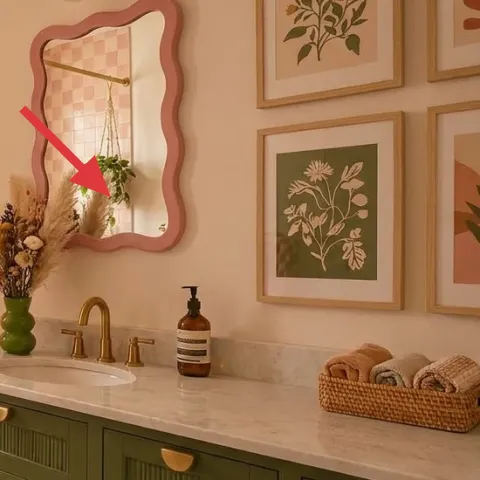
The wood-framed wall mirror is one of the biggest “instant read” pieces in the hero: it adds depth and reflects the warm lamp glow, so the whole corner feels brighter. Since mirrors are also moveable decor, it fits the shared-housing rule—wrap and box it like any other large wall item. The wood frame is doing extra work, too; it warms the stone countertop and tile so the space doesn’t read too cool. The trade-off is weight and fragility—mirror corners can chip, so use padding and plan on two hands when moving it.
Use the mirror to multiply one warm light source
When a lamp is already present, a reflective surface makes that warmth feel intentional instead of accidental.
Layer 7 — macramé hanging planter with plant ($95) brings boho softness overhead
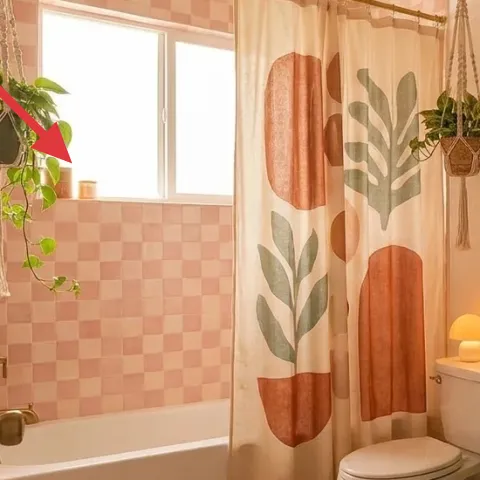
The macramé hanging planter with plant adds vertical softness and a little “movement” above the shower curtain and mirror. In a bathroom, that matters because you’re often stuck with fixed surfaces at eye level; hanging decor gives you a new layer without changing the fixtures. The boho texture also echoes the woven towel basket, so the room feels coordinated instead of randomly decorated. The trade-off is placement: it has to be positioned carefully so it doesn’t swing into the shower area. That’s why a no-drill hanging approach matters here—easy to take down when your lease ends.
Make it instead of buying it
This macramé wall hanging uses the same hanging-planter role as the hero—cord + dowel + no-drill hooks—so you get that overhead boho texture for less.
Materials
- Macramé cord (multiple strands) — ~1 roll — craft store — $20
- Wooden dowel (for the top bar) — 1 piece — hardware store — $10
- Command Strips multi-pack — 1 pack — hardware/online — $8
- Indoor plant (4–6 ft equivalent, scaled for a small hanging pot) — 1 — plant shop — $30
- Planter/pot (medium) — 1 — garden store — $15
Steps
- Measure cord length for the finished drop and knot depth.
- Cut cord strands to length, then gather and align them at the dowel.
- Create the top attachment: tie cords around/over the dowel so knots stay tight.
- Form the hanging pattern knots (even spacing) down the length.
- Attach the planter loop or tie points so the pot sits centered.
- Hang using Command Strips on a clean, dry wall surface and test stability before adding the plant.
Total DIY cost: $83 — saves about $12 over buying.
The cost, layer by layer
| Layer | Item | Cost |
|---|---|---|
| 1 | Round pink bath rug | $80 |
| 2 | Patterned shower curtain | $30 |
| 3 | Woven basket with folded towels | $35 |
| 4 | Framed botanical print | $25 |
| 5 | Small candle jar | $15 |
| 6 | Wood-framed wall mirror | $60 |
| 7 | Macramé hanging planter with plant (DIY) | $95 |
| Total | $340 | |
If a rug budget is tight, switch to a smaller round bath mat and choose a washable, non-slip backing. The same rule holds for the curtain: one bold print panel does the heavy lifting, so the rest can stay simple and repeat the terracotta/olive tones.
What worked, what didn't (across the whole room)
This corner reads finished because the upgrades all live on surfaces you can control—floor underfoot, fabric at shower level, and soft decor above eye level. The mirror and warm candle jar do the “light work” so the tile feels less stark. The one thing that could derail the look is letting too many small items compete on the vanity.
What worked
- The round pink bath rug makes the vanity zone feel intentional instead of floating on tile.
- The patterned shower curtain adds color without touching any fixed fixtures.
- Woven towel storage keeps the countertop tidy and packs easily for moves.
- A framed botanical print softens the wall hardness with organic shapes and green tones.
- The small candle jar brings warmth that shows up in both morning and evening light.
- The wood-framed mirror reflects light and makes the corner feel larger and brighter.
What didn't
- Too many small decor pieces on the vanity made the corner feel cluttered instead of curated.
- Hang-height misjudgment on overhead decor can swing into the shower area—placement matters.
- Going for a very glossy candle jar can show fingerprints under warm lighting.
- If the shower curtain pattern is too small, it blends into the tile and loses the “anchor” effect.
What we'd skip if we did it again
Skip switching to heavy, permanent wall upgrades. In shared housing, the biggest win is removable layering: textiles, frames, and hanging decor that pack in boxes when the lease ends.
Skip “matchy-matchy” towel styling across every surface. Keep one basket and a consistent fold—then let the curtain print and wall art do the visual work.
Skip placing hanging decor too close to wet zones. Overhead pieces look great, but a little clearance prevents splash damage and keeps the boho layer from turning into maintenance.
Frequently asked
How long does this bathroom vanity corner refresh take?
Plan on about 2–3 hours. Curtain swaps are quick, rug placement is instant, and framed art hanging is usually the longest step—especially if you’re checking sightlines next to the mirror. The macramé DIY adds the most time on the front end; once it’s made, it’s a one-and-done install with no fixture changes.
Is this realistic for shared housing where I can’t change the fixtures?
Yes—that’s the whole point. The look stays away from anything fixed like faucets, toilets, and built-in vanities. Instead, it changes the things you can pack and re-hang: shower curtain textile, bath rug, woven towel storage, framed art, and a removable hanging planter.
What if my bathroom is smaller than the photo?
Go smaller on footprint, not on impact. Choose a compact round mat or a narrower rug position, keep only one framed print near the mirror, and let the curtain handle the color. For overhead, keep the macramé planter closer to the mirror so it doesn’t take up too much vertical visual space.
Where can I shop for these items without overpaying?
Look for the curtain and rug at home goods stores with seasonal sales, then source wall art and candles at budget-friendly retailers or thrift-to-framed shops. The macramé cord and dowel are usually cheapest at craft stores; for the hooks, buy a reputable removable option and test it on a spare patch if possible.
What’s the biggest mistake people make in bathrooms like this?
Overcrowding the vanity zone. It’s tempting to add lots of small items, but the tile and mirror already create a “reflective” stage. Stick to one basket, one small candle jar moment, and one plant feature, then let the shower curtain and rug carry the color.
More in Bathroom
Under $350: olive-and-terracotta bathroom vanity corner refresh
An olive-and-terracotta bathroom vanity corner makeover that packs up with you: rug, shower curtain, wall art, a warm candle moment, and a …
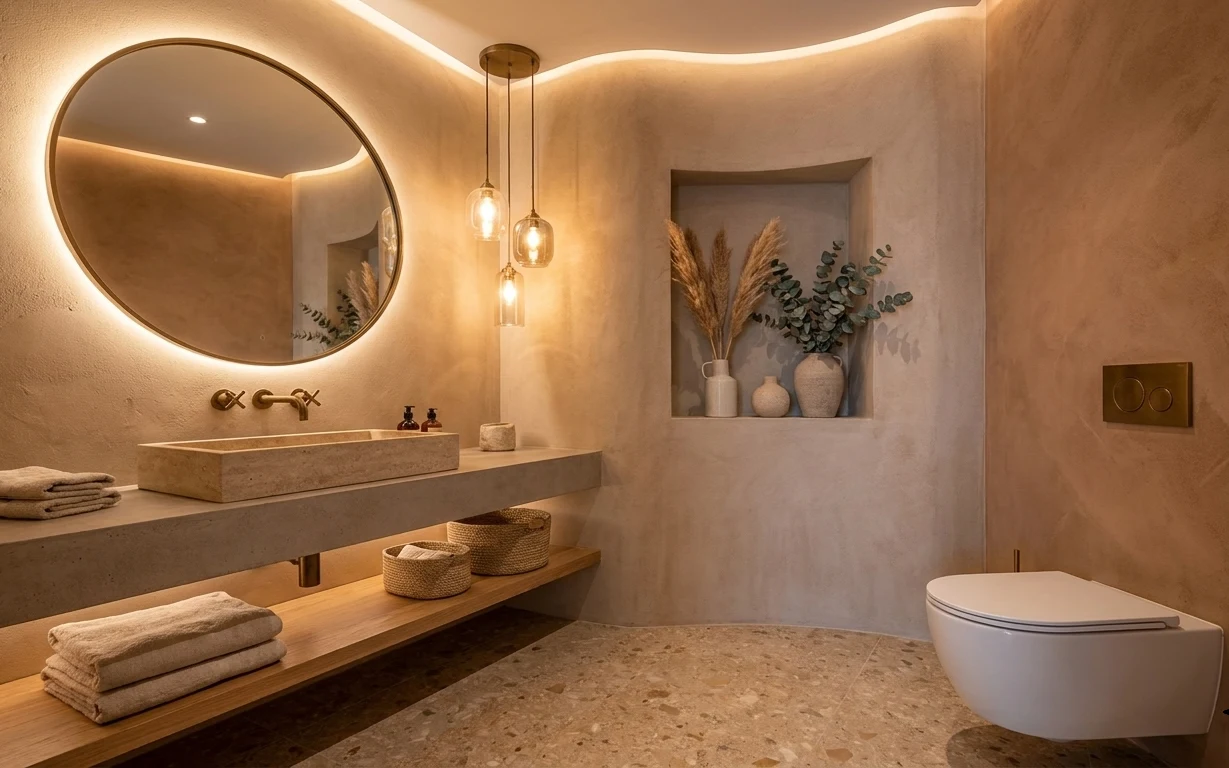
Under $350: renter-friendly spa bathroom refresh with 7 layers
A renter-friendly spa bathroom refresh that uses 7 swaps—bath mat, folded towels, a woven shelf basket, one candle, and niche styling—witho…
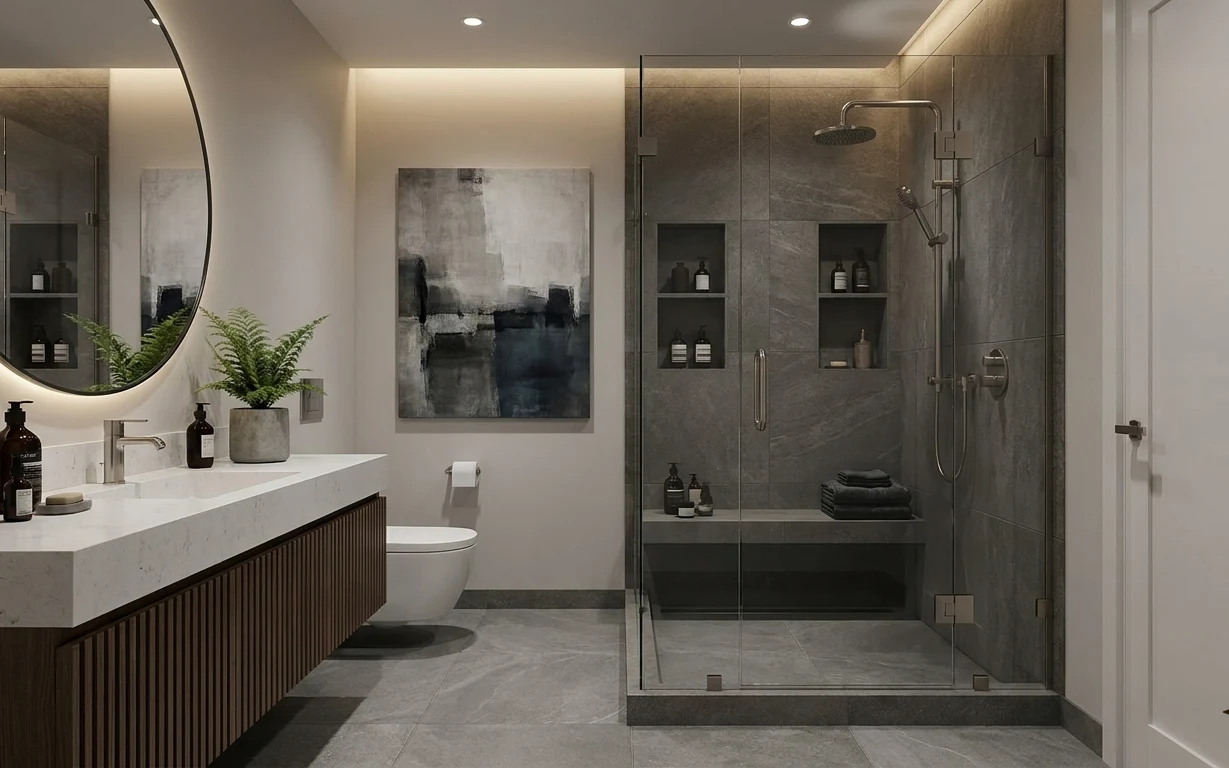
Under $300: 7 move-friendly bathroom swaps for shared housing
A modern, spa-like bathroom look you can rebuild for under $300 using 7 move-friendly swaps that pack into a few boxes. The checklist focus…