- Best for
- Textiles + removable art focus
- Square footage
- Small rooms and daybed zones
- Cost
- Under $400
- Renter-safe
- No-drill, pack-and-go layers
Why bold blue-and-red accents are the daybed nook of 2026
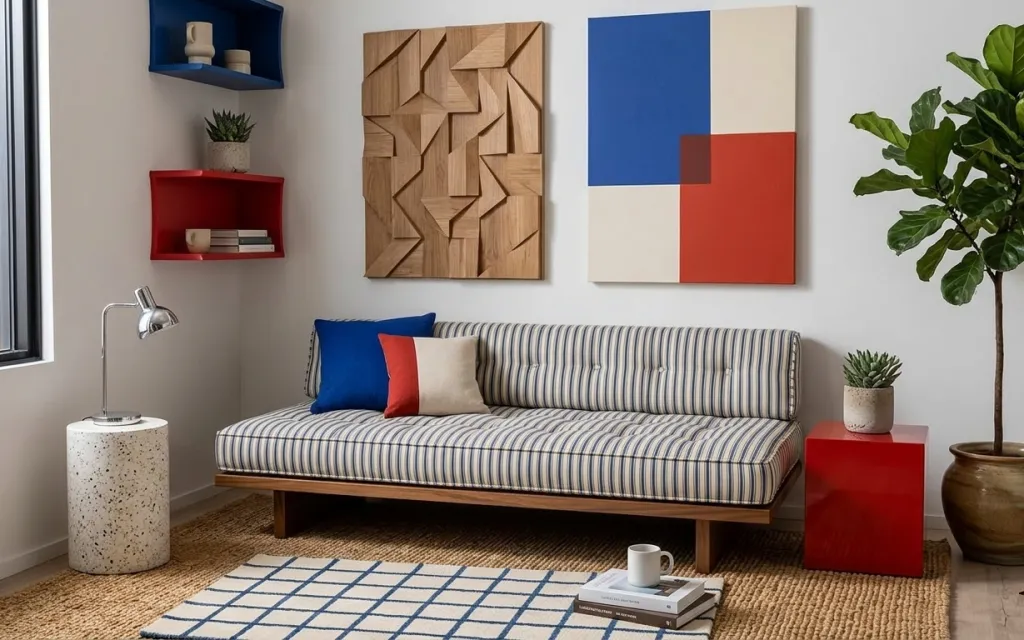
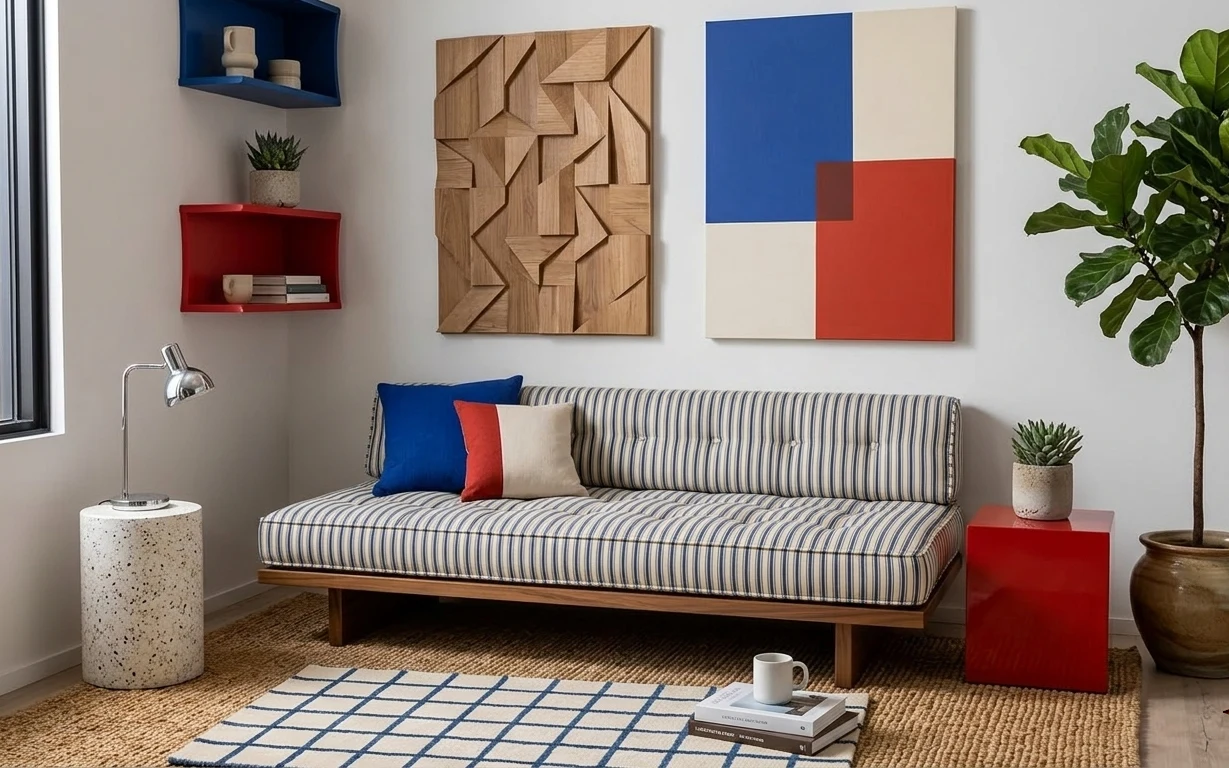
In this setup, the look is really about contrast: a jute rug anchors a low daybed, while striped cushions and two blue-and-red pillows add rhythm without asking for heavy furniture. The wall does the big work too—those graphic framed squares read like a gallery, but they’re still just removable art. Texture stays tactile with woven rug fiber and the crisp stripe pattern, and the chrome floor lamp adds a practical vertical line near the window. For shared housing, this kind of color-forward styling is achievable because everything listed here packs into boxes.
I used to over-plan wall art for every move, and then I’d get stuck with pieces that didn’t fit the next wall layout. Here, I’m choosing one “loud” framed print and leaning on repeatable elements—stripe, rug, and plants—so the room still feels intentional even after a quick swap. The biggest mistake to avoid is treating the daybed like a permanent bedroom setup; the best version is the one that stays light, modular, and easy to take with you.
Layer 1 — jute area rug ($80) Woven texture that hides traffic
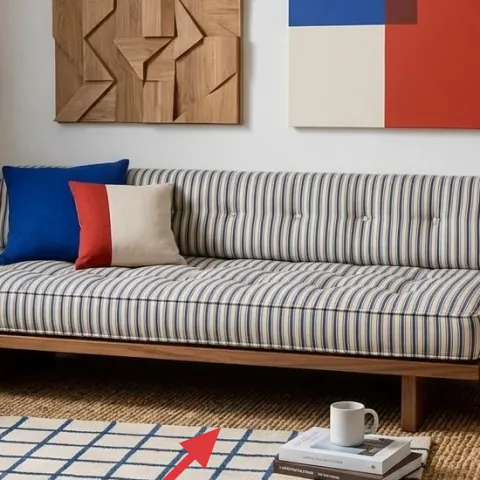
A jute area rug pulls the whole daybed nook down to earth—literally. In the photo, the rug’s warm, tan weave shows through under the bench and extends toward the front edge, which makes the low seating feel grounded instead of floating. Jute also tolerates the kind of mess shared spaces tend to collect (dropped mugs, scuffed shoes) better than a high-pile light rug would. The trade-off: jute is textured, so it can be a little rough under bare feet. The upside is that it rolls up for moves without drama.
Rug timing
If the rug feels too “plain,” layer it with a vivid throw pillow or one bold framed print—jute is the base, not the statement.
Layer 2 — striped daybed cushions ($18) Pattern that reads from across the room
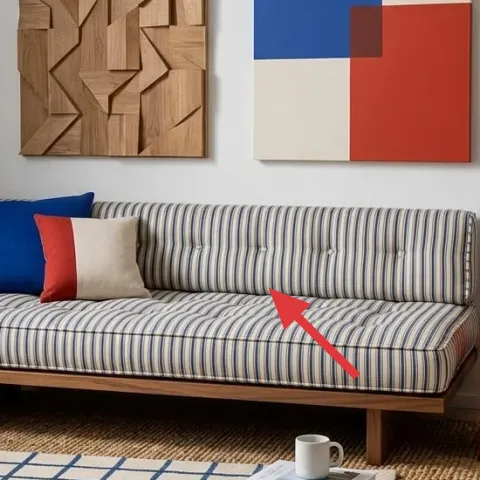
Striped cushions do a lot of work in a small footprint because the pattern creates horizontal movement where a daybed’s proportions can look blocky. Here, the blue-and-white stripes sit on the main cushion area and visually widen the seating zone. Choosing cushion covers (or replacement inserts) keeps the refresh move-friendly, since textiles pack flatter than furniture. The trade-off is scale: if stripes are too fine, they can blur at distance; if they’re too thick, they can overwhelm nearby color blocks. These medium stripes hit that balance with the rug’s warm neutrals and the wall’s graphic shapes.
Keep it repeatable
When future walls are different sizes, the easiest “look” to keep is color + pattern—swap covers instead of rebuilding the whole setup.
Layer 3 — chrome floor lamp with white shade ($40) Plug-in light for evening tasks
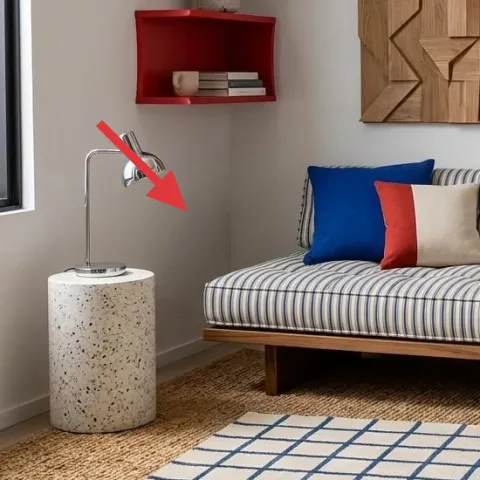
A plug-in floor lamp gives the room an instant functional glow without changing any fixed fixtures. The chrome and white shade add a clean, reflective edge that works with mid-century angles and the graphic wall art. Position-wise, it’s doing something smart in the corner near the window: it keeps the daybed nook readable after dark without washing out the framed prints. The trade-off is brightness control—some white shades scatter light more than expected. A slightly smaller shade is easier to live with in a shared space because it still feels bright when people are passing through.
Choose the right bulb warmth
Stick to a warm 2700K–3000K bulb so the blue accents don’t look flat and the chrome stays flattering.
Layer 4 — red cube side table ($60) A hard color block you can pack
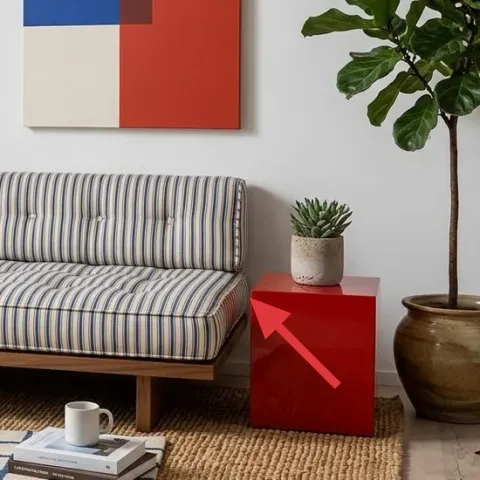
The red cube side table is the practical “landing pad” for cups, plants, and small objects—and it’s one of the easiest pieces to take with you when the lease ends. Its saturated red echoes the wall’s red shapes, so the room feels designed rather than accidental. Because it’s a compact cube, it also fits into a daybed nook without crowding circulation. The trade-off is that red furniture can show dust more than neutral wood, especially on corners. Still, that’s a worthwhile trade for the way the cube visually separates the daybed from the plant and shelf styling.
Watch the top edge
If the cube has a slick top, use a small tray—otherwise mugs and planters can slide during moves.
Layer 5 — blue-white-red geometric framed artwork ($60) DIY-cardstock version for the same look
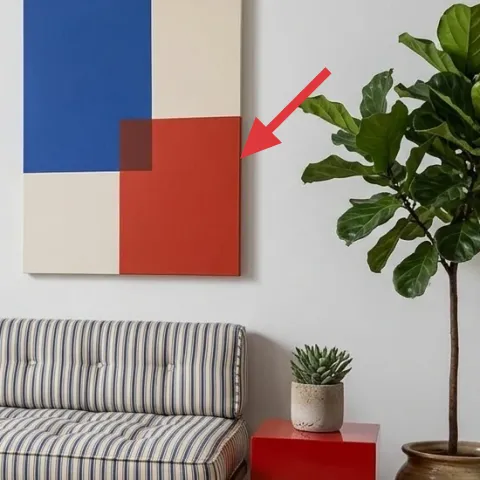
This kind of geometric framed artwork is the fastest route to “styled” in a shared living space because the color blocks do the work your furniture can’t. In the photo, the blue-and-white grid with the red square gives a crisp focal point above the daybed cushions, while the neighboring wood geometric frame adds depth without needing more pieces. Buying a print is great, but the DIY option matters here: it’s replaceable, packable, and it fits the way shared housing moves. The trade-off is time—cardstock art takes a bit of patience compared to ordering online—but it keeps the budget focused on materials that can travel.
Make it instead of buying it
Make a blue-white-red geometric abstract on cardstock to swap into the same framed layout for the photo’s bold color-block look.
Materials
- Acrylic paint set — small assortment — $18
- Cardstock pack (heavy, smooth) — 25 sheets — $6
- Craft brush set — flat + round — $8
- Painter’s tape — 1 roll — $6
- Palette paper or disposable plate — 1 pack — $4
Steps
- Sketch a simple grid and one red square on the cardstock with light pencil marks.
- Mask the edges with painter’s tape to create clean borders for each block.
- Paint the largest blue sections first, then let them fully dry.
- Remove tape only after that layer is dry, then add the white and red blocks in small passes.
- Check alignment from a distance and add touch-ups where lines look uneven.
- Let the final paint dry completely, then slide the finished cardstock into the existing frame.
Total DIY cost: $42 — saves about $18 over buying.
Layer 6 — small potted plant in gray pot on red cube ($30) Greenery that repeats the color story
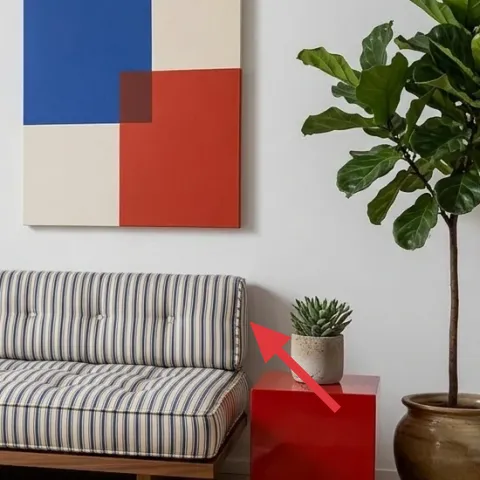
Even with bold blue-and-red wall art, a small plant keeps the daybed nook from looking too graphic. The gray pot on the red cube is a visual “middle tone” between the warm rug and the sharp wall color blocks, and the green leaves soften the edges of the cube. Because the plant is separate and portable, it works well for shared housing: the pot can be wrapped and moved without worrying about wall damage. The trade-off is that plants need consistent watering, and shortcuts show up fast in bright daylight rooms. Still, for a refresh that must travel to the next lease, a compact plant is one of the smartest upgrades.
Match the pot, not the plant
In a future room, keep the gray pot look even if the plant variety changes—it preserves the styling rhythm.
Layer 7 — tall rubber plant in brown pot ($80) A vertical anchor near the corner
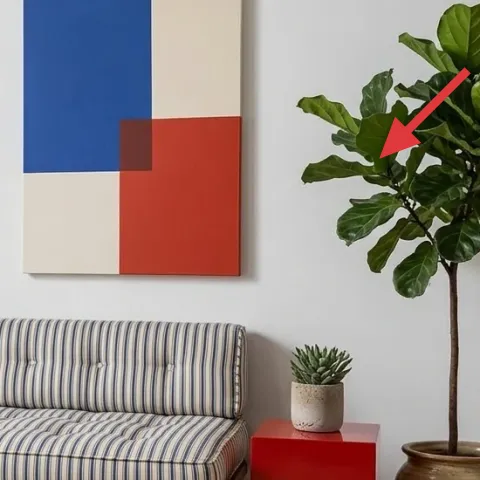
The tall rubber plant gives height to the daybed nook and makes the wall art feel intentional rather than floating. In this photo, the leafy silhouette balances the horizontal stripes and rug weave, and the brown pot pulls in another earthy neutral that harmonizes with the jute. If the room feels narrow, taller plants also help the eye travel upward, making the space feel less boxed in. The trade-off is floor-space: this plant takes up a corner footprint, so the rest of the styling needs to stay light and modular. For shared housing moves, a potted plant still wins because it’s one item to pack—wrap the pot, protect the leaves.
Pack smarter
Tape loose leaves gently, then wrap the pot in a towel and a plastic bag so soil stays contained during moves.
The cost, layer by layer
| Layer | Item | Cost |
|---|---|---|
| 1 | Jute area rug 5×7 | $80 |
| 2 | Striped cushion covers for daybed | $18 |
| 3 | Plug-in chrome floor lamp with white shade | $40 |
| 4 | Red cube side table | $60 |
| 5 | Geometric framed artwork (DIY cardstock insert) | $60 |
| 6 | Small potted plant in gray pot | $30 |
| 7 | Tall rubber plant in brown pot | $80 |
| Total | $368 | |
A cheaper variant keeps the same structure but reduces cost by swapping the tall plant for a smaller floor plant and choosing a basic off-white rug—jute can go down to the thrifted end of the range while still anchoring the daybed.
What worked, what didn't (across the whole room)
Overall, the room’s success is about repeating a few visual rules: warm texture underfoot, stripes on the daybed, and one graphic wall moment. The plants and plug-in light make it feel lived-in without requiring any permanent changes.
What worked
- The jute rug warms the space and helps hide small daily mess in shared households.
- Stripes on the daybed cushions add movement and keep the low profile from looking flat.
- The chrome floor lamp adds vertical structure beside the window and works after dark.
- The red cube side table repeats the wall palette and provides a practical surface.
- Geometric framed artwork gives a gallery feeling that stays removable and move-friendly.
- Both plants soften sharp edges and keep the color blocks from feeling too graphic.
What didn't
- Bright white shades can scatter light too evenly if the bulb is cooler than 3000K.
- If stripe spacing is off, the daybed can look “busy” next to bold wall color blocks.
- Red furniture highlights fingerprints and dust on high-traffic move days.
- Too many framed prints together would crowd the wall; one loud piece plus one supporting frame works better.
What we'd skip if we did it again
Skip a second red furniture piece. A single red cube already mirrors the wall palette, and adding more red can make the nook feel visually loud instead of balanced.
Skip a wall option that requires wall damage, like anything that needs drilling or hard anchors. With geometric art, a clean removable approach keeps the refresh valid for shared housing moves.
Skip ultra-delicate rug fibers if the daybed nook is high-traffic. Jute’s texture is forgiving, while glossy or thin weaves show scuffs and staining quickly.
Frequently asked
How long does this daybed nook refresh take?
Most of the changes are set-and-style: swap cushion covers, place the rug, set up the plug-in lamp, and position the tables and plants. The DIY framed insert takes the longest—typically an afternoon for painting and drying, then sliding into the frame. If the frame is already on the wall, the practical install time is quick because no wall fixes are required.
Is this actually move-friendly for shared housing?
Yes, because the plan relies on textiles (rug and cushion covers), plug-in lighting, freestanding tables, and removable wall art. Plants can be wrapped and transported with simple protection. The only “care” item is the frame art: keep it protected in a flat box so corners don’t get crushed between leases.
What if my room is smaller or bigger than this?
In a smaller daybed nook, keep the same color story but reduce the scale of the plant—use one taller plant or one smaller plant, not both. In a bigger room, it helps to spread the rug slightly farther out under the daybed front edge and let the framed art sit centered above the cushions. The key is keeping one strong focal point on the wall.
Where should similar items be shopped differently (without going over budget)?
Look for the plug-in floor lamp and cube table at home stores with sales or at resale platforms for the best price. For cushion covers and rug basics, budget-friendly home textiles and online rug retailers are usually cheaper than full-room furniture stores. For wall art, the DIY cardstock insert is the easiest way to lock in the exact colors without paying gallery-pricing.
What’s the biggest mistake people make in a daybed nook?
Overloading the wall. It’s tempting to add a matching set of prints, but graphic color blocks need breathing room. Keep the wall styling to one loud geometric framed artwork plus a supporting frame, then let the rug texture and cushion stripes do the rest of the visual work.
More in Small Spaces
Under $400: 7 move-friendly swaps for a daybed nook
A $400 daybed nook refresh built for shared housing: jute underfoot, bold framed color, a plug-in lamp, and plants that pack out in a year.…
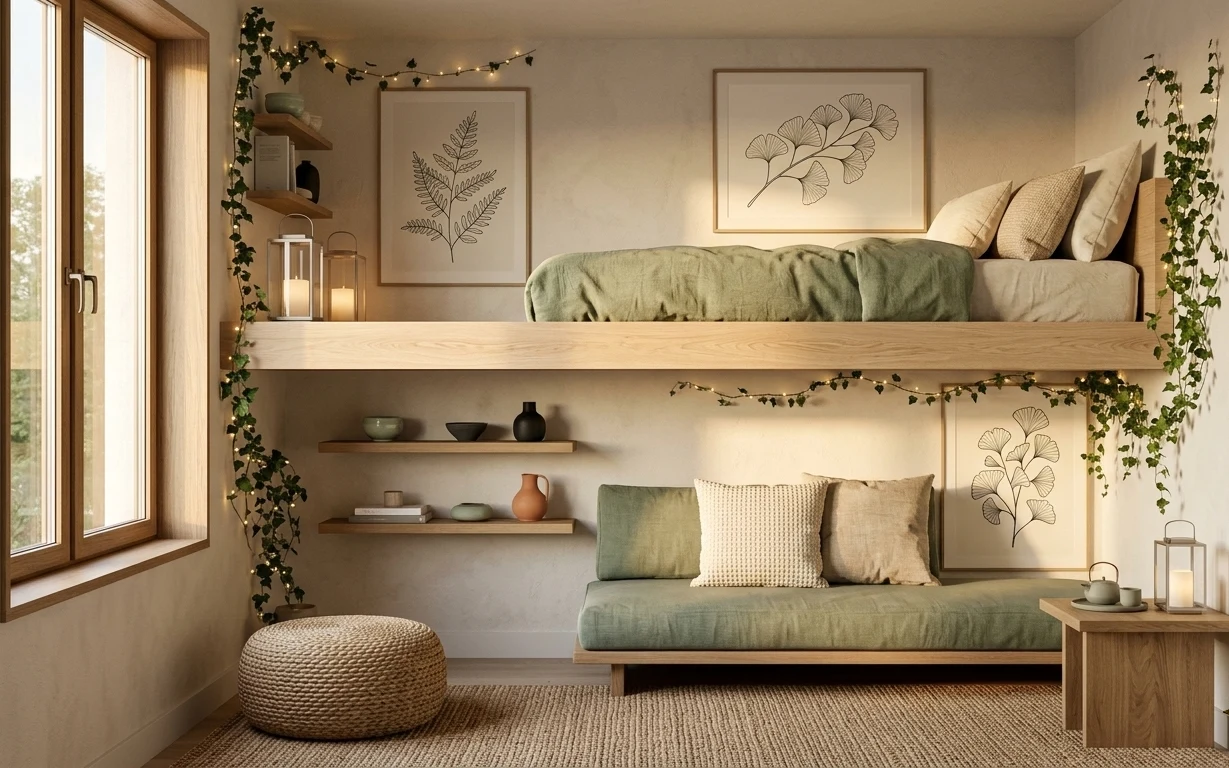
Under $700: japandi daybed nook refresh with weekend upgrades
A calm japandi daybed nook refresh you can pull off for under $700. Swap in one bold botanical frame, add warm string lights and a plush 5×…
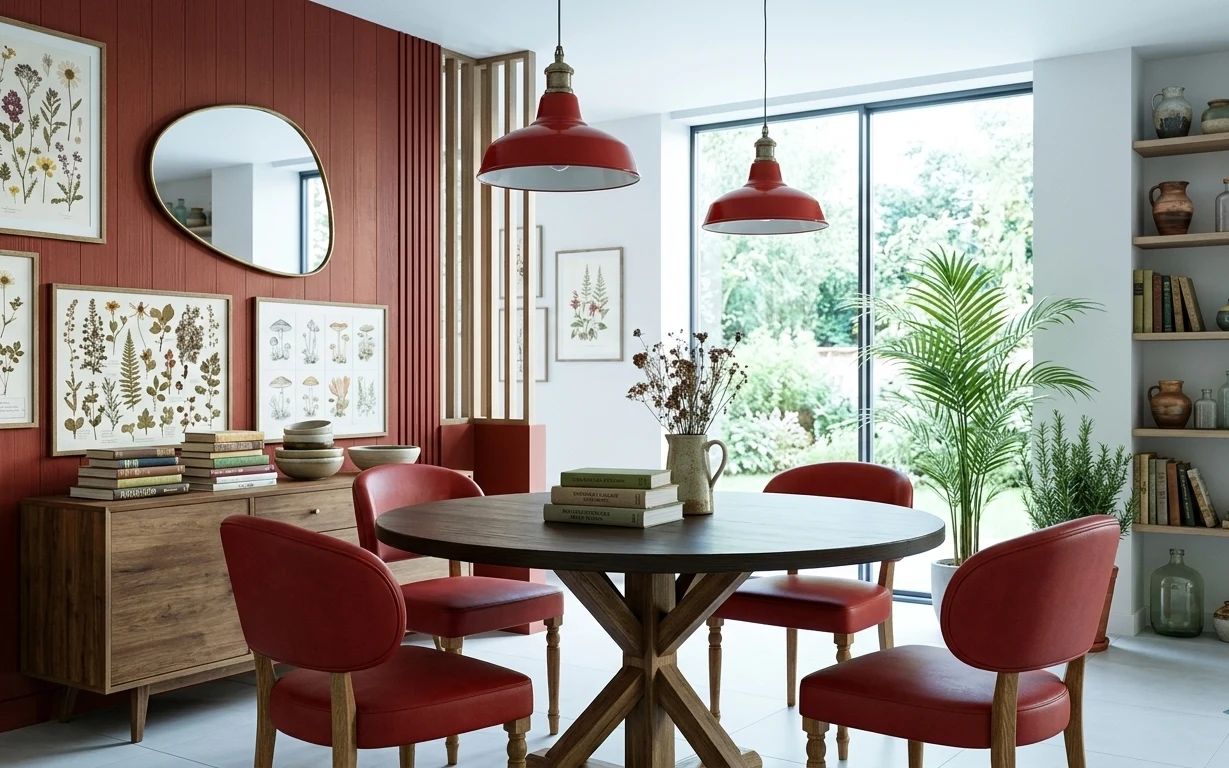
Under $400: move-friendly dining nook refresh in warm reds
A warm-wood dining nook with red accents can look intentional without permanent changes. This $400 (max) refresh uses 7 move-ready swaps—ch…