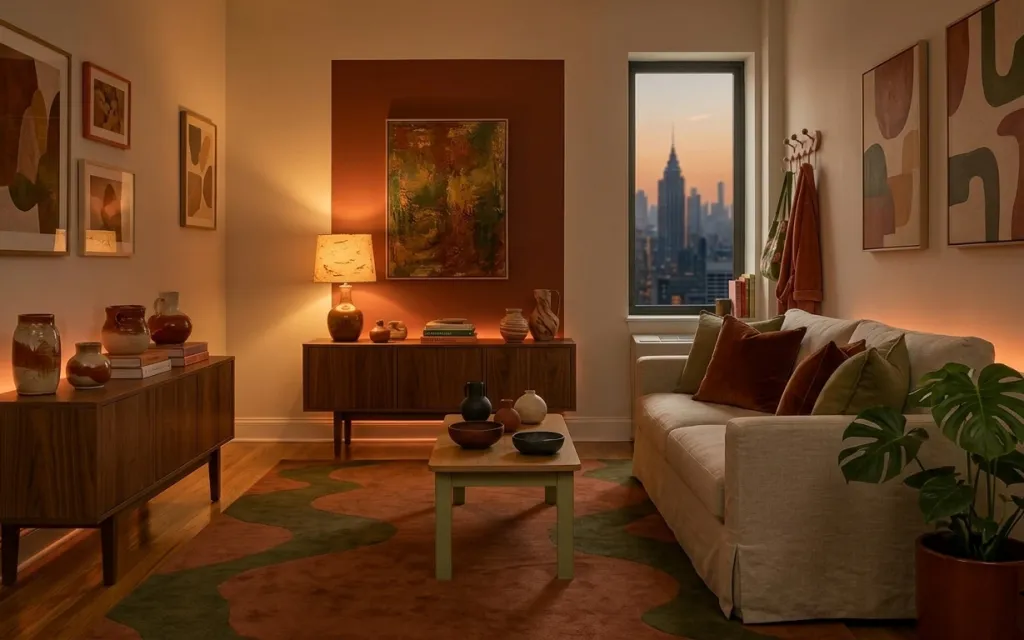
- Best for
- earthy color repeat + move-friendly swaps
- Cost
- about $340 total
- Difficulty
- easy (mostly textiles and styling)
- Time
- 1 weekend afternoon + a couple short sessions
Why burnt orange-and-olive accents are the sofa seating area of 2026
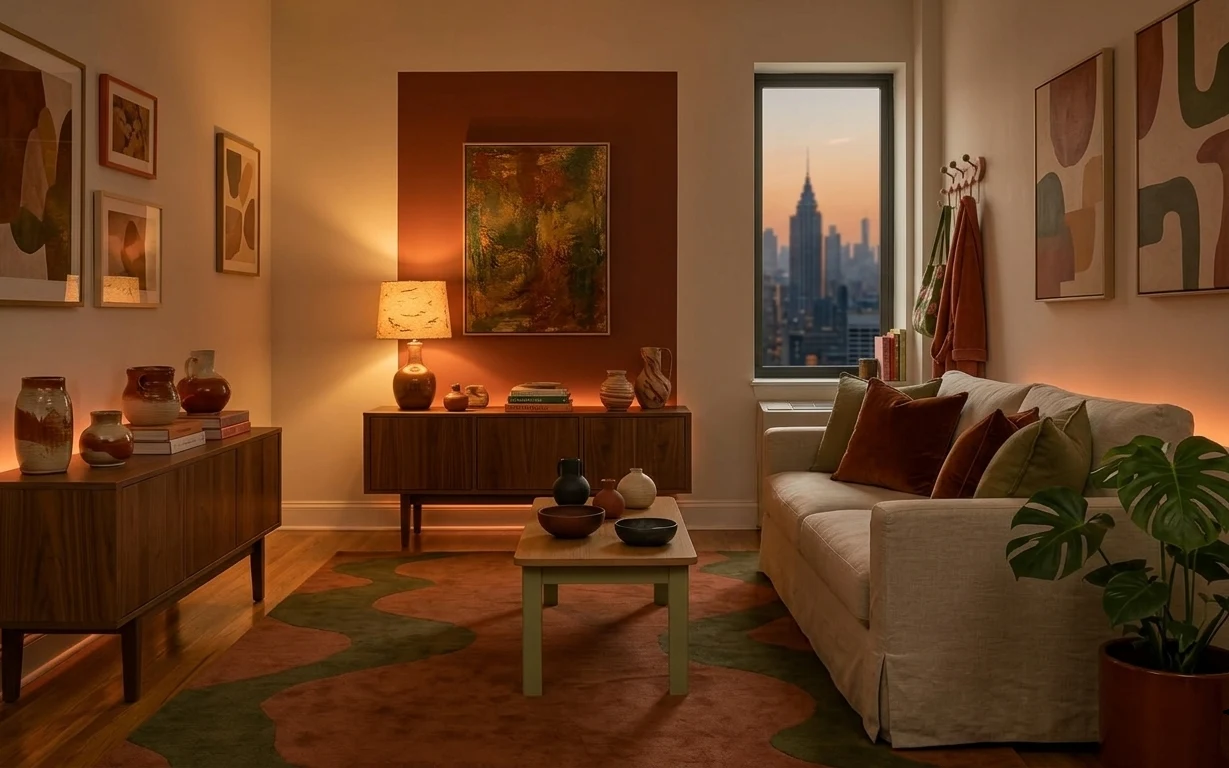
In this warm, mid-century-leaning sofa seating area, the palette does the heavy lifting: burnt orange wall tones, olive throw pillows, and warm wood floor shine under amber lamp light. The grounded base is the earth-toned area rug, which visually softens the hardwood. On top of that, the coffee table stays styled but not fussy—ceramic pieces plus a decorative tray read intentional instead of cluttered. This is a look you can pull off in shared housing because everything here is removable, lightweight, and built for the next lease.
I used to chase “perfect match” rooms, and it always broke down when I had to move. One move, I packed my pretty but too-thin throw pillows last, and they ended up looking flat and mismatched in the new spot. What changed my mind was focusing on texture and value—linen-ish fabrics, warm lamps, and a rug that anchors the colors—then repeating just one accent tone (olive) across the seating. That’s why this setup feels cohesive without needing permanent installs.
Layer 1 — Area rug ($80) earth-toned base that hides daily mess
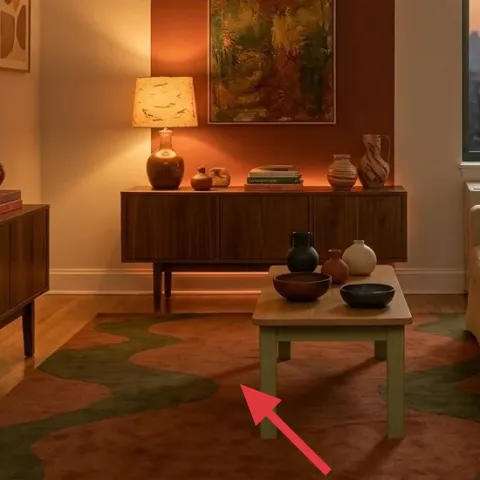
Choose an earth-toned area rug in a mottled olive-and-burnt palette, sized for the living room so the front legs of the sofa sit on it. In the hero, the rug’s irregular pattern keeps the floor from looking bare while still letting warm wood peek through at the edges. The biggest reason to pick a rug over “just add a runner” is coverage: it softens foot traffic and makes the whole seating zone feel designed. The trade-off is that you’ll want a rug pad (even a thin one) so it doesn’t creep and so the pattern stays sharp where people walk.
Start with the rug, not the pillows
If the rug already contains olive and warm browns, your throw pillows can be simple and still look collected.
Layer 2 — Coffee table ($60) low height for easy trays and quick packing
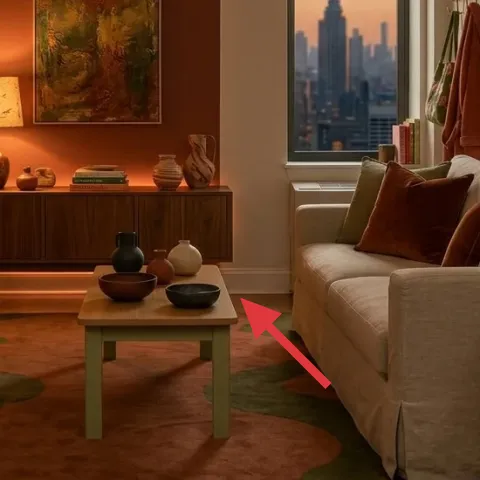
A simple low coffee table keeps the styling at eye level and makes the “tray moment” easier. In the photo, the tabletop is wide enough for a decorative tray and a couple of small ceramic objects, but it’s still visually light against the wood floor. This is the option that beats a taller, bulkier table when you’re in shared housing—lighter pieces move faster, and you don’t need two people just to get it into a van. The trade-off is surface space: if you go too narrow, you’ll constantly rearrange objects just to fit them.
Go for one main surface arrangement
One tray + a few ceramics reads intentional from across the room.
Layer 3 — Table lamp ($25) warm glow without hardwiring
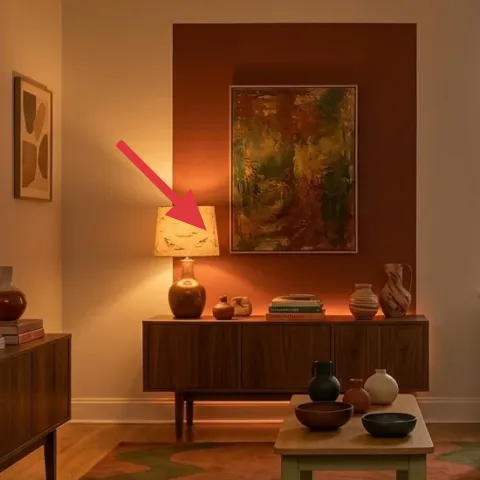
A plug-in table lamp with a warm shade gives you that amber, late-evening look you see in the hero—without touching hardwired fixtures. The lamp in the photo sits near the left side of the seating area and turns the wall and floor into a softer backdrop, which makes your framed art look richer. This is also a move-friendly win: you can wrap the lamp shade in tissue paper and pack the base in a single box. The trade-off is bulb choice—cool bulbs will make the room feel dull and gray against the warm wall tones.
Match the bulb warmth to the room
Pick a warm white bulb so the burnt orange and wood tones stay inviting after dark.
Layer 4 — Throw pillow cover in olive green ($30) the quickest color repeat
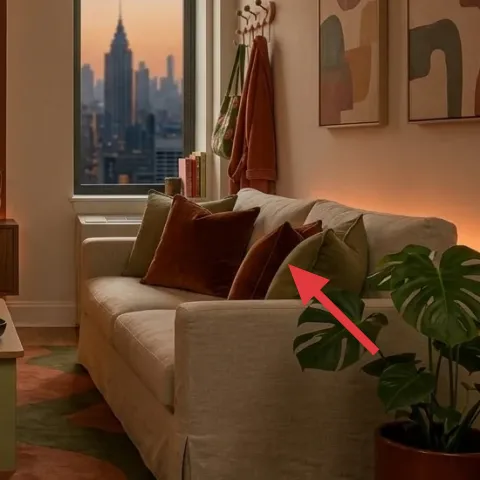
Olive throw pillow covers pull the whole palette together because they repeat the green already present in the area rug. In the hero, the olive pillows sit against neutral upholstery and warm rust-brown pillows, so the room looks layered instead of flat. Buying matching covers is the cleanest shortcut, but DIY dye is cheaper and more flexible—especially when you’re packing for a move. The trade-off is that dye is most forgiving on light-colored fabric, so aim for covers you can dye safely without bulky seams or textured flocking.
Make it instead of buying it
DIY dyed olive throw pillow covers so you get that same deep olive tone while staying move-ready in a couple of boxes.
Materials
- Plain white pillow cover (for dyeing) — 1 — craft/home store — $10
- Fabric dye (olive/green shade) — 1 kit — craft/home store — $6
- Salt (for dye set) — 1 small box — grocery — $3
- Large plastic tub/liner — 1 — discount store — $5
- Latex gloves + paper towels — 1 set — drugstore — $1
Steps
- Pre-wash the pillow cover so dye grabs evenly (follow the dye kit for fabric type).
- Dissolve the dye per instructions in warm water, then add salt if your kit requires it.
- Stir and submerge the cover, keeping fabric fully wet so the color doesn’t pool.
- Adjust soak time for depth—check every so often until it matches the olive you want.
- Rinse in cool water until it runs mostly clear, then wash once separately.
- Air-dry or tumble-dry low, then put the cover on the pillow insert.
Total DIY cost: $25 — saves about $5 over buying.
Layer 5 — Decorative tray on coffee table ($35) keeps the ceramics looking collected
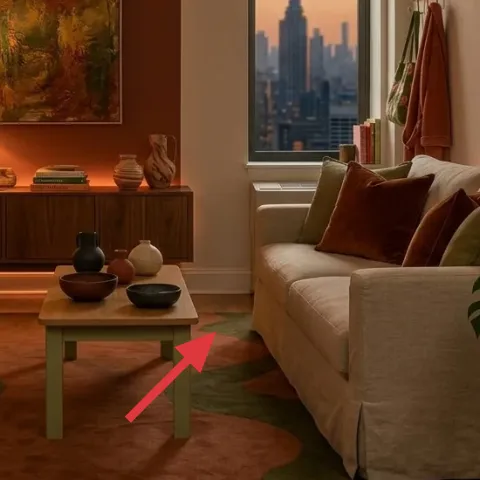
A decorative tray is the easiest way to make small ceramics feel intentional. In the hero, the tray holds a few dark and warm-toned pieces, and that one “container” makes the coffee table read styled even when you add or remove items. This is a better move than trying to match every vase: the tray gives you shape and structure, while your ceramics bring the color and texture. The trade-off is choosing the wrong tray material—too shiny or too reflective can fight the warm lamp glow, so aim for matte wood, stone, or ceramic in warm brown.
Don’t overcrowd the tray
Three items max reads styled; more than that turns into clutter once the room changes with moving.
Layer 6 — Framed abstract wall art ($80) one anchor print for the palette
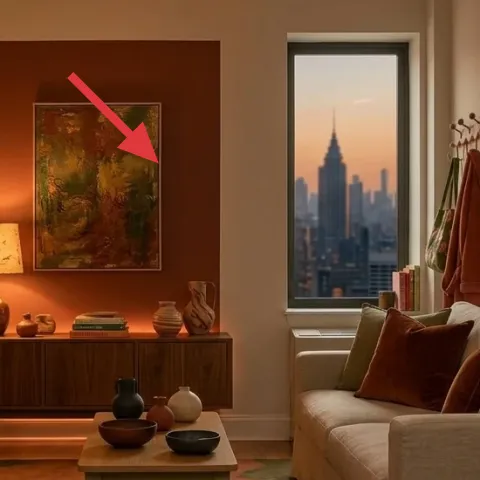
Pick one framed abstract print with the same warm-or-olive family so your wall doesn’t feel random. The hero’s central abstract piece uses burnt orange and earthy greens, and it becomes the visual anchor that makes the surrounding smaller frames feel purposeful. This is the right call for shared housing because framed art packs flat and rehangs easily with renter-safe methods like Command hooks (no drilling). The trade-off is scale: too small, and it won’t read as an anchor; too large, and it can dominate a small sofa seating area.
Use the art to choose your second accent
Once the main print has olive in it, your pillows can be simpler.
Layer 7 — Indoor plant in terracotta pot ($30) adds organic shape without extra furniture
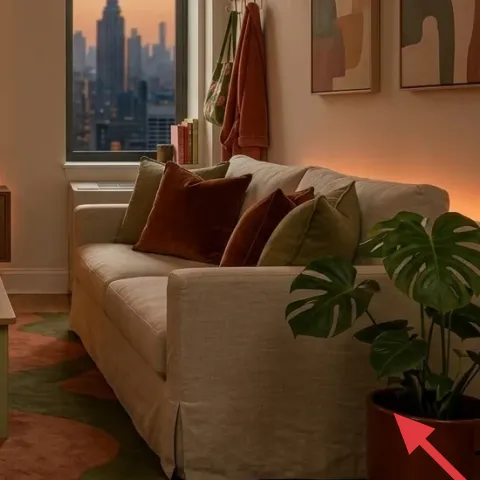
An indoor plant in a terracotta pot gives you the lush, organic shape your eye expects in a warm living room. In the photo, the plant sits at the right edge near the sofa, and the terracotta echoes the burnt orange tones in the walls and ceramics. The biggest reason to choose a plant here is that it adds height and texture without taking up seating space—perfect when you’re moving within a year or two. The trade-off is transport: plants prefer a careful move, so keep a plastic saucer and wrap the pot with a towel to prevent chips.
Group the plant with warm objects
Terracotta next to wood and matte ceramics looks cohesive from the first glance.
The cost, layer by layer
| Layer | Item | Cost |
|---|---|---|
| 1 | Earth-toned area rug (5×7) | $80 |
| 2 | Low coffee table | $60 |
| 3 | Plug-in table lamp with warm shade | $25 |
| 4 | Olive throw pillow cover (DIY dye equivalent) | $30 |
| 5 | Matte decorative tray | $35 |
| 6 | Framed abstract wall print (16×20) | $80 |
| 7 | Indoor plant in terracotta pot | $30 |
| Total | $340 | |
If you want a cheaper version, swap the framed abstract print for a smaller 11×14 framed option ($25–$40 range depending on frame), and choose a simpler tray material (flat wood or basic ceramic) while keeping the rug and one olive pillow.
What worked, what didn't (across the whole room)
This setup works because it anchors color with the rug, repeats olive in the seating, and keeps table styling contained with a tray. The warmth stays believable because the lamp glow matches the burnt orange tones in the wall art.
What worked
- The earth-toned rug makes the wood floor feel intentional, not accidental.
- Olive throw pillows repeat the rug’s green without forcing a full matching set.
- A warm plug-in table lamp creates depth against the cream walls after dark.
- The decorative tray keeps ceramics from drifting into visual clutter.
- One framed abstract print acts as the palette anchor for the entire wall.
- Terracotta plant styling adds organic height without adding furniture mass.
What didn't
- Too many small ceramic objects on the coffee table can look busy fast in photos.
- Cool white bulbs would flatten the burnt orange tones and make the room feel gray.
- Oversized wall art without a second supporting print can feel unbalanced.
- Skipping the rug sizing often leaves the sofa zone looking like it floats.
- A glossy tray finish can reflect lamp light and distract from the textiles.
What we'd skip if we did it again
Skip a full “matchy” furniture set, especially in shared housing. Matching often tempts you to buy bigger pieces that are heavier and harder to move, and it reduces the room’s flexibility when your new neighborhood changes light and layout.
Skip buying only pillows first. Without an earth-toned rug and one warm lamp glow, pillow color alone looks random, not intentional—like it’s missing the foundation that ties the tones together.
Skip adding several small framed prints at once. Pick one framed abstract print as the anchor, then stop; the surrounding wall details should support it, not compete with it, so the look stays calm when you pack up later.
Frequently asked
How long does this living room refresh take?
Most of the work is styling time. Swapping the rug, setting up the coffee table tray, and arranging the pillow covers usually takes 1–2 hours. The lamp is instant, and placing framed wall art is another quick session. The only time sink is the DIY dye process for pillow covers—plan for pre-wash, dye soak, rinsing, and drying, plus a separate short day if you air-dry.
Is this renter-safe for shared housing walls?
The wall items are meant to be moved with you. Framed abstract wall art can be hung with renter-safe methods like removable hooks rather than drilling. If your landlord is strict about anything adhesive, choose foam-core style hanging methods that don’t pull paint, and avoid anything that leaves residue. Everything else—rug, pillow covers, tray, lamp, and plant—packs into boxes and disappears during the move.
What if my sofa seating area is smaller than the photo?
Size everything by the rug first. A smaller rug can still work if you keep the pattern strong and ensure the front legs of the sofa sit fully on it. For wall art, use one anchor print rather than spreading several frames across the wall. On the coffee table, use fewer ceramic objects—one tray plus two items—so negative space stays calm.
Where should I shop differently to get this look for less?
For budget, prioritize the rug and one framed abstract print. Those are what create the color story. For the lamp, browse thrift stores or discount retailers for a plug-in lamp with a warm shade. For the pillow covers, buy plain covers or thrift them, then DIY dye to reach the olive tone rather than paying for a designer color match.
What’s the biggest mistake people make in a warm, earthy palette?
They buy colors without checking undertones under the same light source. Warm bulbs can make green look deeper and burnt orange look richer, but cool bulbs can flip everything toward muddy gray. Another common miss is overcrowding the coffee table—too many ceramics and no tray structure makes the room feel busy even if the colors match.
Can I keep the vibe if I don’t want to DIY?
Yes. Skip the dye step and buy olive throw pillow covers in the same fabric weight or a close substitute like a cotton-linen blend. Keep the rest of the structure: an earth-toned rug, warm lamp glow, and a decorative tray on the coffee table. The palette still lands because olive repeats the rug’s green and the framed abstract art brings the burnt orange anchor.
More in Living Room
Under $400: earthy burnt-orange living room refresh
A move-friendly living room sofa seating area refresh that keeps everything packed and re-used. This $400-leaning plan builds warmth with a…
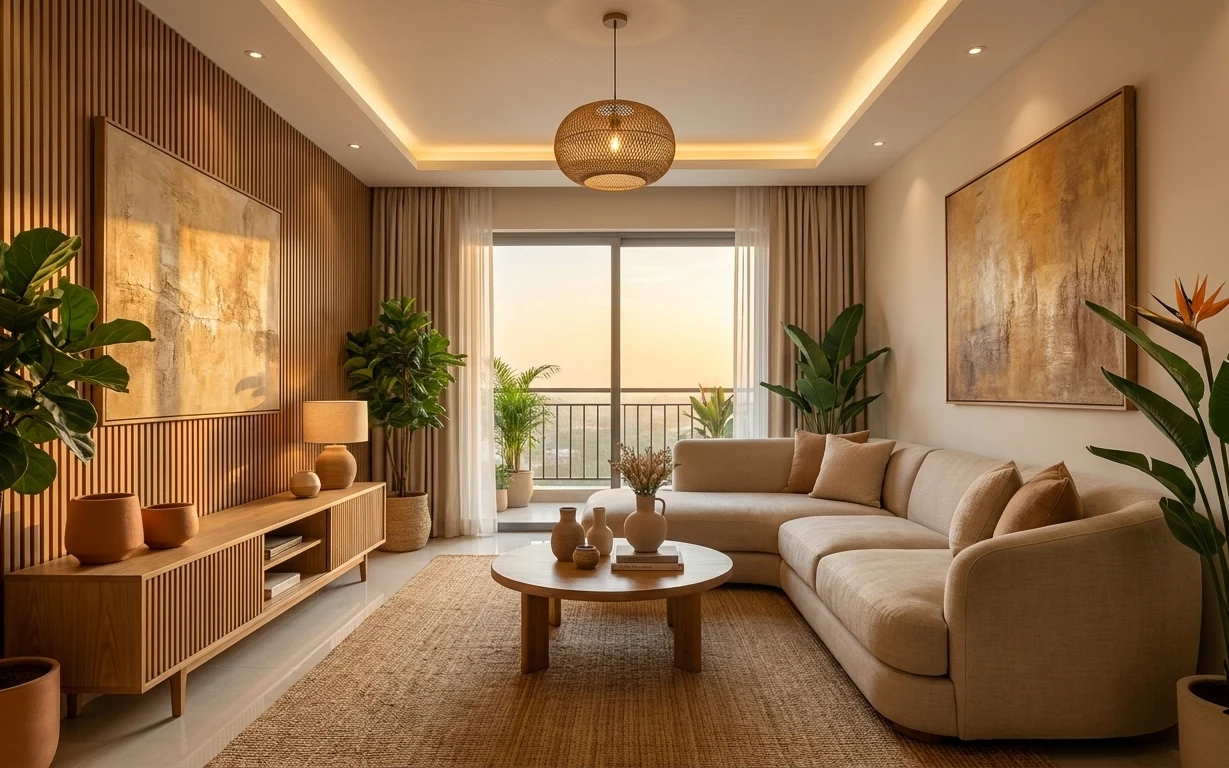
Under $1500: beige sectional living room weekend refresh with 7 layers
A warm, modern japandi living room with a beige sectional, jute rug, rattan ceiling light, and framed abstract art—refreshed with 7 buy-or-…
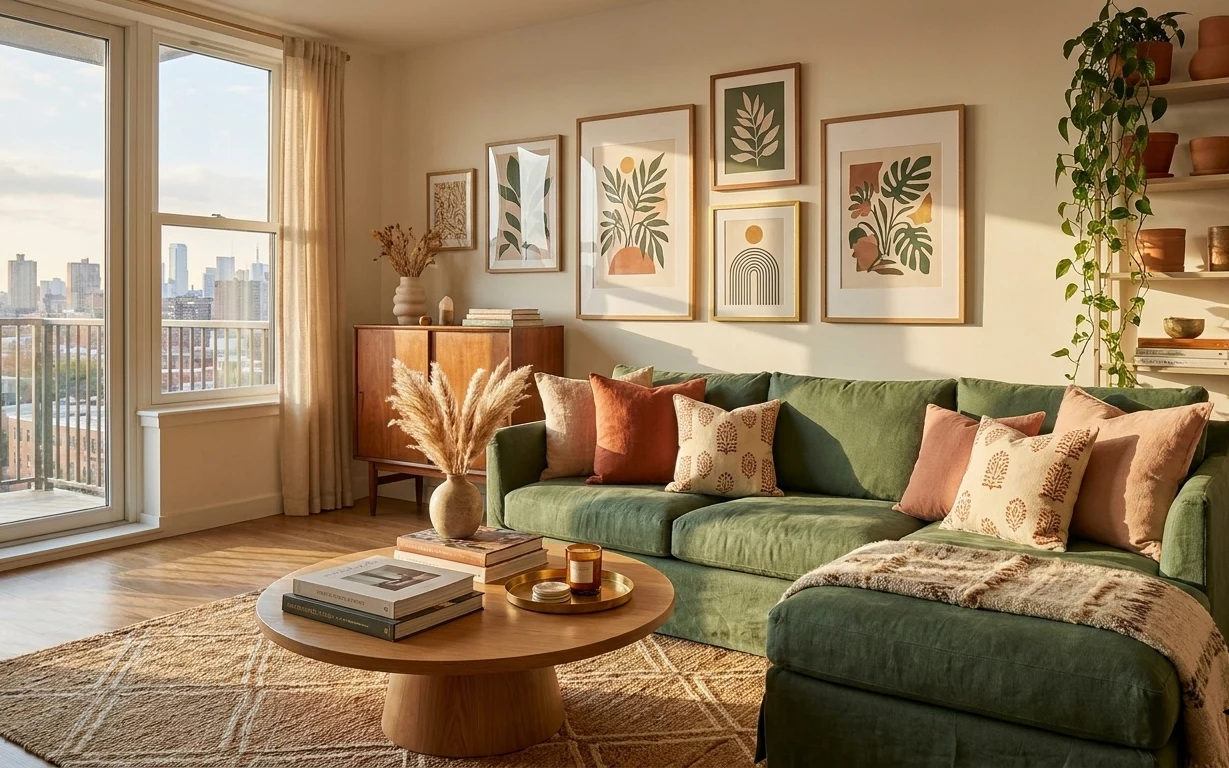
Under $700: boho living room refresh with green sofa accents
A boho living room look built around a green sofa—updated with a patterned rug, warm curtain panels, botanical framed prints, and terracott…