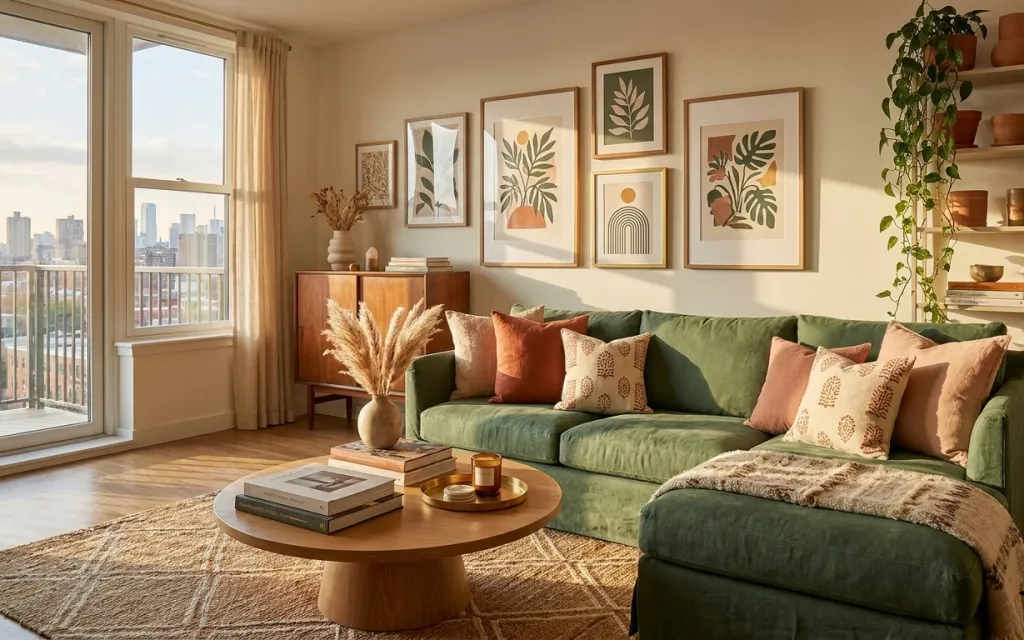
- Best for
- Earthy texture + botanical wall styling
- Cost
- $644 total (about $700 max with rounding room)
- Difficulty
- Easy—mostly textiles and wall art
- Time
- About 3–5 hours total
Why olive-and-terracotta softness is the living room of 2026
The first thing I notice is how the green sofa reads rich instead of heavy—then the patterned area rug and warm curtain panels soften everything into one sitting zone. The framed botanical prints add crisp edges on the otherwise organic, nature-forward styling, while the throw blanket and pillows bring in that mix of cream + terracotta. The best part for renters is that none of it asks for wall changes; you’re styling what’s already working and adding texture at floor, window, wall, and tabletop levels.
I used to overthink “matching” in rentals. Then I caught myself buying pillows in three different greens that didn’t talk to each other. Here, the trick is picking one hero color (the sofa’s green), then repeating it in smaller doses—alongside terracotta planters and cream textiles—so the room feels intentional even if it’s a mix-and-match collection.
Layer 1 — patterned area rug ($200) Anchor the room with a grounded, woven texture
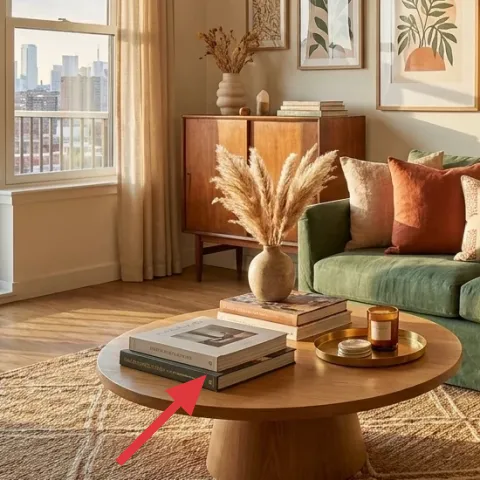
A patterned area rug is the fastest way to make a living room feel styled, especially when the furniture is already bold—like this green velvet sofa. The rug’s woven look and neutral base keep the palette earthy, while the geometric pattern prevents the space from feeling flat. A solid rug would make the room calmer, but it would also mute the mid-century-modern rhythm you see in the coffee table and the botanical prints. This is also the renter-friendly move: it covers scuffs, helps the sofa look “placed,” and packs away cleanly when the lease ends.
Rug sizing that looks right from day one
Choose a rug where the front legs of your sofa can land on it—otherwise the seating area looks like it’s floating.
Layer 2 — curtain panels ($80) Frame the windows with warm, vertical softness
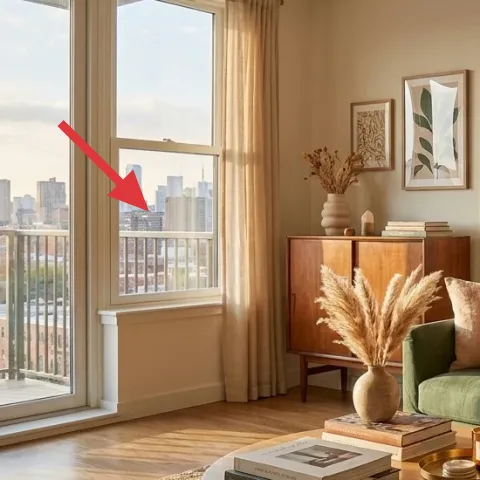
Curtain panels bring instant height and softness to rooms with lots of visual lines, like wall art frames and the round table edge. In the photo, the curtains read warm and creamy, which balances the sofa’s deeper green and keeps the daylight feeling gentle. If you went with a sheer-only treatment, you’d lose that grounded color wash; if you went with heavy blackout fabric, the room would feel darker than it needs to. For renters, this works best as a simple swap using removable hardware and a full-length drop so the window looks finished.
Why the curtain color matters
The creamy tone echoes the rug and pillows, so the room doesn’t depend on the green sofa to do all the work.
Layer 3 — round wood coffee table ($45) Add a warm surface for books, trays, and small rituals
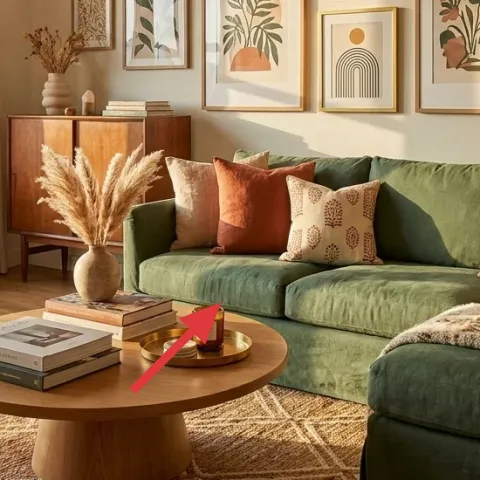
A round wood coffee table shape is doing subtle design work here: it softens the room’s geometry and gives a natural landing spot for styling. The tabletop reads warm (wood tone), which pulls the terracotta accessories and the botanical prints toward a cohesive theme. An obvious alternative would be a rectangular table—more common, more storage-friendly—but it can make the center feel too sharp against a plush sofa. The trade-off with round is less surface for sprawling items, so the styling stays curated: tray, candle, and a small book stack.
Use “one tray, three items”
Keep the table looking intentional by grouping a tray with a candle, a small object, and a book or two.
Layer 4 — decorative throw pillows ($24) Tie the sofa to the palette with cream + terracotta accents
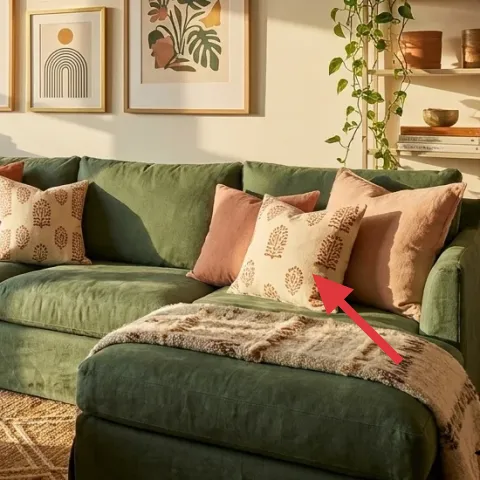
Decorative throw pillows turn a single upholstery color into a palette you can build on. These pillows lean cream with terracotta-toned patterns, so they act like visual bridges between the rug neutrals and the framed botanical prints. If you chose only solid pillows in cream, you’d keep things calm, but you’d lose the pattern-mixing that makes the room feel collected. Going too matchy—pillows that repeat the exact same pattern at scale—would also fight the organic theme. Instead, mix shapes and pattern density while keeping the color family consistent.
Don’t overshoot the pattern scale
If one pillow has a large bold motif, keep the others smaller so the sofa doesn’t turn into a loud focal point.
Layer 5 — framed botanical prints (multiple) ($180) Create crisp structure above the sofa
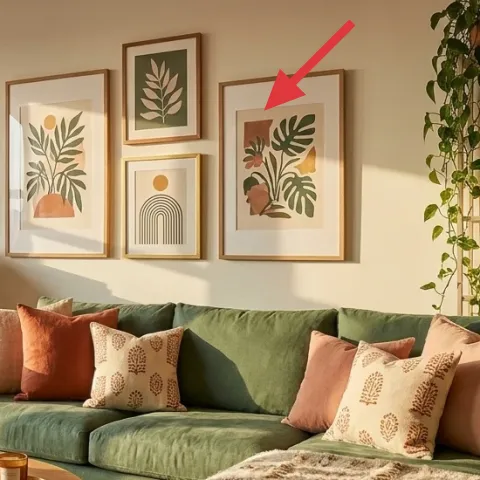
Framed botanical prints add that “collector wall” energy without requiring a gallery wall drill job. In the photo, the frames are varied but visually related—greens, warm neutrals, and plant silhouettes—so the wall stays cohesive even with different compositions. A single oversized print would be simpler, but it wouldn’t create the same layered rhythm you get from multiple pieces. With multiple prints, you can also echo the room’s textures: woven rug on the floor, botanical imagery on the wall, and organic pampas-and-plant styling nearby. The key is spacing—leave enough air between frames so they read as intentional.
Keep frames in one material family
Even when the prints vary, consistent frame color (like wood or warm finishes) makes the set look curated.
Layer 6 — indoor trailing plant ($80) Add movement on the right side of the room
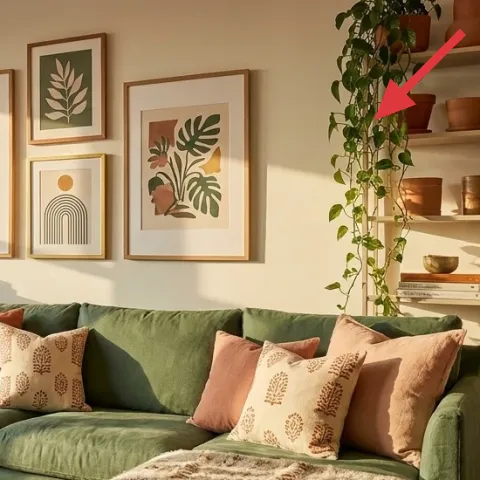
An indoor trailing plant is what makes this corner feel alive rather than staged. Because it drapes downward over the shelf, it softens the straight edges of the books and terracotta planters, and it visually pulls the eye up to the botanical prints. A simple upright plant would look tidy, but it wouldn’t create the same layered, boho feel—especially next to a sofa with plush textures. The trade-off is placement: trailing plants need a bit of room to spill, so aim for a spot where the leaves can hang without hitting the wall art or window trim.
Let it spill, but control the mess
Trim the ends lightly so the drape stays full without tangling around books.
Layer 7 — candle on decorative tray ($35) Warm the tabletop with a small, renter-friendly glow
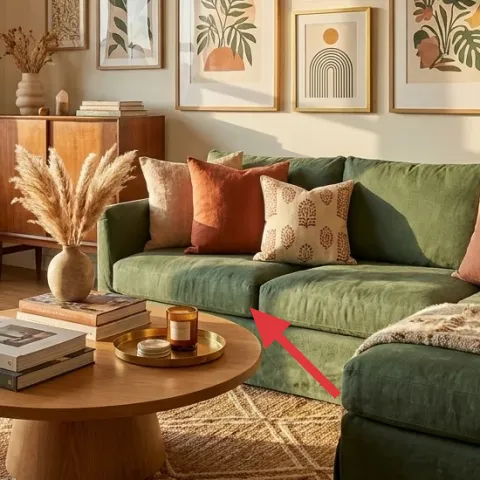
Candles on a decorative tray are a quick way to make a coffee table feel “used”—not just furnished. In the photo, the candle sits among the book stack and the tray, so it reads like part of the styling, not an afterthought. You could skip candles and rely on daylight, but the room would lose that evening warmth that matches the earthy palette. The trade-off with candles is safety and maintenance: use a stable tray, keep it away from fabrics, and treat it like a small styling switch you can swap seasonally.
Make it instead of buying it
This DIY candle pour gives you the same tabletop warmth, and the jar style is easy to match to the earthy tray look.
Materials
- Wax (soy or paraffin) — ~10–12 oz — craft store — $12
- Wick + wick tabs — 1 set — craft store — $5
- Small glass jar — 1 jar — thrift store or craft store — $7
- Fragrance oil (optional) — 1 small bottle — craft store — $2
- Candle dye/pigment (optional) — pinch-sized — craft store — $3
Steps
- Set up a clean jar workspace and center the wick so it stays straight when you pour.
- Melt wax slowly in a heat-safe container until fully liquid.
- Stir in fragrance and/or pigment (if using) for the same warm tone.
- Pour wax into the jar, keeping the wick centered the entire time.
- Let the candle cool and solidify without moving the jar.
- Trim the wick and test-burn for a short session before styling it on the tray.
Total DIY cost: $29 — saves about $6 over buying.
The cost, layer by layer
| Layer | Item | Cost |
|---|---|---|
| 1 | patterned area rug 5×7 | $200 |
| 2 | curtain panels pair | $80 |
| 3 | round wood coffee table | $45 |
| 4 | decorative throw pillows (2 covers) | $24 |
| 5 | framed botanical prints set (5–7) | $180 |
| 6 | indoor trailing plant (4–6 ft) | $80 |
| 7 | candle on decorative tray | $35 |
| Total | $644 | |
If the rug budget is tight, look for a smaller size (or a close-to-5×7) and style with a rug pad for a sturdier look; the visual “anchor” effect still holds, and the rest of the palette—curtains, prints, and pillows—does the heavy lifting.
What worked, what didn't (across the whole room)
This setup succeeds because every layer repeats the same three ideas: warm neutrals, botanical green notes, and plush texture. The room also stays readable because the framed prints add structure while the plant and pampas keep it organic. The main friction points were mainly about proportion—choosing too-large patterns or too-big pieces would crowd the sofa area.
What worked
- The patterned area rug grounds the sofa and makes the seating zone feel intentional.
- Cream curtain panels soften the window area and keep daylight feeling warm, not washed out.
- Botanical framed prints add clean structure above plush upholstery.
- Throw pillows connect the sofa’s green to terracotta accents without repainting.
- A trailing plant creates visual movement and balances the right-side shelving.
- Tray styling on the coffee table makes small moments feel designed.
What didn't
- Solid, texture-free pillows would flatten the sofa instead of echoing the rug’s pattern.
- Oversized wall art would crowd the center area and overpower the frame grouping rhythm.
- Too many small candle-like objects at once can make the coffee table look cluttered fast.
What we'd skip if we did it again
Skip swapping in a second “almost green” throw pillow. When there are multiple competing greens, the sofa stops feeling cohesive and the room reads accidental instead of curated. Keeping to one sofa color plus warm terracotta/pattern neutrals keeps the palette tight.
Skip replacing furniture just because the coffee table feels trendy. In a renter setup, small budget wins matter more than full swaps. If the coffee table shape is already good, spend on textiles and wall art instead.
Skip large, heavy window treatments that block too much light. The photo relies on soft daylight, and heavy fabric would change the mood. Choose warm curtain panels with a full-length drop so the room stays bright while still feeling finished.
Frequently asked
How long does this living room refresh take for a renter?
Most of the time goes into placement: rug positioning, curtain height, and spacing the framed botanical prints. If the furniture is already in place, plan on 2–3 hours for the setup, plus another hour for styling the coffee table and trimming the trailing plant. The DIY candle pour adds passive wait time, but you’re not actively working during the cooling period.
Will this work if my apartment has smaller windows or a different wall width?
Yes—just scale the curtain panels to the width and aim for the same full-length drop, so the window looks taller. For the botanical prints, keep the same color family (greens + warm neutrals) but reduce the number of frames to fit your wall—three larger pieces can still feel curated without crowding.
What if I can’t hang frames with anything permanent?
Use removable wall-hanging methods that are designed for renters. The key is to keep frames level and evenly spaced, then use a light-touch approach for weight distribution. When in doubt, pick fewer frames with a slightly larger print so each piece has more “visual importance” even if the spacing is tighter.
Can I swap the rug for a solid one?
You can, but you’ll need to replace the pattern energy somewhere else. If you go solid, lean on pattern-mixing through throw pillows or choose botanical prints with more color variation. The room works because the rug pattern gives movement at floor level—so without it, the wall and textiles have to do a little more.
Where should I shop for the pieces in this palette?
For the biggest visual payoff, start with the rug and curtain panels from stores that specialize in home textiles. For botanical framed prints, look for coordinated sets in similar frame finishes. Then add the indoor trailing plant and terracotta pots from garden centers or big-box retailers and style with a simple tray to match the warm wood tones.
What’s the biggest mistake to avoid in this kind of boho living room?
The biggest mistake is buying decor that’s “boho” but not tied to the same color logic. If you mix too many unrelated greens or too many different warm undertones, the room stops reading cohesive. Pick one hero color (the sofa’s green) and repeat it in pillows or prints, then ground everything with cream neutrals and terracotta accents.
More in Living Room
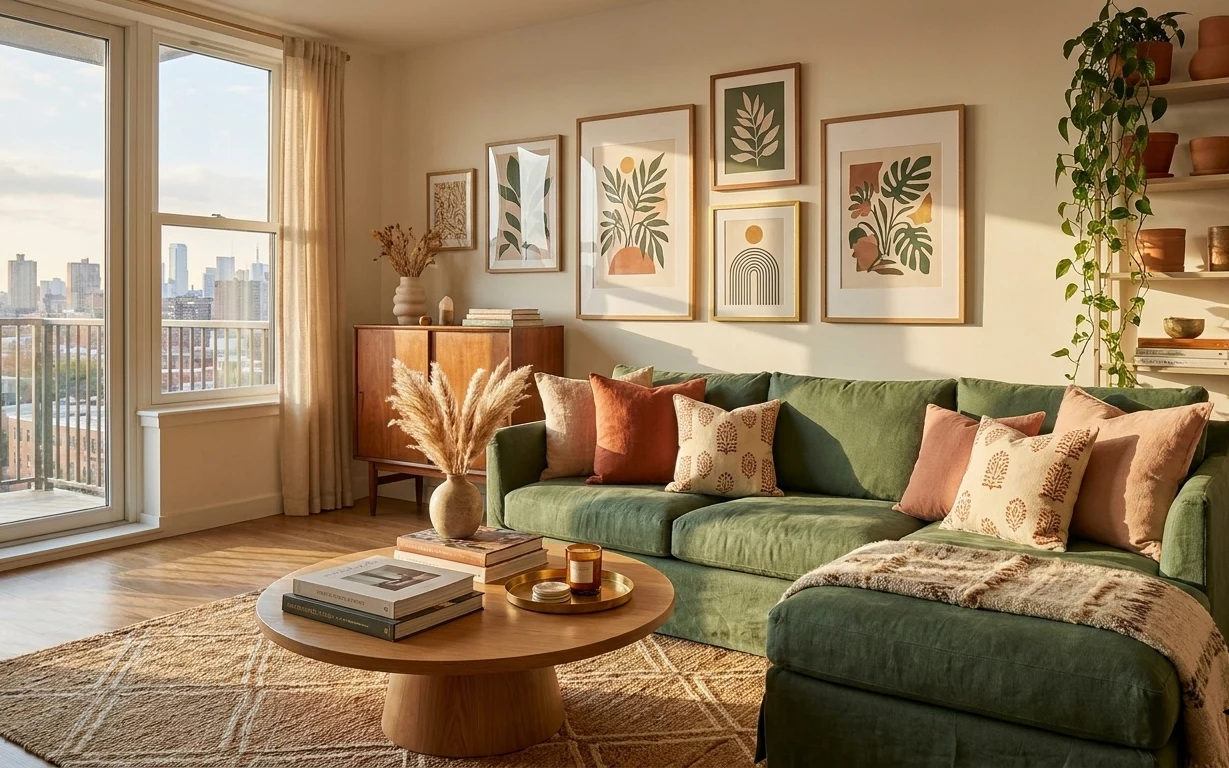
Under $700: boho living room refresh with green sofa accents
A boho living room look built around a green sofa—updated with a patterned rug, warm curtain panels, botanical framed prints, and terracott…
Under $1500: modern farmhouse living room refresh
A $1500-or-less living room dining-kitchen refresh built around a warm rug, a green sofa, and terracotta plants. This weekend project uses …
Under $600: move-friendly living room refresh with 7 swaps
A plant-filled, rust-and-sage living room style is easy to rebuild for your next lease. Here are 7 move-friendly swaps (under $600 total) t…