- Best for
- Textiles + wall styling
- Cost
- Under $400
- Time
- 2–4 hours
- Renter-safe
- Yes (no-drill swaps)
Why warm blue-and-rust styling is the kitchen nook of 2026
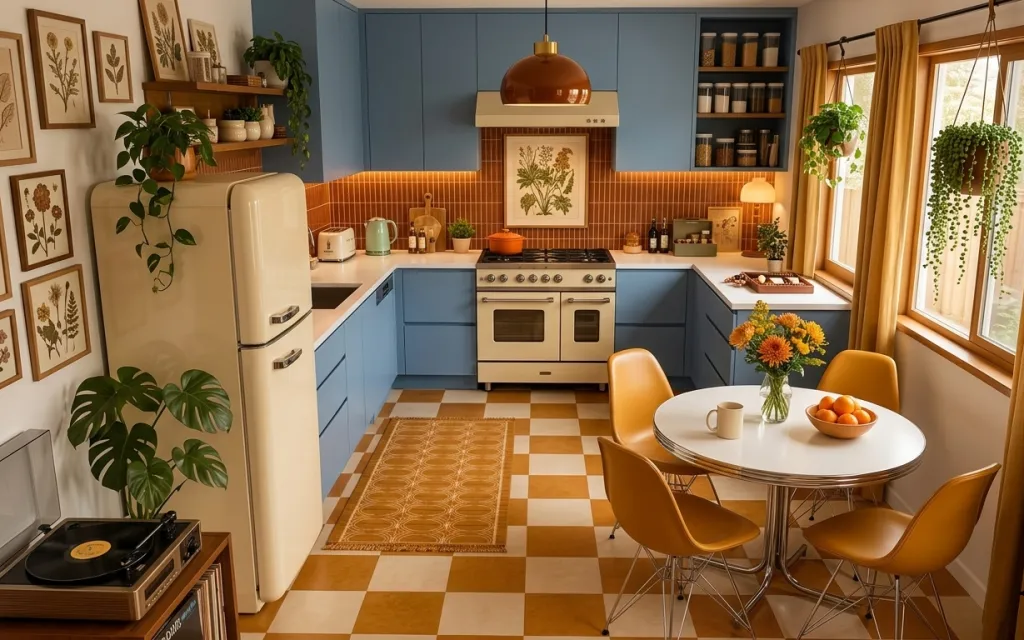
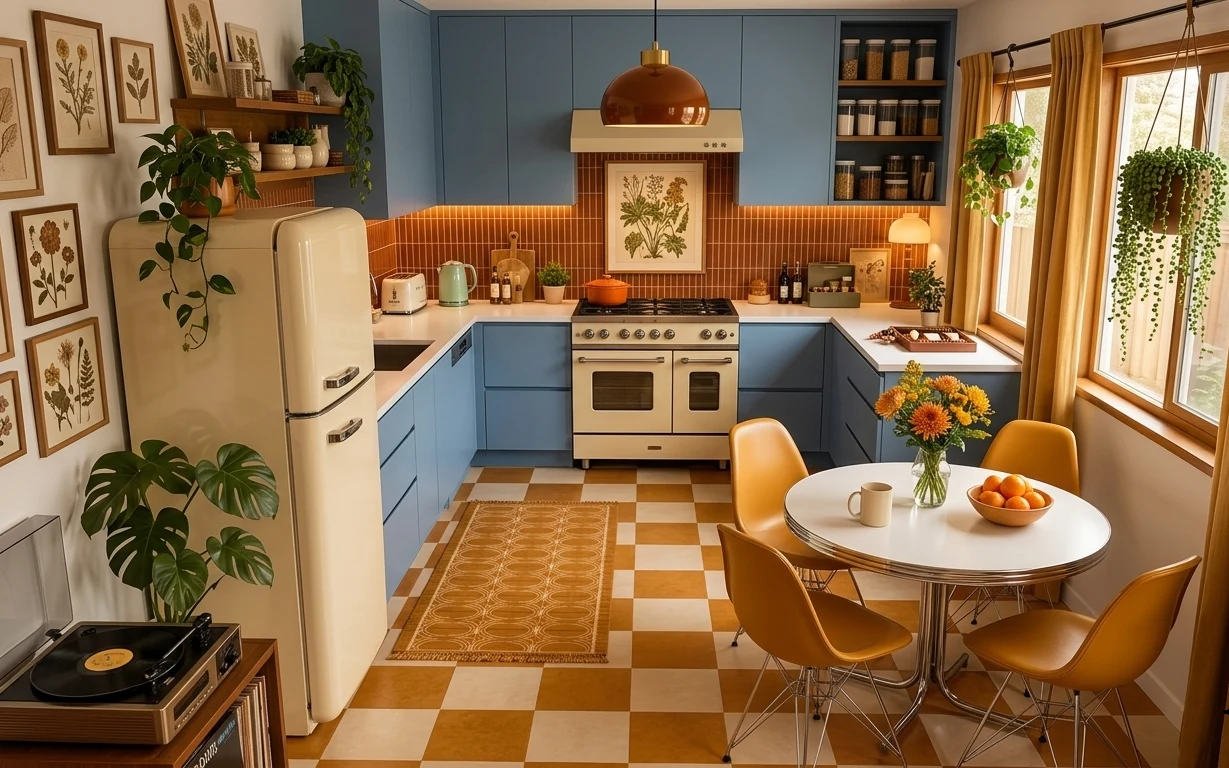
The first thing that hits in this photo is the color math: cool blue cabinetry-style tones against warm terracotta rust, then a botanical layer that keeps the whole kitchen from feeling too sharp. Textures do a lot of the work—look at the patterned rug underfoot, the soft drape of the mustard curtains, and the glossy ceramic shine on the table. Even if your rental keeps the big hard surfaces fixed, you can still steer the vibe using rugs, curtains, and wall art hung with Command hooks. It’s the same mix you’ll see in shelter magazines—palette first, texture second, then little plant moments.
I almost overdid it on my own place once by adding too many matchy prints at the same height. This setup changed my mind because the wall art is intentional: fewer frames, consistent spacing, and one hero piece at a time. Add a plant cluster, then stop. The result reads styled, not crowded—especially in a smaller kitchen nook where every inch shows.
Layer 1 — 5×7 area rug in ochre pattern ($80) Warm pattern grounds the tile
This ochre patterned area rug sits centered in the kitchen nook zone, where your feet land most often. The trade-off is that a rug this bold needs simple styling around it—no extra competing patterns on the tablecloth or walls—so the print stays readable. In a rental, it’s also the easiest layer to pack up later: roll, tape, and go. If you’re tempted to skip a rug and just rely on wall color, don’t—tile can feel cold under bright daylight, and the rug softens that contrast instantly.
Pick a rug with a mid-tone base
Ocher reads warmer than beige, so it balances the blue tones without making the room feel yellowed.
Layer 2 — mustard curtain panel pair ($40) Soft drape adds warmth by the window
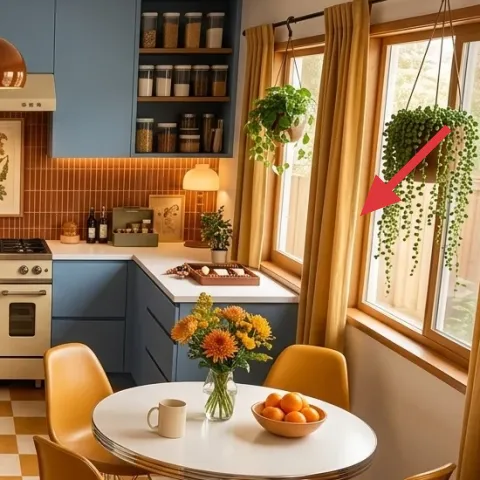
The mustard curtain panel pair frames the right-side window and makes the nook feel finished at human height. You’re not changing the landlord-installed hardware—just adding textiles—so it’s renter-safe and easy to swap at move-out. The trade-off is light control: thicker-looking curtains can reduce daylight, so choose a fabric that still lets the window glow. In this color story, mustard works because it echoes the warm terracotta/rust notes in the background while making the blue feel calmer rather than colder.
Match the warm undertone, not the exact orange
Look for curtains that pull golden instead of red, so they stay cohesive with terracotta.
Layer 3 — framed botanical art print (Command-hook style) ($25) One botanical frame ties the wall to the plants
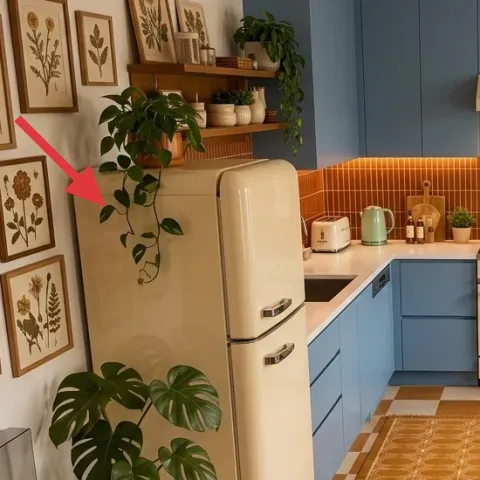
Add a single framed botanical print on the left wall area to pull your eye upward and connect the table plants to the wall. This choice is better than going all-in with a large gallery right away, because one frame gives you the same “collection energy” without overfilling a rental wall. The trade-off is scale: a small print needs a clean, straight placement so it doesn’t look accidental against multiple frames. In the photo, the botanicals repeat leaf shapes, which is why this layer works—same theme, different frame.
Make it instead of buying it
Hand-paint a small abstract leaf-like print on cardstock and frame it, so you get botanical energy for less than a framed print.
Materials
- Cardstock — 1 sheet, letter size — local craft store — $3
- Acrylic craft paint (assorted) — 1 small set — craft store — $8
- Small foam brush pack — 3–4 sizes — craft store — $6
- Matte-finish acrylic sealer spray — 1 can (optional) — craft store — $2
- Frame — 1 basic wood frame — thrift/discount — $0
Steps
- Sketch 2–3 simple leaf shapes lightly in pencil, then plan where the darker marks will sit.
- Load a foam brush with one light color and block in the biggest leaf silhouettes.
- Layer a second color for veins/edges, keeping the contrast near the center of each shape.
- Fill small negative spaces with a third muted tone so the print doesn’t look flat.
- Let the paint dry fully, then gently mist with acrylic sealer spray if using it.
- Place the finished cardstock inside the frame mat or directly into a simple frame opening.
Total DIY cost: $19 — saves about $6 over buying.
Layer 4 — vase with mixed flowers ($20) Fresh color pop without a big commitment
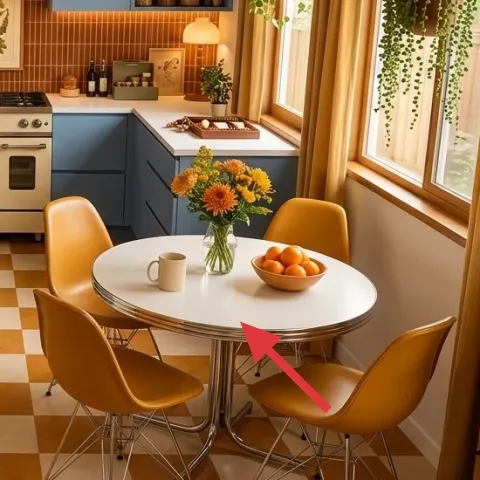
The vase with mixed flowers anchors the right side of the table visually and gives that “morning-in-the-kitchen” feeling. It’s a renter-friendly layer because you’re buying a vase and fresh stems, not redesigning a built-in. The trade-off is timing: flowers last a limited number of days, but that’s also the point—swap for seasonal stems and the look stays current. Compared with candles or faux greenery, fresh stems read more dimensional in daylight, especially next to glossy ceramic and the warm tones from the rug.
Don’t choose a vase that’s too tall
On a dining table in a narrow nook, a towering vase blocks sightlines and makes the space feel tighter.
Layer 5 — leafy tabletop potted plant ($15) Bring the botanical theme down to counter height
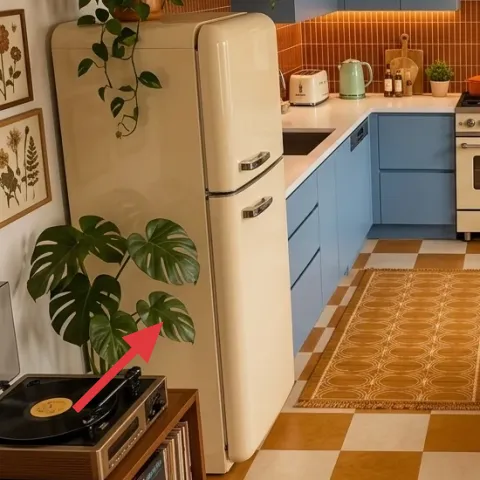
A leafy tabletop potted plant on a counter shelf level makes the botanical theme feel intentional instead of decorative. This is the kind of layer that reads “styled” even when you’re just passing through the room, because leaves add texture where your eyes naturally pause. The trade-off is maintenance: choose a plant that matches your light—if your kitchen gets bright sun, go greener; if it’s lower light, pick something hardier. Compared with hanging decor, a plant stays move-friendly and works in every rental layout because it can shift locations as needed.
Group leaves with one repeating shape
In this look, repeating leaf silhouettes (broad + trailing) makes the plants feel collected, not random.
Layer 6 — ceramic bowl on table ($20) Adds shine and a place for fruit or knickknacks
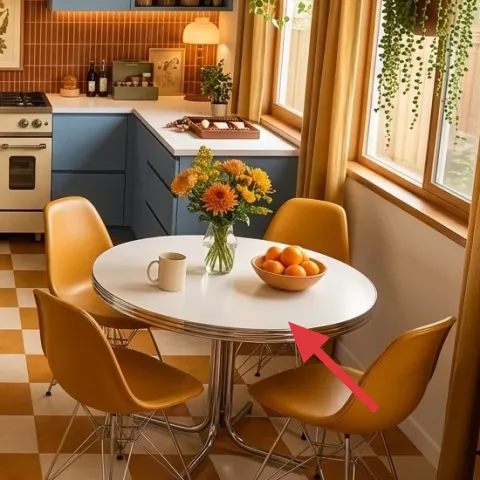
The ceramic bowl sits on the round table and gives you a functional styling surface—fruit in the photo, but it could also hold citrus slices or small kitchen tools. This layer works because it repeats the photo’s ceramic gleam and keeps the table from looking empty between meals. The trade-off is that it has to be visually clean: skip bowls that look scuffed or overly patterned, since the rug and wall art already bring the pattern. A neutral ceramic is the safer choice in a kitchen where countertop clutter is always one forgotten moment away.
Let the rug pattern do the heavy lifting
When the floor is busy, your tabletop object should be smooth and mostly solid for balance.
Layer 7 — round dining table with metal base ($160) Sets the scale for a compact nook
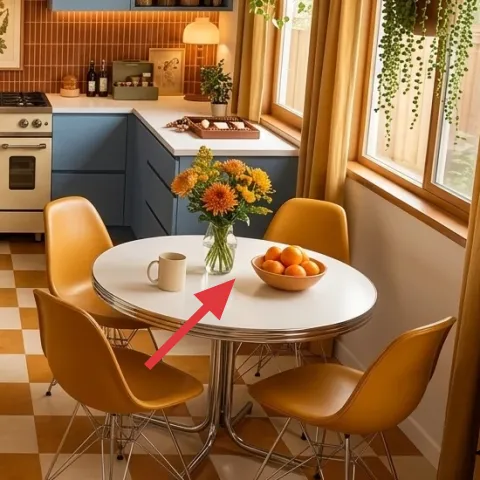
A round dining table is doing quiet work here: it softens edges in a room with lots of straight lines, and it keeps movement easy around the nook. The metal base also helps visually because it doesn’t feel as heavy as a fully wood table. The trade-off is seating planning—round tables can feel tight if you try to cram too many chairs for daily life—so choose a size that fits your actual circulation path. If you’re tempted to pick a rectangular table for utility, try the round option first; it photographs better in tight kitchens and keeps the space feeling more open.
Choose chairs with wire or slim legs
Open legs keep the nook light, so the rug and curtains stay the focus.
The cost, layer by layer
| Layer | Item | Cost |
|---|---|---|
| 1 | Area rug 5×7, ochre pattern | $80 |
| 2 | Curtain panel pair (84") in mustard | $40 |
| 3 | Framed botanical art print (DIY-able) | $25 |
| 4 | Vase for mixed flowers | $20 |
| 5 | Leafy tabletop potted plant | $15 |
| 6 | Ceramic bowl for fruit/knickknacks | $20 |
| 7 | Round dining table with metal base | |
| Total | $360 | |
If your budget is tighter, swap the round table for a smaller diameter version and pick a simpler solid-rug pattern. You can also replace the fresh bouquet with one neutral vase plus a bundle of dried stems—same styling role, lower recurring cost.
What worked, what didn't (across the whole room)
This nook works because the styling layers repeat the same temperature (warm gold and rust) while using plants and textiles to soften hard lines. The room also stays coherent because the rug and curtains do the “pattern work,” while ceramics and wall art keep their shapes clean.
What worked
- The ochre rug anchors the walking path and makes tile feel less stark under daylight.
- Mustard curtains add warmth at window height, so the kitchen reads more lived-in.
- A single botanical frame provides vertical interest without turning the wall into a clutter zone.
- Fresh stems in a vase add dimensional color that’s easier to refresh than permanent decor.
- Table ceramics (bowl + small objects) keep the surface styled between meals.
- Round dining scale softens the room’s geometry and improves circulation around the nook.
What didn't
- Too many botanical prints at once would compete with the rug pattern and feel visually busy.
- If curtains pull too orange or too red, the warmth can clash with terracotta undertones.
- Using a very tall centerpiece would block sightlines across a compact dining setup.
- Choosing a heavily textured bowl could compete with glossy ceramics already on the table.
- Skipping a rug altogether would make the tile floor feel colder and more detached from the styling.
What we'd skip if we did it again
Skip adding multiple new wall frames at the same height right away. In a rental, it’s tempting to fill every blank space, but this nook stays balanced because botanicals repeat without overcrowding. Start with one framed print, then add only if there’s obvious negative space after the rug and curtains settle.
Skip a second patterned textile once the rug is in. The rug already carries the warm pattern, so adding patterned curtains or a second decorative runner can make the room feel visually noisy. Choose solid or lightly textured textiles to keep the color story readable.
Skip choosing a centerpiece that hides the tabletop. If the nook feels tight, prioritize a shorter vase and leave open space for the bowl. The goal is a styled surface you can still use every day—not a decorative prop that crowds the table.
Frequently asked
How long does this kitchen nook refresh take?
Plan on about 2–4 hours total if you’re adding a rug, hanging one framed print with Command-style hooks, and styling a plant and vase. The biggest time sink is choosing the right sizes—rug placement and curtain length matter more than people think. If you’re swapping furniture too, add another few hours for moving and leveling.
Will this work if I can’t change anything on the walls besides hooks?
Yes. This look is built around move-friendly layers: textiles (the rug and curtains), freestanding plant styling, and framed wall art hung without drilling. As long as you can use Command strips or hooks, you can replicate the botanical rhythm on your wall without replacing anything landlord-installed.
My kitchen is smaller—what should I scale down?
In a tighter nook, go smaller on rug size and pick curtains that don’t pool on the floor. Keep one botanical wall frame as the hero, then use plants as supporting texture instead of adding extra wall items. For the table, choose a round or compact square so circulation stays open around the dining chairs.
What if my kitchen gets less daylight than the photo?
Use the same warm palette, but lean into materials that read brighter: a lighter rug base, a slightly sheer curtain fabric, and ceramic objects with smooth reflective surfaces. Fresh flowers still help, too—choose smaller arrangements so the room doesn’t feel heavy.
Where should I shop for these renter-safe pieces?
For rug and curtains, look at mainstream home retailers and discount sites that offer returns for sizing mistakes. For framed art, try thrift shops and discount art sellers, or DIY a small print and frame it. Plants and vases are usually easiest at local nurseries and flower markets.
What’s the biggest mistake people make with kitchen nook styling?
They add too many patterns at once. In this setup, the rug and curtains carry the visual rhythm, and everything else stays calmer—botanical frame stays singular, ceramics are neutral, and plants repeat a consistent leaf vibe. If you keep that pattern rule, the room reads cohesive.
More in Kitchen & Dining
Under $400: renter-friendly kitchen nook swaps with bold botanicals
A renter-friendly kitchen nook refresh under $400: add an ochre patterned rug, mustard curtains, a framed botanical print, and small plant …
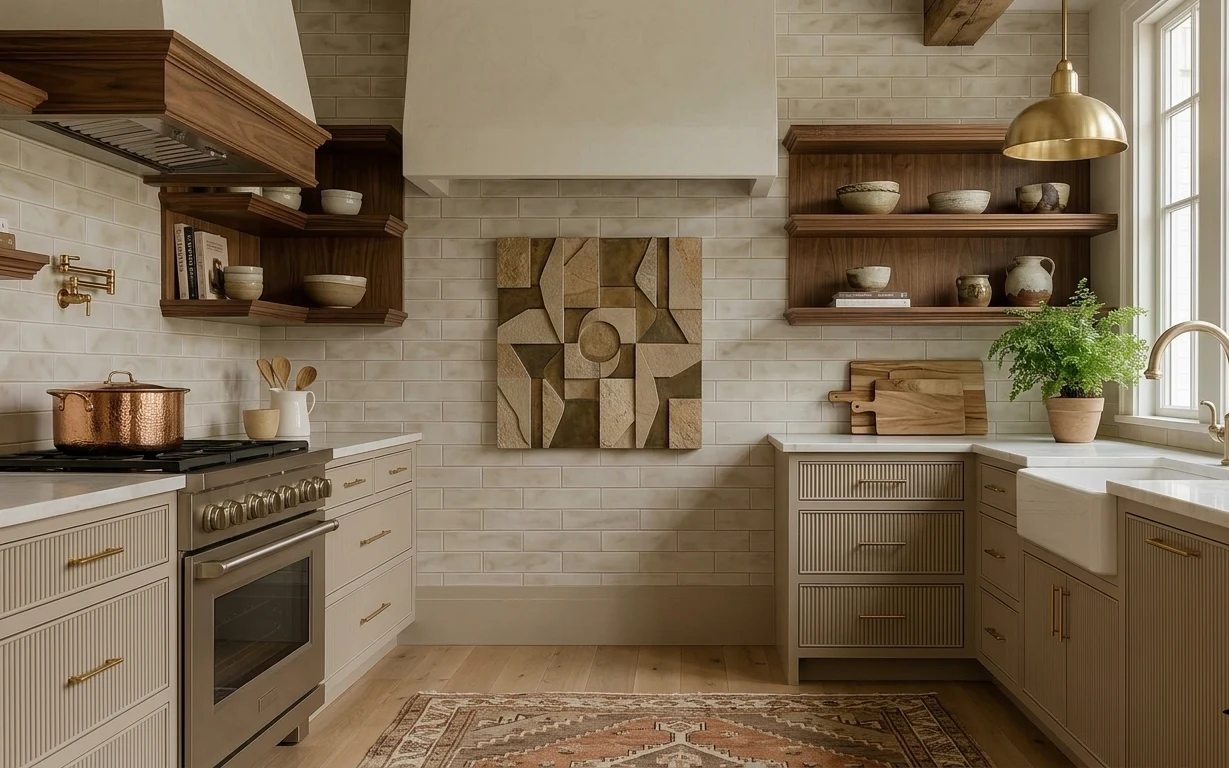
Under $600: brass-and-tile galley kitchen weekend refresh
A galley kitchen can feel custom with a few targeted swaps: rug, brass lighting, cabinet hardware, and a brighter tile backsplash. This $60…
Under $600: botanical kitchen corner refresh with 7 weekend wins
Turn a bright kitchen corner into a calm, botanical moment with 7 budget-friendly upgrades. This weekend refresh keeps the look cohesive—ju…