- Best for
- texture + scale
- Cost
- about $500
- Difficulty
- easy
- Time
- one weekend
Why warm earth textures are the living room of 2026
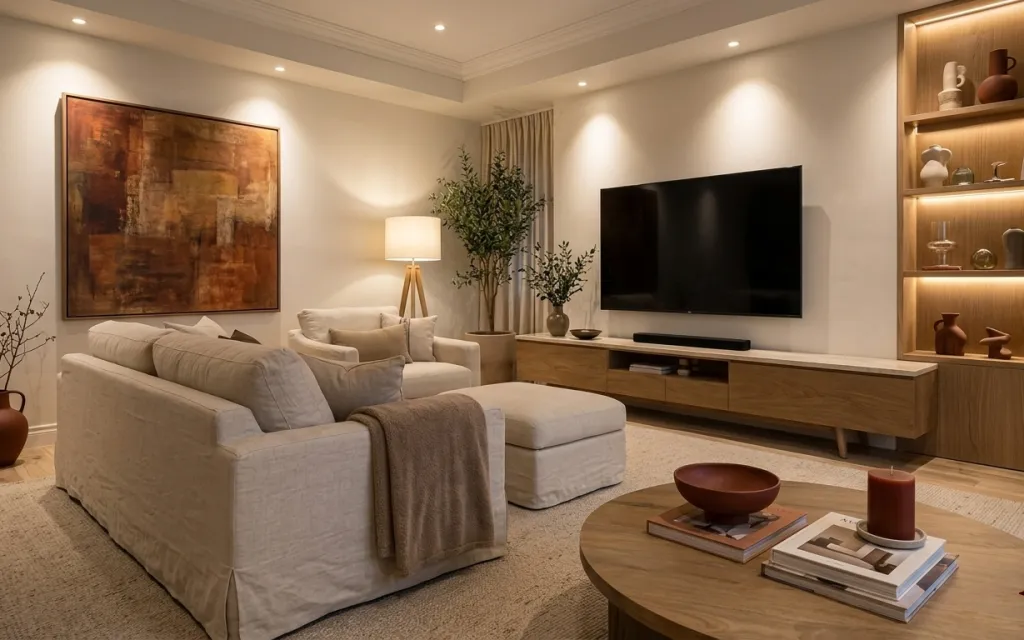
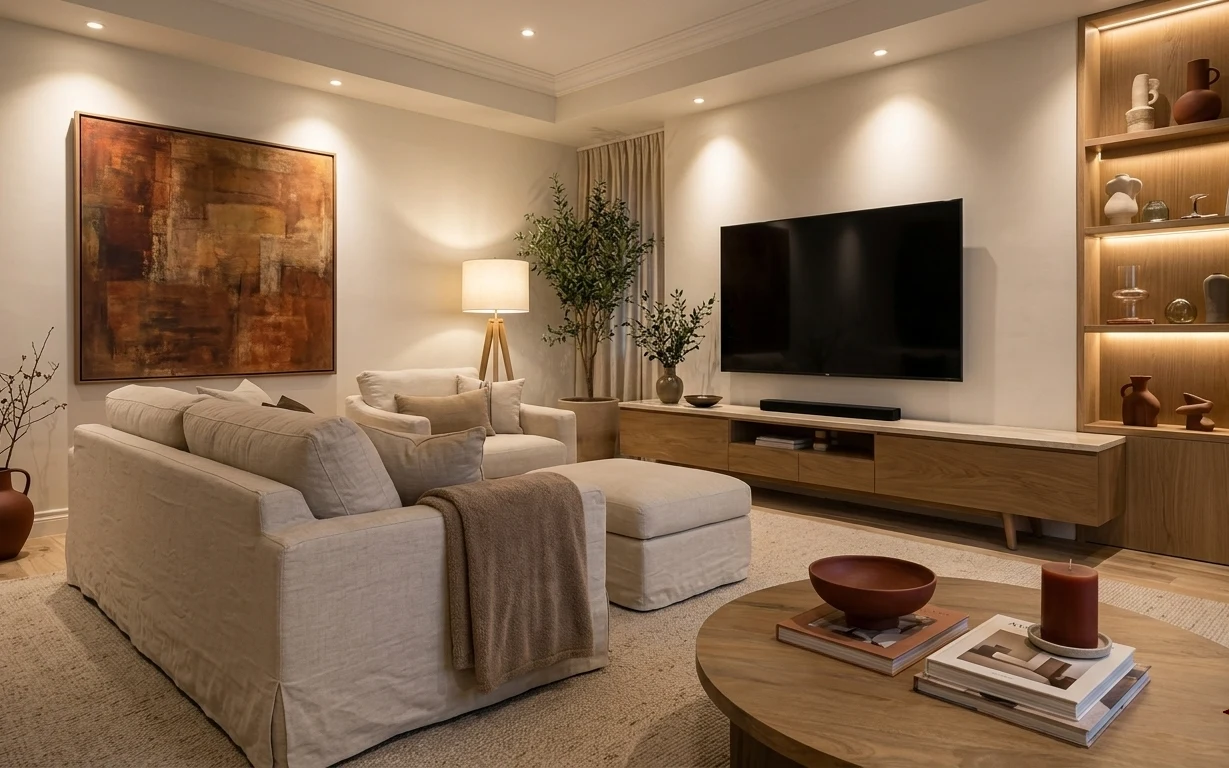
The first thing you notice here is how the textures do the talking: the large area rug anchors everything, while the sofa throw blanket and layered pillows keep the seating from reading flat. The room’s palette also follows a repeat pattern—warm beige, light gray, and walnut-brown wood tones—so every new piece feels like it belongs. This is very doable on a renter budget because you can swap textiles and freestanding decor without touching anything built-in or hardwired. It also echoes what you see in modern shelter magazines right now: one oversized rug, one statement frame, and lighting that’s warm and off to the side.
I used to over-style living rooms by adding matching “sets” everywhere, like pillow colors picked from one brand’s website. What finally clicked for me was letting the textures lead (linen-like throw, soft pillow covers) and treating art and lamps like functional accents. That’s why this setup works: the big rug and framed print carry the scale, while the candle and vase add small warm moments at eye level.
Layer 1 — large area rug ($200) Texture-first foundation underfoot
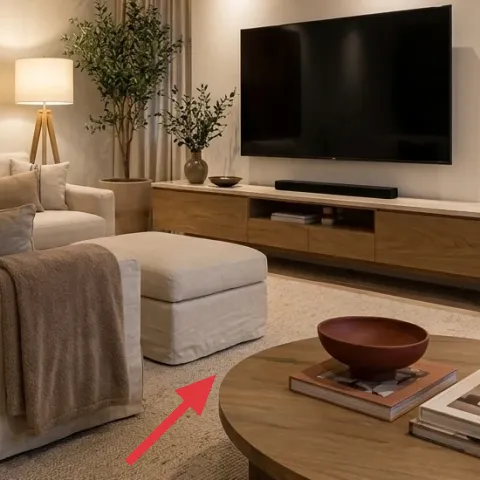
A large area rug in a warm neutral tone makes the whole room feel finished, especially with a light sofa and wood flooring in the background. The pile and weave here read slightly textured, which helps hide everyday life—shadows from feet and minor scuffs won’t look as obvious as on a glossy surface. It’s the easiest “budget-per-impact” swap because it changes the scale of the room instantly. The trade-off is you’ll want to measure carefully for what sits under the front legs of the sofa, so the rug looks intentional rather than floating. If you’re tempted to go smaller, resist—this look depends on rug size.
Anchor with rug size
Go big enough that at least the front legs of the sofa land on the rug; it’s the difference between styled and accidental.
Layer 2 — sofa throw blanket ($25) Draped edge that softens sharp corners
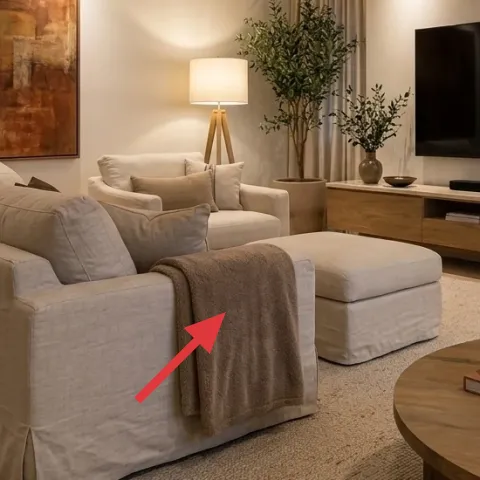
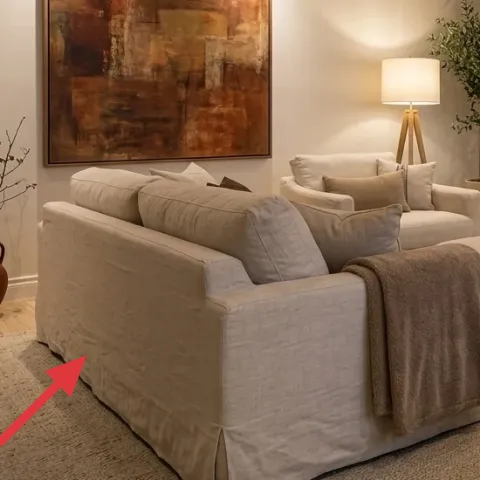
This sofa throw blanket is the “soft geometry” in the photo: it falls over the sofa front edge and adds movement without adding bulk. In a warm gray-beige like the one shown, it also keeps the color story calm when the room already has a framed print and a TV. The best part for renters is that a throw is fully moveable—you can swap it out for seasons or when your taste shifts. The trade-off is that blanket folds show more than you think, so a quick shake before photos (or before guests arrive) matters. I learned that the hard way after leaving one wrinkled throw across a couch for days.
Why drape beats perfectly folded
Random folds read natural and look layered, while a tight fold can feel staged and flat.
Layer 3 — throw pillows ($12) Mix neutral shapes, not bold colors
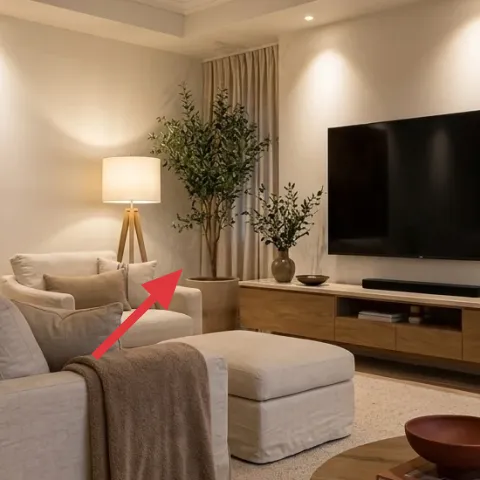
The throw pillows shown are what makes the sofa look plush rather than boxy. Because the covers are in light gray and creamy tones, they sit quietly next to the warm rug and the walnut wood, so the room doesn’t fight itself. This is the renter-friendly way to create “designer” depth without changing furniture: pillow covers are easy to remove, wash, and re-style. The trade-off is that you can’t just buy one—oddly, too few pillows makes a sofa look like it’s missing something. Aim for variation in size so the stack feels intentional. A small number of better covers beats a full set that all matches perfectly.
Use three sizes
Layer pillows in three sizes (and keep colors in the same warm/gray family) for depth without visual clutter.
Layer 4 — large framed abstract wall art print ($80) Hand-painted neutral art you can change anytime
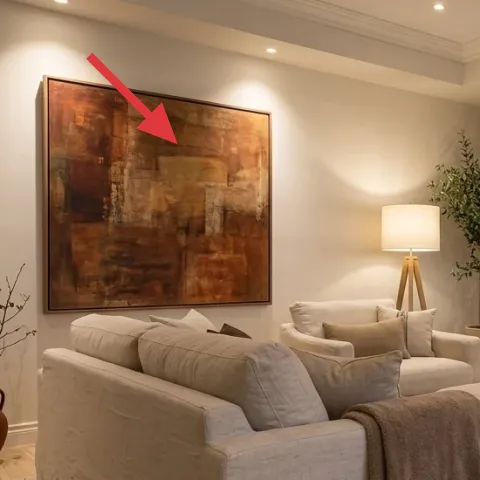
That large framed abstract print is doing a ton of work: it brings the warm rust-and-taupe tones onto the wall and balances the TV’s dark rectangle. To get the same effect as a renter, you can swap in a renter-safe framed piece you can take down easily later. Here, the frame size matters more than the exact brush style—the goal is bold scale on the left wall so your eye has somewhere to land. The trade-off with abstract is you’ll need to pick colors that match the room’s warm beige and walnut, or the art will look “pasted on.”
Make it instead of buying it
This DIY hand-painted abstract on cardstock gives you the same warm neutral vibe as the framed print, without needing to drill or commit to one long-term look.
Materials
- Cardstock, 9×12 sheets — 3 sheets — craft store — $6
- Acrylic craft paint set (warm neutrals) — 1 set — art store — $12
- Small paintbrushes (flat + round) — 2 pack — craft store — $8
- Matte medium (optional for smoother coverage) — small bottle — art store — $10
- Simple frame to fit your paper — 1 frame — discount store — $18
Steps
- Lightly plan color blocks on paper with pencil (no pressure marks).
- Paint a thin base wash in the warmest beige and let it dry fully.
- Layer rust and taupe rectangles with a flat brush, keeping edges slightly irregular.
- Add subtle vertical texture lines with the round brush and a darker umber tone.
- Optional: blend a few transitions with matte medium for softer gradients.
- Let the painting dry completely before handling.
- Trim the paper to fit the frame opening cleanly.
- Insert into the frame and check the final color balance under room lighting.
Total DIY cost: $54 — saves about $26 over buying.
Pick frame tones, not just art tones
If your frame is too cool-toned (black/steel), the whole wall can look colder than the rug and lamp.
Layer 5 — white table lamp with fabric shade ($60) Warm light that makes neutrals feel intentional
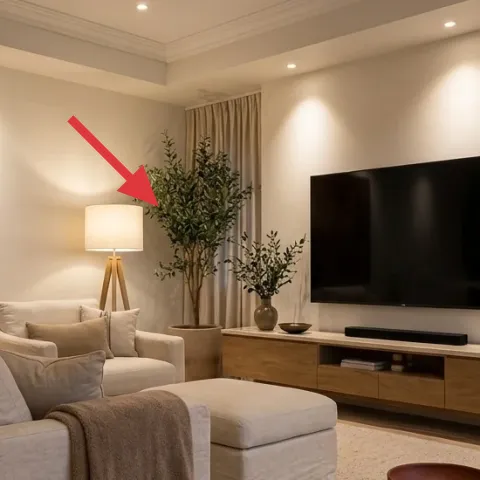
A white table lamp with a fabric shade is what turns the room’s neutral palette from flat to dimensional after dark. In the hero, it sits off to the left of the TV zone and provides a softer glow than overhead lighting, which helps the framed print and plants feel more “alive.” The fabric shade is key: it diffuses light so the room looks calm rather than harsh. This is a renter-friendly swap because a plug-in lamp doesn’t require any electrical changes. The trade-off is placement—move it a bit and you’ll change what parts of the wall read brighter. That’s why it helps to test the lamp position before you commit to one spot.
Choose fabric over glossy
Fabric shades create an even wash, especially against light walls and a warm rug.
Layer 6 — floor vase ($30) Sculptural ceramic moment on the floor
The floor vase acts like a visual “comma” on the left side of the room—tall enough to balance the sofa, but grounded enough to avoid looking top-heavy. Its warm terracotta-brown tone ties directly into the rusty notes in the abstract print, so the palette feels connected even when the objects don’t match exactly. For renters, it’s an easy win because you’re not committing to a permanent change, just a styled object. The trade-off is scale: if you choose a vase that’s too small, it disappears, and the whole left side looks empty. A floor vase also lets the plant arrangement look more intentional without needing extra shelves.
Style height with what you already own
Pick a vase first, then fill it to reach a height that matches the sofa arm line.
Layer 7 — candle ($35) Small warm glow for the coffee-table zone
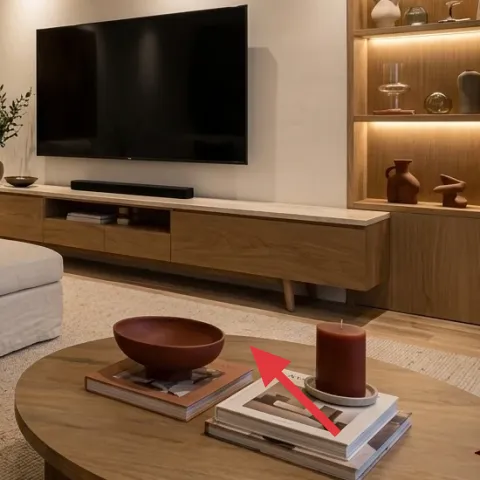
A candle on the round wooden coffee table adds that quiet, lived-in feel the photo has—especially when the rest of the room is mostly textiles and warm neutrals. The warm brown tone on the candle holder echoes the wood and the vase, so it reads like part of the same family instead of a random accent. It’s also a renter-friendly styling layer because you can swap scents and holders seasonally, and nothing is permanent. The trade-off is that candle styling is temporary; it won’t look “set” if it’s uncovered for long periods. If you want the vibe without maintenance, use the holder as decor and swap in a battery candle on busy weeks.
Keep it centered, not clustered
On a round table, one main candle looks calmer than stacking multiple small holders.
The cost, layer by layer
| Layer | Item | Cost |
|---|---|---|
| 1 | Area rug (8×10) | $200 |
| 2 | Throw blanket | $25 |
| 3 | Throw pillow covers | $12 |
| 4 | Large framed abstract wall art print (DIY ~$54 materials) | $80 |
| 5 | Plug-in table lamp with fabric shade | $60 |
| 6 | Floor vase | $30 |
| 7 | Candle (with holder) | $35 |
| Total | $442 | |
If you want a cheaper variant, keep the rug and lamp, then swap the framed print for a smaller set of two budget frames (or a single print with a wider mat) and choose one multipurpose neutral vase you can re-use.
What worked, what didn't (across the whole room)
This refresh leans on scale and softness: the rug and large art handle the “big blocks,” while pillows, a throw, and lamp light create the cozy, layered read. The only thing that can derail the look is choosing too-similar neutrals without texture contrast.
What worked
- The large area rug grounds the seating and makes the warm neutral palette feel intentional.
- Throw blanket drape softens the sofa’s edges and adds movement without changing furniture.
- Pillow cover layering adds depth in the same color family, so the room stays calm.
- The framed abstract print balances the TV’s dark rectangle with warm rust-and-taupe tones.
- The fabric lamp shade provides gentle lighting that flatters the walls and coffee-table objects.
- The floor vase and candle add sculptural warmth at different heights, not just one level.
What didn't
- Too-small rug sizes make the sofa feel disconnected from the rest of the room.
- Matching everything perfectly can look staged; variation in shape and fold is what reads modern.
- If the framed art uses overly cool grays, it clashes with the warm wood and terracotta tones.
- A high-shine candle holder can reflect light harshly, fighting the soft look from the lamp.
- Lamp placement too close to the TV can brighten the screen area more than the wall textures.
What we'd skip if we did it again
Skip buying a matching “living room set” for pillows and decor. Sets often create a flat look where everything shares the same sheen and thickness; the photo’s style depends on mix-and-match textures in the same warm family.
Skip small art. If the abstract piece isn’t large enough, it won’t balance the TV, and you end up compensating with more clutter. If wall mounting isn’t allowed, choose a proportionally sized frame you can hang with removable methods.
Skip a lamp shade that’s too small or too glossy. A smaller shade can leave the wall behind the sofa looking dim, and a shiny finish adds hotspots against light walls.
Frequently asked
How long does this living room refresh take?
Plan for about 4–6 hours total if the main items are already in your cart and you only need to style. Rug placement and measuring takes the most time because scale matters. Art and lamp setup usually take 30–60 minutes. The rest is styling: draping the throw, arranging pillows, and setting the candle and vase so they look balanced.
Is this renter-friendly if I’m not allowed to drill?
Yes—this plan is built around textiles and freestanding decor. The only wall-facing item is the framed abstract print, which can be hung using renter-safe methods (like removable hooks) as long as they’re allowed in your lease. Everything else—the rug, pillows, throw blanket, lamp, vase, and candle—packs up without leaving hardware behind.
What if my living room is smaller than the photo?
Keep the same formula but scale down one decision, not three. A smaller room still needs a large-enough rug to anchor the seating, but you can shorten the coffee-table styling and use fewer pillows. For the wall, choose a framed print with bold scale relative to the wall space—if you go too small, the TV zone will feel heavier.
Where should I shop for the easiest version of this look?
For the rug and textiles, focus on retailers with neutral throw blankets and pillow cover options in warm beige and light gray. For the lamp, look for a plug-in table lamp with a fabric shade in white or cream. For the art, either buy a framed abstract print in warm tones or follow the DIY direction and frame it in a simple, warm-toned frame.
What’s the biggest mistake to avoid in a warm neutral living room?
The biggest mistake is buying items that are all the same “soft” without any contrast in texture. If everything looks smooth and matte, the room can read flat. Add contrast with a textured rug, a fabric-shaded lamp glow, and pillows that vary slightly in shape and thickness—even if the colors match.
More in Living Room
Under $500: warm neutral living room renter refresh
A warm neutral living room refresh that reads expensive without renovations: start with a soft area rug, add a throw-and-pillow stack, swap…
Under $600: plant-filled sunlit living room refresh with 7 layers
A sunlit living room refresh for shared spaces, built around terracotta-and-olive warmth. This move-friendly plan uses 7 swap-in layers (te…
Under $700: renter-friendly living room refresh with botanicals
A bright, plant-forward sofa-and-coffee-table living room look is doable for under $700, even with a lease. This plan uses a large patterne…