- Best for
- palette-building with botanicals
- Cost
- under $700
- Difficulty
- easy (no-drill swaps)
- Time
- ~2–4 hours, plus dye dry time
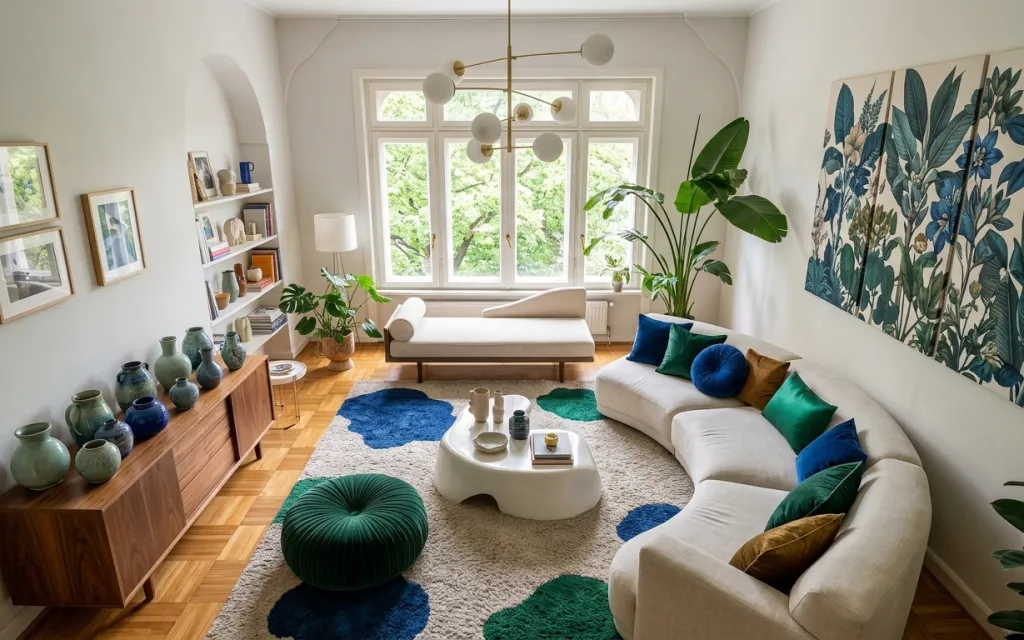
Why blue-and-green botanical accents is the sofa-and-coffee-table living room of 2026
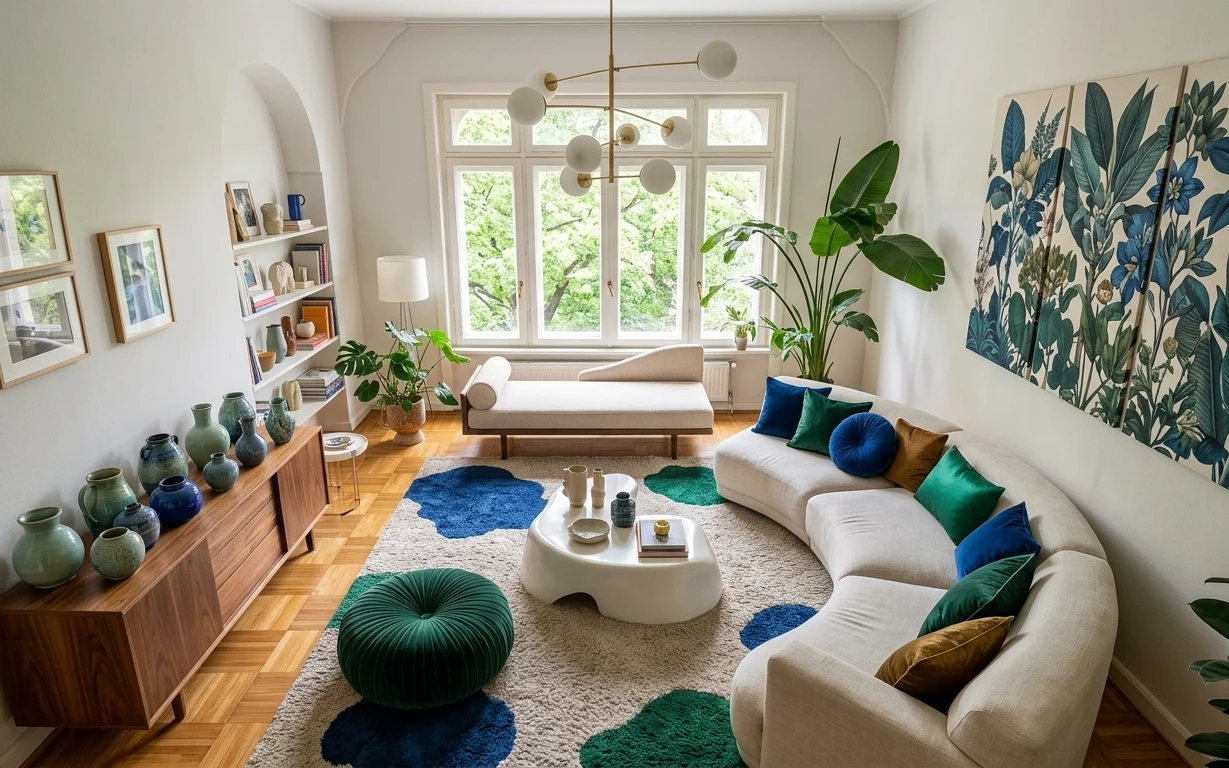
What I love about this setup is how the colors read as “collected,” not matched: that light beige rug pulls the blues and greens forward, while the framed botanical artwork adds structure on the right wall. The textures do the rest—soft throw pillows on a cream sofa, the chunky look of the patterned rug, and the clean matte surfaces of a low white coffee table. For a renter, the trick is focusing on swap-able layers you can roll up, hang with Command hooks, or move to the next place.
I once tried to make this kind of palette work with only neutrals, and it felt flat in the daytime—like the room was missing a “note.” Here, the blue-green accents act like punctuation. I also used to overstyle coffee tables; now I keep one centered tray and let plants do the visual movement. That balance is what makes the whole room feel intentional without needing any hard changes.
Layer 1 — patterned area rug (8×10) ($200) Anchor-the-colors underfoot
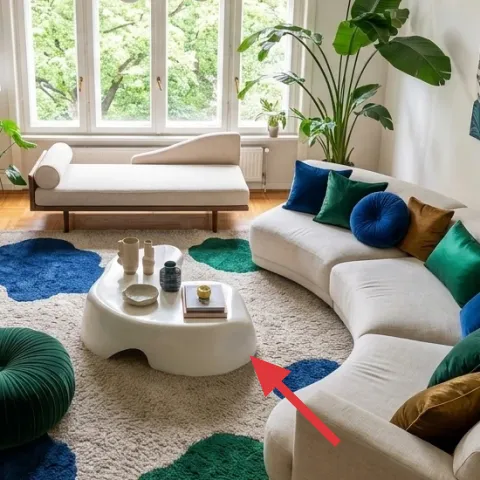
This patterned area rug sits under the cream sofa and the coffee-table zone, which is why it works so well for a renter refresh. The light ground keeps the room bright, while the darker blue and green accents echo the throw pillows and the framed botanicals. I’d usually start with a plain rug when budgeting, but that’s exactly how rooms like this end up looking “almost right.” With a bolder rug, every other piece can be simpler—think one artwork, one tray, a couple of plants. Trade-off: you’ll want to vacuum more often, especially on the edges where color flecks show.
Go bigger than you think
Let the rug extend beneath the front legs of the sofa and coffee-table area—smaller rugs make everything look disconnected.
Layer 2 — large framed botanical artwork ($80) for the right-wall color hit
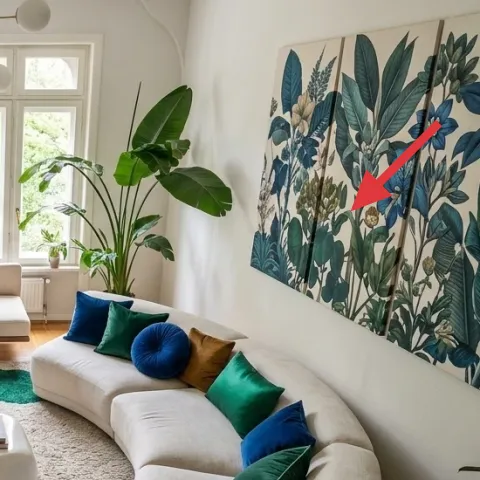
The large framed botanical artwork is the vertical anchor on the right wall, and it’s doing two jobs: bringing in organic shapes and giving the blue-green palette a focal point. This is also one of the easiest lease-friendly upgrades because framed art can hang with Command strips or removable hooks. The obvious alternative would be smaller prints, but you’d be fighting for visual hierarchy against the window and plant mass. This larger scale keeps the room from looking like “decor scattered across surfaces.” Trade-off: make sure it’s centered so the color doesn’t compete with the sofa curve and the coffee-table rectangle.
Match the art to your pillows
If the artwork has blue and green, keep the pillow colors in the same range so nothing feels random.
Layer 3 — white plug-in table lamp ($45) for warm task light
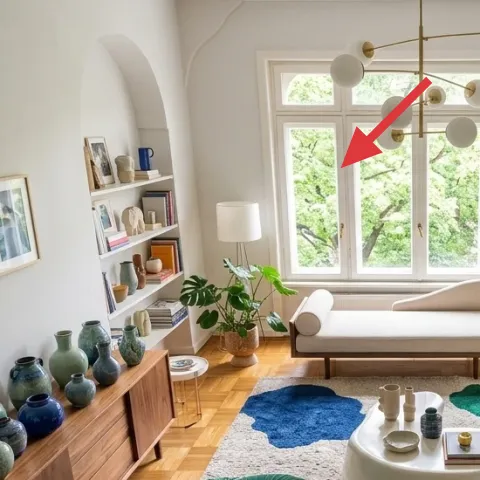
The white plug-in table lamp on the bookshelf adds a soft, readable glow without depending on the overhead fixture (and it’s renter-safe because it’s not hardwired). In this photo it sits at bookshelf height, so it lights the coffee-table zone and gives the whole room depth after dark. A ceiling-only setup can look bright but flat; the lamp creates an extra lighting layer you can’t fake with just candles. The obvious alternative is a second floor lamp, but those take up more visual space near the window and plants. Trade-off: choose a shade that stays bright white, not creamy yellow, so the room’s blue stays crisp.
Don’t choose a shade that skews too yellow
If the lamp light turns the rug and pillows muddy, the palette will look off even if everything matches on paper.
Layer 4 — throw pillow cover (DIY-dyed to teal) ($18) brings the blue-green palette closer
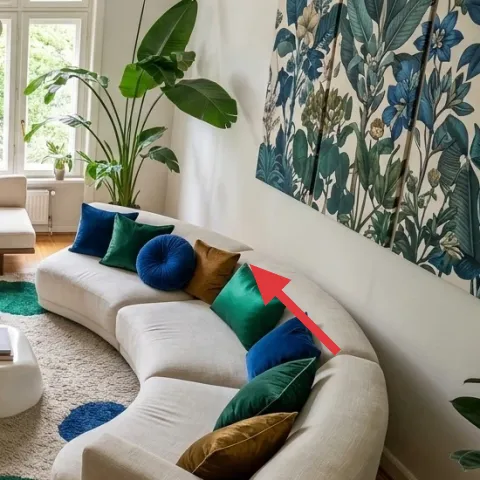
Make it instead of buying it
This DIY turns a spare cotton pillow cover teal using dye, so it matches the photo’s blue-green accent without buying another full pillow.
Materials
- Fabric dye powder (teal/blue-green) — 1 box — craft store — $7
- Plain cotton pillow cover — 1 cover — discount home goods — $6
Steps
- Soak the cotton cover to fully wet the fabric before dye.
- Dissolve the dye in hot water in a tub or bucket.
- Submerge the cover and stir gently for even color absorption.
- Let the cover sit in the dye until it reaches the teal depth you want.
- Rinse in cool water until the water runs clear.
- Wash once separately and air-dry fully before styling.
Total DIY cost: $13 — saves about $5 over buying.
Layer 5 — decorative tray on coffee table ($30) keeps small styling contained
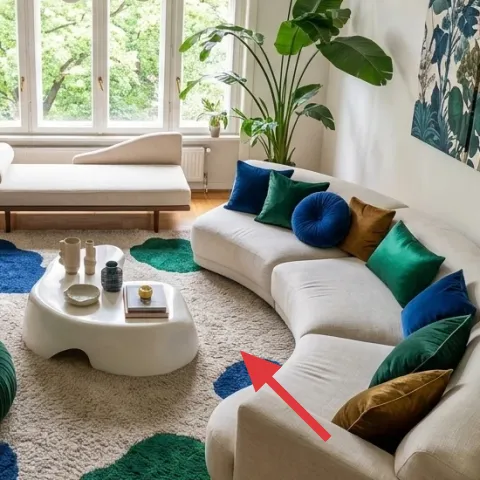
A decorative tray on the low white oval coffee table is what makes the small objects look intentional instead of scattered. In this setup, the tray creates a center “island” for candles, cups, and little jars, which matters because the sofa and rug already bring a lot of pattern. The simple alternative would be styling each object separately across the tabletop—but it tends to look cluttered fast, especially in a bright room with plants. With one tray, you can swap items weekly while keeping the same visual rhythm. Trade-off: you’ll need to wipe the tabletop more often so the tray doesn’t collect dust around the edges.
Use one tray, not three
One larger container reads cleaner and leaves breathing room around the coffee table’s curves.
Layer 6 — large leafy potted plant (corner) ($60) adds height and softness
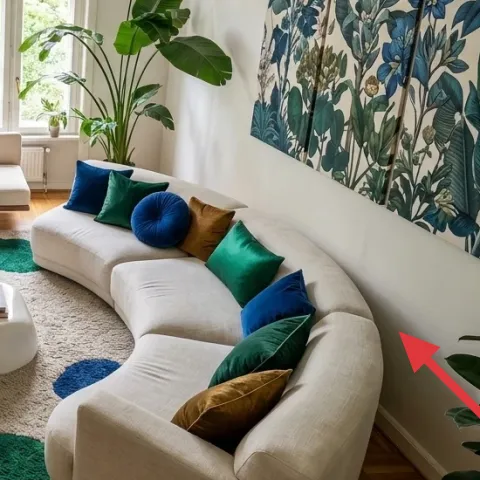
The large leafy potted plant in the right corner balances the bold wall artwork by adding volume where the eye naturally rests—between the sofa arm and the wall. Plants also help the blue-green palette feel organic rather than purely decorative, and they visually connect to the botanical print. The alternative is buying a tall floor vase, but that doesn’t bring the “living” shape variation that plants do. Trade-off: real plants need light and occasional watering, so pick a spot near the window and commit to a simple weekly routine. If the corner gets dim, swap to a lower plant with similar leaf mass.
Place the plant where the wall gets “too flat”
If the room feels one-dimensional, a tall leafy shape in the corner adds instant depth without changing the layout.
Layer 7 — wood console sideboard ($220) grounds the left wall
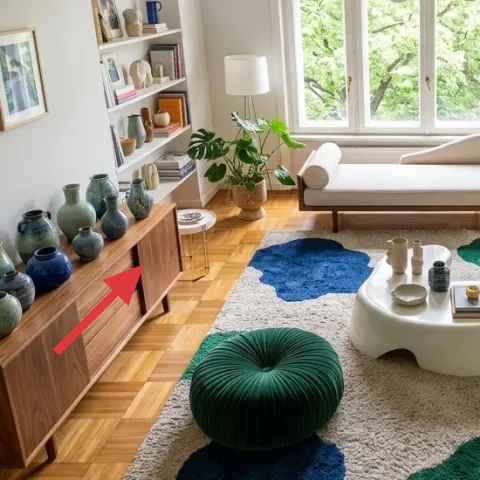
The wood console sideboard on the left does the heavy lifting of grounding the room: it brings warmth against the white walls and gives you storage for books, vases, and everyday items. In a renter space, a sideboard is a better move than adding more wall shelves because it creates display surfaces you can rearrange without drilling. The obvious alternative is stacking small thrifted pieces, but that can look busy next to a window view and a bookshelf. This one creates order—horizontal lines for your ceramics and vertical access for plants. Trade-off: keep the surface styling limited to two “clusters” so it doesn’t compete with the rug pattern.
Cluster by height
Pair tall stems with shorter ceramics and leave some negative space so the wood doesn’t look crowded.
The cost, layer by layer
| Layer | Item | Cost |
|---|---|---|
| 1 | Patterned area rug 8×10 | $200 |
| 2 | Framed art print 16×20 (large botanical) | $80 |
| 3 | Plug-in table lamp (white) | $45 |
| 4 | Throw pillow cover (DIY dyed teal, retail equivalent) | $18 |
| 5 | Decorative tray for coffee table | $30 |
| 6 | Indoor plant (4–6 ft, leafy) | $60 |
| 7 | Wood console sideboard (freestanding) | $220 |
| Total | $653 | |
Cheaper variant: use a 5×7 area rug (instead of 8×10) and pick one framed botanical print over the larger scale, then spend the difference on more plants and pillow covers.
What worked, what didn't (across the whole room)
The biggest win here is palette control: the rug and botanical artwork keep the blue-green story consistent. Layering one plug-in lamp and one tray also prevents the coffee-table styling from turning into visual noise.
What worked
- The patterned area rug ties the sofa, coffee table, and botanical print into one color system.
- The large framed botanical artwork gives the right wall a clear focal point.
- A plug-in table lamp at bookshelf height adds depth after dark without ceiling dependence.
- One decorative tray keeps small objects looking curated instead of scattered.
- A tall leafy plant softens straight lines and supports the organic look.
- The freestanding wood console sideboard adds warmth and practical display space.
What didn't
- Too many small decor pieces on the coffee table made the center feel crowded in early styling tests.
- If the lamp shade shifts too yellow, it muddles the blue tones in the rug and pillows.
- Choosing a rug with only neutrals would flatten the whole palette against the white walls.
- Skipping a tall plant makes the right side feel heavier on wall art than on balance.
What we'd skip if we did it again
Skip the “all neutrals” version of this layout. Without a patterned rug or a blue-green accent pillow, the botanical artwork reads isolated, and the room feels like it’s missing one deliberate color note.
Skip buying a second lighting fixture in the same role. One plug-in table lamp is enough here—adding another floor or table lamp usually crowds the bookshelf/plant area without improving the warmth.
Skip small-print wall decor sets. In this photo’s scale, smaller pieces tend to get visually lost near the window and the large right-wall artwork, so one bolder framed botanical piece works better.
Frequently asked
How long does this renter refresh take?
For most people, the whole look lands in a half-day. Rug and lamp placement usually takes 30–60 minutes, and Command-hung art can be done in under an hour with the right measuring. The only extra time is dyeing a pillow cover—plan for dyeing and rinse time, then let it fully air-dry before styling.
Will this work in a smaller living room?
Yes, but scale matters. If the room is tight, choose a smaller rug size and keep the sofa-to-coffee-table zone centered. Swap the large framed botanical artwork for one slightly smaller frame so it doesn’t overwhelm the wall. The plant can also be reduced: prioritize leaf shape volume over height.
What if I rent and can’t use anything that leaves marks?
Stick to removable hanging methods for framed art and use plug-in lighting. This plan doesn’t require drilling or permanent fixings. For the tray and decor, everything is purely surface-based, and the rug is a moveable floor layer that you can roll up and take with you.
Where should I shop for these exact types of items?
For rugs, look for machine-washable or easy-clean patterned options from mainstream home retailers. For framed botanicals and prints, search for larger single prints sized around 16×20 to keep it simple and renter-friendly. Plug-in table lamps and decorative trays are widely available online; filter by white shade and warm bulb compatibility.
What’s the biggest mistake people make with this kind of palette?
The most common miss is under-committing to one bold anchor. If the rug is plain and the artwork is too small, the blue-green accents don’t feel connected. The second mistake is over-styling the coffee table—using one tray and limiting small objects keeps the room from feeling cluttered.
Can I swap the DIY pillow color to match my existing pillows?
Absolutely. If you have a neutral pillow cover, dye it to any blue-green or teal direction that matches your rug and artwork. Just note that dye results vary based on the fabric color—light cotton takes teal easiest, and a darker cover may turn out more muted.
More in Living Room
Under $700: renter-friendly living room refresh with botanicals
A bright, plant-forward sofa-and-coffee-table living room look is doable for under $700, even with a lease. This plan uses a large patterne…
Under $400: earthy burnt-orange living room refresh
A move-friendly living room sofa seating area refresh that keeps everything packed and re-used. This $400-leaning plan builds warmth with a…
Under $1500: beige sectional living room weekend refresh with 7 layers
A warm, modern japandi living room with a beige sectional, jute rug, rattan ceiling light, and framed abstract art—refreshed with 7 buy-or-…