- Best for
- Color-coordinated, plant-forward refresh
- Cost
- Under $600
- Difficulty
- Easy
- Time
- Half-day to one weekend
Why terracotta-and-olive plant-lounge is the sunlit living room of 2026
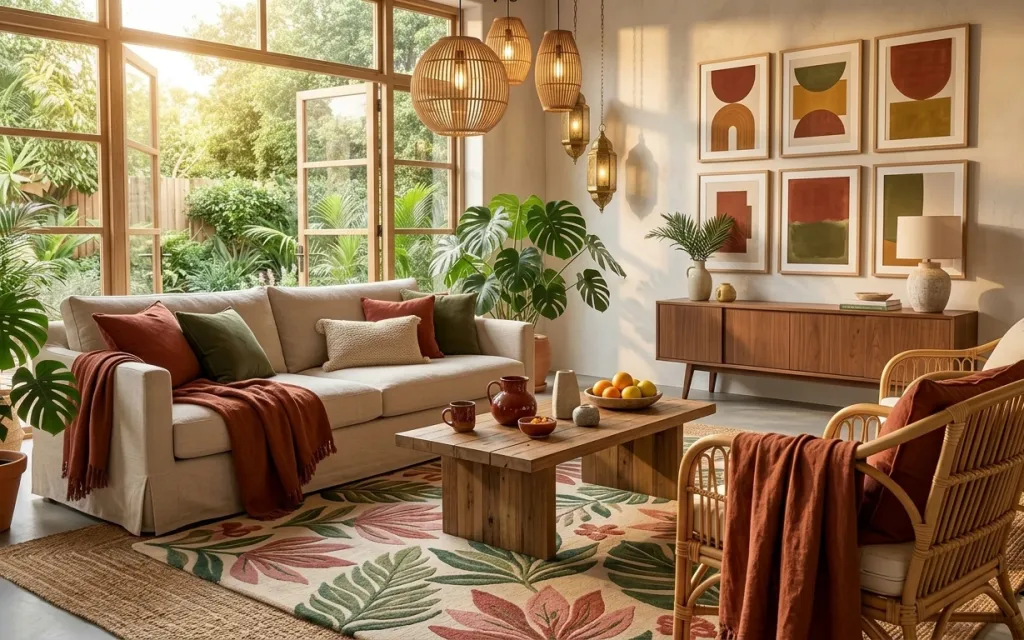
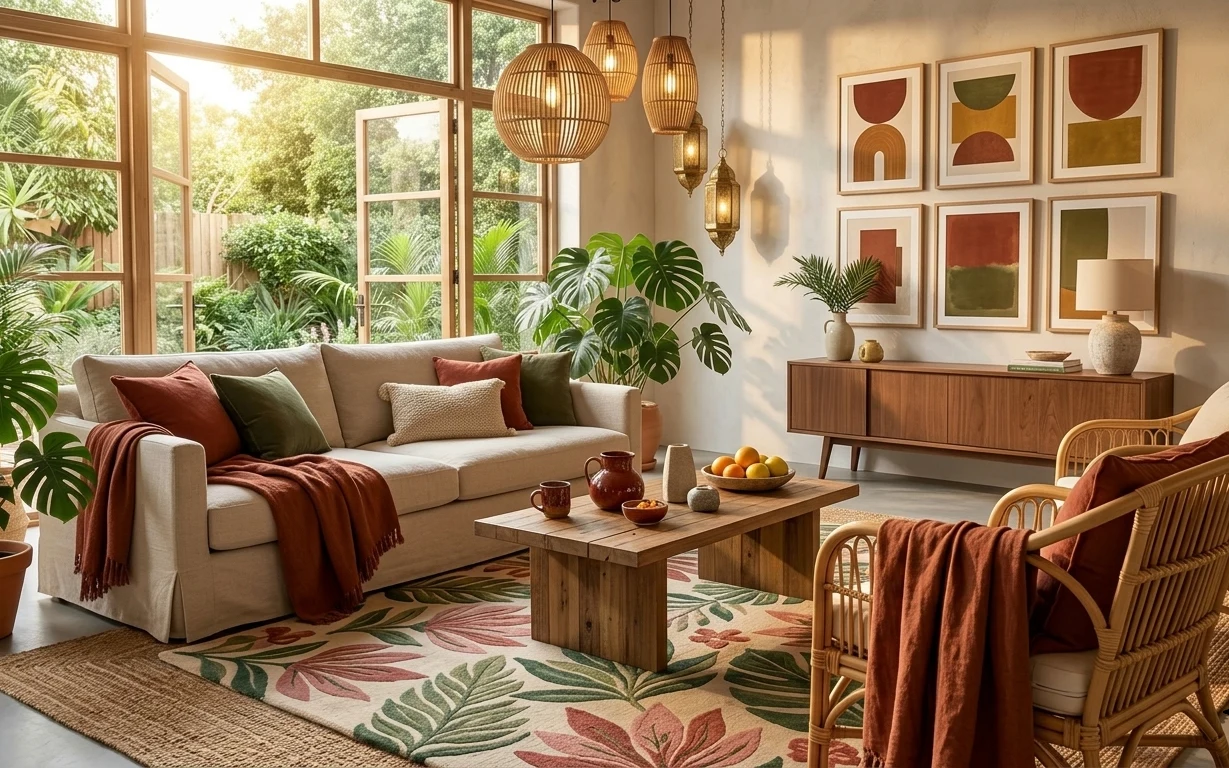
Look at how the room’s warmth comes from repeatable cues: cream upholstery, olive-green leaves, and terracotta accents that show up in textiles and ceramics. The textures do a lot of the heavy lifting—linen-like throw fabric over a sofa, a braided-leaning rug underfoot, and the light grain of a wooden coffee table. Even the wall art feels curated instead of busy because it repeats the same color family. For shared housing, this is the good news: the biggest visual impact pieces are all removable or swap-friendly, not hardwired or permanent.
I used to overthink wall art in rentals and end up with prints taped where they didn’t belong. What finally clicked was treating the wall like a “frame,” not a commitment: pick one theme (in this case terracotta and olive), then repeat it in rugs and throw pillows. When you do that, the room reads like a set—even if you’re missing a matching nightstand or landlord-installed fixtures aren’t perfect. This photo’s look works because the strongest elements are soft goods and clip-on/leaning-friendly choices.
Layer 1 — area rug ($120) Lays down a botanical base for the whole palette
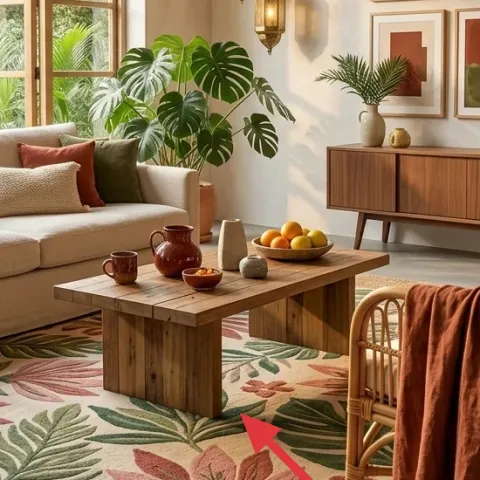
The area rug is the visual anchor: a cream ground with large botanical motifs in green and terracotta tones. Placing it under the front legs of the sofa and chairs is what makes the pattern feel intentional instead of “floating.” A rug like this is also where you get the boho-tropical energy without needing permanent wall changes. The trade-off is maintenance—botanical prints can show lint—so a washable cover or simple vacuum schedule matters. Still, this is one of the easiest move-ready upgrades because rugs roll, wrap, and fit in a rental van.
Let the rug do the color matching
Choose throws and pillows that pull one repeated rug color (olive or terracotta), not a whole new palette.
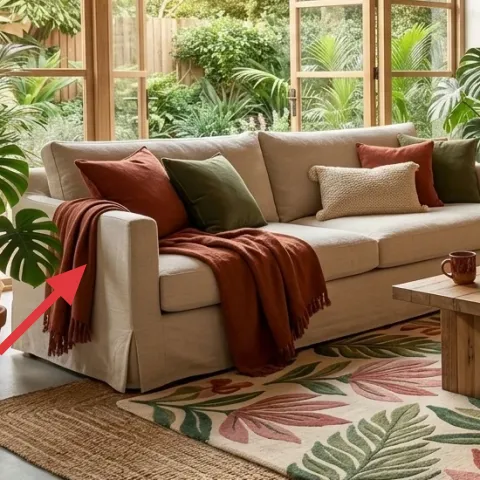
Layer 2 — throw blanket ($30) Brings terracotta warmth where the eye already rests
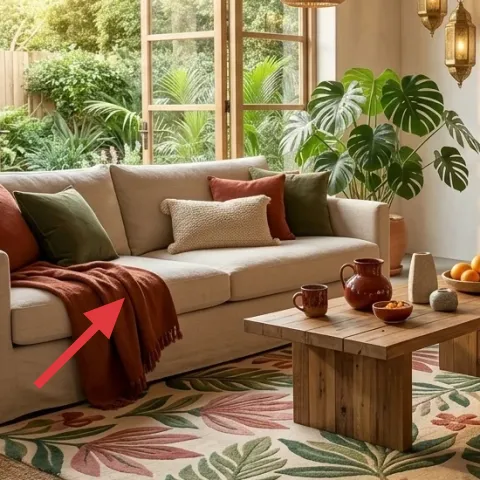
The throw blanket draped over the sofa is terracotta-leaning, and it’s positioned exactly where you naturally pause—on the seating edge. That placement matters: it adds depth without covering everything, so the sofa still reads clean and open. I like this over buying a second “statement” pillow because fabric weight gives you the same warmth with less clutter. The best part for shared housing is that a blanket folds small and can move room-to-room without measuring anything. If you want the look to feel effortless, keep the blanket’s drape asymmetric—one relaxed fold beats a perfectly centered throw.
Texture beats exact color matching
As long as the throw sits in the same warm family as the rug accents, slight undertone differences won’t break the look.
Layer 3 — throw pillows ($18) Adds softness and breaks up the cream upholstery
These throw pillows give you the “layered” effect: one neutral-ish tone for calm, plus a second pillow in the warmer earth range. A quick rule I’ve learned: pillows should echo the rug’s pattern energy without copying every leaf shape. That’s why choosing pillow covers that coordinate with the rug’s greens and terracottas looks cohesive even when the sofa stays plain. The trade-off is scale—too-small pillows look lost, too-many pillows look like you’re trying to hide something. Aim for two to four covers that look full, not fluffy.
Mix one solid with one textured print
Pair a solid cover with a subtle pattern or woven texture so the sofa doesn’t feel flat.
Layer 4 — wooden coffee table ($120) Keeps the tropical palette grounded
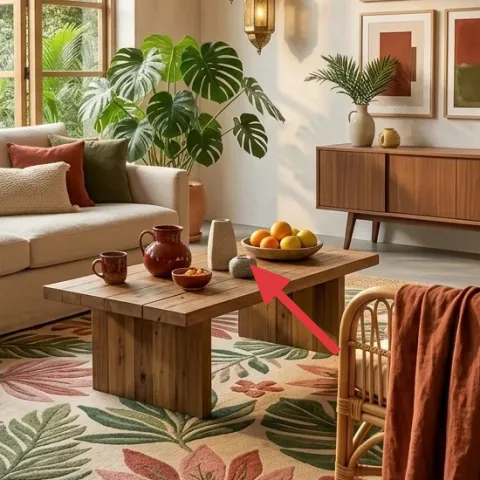
The wooden coffee table adds the mid-century counterbalance: straight lines, warm wood tone, and a top surface that can handle ceramics and small bowls. In a room with lots of botanical pattern, the coffee table works like punctuation—it gives your eye a stable “pause” between leaves and textiles. Buying a similar table (or scoring one secondhand) is often cheaper than replacing the whole sofa, and wood finishes photograph beautifully in daylight. The trade-off is practicality: open table tops can look busy if items overflow. The fix is choosing a small tray or simply limiting décor to three objects max.
Don’t clutter the tabletop
Too many small ceramics fight the rug pattern and make the room feel crowded, even with plants everywhere.
Layer 5 — rattan chair ($80) Brings airy texture without taking over the room
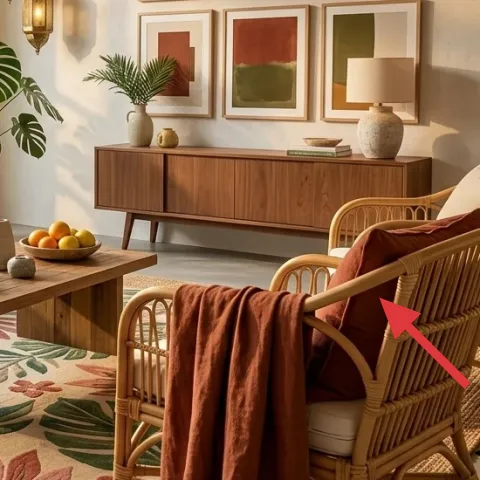
The rattan chair gives you that light, woven texture you can’t fake with a smooth plastic side chair. It’s also visually “thin” compared to upholstered seating—so it doesn’t compete with the sofa, rug, and wall art. In this palette, rattan ties together terracotta and greens because the natural color reads as warm neutral. The trade-off is comfort: rattan chairs often need a cushion if you plan to sit for more than ten minutes. For a move-friendly plan, chairs are great because you can pack cushions separately and transport the frame on its own. If you’re shopping, look for a chair with a tight weave and sturdy joinery.
Make it livable with one cushion
A single removable seat cushion keeps the chair comfy while still letting the rattan texture show.
Layer 6 — framed abstract art prints ($120) Replaces wall clutter with repeating warm geometry
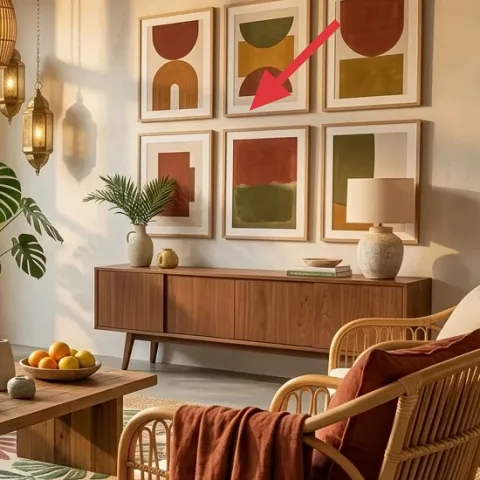
These framed abstract prints act like a color map: they repeat terracotta shapes and olive greens in a clean, grid-like layout on the right wall. That’s why the whole room feels “designed” instead of random—each frame supports the same palette you see in the rug and textiles. The trade-off is permanence: hanging multiple frames with hardware can get complicated in shared housing. That’s exactly why a removable alternative works better for most leases. This is also the layer where the DIY is most satisfying, because wall decor is the easiest thing to swap when you move.
Make it instead of buying it
Macramé wall hanging mirrors the boho texture of the framed prints, while staying move-friendly because it hooks on with Command hardware.
Materials
- Macramé cord — 1 roll (about 150–200 ft) — craft store — $20
- Wood dowel — 1 piece (about 18–24 in) — craft store — $12
- Command hook (picture-hanging style) — 1–2 hooks — grocery/drugstore — $8
- Natural twine — 1 small spool — craft store — $6
- Small tassel fringe (optional) — 1 pack — craft store — $5
Steps
- Cut cords to length: decide finished height, then add extra for knotting.
- Attach cords to the dowel using simple loop knots so the strands hang evenly.
- Work a basic knot pattern in rows (repeat the same knot for consistency).
- Bundle the strands at the bottom and finish with a tight tie for a clean fringe.
- Hang by centering the dowel on Command hooks; adjust so it sits level.
- Back it up with a quick fluff-and-evening pass so the strands look intentional.
Total DIY cost: $51 — saves about $69 over buying.
Layer 7 — potted palm plant ($30) Adds the tropical “movement” that art and textiles can’t
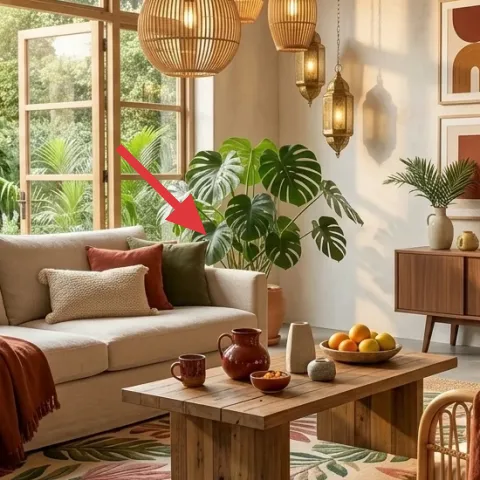
The potted palm plant in the left foreground makes the room feel alive—its big leaf shape echoes the botanical rug pattern and fills vertical space near the windows. For this look, plants aren’t decoration; they’re part of the color palette, pulling green tones into the room from every angle. This is why I’d prioritize one strong plant over adding more small ornaments on the coffee table. The trade-off is that plants need light and basic care, but the payoff is instant depth without adding visual noise. In shared housing, you can pot-swap later or move the plant with minimal drama because pots are already designed to travel.
Match plant size to the wall space
If your wall feels tall, choose one broader plant; if it feels low, use two smaller pots.
The cost, layer by layer
| Layer | Item | Cost |
|---|---|---|
| 1 | Area rug (botanical pattern) | $120 |
| 2 | Throw blanket (terracotta tone) | $30 |
| 3 | Throw pillow covers (2-pack) | $18 |
| 4 | Wooden coffee table | $120 |
| 5 | Rattan chair | $80 |
| 6 | Framed abstract art prints (set) | $120 |
| 7 | Indoor plant (4–6 ft) | $30 |
| Total | $520 | |
If you want a cheaper variant, focus on rugs and textiles first: choose a simpler botanical rug and smaller throw pillow set, then shop for a used wooden coffee table and one rattan chair at a thrift store. Skip the framed print set in favor of a single, removable macramé or fabric panel.
What worked, what didn't (across the whole room)
This palette works because the colors repeat across large surfaces: rug, textiles, and plants all share the same warm green-and-terracotta language. The room also feels balanced thanks to wood and rattan texture, which soften the graphic wall art. Where it could go wrong is adding too many décor objects, or letting the wall treatment fight the rug instead of echoing it.
What worked
- The botanical rug anchors the palette so the sofa and chairs feel intentional, not random.
- Terracotta throws add warmth in a single fabric layer, without changing any fixed furniture.
- Rattan chair texture keeps the room light while still adding a crafted feel.
- Wood tabletop adds a mid-century calm that prevents the room from feeling too busy.
- Wall art in repeated color blocks reads as organized even when the room includes plants.
- Plants provide real vertical shape that patterns can’t mimic in daylight.
What didn't
- Too many small ceramics on the coffee table makes the pattern feel louder than it needs to.
- Oversized pillow quantities can make a cream sofa look cluttered instead of styled.
- Choosing wall art with competing color undertones can break the terracotta-and-olive harmony.
- A rug that’s too small under the seating area makes the room feel disconnected.
- Plant neglect shows up fast: yellowing leaves stand out against a bright background.
What we'd skip if we did it again
Skip replacing furniture silhouettes first. In a room like this, the coffee table and chairs only need the right materials and warmth; most of the “wow” comes from rug scale and textile colors that are easier to move.
Skip wall hardware that can’t transfer between leases. Multiple framed prints can be a headache in shared housing, so favor removable wall methods like Command hooks and lightweight displays that come down in minutes.
Skip adding extra décor layers on surfaces. Once plants, a botanical rug, and a terracotta throw are in place, the coffee table should stay simple—three objects max keeps the whole look cohesive.
Frequently asked
How long does this kind of living room refresh take?
The textiles and rug usually take the most visible time: swapping a rug and draping throws can be done in a couple of hours. Wall decor depends on how many pieces you’re hanging or whether you’re making a macramé; Command-style mounting is typically quick. If you’re shopping secondhand, budget extra time for pickup and returns.
Is this renter-friendly if my lease doesn’t allow wall hooks?
Most of the impact is already renter-friendly without touching walls: the rug, throw blanket, and pillow covers are purely movable. For the wall layer, choose a leaning option (like a lightweight fabric piece) or hang only one removable piece with Command hardware where allowed. The plant and furniture textures will still carry the look.
What if my living room is smaller than this photo?
Scale down pillow and rug size before changing the palette. If you can’t go as large on the rug, keep the botanical pattern but reduce the seating coverage—front legs on the rug is a good target. Choose one statement plant rather than multiple. Wall art can stay in a grid, but fewer frames still reads cohesive when colors repeat.
What if my living room is bigger and feels too quiet?
Add repetition instead of more unrelated décor. Keep the terracotta-and-olive language consistent, then increase either plant presence (a wider plant or a second pot) or wall presence (one larger woven hanging, not more tiny objects). The coffee table can hold a small tray to create structure without making the surface feel cluttered.
Where should I shop to keep costs under control?
For under $600, prioritize value items: thrift stores and marketplace listings for the coffee table and rattan chair, and discount home sites for the rug and throw. Pillow covers are easy to source from basics retailers, and indoor plants are often cheaper at local nurseries. For the wall layer, a macramé cord kit from a craft store is frequently the best ROI.
What’s the biggest mistake people make with this style?
The most common misstep is buying too many “matching” items that don’t share an undertone. A room can look off even when colors sound right on paper. Another mistake is overwhelming the rug pattern with too many small décor pieces on the coffee table. Keep the palette consistent and let one large pattern (the rug) lead.
More in Living Room
Under $600: plant-filled sunlit living room refresh with 7 layers
A sunlit living room refresh for shared spaces, built around terracotta-and-olive warmth. This move-friendly plan uses 7 swap-in layers (te…
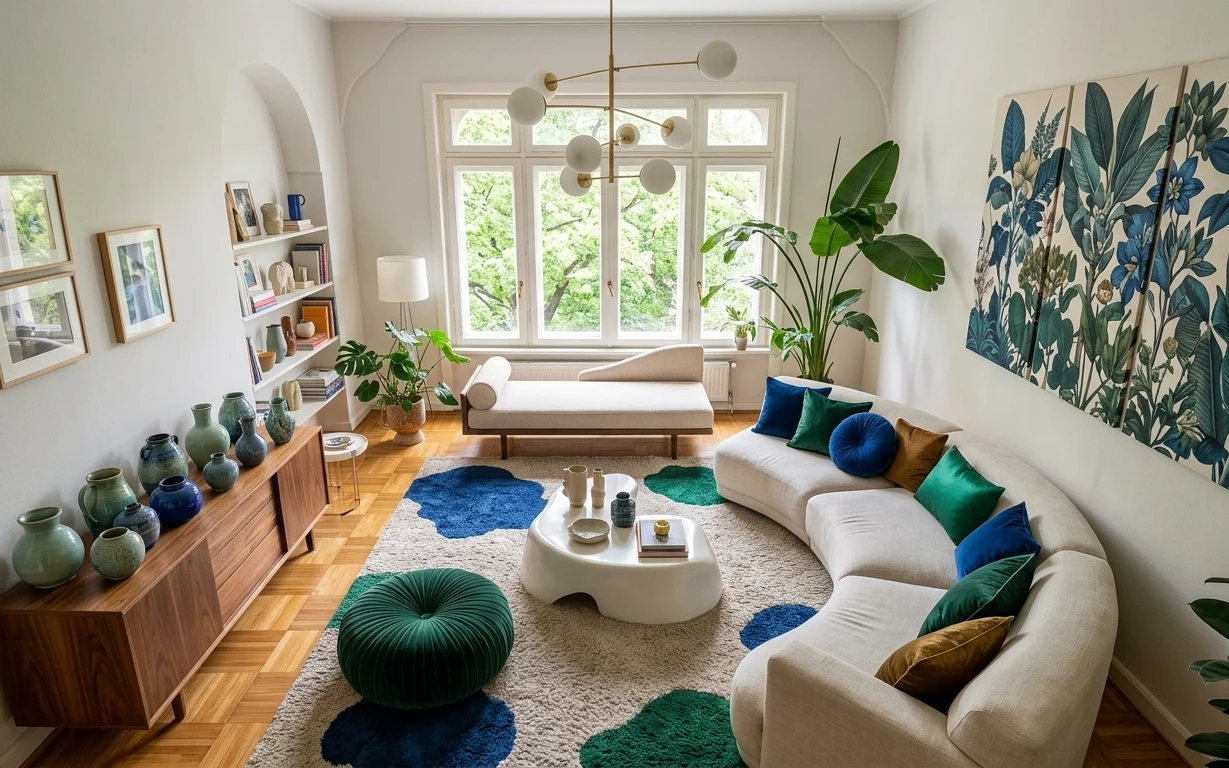
Under $700: renter-friendly living room refresh with botanicals
A bright, plant-forward sofa-and-coffee-table living room look is doable for under $700, even with a lease. This plan uses a large patterne…
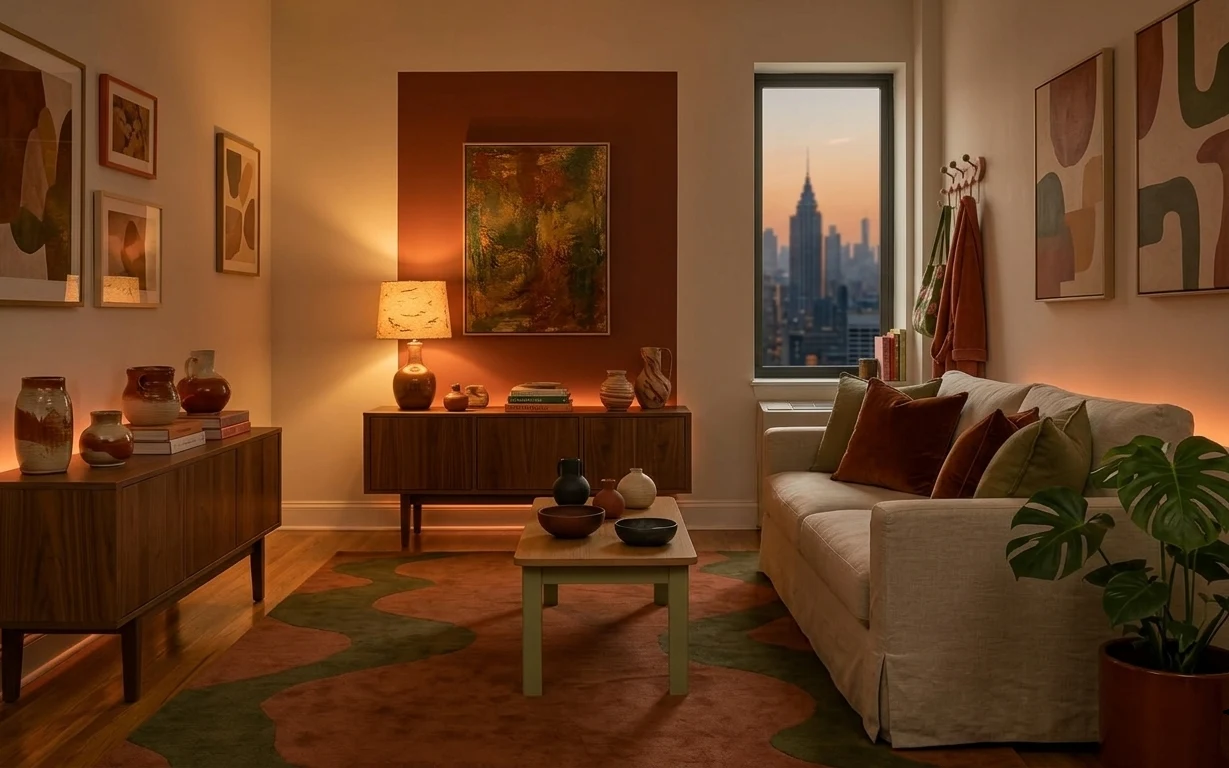
Under $400: earthy burnt-orange living room refresh
A move-friendly living room sofa seating area refresh that keeps everything packed and re-used. This $400-leaning plan builds warmth with a…