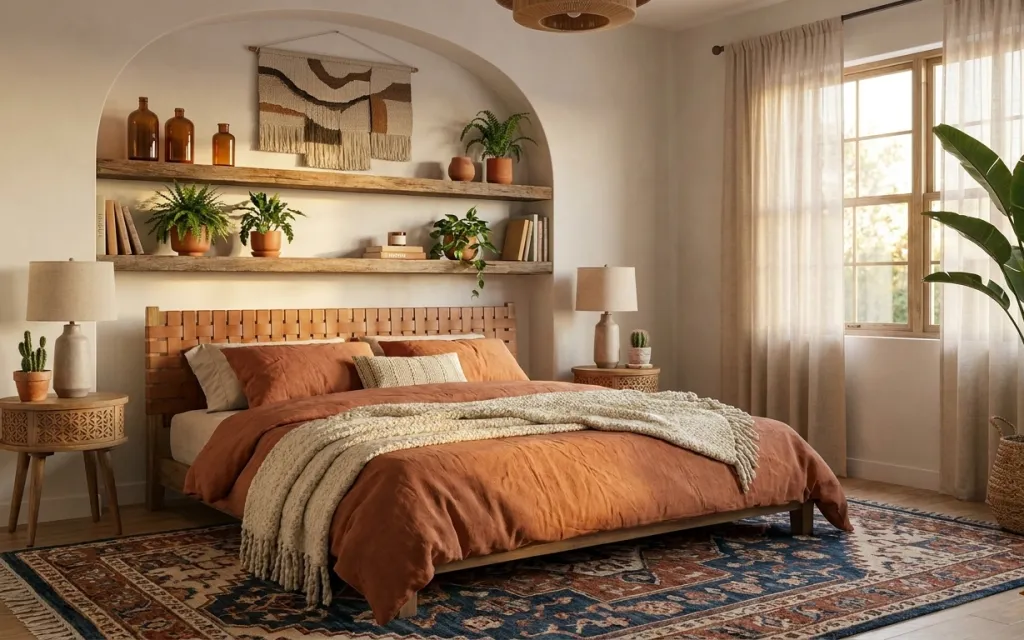
- Best for
- Move-friendly bedroom refresh
- Cost
- Under $600
- Difficulty
- Weekend: easy
- Time
- 2–4 hours total
Why this rust-and-cream arched bed nook is the move-friendly nook of 2026
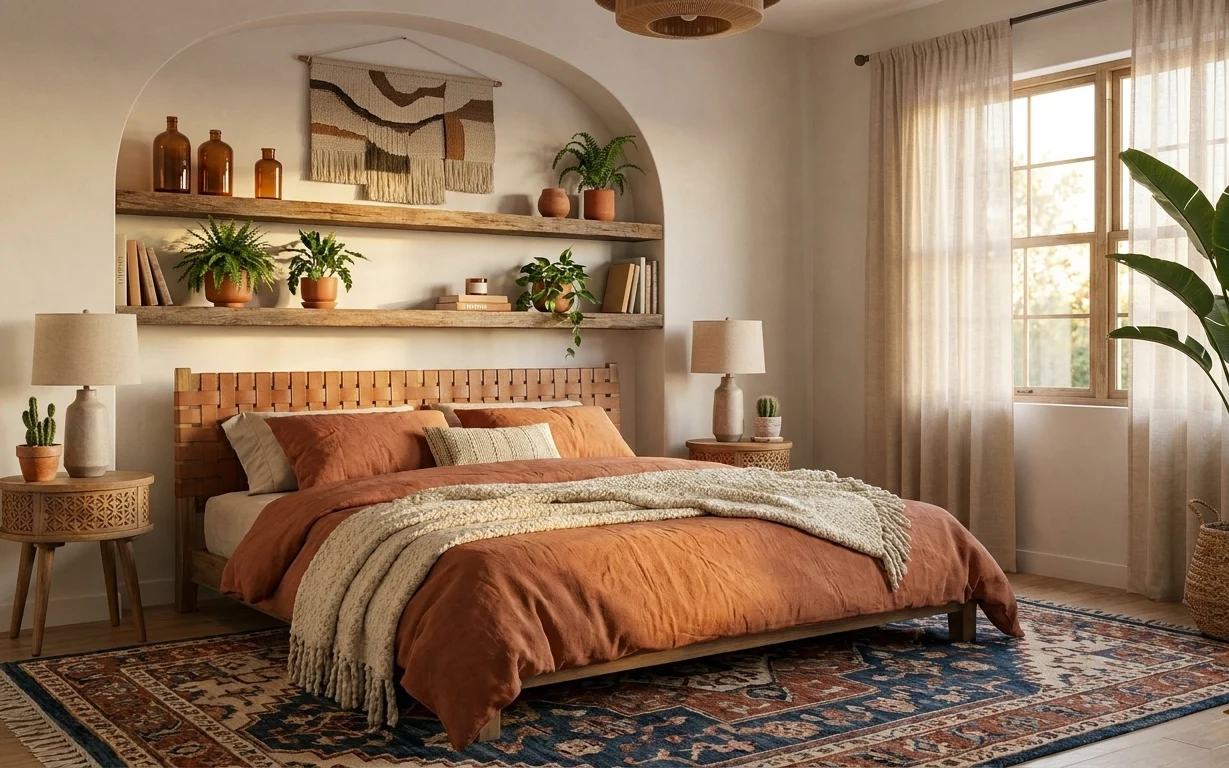
Start with the foundation: that blue-and-rust area rug grounds everything so the bed and plants don’t feel like they’re floating. From there, layer in warm textiles—like a brown-and-cream throw folded over the bed and a cream knit pillow tucked near the front edge. The arched wall style reads boho on purpose, so a macramé wall hanging is doing real work, not just decoration. This is achievable for shared housing because you’re changing soft goods and freestanding pieces, not fixed installs.
I used to overthink “statement” decor and end up buying wall items that were too permanent for my next lease. What finally clicked for me was choosing one wall accent that can come down cleanly and wrapping the rest of the look in moveable layers: rug, throws, and lighting. That’s why the macramé is the one thing I’d treat like the centerpiece, while the rest stays flexible.
Layer 1 — Area rug with blue, rust, and cream pattern ($200) Grounds the whole nook
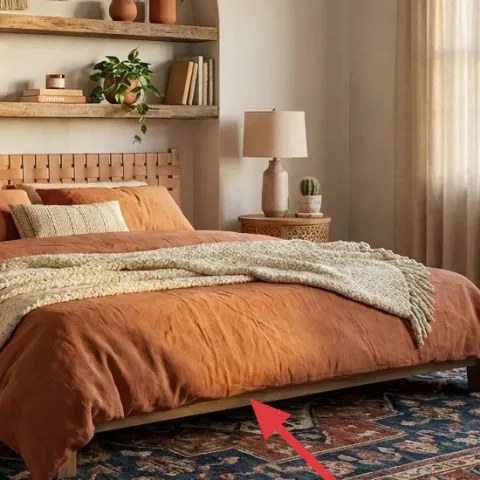
That patterned area rug is the anchor: the deep blue and rust tones pull the burnt-orange comforter cover and the earthy plants into one palette. For shared housing, a rug is also the easiest “reset” because it rolls, folds, and goes into a box without asking permission from the landlord. The trade-off is cost—this is worth spending on—so you don’t have to chase “color coordination” with five separate accessories later. If you pick a smaller rug, you’ll lose that room-wide grounding effect, so aim for a size that reaches under the bed area at least a bit.
Pick a rug that overlaps the bed
Even a few inches under the bed edge makes the whole nook feel intentionally built, not staged.
Layer 2 — Macramé wall hanging on the arched wall ($80) Adds boho texture without permanence
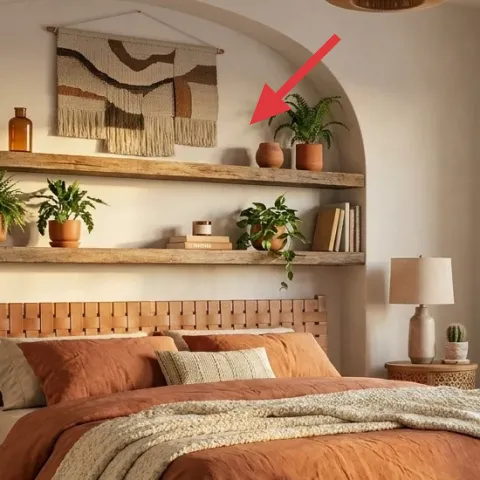
This arched-wall macramé brings in vertical texture and movement, which matters in a room with a lot of horizontal lines (shelves and the bed). It also echoes the earthy palette—cream and tan threads feel natural next to rust bedding and terracotta planters. Choosing macramé over a printed print is a practical decision for renters: cord-and-dowel decor packs flatter and comes down quickly. The trade-off is that macramé looks best with soft, warm lighting rather than harsh overhead glare, so pair it with table-lamp light.
Make it instead of buying it
DIY a simple macramé wall hanging using cord and a wood dowel so you get the same arched texture while keeping it move-friendly.
Materials
- Macramé cotton cord — ~150–200 ft — craft store — $20
- Wood dowel — 1 piece, ~12–14 in — hardware store — $8
- Command hook (for hanging) — 2 hooks — $8
- Scissors + painter’s tape — small set — $0
Steps
- Cut cords into equal lengths, then fold to create doubled strands for even fringe.
- Tape the dowel to a table height so the knots stay aligned while you work.
- Attach cords to the dowel with a secure lark’s head knot (repeat across).
- Work a simple square-knot or half-knot pattern in a row, keeping tension consistent.
- Repeat the knot row until you hit your desired hanging width.
- Trim ends evenly and lightly fluff the fringe so it looks full from across the room.
- Hang with picture hooks on the arched wall using the least visible hook points.
Total DIY cost: $36 — saves about $44 over buying.
Use hooks on the curve, not the center
On an arched wall, centering hardware can make the hanging tilt; place the hook points slightly above where you want the bar to sit.
Layer 3 — White-shade table lamp on side table ($60) Softens everything after dark
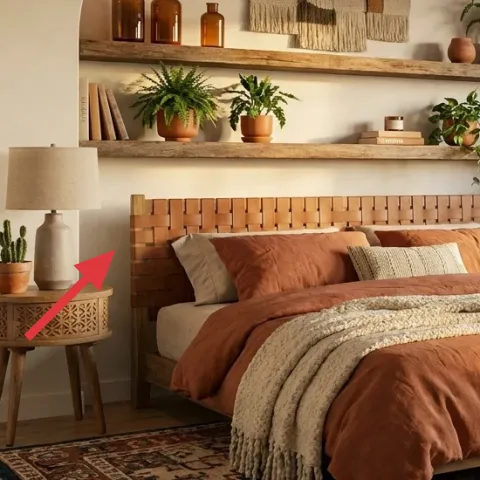
This white-shade table lamp on the left side table creates the warm pool of light that makes the rug pattern feel rich instead of flat. The shade color matters: a light, fabric look keeps the glow gentle and works with cream curtains and cream-toned macramé threads. The trade-off with lamps is that you may have to buy one “good enough” option if you don’t already have it—so pick a plug-in lamp with a fabric shade so you get that cozy effect without extra bulbs. In a shared bedroom, lighting is one of the fastest ways to make the space feel finished.
Don’t match bulbs—match the shade color
Different bulb temperatures can clash against warm textile tones; a light fabric shade helps smooth the mix.
Layer 4 — Beige curtains ($40) Makes daylight look softer
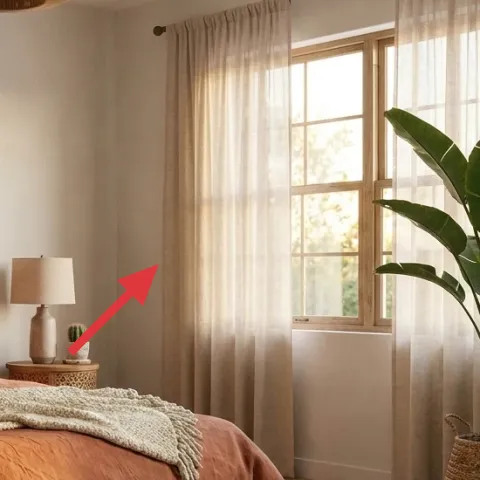
Those beige curtains add softness right where the room needs it—between the arched wall and the bright window. Sheer, warm curtains also make the room feel brighter without turning the space into a glare-fest. This layer is renter-friendly because you’re swapping textiles and hanging with the existing setup (or using a tension rod if your window needs one). The trade-off is privacy and light control: sheers won’t block everything, so if sleep is important, layer with a thicker removable panel or choose a slightly heavier fabric. Either way, the fabric tone should stay warm to match the rust bedding.
Choose a warm beige, not a cool gray
Cool tones fight rust bedding; warm beige threads read cohesive with terracotta plants.
Layer 5 — Brown and cream throw blanket ($45) Adds movement on top of the bed
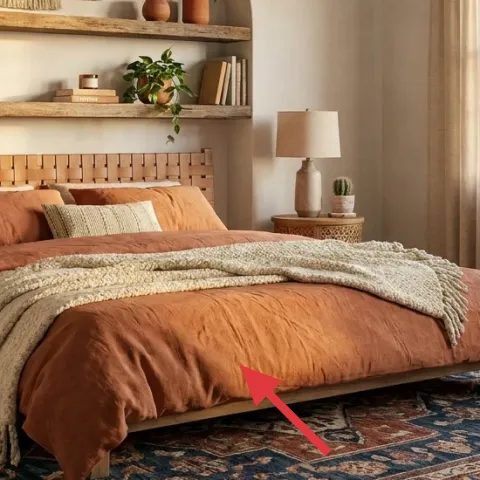
That brown-and-cream throw blanket folded across the bed is doing the “layering” work—two neutrals that echo the rug pattern and keep the comforter cover from looking one-note. You could try to swap in a new comforter, but changing the top textiles is a smarter move in shared housing: throws and pillows pack easily and look good in multiple rooms. The trade-off is styling time: the fold should land in a visible place, not hidden behind the pillows. Aim for a loose drape with a little texture showing, since knit-and-woven surfaces read differently and add depth in photos and in person.
Fold width beats “perfect placement”
If you’re aiming for a casual vibe, a thicker fold that peeks out is usually more convincing than straight edges.
Layer 6 — Low woven plant basket ($25) Adds texture near the floor
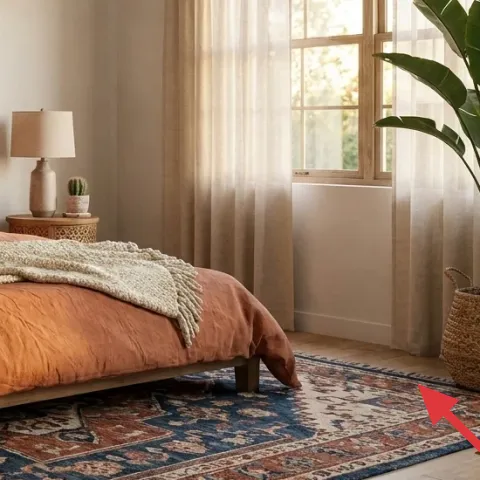
A low woven plant basket is one of those details that makes a boho nook feel lived-in without adding clutter. It sits visually at the bottom edge of the composition, so the eye doesn’t jump from rug to plant leaves with nothing in between. The basket also acts like a “texture bridge” between the rug’s pattern and the smooth surfaces (curtains and walls). The trade-off is sizing: go too big and it crowds the corner, go too small and it feels decorative-but-empty. A compact basket is easier to pack and carry when you move again.
Use baskets to hide the “landing zone”
Put a few small items inside (extra coasters, cables, or a spare plant pot) so you don’t have random clutter.
Layer 7 — Cream knit throw pillow ($24) Softens the bed’s front line
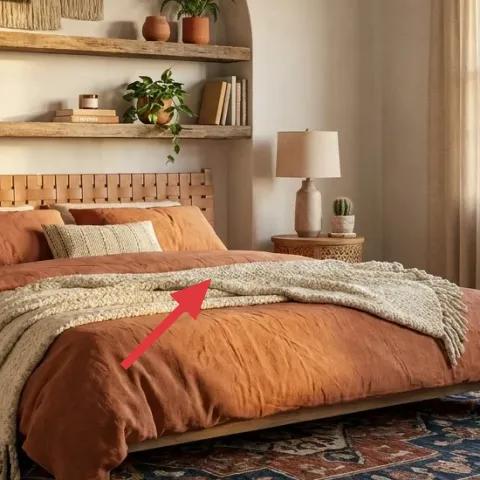
The cream knit throw pillow gives you a lighter texture right at the front of the bed, which balances the burnt-orange comforter cover and keeps the look from leaning too brown. Knit textures are especially helpful in rooms with patterned rugs and cord or woven wall decor—everything gets a softer landing. You could buy a whole pillow set, but a single statement cover is usually enough, and it’s easier to swap later. The trade-off is that knit can look “busy” if you add too many patterns at once, so keep the second pillow simple or solid. This one acts like the calm note.
Match undertones, not exact colors
Look for cream that leans warm to blend with the rust bedding and amber-toned decor.
The cost, layer by layer
| Layer | Item | Cost |
|---|---|---|
| 1 | Area rug 5×7, blue/rust pattern | $200 |
| 2a | Macramé cord kit | $45 |
| 2b | Wood dowel, 12–14 in | $10 |
| 2c | Command hooks (multi-pack) | $8 |
| 2d | Tassel/end fringe add-on | $17 |
| 3 | Plug-in table lamp with fabric shade | $60 |
| 4 | Curtain panel pair (84 in), beige | $40 |
| 5 | Throw blanket, brown-and-cream | $45 |
| 6 | Woven storage basket, low | $25 |
| 7 | Throw pillow cover, cream knit | $24 |
| Total | $479 | |
A cheaper variant keeps the same layout but swaps one item: pick a lower-cost patterned rug or a thinner knit throw pillow cover, then spend the difference on one lamp shade you like.
What worked, what didn't (across the whole room)
The strongest read here is layering: rug pattern underfoot, woven/knit textures on the bed, and cord texture on the arched wall. Warm lighting from a fabric-shade table lamp makes the whole palette feel cohesive. The only thing that can derail this look is going too cool or too minimal—then the rust and terracotta lose their contrast.
What worked
- The blue-and-rust rug ties the bed textiles to the plant colors for one continuous palette.
- The macramé wall hanging adds vertical texture so the arched wall doesn’t feel empty.
- Soft beige curtains diffuse daylight and prevent harsh contrast against the cream walls.
- The throw blanket creates intentional folds, making the bed look styled even when you’re busy.
- Fabric lamp shade glow keeps the textures readable after dark.
- A low woven basket anchors the corner visually at floor level.
What didn't
- A plain rug without pattern would make the bed’s rust tones feel “stuck on” instead of connected.
- Too many patterned pillows at once would fight the macramé cord texture.
- Cool-gray beige curtains would pull the room toward a colder look than the amber decor.
- If the throw blanket is folded too tightly, it reads stiff instead of cozy.
- Larger baskets than this can crowd the corner and reduce breathing room.
What we'd skip if we did it again
Skip a second matching pillow set. In a small shared bedroom, duplicates start to look like “furniture store styling,” and they also pack more bulk than a single great knit cover.
Skip upgrading fixed lighting or changing bulbs to chase color temperature. A fabric-shade plug-in lamp gets you the warm mood without messing with anything permanent or hardwired.
Skip hanging anything heavy or needing anchors. For renters, the move-friendly win is removable decor (cord-and-dowel macramé + hooks) paired with packable textiles like curtains, throws, and pillow covers.
Frequently asked
How long does this kind of refresh take in a shared house?
Plan for about 2–4 hours total, assuming you already own basic tools like scissors and a tape measure. The biggest time block is measuring for curtains and laying out the rug so the bed sits centered. If you DIY the macramé, add another 2–3 hours depending on knot comfort.
If I’m a renter, can I still do the wall decor part?
Yes—choose removable hanging methods. A macramé wall hanging can go up with Command hooks (or foam-core options if your walls are plaster). The key is to avoid anything that requires drilling or anchors, and to keep your design lightweight enough to lift down in one piece when the lease ends.
What if my room is smaller than this arched bed nook?
Use the same layering logic, but shrink one “anchor” item. If your room can’t fit a large rug, choose a slightly smaller rug and make sure at least the front legs of the bed sit on it. Keep the curtains to warm beige and limit pillows to one textured knit so the look stays intentional, not cramped.
What if my room is bigger—should I buy more to fill it?
Bigger rooms usually need more scale, not more clutter. Consider keeping the rug pattern but choosing a larger size, and let the macramé take up more vertical space (longer cord strands or wider knot width). For textiles, keep two layers max on the bed—throw and one knit pillow—so the palette doesn’t get busy.
Where should I shop for these items without overspending?
For the rug and curtain panels, focus on retailers that stock upholstery-textile basics, then check thrift stores or marketplace for lamps and pillow covers. The easiest win is buying soft goods from places with lots of colors and returning policies. For macramé cord, craft stores are usually the best price per yard.
What’s the biggest mistake people make in this room type?
Overcorrecting with wall art alone. In an arched nook with warm bedding and plants, the wall decoration can’t replace the foundation. If the rug is too small or the bed textiles aren’t layered, the room looks unfinished even with a nice macramé.
More in Bedroom
Under $600: an arched bed nook refresh with fewer than 7 buys
A warm, boho arched bed nook makeover using items you can pack up fast. Budget: under $600 total across 7 swaps, with a move-friendly macra…
Under $700: renter-friendly arched bed nook layers
A warm, renter-friendly arched bed nook built with curtains, a patterned rug, an arched bed frame, and layered textiles—plus move-out-frien…
Under $700 bedroom corner: rug, curtains, shelf, and botanical art
A warm, earthy bedroom corner refresh you can build in one weekend under $700. Focus on an area rug, curtain panels, a simple table lamp, a…