- Best for
- Fast living-room cozying
- Cost
- Under $600
- Difficulty
- Weekend-friendly
- Time
- 4–7 hours
Why this warm neutral living room is the cozy fireplace living room of 2026
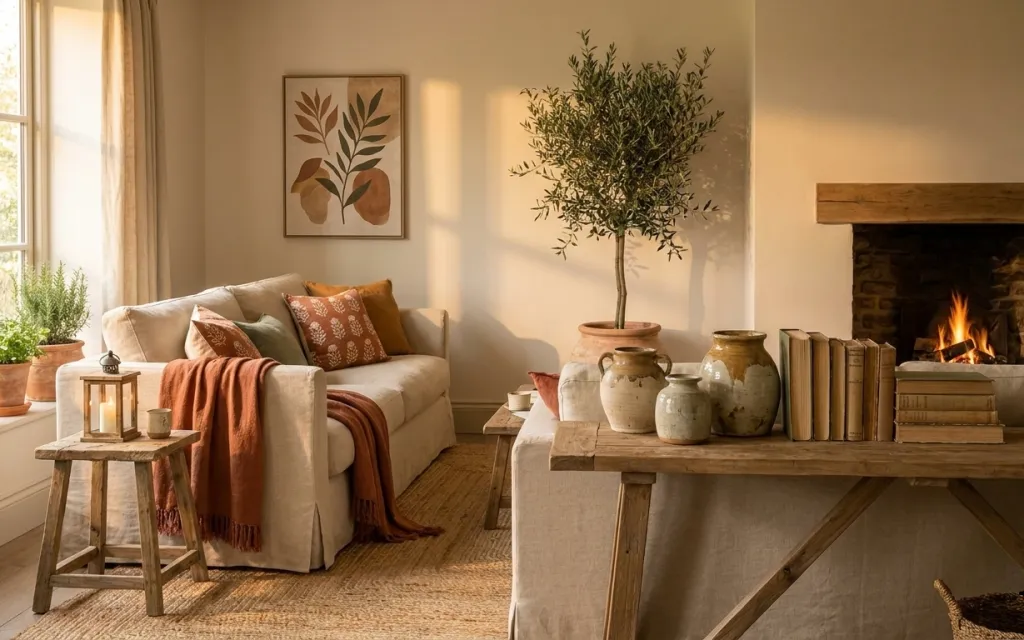
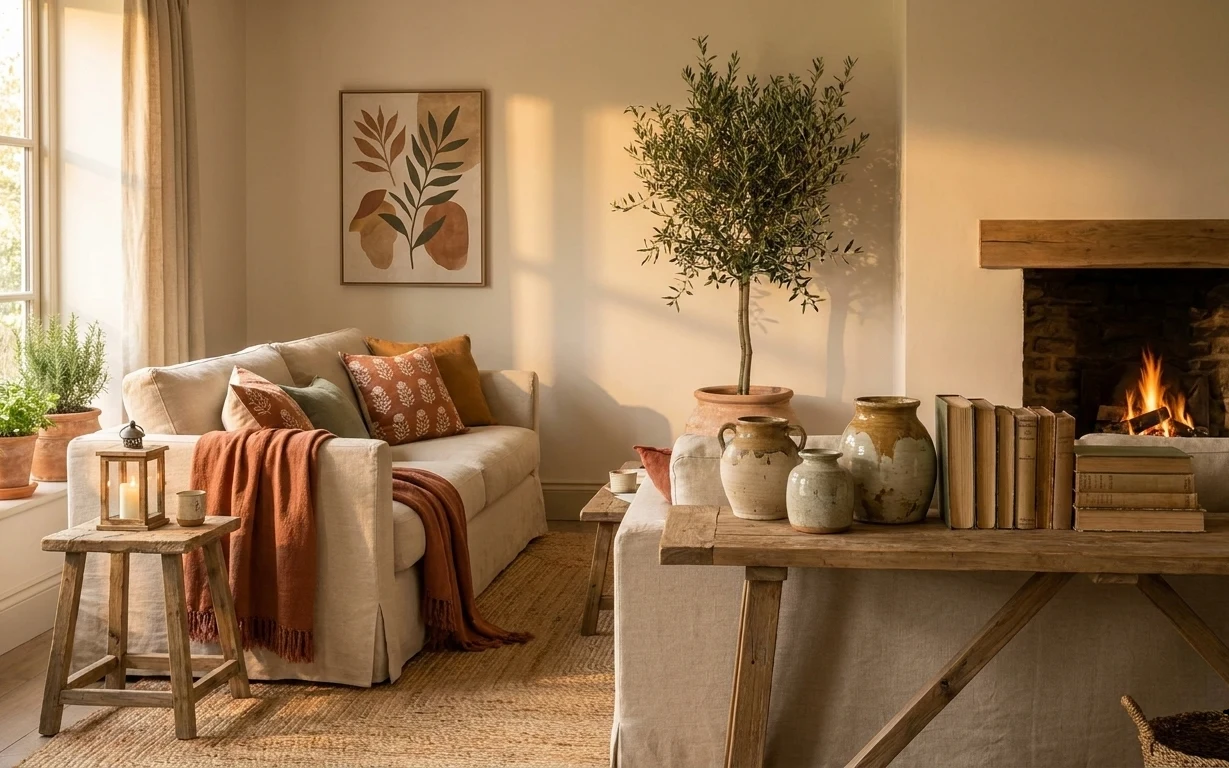
The first thing I notice in this photo is how the warm tan rug and cream sofa feel like a base layer, not just furniture. The rust throw blanket and terracotta pillow add that extra “thread” of color without turning the space loud. Then the framed botanical wall art gives the whole setup a focal point, while the potted tree plant and ceramic vases keep the mantel styling from looking flat. For US homeowners, this is the kind of weekend project where every choice is visible the same day—no waiting, no guessing.
I used to overthink accessories like they were math problems. I’d try to match everything—same shade of terracotta, same wood tone, same jar shape—and it always looked too controlled. This time I’d copy the photo’s balance instead: one botanical print up top, then organic shapes below (plant leaves, rounded ceramics). The biggest shift is leaning into texture—woven rug fibers, linen-look curtains, and the matte ceramic glaze—so it feels lived-in, not staged.
Layer 1 — Throw pillow cover (terracotta) ($30) Warm color without changing the sofa
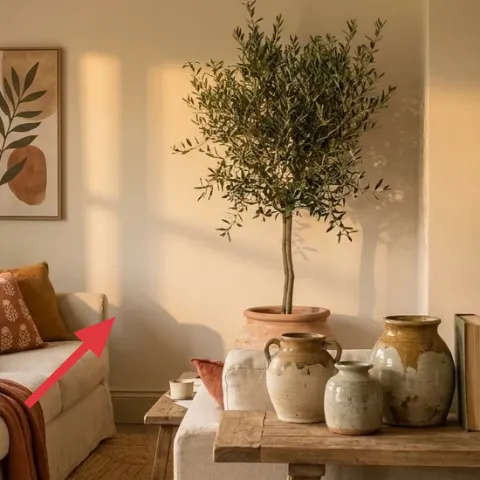
A terracotta pillow cover reads like a color “bridge” between the rust throw and the warm tan rug. On a cream sofa, it adds enough pigment to keep the room from feeling flat, but it doesn’t overwhelm like a bright red or deep navy would. I’d choose a pillow cover with an all-over pattern rather than a single solid color—this photo’s texture makes the pillow look dimensional even when the sun is low. The trade-off: patterned covers can be harder to swap later, so stick to the same warm family (terra-cotta, cinnamon, clay).
Match undertones, not just the shade
If your blanket is more orange than brown, pick a pillow cover that pulls orange too—terracotta vs. brick makes a real difference in daylight.
Layer 2 — Ceramic vases (multiple) ($30) Rounded styling that reads as “full”
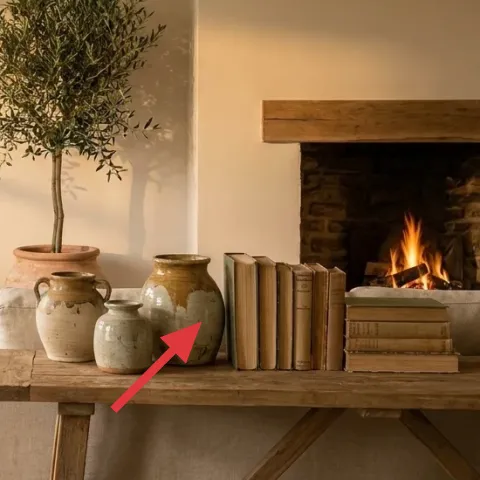
These ceramic vases on the console mantel zone give you that “collected over time” look, even if you’re starting fresh. The shapes matter: one taller vessel, one rounder form, and one smaller piece keep the grouping from looking like a store set. I’d keep the palette tight—matte creams, dusty clay, and muted green hints—so the vases work with the framed botanical print instead of competing. The obvious alternative is buying one big statement vase, but stacking a few pieces lets you adjust height and spacing without moving the whole setup.
Keep the group asymmetrical
One container slightly forward usually photographs better and looks more natural on a flat console surface.
Layer 3 — Throw blanket (rust) ($60) Texture you’ll touch every day
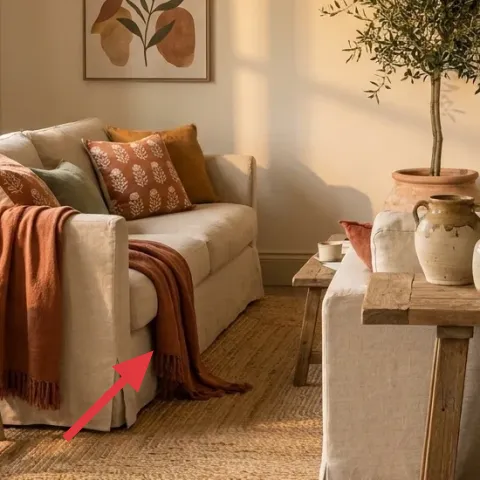
The rust throw blanket is doing quiet heavy lifting: it adds warmth, softens the sofa’s straight lines, and makes the whole corner feel more “ready” to live in. Choose a blanket with a visible weave or slub texture so it holds shape when folded over an arm. If you go too smooth, it can blend into the sofa and lose that depth the photo has. I’d drape it so one edge falls naturally onto the rug side—like in the picture—rather than tucking it perfectly flat. The trade-off is that you’ll adjust it occasionally, but it keeps the room from looking static.
Drape, don’t fold-flat
Let gravity do the styling: a casual fold creates shadow lines that read as intentional texture.
Layer 4 — Framed botanical wall art ($80) One print that anchors the whole wall
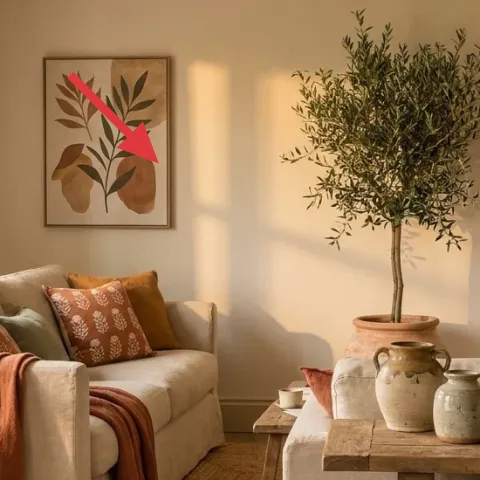
This framed botanical wall art is the visual center because it sits at eye level and echoes the plant’s leaf shapes. When you’re decorating quickly, one well-chosen print beats a bigger, busier arrangement—especially in a room with already-active textures like curtains, a rug, and a mantel. Pick an art print that stays in the warm neutral range (cream paper, olive greens, muted terracotta) so it won’t fight your ceramics and throw. The trade-off: going “too colorful” can force everything else to change—stick to earth tones and let the plant supply the green variation.
Don’t hang it too high
If the framed print sits above eye level, the sofa-corner styling starts to feel disconnected from the wall.
Layer 5 — Curtain panels (beige pair) ($80) Frame the light like a soft border
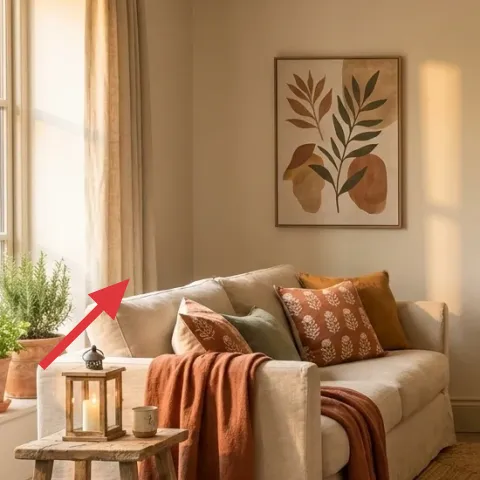
Make it instead of buying it
DIY no-sew linen-look curtain panels with a tension rod so you get the same warm beige framing without committing to a full window treatment.
Materials
- Faux-linen or linen-look fabric — ~2 yards — fabric store — $30
- Tension rod (adjustable) — 1 — home store — $12
- Fabric iron-on hem tape — 1 pack — craft store — $15
- Measuring tape — 1 — toolbox supply — $10
Steps
- Measure your window width and desired drop length (down to the sill or slightly below) and add overlap for fullness.
- Cut fabric into two panels with enough width for a soft gather when hung.
- Press a narrow hem at the top edge first so the tension rod sleeve stays straight.
- Press side hems to keep edges clean and prevent fraying from becoming the “main event.”
- Use iron-on hem tape for the bottom hem, then press firmly until bonded.
- Slide the tension rod through the top hem opening, then hang and adjust so the panels skim the floor evenly.
- Step back and balance the left and right panel weight so they fall at the same angle.
- Lightly steam or re-press any creases for a crisp, finished curtain line.
Total DIY cost: $67 — saves about $13 over buying.
Use tension rods when you’re moving fast
They let you get the “finished window” look in a day, and you can take the panels with you if your plans change.
Layer 6 — Potted tree plant ($80) Height that makes the corner feel intentional
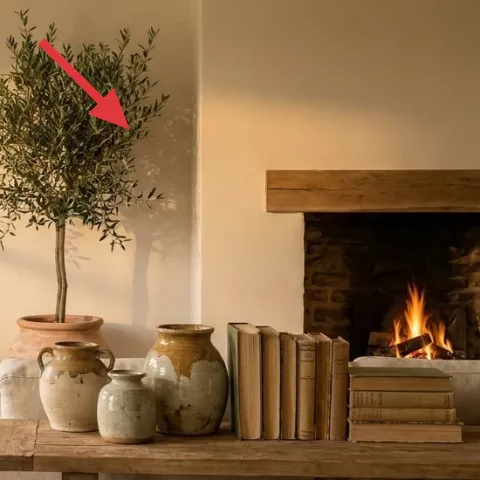
In this room, the potted tree plant adds vertical structure so the wall and mantel styling don’t feel low or flat. A taller plant also softens the fireplace zone—brick and flame energy can be visually heavy, and the leaves bring movement back into the corner. I’d pick a plant with a slender trunk and lots of fine foliage so it reads airy, not bulky. The trade-off is upkeep: too much browning can make the whole corner look tired, so choose a plant you can keep watered and rotated toward the light. Done right, it makes the room look styled even before you start polishing accessories.
Rotate for even leaf shape
Every few weeks, turn the pot slightly so growth fills out the silhouette instead of leaning.
Layer 7 — Area rug (woven neutral) ($200) Grounding warmth under the sofa
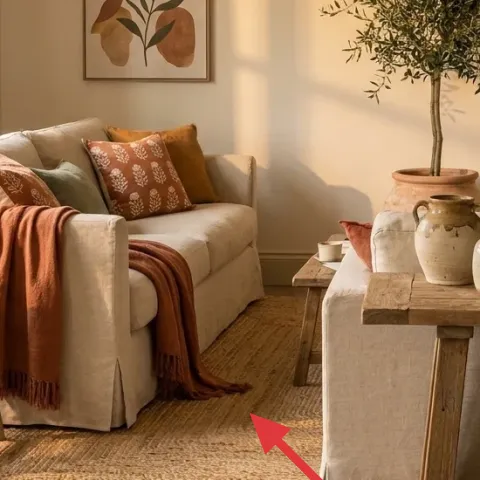
The rug is what keeps this living room from feeling like “separate pieces.” Its woven texture and warm tan color tie the sofa, blanket, and terracotta accents into one palette, and it helps the fireplace area feel cozy instead of stark. If you choose a rug with a tighter weave and neutral depth, the patterns won’t fight the botanical wall art. The trade-off: larger rugs cost more and may take a little rearranging, but in a living room refresh, it’s the one upgrade you’ll feel every day when you walk across the fibers. Keep the rug centered so the sofa front legs land cleanly on it.
Center it by legs, not by eyeballing
Line up the sofa placement so at least the front legs sit on the rug—this is where rugs stop looking “tacked on.”
The cost, layer by layer
| Layer | Item | Cost |
|---|---|---|
| 1 | Throw pillow cover (terracotta) | $30 |
| 2 | Ceramic vases (multiple) | $30 |
| 3 | Throw blanket (rust) | $60 |
| 4 | Framed botanical wall art | $80 |
| 5 | Curtain panels (beige pair) | $80 |
| 6 | Potted tree plant | $80 |
| 7 | Area rug (woven neutral) | $200 |
| Total | $560 | |
If you want a cheaper variant, prioritize a rug under $200 and DIY the curtain panels and wall art styling. Keep one pillow + one blanket in the warm terracotta family and spend the rest on plant height.
What worked, what didn't (across the whole room)
This corner works because the textures stack in a readable way: woven rug fibers, linen-look curtains, and matte ceramics all play well together. The terracotta and rust accents are warm enough to sit beside cream and olive without feeling random. Where it can miss is when the window framing or wall focal point is too small, since the fireplace zone already pulls attention.
What worked
- The terracotta pillow cover connects the rust throw and the warm tan rug instead of competing.
- The framed botanical print gives the wall a clear focal point at eye level.
- The potted tree plant restores vertical balance next to the fireplace mantel.
- Layering a woven rug under the sofa makes the whole seating area feel anchored.
- Curved ceramic vases add rounded visual breaks between straight furniture lines.
- Textiles do most of the work, so the room looks finished without replacing big furniture.
What didn't
- A plain solid pillow in the same color would look flatter than the patterned texture shown.
- Skipping curtains can make the window feel unfinished and the light line less intentional.
- A rug that’s too small makes the sofa area feel like it’s floating above the floor.
- Too many small ceramics on the console can look crowded instead of collected.
- Hanging the botanical print higher than eye level breaks the connection to the sofa.
What we'd skip if we did it again
Skip a full matching “set” approach. In this room, the best look comes from mixing textures and shapes: woven rug, linen-look curtains, and matte ceramics, not identical items from one line.
Skip buying a second statement light or extra decor on the mantel. You already have flame energy and a lantern-style table lamp; adding more can dilute the warm focus around the fireplace.
Skip cold-toned accents like silver or icy blues. The botanical print and plant are olive, so warm neutrals and terracotta keep the corner cohesive without extra color theory.
Frequently asked
How long does this refresh take on a weekend?
Plan on about 4–7 hours total. The biggest time blocks are measuring and hanging curtains (or sewing/hem-taping them) plus adjusting the rug placement so it sits correctly under the sofa. If you’re doing the DIY curtain route, budget extra time for pressing hems and re-checking the drop length so both panels hang evenly.
Can I do this if I rent?
Yes, especially the soft-goods layers. The rug, pillows, blanket, wall art, and plant are all renter-safe. For the curtains, a tension rod setup keeps it drill-free. For the wall art, use removable hardware or a safe command method that follows the product instructions for your wall type.
What if my living room is smaller than the photo?
In a smaller room, go smaller on the number of ceramics and keep the rug sized so it still touches the front legs of the sofa. Choose curtains that reach either just below the sill or slightly to the floor—full height helps the window feel taller. Keep the wall art single and centered instead of adding multiple prints.
What if I have taller ceilings or a wider sofa wall?
Use the same logic, just scale the height. Hang curtains higher than the window frame if you can, so the fabric pulls the eye upward. Choose a framed print that’s proportionate to the sofa width, and let the potted tree plant take up more vertical space to balance the fireplace mantel.
Where should I shop if I want these exact tones?
Look for warm neutrals in three categories: cream/beige textiles, terracotta or rust accents, and olive-green botanicals. For the easiest match, shop in sets of materials rather than specific furniture: a woven rug in warm tan, a linen-look curtain fabric in beige, and a botanical print that includes olive leaves and muted clay tones.
Biggest mistake to avoid in a fireplace living room refresh?
Skipping one clear anchor. The room needs a strong focal point at the wall (the framed botanical print) and a grounding layer underfoot (the rug). If the rug is too small or the wall art is off-center or too high, the fireplace zone starts to look like it belongs to a different room.
More in Living Room
Under $600 for a cozy fireplace living room refresh
A cozy fireplace living room starts with warm neutrals, then adds texture: a beige curtain pair, a framed botanical print, and earthy ceram…
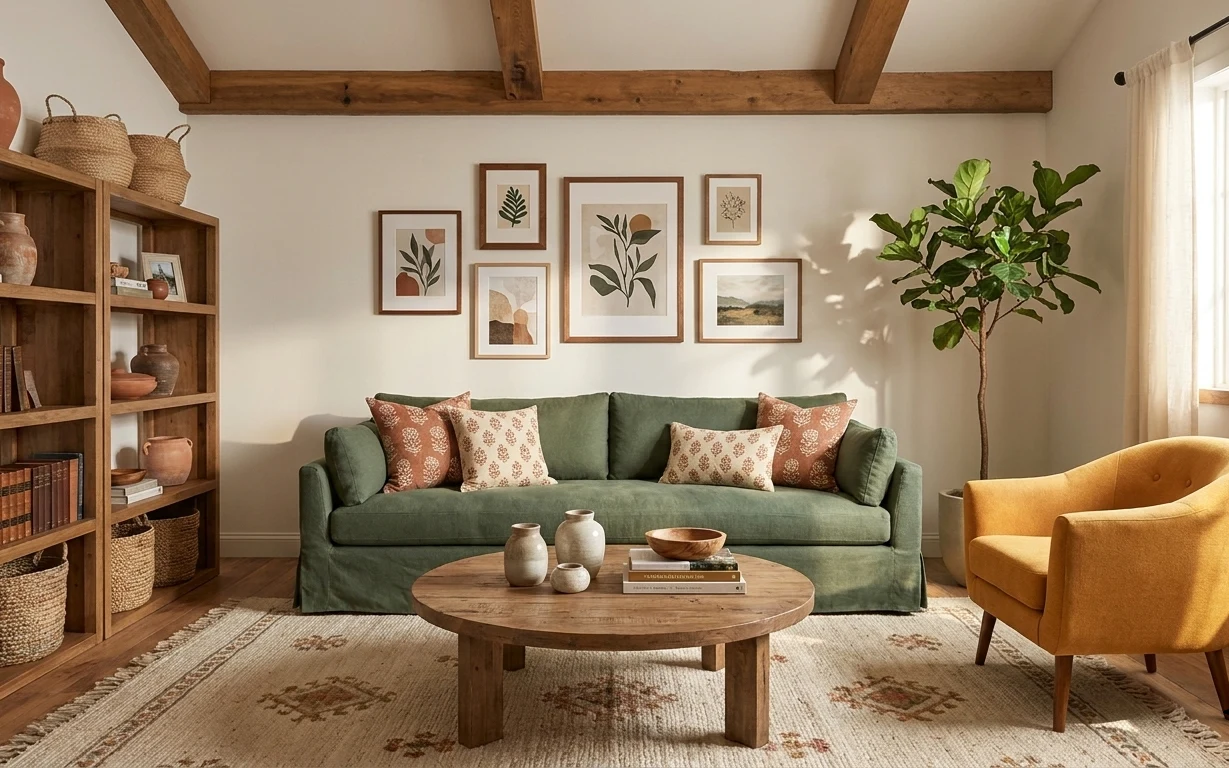
Under $700: a renter-friendly botanical living room refresh
A bright, botanical living room setup with a sage sofa, patterned rug, and framed prints—built for renters under $700. Includes a move-out-…
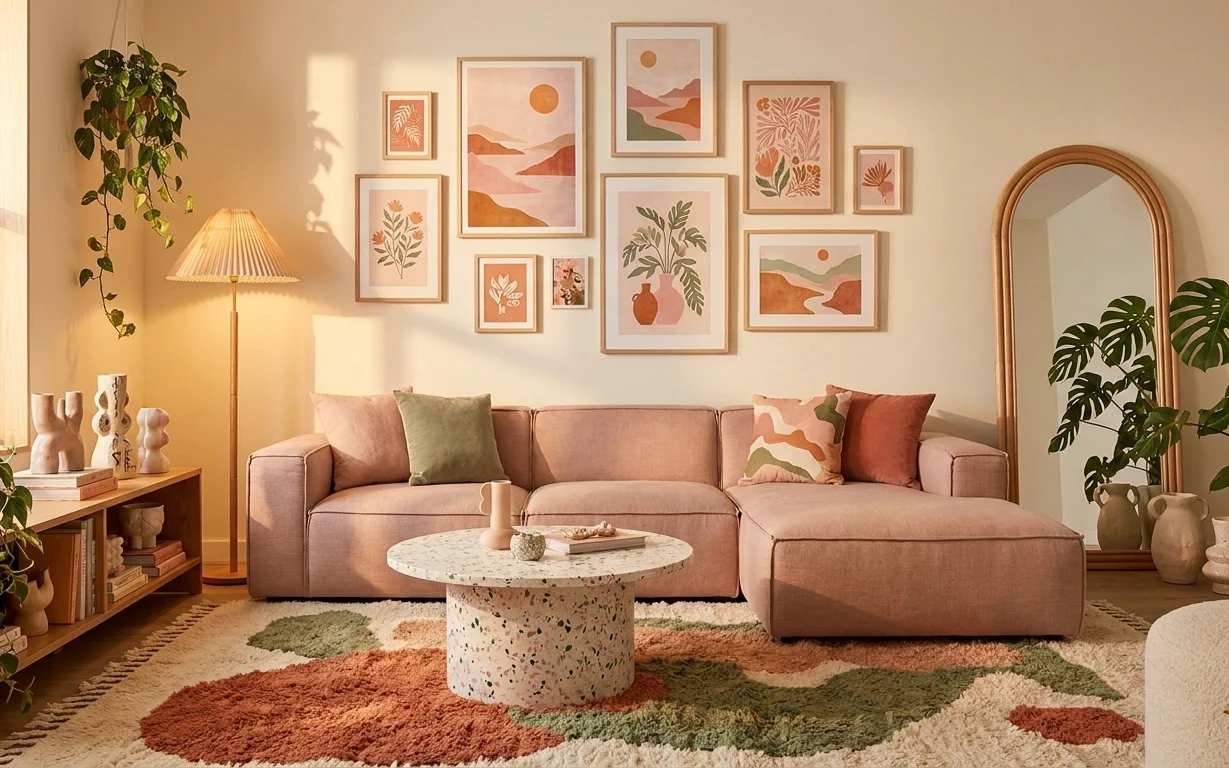
Weekend budget refresh: under $1500 for a cozy living room
A warm, earthy living room refresh under $1500 by upgrading one big thing (a multicolor rug) plus lighting, wall art, and finishes. You’ll …