- Best for
- Renters who want botanical wall art without drilling
- Cost
- About $643 total for the core look
- Difficulty
- Easy swaps + one frame DIY
- Time
- 1 weekend for shopping + styling
Why this sage-and-mustard living room is the move-friendly set of 2026
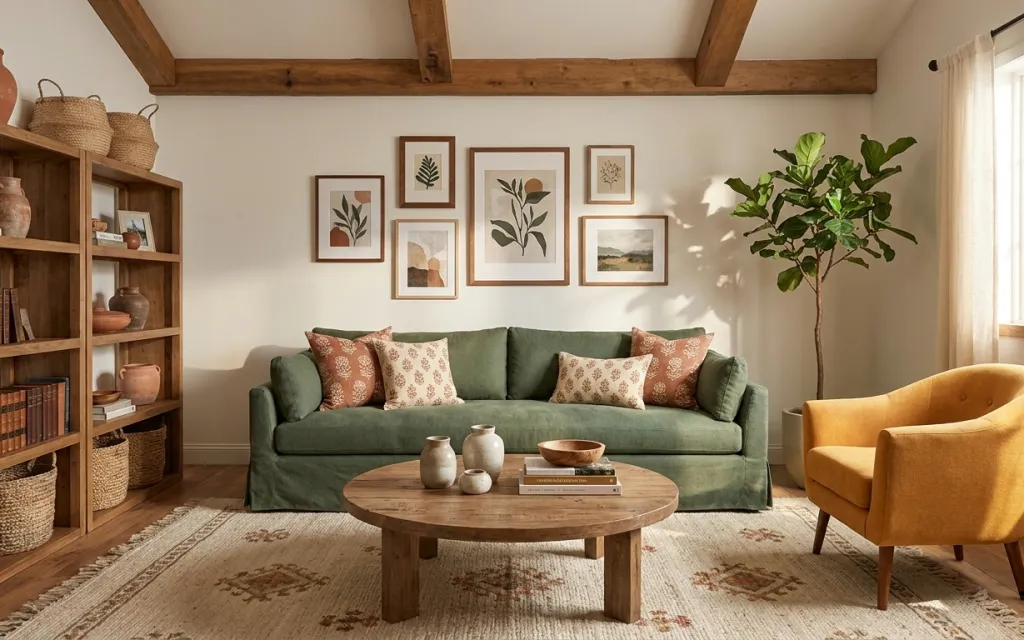
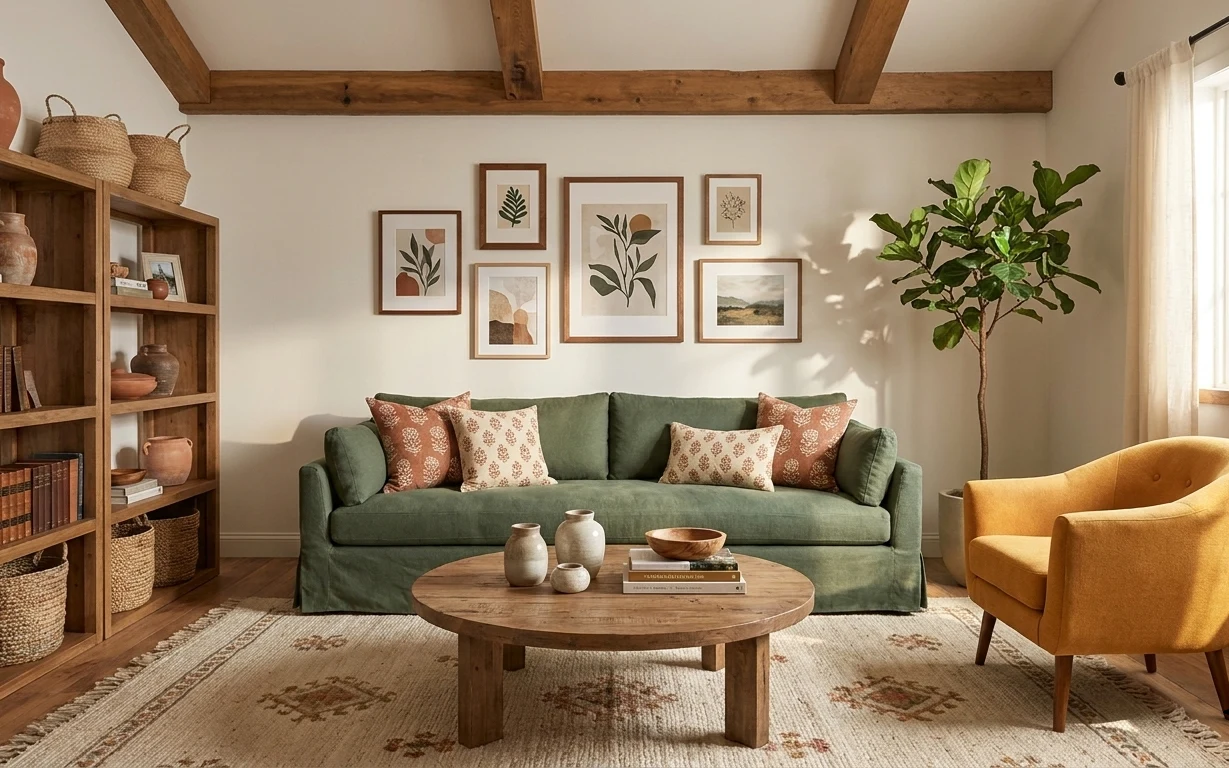
The starting point is a sage green sofa with chunky wood shapes above and a warm-toned rug underfoot. The texture mix is doing a lot of work: woven baskets on the shelves, a plush armchair in mustard upholstery, and linen-soft curtain panels by the window. Then there’s the botanical rhythm—small framed prints clustered on the wall—plus a leafy potted tree that makes the whole room feel intentional instead of “just furniture.” For renters, this is doable on a budget because the biggest visual impact comes from swappable soft goods and clip-on/command-mounted wall art.
My first instinct was to overthink the wall and try to “match” every frame size. What kept me honest was realizing the room already has strong mid-century lines (those wood beams and the rounded coffee table), so the frames needed to look collected, not perfectly identical. I also learned the hard way that one pillow pattern usually reads flat—adding a second print (and one solid) makes the sofa look styled, not accidental.
Layer 1 — Patterned area rug ($120) Grounds the seating zone
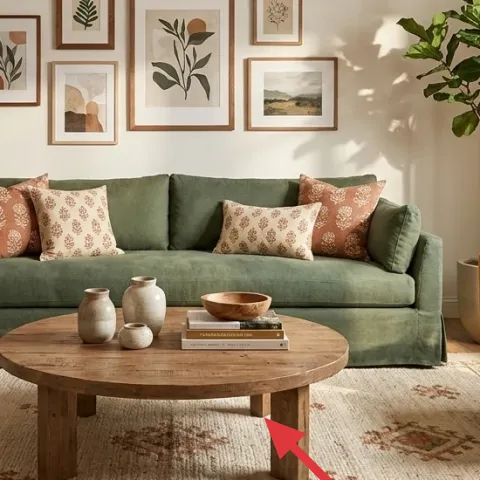
This patterned area rug sits under the sofa and coffee table, giving the room that earthy, lived-in foundation you’d normally get from something older. The key is the warm neutral base—cream plus terracotta tones—so it still works with the green sofa and mustard chair instead of fighting them. A plain rug would make the seating look floating; this one anchors the shapes and adds movement where the floor would otherwise be blank. Trade-off: it’s busier than a solid, so keep other items (like pillow backs) slightly more controlled in color.
Pick a pattern with at least one warm undertone
If your other pieces are sage or olive, look for a rug that includes terracotta or rust so the room reads cohesive—not just “green things.”
Layer 2 — Round wooden coffee table ($70) Breaks up the geometry
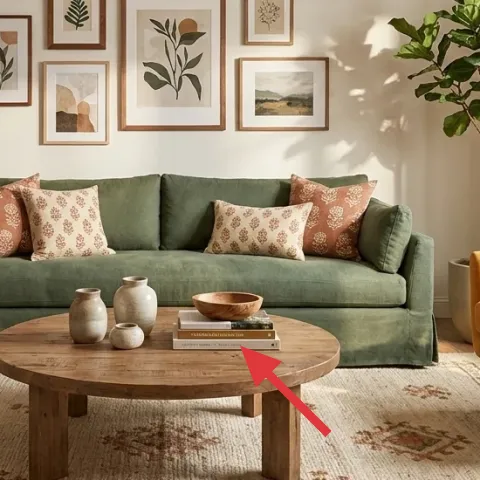
The round wooden coffee table keeps the room from feeling too boxy against straight wall lines and shelving. In the photo it’s medium warm wood with a simple top, which is exactly why it works: it doesn’t steal attention from the botanical wall, but it still ties into the ceiling beams and shelving. Choosing round is the easier alternative to hunting down a matching set of furniture—especially for renters, who often mix pieces from different eras. Trade-off: round tables can limit how far you can push chairs in, so aim for a comfortable walking gap behind the sofa and armchair.
Match undertones, not finish names
Warm oak, honey, and “medium wood” all land in the same family visually, even when the labels differ.
Layer 3 — Green fabric sofa ($250) The color anchor for the whole palette
The green fabric sofa is the anchor because it sets the room’s temperature: not blue-green, more sage and earthy. That makes it the ideal base for botanical prints—leaves and stems echo the upholstery color without looking themed. If you’re shopping within a renter budget, the obvious alternative is a neutral couch, but it would remove the room’s main “signal”—the sofa’s color is what makes the wall art and plant feel curated. Trade-off: green upholstery can show lint, so plan to keep a fabric roller handy and rotate pillows so one spot doesn’t fade faster.
Don’t choose a green that’s too gray
A cool, gray-green can make the botanicals look washed out against warm wood and mustard.
Layer 4 — Mustard upholstered armchair ($90) Adds the mid-century pop
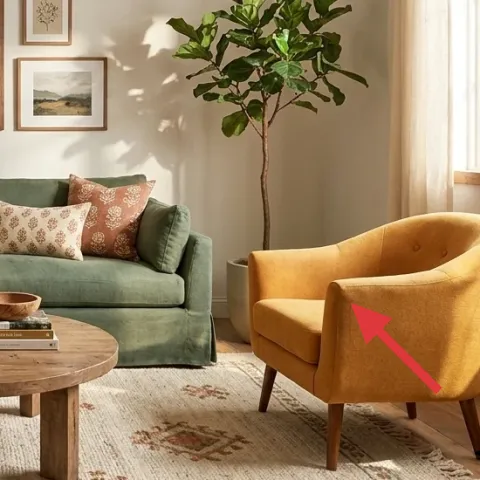
The mustard upholstered armchair on the right side is the pop color that keeps the room from going all “green plus beige.” The best part is scale: it reads like a lounge chair, not a dining chair, so it adds comfort while still feeling light next to the sofa. The upholstery gives you a softer texture than a wood-only accent chair, which matters when you already have a patterned rug and framed wall art. Trade-off: brighter upholstery can feel risky, but mustard works especially well with warm woods and botanical art because it shares the room’s earthy undertones.
Use the chair to choose your pillow colors
If you’re unsure what to buy for pillows, pull mustard and warm tan from the chair first.
Layer 5 — Framed botanical print ($60) Make the wall feel collected with one DIY
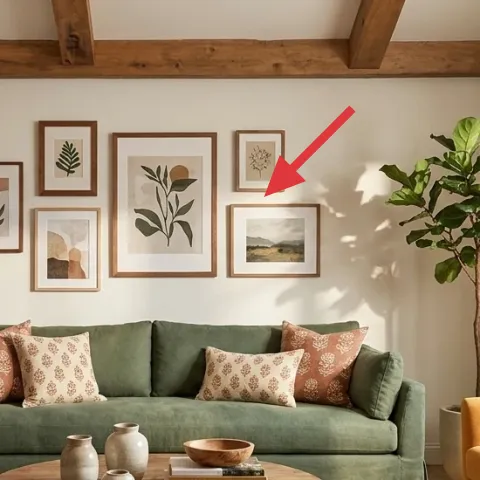
That cluster of small framed botanical prints works because each frame repeats a similar palette: warm paper tones and muted greens. Rather than trying to match every print perfectly, you want the group to look intentional, with one or two slightly varied compositions. This layer gives you a move-friendly way to add “real wall art” without drilling: one framed print is enough to start the cluster, then you can add more over time. Trade-off: sourcing botanicals can take a little browsing, but it’s cheaper than buying multiple matching prints—and it personalizes the set.
Make it instead of buying it
This pressed flower frame DIY recreates a botanical print look using dried stems and a ready-to-use frame.
Materials
- Assorted dried botanicals — small bundle — craft store — $12
- Clear acrylic sheet (frame insert) — 1 — craft store — $15
- Wood picture frame (8×10 or similar) — 1 — thrift or craft store — $20
- Archival glue dots or small glue dots — 1 set — craft store — $5
- Acid-free backing paper — 1 sheet — craft store — $3
Steps
- Press your botanicals between sheets of paper under a heavy book for at least 24 hours.
- Cut acid-free backing paper to the frame’s inner size.
- Dry-fit the stems on the backing paper until the composition sits how you like.
- Secure the stems with tiny glue dots so they don’t warp the paper.
- Place the clear acrylic insert over the arranged botanicals and close the frame.
- Wipe the acrylic lightly and set the frame aside for a few minutes before hanging.
Total DIY cost: $47 — saves about $13 over buying.
Layer 6 — Throw pillows on the sofa ($18) Adds pattern without repainting
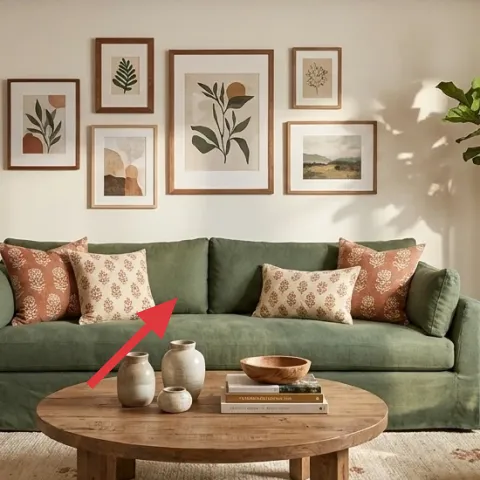
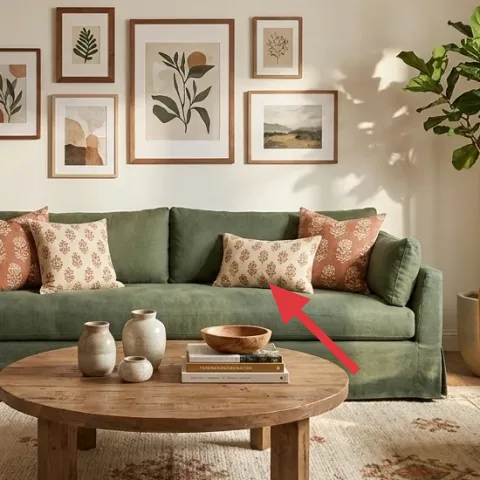
In the photo, the sofa gets depth from a mix of patterned and warm-toned throw pillows: small leaf-like shapes and geometric motifs in rust and tan. This is one of the easiest renter wins because pillow covers are entirely portable and don’t require any wall work. The reason this choice beats “buying matching pillows” is that your room already has multiple textures (rug pattern, wood shelving, botanical wall art), so mixing pillow patterns makes everything look designed instead of themed. Trade-off: you’ll want to limit the number of colors so the sofa stays cohesive with the green upholstery.
Use one solid to calm two prints
A solid pillow keeps the sofa from competing with the botanical wall cluster.
Layer 7 — Potted leafy tree plant ($35) Brings height and softness to the corner
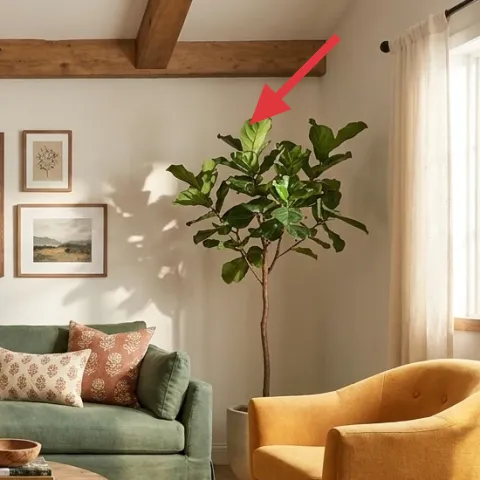
The potted leafy tree plant on the right adds vertical interest and a fresh green echo of the sofa. It also fills the visual gap between the window area and the mustard armchair, so the room doesn’t feel like a flat “two-piece set.” A cheaper alternative is smaller greenery, but it won’t create the same scale contrast next to the sofa and shelves. Trade-off: plants need light, so place it near the brightest window and rotate the pot every couple of weeks for even growth.
Choose a pot color that blends with your wood
When the pot is neutral, the leaves do the decorating—no extra visual clutter.
The cost, layer by layer
| Layer | Item | Cost |
|---|---|---|
| 1 | Patterned area rug | $120 |
| 2 | Round wooden coffee table | $70 |
| 3 | Green fabric sofa (thrifted) | $250 |
| 4 | Mustard upholstered armchair | $90 |
| 5 | Framed botanical print | $60 |
| 6 | Throw pillow covers (2-pack) | $18 |
| 7 | Potted leafy tree plant | $35 |
| Total | $643 | |
If you want a cheaper version, prioritize the rug and one framed botanical print, then scale back on the sofa and armchair by shopping thrift for shape first and buying only the best-fitting color later.
What worked, what didn't (across the whole room)
This setup works because the palette is consistent: sage upholstery, warm wood, and rust/mustard accents all reinforce each other. The botanical wall prints plus one tall plant keep it from feeling like a single-color living room, and the round coffee table softens the edges.
What worked
- The patterned rug ties the seating together and keeps the floor from feeling empty.
- The green sofa provides color depth so the framed botanicals look richer, not flatter.
- Pillows add texture and pattern variety without any landlord-facing changes.
- The mustard armchair adds a warm focal point beside the sofa for contrast.
- The round coffee table prevents the room from feeling overly angular.
- The leafy tree plant adds height and softness in the window-side corner.
What didn't
- Trying to match every framed piece exactly makes the wall feel stiff instead of collected.
- Skipping a solid pillow makes the sofa look busy against the rug’s pattern.
- A smaller plant scale can leave the corner feeling unfinished next to the armchair.
- Choosing a rug that’s too cool-toned can fight the warm wood ceiling and shelves.
- Relying on wood-only accent pieces makes the room feel heavier than it looks in the photo.
What we'd skip if we did it again
Skip buying a “perfect matching” set for the living room. Mixing a green sofa, mustard chair, and warm wood table keeps the look more interesting than repeating the same color and finish too many times.
Skip going wall-art shopping first. It’s smarter to choose the rug and sofa palette first, then buy frames and prints that match the warm undertones you already have.
Skip a tiny plant or a single stem. The corner needs height next to the armchair, so choose a potted leafy tree or a similarly tall option and place it near the brightest window.
Frequently asked
Can this work in a smaller living room?
Yes—start by keeping the rug and one main seating piece (sofa or chair) and scale down the rest. In tight spaces, the coffee table still matters, but you may want to choose a slightly smaller round diameter. For the wall, keep the botanical prints in a smaller cluster rather than spreading them across the entire span.
What if my rental doesn’t allow permanent wall hanging?
This look is built around renter-safe hanging. Use Command Strips or other removable hanging methods for the framed botanical print, and plan to pack it away at move-out. Avoid anything that requires drilling into trim or drywall. If your landlord frowns on hooks, keep to adhesive hanging that’s designed for removable use.
How long does the pressed flower frame DIY take?
Plan for about 10–20 minutes of active work, but pressing botanicals takes extra time. If you press the flowers ahead (at least 24 hours), the frame assembly itself is quick: dry-fit, secure, assemble with the acrylic insert, and let it rest briefly before hanging.
Where should I shop if I’m trying to keep the budget under $700?
For this palette, prioritize thrift or resale for the sofa and armchair shapes, then buy textiles and wall art from craft, discount home, or home décor sale sections. The rug and framed print are the highest-impact “style finishers,” so spending there is worth it. Keep plant shopping flexible—local grocery or plant shops often have smaller starter trees.
What’s the biggest mistake with a botanical living room?
Overmatching the wall art and under-layering the sofa. Botanical rooms look collected when frames vary slightly in composition and color warmth. On the seating, skip the “one pillow only” habit—two patterned covers plus one solid makes the sofa look styled instead of randomly decorated.
How do I make the room look cohesive without repainting?
Cohesion comes from repeating undertones. Pull warm accents (rust, tan, mustard) from the rug and chair into the pillow covers, and let the green sofa connect to the botanicals and plant leaves. As long as your rug and wall art share at least one warm undertone, the palette will feel intentional without changing the walls.
More in Living Room
Under $700: a renter-friendly botanical living room refresh
A bright, botanical living room setup with a sage sofa, patterned rug, and framed prints—built for renters under $700. Includes a move-out-…
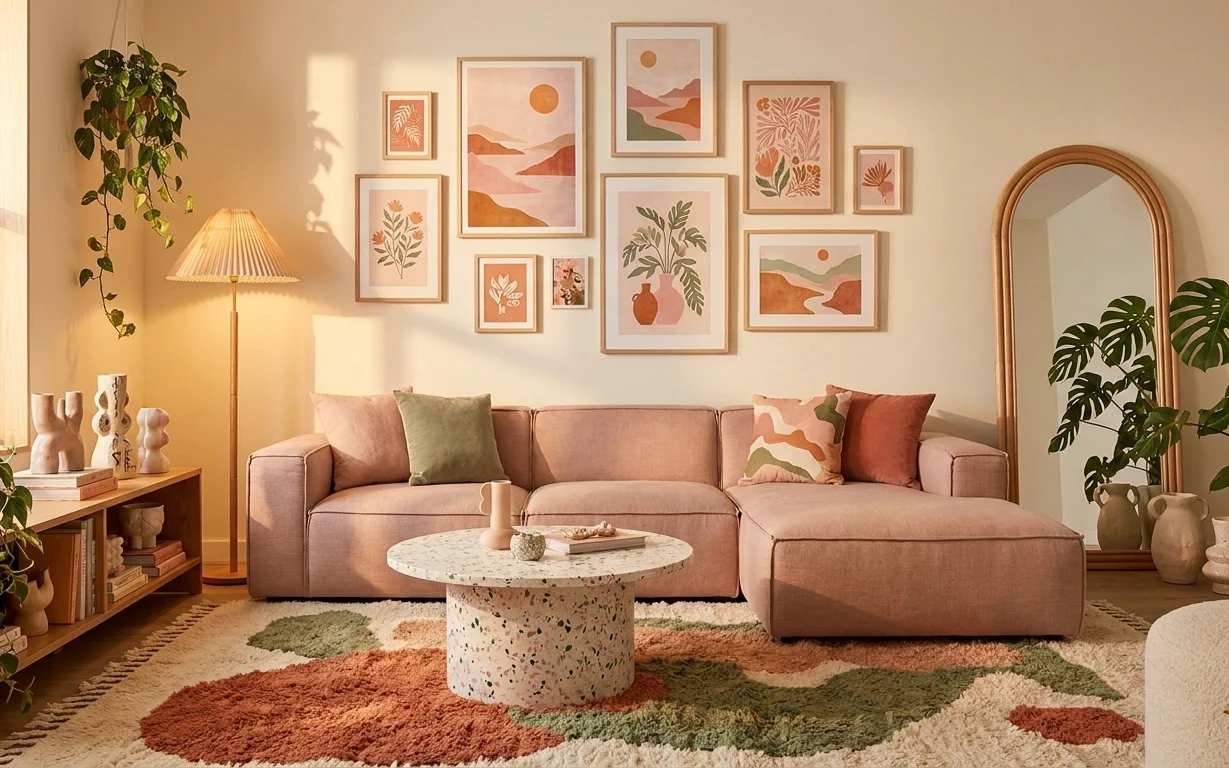
Weekend budget refresh: under $1500 for a cozy living room
A warm, earthy living room refresh under $1500 by upgrading one big thing (a multicolor rug) plus lighting, wall art, and finishes. You’ll …
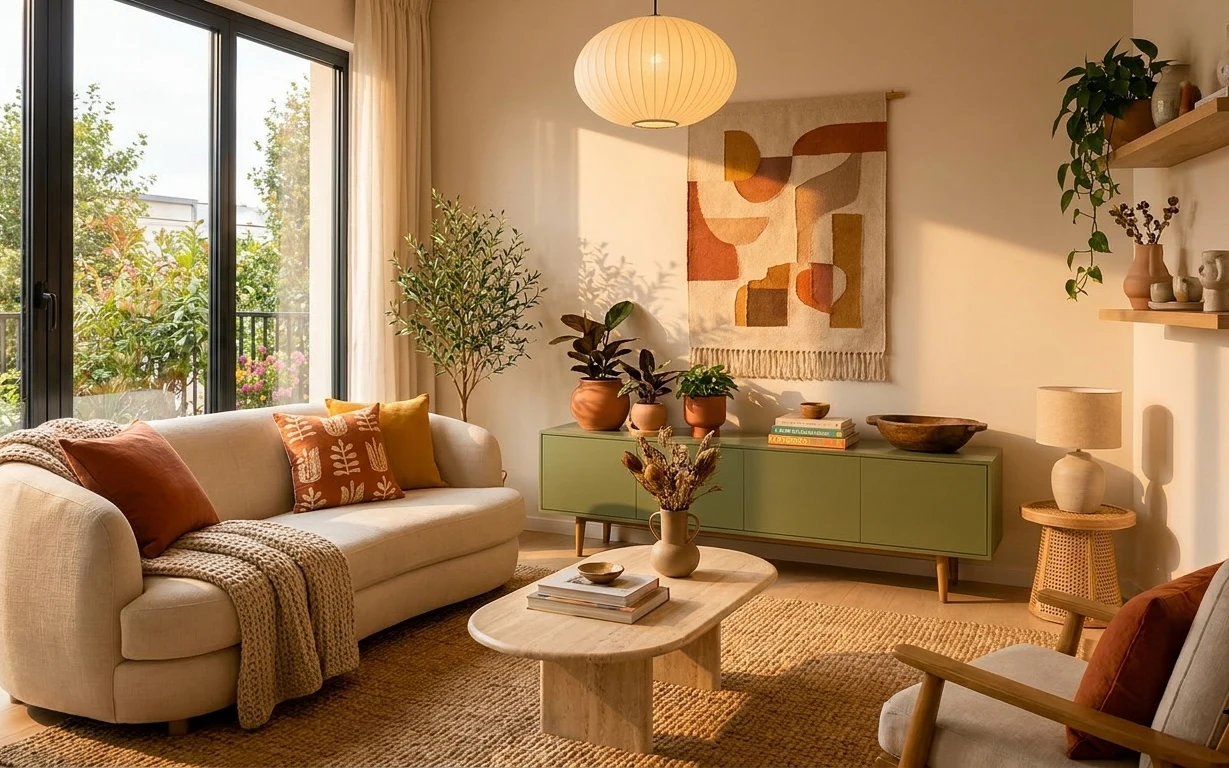
Under $800: a warm boho living room corner refresh
A warm boho living room corner refresh with a jute-style rug, layered textiles, and art. This $800 plan focuses on high-impact changes like…