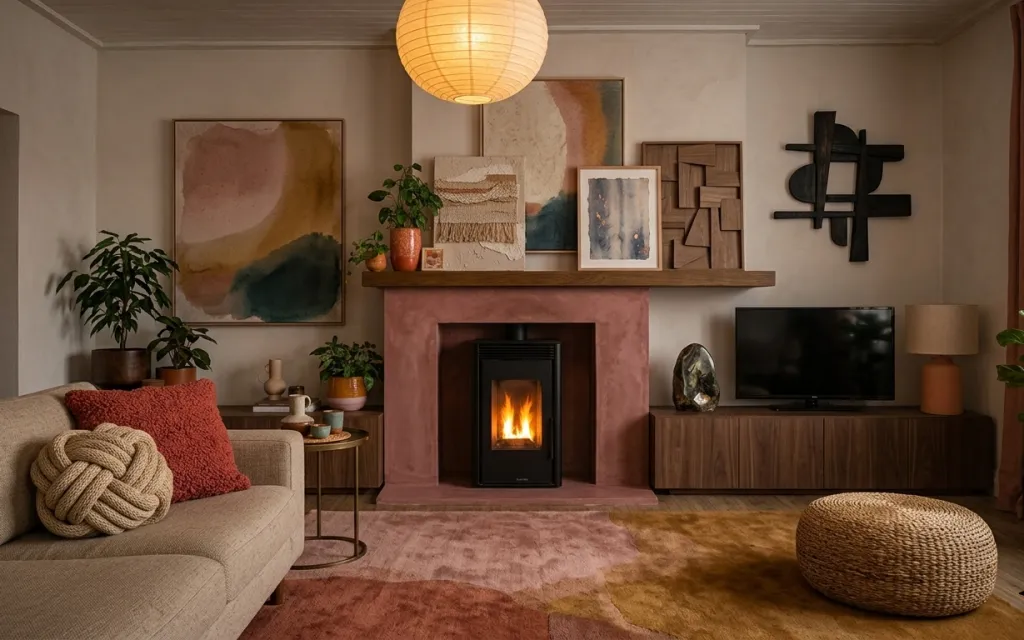
- Best for
- earthy palette + cozy evenings
- Cost
- under $600
- Difficulty
- easy (mostly textiles)
- Time
- half-day to a weekend
Why the clay-and-terracotta palette is the fireplace living room of 2026
The starting point here is the warm, clay-leaning color story: rust textiles against cream walls, with olive notes showing up in the abstract rug. The sofa’s chunky tan throw reads cozy instead of precious, while the beige drum shade keeps the light soft rather than harsh. Even the black metal fireplace insert adds contrast without going too dark. For shared housing, this setup is achievable because the big moves are all removable—swap in rug + soft goods and keep the hard parts of the building out of the equation.
I used to overthink “matching” when I’d move: I’d buy a lamp base and then chase the perfect shade, and it still never looked right. What changed was treating textiles as the real palette—one rug pattern and one warm accent color do most of the heavy lifting. That’s why this works: the color shows up in multiple textures (wooly knit, woven rug, matte ceramic), so nothing has to be exact to feel intentional.
Layer 1 — area rug with rust and olive abstract pattern ($150) Reads like a built-in art piece underfoot
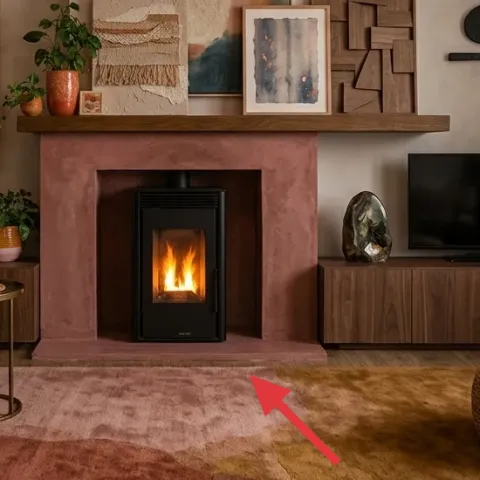
An abstract area rug in rust with olive greens turns a standard living room into one that feels curated, not staged. In the hero, the rug sits centered under the sofa and fireplace zone, so the pattern becomes the “anchor image” the rest can echo. The trade-off is simple: skip tiny, busy motifs and choose one with big color blocks so your throw pillows and curtains don’t compete. A rug like this also hides daily life—shoes, coffee drips, and the inevitable scuffs that come with shared housing moves.
Pick pattern scale you can live with
Big color fields look calmer from a distance and stay flattering in photos even when the room is crowded.
Layer 2 — rust textured throw pillow cover ($30) Makes the couch feel intentional, not accidental
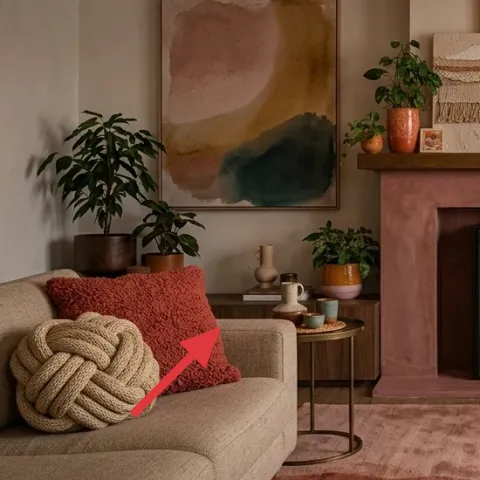
This rust pillow cover gives you a repeatable “color note” that matches the rug’s warm side without needing to repaint anything. The hero’s pillow has texture, so it catches the warm lamp light and reads richer than a flat solid. The trade-off: choosing a textured cover means it’s easier to see lint, so fabric selection matters (look for a cover that’s not too clingy). When the next lease starts, pillow covers pack down to a flat layer in a box, and the color can be dialed toward whoever’s staying longer.
Make it instead of buying it
Dyed pillow covers let a plain cream cover become the same clay-rust tone as the hero, using a thrifted base so moving stays lightweight.
Materials
- Plain cream pillow cover (cotton/linen) — 1 — thrift store — $8
- Fabric dye kit (rust/clay shade) — 1 — craft store — $8
- Table salt — 1 small box — grocery store — $2
- Rubber gloves — 1 pair — drugstore — $2
- Sponge brush — 1 — craft store — $3
Steps
- Pre-wash the pillow cover to remove any sizing or oils.
- Dissolve dye with warm water per the kit instructions in a bucket.
- Add salt as directed (it helps the dye set on fibers).
- Wearing gloves, sponge-dye in even passes until the rust tone matches the rug’s warmth.
- Let it sit covered for the time listed on the kit.
- Rinse in cool water until runoff clears, then air-dry fully.
Total DIY cost: $23 — saves about $7 over buying.
Keep the dye’s undertone in mind
Rust that leans pink can clash with olive; aim for a clay-brown undertone so it harmonizes with the rug pattern.
Layer 3 — plug-in table lamp with beige drum shade ($60) Adds warm height without touching the ceiling
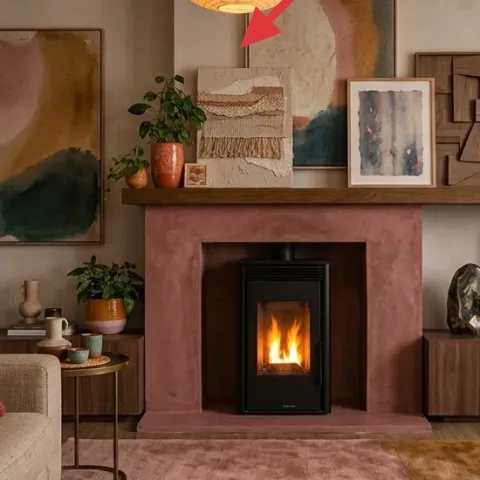
A plug-in table lamp with a beige drum shade brings warm, even light close to eye level, which makes textured surfaces (like the knit throw and woven rug) look intentional. In the hero, the lamp’s shade is a soft neutral, so the light doesn’t compete with the terracotta fireplace surround. The trade-off is that a smaller shade can cast a tighter pool, so place it on the side table near the seating edge rather than the far end of the console. Because it plugs in, it’s renter-friendly and packs down fast—shade and base go into separate boxes.
Shade color matters more than bulb wattage
A beige shade keeps the glow warm without turning the room yellow.
Layer 4 — pair of floor-length curtains in rust color ($80) Frames the right wall with soft color
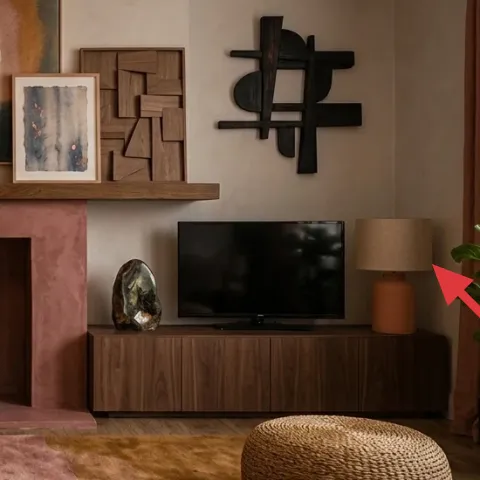
Floor-length rust curtains make a room feel finished even when the rest is mostly removable textiles. Here, they sit along the right edge and echo the rug’s warmth, which visually balances the black fireplace insert. Choose a curtain pair that reads matte rather than shiny—shimmer fabrics can look cheap under lamp light and show wrinkles more. The trade-off: longer curtains take up more space in a moving box, so fold carefully and label them with tape. Still, they’re straightforward to hang again in a new place without messing with the building’s fixed details.
Skip anything that needs wall hardware
For shared housing, prefer tension rod setups or clip-on styles that avoid drilling and paint-risk removals.
Layer 5 — large framed abstract artwork on left wall ($80) Gives the palette a “real” anchor
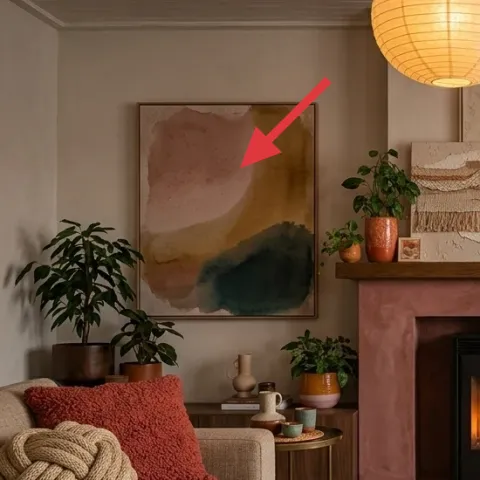
A large framed abstract print on the left wall ties the whole color story together, especially when the artwork includes muted greens and warm browns like the hero. The frame size is doing a lot of work here: it fills visual space so the room doesn’t feel empty on move-in day. The trade-off versus hanging multiple small prints is fewer visual variables—one piece means fewer chances for mismatched colors across leases. Pick a print with soft edges or watercolor-like shapes so it blends with the rug’s organic pattern rather than looking graphic and flat.
Let the rug lead, then match 1–2 colors
Use the rug’s olive and rust as the reference points when choosing artwork.
Layer 6 — light-wood media console under TV ($150) Creates a warm, moveable “stage” for objects
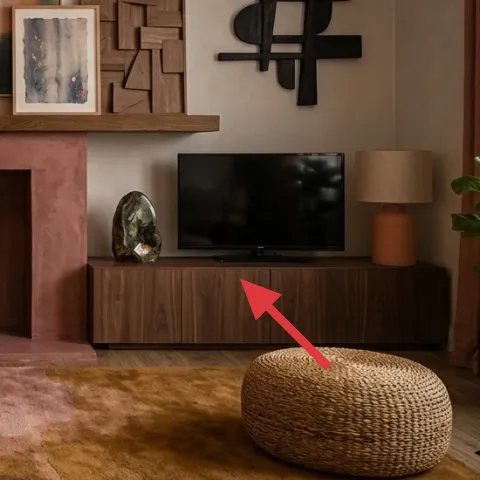
A light-wood media console under the TV adds horizontal warmth and gives the eye a calm place to land between the fireplace and the seating area. In the hero, the console’s grain reads modern and neutral, so it doesn’t fight the terracotta and olive tones. The trade-off is scale: if it’s too tall or too dark, it will make the room feel heavier in photos. A console like this is also easier to move than built-in-looking furniture—one solid unit, but still manageable with the right dolly and a friend. Styling stays flexible: swap ceramics, trays, or a lamp without changing the furniture.
Style with odd numbers of small objects
Three pieces (vessel + book + tray) looks intentional without adding clutter.
Layer 7 — large potted plant in black pot ($30) Adds life and dark contrast near the sofa
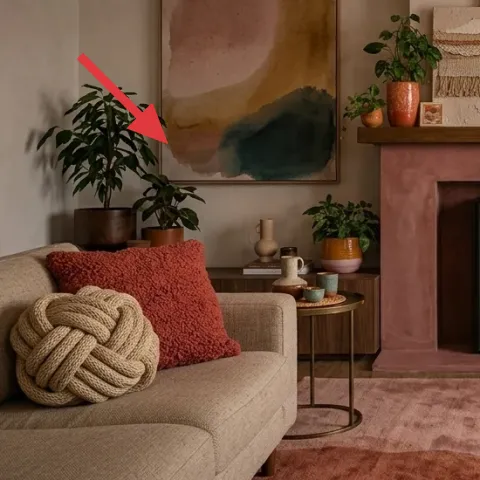
A large potted plant in a black pot brings vertical shape and a darker visual note right where the seating is, so the room doesn’t feel like just color blocks and furniture silhouettes. The hero’s plant also carries the olive tone through living texture—leaves read as a color swatch that changes across the day. The trade-off is that plants require a bit of routine; if they’re hard to keep alive, they’ll look tired fast. In shared housing, though, this is one of the easiest decor pieces to pack because the pot stays intact. Lift, wrap, and move.
Choose a plant that tolerates your light
If the room gets indirect light, opt for hardy greens that don’t demand constant sun.
The cost, layer by layer
| Layer | Item | Cost |
|---|---|---|
| 1 | Area rug (5×7) with rust and olive abstract pattern | $150 |
| 2 | Rust textured throw pillow cover (DIY-equivalent) | $30 |
| 3 | Plug-in table lamp with beige drum shade | $60 |
| 4 | Curtain panel pair (floor-length), rust color | $80 |
| 5 | Large framed abstract artwork, warm clay-and-olive tones | $80 |
| 6 | Light-wood media console under TV | $150 |
| 7 | Large potted plant in black pot (4–6 ft) | $30 |
| Total | $580 | |
Cheaper variant: swap the framed abstract artwork for a smaller print set and choose a solid-color pillow cover dyed closer to rust; keep the same rug and curtains to preserve the overall warm palette.
What worked, what didn't (across the whole room)
The best part of this look is that the palette repeats across materials—rug pattern, rust textiles, and warm lamp light—so the room reads cohesive without needing exact matches. The second win is mobility: every major visual element here is either soft goods or freestanding furniture that packs for a move.
What worked
- The rust-and-olive rug anchors the seating and makes the fireplace area feel intentional.
- Textured pillow styling adds depth even when the room is otherwise neutral.
- A beige-shaded plug-in lamp keeps warmth consistent after dark.
- Rust curtains add vertical softness and frame the room’s edge without extra decor.
- A large framed print prevents the wall from feeling empty next to the fireplace.
- A light-wood console creates a warm horizontal line between TV and seating.
What didn't
- If curtains are too sheer, the rust color disappears and the look flattens.
- A highly glossy lamp shade can make warm lighting look yellow-green instead of clay-toned.
- If the plant is too small for the corner, the left side feels top-heavy.
- Too many small framed pieces would compete with the rug’s abstract color blocks.
- Dark media consoles can crowd the fireplace zone and make the room feel heavier.
What we'd skip if we did it again
Skip the matching “set” approach (like buying furniture in the same wood and shade) and instead pick one palette anchor: the rug. When the rug carries the rust and olive notes, everything else can be slightly different and still look cohesive in a move-friendly way.
Skip a lamp with a patterned shade. The hero’s beige drum shape works because it doesn’t add another visual pattern on top of the rug and artwork.
Skip tiny wall art next to the fireplace. A single large framed abstract print reads balanced against the mantel height and keeps the room from feeling visually incomplete.
Frequently asked
How long does a refresh like this usually take in shared housing?
Most of the time goes to the biggest items you’re bringing in: the rug and the curtains. If the plug-in lamp is already at-hand, the lamp swap is quick. Expect about 2–3 hours for the textiles (rug, pillow covers, curtains) and another 30–60 minutes for placing the plant and arranging the small items around the TV console and side table.
Is this renter-friendly if the place won’t allow wall changes?
Yes—the high-impact choices are all freestanding or textile-based. The framed artwork can be handled with low-risk hanging options that don’t require drilling, and the curtains can be done with tension-rod or clip-friendly setups. The rest of the look relies on the rug, pillow color, and plug-in lighting, which move to the next lease easily.
What if my room is smaller or the walls feel tight?
Keep the rug pattern but scale down the rug size if needed, then make the wall print a little smaller too. Curtains can still work: choose a slightly shorter panel length while keeping the rust tone. For the pillow refresh, stick with one main rust cover and one neutral knit throw so the room doesn’t get visually crowded.
What if the lighting in my room is cooler than the photo?
Switch the lamp bulb to a warm color temperature and keep the shade a matte beige. If the room reads bluish, avoid cool-toned rust (more red-orange) and aim for clay-brown rust in the pillow cover and curtains. The rug can do most of the correction if it already includes warm browns.
Where should shopping start to get the palette right quickly?
Start with the rug’s rust-and-olive combination, then choose the curtain color and the pillow tone to match that undertone. After that, pick one large framed abstract print that includes at least one warm element and one muted green. Buying in that order prevents the common mistake of picking a pillow rust that doesn’t actually harmonize with the rug.
What’s the biggest mistake people make with earthy living room palettes?
Over-adding unrelated patterns. When the rug already has abstract shapes, it’s better to keep other elements mostly solid or gently textured: beige shade, rust curtains, and one textured pillow. If the wall art is also too busy, the room starts to feel noisy instead of calm—even if every single item looks nice on its own.
More in Living Room
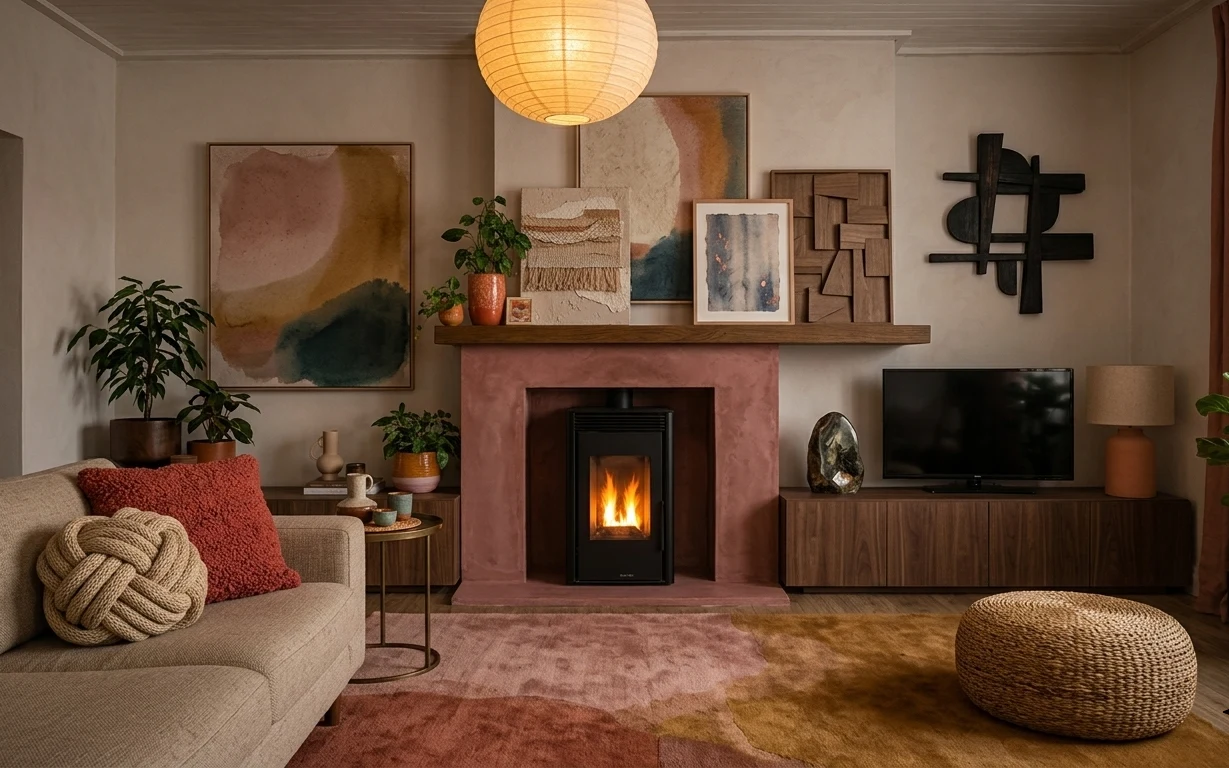
Under $600: warm clay-and-olive fireplace living room refresh
A warm clay-and-olive fireplace living room refresh with 7 move-friendly swaps, all packable for shared housing. The total lands under $600…
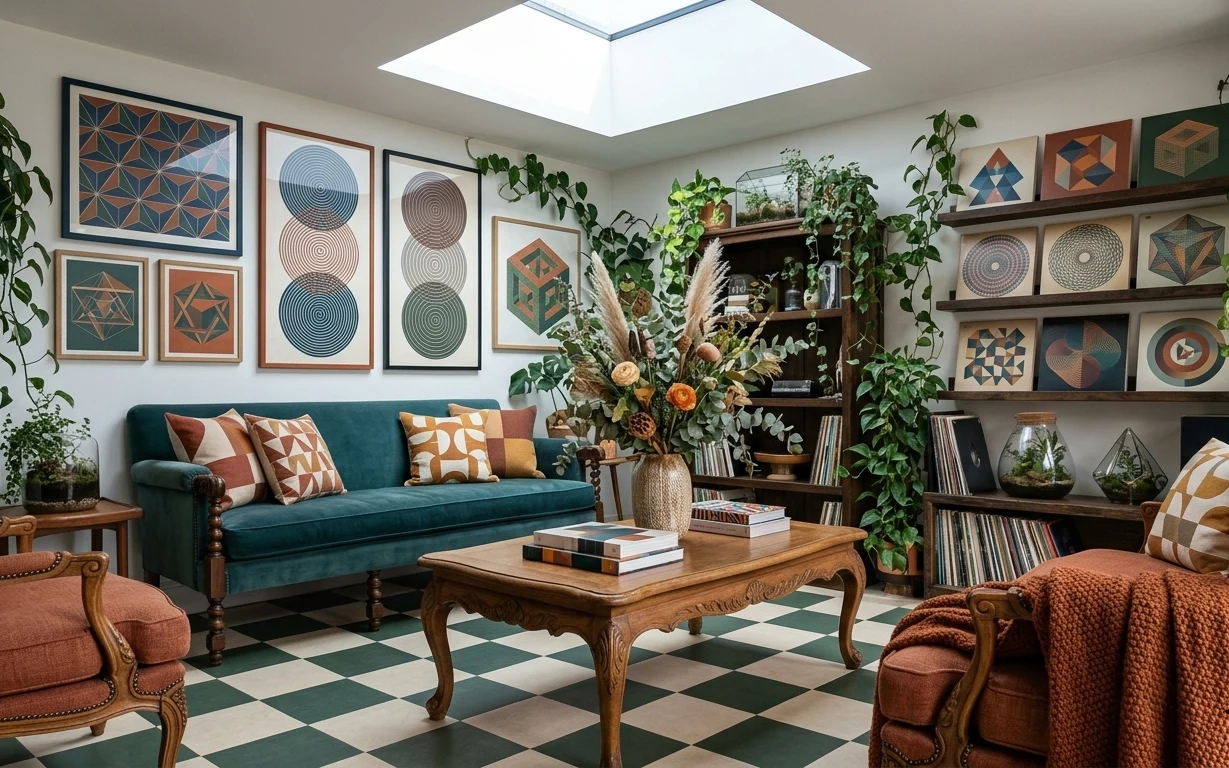
Under $400: teal-and-rust renter living room refresh with 7 layers
A bright, boho-leaning living room gets a coordinated look without drilling or permission. This renter-friendly refresh uses 7 swaps (inclu…
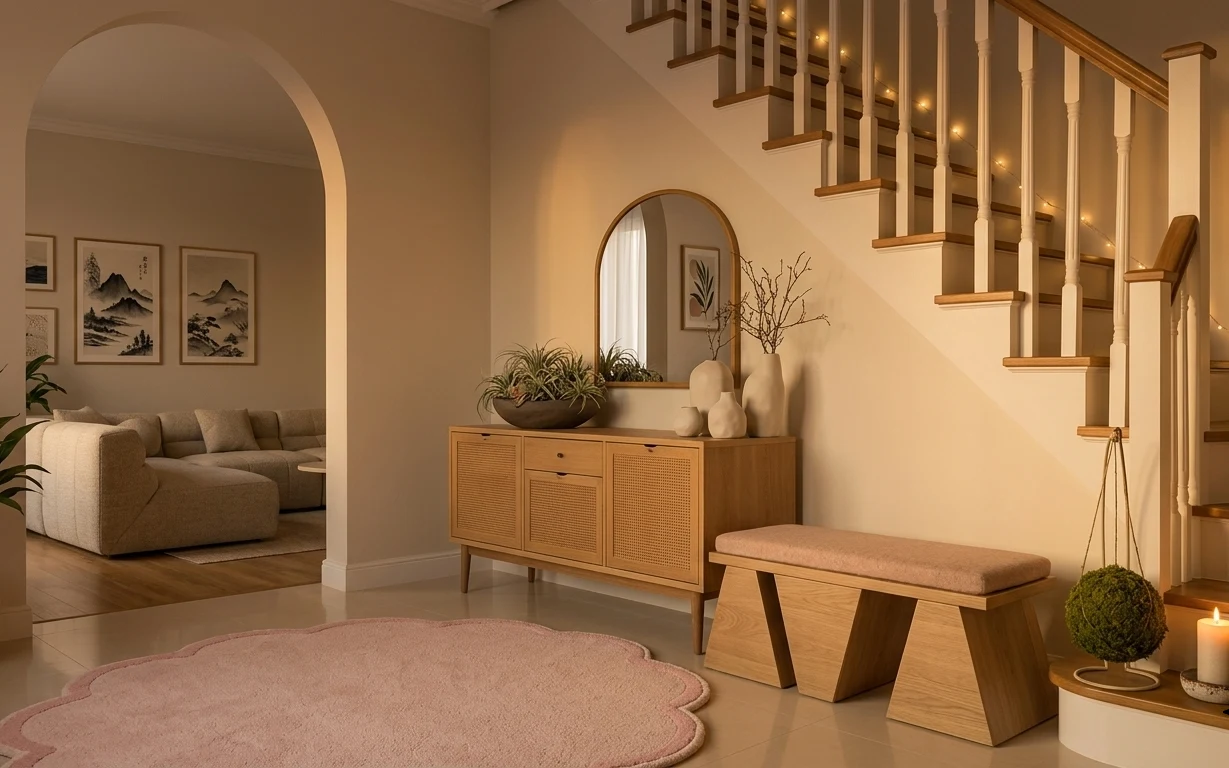
Under $600: 7 move-ready living room swaps with string lights
A move-friendly living room refresh under $600 using the pink round rug, a wood sideboard, and warm string lights. This plan focuses on ren…