- Best for
- a warm boho living room refresh
- Cost
- about $690 total
- Difficulty
- Weekend-friendly, mostly swaps + one paint DIY
- Time
- 4–8 hours to start feeling “done”
Why terracotta-and-cream textiles are the living room sofa corner of 2026
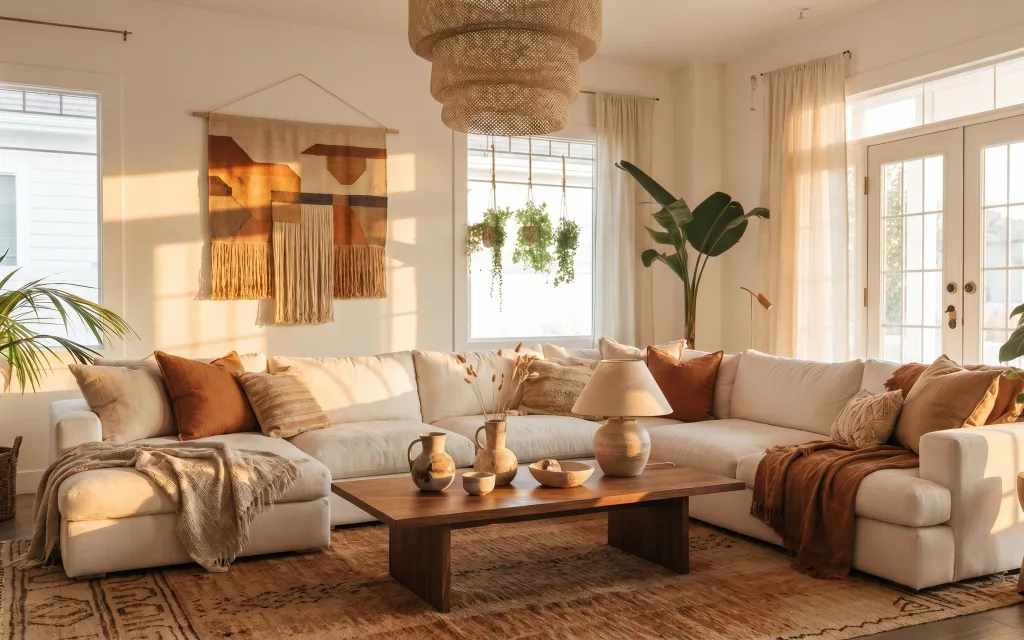
Sunlight is doing a lot of work here—so the safest way to get this look is to lean into warm neutrals and repeat natural textures. The cream sofa cushions and the rust-leaning pillows give you that color “echo,” while the throw blanket adds a softer, slightly wrinkled layer. On the floor, the patterned rug keeps everything from looking too precious, and the curtains soften the daylight at the windows. Finally, the woven wall tapestry with fringe gives the wall a focal point without needing a full gallery wall.
I made the mistake once of buying one “statement” item and then treating the rest like supporting cast. Here, the winning move is repetition: terracotta shows up in pillows, textiles, and small ceramics, and the textures—woven, linen-like, and matte clay—stay consistent. When you repeat materials instead of just colors, the room reads finished even if the layout is staying put.
Layer 1 — throw pillow covers ($30) Tagline
Switching to warm-toned throw pillow covers is the fastest way to make a cream sofa feel like the same design story. In this photo, you can see the pillows mixing creams with terracotta and small pattern-like textures, which is why the sofa doesn’t look flat against the light walls. The trade-off with pillows is that they’re “small,” so the trick is choosing a cohesive set and styling them thoughtfully: start with two solids, then add one with texture. Skip random colors that don’t repeat elsewhere—you want the pillows to match the terracotta you’ll see in ceramics and textiles later.
Layering for depth
Use a 2–1 formula: two cream/neutral covers for calm, then one terracotta or textured cover to anchor the palette.
Layer 2 — throw blanket ($60) Tagline
A throw blanket draped over the sofa arm is the texture layer that makes the whole corner look lived-in. Here it’s in a warm neutral that picks up the same undertone as the pillows, and the visible weight (it folds instead of hanging rigidly) is what creates that casual, “ready to curl up” look. A lighter, thin blanket can read too crisp in daylight; heavier weave or linen-like fabric looks warmer and more dimensional. I prefer placing it slightly low on the seat edge, not at the very top of the back—too high and it can look like a decorative afterthought.
Why fabric weight matters
In bright rooms, thin throws catch the light and can feel stiff; a heavier weave shows softer shadows.
Layer 3 — area rug ($200) Tagline
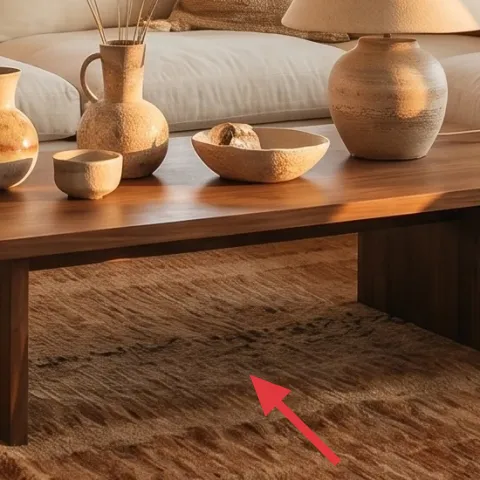
The rug is what turns separate furniture pieces into one “zone.” This one has a warm, earth-brown pattern that visually connects the coffee table wood and the terracotta pillows, plus it gives you a little motion underfoot instead of a plain solid. The trade-off is size: the biggest mistake is buying a rug that’s too small, which makes the sofa look like it’s floating. Aim for a rug that reaches under the front legs of the sofa so the room reads grounded. If you can, add a rug pad too—comfort improves and it stays put on hardwood.
Get the zone right
Choose a 5×7 (or larger if your layout allows) so at least the front sofa legs sit on the rug.
Layer 4 — curtains ($80) Tagline
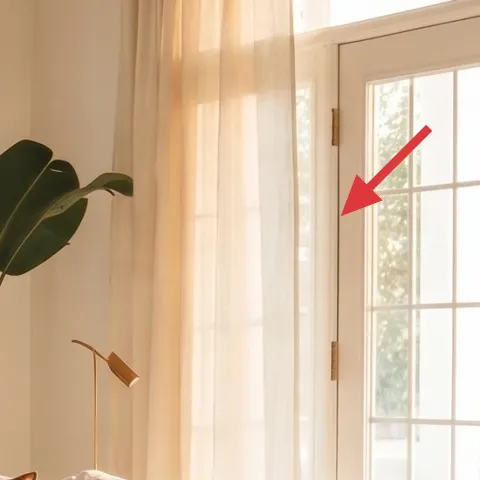
Curtains are the quiet fix that makes the daylight feel intentional instead of harsh. In the photo, the curtains look airy and light in color, letting sunlight glow while still softening the window frame. If you buy thicker blackout curtains, the room can end up feeling heavier than it looks here—this look depends on a sheer-to-lightweight feel. The placement also matters: hang them so they hit above the window line and extend beyond the sides, which visually widens the space. Keep the color in the same cream family as the sofa so everything stays cohesive.
Don’t short them
If curtains stop at the top trim, you lose the vertical lift that makes rooms feel brighter.
Layer 5 — table lamp with beige shade ($60) Tagline
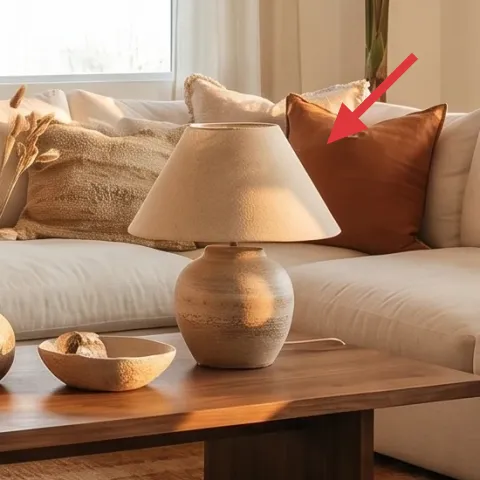
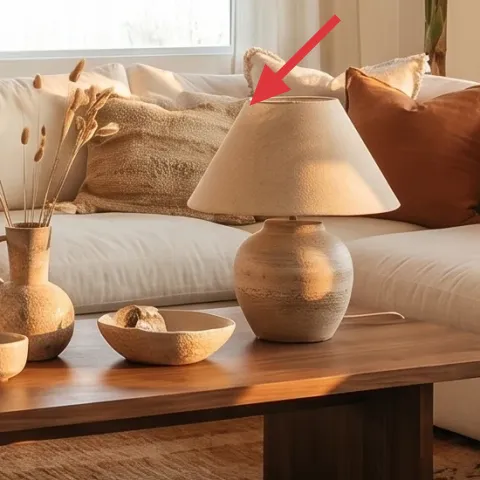
That beige-shaded table lamp adds warm, directional light that the room needs after sunset. Daylight makes a palette like this look effortless, but at night you need a local “pool” of light near the sofa to keep the corner from turning flat. I’d choose a shade in a light natural fabric (like linen-look) because it diffuses rather than reflecting the room back at you. The trade-off is bulb choice: cool bulbs make terracotta look dull, so stick with a warm temperature and keep the lamp positioned so the light falls toward the seating area, not into the window.
Match the warmth
A warm bulb keeps the terracotta pillows from shifting toward red-orange under evening light.
Layer 6 — woven wall tapestry with fringe ($80) Tagline
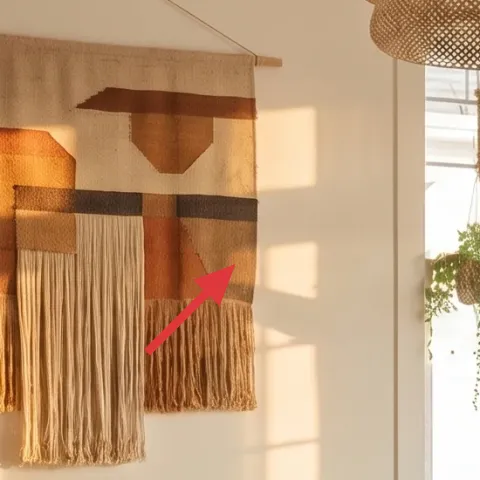
The woven wall tapestry with fringe is the focal point that stops this corner from feeling like “just soft furniture.” It brings in that tactile, boho texture—fibers, a woven structure, and fringe movement—so the wall doesn’t feel blank even with plenty of natural light. The trade-off is scale and placement: too small reads like decor; too high or too low looks accidental. Hang it centered on the wall space above the sofa, and let the fringe hang evenly so it doesn’t crowd the sightline. If you’re choosing your own, pick colors that echo your pillows (cream and rust/terracotta) so the room feels collected, not random.
Use the wall as a color “mirror”
Pick tapestry tones that repeat in the throw blanket or pillows—exact hue isn’t required, undertone is.
Layer 7 — wood coffee table ($180) Tagline
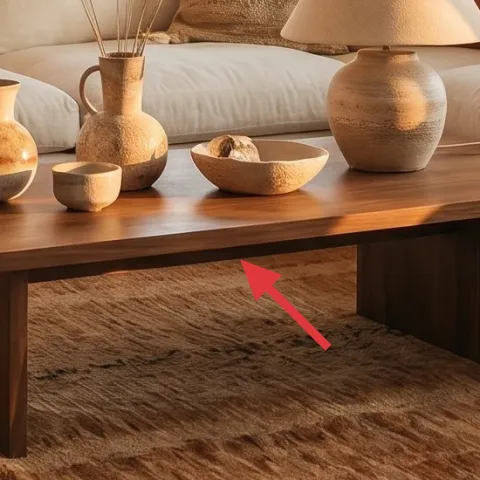
That wood coffee table anchors the whole palette because it’s the bridge between warm textiles and earthy decor. Here, the table top reads medium-to-warm brown, which plays nicely with the terracotta accessories and the rug’s earth tones. If your existing table is a cooler oak or too light, it can make the pillows look pink instead of terracotta. A quick paint refresh lets you keep the same size and shape while changing the undertone—so you get a cohesive room without buying a whole new table. Keep the finish matte or satin so it still looks natural in daylight.
Make it instead of buying it
Paint the existing wood coffee table with a warm espresso tint so the undertone matches the terracotta pillows and rug.
Materials
- Stain-blocking primer/wood primer — 1 quart — store brand — $22
- Warm espresso paint (interior acrylic/alkyd) — 1 quart — home center — $10
- Sandpaper (120 + 220 grit) — assorted sheets — hardware store — $12
- Tack cloth + clean rag pack — 1 set — hardware store — $8
- Foam mini roller + angled brush — 1 set — hardware store — $6
Steps
- Clean the table thoroughly with a degreasing cleaner and dry completely.
- Lightly scuff-sand the top and edges with 120-grit to remove gloss.
- Wipe with tack cloth until no dust remains.
- Apply a thin coat of wood primer; let it dry per the can label.
- Sand smooth with 220-grit, then wipe again with tack cloth.
- Roll and brush the espresso paint in thin coats, keeping edges crisp.
- Let the first coat dry, then lightly scuff if the surface feels rough.
- Add a second coat and allow it to cure fully before putting items back.
Total DIY cost: $58 — saves about $122 over buying.
Finish choice
Matte or satin keeps the wood looking warm and natural instead of plasticky in sun.
The cost, layer by layer
| Layer | Item | Cost |
|---|---|---|
| 1 | Throw pillow covers (warm terracotta + cream) | $30 |
| 2 | Throw blanket (warm neutral, heavier weave) | $60 |
| 3 | Area rug 5×7 (earth-brown pattern) | $200 |
| 4 | Curtain panel pair (84") (cream lightweight) | $80 |
| 5 | Plug-in table lamp with beige shade | $60 |
| 6 | Woven wall tapestry with fringe (tapestry-style art) | $80 |
| 7 | Coffee table (wood, warm brown finish) | $180 |
| Total | $690 | |
If you want it cheaper, swap the rug for a simpler flatweave in a similar earth tone ($80–$120), and choose curtain panels on sale. Keep the tapestry and lamp—those two anchor the look even when everything else is budget-friendly.
What worked, what didn't (across the whole room)
This corner reads cohesive because the materials repeat: cream textiles, terracotta accents, and woven/ceramic textures. The lighting also matters—warm lamp light keeps the palette from going flat after dark. The only things that needed careful tweaking were scale (rug and tapestry) and texture weight (blanket and curtains).
What worked
- The cream sofa with terracotta pillows looks intentional because the color repeats in ceramics and textiles.
- The patterned rug grounds the sofa, so the space feels zoned instead of like separate pieces.
- Airy curtains soften the window light and keep the room feeling bright rather than heavy.
- The woven wall tapestry adds texture without needing multiple framed prints.
- The beige-shade lamp gives a warm pool of light that flatters the terracotta hues at night.
- Matte-looking wood tones on the coffee table keep the whole palette cohesive in daylight.
What didn't
- A too-small rug made the sofa feel like it was floating, even with great pillows.
- Using a thin throw blanket read crisp instead of cozy, so the texture didn’t soften the corner.
- Choosing cool-toned bulbs once made terracotta look muted and slightly pink under lamp light.
- Hanging curtains too low reduced the vertical lift, making the windows feel narrower.
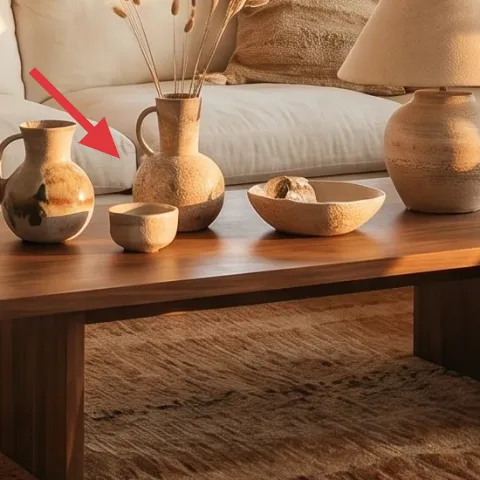
- Overloading the coffee table with mismatched ceramics made the center look cluttered instead of curated.
What we'd skip if we did it again
Skip buying a “matchy-matchy” sofa set of furniture pieces. The room works because the sofa stays the calm base, while textiles, wall art, and ceramics carry the warmth. If the whole palette comes from furniture alone, it can start to feel flat and expensive-looking without much personality.
Skip a rug in a high-contrast black-and-white pattern. Earth tones and warm browns are doing the heavy lifting here, and an overly graphic rug tends to fight the woven tapestry’s texture. If a patterned rug is non-negotiable, keep the contrast moderate so sunlight can still do its thing.
Skip short curtains or heavy drapes that block too much light. This look depends on soft daylight and gentle shadows; when you go too dark or too short, the cream sofa starts to look dull. Choose cream curtains that skim the window light and hang them to extend upward for height.
Frequently asked
How long does a refresh like this take?
Most of the changes are swaps: pillow covers, a throw blanket, curtains, and a lamp can be done in a couple of hours. The rug and tapestry installation take the most planning for placement. The DIY coffee table paint is the time sink because of dry and cure time—plan for a one-day paint window plus a second day for careful handling.
If I rent, what parts should I prioritize?
Prioritize curtains (hung with a proper rod), throw textiles, and lamps—those don’t require changing the building. For the wall tapestry, use a picture rail hook if available or a screw-and-anchor install only if your lease allows. Avoid painting permanent surfaces in a rental unless you’re confident about prep and removal.
What if my living room is smaller than this one?
Go smaller on the rug only if you can still fit the front legs of the sofa on it. Keep the tapestry scale proportional so it doesn’t feel like it’s taking over the wall. Use fewer pillows (two to three main covers) and lean on one strong texture like the throw blanket to carry the cozy factor.
What if my room has darker floors or less natural light?
Choose slightly lighter curtains and consider a warmer, more diffused lamp bulb temperature so terracotta stays flattering. Pick a rug with lighter base tones rather than very dark browns. On the coffee table, stick with matte finishes—gloss can reflect overhead light and make the space feel harsher.
Where should I shop for the most similar materials and textures?
For woven pieces, look for tapestry-style wall art in home decor shops and marketplaces, focusing on fringe and fiber texture. Curtains and lamps are easy to match by fabric weight (lightweight, linen-look) and shade color (natural beige). Rugs are the biggest wildcard—shop by pattern undertone first, then scale.
Biggest mistake people make with this kind of warm, boho palette?
Overbuying random accents that share only one color. This look works when materials repeat: linen-like textiles, woven wall texture, and matte ceramics. If you change three different things at once without repeating the texture family, the room can look like separate purchases instead of one cohesive corner.
More in Living Room
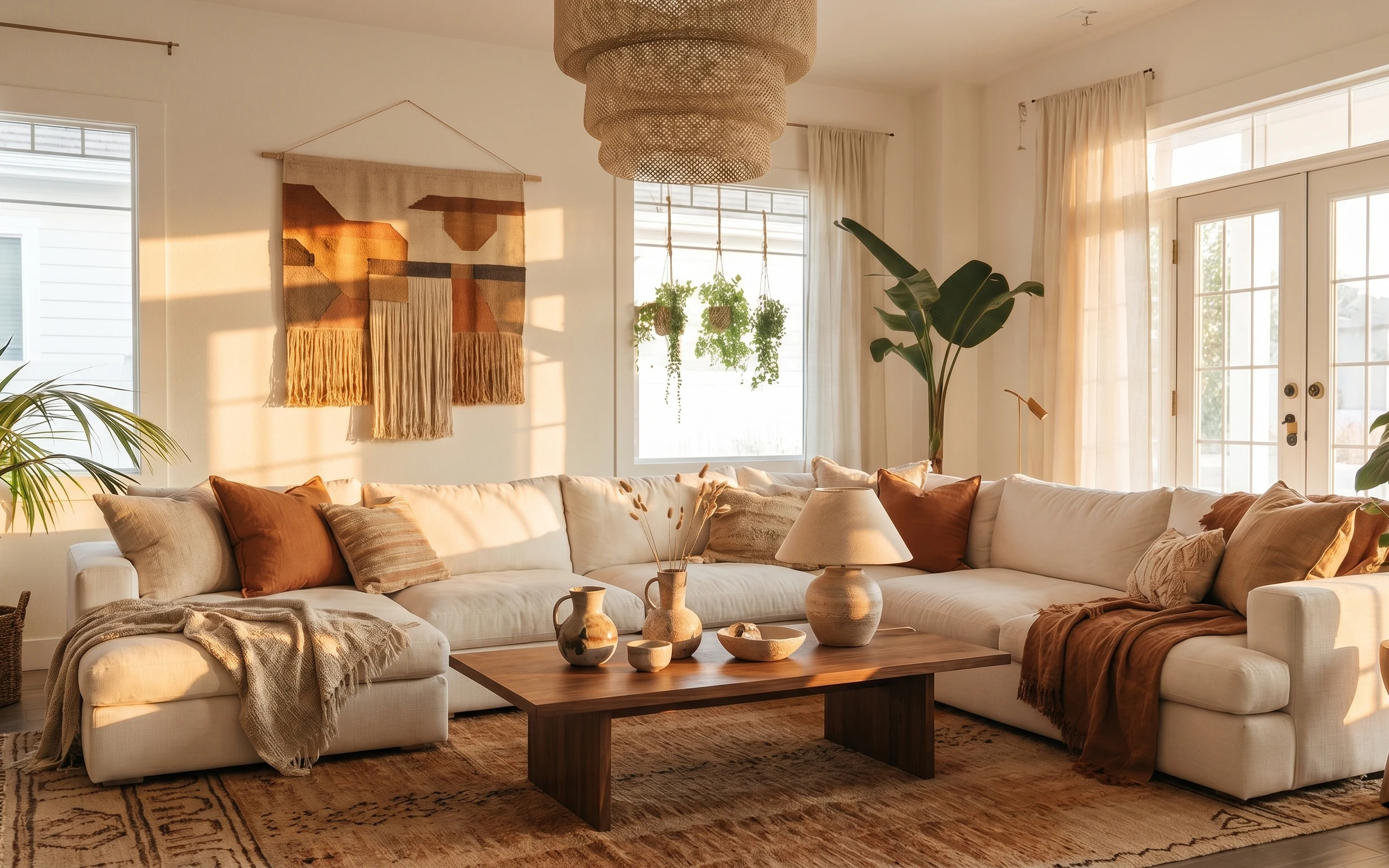
Under $700: earthy living room sofa corner refresh with 7 layers
A warm, boho living room sofa corner starts with cream-and-terracotta textiles, then gets anchored by a rug, curtains, and one statement wa…
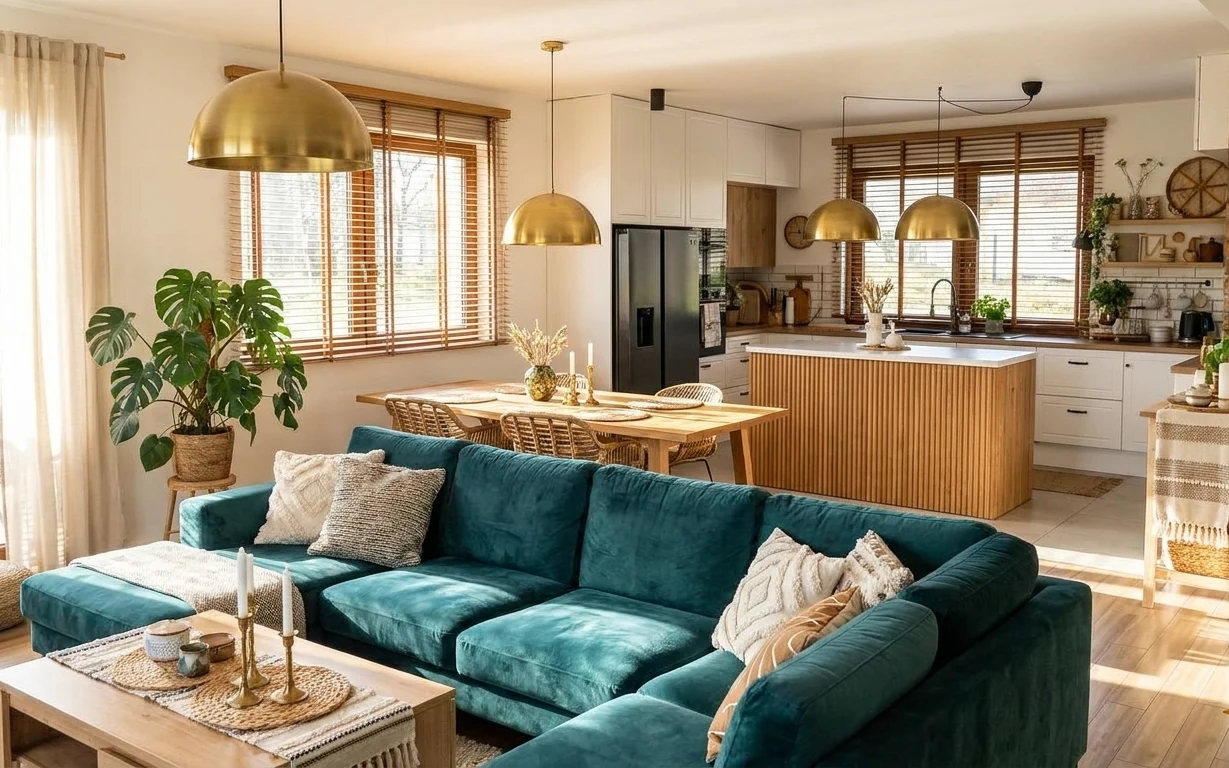
Under $800: weekend refresh for a teal sofa living room
A teal-sofa living room with brass pendants, sheer curtains, and a beige rug can feel polished fast. This weekend plan uses 7 visible swaps…
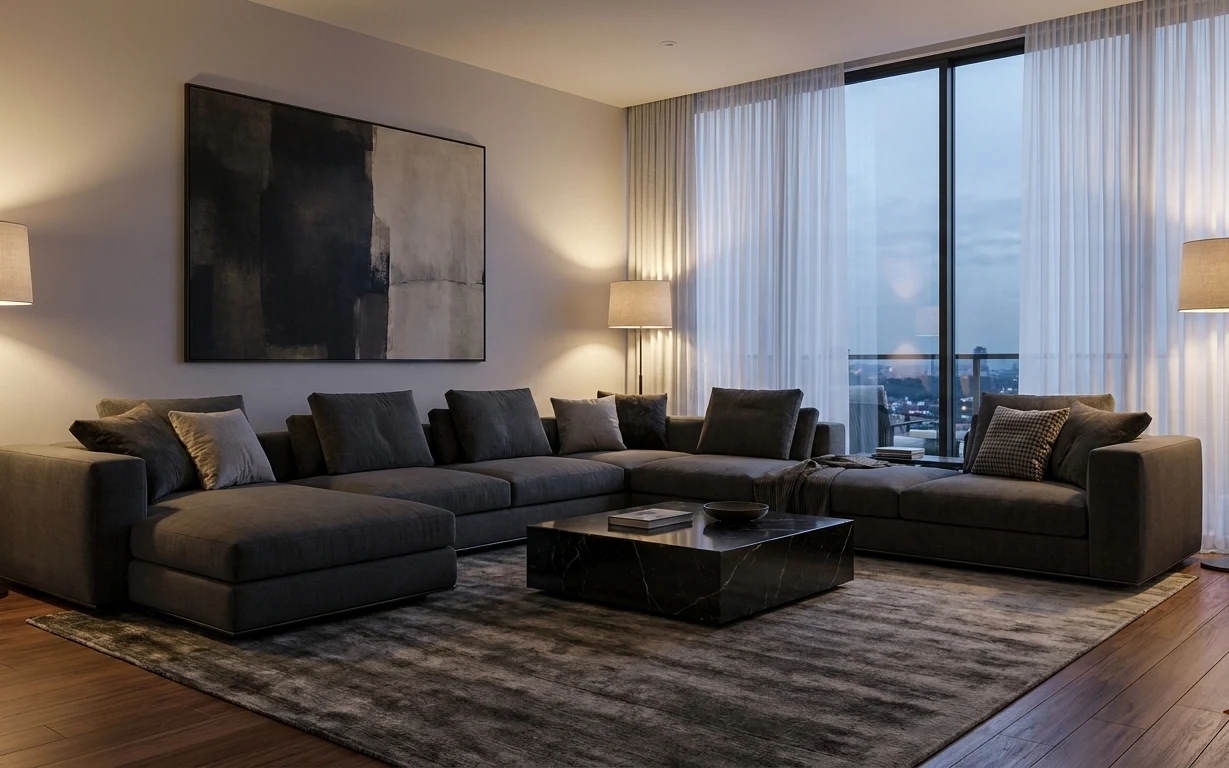
Under $800: modern living room refresh with curtains and rug
A modern living room refresh under $800: start with a large gray rug, sharpen the look with a black coffee table, and soften daylight using…